Review · MATCHA EXPERIENCES
Kyoto: Make Zen Garden and Taste Matcha in Pottery Shop
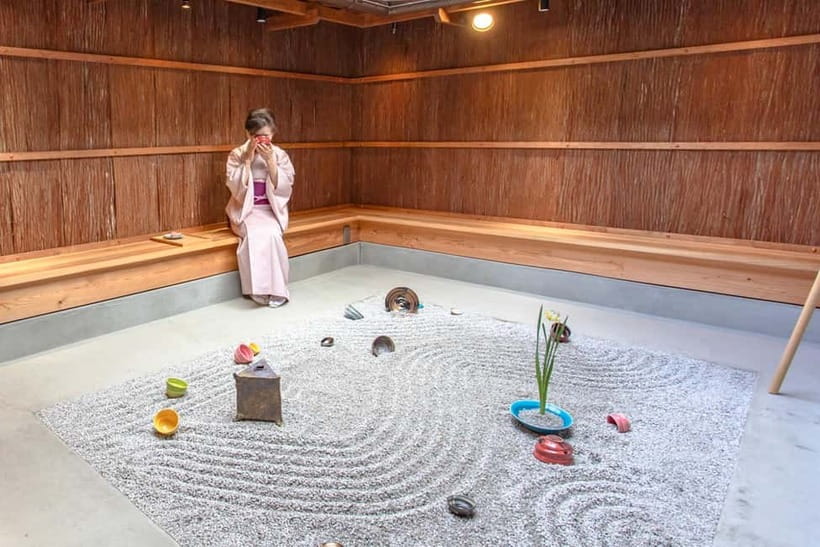
Kyoto’s Zen gardens are usually made for looking, not touching. Here, you get to rake the sand, place the decorations, and make your own small karesansui garden in the back of a traditional pottery shop. Then you sit beside it with matcha from Ippodo and a Japanese sweet. I like that the activity turns a familiar Kyoto sight into something you can actually take part in. I also like the setting: a renovated 100-year-old machiya in a neighborhood known for antiques and traditional household shops.
The main drawback is the short, free-form format. You may receive only a little instruction, and a decisive group could finish the garden quickly. At $12 per person, the price is modest, but this is a brief cultural stop rather than a full tea ceremony or a long pottery workshop.
Key points to know before you book
- Make, rather than simply view, a Zen garden: You rake and decorate your own small sand garden.
- Enjoy Ippodo matcha in front of your creation: Choose hot or iced tea, paired with a seasonal Japanese sweet.
- Visit a traditional machiya setting: Ninshu’s pottery shop occupies a renovated 100-year-old Kyoto townhouse.
- Keep the group small: No more than eight people take part, which suits this quiet hands-on activity.
- Allow 30 minutes: It fits neatly between sightseeing stops near Kyoto Imperial Palace Park.
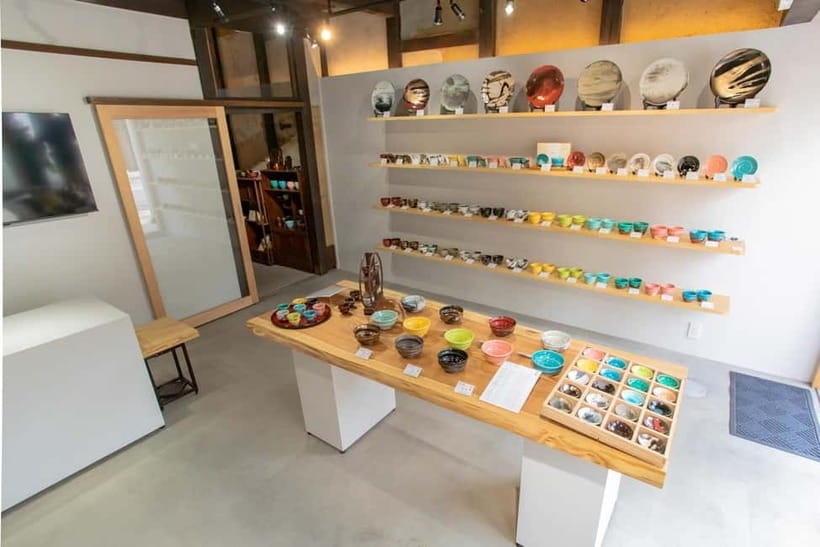
- Shop for useful pottery: Handmade pieces are dishwasher-safe and microwave-safe, making them practical souvenirs.
Making a Zen garden instead of just admiring one
A traditional Zen garden, or karesansui, uses sand, stones, and simple forms to suggest water and scenery. In temple gardens, you normally stand at the edge and appreciate the careful patterns from a distance. Ninshu changes that arrangement by giving you a rake and inviting you to create your own design.
You work in the garden behind the pottery shop. The experience is not presented as a formal lesson in Zen philosophy, and the supplied details do not promise a long explanation of garden symbolism. Think of it as a small creative activity with a Kyoto setting, not a certified gardening class.
That distinction matters. If you want a polished, highly directed workshop with a teacher demonstrating every step, this may feel too loose. If you enjoy making your own choices, the open format gives you room to play with the sand and decorations.
The garden can be completed quickly, especially if everyone in your group agrees on a design right away. I would slow down and treat the raking as the point of the activity. The simple lines and repeated motions give you a quiet break from Kyoto’s busy sights, even if the finished garden is small.
You can also take photographs of yourself with the garden you made. This gives the activity a clear keepsake value. Instead of taking another picture of a temple garden that thousands of people have photographed, you leave with an image of your own temporary creation.
More Matcha Experiences in Kyoto
- Kyoto: Tea Ceremony Meditation – Make Matcha with Tea Master
★ 4.8 · 406 reviews - Kyoto: Kimono Tea Ceremony with Matcha and Sweet
★ 4.9 · 249 reviews - Kyoto: Arashiyama Bamboo, Temple, Matcha, Monkeys & secret spots
★ 5.0 · 219 reviews
A 100-year-old machiya gives the activity its character
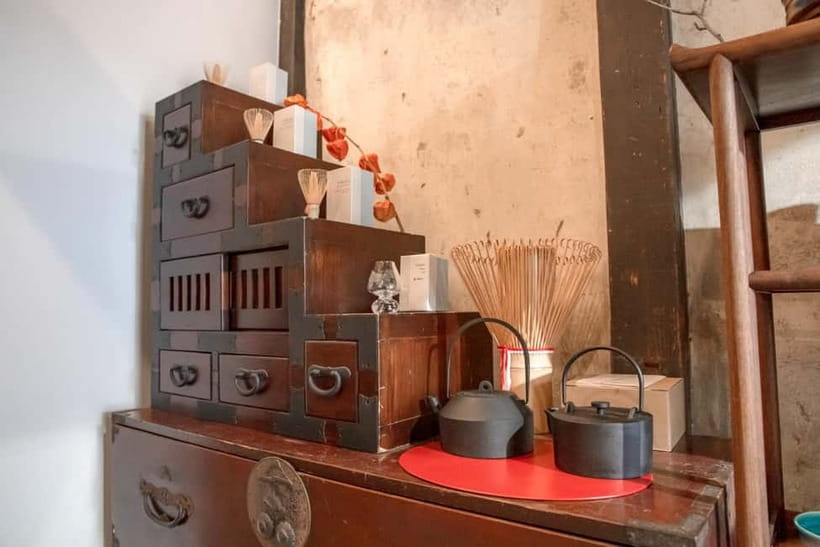
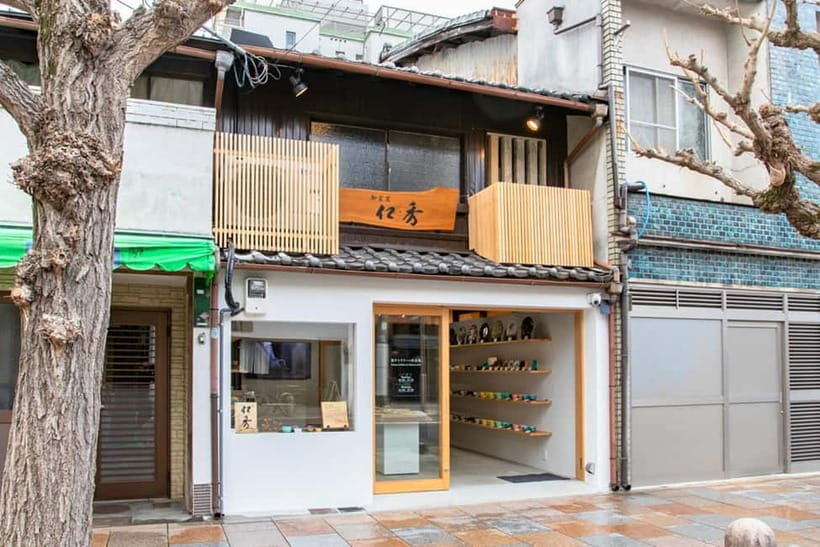
Ninshu’s shop is in a renovated Kyoto townhouse, known as a machiya. These narrow wooden buildings are closely tied to the city’s traditional streetscape and merchant neighborhoods. Here, the machiya is not just a backdrop. It houses a working pottery shop and opens onto the small garden used for the experience.
The setting helps this short activity feel connected to Kyoto rather than placed inside a generic studio. You get a taste of several local traditions at once: townhouse architecture, handmade pottery, a dry garden, matcha, and Japanese sweets.
The shop is also in a useful part of town. It sits about 100 meters south of Kyoto Imperial Palace Park along Teramachi Dori, and it is two minutes north of Ippodo. Teramachi Dori has antique shops and traditional household stores, so you can pair this visit with an easy stroll through a more specialized shopping area.
I like this location for an afternoon plan. You could visit the Imperial Palace Park, stop at Ippodo or nearby shops, then spend 30 minutes making the garden. It is not the sort of activity that requires giving up half a day of sightseeing.
Raking, decorating, and finding your own design
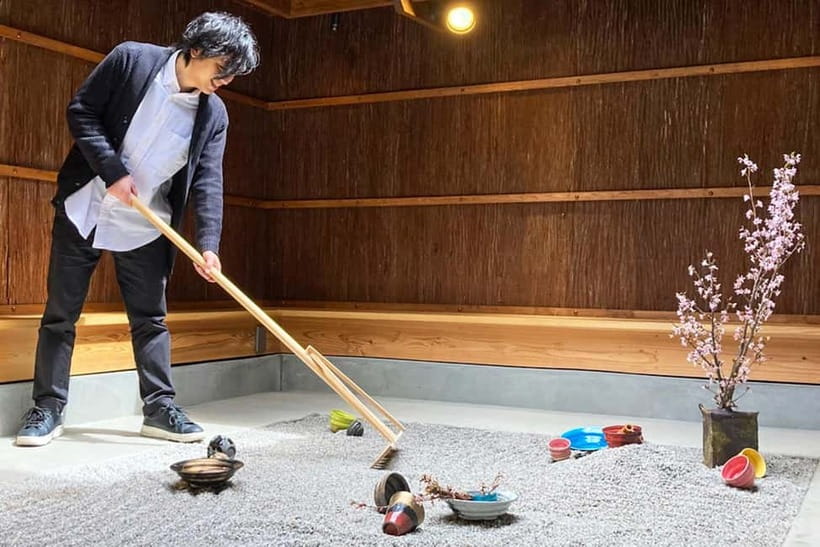
The first part centers on the garden. You rake the sand and add decorative elements to produce an original arrangement. The available information does not specify a fixed design, a set number of tools, or a formal demonstration, so you should expect a simple, creative format.
That freedom can be an advantage. You are not simply copying a pattern. You can decide how carefully to space the lines, where to place the stones, and how much detail to add. Families, couples, and friends who like small creative tasks may enjoy this part most.
It can also expose the limits of a 30-minute session. There is not enough time for a detailed lesson in Japanese garden design, and the activity may feel over quickly if you are not interested in making choices. I would book it for the hands-on moment and the atmosphere, not for an in-depth study of Zen practice.
The small group limit of eight people should help keep the activity manageable. It does not guarantee private use of the space, but it is a more personal scale than a large workshop. For a quiet garden task, that matters.
The instruction level is worth noting. One account described the activity as free form, with not much guidance. You should be ready to begin with a broad explanation and then make your own decisions. That is fine for creative people, but less ideal if you prefer a step-by-step class.
Matcha and a Japanese sweet beside your garden
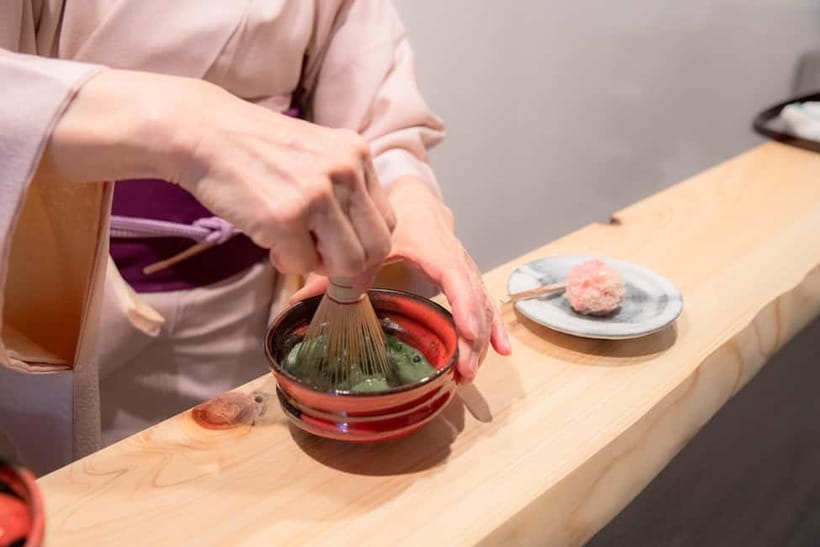
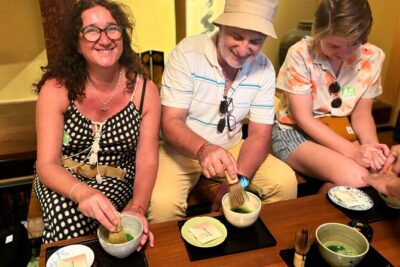
After making the garden, you sit in front of it and enjoy matcha from Ippodo, a well-known Kyoto tea company. You may choose hot or iced matcha. The drink is served with a seasonal wagashi, or Japanese sweet. One detailed account describes the pairing as iced or hot matcha with a mochi cookie.
This second part gives the activity its calm finish. You have something to look at while you drink, and the garden you just made becomes part of the presentation. The tea and sweet are not an add-on in a separate room. They complete the small scene.
Ippodo is a particularly fitting tea choice for a Kyoto experience. The company is well known in the city, and the meeting point is only a two-minute walk north of Ippodo. If you already plan to visit the tea shop, this activity is easy to combine with that stop.
The tea service should not be confused with a full tea ceremony. The experience information does not describe formal tea preparation, kneeling, utensils, or a lesson in tea etiquette. You are there to enjoy matcha in a traditional setting, not to attend an extended ceremony.
The sweet is seasonal, so the exact item may vary. That is part of the appeal, but it also means you should not book expecting one specific confection. If you have dietary restrictions, the available information does not state whether substitutions can be made.
More Tea and Calligraphy Workshops in Japan
- Kyoto Hidden Riverside Zen Mediation and Uji Matcha Experience
★ 5.0 · 9 reviews - Whisk Your Own Matcha: A Zen Matcha Experience at Temple
★ 3.6 · 7 reviews - Kyoto: Nighttime Zen Meditation and Matcha Tea Experience
★ 5.0 · 7 reviews - Kyoto Tea ceremony with Japanese Flower Arrangement Ikebana
★ 5.0 · 3 reviews
Why the pottery shop adds real value
You can buy handmade pottery at the shop after the activity. The pieces are dishwasher-safe and microwave-safe, which makes them more useful than many fragile souvenirs. That practical detail is especially helpful if you want something you can use at home rather than store on a shelf.
The pottery also connects directly to the place you are visiting. You are not buying a generic Kyoto-branded object from a souvenir chain. You are browsing pieces in the same kind of traditional shop where the activity takes place.
The information provided does not give a price range, specific shapes, or details about shipping. You should inspect the available pieces in person and confirm any purchase or packing arrangements at the shop. The dishwasher and microwave ratings are clear, but other buying details are not.
I would leave time to browse instead of rushing away as soon as the matcha is finished. The surrounding Teramachi area has antique and traditional homeware shops, so the pottery visit can become part of a broader shopping walk.
A good 30-minute pause near Kyoto Imperial Palace Park
The activity lasts 30 minutes, with starting times based on availability. That short length is both its strongest practical feature and its main limitation.
For a busy Kyoto schedule, 30 minutes is easy to fit between major sights. You could use it as a break after the Imperial Palace Park, before lunch, or during a shopping walk along Teramachi Dori. It is also suitable for people who want a cultural activity without committing to a long class.
The meeting point is about 11 minutes on foot from Kyoto Shiyakusho-mae Station on the Subway Tozai Line. It is about nine minutes from Jingu-marutamachi Station on the Keihan Main Line. The shop is 100 meters south of Kyoto Imperial Palace Park along Teramachi Dori and two minutes north of Ippodo.
I would use the supplied coordinates, 35.0157879, 135.7673992, if you are navigating by phone. Kyoto streets can be easy to misread, and the shop may not be obvious if you are looking only for a temple gate or a large attraction.
The short duration also means you should arrive ready to begin. There is little spare time for a slow arrival, extended orientation, or a long shopping session before the garden work. Plan your route in advance, especially if you are coming from another part of Kyoto.
Is $12 a fair price?
At $12 per person, the activity is inexpensive by Kyoto tour standards. The fee includes the garden experience, matcha, the Japanese sweet, reservation charges, and system fees. You are paying for a small cultural activity and a refreshment, not just a cup of tea.
The value is strongest if you already want to visit this part of town. You get a hands-on garden activity, a drink from Ippodo, a seasonal sweet, access to the machiya setting, and the chance to browse handmade pottery. The nearby antiques and homeware shops add more reason to make the trip.
The value is weaker if you expect a substantial class. Thirty minutes leaves little room for detailed instruction, and the garden task may be completed rapidly by a group that makes decisions quickly. You also need to pay separately for any pottery you choose to buy.
Still, the price is low enough that the limited duration is not a major concern for most people. I would see it as a compact cultural stop, similar to adding a well-chosen café break to your sightseeing day, but with a creative activity attached.
Who will enjoy this experience most?
I would recommend it to you if you want a small, memorable Kyoto activity rather than another major temple visit. It suits people who like crafts, photography, tea, traditional buildings, and useful souvenirs.
Families may appreciate the clear task of raking and decorating the garden, although the information does not specify an age minimum or special children’s program. Couples and friends can create a shared design, while solo participants can focus on the quiet process and the matcha afterward.
It is also a good choice for first-time visitors who want several Kyoto customs in one place. In 30 minutes, you touch on dry garden design, machiya architecture, matcha, wagashi, and pottery. You will not study any one of these in great depth, but you get a compact introduction to all of them.
I would think twice if your main goal is a formal tea ceremony, a detailed Zen lesson, or a long pottery class. Those expectations do not match the short, open-ended format. The experience works best when you value atmosphere and participation over a tightly structured lesson.
Practical details that affect your choice
The group is limited to eight people. That small size is suitable for a shop garden and should make the activity feel more personal than a large sightseeing group.
Cancellation is free up to 24 hours before the scheduled start for a full refund. You can also reserve now and pay later, which helps if you are still arranging a Kyoto itinerary.
The activity is offered in a small store, not at a large temple complex. You should therefore expect a compact setting and a focused session. The experience is about taking part in a small garden ritual, not touring a full temple garden.
No guide names are provided, but hosts assist with the activity. Based on the open format, I would arrive prepared to ask questions if you want more explanation about the garden, pottery, or tea.
Should you book the Ninshu Zen garden experience?
Book it if you like the idea of making a small karesansui garden, drinking hot or iced matcha beside it, and browsing practical handmade pottery in a historic Kyoto townhouse. The $12 price and 30-minute length make it an easy addition to a day near the Imperial Palace Park and Teramachi Dori.
Skip it if you want a formal tea ceremony or detailed instruction. You may find the garden portion brief and lightly guided. For the right visitor, though, that simplicity is exactly the appeal: a quiet, creative pause with a Japanese sweet, a cup of Kyoto tea, and a souvenir you can actually use.
FAQ
How long does the Zen garden and matcha experience last?
The experience lasts 30 minutes.
How much does the experience cost?
The price is $12 per person.
What do I do during the garden activity?
You rake and decorate a small Zen garden to create your own original karesansui design.
Is matcha included?
Yes. The experience includes matcha from Ippodo, a well-known Kyoto tea company.
Is the Japanese sweet included?
Yes. A seasonal wagashi is included with the matcha. One description identifies the sweet as a mochi cookie.
Can I choose hot or iced matcha?
Yes. You can have either hot or iced matcha.
Where does the activity take place?
It takes place in the garden of Ninshu’s pottery shop, inside a renovated 100-year-old Kyoto townhouse.
How many people can join the group?
The group is limited to eight participants.
Where is the meeting point?
The shop is two minutes north of Ippodo and 100 meters south of Kyoto Imperial Palace Park along Teramachi Dori. It is about 11 minutes from Kyoto Shiyakusho-mae Station and nine minutes from Jingu-marutamachi Station.
Can I buy pottery after the activity?
Yes. Handmade pottery is available for purchase, and the pieces are dishwasher-safe and microwave-safe.
Can I cancel for a full refund?
Yes. You can cancel up to 24 hours in advance for a full refund.
Can I reserve now and pay later?
Yes. The activity allows you to reserve your place and pay later.
More Tea and Calligraphy Workshops in Kyoto
- Tea ceremony at Kyoto’s Zen Temple Teahouse
★ 5.0 · 2 reviews - Silent Beauty of Kyoto Zen Walk and Tea Experience
★ 5.0 · 2 reviews - Zen Garden Making and Matcha Tasting in Handmade Pottery Shop
★ 3.5 · 2 reviews
Fresh tea listings around Kyoto
- Traditional Tea Ceremony in Kyoto★ 4.5 · 3 reviews
- Kyoto: Authentic Tea Ceremony in a Small Group★ 5.0 · 7 reviews
- Uji Walking Tour – Byodo-in temple and Tea Ceremony from Kyoto★ 3.5 · 3 reviews
- Tea Ceremony Experience in Traditional Kyoto Townhouse★ 5.0 · 19 reviews
- Tea Ceremony in 150 Years Old Townhouse with Tables and Chairs★ 5.0 · 22 reviews
- Tea ceremony at Kyoto’s Zen Temple Teahouse★ 5.0 · 2 reviews
- Sencha-do the Japanese Tea Ceremony Workshop in Kyoto★ 5.0 · 21 reviews
- Silent Beauty of Kyoto Zen Walk and Tea Experience★ 5.0 · 2 reviews
Matcha Experiences, compared.
World Heritage Kyoto & Nara Uji Authentic Matcha Experience
Read our review →
Matcha Making Class in Tokyo with Authentic Japanese Sweets Set
Read our review →
Kyoto: Tea Museum Tickets and Matcha Grinding Experience
Read our review →
Matcha Making Class in Osaka with Authentic Japanese Sweets Set
Read our review →
Kyoto: Tea Ceremony Meditation – Make Matcha with Tea Master
Read our review →
Tokyo: Matcha Making Experience with Mochi Sweets in Asakusa
Read our review →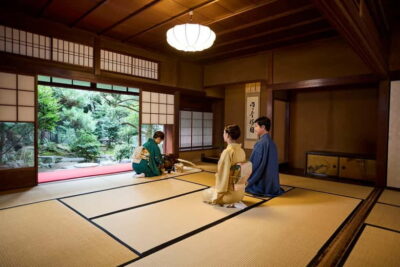
Kyoto: Kimono Tea Ceremony with Matcha and Sweet
Read our review →