
Review · KIMONO & TEA CEREMONY
Kimono and Tea Ceremony in Asakusa Private Food Tour With Guide
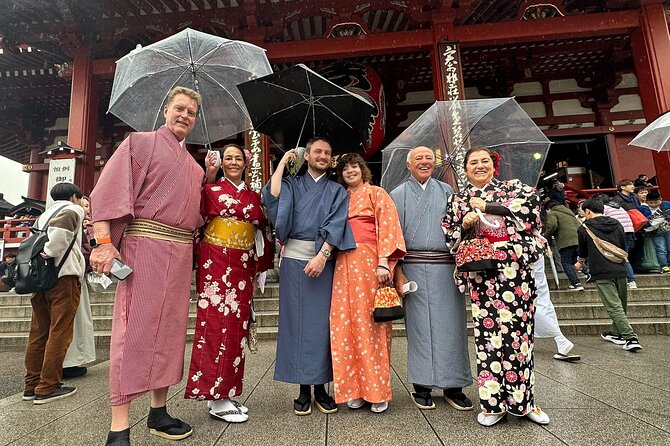
Getting dressed in a kimono changes the way you see Asakusa. Instead of simply passing through Sensō-ji and Nakamise Street, you become part of the scene, stopping for photos, learning how the clothing works, and tasting several Japanese specialties along the way. The small group size, capped at eight people, should keep the experience personal.
I like the mix of culture and food, especially the chance to try A5 wagyu, sweets, ice cream, and Japanese tea in one half-day outing. I also like the timing: a 11 a.m. start and roughly four hours leave your afternoon open. The main caution is price. At $290 per person, this is a premium activity, and the value depends on how much you want the kimono dressing, guided food stops, and tea ceremony rather than a simple Asakusa walk.
Key points to know before booking
- Kimono dressing is the heart of the experience: Choose a traditional or modern style, then add the obi sash and wooden sandals.
- The food is more than a small snack: A5 wagyu, two soft drinks, water, ice cream, local desserts, and tea are included.
- Asakusa supplies a strong setting: The route includes Sensō-ji, Kaminarimon, and the 250-meter Nakamise shopping street.
- The group stays small: A maximum of eight people makes it easier to ask questions and get help with the outfit.
- Adam may be your guide: He is named in the tour feedback and is praised for personal stories about living in Japan and useful local details.
- Extra services cost more: Hairstyling and overnight kimono rental are available for an additional fee.
Why the kimono changes your Asakusa visit
Asakusa is one of Tokyo’s best areas for a first look at traditional Japan, but it can also feel crowded and fast-moving. A kimono gives the visit a clear focus. You are not just looking at the temple gates and souvenir shops. You are learning how to wear an important piece of Japanese clothing, then walking through the district in it.
The outfit includes your choice of traditional or modern kimono, an obi sash, and wooden sandals. The dressing help matters because a kimono is not something most visitors can put on correctly without assistance. Expect the clothing to feel more formal and restrictive than everyday clothes. That is part of the experience, but it also means you should plan to walk at a comfortable pace.
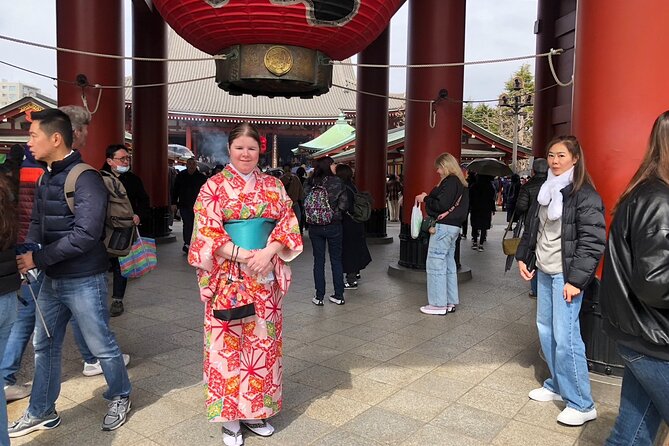
You can take photos throughout the outing, particularly around Kaminarimon and Sensō-ji. The clothing makes these familiar Tokyo views more memorable, though popular areas can be busy. You may need patience when stopping for pictures, and you should be mindful of other people moving through the temple grounds and shopping street.
The tour is not presented as a stage performance or a quick costume change. It combines dressing, walking, food, and tea. That mix gives you several ways to connect with the neighborhood, which is useful if you want more than a photo session.
More Kimono and Tea Ceremonies in Tokyo
- Kimono Tea Ceremony at Tokyo, Asakusa Maikoya
★ 5.0 · 638 reviews - Tokyo: Matcha and Kimono Experience
★ 4.7 · 219 reviews - Tokyo: Asakusa Kimono Dressing and Matcha Experience
★ 4.9 · 173 reviews
Starting at the Asakusa Culture Tourist Information Center
The meeting point is the Asakusa Culture Tourist Information Center at 2-chōme-18-9 Kaminarimon, Taito City. The tour begins at 11 a.m. Since the activity returns to the same meeting point, you do not need to arrange a separate ride back to your hotel or another neighborhood.
The center is near public transportation, making it a practical place to begin a morning in Asakusa. I would arrive with enough time to find the building and settle in before the start. The supplied information does not give a detailed dressing schedule, so allow some flexibility at the beginning rather than planning a tight appointment immediately afterward.
The activity lasts about four hours. That is long enough for the outfit, neighborhood walk, tea ceremony, and food stops without taking your entire day. You can pair it with an afternoon visit to another part of Tokyo, though you may prefer to stay in Asakusa and explore more of the district once the guided portion ends.
Sensō-ji, Tokyo’s oldest temple
Sensō-ji is the first listed stop, with about an hour allocated to the temple. It is Tokyo’s oldest temple and one of Asakusa’s most important Buddhist sites. The tour places the temple at the center of the cultural walk, which makes sense: the kimono, tea, and traditional snacks all connect naturally with this setting.
Your guide can provide context as you move through the temple area. The precise explanation will depend on who leads the tour, but Adam is specifically named in the supplied guest feedback. He is praised for explaining what it is like to live in Japan and for sharing small facts that help make the area easier to understand.
The temple grounds are free to enter. That does not mean the visit is empty of value. Sensō-ji gives you a chance to see how a major religious site functions alongside shopping, food, and tourism. The contrast is part of the Asakusa experience.
One practical point: Sensō-ji is a famous Tokyo sight, so you should not expect a quiet private temple visit. The kimono can make the stop feel more personal, but it does not remove the crowds. Keep your expectations realistic and treat the temple as a shared public place, not a private photo studio.
Kaminarimon and the first photo opportunities
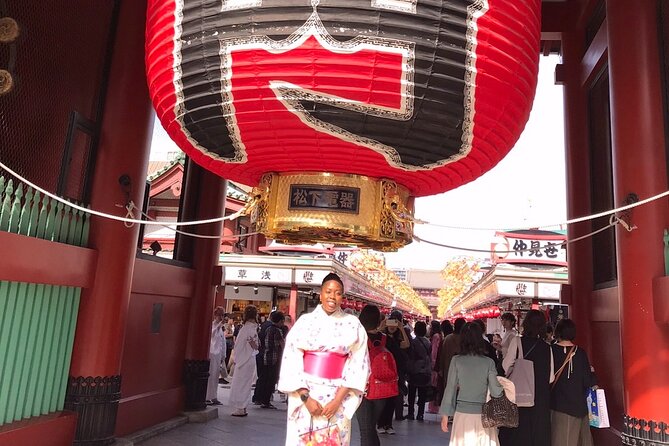
Kaminarimon, or the Thunder Gate, is the outer entrance to Sensō-ji. Its large lantern and statues make it one of the most recognizable views in Asakusa. The gate is about 11.7 meters tall and 11.4 meters wide, so it has the scale to make a kimono photo look especially dramatic.
This is one of the best places to appreciate the visual side of the experience. The gate frames the approach to the temple, while your kimono gives the photograph a clear Japanese setting. Your guide may also help with timing and positioning, though formal photography service is not listed as an inclusion.
The gate is popular, and people constantly pass through it. If you want a clear photograph, you may need to wait for a gap. That is normal here. A small group helps because eight people are easier to gather than a large coach group, but the public setting still places limits on how long you can stop.
More Tea Ceremonies in Tokyo
- Tokyo: Traditional Tea Ceremony with a Tea Master
★ 5.0 · 528 reviews - Tea Ceremony Workshop in Tokyo by the Experienced Instrucor
★ 5.0 · 189 reviews - Asakusa: Kimono Tea Ceremony with Matcha and Sweet
★ 4.9 · 153 reviews - Tea Ceremony Experience in a Private Tea Room in Shibuya
★ 4.9 · 125 reviews
Nakamise Street: snacks, souvenirs, and a busy approach
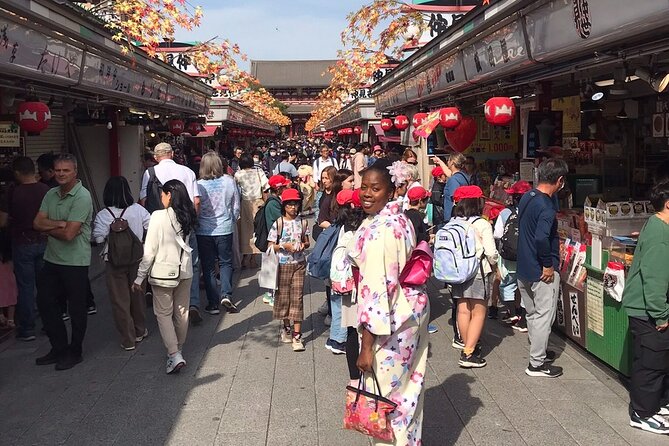
Nakamise is the 250-meter shopping street leading toward Sensō-ji. Shops on both sides sell traditional souvenirs, snacks, and sweets. The route is a useful bridge between the temple visit and the food side of the tour.
This is where the outing should feel less like a formal lesson and more like a guided walk through a working tourist district. You can look at the shop displays, notice the traditional designs, and ask your guide about local foods or customs. The included treats give you a reason to sample the area without paying for every bite yourself.
Nakamise is also one of the tour’s potential weak points if you dislike crowded shopping streets. It is famous, heavily visited, and designed for browsing. You will not get a quiet old-town stroll. The benefit is choice and energy. The drawback is that you may move slowly and have less room for wide kimono sleeves and wooden sandals.
Wear comfortable clothing under the kimono and avoid bringing a large bag if possible. The supplied information does not specify storage arrangements, so a compact day bag is the safer choice. Jeans and sneakers are not required for the ceremony because the tour provides the traditional look, but practical clothing underneath still matters.
Tea ceremony and the value of a guided explanation
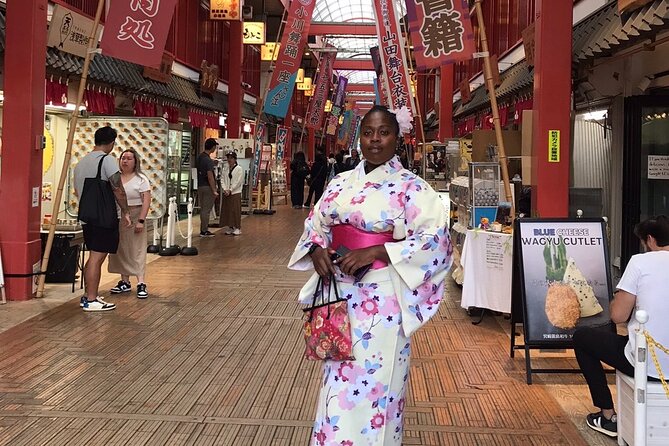
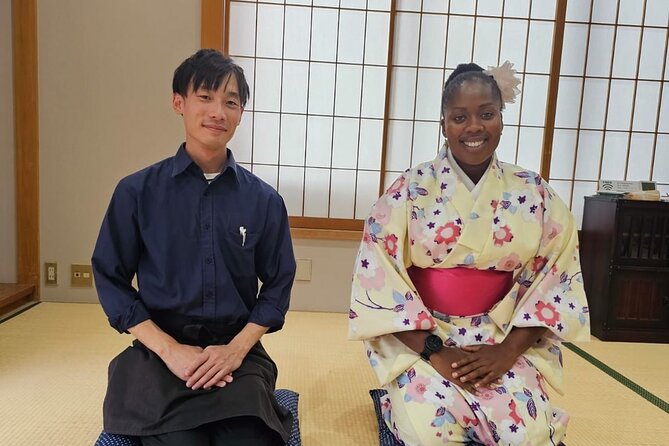
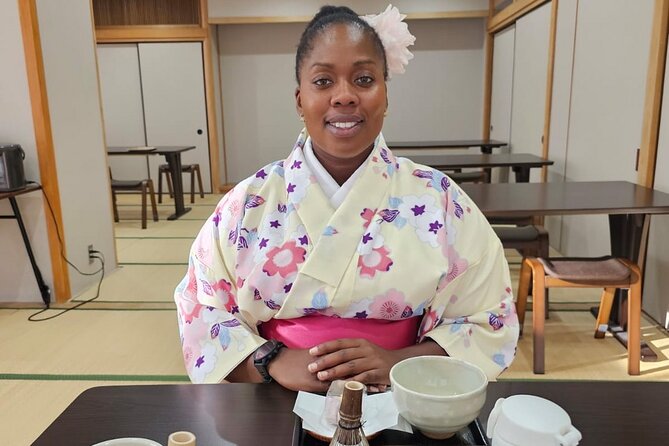
The tea ceremony is the cultural centerpiece. You are not simply drinking tea at a café. You are taking part in a formal Japanese tradition while dressed in a kimono, with the guide helping connect the activity to the rest of the day.
The exact ceremony format is not described in detail, so do not book this expecting a long specialist workshop unless the operator confirms that separately. The supplied package identifies the experience of the tea ceremony as included, along with the kimono activity and culture walk.
Tea ceremonies reward attention to small actions: the way tea is prepared, presented, and received; the pace of the setting; and the manners involved. Your guide’s role is important because those details can pass quickly if you do not know what to watch for. Adam is named as a guide associated with the experience, and the information about his tours points to personal explanations and local facts as a key part of his style.
Tea is also paired with other refreshments during the outing. Two soft drinks and water are included, along with ice cream and local desserts. Alcohol is not included, though it can be purchased by people aged 18 and older. This makes the tour easy to book for a mixed group with different tastes, since no one is required to choose an alcoholic drink.
A5 wagyu, ice cream, and Japanese sweets
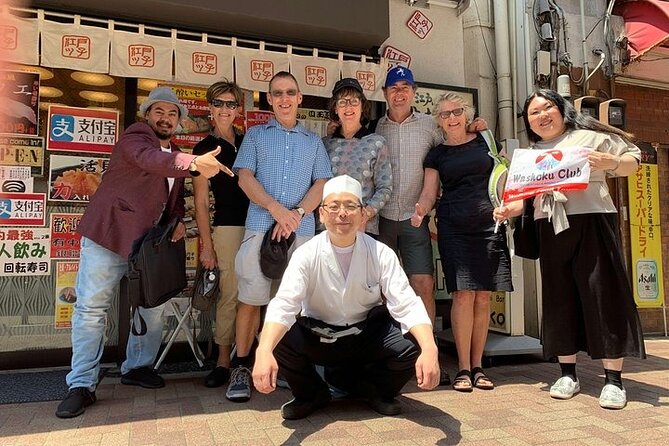
The food element gives this tour more substance than a kimono rental followed by a short walk. A5 wagyu is included, along with ice cream and local desserts. Two soft drinks and water are also part of the package.
A5 is the highest Japanese beef grade, based on yield and meat quality standards. The listing does not specify the cut, serving size, cooking method, or restaurant, so you should not assume this is a full steak dinner. Think of it as a premium tasting included within a wider cultural outing.
That distinction matters when you compare the $290 price with an independent meal or a basic kimono rental. You are paying for the combination of food, clothing, help with dressing, guiding, and the tea ceremony. If you mainly want to eat A5 wagyu, a separate restaurant booking may offer better value. If you want food to be part of a guided Asakusa story, the package makes more sense.
The dessert stops should help pace the afternoon. Ice cream and local sweets offer a lighter change after savory food and tea. Specific desserts are not named, so the selection may vary. This is a good place to ask your guide what is local and how the sweets are usually enjoyed.
How much value do you get for $290?
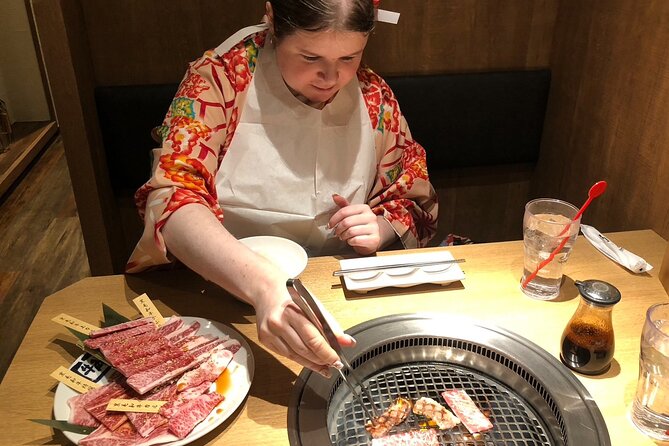
At $290 per person, this is not a budget tour. The price is easier to justify if you want several services in one booking: kimono selection and dressing, a small guided group, a cultural walk, tea ceremony, A5 wagyu, drinks, ice cream, and desserts.
The maximum group size is eight. That matters because dressing assistance and cultural explanation are more useful when the guide is not handling a large crowd. You have a better chance to ask questions, hear the guide clearly, and keep the group together while wearing wooden sandals.
The half-day format also has practical value. You are not giving up an entire day, and the return to the original meeting point simplifies the rest of your schedule. A free afternoon can cover another neighborhood, a museum, or additional time in Asakusa.
Still, the price will feel high if you already plan to rent a kimono independently, visit Sensō-ji on your own, and eat at ordinary local shops. This activity is for convenience and a packaged cultural experience, not for travelers counting every yen. Hairstyling and overnight kimono rental cost extra, so add those only if they are central to your plans.
What to know about comfort and planning
The tour is listed as suitable for most people and near public transportation. No hotel pickup or drop-off is provided, so you must reach the Asakusa Culture Tourist Information Center yourself.
Kimono clothing is attractive but not designed for long, fast walks. The route includes a temple, gate, and shopping street, and the total activity runs about four hours. Comfortable clothing underneath, a manageable bag, and sensible expectations about walking will make the outing easier.
The tour begins at 11 a.m., which is a useful middle ground. You do not need an early start, but you still have much of the day ahead. Since you return to the meeting point, you can decide later whether to continue sightseeing nearby or move on to another part of Tokyo.
Hairstyling is available at an extra cost. If you want a more finished traditional look for photographs, ask about the price and timing before booking. Overnight kimono rental is also available for an additional fee, giving you more time in the outfit beyond the four-hour program.
Free cancellation is available if you cancel at least 24 hours before the start time. Cancellations or changes made inside that window are not accepted for a refund.
Who should book this Asakusa experience?
I would recommend this for you if you want a guided introduction to Japanese clothing and customs, enjoy tasting several foods rather than sitting through one long meal, and value a small group. It also suits first-time Tokyo visitors who want an easy cultural activity with a fixed meeting point and a clear half-day schedule.
Families, couples, and small friend groups can all fit the format, provided everyone is comfortable wearing a kimono and walking at a relaxed pace. The tea ceremony adds structure, while the food keeps the outing social and accessible.
I would be more cautious if your main goal is a quiet temple visit, an advanced tea lesson, or a full wagyu dinner. The famous Asakusa stops are public and busy, the ceremony details are limited in the description, and the beef is one part of a larger program rather than the whole meal.
Should you book the kimono and tea tour?
Book it if you want your Asakusa sightseeing to feel like an occasion. The strongest parts are the kimono dressing, the small group, the tea ceremony, and the mix of A5 wagyu, sweets, and drinks. Guide Adam is named in connection with the experience, and his reported focus on life in Japan and small local facts is exactly the sort of detail that can make a short walk more useful.
Skip it if $290 feels too steep for a half-day or if you would rather explore at your own speed. Asakusa is easy to visit independently, and the temple and shopping street do not require an expensive tour. For the right person, though, this package brings together clothing, food, photos, and cultural context in a convenient four-hour outing.
FAQ
Where does the tour start?
It starts at the Asakusa Culture Tourist Information Center, 2-chōme-18-9 Kaminarimon, Taito City, Tokyo 111-0034, Japan.
What time does the experience begin?
The start time is 11 a.m.
How long does the tour last?
The experience lasts approximately four hours and ends back at the meeting point.
How many people can join the tour?
The maximum group size is eight people.
What food and drinks are included?
The package includes a tea ceremony, two soft drinks, water, an A5 wagyu experience, ice cream, and local desserts.
Can I cancel for a full refund?
Yes. You can receive a full refund if you cancel at least 24 hours before the experience start time. Cancellations or changes made less than 24 hours before the start time are not refunded.
More Food Tours in Tokyo
- Tokyo Vegan Tour : Miso Making, Tea Ceremony, Rickshaw Ride
★ 5.0 · 2 reviews - Jakarta: Volcano, Tea/Rice Fields, Hot Spring, Local Food
★ 4.9 · 515 reviews - SF’s Chinatown: Tea & Dim Sum Food Tour – Includes full meal, 3hr
★ 5.0 · 153 reviews - Street Food Cooking Class in Taipei : Gua Bao/Lu Rou Fan/Boba Tea
★ 5.0 · 22 reviews
More Food and Drink Tours in Tokyo
- Experience all of Japanese culture and Japanese food experience classes “origami, udon, Japanese food, green tea, calligraphy” in 4 hours
★ 5.0 · 105 reviews - Tokyo Sushi Making Class : Sake Ceremony & Matcha Experience
★ 5.0 · 44 reviews - Matcha Experience with of Japanese Tea Tasting in Tokyo
★ 5.0 · 31 reviews - Tokyo: Matcha Tasting and Making Experience
★ 4.9 · 21 reviews
Fresh tea listings around Tokyo
- Yokohama : Tea Ceremony with Sweets and Souvenir★ 5.0 · 5 reviews
- Walking Tour: Yanaka,Nezu& Sendagi: Tea Ceremony & Old Tokyo★ 5.0 · 3 reviews
- Private Mochi・Matcha sweets Making Class Near Shibuya Area★ 5.0 · 22 reviews
- Private Kimono and tea ceremony at local home near Tokyo Disney★ 5.0 · 6 reviews
- 2 Hours Mochi &Nerikiri Making & Matcha Class in Bunkyo★ 5.0 · 21 reviews
- Tokyo: Tea Ceremony & Japanese Sweets Making★ 5.0 · 10 reviews
- Tokyo Sweets Tour: Hidden Gems & Matcha at an Old Tea House★ 5.0 · 6 reviews
- Tokyo Tea Ceremony Class at a Traditional Tea Room★ 5.0 · 2 reviews
Kimono & Tea Ceremony, compared.
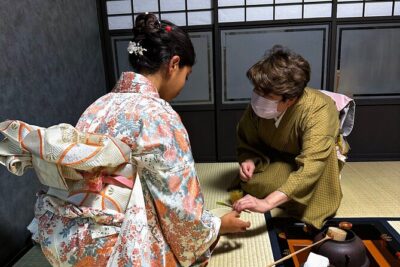
KYOTO Tea Ceremony with kimono near by Imamiya Jinjya Shrine
Read our review →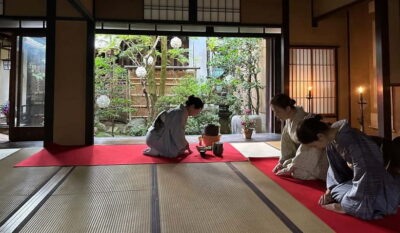
Kyoto: Kimono and Tea Ceremony Experience at Cultural Asset
Read our review →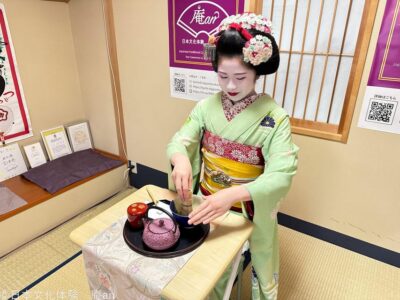
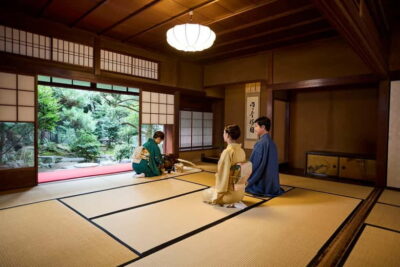
Kyoto: Kimono Tea Ceremony with Matcha and Sweet
Read our review →
Browse the lists this tour appears in