
Review · TEA CEREMONY EXPERIENCES
Tokyo Tea Ceremony Class at a Traditional Tea Room
The rare treat here is not simply a cup of matcha. You enter a purpose-built wooden tearoom in Kugayama, a quieter Tokyo neighborhood, and learn the ceremony from Ms. Haruki, a tea practitioner from Oita who has practiced since high school and has presented Japanese tea culture in the United States and New Zealand. I like the small setting and the fact that the lesson is given in English.
I also like that you taste both thin tea and koicha, or thick tea, which is normally reserved for formal ceremonies. The main consideration is the location: you must make your own way to Kugayama Station, and the non-refundable booking policy leaves little room for a last-minute change.
Key points to know before booking
- Authentic wooden tearoom: The room uses traditional construction methods and materials designed for tea ceremony.
- Small group of up to four: The limited size allows more time for questions and hands-on practice.
- English-language instruction: Ms. Haruki has experience presenting tea ceremony abroad and works as a licensed guide interpreter.
- Both thin and thick matcha: You taste koicha, a formal style rarely included in casual tea experiences.
- Hands-on tea making: You do not just watch the temae demonstration. You prepare some matcha yourself.
- Washi souvenir included: Each participant receives a traditional Japanese item made from washi paper.
Why this Kugayama tea ceremony feels different
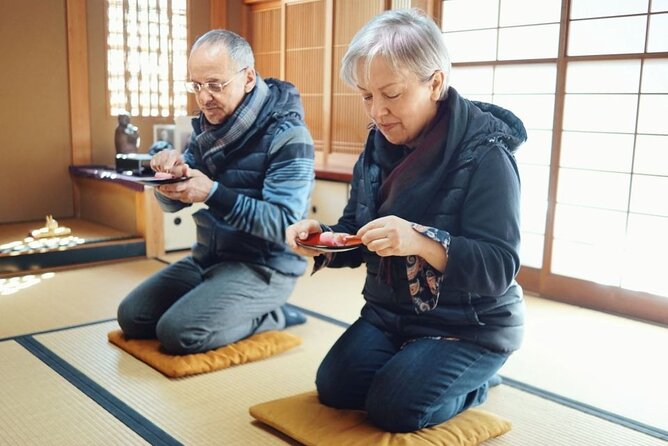
Many Tokyo tea activities focus on the drink itself. This one gives equal attention to the room, the tools, the gestures, and the ideas behind the ritual.
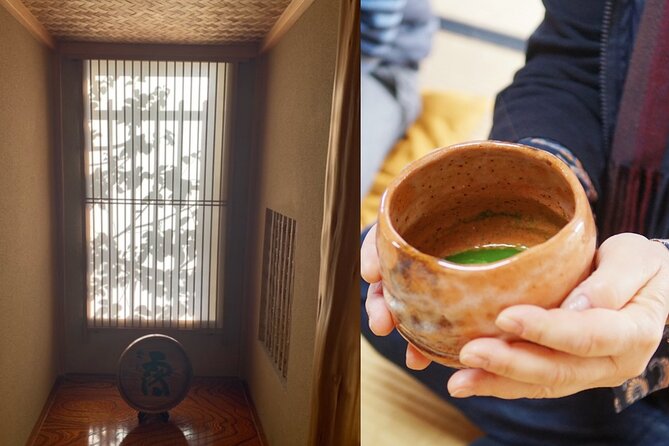
The tearoom was built specifically for tea ceremony, using wooden materials and traditional construction methods. That matters because the setting is part of the lesson. You are not simply seated in a modern room while someone explains an old custom. The proportions, materials, and quiet atmosphere help show why Japanese tea ceremony is treated as a complete art rather than a quick refreshment stop.
The experience takes place near Kugayama Station in Suginami City, outside the busiest sightseeing areas of central Tokyo. That adds a little travel time, but it also gives the activity a more local feel. If your Tokyo schedule is packed around Asakusa, Shibuya, and Shinjuku, Kugayama requires a deliberate trip. I see that as a fair trade for a smaller, calmer setting.
The group limit is four people. That is one of the strongest practical features. You should have room to see the utensils, follow the hand movements, and ask questions without trying to compete with a large audience. The exact number of teachers may vary, but the experience has been led by three tea teachers working together, giving the session a personal and carefully guided feel.
More Tea Ceremonies in Tokyo
- Kimono Tea Ceremony at Tokyo, Asakusa Maikoya
★ 5.0 · 638 reviews - Tokyo: Traditional Tea Ceremony with a Tea Master
★ 5.0 · 528 reviews - Tea Ceremony Workshop in Tokyo by the Experienced Instrucor
★ 5.0 · 189 reviews
Meeting Ms. Haruki and learning the story of tea
Ms. Haruki is from Oita and began studying tea ceremony in high school. She later learned international tea ceremony in Tokyo and has presented the tea-making process in the United States and New Zealand.
Her background is useful for an English-speaking audience. Tea ceremony has many small customs that can seem puzzling if you only watch them from a distance. Why is the bowl turned? Why are the utensils handled in a set order? Why does the host pause at certain moments? The opening history presentation gives these actions a place in Japanese culture.
Ms. Haruki also works as a National Government Licensed Guide Interpreter. That does not turn the event into a general Tokyo sightseeing tour. Instead, it means you can expect the explanation to connect the ceremony with wider Japanese customs in clear English.
The session is not designed as a rushed demonstration followed by a photo. It usually takes about two hours, though one account places the total time closer to two and a half hours. Plan your schedule with that longer possibility in mind, especially if you have a train reservation or another timed booking afterward.
Watching the temae, the formal tea-making procedure
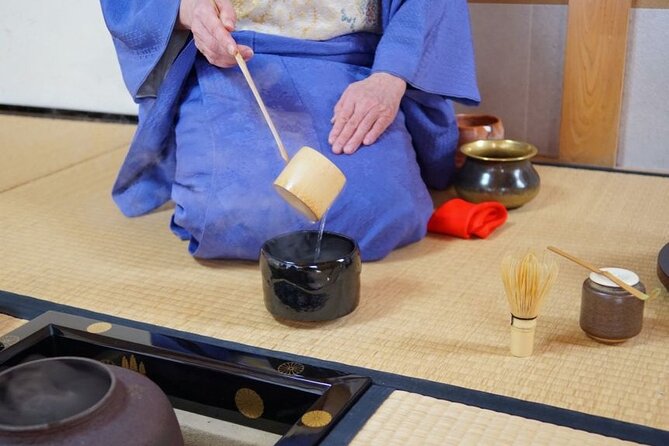
A central part of the class is the presentation and demonstration of temae, the formal procedure used to prepare tea.
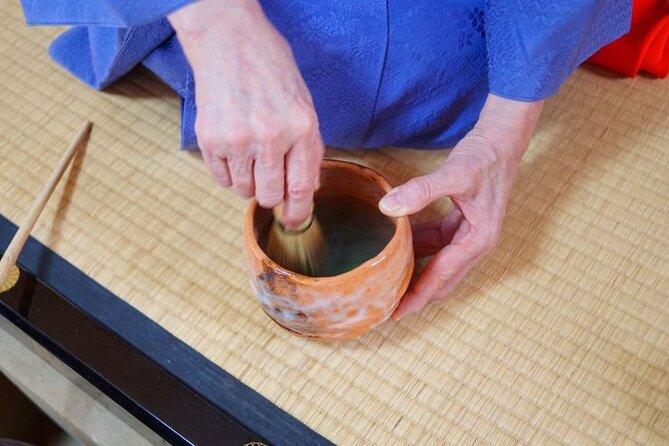
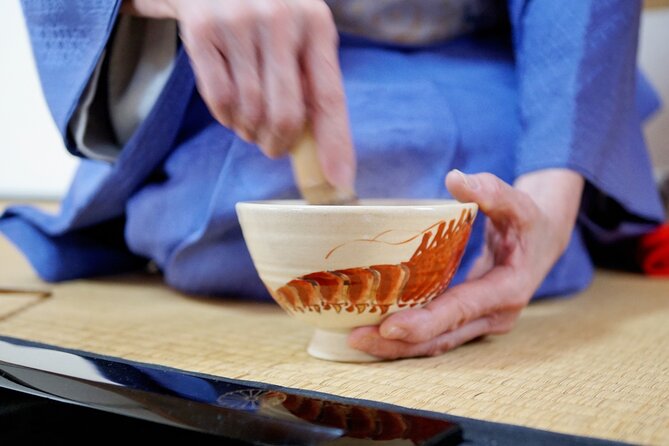
You will see how the practitioner handles the utensils and moves through the preparation. The value is in the order and restraint. Tea ceremony is not about making matcha as quickly as possible. The procedure gives attention to each movement and to the relationship between host, visitor, room, and objects.
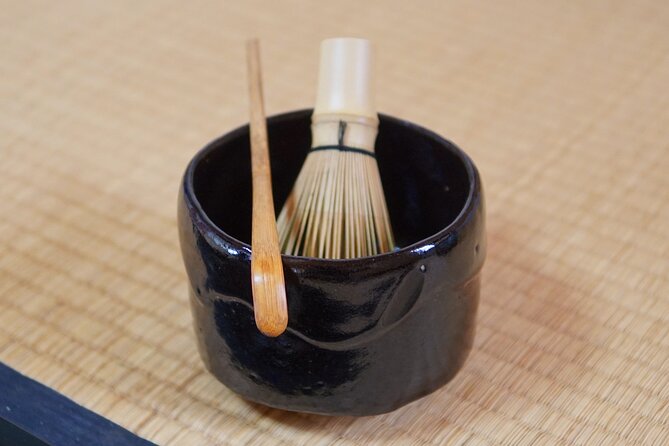
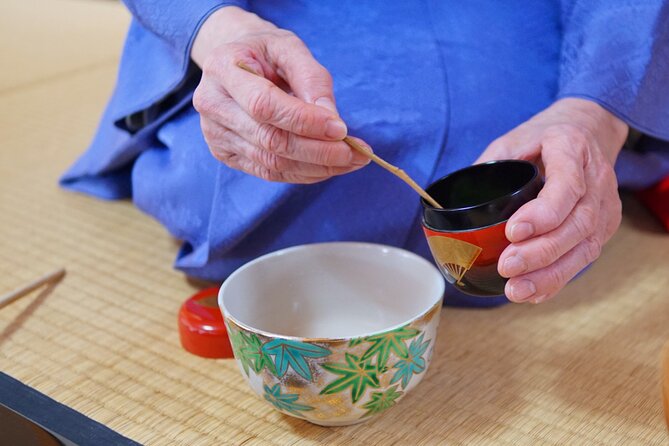
The utensils also receive close attention. You have a chance to inspect them and learn how they fit into the ceremony. This is helpful if you have seen matcha preparation in cafés and want to understand what makes the formal practice different.
The demonstration is likely the quietest part of the activity. You need to watch carefully, since some movements are small. The limited group size helps here. In a large class, it can be hard to see the bowl or whisk. With no more than four participants, you should have a better view and more space for questions.
The tone is dignified, but not cold. The tea teachers have been described as friendly and careful to explain the customs and background. That balance matters. A formal ritual can feel intimidating if every mistake seems serious. A good teacher shows you the respect due to the tradition while helping you feel comfortable enough to participate.
Thin matcha, thick matcha, and the taste of koicha
The tasting includes both thin tea and thick tea. Thin tea is the more familiar style for many people who have tried matcha in Japan or abroad. It is whisked with more water and usually has a lighter texture.
Koicha, or thick tea, is a different experience. It uses a much denser preparation and is generally served at formal tea ceremonies. Including it here gives you a rare chance to compare the two styles in one sitting.
I would not book this activity only if you want a sweet matcha drink. Koicha is part of the cultural lesson, and its thicker texture may surprise you. The point is not that one is better than the other. The comparison helps you understand the range of tea preparation and why the formal setting matters.
The tea is served with sweets, which provide a useful contrast to the matcha. Coffee and tea are also listed among the included refreshments, but the main focus is clearly the matcha experience. If you have never tried thick tea, approach it with curiosity rather than expecting a café-style beverage.
The taste is only one part of the lesson. You are also learning how to receive the bowl, how to drink properly, and how to look at the utensils. Those instructions turn a simple tasting into participation in a custom.
Same city, a very different cup:
- Matcha Making Class in Tokyo with Authentic Japanese Sweets Set
★ 5.0 · 744 reviews - Dynamic Tokyo: Tokyo Tower, Tea Experience, Bay Cruise Day Tour
★ 4.5 · 521 reviews - Tokyo: Matcha Making Experience with Mochi Sweets in Asakusa
★ 4.9 · 388 reviews - Asakusa Cultural Walk & Matcha Making Tour
★ 5.0 · 245 reviews
Making your own matcha
After watching the demonstration, you have a chance to make some matcha yourself. This is an important feature because it changes your role from spectator to participant.
You will not be expected to master the entire ceremony in one afternoon. Instead, the hands-on part lets you feel the basic actions and understand the care involved in preparing the drink. The instructor can guide you through the process, and the group size should make it easier to receive direct help.
This part also gives you a better sense of the difference between ordinary preparation and formal temae. You may find that the whisking itself is simple, while the full ceremony depends on many other details: the sequence of movements, the handling of objects, and the way the tea is presented.
Bring a patient attitude. The best reason to join is not to produce a perfect bowl of matcha. It is to see how a familiar drink becomes a focused social and cultural practice.
The wooden room is part of the lesson
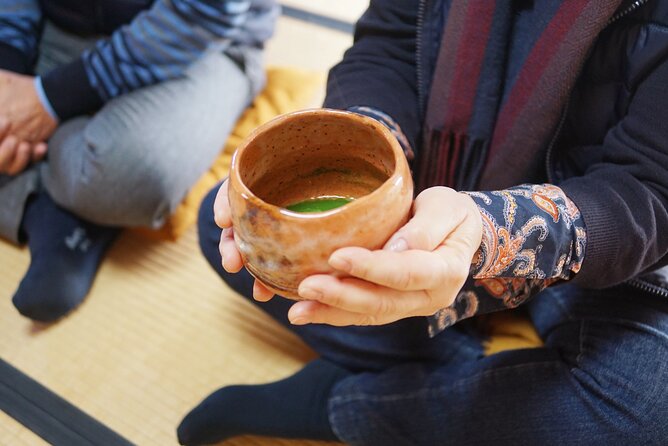
The tearoom is one of the experience’s most valuable features. It uses traditional construction methods and wooden materials selected for the room.
That setting helps explain why tea ceremony has its own architecture. A tea room is not just a backdrop. Its design supports quiet attention and gives the ceremony a defined space. Even if you know little about Japanese architecture, you will notice that the room feels made for this activity rather than borrowed from a general event venue.
The setting also changes the pace. Tokyo can be noisy, crowded, and visually intense. This class offers a calm two-hour pause. You are still in the city, but the activity asks you to focus on small objects and deliberate movements rather than chase the next sight.
The location in Kugayama is both a strength and a limitation. It is a good choice if you want a more neighborhood-based experience and do not mind traveling beyond the main tourist zones. It is less convenient if you are trying to fit several central Tokyo attractions into a tight day.
A washi souvenir with a practical connection to Japan
The class includes a souvenir made from washi, traditional Japanese paper. This is a nicer keepsake than a generic branded item because it connects to a longstanding Japanese craft tradition.
The exact item is not specified, so you should not book the class expecting a particular design or size. Still, the souvenir gives you something tangible to take home after an experience that is otherwise built around gestures, taste, and atmosphere.
Washi is also a fitting choice for this activity. Tea ceremony pays attention to the material world, from the bowl and whisk to the room itself. A handmade paper item continues that theme without turning the class into a shopping stop.
What the price includes at $117.87
At $117.87 per person, this is not the cheapest way to sample matcha in Tokyo. You can find a simple tea or matcha dessert for much less.
The comparison is not quite fair, though. The fee includes an English-language presentation, the tea ceremony performance, instruction in drinking both thin and thick tea, a chance to make matcha, sweets, tea refreshments, close attention to the utensils, and a traditional washi souvenir. You are paying for teaching, a small group, and access to a purpose-built tearoom, not only for the beverage.
For me, the value is strongest if you want cultural context and active participation. It is weaker if you only want a quick taste of matcha or a short photo opportunity. The maximum of four participants improves the value because the class can remain personal rather than becoming a group lecture.
The price also includes an unusual element: koicha. Since thick tea is usually connected with formal ceremonies, tasting it in this setting adds something that many basic tea introductions do not offer.
Transport is not included. You must reach Kugayama Station on your own, and the activity returns to the meeting point at the end. Factor in the cost and time of getting there when comparing this with tea classes closer to your hotel.
Timing, meeting point, and booking cautions
The meeting point is Kugayama Station, at the listed address in Kugayama, Suginami City, Tokyo 168-0082. The activity ends back at the meeting point, so you are not left at a different part of the city.
A mobile ticket is provided, which is convenient for a Tokyo day when you may already be carrying several train tickets and reservations. Confirmation is sent within 48 hours of booking, subject to availability. Do not treat the booking as final until that confirmation arrives.
The activity is generally described as about two hours, but plan for up to two and a half. The extended timing can be a benefit because the teachers take time to explain the customs and background. It can also affect a tightly packed itinerary.
The cancellation policy is strict. The experience is non-refundable and cannot be changed for any reason. I would book only after checking your Tokyo schedule and confirming that everyone in your party can attend.
Who will get the most from this experience
This class suits you if you want to understand tea ceremony rather than simply watch someone whisk matcha. It is especially useful for first-time visitors who want a clear English explanation of the history, etiquette, utensils, and preparation.
It also suits repeat visitors to Tokyo who have already seen the major temples and shopping districts. The trip to Kugayama gives you a different side of the city, and the intimate room offers a slower activity between busy sightseeing days.
Food lovers should enjoy the comparison between thin tea and koicha, though you should be open to a formal taste rather than expecting a sweet café drink. Photography-focused visitors may appreciate the room, but this should not be booked as a staged photo session. The ceremony and instruction come first.
Families and mixed-age groups may appreciate the short duration and small group size, but the provided information does not specify age requirements. If anyone in your party has concerns about sitting, movement, or tea-related etiquette, ask the operator before booking rather than assuming.
Should you book this Kugayama tea ceremony?
Book it if you value a small group, an authentic wooden tearoom, clear English instruction, and the chance to taste both thin matcha and rare koicha. The personal teaching, hands-on preparation, and washi souvenir give the experience more substance than a quick tea tasting.
Skip it if your schedule leaves no room for a trip to Kugayama, if you want a low-cost drink only, or if the non-refundable policy makes you uneasy. The price is reasonable for a private-feeling cultural lesson, but it is not designed for a rushed stop between central Tokyo attractions.
For the right visitor, this is a thoughtful way to learn how tea ceremony works from the inside. You leave with more than the taste of matcha. You gain a better sense of why the room, the utensils, the movements, and the tea all matter.
FAQ
Where does the tea ceremony take place?
The meeting point is Kugayama Station in Suginami City, Tokyo, at the listed address in Kugayama 4-chome. The activity ends back at the meeting point.
How long does the experience last?
The expected duration is about two hours. One account indicates that it can take about two and a half hours, so allow extra time in your schedule.
Is transportation included?
No. Transport to the meeting point is not included. You must make your own way to Kugayama Station.
Is the activity offered in English?
Yes. The experience includes English-language instruction from tea practitioner Ms. Haruki, who has presented tea ceremony in the United States and New Zealand.
How many people can join?
The activity has a maximum of four participants.
What types of tea are served?
You receive both thin tea and thick tea, known as koicha. Matcha green tea and sweets are included.
Can I make matcha myself?
Yes. Participants have the opportunity to prepare some matcha themselves after watching the tea-making demonstration.
What is included besides the tea?
The experience includes the tea ceremony performance, instruction, sweets, tea refreshments, a chance to examine the utensils, and a traditional Japanese souvenir made from washi.
Is the tearoom traditionally built?
Yes. The tearoom uses traditional construction methods and wooden materials designed specifically for the room.
Can I cancel or change my booking?
No. The experience is non-refundable and cannot be changed for any reason. Confirmation is sent within 48 hours of booking, subject to availability.
More Afternoon Tea in Tokyo
- Tea Ceremony Experience in a Private Tea Room in Shibuya
★ 4.9 · 125 reviews - Tokyo: Tea Ceremony Experience in a small tea room
★ 4.9 · 53 reviews - London: Afternoon Tea Cruise on the River Thames
★ 4.4 · 3,274 reviews - Afternoon Tea Bus Tour in Dublin
★ 5.0 · 2,791 reviews
Fresh tea listings around Tokyo
- Yokohama : Tea Ceremony with Sweets and Souvenir★ 5.0 · 5 reviews
- Walking Tour: Yanaka,Nezu& Sendagi: Tea Ceremony & Old Tokyo★ 5.0 · 3 reviews
- Private Mochi・Matcha sweets Making Class Near Shibuya Area★ 5.0 · 22 reviews
- Private Kimono and tea ceremony at local home near Tokyo Disney★ 5.0 · 6 reviews
- 2 Hours Mochi &Nerikiri Making & Matcha Class in Bunkyo★ 5.0 · 21 reviews
- Tokyo: Tea Ceremony & Japanese Sweets Making★ 5.0 · 10 reviews
- Tokyo Sweets Tour: Hidden Gems & Matcha at an Old Tea House★ 5.0 · 6 reviews
- Kimono and Tea Ceremony in Asakusa Private Food Tour With Guide★ 5.0 · 4 reviews
Tea Ceremony Experiences, compared.
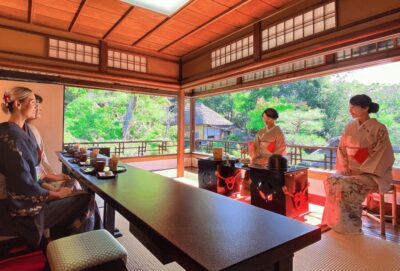
Kyoto: Tea Ceremony in a Traditional Tea House in Kiyomizu
Read our review →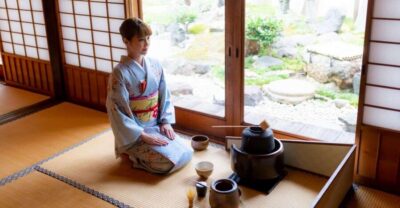
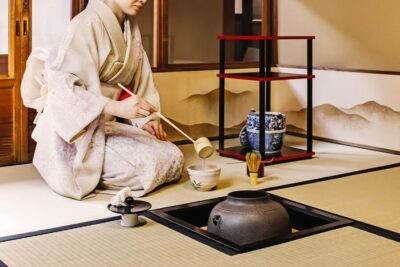
Kyoto: 45-Minute Tea Ceremony Lesson Experience
Read our review →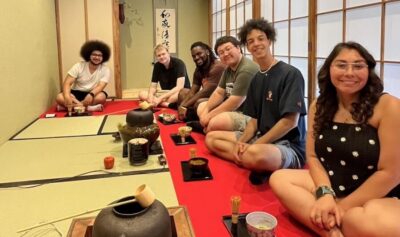
Kyoto: Table-Style Tea Ceremony at a Kyo-Machiya
Read our review →
Browse the lists this tour appears in