
Review · TEA CEREMONY EXPERIENCES
Tea ceremony experience in Osaka with a small group
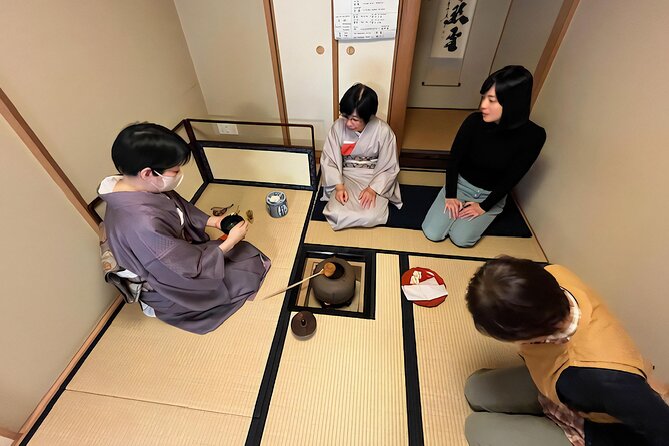
The most appealing part of this experience is its small private setting. With no more than four people in your group, you get room for questions and personal instruction instead of watching from the back of a crowded class. You begin with the customs of entering a tatami room, then move from watching the tea master to preparing matcha yourself.
I like the combination of clear cultural explanation and hands-on practice, and I like that tea and traditional Japanese sweets are included. The main consideration is location: Ibaraki-shi is between Osaka and Kyoto, and the meeting point is about a 10 to 15 minute walk from the station.
Key points
- Private group of up to four: A quieter format with direct instruction from the tea master.
- Tatami-room introduction: Learn how to enter and take part in a Japanese-style room.
- Matcha preparation: Watch a demonstration, then make tea yourself in the ryurei table style.
- Tea and sweets included: The experience includes the matcha, Japanese sweets, tools, and materials.
- Convenient regional location: Reach the meeting point from Ibaraki-shi Station on the Hankyu Kyoto Line.
- Flexible one-and-a-half-hour format: A good cultural activity to pair with time in Osaka or Kyoto.
A small tea ceremony near Osaka and Kyoto
This is a gentle introduction to Japanese tea ceremony, designed for people who know little about the subject as well as those who already want a closer look at Japanese customs. You do not need to arrive with special knowledge. The tea master explains the steps in detail, so the ritual feels understandable rather than mysterious.
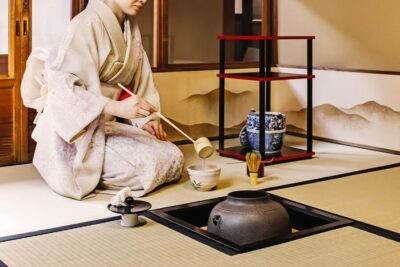
The experience takes place in a tatami room, a Japanese-style room where floor seating and careful movements matter. You first learn how to enter the room properly. That opening lesson is important because tea ceremony is not only about drinking matcha. It also involves manners, attention, and respect for the space.
You then watch a demonstration using matcha and Japanese traditional sweets. After that, the lesson changes from observation to participation. You learn the ryurei style, which is a table-style form of tea ceremony, and prepare a bowl of matcha yourself.
The session lasts about 60 to 90 minutes. That is long enough to include explanation, demonstration, tasting, and practice without taking over your entire day.
More Tea Ceremonies in Osaka
- Osaka: Tea Ceremony Experience
★ 4.9 · 1,426 reviews - Tea Ceremony Experience in Osaka Doutonbori
★ 5.0 · 754 reviews - Osaka: Tea Ceremony, Calligraphy, and Kimono Experience
★ 4.9 · 130 reviews
Why the private group size matters
The group limit is four people, and this is one of the strongest reasons to consider the experience. Tea ceremony has small movements that can be hard to see in a large class. In a group of four, you should have a better chance to follow the hand motions and ask for clarification when needed.
The private format also suits families, couples, or friends who want to share one cultural activity without being mixed into a larger crowd. Only your group participates. That gives the session a more personal rhythm, though the exact amount of individual instruction can depend on your group and the pace of the lesson.
A small class can also make the ceremony less intimidating for a first-timer. You are not expected to know the correct way to move, hold the bowl, or prepare the tea before arriving. The tea master and assistant are attentive to beginners and explain how to perform the steps yourself.
This is not a theatrical show where you sit silently and watch from a distance. The useful part comes after the demonstration, when you get to try the process.
Entering the tatami room
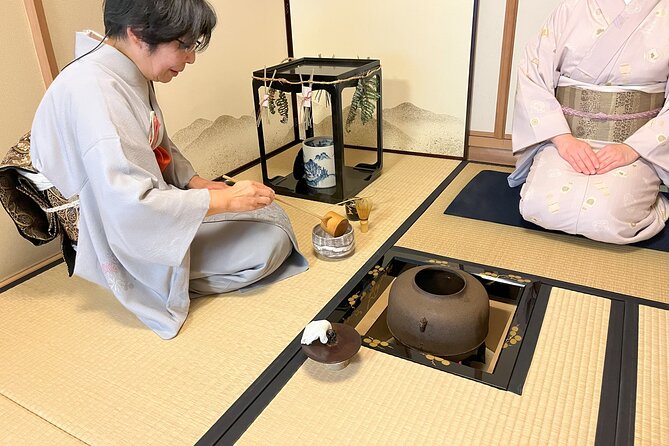
The first part of the session introduces how to enter a tatami room. This may seem like a small detail, but it gives you the right frame for everything that follows. You learn that the room itself is part of the ceremony, and that your movements and conduct matter.
You should expect an explanation before the tea-making begins. Since the activity is intended for people unfamiliar with Japanese culture, the instruction is detailed and easy to follow. That makes this a better choice than a short tea tasting if you want to understand the setting and basic etiquette.
Tatami floors can require more careful movement than a standard room. The provided information does not specify how long you must kneel or whether alternate seating is available, so you may want to ask the provider if you have concerns about sitting on the floor. The ryurei portion uses a table, but the opening instruction takes place in the Japanese-style room.
The atmosphere is meant to be calm and focused. One participant described the experience as relaxing and informative, with the teacher and assistant providing attentive guidance. That balance is useful: you get cultural detail without being left to guess what each step means.
Matcha, sweets, and the demonstration
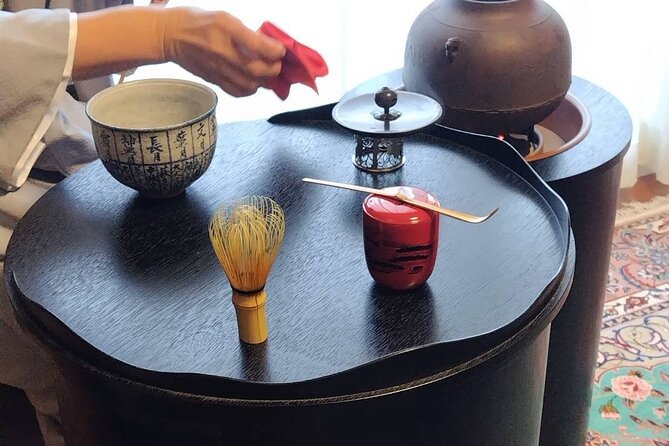
After the introduction to the room, the tea master demonstrates the ceremony with matcha and traditional Japanese sweets. The sweets are not just an extra snack. In a tea ceremony setting, the sweet course helps prepare your palate for the bitterness of matcha.
You receive both the tea and sweets as part of the price, along with the tools and materials required for the activity. You do not need to bring equipment or arrange a separate tasting.
The demonstration gives you a chance to watch the order of the steps before trying them yourself. Pay attention to the sequence rather than rushing to photograph everything. This is a hands-on lesson, and the movements are easier to understand once you have seen them performed from beginning to end.
The tea ceremony format also gives you a closer look at a part of Japanese culture that is easy to miss during ordinary sightseeing. A visit to a temple or garden can show you the setting, but this activity explains some of the behavior and care connected with a traditional tea gathering.
Same city, a very different cup:
- Matcha Making Class in Osaka with Authentic Japanese Sweets Set
★ 5.0 · 509 reviews - Osaka: Matcha Making Experience with Japanese Sweets
★ 5.0 · 146 reviews - Osaka: Japanese Traditional Sweets Making and Tea Ceremony
★ 4.7 · 118 reviews - Osaka Temple Cool Foot Bath & Matcha Experience〈45min〉
★ 4.9 · 82 reviews
Making your own matcha in the ryurei style
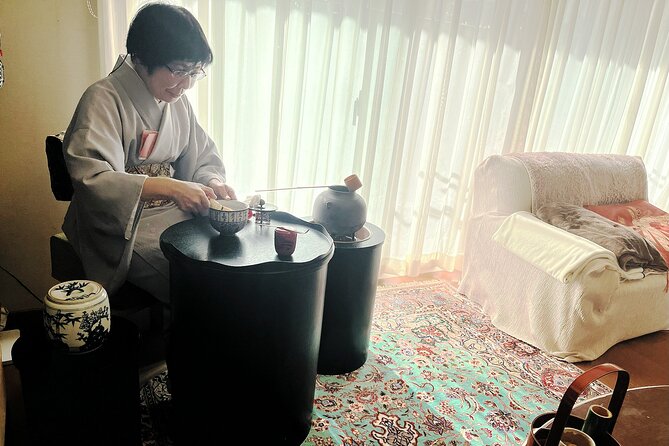
The most practical part of the session comes when you prepare matcha yourself. The tea master introduces the ryurei style, a table-based form of tea ceremony. This provides a more approachable way to practice the method, especially after the earlier tatami-room instruction.
You will learn how to make the tea, then drink the matcha you prepared with Japanese traditional sweets. That change from watching to doing is what gives the activity its value. You are not simply told what the ceremony means. You get to perform the basic process under guidance.
The instructions are intended to be detailed but accessible. If your group has questions, this private format should make it easier to pause and ask. The experience does not promise professional-level training, and it is not a full course in every tea school or tradition. Think of it as a focused first lesson and cultural introduction.
The activity is also suitable if you simply enjoy tea and sweets but do not want a highly formal cultural program. You can appreciate the taste and calm setting while learning the meaning behind the gestures.
The Ibaraki-shi location and walking route
The meeting point is Repark Ibaraki Oike, at 1-chome-14-46 Oike in Ibaraki, Osaka Prefecture. The nearest station is Ibaraki-shi Station on the Hankyu Kyoto Line. From the station, plan on a 10 to 15 minute walk.
This location sits between Osaka and Kyoto, which can work well in a day that includes either city. It is not a central Osaka attraction, so you should allow time for the train ride and the walk. The location is near public transportation, but the activity is not a quick walk-in experience from the main Osaka sightseeing districts.
The meeting procedure is straightforward but requires attention. After booking, you receive the detailed address and phone number as confirmation. When you reach the place, call the provided number, and the staff will come to meet you.
Arrive on time. If you get lost or expect to be late, call the number rather than trying to find the room on your own. The stated meeting point is a parking location, so the phone call is especially important for connecting with the provider.
Is $67.11 a fair price?
At $67.11 per person, this is not the cheapest way to drink matcha in Japan. You are paying for instruction, a private group format, the tea master’s time, the tools, the sweets, and the chance to prepare the tea yourself.
The value improves if you want more than a tasting. A café can give you matcha and a sweet for less, but it will not normally explain how to enter a tatami room, demonstrate the tea ceremony, and guide you through making your own bowl.
The private format matters most for couples, families, and small groups. If you are traveling alone, the price may feel higher for a 60 to 90 minute activity, depending on the final group arrangement. For a group of friends, the cost buys a more personal cultural lesson than a large public demonstration.
Group discounts are available, which may make the experience more attractive when several people book together. Travel costs are not included, so add your train fare and any local transportation to the total.
Who should book this experience?
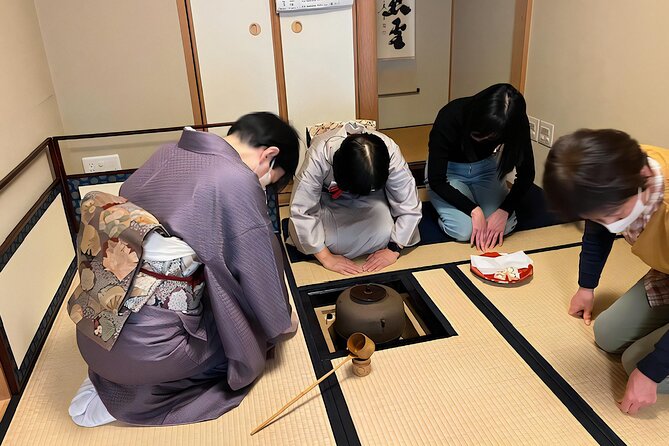
I would recommend this for first-time visitors who want a manageable introduction to Japanese culture. The instructions are designed for beginners, and you do not need to study tea ceremony before arriving.
It also suits people who prefer quiet, small-group activities over large guided tours. The maximum of four participants keeps the format personal, and the teacher and assistant can focus on helping your group through the steps.
Families should consider the format carefully. Children who enjoy hands-on activities may like preparing matcha, but the ceremony requires attention and respectful behavior. The supplied information does not give a minimum age, so ask the provider if you are booking with young children.
Tea enthusiasts will appreciate the chance to make matcha themselves. Still, this is a cultural experience rather than a detailed lesson on tea varieties, farming, or brewing science. Book it for the ceremony and customs, not for an advanced tea-tasting course.
The location also makes sense for visitors dividing time between Osaka and Kyoto. If your schedule is packed with central Osaka sights, the extra train ride and walk may not be worth it. If you have room for a slower cultural stop, the setting between the two cities can fit neatly into your plans.
Practical details before you reserve
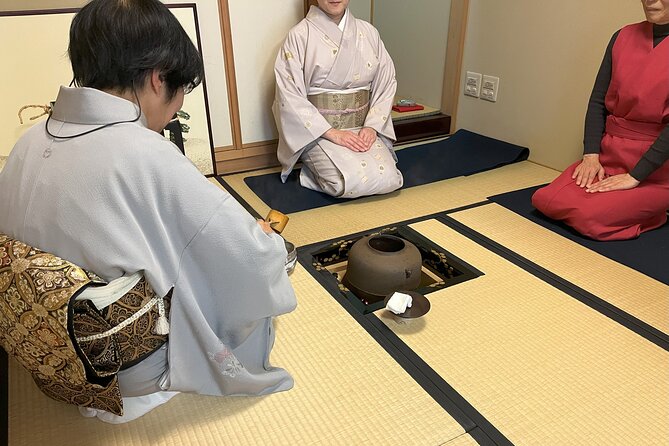
Confirmation is sent within 48 hours of booking, subject to availability. Since the exact address is provided after reservation, keep an eye on your booking messages and save the phone number before leaving for the meeting point.
The activity ends back at the meeting point. You arrange your own travel to and from Ibaraki, and the activity does not include transportation expenses.
Mobile tickets are available, and the experience can be canceled for a full refund if you cancel at least 24 hours before the local start time. Cancellations or changes made within 24 hours are not accepted for a refund.
I would allow extra time for the walk from Ibaraki-shi Station. A 10 to 15 minute walk is not difficult for most people, but arriving early gives you a buffer if you miss a turn or need to make the phone call at the meeting point.
Should you book the Osaka tea ceremony?
Book this experience if you want to do more than taste matcha. The small private group, careful explanations, tatami-room introduction, traditional sweets, and hands-on preparation make it a useful first look at Japanese tea ceremony.
Skip it if you need an activity in central Osaka, want an advanced tea-school lesson, or have no time for the trip to Ibaraki-shi. For everyone else, $67.11 is a reasonable price for a personal 60 to 90 minute cultural session, especially when group discounts apply and all tea, sweets, tools, and materials are included.
FAQ
How long does the tea ceremony experience last?
The session takes approximately 60 to 90 minutes, or about one and a half hours.
Where does the activity meet?
The meeting point is Repark Ibaraki Oike, 1-chome-14-46 Oike, Ibaraki, Osaka 567-0826, Japan. The activity ends at the same meeting point.
How do I reach the meeting point by train?
The nearest station is Ibaraki-shi Station on the Hankyu Kyoto Line. The walk from the station takes about 10 to 15 minutes.
Is this a private activity?
Yes. Only your group participates, and the group size is limited to four people.
What is included in the price?
The price includes the tools and materials needed for the activity, Japanese sweets, and matcha green tea. Travel expenses are not included.
Can I cancel for a full refund?
Yes. You can receive a full refund if you cancel at least 24 hours before the experience start time. Cancellations or changes made less than 24 hours before the start time are not accepted for a refund.
Fresh tea listings around Osaka
- Osaka:Zen Tea Ceremony and Foot Bath Experience<45min>★ 5.0 · 7 reviews
- Osaka: Tea Ceremony, Calligraphy, and Kimono Experience★ 5.0 · 6 reviews
- Nara Deer Park, Uji Matcha, & Hot Spring Full-Day Tour from Osaka★ 4.0 · 21 reviews
- Osaka: Nara, Todaiji, Uji Matcha, and Hot Spring Tour★ 4.0 · 7 reviews
- Discover Japanese Tea Blending Techniques in Osaka★ 5.0 · 19 reviews
- Osaka Japanese Cooking And Matcha Class near Osaka Castle★ 5.0 · 22 reviews
- Craft Sushi and Matcha Ice Cream in Central Osaka (3-Course Meal)★ 5.0 · 2 reviews
- ZEN therapy | Shiatsu-style massage, EnergyTherapy & Japanese Tea★ 5.0 · 5 reviews
Tea Ceremony Experiences, compared.
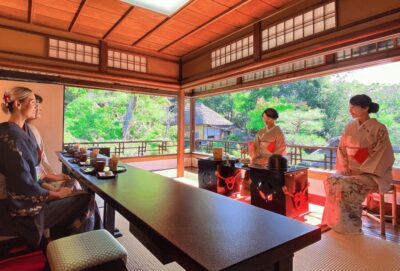
Kyoto: Tea Ceremony in a Traditional Tea House in Kiyomizu
Read our review →
Kyoto: 45-Minute Tea Ceremony Lesson Experience
Read our review →
Kyoto: Table-Style Tea Ceremony at a Kyo-Machiya
Read our review →
Browse the lists this tour appears in