
Review · TEA CEREMONY EXPERIENCES
Cultural Cooking Class Featuring Ramen Sushi and Tea Ceremony
The most unusual part of this Osaka food class is its setting: you enter Katsuji’s own home for a Japanese tea ceremony, then move into the kitchen to prepare sushi and ramen. That gives you more than a meal. You get a look at how food, hospitality, and daily life fit together in a real Japanese home.
I like the mix of tea ceremony and cooking, since the quiet ritual gives the three-hour class a good change of pace. I also like the personal souvenir, custom calligraphy drawn by Katsuji himself. The main thing to note is that the ramen uses ready-made noodles, so you’ll prepare the dish from scratch but not make the noodles themselves.
Key points to know before booking
- Tea ceremony at Katsuji’s home: Learn the basic movements and meaning of a Japanese tea ceremony while drinking hand-whisked matcha.
- Two Japanese dishes in one class: Prepare sushi and ramen, with ingredients and apron rental included.
- A small group setting: The class accepts no more than 10 people, which should allow room for instruction and questions.
- A personal souvenir: Take home calligraphy hand-drawn by Katsuji.
- Dietary requests are possible: Halal, vegetarian, and pescetarian options can be accommodated if you give advance notice.
- Plan around the meeting point: You arrange your own transport to Inazucho in Toyonaka, Osaka, and the class returns there at the end.
A home-style food lesson in Osaka’s culinary capital
Osaka is famous for eating, but this experience asks you to do more than sit at a restaurant counter. You’ll visit Katsuji’s home in Inazucho, Toyonaka, and spend about three hours learning food skills and customs from someone with more than 30 years in the food industry.
That home setting matters. A restaurant can show you a finished dish, but a home class lets you see how hospitality feels in a personal space. You’ll have time to ask questions, watch each step, and understand the care behind the food rather than simply taking photographs and moving on.
The class requires at least two bookings. If you’re traveling alone, you must purchase two slots, so this is not the best-value choice for a solo visitor unless you are comfortable paying for two places. The maximum group size is 10, which keeps the experience smaller than a large demonstration class.
The class is offered through byFood and costs $73.98 per person. For three hours, that price covers the tea ceremony, sushi and ramen instruction, ingredients, an apron, a drink, and calligraphy art. You are also paying for access to a local home and a professional instructor, not just for the food you eat.
More Tea Ceremonies in Osaka
- Osaka: Tea Ceremony Experience
★ 4.9 · 1,426 reviews - Tea Ceremony Experience in Osaka Doutonbori
★ 5.0 · 754 reviews - Osaka: Tea Ceremony, Calligraphy, and Kimono Experience
★ 4.9 · 130 reviews
Starting with a Japanese tea ceremony
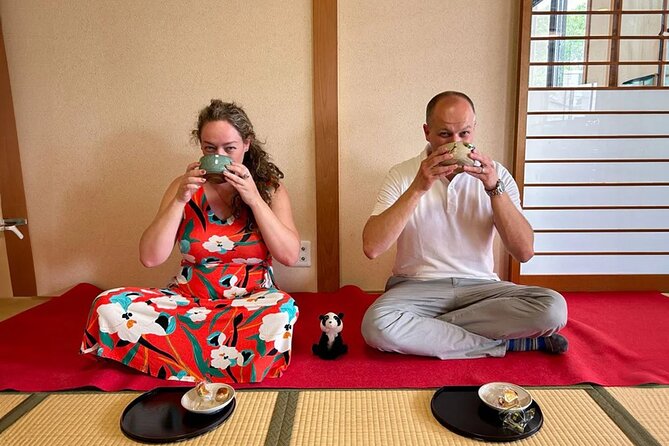
The first part takes place in an authentic tearoom in Katsuji’s home. You’ll sit in an ancient Japanese style and learn the basic flow of the ceremony before drinking matcha that has been whisked by hand.
You should think of this as an introduction rather than a formal study session. The available information does not promise an advanced lesson in tea practice, nor does it give a precise list of every movement you’ll learn. What it does provide is a chance to see the ceremony up close, in the setting of a person’s home, with professional guidance.
The slower pace is useful. Cooking classes can become busy and noisy once knives, ingredients, and hot pans appear. Beginning with tea gives you time to settle in and pay attention to small gestures, manners, and the calm rhythm of Japanese hospitality.
Matcha can be unfamiliar if you usually drink sweetened tea. It has a distinct, earthy taste, and the ceremony places as much weight on preparation and presentation as on the drink itself. If you want a quick food stop, this opening may feel slow. If you want cultural context along with your meal, it gives the class more substance.
Making sushi from basic ingredients
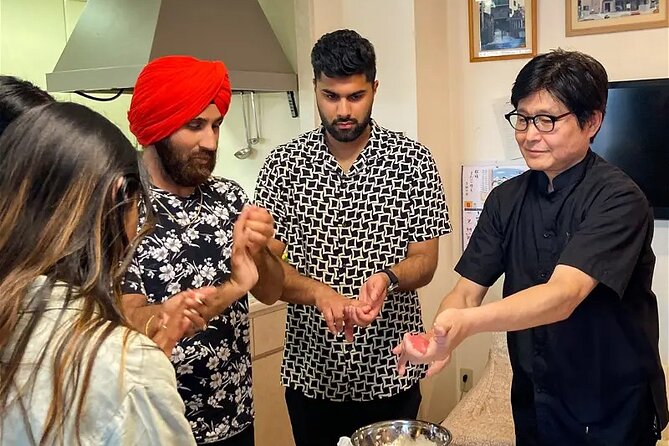
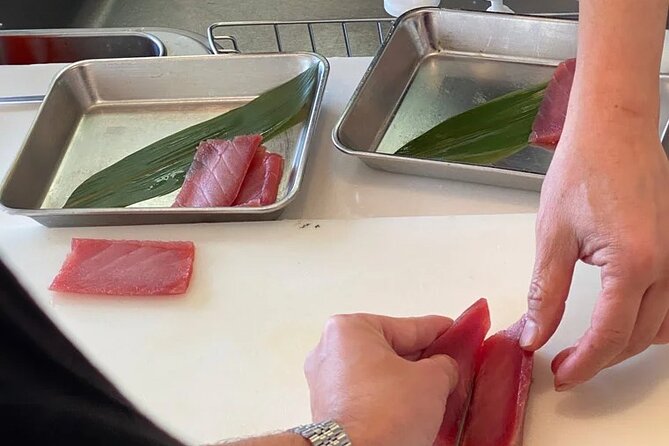
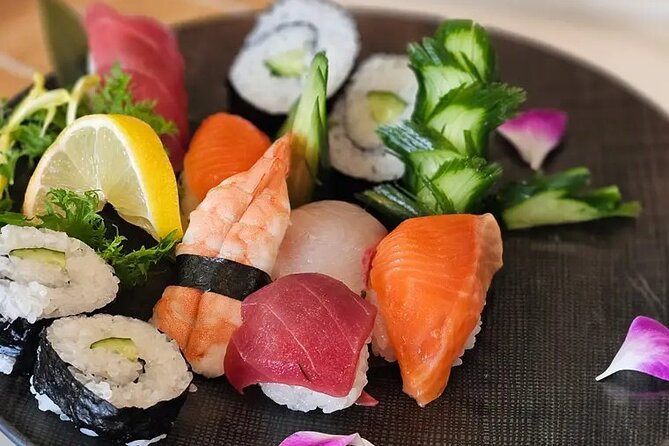
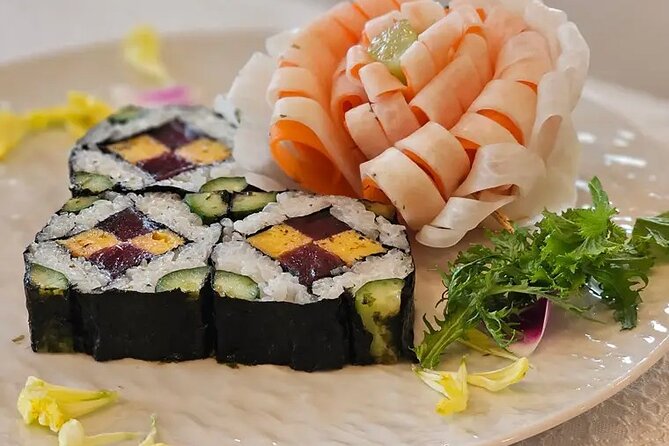
After the ceremony, you’ll head to the kitchen to prepare sushi. The class provides the ingredients, and you’ll make the dish under Katsuji’s direction rather than simply watching him assemble it.
The most useful part for a first-time sushi maker is the chance to handle the food yourself. You can see how the ingredients are put together, how portions are managed, and how the final dish takes shape. The experience is especially approachable if you have never made sushi before. You do not need to arrive with cooking experience to take part.
One available account of the class describes a first attempt at making and eating sushi that went very well. That detail is worth noting for families, couples, and friends who may worry that the cooking will be too technical. Katsuji is described as warm and quick to joke, so the tone is likely to be relaxed rather than strict.
Still, keep your expectations sensible. This is a home cooking lesson, not a professional sushi apprenticeship. You’ll leave with a better feel for the dish and a meal you helped prepare, but the class length does not suggest an in-depth study of knife skills, fish selection, or restaurant-level presentation.
You’ll eat the sushi during the class. That makes the meal part of the lesson, not an extra restaurant course afterward.
Preparing ramen without making the noodles
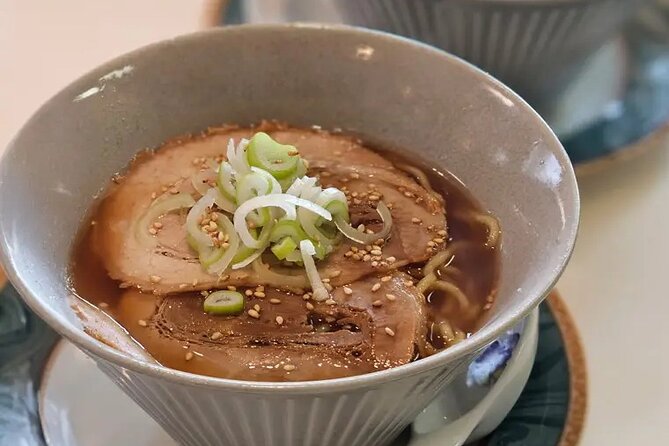
The second dish is ramen. You’ll prepare the dish from scratch using the supplied ingredients, but the noodles themselves are ready-made. This is the clearest detail to understand before booking.
For most people, that limitation will not reduce the fun. Ramen involves more than noodle production, and you’ll still learn how the dish comes together. But if your main reason for booking is to learn how to make ramen noodles by hand, this class will not meet that goal.
The combination of sushi and ramen gives the cooking section a useful range. Sushi introduces careful assembly and presentation, while ramen offers a warmer, more casual bowl of food. You get two familiar Japanese dishes in one visit instead of spending the entire session on one recipe.
You should expect to eat what you prepare. The class includes a drink, and the food ingredients are included in the price. Since transportation is not included, the cost works best when you value the instruction, cultural portion, and souvenir as much as the meal itself.
Same city, a very different cup:
- Matcha Making Class in Osaka with Authentic Japanese Sweets Set
★ 5.0 · 509 reviews - Osaka: Matcha Making Experience with Japanese Sweets
★ 5.0 · 146 reviews - Osaka: Japanese Traditional Sweets Making and Tea Ceremony
★ 4.7 · 118 reviews - Osaka Temple Cool Foot Bath & Matcha Experience〈45min〉
★ 4.9 · 82 reviews
The personal touch from Katsuji
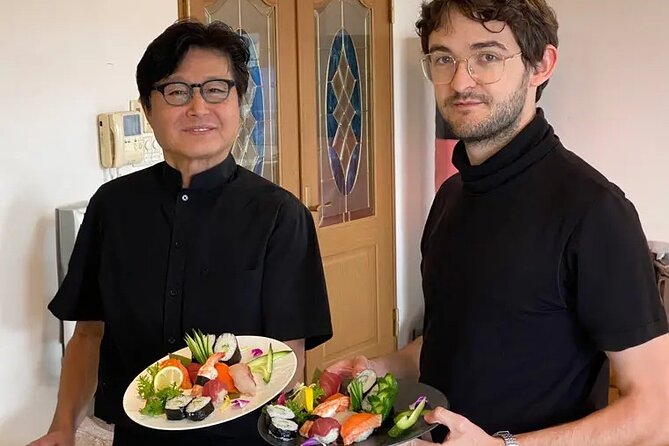
Katsuji is the named instructor, and his background includes more than 30 years in the food industry. That experience gives the class a clear human focus. You are not being passed between several staff members or watching a generic recorded presentation.
The tone also matters. Katsuji is described as someone who jokes throughout the class and creates a friendly atmosphere. That can make a difference when you are handling unfamiliar ingredients or making sushi for the first time. A relaxed instructor helps you ask questions instead of worrying about getting every step perfect.
I would choose this class for people who want contact with a local host and a home setting. It is a better match for curious eaters, couples, families, and small groups than for visitors seeking a formal culinary qualification.
Because the group can include up to 10 people, the experience is not fully private. A group of that size is still reasonably contained, but you should not expect unlimited one-on-one time. If personal attention is important to you, arrive ready to listen and take your turn during the kitchen work.
Taking home calligraphy instead of a standard souvenir
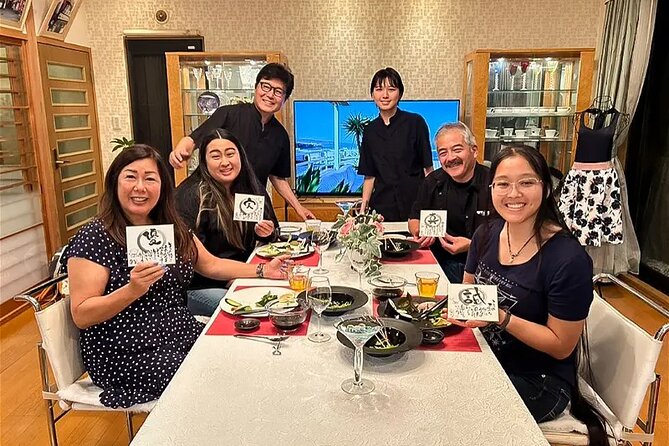
At the end, you receive custom hand-drawn calligraphy made by Katsuji. This is more personal than a packaged kitchen item or a printed certificate. It gives you a small connection to the host and the afternoon you spent in his home.
The exact wording or design is not specified, so you should not book the class expecting a particular character or phrase. The value is in the handmade nature of the piece. It is also easy to pack and gives you something meaningful to take home without adding much weight to your luggage.
This detail helps justify the price for people who care about cultural exchange. The class is not only about learning recipes. You also take part in tea customs and receive a piece of calligraphy created during the experience.
Dietary needs and what to tell the host
The class can accommodate halal, vegetarian, and pescetarian diets. You must provide your dietary restrictions in advance. Do not wait until you arrive, since the ingredients need to be planned before the class.
The information provided does not list every possible substitution or explain how each version of the recipes changes. If your diet is strict, give clear details when booking and confirm that the requested arrangement has been noted.
This option makes the class more useful for mixed groups. One person can follow a halal, vegetarian, or pescetarian diet while others enjoy the standard preparation, as long as the host has enough notice.
Getting to Inazucho in Toyonaka
The meeting point is in Inazucho, Toyonaka, Osaka 561-0854. The location is near public transportation, but transport to and from the class is not included.
You should allow extra time to find the correct place and arrive on time. This is a home-based activity rather than a major attraction with a large entrance sign, so a rushed arrival could make the beginning harder to enjoy. Your own transport arrangements also mean that the $73.98 price does not cover local fares.
The class ends back at the meeting point. That makes it easier to plan the rest of your day, since you will not be dropped at a different neighborhood or restaurant.
Confirmation arrives within 48 hours of booking, subject to availability. The experience is booked, on average, 12 days ahead, so I would not leave it until the last moment if your Osaka dates are fixed.
Is three hours a good use of your Osaka food budget?
At $73.98 per person, this is more expensive than simply ordering sushi or ramen. That comparison misses much of what you are buying, though. The fee includes a tea ceremony, a professional instructor, both cooking sessions, ingredients, an apron, a drink, and calligraphy to take home.
The value depends on your priorities. If you want the cheapest possible meal, choose a restaurant. If you want to learn, cook, meet a local host, and take part in a cultural activity, the price is more reasonable.
I especially like that the class combines food with a quiet cultural activity. Many cooking experiences focus only on recipes. Here, the tea ceremony creates a fuller picture of Japanese hospitality, while the food preparation gives you something practical to do.
The minimum booking rule changes the calculation for solo visitors. A single person must buy two slots, making the experience notably more expensive for one guest. Couples and friends get better value because the required two-person booking is already met.
Who should book this Osaka class?
I would recommend it to you if you fit one or more of these descriptions:
- You want a home-based experience instead of a standard restaurant meal.
- You are new to sushi making and prefer a friendly, guided introduction.
- You want to combine a tea ceremony with hands-on cooking.
- You enjoy small cultural souvenirs with a personal story.
- You need halal, vegetarian, or pescetarian arrangements and can give advance notice.
- You are traveling as a couple, family, or small group.
I would think twice if you want to make ramen noodles from flour, since the noodles are ready-made. I would also reconsider if your schedule is very tight, if you dislike sitting in a traditional Japanese style, or if you are traveling alone and do not want to pay for two slots.
The strongest reason to book is the blend of personal welcome, food preparation, and tea ceremony. The strongest reason not to book is that the ramen lesson has a clear limit and the meeting point requires your own transport planning.
Should you book it?
Book this class if you want a friendly, personal introduction to Japanese food and customs, especially if you are traveling with at least one other person. Katsuji’s home, hand-whisked matcha, sushi preparation, ramen cooking, and custom calligraphy make this more memorable than a meal alone.
Skip it if your goal is advanced cooking training or handmade ramen noodles. For most visitors who want to spend a half-day learning, eating, and meeting a local host, the $73.98 cost is fair, provided you plan the journey to Toyonaka and share any dietary needs ahead of time.
Free cancellation is available when you cancel at least 24 hours before the start time. Changes or cancellations made less than 24 hours ahead are not refunded or accepted.
FAQ
How long does the cooking class last?
The experience lasts approximately three hours.
Where does the activity start?
It starts in Inazucho, Toyonaka, Osaka 561-0854, Japan.
Where does the activity finish?
The class ends back at the meeting point.
What food will I prepare?
You will prepare sushi and ramen. The ramen noodles are ready-made and are not made from scratch.
Is a tea ceremony included?
Yes. You will take part in a Japanese tea ceremony in Katsuji’s home and drink hand-whisked matcha.
Are ingredients and an apron included?
Yes. The cooking ingredients and apron rental are included.
Can I request a special diet?
Yes. Halal, vegetarian, and pescetarian diets can be accommodated if you provide the information in advance.
How many people can join the class?
The activity accepts a maximum of 10 people.
Can a solo person book the class?
The experience requires a minimum booking of two people. Solo visitors must purchase two slots.
More Cooking Classes in Osaka
- Osaka Japanese Cooking And Matcha Class near Osaka Castle
★ 5.0 · 22 reviews - Osaka: Japanese Cooking Class with Matcha Experience
★ 5.0 · 4 reviews - Osaka : Exclusive Tea Ceremony & Wagashi Cooking
★ 5.0 · 2 reviews - Xiao Long Bao, Beef Noodles & Boba Tea Cooking Class in Taipei
★ 5.0 · 159 reviews
Fresh tea listings around Osaka
- Osaka:Zen Tea Ceremony and Foot Bath Experience<45min>★ 5.0 · 7 reviews
- Osaka: Tea Ceremony, Calligraphy, and Kimono Experience★ 5.0 · 6 reviews
- Nara Deer Park, Uji Matcha, & Hot Spring Full-Day Tour from Osaka★ 4.0 · 21 reviews
- Osaka: Nara, Todaiji, Uji Matcha, and Hot Spring Tour★ 4.0 · 7 reviews
- Discover Japanese Tea Blending Techniques in Osaka★ 5.0 · 19 reviews
- Osaka Japanese Cooking And Matcha Class near Osaka Castle★ 5.0 · 22 reviews
- Craft Sushi and Matcha Ice Cream in Central Osaka (3-Course Meal)★ 5.0 · 2 reviews
- ZEN therapy | Shiatsu-style massage, EnergyTherapy & Japanese Tea★ 5.0 · 5 reviews
Tea Ceremony Experiences, compared.
Kyoto: Tea Ceremony in a Traditional Tea House in Kiyomizu
Read our review →
Kyoto: 45-Minute Tea Ceremony Lesson Experience
Read our review →
Kyoto: Table-Style Tea Ceremony at a Kyo-Machiya
Read our review →
Browse the lists this tour appears in