
Review · TEA CEREMONY EXPERIENCES
Full Day Nara Deer, Temple, Shrine, Activities & Tea Ceremony
Nara’s best sights are not hard to find, but this tour adds the details you could easily miss on your own. You’ll see the Great Buddha at Todaiji, follow the lantern-lined approach to Kasuga Taisha, meet Nara’s famous deer, and hear the eerie tale of the demon of Gangoji. I like that the day also includes a former katana maker and a small tea ceremony, not just the usual temple circuit.
I also like the hands-on activities: making a deer from origami, writing your name in Japanese, and possibly wearing a kimono or costume for photos. The main caution is simple: this is a seven-hour walking tour with eight planned stops, so the pace may feel full, and lunch is not included.
Key points at a glance
- Todaiji’s Great Southern Gate and Great Buddha: See two fierce guardian statues before entering one of Nara’s essential temples.
- Kikuichi knife shop: Learn about Japanese cutlery at the original store of a former katana-making company.
- Kasuga Taisha and Nara Park: Walk through one of Nara’s most atmospheric shrine routes while watching the deer.
- Origami and calligraphy: Make a deer figure and write your name in Katakana or Kanji to take home.
- Gangoji’s demon story: Visit one of Japan’s oldest surviving temples and hear its unsettling legend.
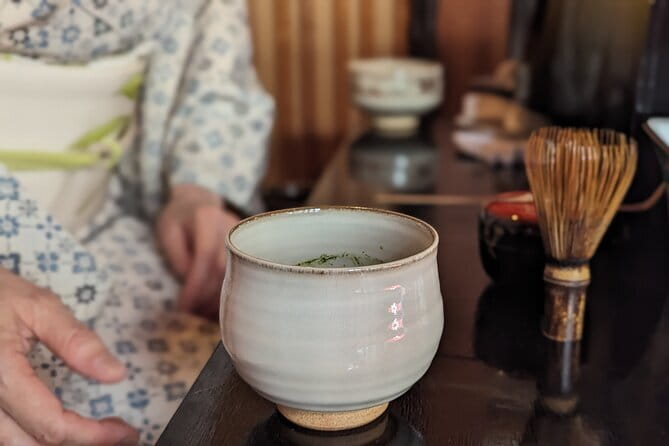
- Certified tea ceremony: Finish with freshly prepared matcha and handmade wagashi in a traditional café away from the busiest tourist spots.
A full day that connects Nara’s famous sights
This experience gives you a broad introduction to Nara without treating the city as a simple deer-feeding stop. Over roughly seven hours, you move between major landmarks, craft traditions, religious sites, and a quiet tea setting.
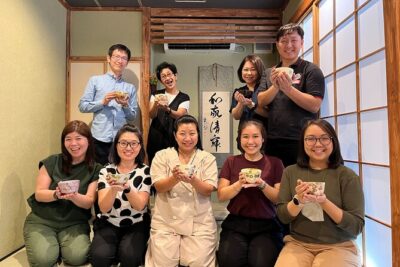
The tour begins at 9:00 a.m. outside the 7-Eleven at 30-1 Higashimuki Kitamachi. It ends back at the same meeting point. A bilingual local guide leads the group, and the maximum group size is 12 people. That is small enough for questions and personal help during the craft activities, though the day still depends on everyone keeping a reasonable pace.
The walking matters. You are not being carried from one entrance to the next in a bus. You’ll cross Nara Park, walk between shrines and temples, and spend time on your feet throughout the day. Wear comfortable shoes and keep your bag light.
More Tea Ceremonies in Japan:
- Kyoto: Tea Ceremony in a Traditional Tea House in Kiyomizu
★ 4.9 · 3,519 reviews - Kyoto: Tea Ceremony Ju-An at Jotokuji Temple
★ 4.9 · 3,207 reviews - Kyoto: 45-Minute Tea Ceremony Lesson Experience
★ 4.3 · 2,378 reviews
Todaiji begins with guardians and scale
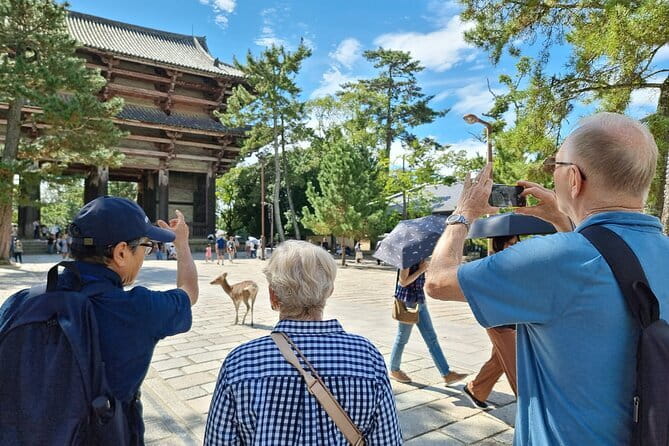
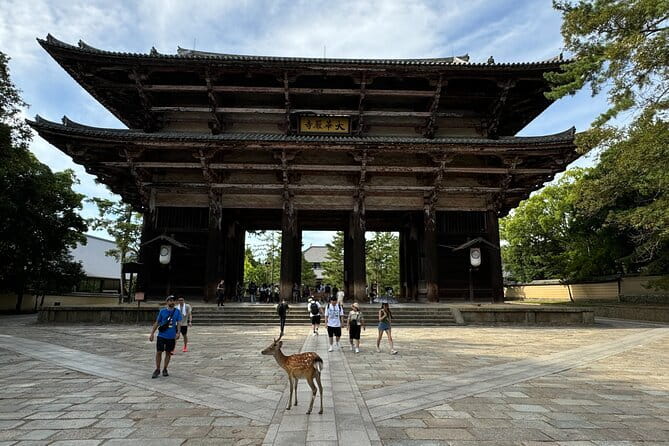
The first stop is Todaiji’s Great Southern Gate, or Namdaimon. Many people rush toward the temple’s main hall, but this gate deserves a pause. Its grand timber structure marks the entrance to the Todaiji grounds, and the two fierce guardian figures give you an immediate sense of the temple’s protective purpose.
Your guide can help you notice the architecture and explain how the gate fits into the wider temple complex. The stop lasts about 35 minutes and costs nothing beyond the tour price.
From there, you have about 50 minutes at Todaiji Temple itself. The main draw is the enormous bronze Buddha, one of the most famous religious images in Japan and the largest bronze Buddha statue in the country. The temple hall is also an impressive sight in its own right.
You receive the entrance ticket as part of the tour, so there is no separate admission decision to make at the gate. The time is structured but includes personal exploration, which is useful if you prefer to look around quietly rather than follow a guide every second.
One practical point: 50 minutes can feel short if you want to study every detail of the hall and grounds. The advantage is that the schedule keeps the day moving and leaves room for several very different experiences later.
Kikuichi brings Japanese knives into the day
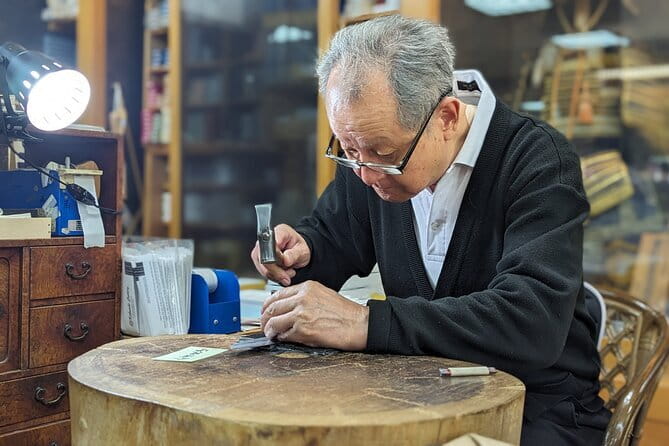
The visit to Kikuichi Monju Shiro Kanenaga Main Store gives the tour a welcome change of subject. Instead of another temple, you visit the original shop of a prestigious Japanese knife maker with roots as a former katana maker.
You receive an introduction to Japanese cutlery and can ask for advice about Japanese knives. This is particularly useful if you are considering a purchase and want more than a quick look at a display case. The stop lasts about 35 minutes and does not include shopping, so any knife or souvenir you buy is your own expense.
I like this part because it connects modern Japanese craft with older sword-making traditions without turning the whole day into a shopping trip. It also gives you something practical to remember Nara by. Still, if you have no interest in kitchen knives, this stop may feel less important than the temples.
The information provided does not specify a shipping service or luggage arrangement for purchases. If you plan to buy a substantial knife, ask the shop and guide about the practical details before paying.
Kasuga Taisha shows Nara’s Shinto side
Kasuga Taisha offers a different religious experience from Todaiji. The shrine is associated with the spirit of Kasuga, described here as a spirit of nature, and the guide gives you a general introduction to Shinto.
The approach is known for its lanterns, making the walk itself part of the visit. You’ll spend about 40 minutes at the shrine, with time to notice the path, the atmosphere, and the relationship between the sacred site and the surrounding park.
This is one of the places where a guide adds real value. Shinto customs can seem quiet or mysterious if you do not know what you are seeing. A clear explanation of the shrine’s purpose and the spirit of Kasuga helps turn a scenic walk into a more meaningful visit.
Kasuga Taisha is also close to the deer park, so the transition from shrine grounds to open parkland feels natural. You should expect a mix of walking and stopping, rather than a long formal lecture.
More Full-Day Trips in Japan:
- Tokyo: Full-Day Tour w/Tea Experience,Buffet Lunch & Cruise
★ 4.9 · 151 reviews - Kanazawa: Samurai, Matcha, Gardens and Geisha Full-Day Tour
★ 4.9 · 75 reviews - Full-Day Tour from Kanazawa: Samurai, Matcha, Gardens and Geisha
★ 5.0 · 68 reviews - Nara Deer Park, Uji Matcha, & Hot Spring Full-Day Tour from Osaka
★ 4.0 · 21 reviews
Deer in Nara Park, with a little caution
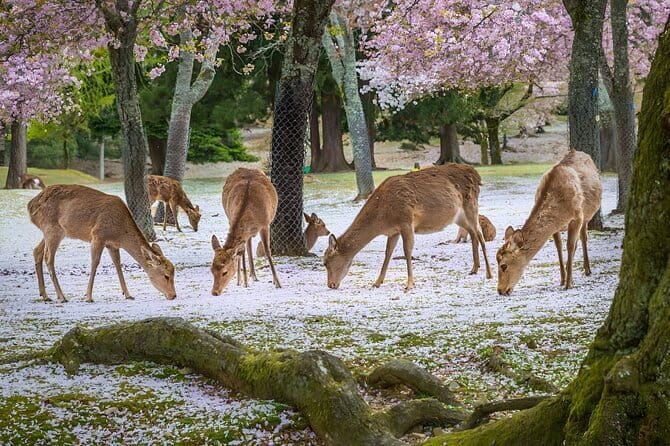
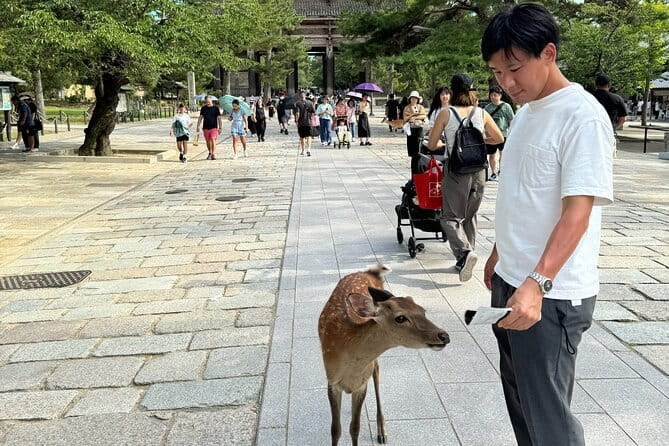
Nara’s deer are central to the experience. You walk through the park with the guide, following a route designed to connect the major sights and the deer areas.
Deer cookies are included for sharing. Feeding them is memorable, but it is not a completely passive photo opportunity. The animals know exactly what the cookies are for, and they may approach quickly once food appears. Follow the guide’s instructions and keep the food controlled.
The park is also a useful break between indoor and religious sites. You can watch the deer, take photographs, and see how closely the park fits into the city rather than existing as an isolated attraction.
The tour material calls the activity a Deer Challenge, which suggests a playful part of the day. It does not provide a detailed set of rules, so the guide will be your best source of advice on how to handle the cookies and interact safely.
Lunch near Higashimuki Shopping Street
After the morning sights, you receive about 45 minutes of free time for lunch around Higashimuki Shopping Street. Food and drinks are not included, so budget separately for this stop.
The location is practical because you can choose what suits you rather than being tied to a fixed restaurant. You might find noodles, rice dishes, snacks, or other Japanese options in the shopping area, but the tour information does not promise a specific restaurant or meal.
Forty-five minutes is enough for a straightforward lunch, though it may feel tight if you want a long, relaxed meal. Pay attention to the meeting time and return to the preset location promptly. The group still has the crafts, Gangoji, and the tea ceremony ahead.
Origami and calligraphy give you something to carry home
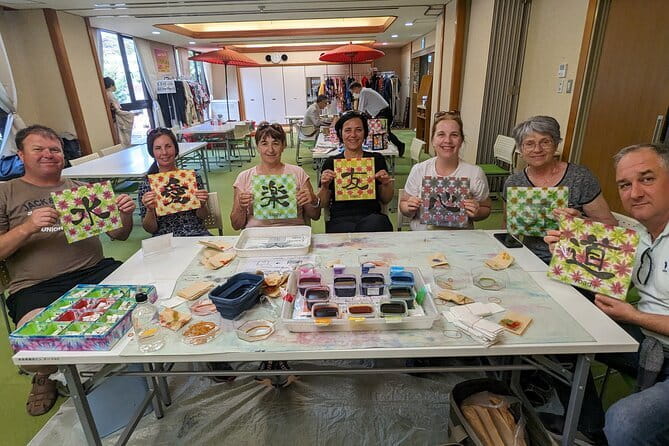
The cultural activities at Nara Visitor Center & Inn last about an hour. You are introduced to origami and calligraphy, make a deer origami figure, and write your name in Katakana or Kanji.
This is one of the most appealing parts for families and anyone who likes learning by doing. You are not only looking at Japanese culture from behind a rope. You create a small keepsake and try writing in a script that is very different from the Roman alphabet.
The activities also offer a change of pace after the morning walking. You can sit down, work with your hands, and ask the guide for help. The small group limit of 12 is helpful here, since personal assistance matters more during calligraphy than it does at a large temple gate.
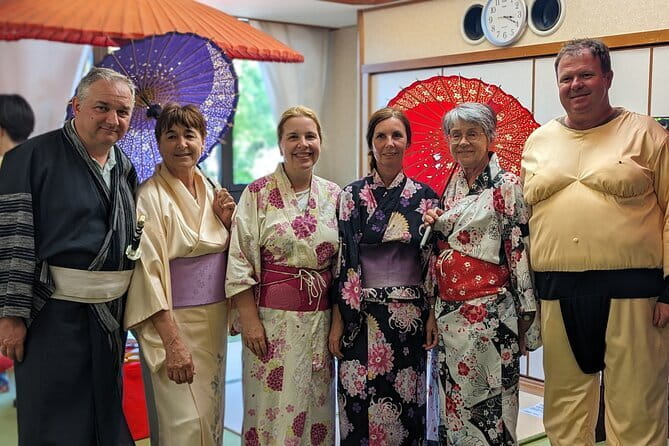
If time allows, you may also wear a kimono or another costume and take photographs. This is not presented as a guaranteed part of every departure, so treat it as an extra possibility rather than the main reason to book.
Gangoji and the demon of the old temple
Gangoji Temple is one of Nara’s seven great temples and one of the five World Heritage Sites in the city. The visit lasts about 45 minutes and includes admission.
The temple is described as technically the oldest temple in Japan still standing. That claim alone makes the stop important, but the guide’s story about the demon of Gangoji gives it a darker character. Rather than hearing only dates and architectural facts, you get a memorable legend tied to the place.
This is the kind of stop that can be easy to skip when planning Nara independently. Many first-time schedules focus on Todaiji and Kasuga Taisha, while Gangoji receives less attention. Including it gives the day more historical range.
The site may appeal most to you if you enjoy folklore, religious stories, and places with a quieter atmosphere. If your main goal is simply to see the Great Buddha and feed deer, the additional temple may make the day feel longer.
A proper tea ceremony closes the afternoon
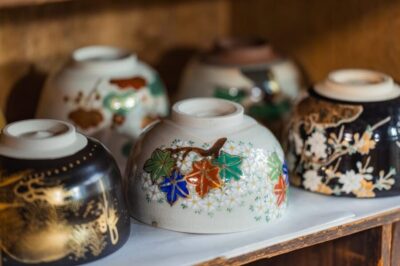
The final stop is Shofukutei, a traditional café where a certified tea master and her husband welcome the group. You receive matcha prepared in front of you and a handmade wagashi, the small Japanese sweet traditionally served with tea.
This is not just a cup of green tea added at the end of a busy day. The value comes from seeing the preparation and learning how the tea fits into Japanese hospitality. The setting is intended to be away from crowded, expensive tourist spots, which makes it a calmer finish than a quick drink at a major attraction.
You should expect a traditional experience rather than a large meal. Matcha can taste pleasantly bitter, and wagashi provides the sweet contrast. The tea fee, matcha, and wagashi are included, but other food and drinks are not.
The one-hour time slot gives the ceremony room to breathe. After a morning of gates, deer, lanterns, and crowds, sitting down with a tea master can make the whole day feel more balanced.
How the guides shape the day
A bilingual local guide leads the tour, and the experience appears to work best when the guide brings energy to both the practical and cultural sides of Nara. Harry is named in one account as a friendly guide who led a small group, while Rémi is named in another as a guide who handled a family day in Nara and shared explanations of calligraphy and local traditions.
One account also describes a guide explaining religion, stories, shrines, and the bamboo garden in perfect German. That does not establish a guaranteed German-language departure, so confirm language needs before booking. The standard information only promises a bilingual guide.
The strongest feature of this format is the mix of explanation and free time. You are guided through the important context, then given space at Todaiji and during lunch to make your own choices.
Is $110.55 a fair price?
At $110.55 per person, this is not the cheapest way to see Nara’s public sights. You can walk through Nara Park and visit some shrine grounds without paying for a tour.
The price makes more sense when you count what is included: a bilingual guide, Todaiji admission, Gangoji admission, deer cookies, the knife-making introduction, the craft activities, and the full tea ceremony with matcha and wagashi. You are also paying for route planning and for connecting several parts of Nara in one day.
The value is strongest if you would otherwise need to research the temples, arrange the right order, find the craft shop, and locate a genuine tea experience yourself. It is weaker if you want a slow temple visit, dislike group schedules, or have no interest in origami, calligraphy, knives, or tea.
The tour is commonly booked well in advance, with an average booking point of about 135 days before the date. That suggests you should not leave it until the last minute if your Nara dates are fixed.
Who should book this Nara experience?
I would recommend it to first-time visitors who want a guided introduction with more variety than the standard deer park and Todaiji route. Families should especially like the deer cookies, origami, calligraphy, and possible costume photoshoot.
It also suits anyone who wants cultural context but does not want a full day of formal lectures. The guide explains Shinto, temple stories, Japanese cutlery, calligraphy, and tea through a series of short experiences.
You may want to skip it if you prefer to move slowly, spend hours at one temple, or avoid walking. The seven-hour schedule is full, and lunch is independent. It is also not the right choice if you want a tour focused only on photography or deer.
The tour starts at 9:00 a.m. and returns to the starting point. Confirmation is provided when you book, a mobile ticket is available, and free cancellation applies when you cancel at least 24 hours before the local start time. Most people can participate, but the walking length is the main physical consideration.
Should you book it?
Book this tour if you want Nara in several flavors: grand temple, quiet shrine, friendly deer, Japanese knives, hands-on crafts, folklore, and a carefully prepared bowl of matcha. The tea ceremony and Gangoji visit give the day more character than a basic sightseeing loop.
Skip it if you want a loose, self-directed day or if the extra stops sound like distractions from Todaiji. For the right person, the price buys more than admission tickets. It buys a well-planned route and access to small cultural moments that are easy to miss on your own.
FAQ
Where does the tour begin?
It begins at 9:00 a.m. at the 7-Eleven at 30-1 Higashimuki Kitamachi, Nara, 630-8214, Japan.
Where does the tour end?
The experience ends back at the meeting point.
How long does the tour last?
The tour lasts approximately seven hours.
Is this a walking tour?
Yes. The experience is described as a walking tour, including a walk through Nara Park between the main sights.
What is included in the price?
The price includes a bilingual local guide, deer cookies to share, admission to Todaiji and Gangoji, an introduction to Japanese cutlery history, cultural activities, and the tea ceremony with matcha and wagashi.
Is lunch included?
No. Lunch, food, and drinks outside the included tea ceremony are not included.
Is the tea ceremony included?
Yes. The tea ceremony fee, matcha, and traditional handmade wagashi are included.
How many people can join the tour?
The maximum group size is 12 people.
Can I cancel for a full refund?
You can cancel for a full refund up to 24 hours before the experience starts. Changes or cancellations made less than 24 hours in advance are not accepted for a refund.
Fresh tea listings around Japan
- Yokohama : Tea Ceremony with Sweets and Souvenir★ 5.0 · 5 reviews
- Walking Tour: Yanaka,Nezu& Sendagi: Tea Ceremony & Old Tokyo★ 5.0 · 3 reviews
- Visit local home for music and tea ceremony near Disney★ 4.9 · 13 reviews
- Yokohama: Sushi & Gyoza Cooking with Matcha & GreenTea Experience★ 5.0 · 3 reviews
- Trip to Kamakura & Enoshima: Shrines, Seaside, Temples &Tea★ 5.0 · 11 reviews
- Uji: Private immersion into Kyoto’s tea and reglious culture★ 5.0 · 17 reviews
- Uji Tea Ceremony and UNESCO Heritage Walking Tour★ 5.0 · 20 reviews
- Kyoto tea town for matcha lovers★ 5.0 · 16 reviews
Tea Ceremony Experiences, compared.
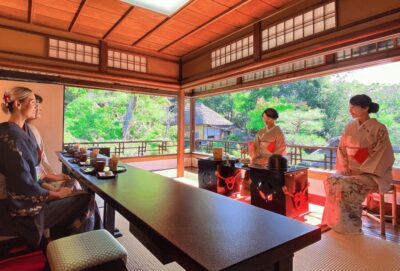
Kyoto: Tea Ceremony in a Traditional Tea House in Kiyomizu
Read our review →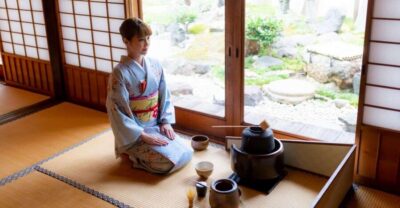
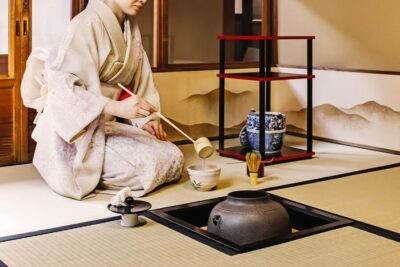
Kyoto: 45-Minute Tea Ceremony Lesson Experience
Read our review →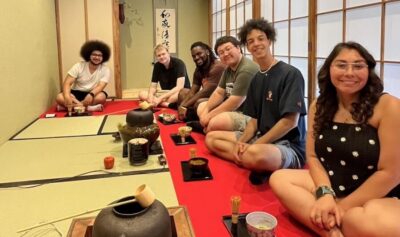
Kyoto: Table-Style Tea Ceremony at a Kyo-Machiya
Read our review →
Browse the lists this tour appears in