
Review · TEA CEREMONY EXPERIENCES
Best of Nagasaki with Japanese Tea Ceremony 4 hours Car Tour
Nagasaki packs a great deal into a small area, but its hills and scattered sights can make a half-day visit tiring. This four-hour private car tour links the city’s most important memorial sites with Glover Garden and a traditional tea ceremony, giving you a broad look at Nagasaki without spending the day on foot.
I like the way the tour joins two very different parts of the city: the serious work of remembering the 1945 atomic bombing, followed by the quiet ritual of matcha. I also like that transportation, entrance fees, and the tea ceremony are included, so you do not have to keep reaching for your wallet. The main drawback is the brisk schedule. Some stops receive only 20 or 30 minutes, and the tea ceremony may leave little time for a long, unhurried visit.
Key points to know before booking
- Peace Park and the atomic bomb museum give you the essential context for Nagasaki’s wartime past.
- The tea ceremony in Shindaikumachi adds a calm, hands-on cultural moment to a serious sightseeing day.
- Glover Garden and Oura Church show Nagasaki’s long connection with foreign trade and Christianity.
- A private car or taxi saves energy on Nagasaki’s hills and helps fit several distant sights into four hours.
- Guides including Akihiro, Moeurn, Hiro, and Vichka have been praised for clear English and attentive service.
- The $221.12 price makes the most sense for a private group, cruise passenger, or anyone with limited time and stamina.
Why this four-hour route works in Nagasaki
Nagasaki is not a city you understand from one viewpoint. The Peace Park and atomic bomb museum tell one essential story. Glover Garden and Oura Church show another, centered on foreign merchants, Christianity, and the city’s international role. The tea ceremony gives you a third angle, rooted in Japanese hospitality and careful ritual.
That mix is the real strength of the outing. You are not spending four hours looking at similar monuments. Instead, the tour moves from remembrance to culture, then to hillside views and historic buildings.
The car matters, too. Nagasaki has steep streets and several sights spread across different parts of the city. If you are arriving by cruise ship, or if long walks are difficult, a private vehicle lets you save your legs for the places that deserve a closer look. Depending on vehicle availability, the ride may be in a private car or a taxi, so do not assume the exact vehicle type in advance.
The tour is private, meaning only your own group participates. That gives you a more personal setting than a large coach excursion, though the short schedule still limits how much the guide can adjust the route.
More Tea Ceremonies in Japan:
- Kyoto: Tea Ceremony in a Traditional Tea House in Kiyomizu
★ 4.9 · 3,519 reviews - Kyoto: Tea Ceremony Ju-An at Jotokuji Temple
★ 4.9 · 3,207 reviews - Kyoto: 45-Minute Tea Ceremony Lesson Experience
★ 4.3 · 2,378 reviews
Peace Park gives the morning its serious purpose
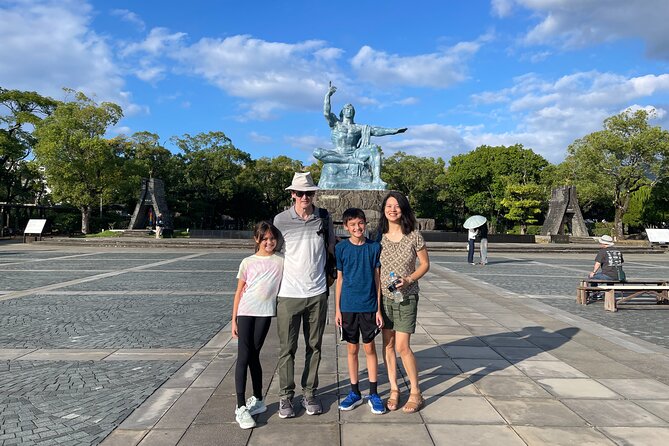
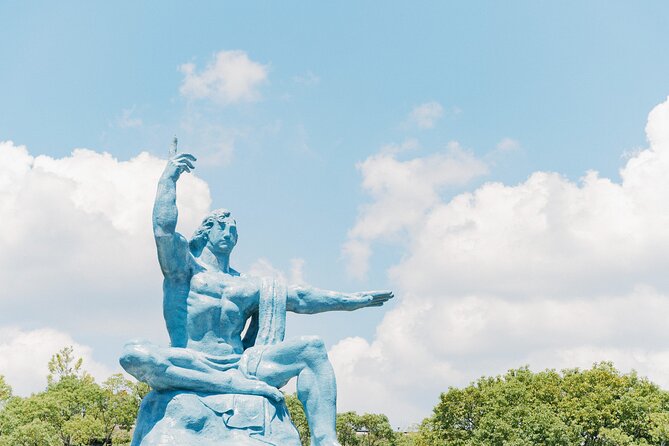
The first stop is Nagasaki Peace Park, with about 20 minutes set aside. The park contains memorials and sculptures dedicated to the people killed by the atomic bombing, including the familiar Peace Statue.
This is not a stop to rush through with a camera. The value lies in taking a few quiet minutes to look at the memorials and understand the city’s message of peace. Your guide can help place the park within the larger story of Nagasaki and the events of August 9, 1945.
Twenty minutes is enough for a focused visit, especially if you want to see the main memorial area. It is not enough for a slow walk through every corner or for extended reflection. If this subject is especially important to you, you may wish to tell the guide early that you would value a little more time here, though the rest of the route may need to be shortened.
The stop works well at the beginning because it sets a thoughtful tone. You are not simply ticking off a famous site. You are beginning with the human cost of the city’s past.
Hypocenter Park marks the exact point of impact
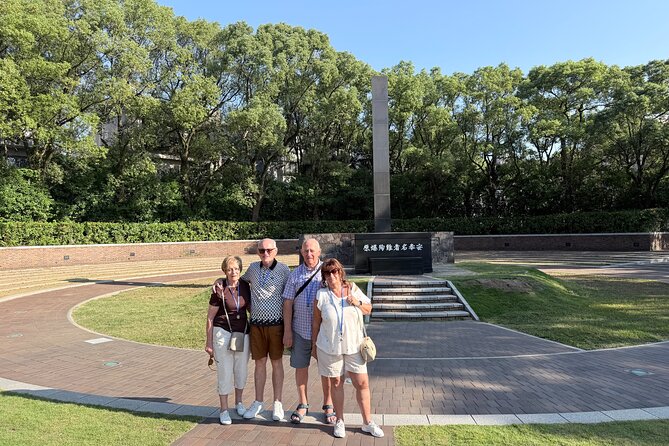
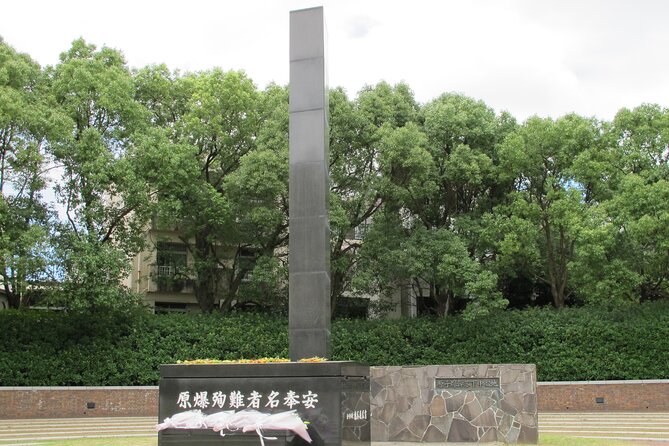
A short visit to Hypocenter Park follows. Here you see the location directly beneath the point where the atomic bomb exploded in 1945, marked by a monument.
The experience is more stark than scenic. The park’s importance comes from its exact location and the simple fact that you are standing at the center of the event. Your guide can explain what happened and how the bombing affected Nagasaki.
Again, the planned time is about 20 minutes. That is enough to see the monument and walk around the immediate area, but not enough for a long, detailed visit. The stop pairs naturally with Peace Park, yet the two should not feel interchangeable. Peace Park is a memorial space with sculpture and symbolism. Hypocenter Park is a precise historical location.
I appreciate that the tour includes both. One gives you the city’s call for peace, while the other gives you a physical reference point for the event itself.
The atomic bomb museum adds detail and personal stories
The Nagasaki Atomic Bomb Museum receives about 30 minutes, with admission included. Inside, you can see photographs, objects, and personal accounts connected to the bombing and its aftermath.
This is likely to be the most information-heavy part of the tour. The museum gives detail that an outdoor memorial cannot, including the human stories behind the dates and statistics. It also helps connect the Peace Park and Hypocenter Park stops.
Thirty minutes is a useful introduction, but it is short for a museum of this weight. You will need to keep moving and choose what matters most to you. If you want to read every panel or spend time with each artifact, this tour will not provide enough time.
That is not necessarily a flaw. The purpose here is to give you a clear understanding of Nagasaki during a compact city tour. If you want a full museum visit, plan a separate return visit rather than expecting to cover everything during this outing.
Because the subject can be emotionally difficult, the pace may suit you if you want meaningful context without devoting an entire day to the museum. It may feel too brief if the atomic bombing is your main reason for visiting Nagasaki.
More tea experiences around Japan if you are still choosing
- World Heritage Kyoto & Nara Uji Authentic Matcha Experience
★ 5.0 · 1,573 reviews - Osaka: Tea Ceremony Experience
★ 4.9 · 1,426 reviews - Kyoto: Table-Style Tea Ceremony at a Kyo-Machiya
★ 4.9 · 1,211 reviews - Kanazawa: Kenrokuen Tea Ceremony Experience
★ 4.8 · 1,139 reviews
The tea ceremony changes the pace in Shindaikumachi
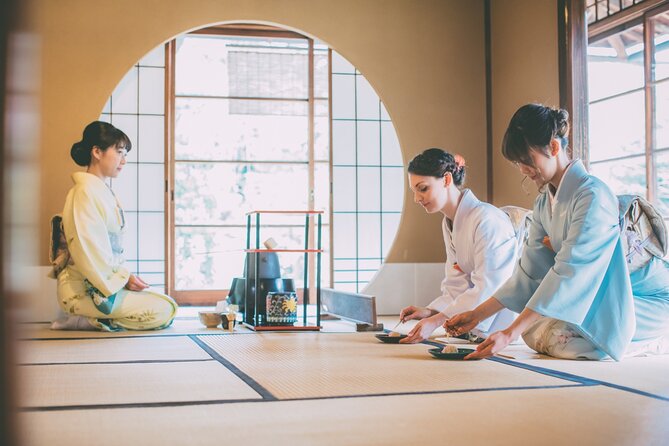
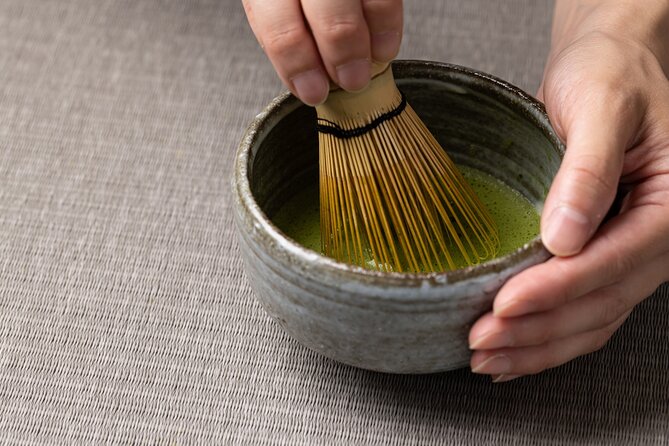
After the memorial sites, the tour turns to a Japanese tea ceremony in Shindaikumachi. The ceremony lasts about 45 minutes and is included in the price.
This is a smart change of pace. You move from public memorials and difficult history into a quiet setting where the focus is hospitality, movement, and attention to detail. You can watch the preparation of matcha, learn about omotenashi, and enjoy the tea as part of the ritual.
The ceremony is not simply a drink stop. It gives you a chance to see a traditional practice explained rather than treated as a decorative photo opportunity. The timing also helps prevent the day from feeling emotionally heavy from beginning to end.
The tour description does not specify every step of the ceremony or whether you prepare the tea yourself, so you should expect a hosted demonstration and tasting rather than assume a hands-on workshop. If you have never attended a tea ceremony, this should be a welcoming introduction. If you have already done several in Japan, its value will depend on the setting and the quality of the explanation.
I especially like this addition because it makes the itinerary feel more connected to everyday Japanese culture. Nagasaki is more than its wartime story, and the ceremony makes that clear.
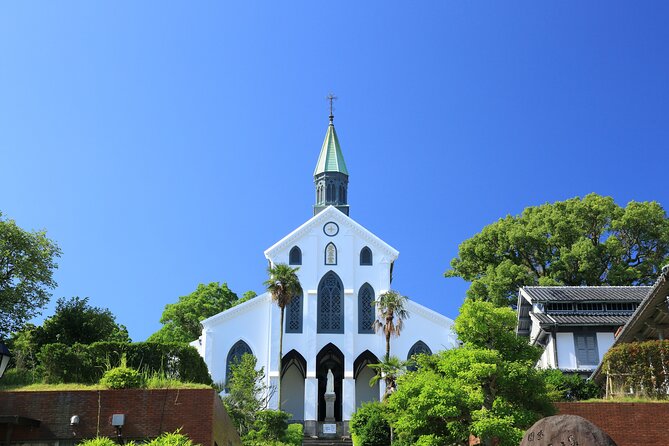
Oura Church reveals Nagasaki’s Christian past
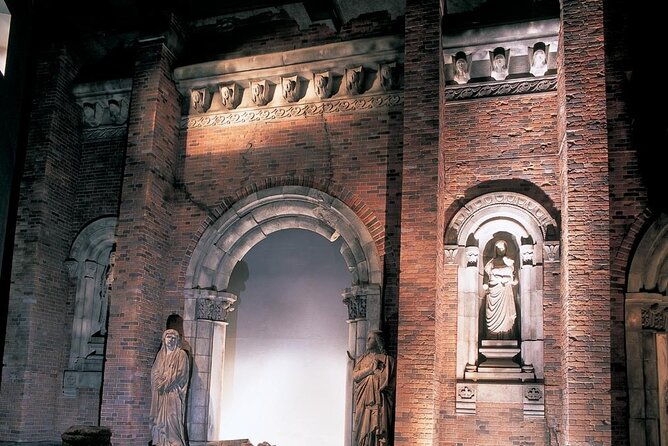
The route also includes Oura Church, described as Japan’s oldest Christian church and a UNESCO World Heritage Site. The visit provides a look at Nagasaki’s connection with Christianity and the foreign communities that shaped the city.
The available itinerary does not give a set duration for this stop, so the time may depend on traffic, opening conditions, and how the rest of the tour is running. You should treat it as an important sight along the route, but not assume you will have a long interior visit.
Oura Church is a useful bridge between the city’s religious past and Glover Garden’s foreign residences. It shows that Nagasaki’s international connections were not limited to trade. They also affected religion, architecture, and the lives of local communities.
If church interiors are a priority for you, ask your guide how much time is available on the day. The tour includes several major stops, and the schedule is tight.
Glover Garden brings in harbor views and foreign history
The final named stop is Glover Garden, with about 30 minutes and admission included. Set on a hillside above Nagasaki Harbor, the garden contains Western-style residences from the 19th century and offers broad views over the city and water.
This is the lightest and most scenic portion of the tour. You can walk through the grounds, see the old homes, and learn about the foreign merchants who lived and worked in Nagasaki. The setting gives you a different view of the city’s past, one shaped by international commerce and architecture.
The hillside location is part of the appeal, but it also means some walking and uneven ground. The car gets you to the area, yet it cannot remove every slope. If you have limited stamina, wear comfortable shoes and use the short visit to focus on the main residences and viewpoints.
Thirty minutes lets you get a good first look, but Glover Garden can reward a slower visit. You may have to choose between lingering over the harbor view, exploring the houses, and walking through more of the grounds. That is the trade-off for fitting the garden into a four-hour route.
Still, ending here works well. After the solemn opening stops and the quiet tea ceremony, the garden gives you fresh air, historic buildings, and a chance to see Nagasaki from above.
What the guides add to the experience
The strongest personal detail connected with this tour is the praise for the guides’ communication and care. Akihiro and Moeurn have been recognized for explaining Nagasaki in clear English and making the experience memorable. Hiro and Vichka have also been described as helpful, professional, and attentive.
Those qualities matter on a route like this. The Peace Park and museum need more than basic directions. You want someone who can explain the setting without rushing you or turning a difficult subject into a string of facts.
The guide may also shape how smoothly the day runs. With five major sightseeing elements plus transport between them, timing is important. A good guide can help you focus on the best parts of each stop and keep the group moving when necessary.
Because this is a private tour, you can ask questions directly and explain what matters most to you. You might prefer more time at the museum, for example, or want to give the tea ceremony your full attention. The schedule may not allow every change, but a private format gives you a better chance to discuss priorities.
Is $221.12 a fair price?
At $221.12 per person, this is not a budget sightseeing option. The value depends heavily on your group size and your reason for booking.
The price includes private transportation, entrance fees, and the Japanese tea ceremony. It also buys you a route that would take more planning and energy to arrange independently in only four hours. For a cruise passenger with a fixed departure time, that convenience can be worth a great deal.
The value improves for a private group because everyone shares the vehicle and guide. If you are traveling alone, the per-person cost is harder to justify. If you are traveling with family or friends, the included transport and admissions make the price easier to understand.
You should also remember what the price does not include. Meals, souvenirs, and personal expenses are extra. The tour itself is a half-day sightseeing experience, not a full-day program with lunch.
The fact that it is often booked well in advance suggests that you should not wait until the last minute if your Nagasaki date is fixed. Confirmation is provided at booking, and free cancellation is available up to 24 hours before the start time. A cancellation inside that window is not refundable.
Who will get the most from this tour?
I would choose this tour if you have only one short block of time in Nagasaki and want to cover the city’s main themes without handling transport yourself. It is particularly suited to cruise passengers, families, older adults, and anyone who finds long walking tours tiring.
It also suits you if you want more than memorials. The combination of the atomic bomb sites, tea ceremony, church, and garden gives you a fuller view of Nagasaki than a route focused only on one subject.
You may want another option if you prefer slow travel. The museum, Glover Garden, and Oura Church can each justify more time than this schedule allows. Independent sightseeing would give you greater control, but you would lose the convenience of a private vehicle and a guide who connects the stops.
The tour is also a good fit if you value English explanation. The guides named in the feedback, including Akihiro, Moeurn, Hiro, and Vichka, have been praised for clear communication and a warm, professional manner.
Should you book the Best of Nagasaki tour?
Book it if you want a well-packed half-day introduction to Nagasaki and value comfort over a slow pace. The route covers the city’s major memorial sites, adds a genuine cultural activity, and finishes with historic buildings and harbor views.
I would be more cautious if your main goal is an in-depth museum visit or an extended tea ceremony. Four hours requires discipline, and the short stops mean you will see the highlights rather than explore every site fully.
For a cruise day, a private group, or anyone with limited stamina, the convenience is the main selling point. You can see a lot, learn why Nagasaki matters, and avoid spending the day figuring out buses and hills. Just book with realistic expectations: this is a carefully packed overview, not a leisurely examination of each stop.
FAQ
How long does the tour last?
The tour lasts approximately four hours.
What sights are included?
The route includes Nagasaki Peace Park, Hypocenter Park, the Nagasaki Atomic Bomb Museum, a Japanese tea ceremony in Shindaikumachi, Oura Church, and Glover Garden.
Is transportation included?
Yes. Private transportation is included. Depending on vehicle availability, transport may be by private car or taxi.
Is this a private tour?
Yes. Only your own group participates in the activity.
Is the tea ceremony included in the price?
Yes. The Japanese tea ceremony is included.
Are entrance fees included?
Yes. Entrance fees are included, including admission to the Nagasaki Atomic Bomb Museum and Glover Garden.
Are meals included?
No. Meals are not included. Souvenirs and personal expenses are also extra.
Is pickup available?
Yes. Pickup is offered.
Can I cancel for a full refund?
Yes, if you cancel at least 24 hours before the experience start time. Cancellations made less than 24 hours in advance are not refunded, and changes inside that 24-hour window are not accepted.
Fresh tea listings around Japan
- Yokohama : Tea Ceremony with Sweets and Souvenir★ 5.0 · 5 reviews
- Walking Tour: Yanaka,Nezu& Sendagi: Tea Ceremony & Old Tokyo★ 5.0 · 3 reviews
- Visit local home for music and tea ceremony near Disney★ 4.9 · 13 reviews
- Yokohama: Sushi & Gyoza Cooking with Matcha & GreenTea Experience★ 5.0 · 3 reviews
- Trip to Kamakura & Enoshima: Shrines, Seaside, Temples &Tea★ 5.0 · 11 reviews
- Uji: Private immersion into Kyoto’s tea and reglious culture★ 5.0 · 17 reviews
- Uji Tea Ceremony and UNESCO Heritage Walking Tour★ 5.0 · 20 reviews
- Kyoto tea town for matcha lovers★ 5.0 · 16 reviews
Tea Ceremony Experiences, compared.
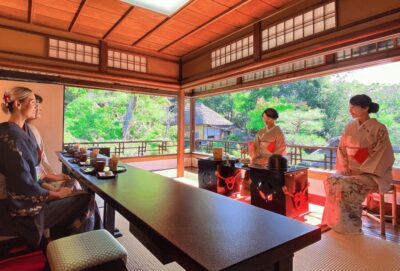
Kyoto: Tea Ceremony in a Traditional Tea House in Kiyomizu
Read our review →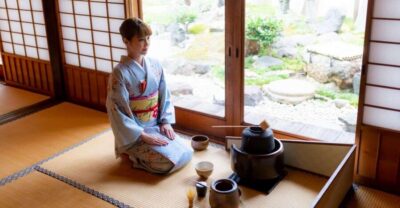
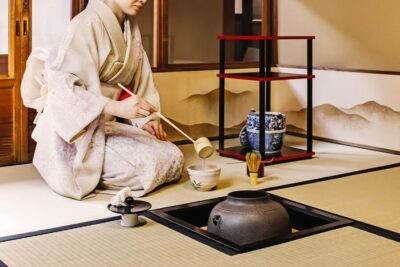
Kyoto: 45-Minute Tea Ceremony Lesson Experience
Read our review →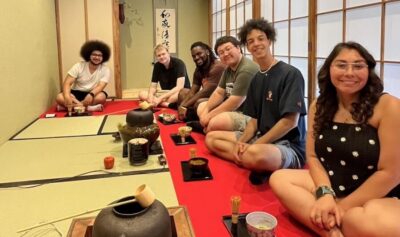
Kyoto: Table-Style Tea Ceremony at a Kyo-Machiya
Read our review →
Browse the lists this tour appears in