
Review · KIMONO & TEA CEREMONY
Elegant Tea Ceremony While Wearing Kimono Experience in Kyoto
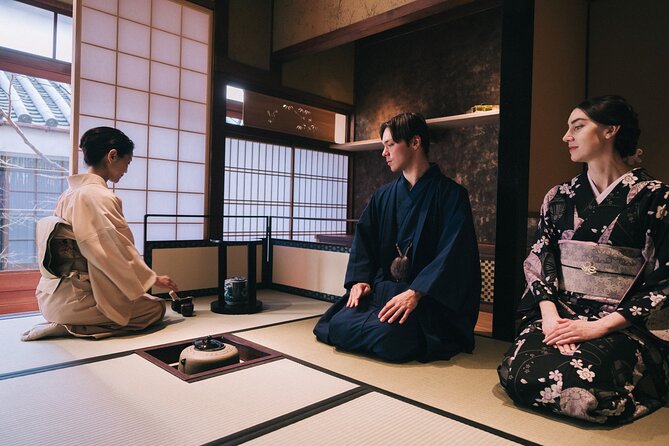
Kyoto’s tea ceremony tradition becomes much more approachable when you first choose a kimono, have your hair arranged, and then learn to whisk your own matcha. At Nishiki Orizuruya, the setting is a traditional tea house just a minute from Nishiki Market, so you can pair a quiet cultural lesson with one of central Kyoto’s busiest food streets.
I especially like the chance to select your own kimono and the care given to dressing, hair, and photographs. I also like that the activity offers more than one finish: calligraphy, gold leaf art, or an English-guided walk through Nishiki. The main consideration is that the tea ceremony is fairly structured, and one participant felt the historical explanation could have gone further.
Key Points
- Kimono and hair styling: Choose from available kimono and accessories, with complimentary hair styling for women.
- Hands-on matcha: Watch the tea master, then prepare your own bowl with a bamboo whisk.
- Traditional sweets: Taste seasonal wagashi supplied by a confectionery with 100 years of history.
- Three ways to continue: Add calligraphy, gold leaf decoration, or a guided Nishiki Market walk.
- Small group setting: The activity accepts a maximum of 10 people, which helps keep the lesson personal.
- Convenient location: Nishiki Orizuruya is about a minute on foot from Nishiki Market and near public transport.
Start With a Kimono Near Nishiki Market
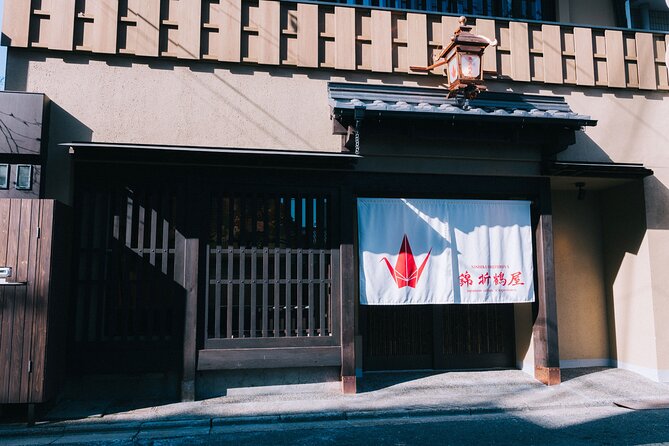
The experience begins at Nishiki Orizuruya, at 452 Jūmonjichō in Kyoto’s Nakagyo Ward. You should arrive at least 10 minutes before your scheduled time, since the dressing process is part of the activity rather than a quick costume change.
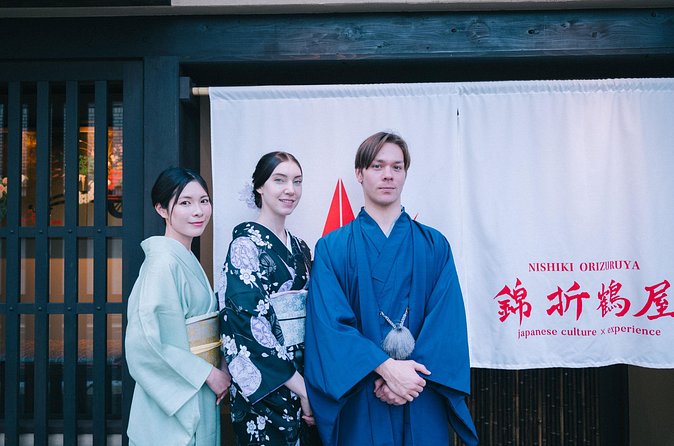
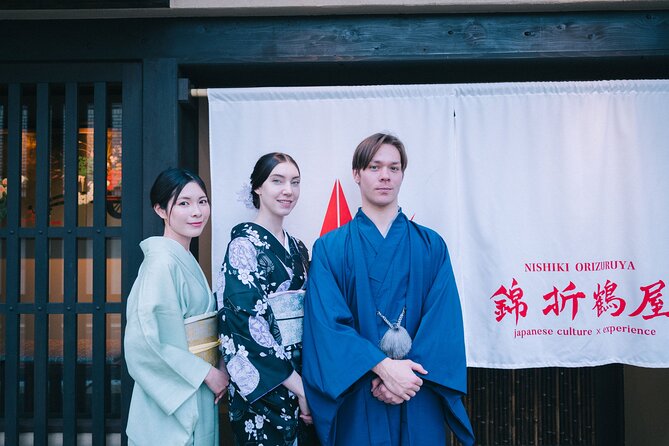
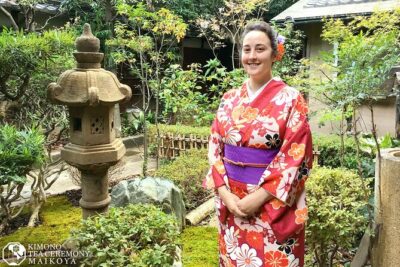
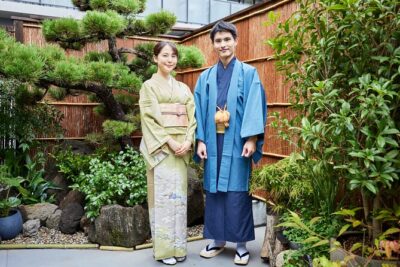
You choose a kimono and accessories from the selection available at the venue. Staff then help you dress properly and arrange your hair if you are a woman. This is one of the strongest parts of the activity because the kimono is not simply handed over for a photograph. The dressing, layers, sash, and hair details create a better sense of how formal Japanese clothing is worn.
The choice is more exciting for women than for men, based on the available comments. Men can take part, but the range may feel less varied. If your group includes several people, allow time for everyone to be dressed and photographed before the tea lesson begins.
The staff are used to working with different body sizes, and a chair has been provided for someone who could not sit comfortably on the floor. That does not guarantee every request can be met, so mention mobility needs when booking or contacting the operator. Traditional tea rooms often involve floor-level seating, but this venue has shown some flexibility.
More Kimono and Tea Ceremonies in Kyoto
- Kimono Tea Ceremony at Kyoto Maikoya, NISHIKI
★ 5.0 · 911 reviews - Kyoto: Kimono Tea Ceremony at Orizuruya Gion
★ 4.9 · 618 reviews - KYOTO Tea Ceremony with kimono near by Imamiya Jinjya Shrine
★ 5.0 · 343 reviews
A Quiet Tea Ceremony With Matcha and Wagashi
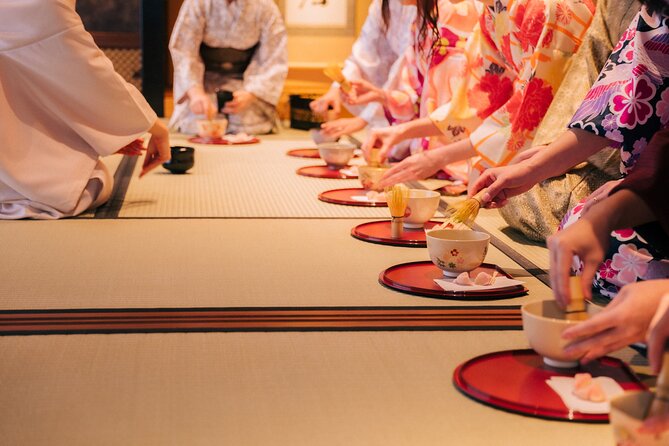
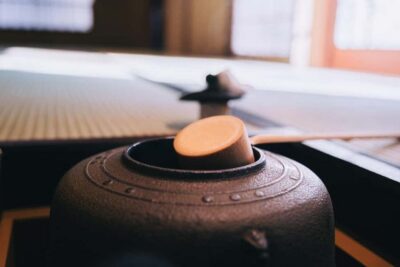
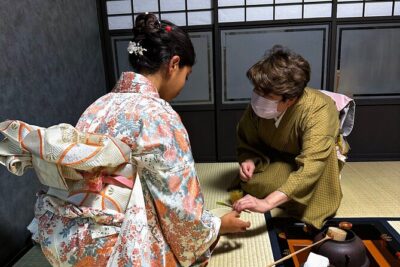
Once dressed, you enter the tea room for the main 90-minute tea ceremony option. An English-speaking tea master explains the basic customs, demonstrates the preparation, and then gives you the chance to make your own matcha with a bamboo whisk.
This hands-on step matters. Watching a tea ceremony can be beautiful, but whisking the tea yourself gives you a better feel for the careful movements and attention behind the ritual. You are not expected to arrive with specialist knowledge. The lesson is designed for first-time participants, families, and anyone who wants a calm introduction to Japanese tea culture.
The matcha is served with seasonal wagashi, or traditional Japanese sweets. These are supplied by a confectionery with a 100-year history, giving the tasting a local connection rather than making it feel like a generic snack break. The sweet and slightly bitter pairing is central to the tea ritual: the wagashi prepares your palate for the matcha.
The tone is formal but welcoming. Ruriko is one of the tea hosts associated with the activity, and she has been praised for explaining the meaning behind the ceremony in clear English. Another guide, Lina, has led the Nishiki Market option. Staff also make time for photographs, which is useful when everyone is dressed and you want a record of the occasion.
You should keep your expectations in check. This is an introduction to tea ceremony, not an advanced study of Japanese tea schools or a long lecture on Kyoto’s cultural past. One participant found that the historical explanation was limited, even though the ceremony itself was enjoyable. If you want a scholarly account of tea history, you may find the presentation light. If you want to learn the basic flow and take part, the format works well.
Pick the Add-On That Fits Your Day
After the tea ceremony, you choose a second activity. The options change the character of the outing, so read the durations carefully before booking.
Calligraphy for a Personal Keepsake
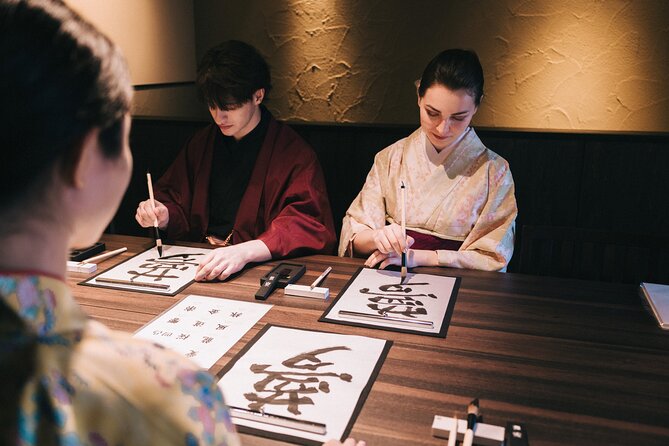
The tea ceremony and calligraphy option combines matcha with a brush-and-ink lesson. You learn to write a favorite kanji on washi paper, creating something you can take home.
This is a good choice if you want a quiet, creative activity that stays inside the cultural theme. The finished piece gives you more than a photograph, although the quality of your writing will depend on your brush control and the guidance provided. You do not need to read or write Japanese to participate, but you should choose a character or word in advance if you already have something meaningful in mind.
The calligraphy option is especially suitable for families. Children aged 5 and above may join, and the activity gives younger participants something active to do after the tea demonstration. There is no child discount, so compare the total cost if you are booking for a large family.
More Tea Ceremonies in Kyoto
- Kyoto: Tea Ceremony in a Traditional Tea House in Kiyomizu
★ 4.9 · 3,519 reviews - Kyoto: Tea Ceremony Ju-An at Jotokuji Temple
★ 4.9 · 3,207 reviews - Kyoto: 45-Minute Tea Ceremony Lesson Experience
★ 4.3 · 2,378 reviews - Kyoto: Table-Style Tea Ceremony at a Kyo-Machiya
★ 4.9 · 1,211 reviews
Gold Leaf Art for a Handmade Souvenir
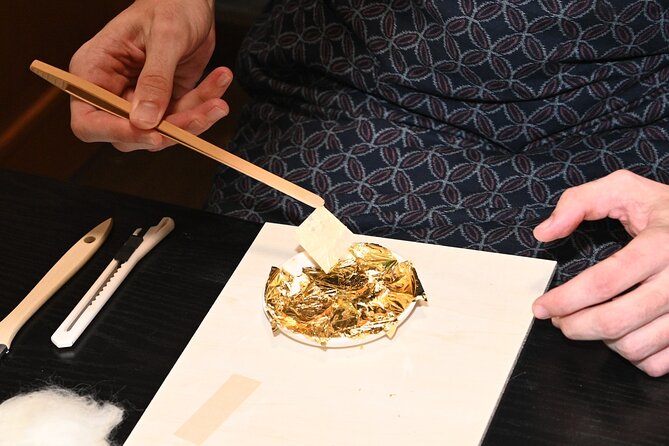
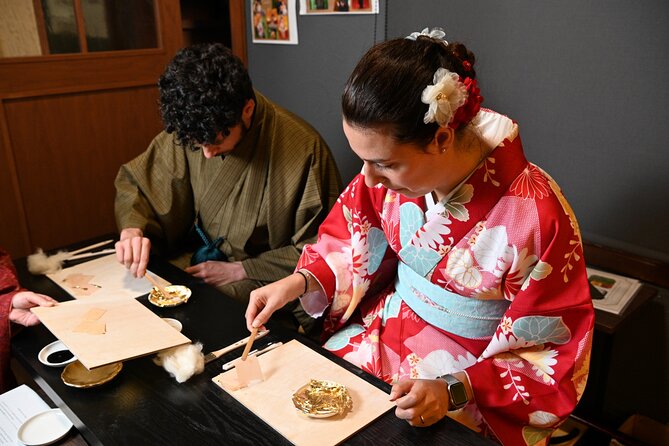
The gold leaf option lasts about 130 minutes in total. After tea, you decorate a small plate with high-purity gold leaf and take the finished item home.
This choice gives you a hands-on craft project without adding a separate stop across Kyoto. Gold leaf is delicate, so the appeal is in learning how to handle and place it rather than producing a perfect museum piece. You leave with a souvenir connected to the activity, which may be more satisfying than buying another shop item.
Choose this option if you prefer making something tangible. It is less useful if your main goal is to see more of Kyoto, since the craft session keeps you at the tea house.
Nishiki Market and the Local Streets
The tea ceremony and Nishiki walking tour lasts about 150 minutes. After the tea, an English-speaking guide takes you to Nishiki Market, often called Kyoto’s Kitchen, along with nearby shrines and historic shopping streets.
This is the best pick if you want the activity to connect directly with Kyoto’s food culture. Nishiki Market is close enough that you do not lose time crossing town, and the guided walk gives context to the stalls, local shops, and nearby religious sites.
The market can be crowded on weekends, holidays, and during special events. That is part of its energy, but it can also make the walk slower and less peaceful. If you prefer a calm afternoon, choose calligraphy or gold leaf. If you want to understand how food, shopping, and neighborhood shrines fit together, the market option gives you more sense of place.
The Kimono Is More Than a Photo Prop
One useful feature is the chance, in some arrangements, to keep the kimono on and walk around the surrounding streets until 6 p.m. This lets you extend the experience beyond the tea room and take photographs in Kyoto’s central streets.
Confirm the exact return arrangement for your chosen plan, since the supplied details do not state that every booking includes the same wearing period. If it applies, it adds real value to the price because you are not limited to a short dressing-room session.
The kimono also changes how you move through the city. You will want to walk at an easy pace and take care on crowded streets. The nearby location makes this practical, since you can remain close to Nishiki Orizuruya rather than planning a long sightseeing route.
How Much Value Do You Get for $50.58?
At about $50.58 per person, the price covers more than a tea tasting. You receive kimono rental, dressing assistance, complimentary hair styling for women, an English-guided tea ceremony, matcha preparation, and traditional sweets. Depending on your plan, you also receive calligraphy, gold leaf art, or a guided local walk.
That is a fair price for a packaged cultural activity in central Kyoto, especially if you would otherwise pay separately for kimono rental and a tea ceremony. The value is strongest for first-time visitors who want a planned introduction without arranging several pieces themselves.
The price is less compelling if you only want to drink matcha for a few minutes. You are paying for the preparation, clothing, instruction, and setting. It is also worth noting that children aged 5 and above pay the same price, with no child discount.
The maximum group size is 10 people. That is small enough to keep the ceremony manageable, though the room may feel busier when several families are being dressed and photographed. A small group does not mean a private session.
Timing, Meeting Point, and Comfort
All plans begin and end at Nishiki Orizuruya. The activity lasts about two and a half hours at its longest, while the basic tea ceremony takes about 90 minutes. Calligraphy and gold leaf add structured time, and the Nishiki walk is the longest option at about 150 minutes.
The venue is near public transport and only about a minute from Nishiki Market. This makes it easy to combine with market browsing before or after the activity, though you should not plan a rushed meal or distant attraction immediately afterward. Dressing, photographs, and the tea ceremony all need their allotted time.
The tea room may involve sitting on the floor. A chair has been provided when needed, but you should raise any mobility concern ahead of time. Staff have also accommodated different sizes and food or tea allergies in individual cases. Ask in advance rather than assuming every dietary request can be handled on the day.
Bring only what you need. The operator places responsibility for personal belongings with you, and a kimono is not the easiest outfit for keeping track of a large bag or loose valuables.
Who Will Enjoy This Most?
I would choose this for a first visit to Kyoto, especially if you want one activity that combines clothing, food, craft, and local customs. It suits couples, families, and friends who enjoy taking photographs but also want a guided cultural lesson behind them.
Families should find the format approachable. Children from age 5 can join, the staff have been kind and patient with young participants, and the calligraphy option gives children a clear activity to complete. Remember that there is no reduced child price.
The basic plan suits someone with limited time. Calligraphy is best for a creative keepsake, gold leaf for a more decorative souvenir, and the market walk for anyone who wants extra local context.
You may want another type of activity if you dislike formal clothing, floor seating, structured rituals, or group photographs. The tea ceremony asks you to follow a set sequence. That is part of its value, but it may feel slower than a casual cultural workshop.
Practical Tips Before You Book
Choose your add-on before confirming the reservation, since each plan has a different duration and focus. The Nishiki option gives you more outdoor sightseeing, while calligraphy and gold leaf keep the afternoon at the tea house.
Wear undergarments that are comfortable beneath a kimono. Avoid bringing bulky personal items, and arrive 10 minutes early so the dressing process does not cut into your scheduled ceremony.
If photography matters to you, tell the staff. They are accustomed to taking pictures during the kimono portion and tea ceremony, but you should still keep the activity moving for the rest of the group.
Book with your schedule firmly set. The activity is non-refundable and cannot be changed for any reason after booking. Confirmation is sent within 48 hours, subject to availability. In severe weather or a natural disaster such as a typhoon, the operator cancels and provides a full refund.
The activity has a 100 percent recommendation rate and a 5 out of 5 rating from 22 published assessments. That record matches the strongest practical points: friendly staff, careful dressing, clear English guidance, and a calm ceremony. Still, the limited history lesson and less exciting men’s kimono selection are fair considerations.
Should You Book This Kyoto Tea Ceremony?
Book it if you want an easy, well-organized introduction to Kyoto culture with real participation rather than a short demonstration. The kimono dressing, hair styling, matcha preparation, seasonal sweets, and choice of add-on give you a full half-day shape without complicated planning.
For the best all-round day, I would choose the Nishiki Market walk. Pick calligraphy if you want a personal keepsake, or gold leaf if you prefer a handmade plate. Skip it only if you want an in-depth lecture on tea history, a private ceremony, or a low-cost cup of matcha without dressing up.
FAQ
Where does the tea ceremony take place?
It takes place at Nishiki Orizuruya, 452 Jūmonjichō, Nakagyo Ward, Kyoto, 604-8121, Japan.
How far is the venue from Nishiki Market?
Nishiki Orizuruya is about a one-minute walk from Nishiki Market.
How long does the basic tea ceremony last?
The tea ceremony plan lasts about 90 minutes.
What is included in every plan?
All plans include kimono rental and English guidance. Women also receive complimentary hair styling.
Do I prepare my own matcha?
Yes. You first watch a tea ceremony demonstration, then prepare your own matcha with a bamboo whisk.
What food is served?
You receive traditional seasonal wagashi, or Japanese sweets, paired with matcha. The sweets come from a confectionery with 100 years of history.
What activities can I choose after the tea ceremony?
You can choose Japanese calligraphy, a gold leaf art workshop, or an English-guided walk through Nishiki Market and the surrounding area.
Can children join?
Children aged 5 and above may join. There is no child discount.
How many people can join the activity?
The maximum group size is 10 people.
What happens if severe weather cancels the tour?
If severe weather or a natural disaster such as a typhoon causes cancellation, the activity is fully refunded. Standard cancellations or amendments are non-refundable.
Fresh tea listings around Kyoto
- Traditional Tea Ceremony in Kyoto★ 4.5 · 3 reviews
- Kyoto: Authentic Tea Ceremony in a Small Group★ 5.0 · 7 reviews
- Uji Walking Tour – Byodo-in temple and Tea Ceremony from Kyoto★ 3.5 · 3 reviews
- Tea Ceremony in 150 Years Old Townhouse with Tables and Chairs★ 5.0 · 22 reviews
- Tea ceremony at Kyoto’s Zen Temple Teahouse★ 5.0 · 2 reviews
- Tea Ceremony Experience in Traditional Kyoto Townhouse★ 5.0 · 19 reviews
- Sencha-do the Japanese Tea Ceremony Workshop in Kyoto★ 5.0 · 21 reviews
- Silent Beauty of Kyoto Zen Walk and Tea Experience★ 5.0 · 2 reviews
Kimono & Tea Ceremony, compared.
KYOTO Tea Ceremony with kimono near by Imamiya Jinjya Shrine
Read our review →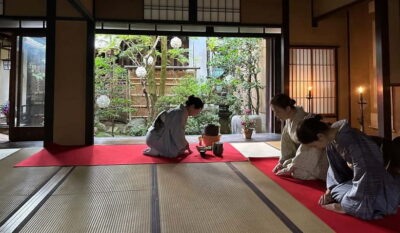
Kyoto: Kimono and Tea Ceremony Experience at Cultural Asset
Read our review →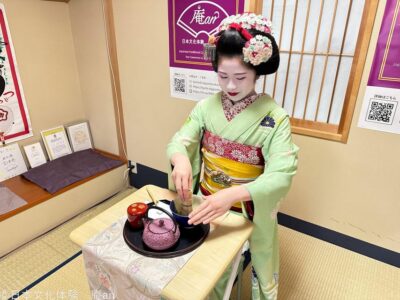
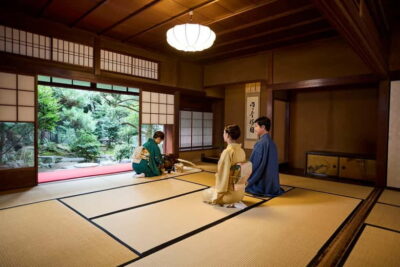
Kyoto: Kimono Tea Ceremony with Matcha and Sweet
Read our review →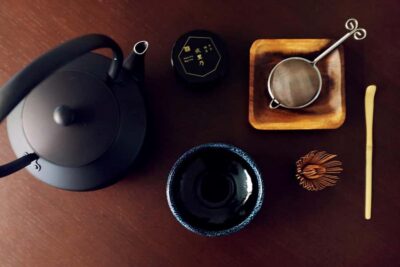
Browse the lists this tour appears in