
Review · TEA CEREMONY EXPERIENCES
Xi’an Calligraphy & Tea Ceremony – Dive into Ink & Brush Artistry
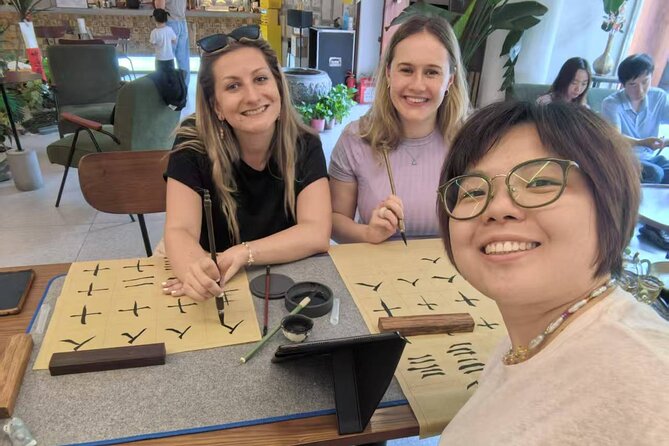
Chinese calligraphy is the heart of this Xi’an experience, but you do more than watch someone wield a brush. You learn the basic strokes, trace the long story of Chinese writing, and create several pieces to take home. The small group, capped at six, gives Yunyun room to guide your hand and answer questions.
I like the jasmine tea ceremony and incense ritual, which give the workshop a calm, traditional setting. I also like the useful souvenirs: a painted folding fan, personalized bookmarks, and a scroll painting are far more meaningful than another quick photo. The main consideration is time. Three hours can pass quickly, especially if you want to take care with every character.
Key points to know before booking
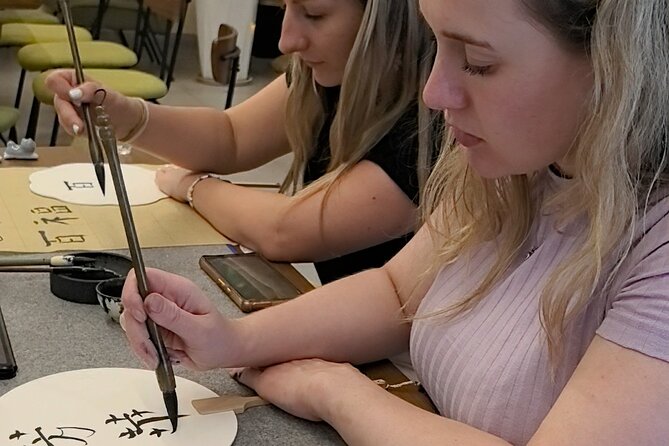
- Three hands-on artworks: You paint a folding fan, make personalized bookmarks, and complete a traditional scroll painting.
- A 3,000-year writing lesson: An interactive character display shows how Chinese writing changed from oracle-bone forms to modern script.
- Small group learning: Fewer than six people join, so you can ask questions and receive personal help.
- A guide with long calligraphy experience: Yunyun has practiced calligraphy for more than 20 years and speaks English fluently.
- Meaningful character practice: You work with characters such as 龙 for dragon, 武 for martial, and 爱 for love.
- A cool indoor cultural option: The workshop suits a hot Xi’an afternoon, with one visitor choosing it during temperatures around 40 degrees Celsius.
Why this Xi’an workshop feels different from sightseeing
Many Xi’an activities put you in front of famous sights and move you along to the next stop. This one asks you to slow down and make something. That change matters. You leave with a better sense of how brush, ink, paper, and character shape work together.
The setting begins with tea and incense rather than a fast introduction. Jasmine tea and snacks are included, and the ceremony gives you a quiet start before the practical work begins. You are not simply handed a brush and told to copy a design. The session builds from cultural background to basic technique, then to your own artwork.
Yunyun leads the workshop. She is described as a native Xi’an travel planner with more than 20 years of calligraphy practice, along with international experience from visiting more than 50 countries. That combination should help if you want both technique and cultural context. She can explain what a character means, why its form changed, and how it relates to Chinese thought.
The small group is important here. With fewer than six people, you should have time to ask about a particular character or request help with a difficult stroke. This is a better format for calligraphy than a crowded demonstration where you watch from the back.
More Tea Ceremonies in China
- Traditional Chinese Tea Ceremony Experience
★ 4.7 · 74 reviews - Beijing Culture: Tea Ceremony, Heritage Instrument & Calligraphy
★ 5.0 · 57 reviews - Chinese Tea ceremony in Beijing Hutong courtyard
★ 4.7 · 26 reviews
Tea, incense, and the scholar’s traditional setting
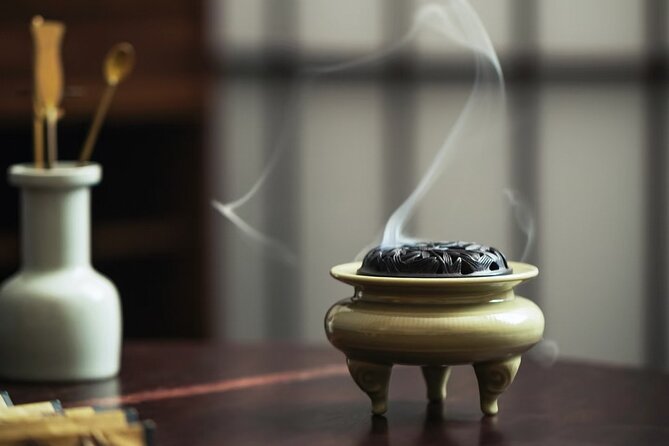
The first 20 minutes are given to a jasmine tea ceremony and incense ritual. These are not just decorative extras. They establish the atmosphere associated with the old scholar’s studio, where calligraphy was part of a larger practice involving patience, order, and attention.
You receive tea and snacks, which also gives you time to settle in after reaching the meeting point at 15 An Ju Xiang in Beilin District. The address is near public transportation, but the supplied details do not specify a particular station or route. Check the exact location before setting out, and allow enough time to arrive for the 2:00 pm start.
The tea portion is likely to appeal even if you have no previous interest in calligraphy. It creates a gentle entry into the workshop and gives Yunyun a natural chance to explain the cultural setting. If your main goal is to produce finished artwork, remember that these opening 20 minutes use part of the total time. That is part of the appeal, but it also means the schedule is not purely focused on painting.
The indoor format can be especially useful in Xi’an’s hotter months. One visitor chose the activity during temperatures of about 40 degrees Celsius because remaining outside all day was difficult. The experience requires good weather according to its booking conditions, so you should not assume that every poor-weather situation guarantees operation. If the provider cancels because of weather, you are offered another date or a full refund.
From oracle bones to modern characters in 25 minutes
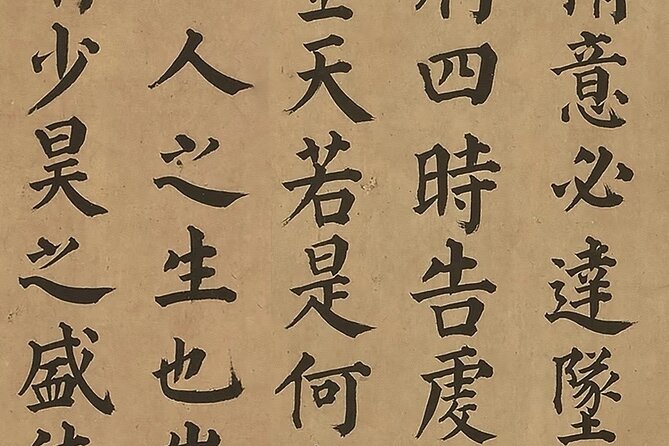
The second section takes about 25 minutes and uses an interactive character wall to show how Chinese writing developed over roughly 3,000 years. This is one of the most useful parts for a first-time visitor because it explains why calligraphy is not simply drawing attractive symbols.
You look at the changes from oracle-bone writing to later forms and modern script. The example of 家, meaning home, helps connect the visual forms to an idea you already understand. The progression gives you a way to see Chinese characters as images that changed with use, materials, and writing styles.
This short lesson also prepares you for the practical section. Once you know that a character has a long visual history, copying it feels less like filling in a worksheet. You begin to pay attention to balance, proportion, and the direction of each stroke.
Yunyun uses pictures and maps when explaining cultural subjects, according to the information provided about her guiding style. That suggests the history portion should be accessible even if you cannot read Chinese. Still, this is a 25-minute introduction, not a full academic lesson. You will get a clear starting point rather than a detailed study of every writing period.
Learning the brush one stroke at a time
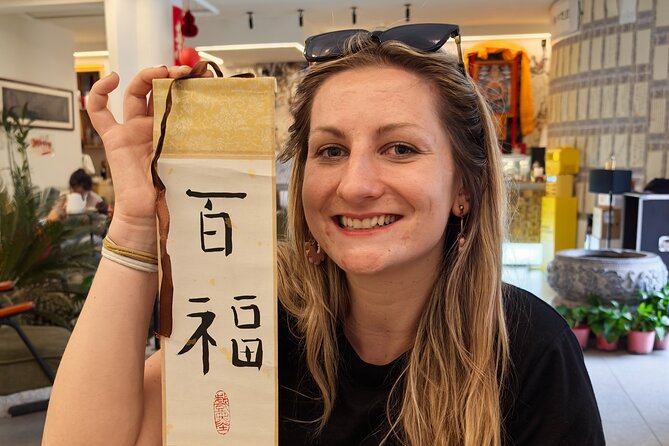
The personal practice section lasts about 1 hour and 10 minutes. You work at an individual station with the basic materials provided: brush, ink, paper, and inkstone. The goal is to learn how the brush behaves before moving on to more meaningful characters.
The progression starts with simple marks and characters such as 一, 十, 大, 小, 米, and 永. These forms let you practice pressure, direction, spacing, and control. 永 is especially useful in calligraphy practice because it contains several types of basic strokes, although the supplied details do not say that the guide presents it in that specific way. What you can expect is a gradual move from simple strokes to more complete characters.
Later, you work with characters that carry clear cultural meaning, including 龙 for dragon, 武 for martial, and 爱 for love. This gives the exercise a personal side. You are not only practicing shapes. You are choosing ideas that may connect with your interests, your name, or a message you want to remember.
Do not expect the first few attempts to look like museum calligraphy. Brush control takes practice, and ink can behave differently from a ballpoint pen or pencil. The value here is the process. Yunyun can help you understand why a line is too heavy, why a character feels unbalanced, or how to slow down at the end of a stroke.
The materials are included, so you do not need to bring paper or ink. Wear something that will not worry you if a small ink mark appears, although the supplied information does not describe a formal dress code or the exact work surface. Most people can participate, and no previous calligraphy skill is listed as necessary.
Same city, a very different cup:
- One-Day Hangzhou Dragon Well Tea Culture & West Lake Private Tour
★ 5.0 · 98 reviews - Tea Tasting and Pairing Concept Workshop
★ 5.0 · 57 reviews - Biking Real Shanghai& Tea Tasting Experience
★ 4.5 · 45 reviews - Tea Village in lost Town and Buddha 1 day tour
★ 5.0 · 32 reviews
Painting a fan, bookmarks, and a scroll
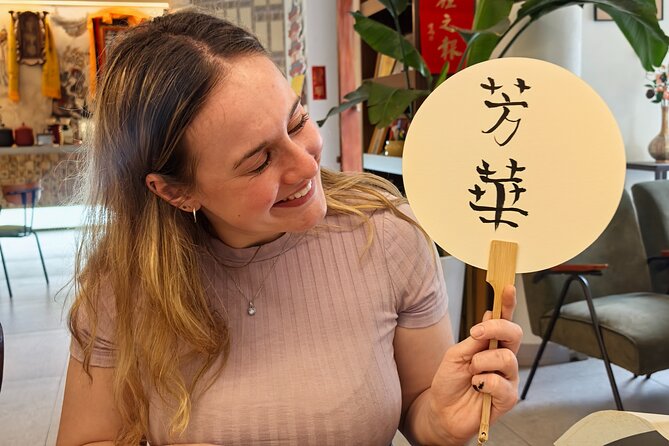
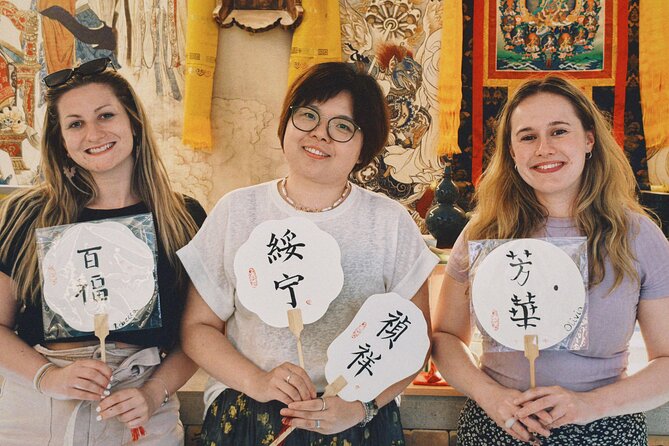
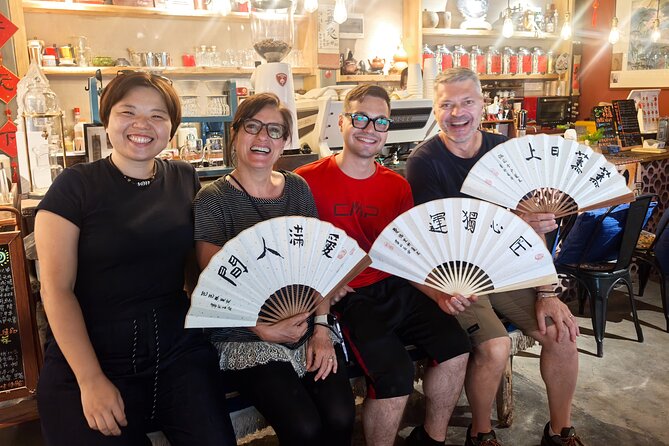
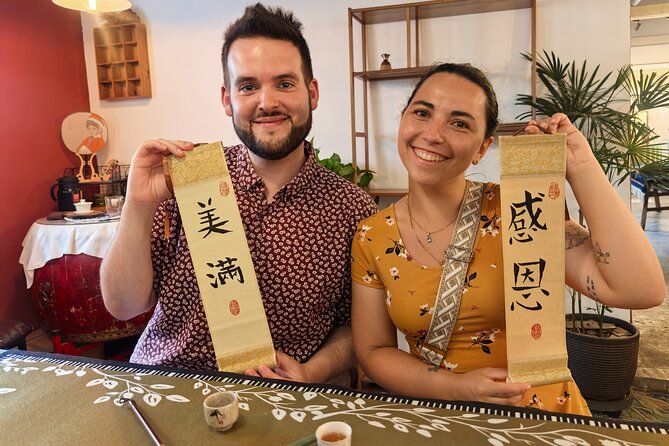
The final creative session takes about 1 hour and 15 minutes. This is where the workshop becomes distinctly personal. You design and paint a folding fan with selected Chinese characters, create personalized bookmarks with your Chinese name, and complete a traditional scroll painting.
The fan is the most immediately memorable item. It gives you a larger surface for a character or short phrase and turns your practice into something you can display or use. The bookmarks are smaller and easier to pack, while the scroll painting gives you a more traditional format.
The personalized Chinese name is a thoughtful touch, especially if you have never had one before. Ask Yunyun about the meaning and sound of the name as you work on the bookmarks. The supplied information confirms that the bookmarks use your Chinese name, but it does not specify how the name is selected, so this is a useful point to clarify at the start.
The creative session is also the part most likely to run long if you work carefully. The stated duration is about 1 hour and 15 minutes, but brush painting does not always fit a rigid schedule. You should be prepared to keep moving if you want to finish all three takeaways within the total three-hour to three-hour-20-minute period.
You return to the original meeting point when the activity ends. That makes the afternoon easy to plan around, particularly if you want to continue sightseeing afterward. The information does not state that the workshop includes transport from a hotel, so you should arrange your own way to 15 An Ju Xiang.
What the $69 price includes
At $69 per person, the value depends on what you want from a cultural activity. If you only want to see calligraphy performed, a lower-cost demonstration might be enough. Here, the price covers roughly three hours of instruction, a small group, tea and snacks, all writing materials, and three finished pieces.
The group limit is a major part of the value. A session with fewer than six people gives you more opportunity for personal correction than a large class. It also lets you ask questions about Chinese language, character meaning, or Xi’an culture without waiting through a long line of participants.
The takeaways add practical value. A painted fan, personalized bookmarks, and scroll painting require materials and time, not just a printed handout. You may not produce professional work, but you will have objects tied to your own effort and to the place where you made them.
The price is less compelling if you are looking for a broad city tour. The activity remains at the studio and returns to the same meeting point. It does not include the Terracotta Warriors, city walls, Muslim Quarter, or other Xi’an sights. Think of it as a focused cultural workshop, not a general introduction to the city.
Who will get the most from this activity
I would recommend this for anyone who wants a quieter, creative afternoon in Xi’an. It suits couples, families, solo visitors, and small groups who would rather make something than spend another few hours taking photographs.
It is also a good choice for hot weather. The indoor setting offers a break from Xi’an’s summer heat, and the tea ceremony gives the afternoon a slower rhythm. Since most people can participate, you do not need an established artistic background.
You may enjoy it especially if you like language, design, history, or hands-on museums. The characters are introduced with meaning, so you can select ideas that matter to you. Someone interested in Chinese culture but unsure where to begin gets an approachable introduction without needing to read Chinese.
This may not suit you if you want a fast-paced schedule or a major sightseeing route. It also may disappoint if you expect to master calligraphy in one sitting. The workshop teaches foundations and gives you guided practice. It does not promise professional-level results.
Practical details for a smooth afternoon
The start time is 2:00 pm, and the activity lasts about three hours to three hours and 20 minutes. Plan the rest of your day with some flexibility, since the listed sections total about 2 hours and 50 minutes before allowing for transitions and the natural pace of a creative class.
Your meeting point is 15 An Ju Xiang, Beilin District, Xi’an, Shaanxi, postal code 710001. The activity ends there as well. A mobile ticket is available, and confirmation is sent when you book.
The maximum group size is six, and the listed inclusions are jasmine tea and snacks, a calligraphy instructor, all writing materials, the painted folding fan, personalized bookmarks, and a traditional scroll painting. Bring any personal wording or character idea you hope to use, but keep in mind that the guide may need to help you choose a workable design.
Free cancellation is available up to 24 hours before the 2:00 pm start for a full refund. Changes or cancellations inside that 24-hour period are not accepted for a refund. If weather causes the provider to cancel, you can choose another date or receive a full refund.
Should you book the Xi’an calligraphy workshop?
Book it if you want a personal cultural activity with a clear creative result. The strongest reasons are the small group, Yunyun’s long calligraphy practice, the character-history lesson, and the chance to take home three items you made yourself.
I would be especially keen to book this on a very hot Xi’an afternoon, when an indoor activity is more comfortable than another long walk. The tea ceremony and incense ritual also make it feel like a complete traditional session rather than a short craft class.
Skip it if your priority is seeing major Xi’an landmarks or covering a lot of ground. At $69, the value comes from instruction, materials, personal attention, and finished artwork. If those matter to you, this is a thoughtful use of three hours. If not, spend the afternoon on the city’s sights instead.
FAQ
Where does the Xi’an calligraphy and tea activity begin?
It begins at 15 An Ju Xiang, Beilin District, Xi’an, Shaanxi, China, postal code 710001. It ends back at the same meeting point.
What time does the activity start?
The scheduled start time is 2:00 pm.
How long does the experience last?
The experience lasts approximately three hours to three hours and 20 minutes.
How many people can join the group?
The activity has a maximum of six participants.
What is included in the price?
The price includes jasmine tea and snacks, a calligraphy instructor, all writing materials, a painted folding fan, personalized bookmarks, and a traditional scroll painting.
Can I cancel for a full refund?
Yes. You can cancel at least 24 hours before the experience start time for a full refund. Cancellations or changes made less than 24 hours before the start time are not accepted for a refund.
More Tea and Calligraphy Workshops in China
- Beijing Culture Event: Tradition Music, Tea Ceremony, Calligraphy
★ 5.0 · 11 reviews - Xi’an Chinese Calligraphy Workshop: Ink Art & Tea Tasting
★ 5.0 · 4 reviews - Kyoto: Tea Ceremony Meditation – Make Matcha with Tea Master
★ 4.8 · 406 reviews - Osaka: Tea Ceremony, Calligraphy, and Kimono Experience
★ 4.9 · 130 reviews
Fresh tea listings around China
- Qixianfeng Tea Plantation Tour in Yangshuo★ 4.6 · 4 reviews
- 3 hours Xi’an Mahjong Class with Local Tea★ 5.0 · 2 reviews
- Xi’an Noodle Making and Tea Tasting Experience★ 5.0 · 6 reviews
- Half-day Tour: Largest Tea Plantation & Amazing Xianggong Hill★ 5.0 · 9 reviews
- Xi’an Chinese Calligraphy Workshop: Ink Art & Tea Tasting★ 5.0 · 4 reviews
- Shanghai 3-Hour Afternoon Tea Tasting and Dessert Tour★ 4.9 · 15 reviews
- Afternoon Tea and Dessert Tour on the Huaihai Road in Shanghai★ 5.0 · 19 reviews
- Private Shanghai City and Zhujiajiao Combo Tour with Boating, Tea Tasting, Lunch★ 5.0 · 15 reviews
Tea Ceremony Experiences, compared.
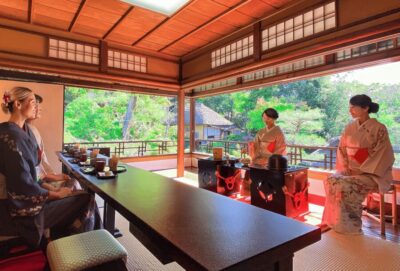
Kyoto: Tea Ceremony in a Traditional Tea House in Kiyomizu
Read our review →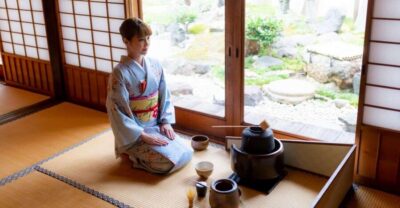
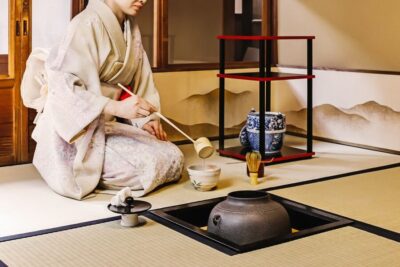
Kyoto: 45-Minute Tea Ceremony Lesson Experience
Read our review →
Kyoto: Table-Style Tea Ceremony at a Kyo-Machiya
Read our review →
Browse the lists this tour appears in