
Review · TEA TASTINGS
Xi’an Chinese Calligraphy Workshop: Ink Art & Tea Tasting
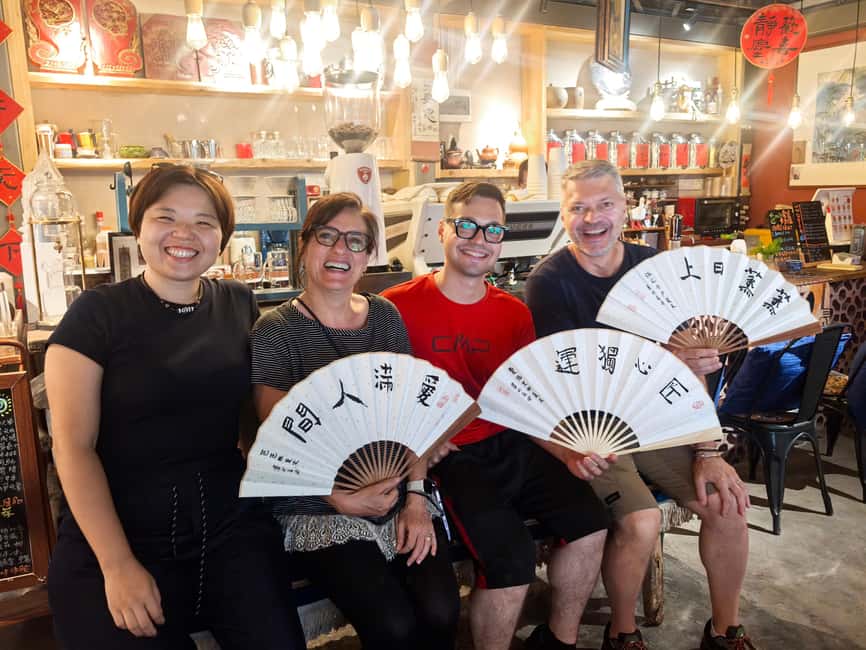
Xi’an’s ancient Chang’an story takes a personal turn when you hold a brush, load it with ink, and try to write characters such as dragon, love, or forever. This three-hour workshop with Yunyun combines calligraphy lessons, Chinese character history, tea, local snacks, and a finished piece of art you can take home.
I like the calm scholar-style setting and the small group, limited to eight people. I also like that you do more than copy practice lines: you write your name in Chinese and choose words for a fan or scroll. The main consideration is that this is a focused art class, not a sightseeing tour, and children under 12 cannot join.
Key points to know before booking
- You learn with real calligraphy tools: Brush, ink, paper, and inkstone are provided.
- Yunyun teaches in English: Her clear explanations and patient instruction suit complete beginners.
- Your name becomes part of the lesson: You practice Chinese characters and learn how your name can be written in Chinese.
- The cultural lesson goes beyond handwriting: You explore roughly 3,000 years of character development and meaning.
- Tea and snacks break up the practice: Traditional tea service helps create a quiet, social pace.
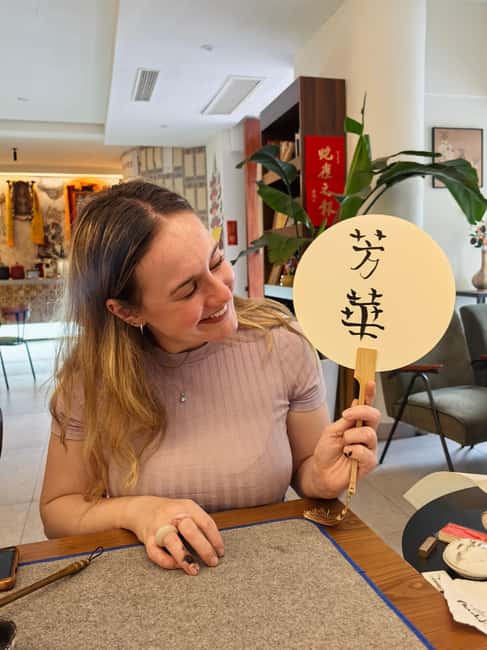
- You take home personal artwork: Choose a painted folding fan or traditional scroll, along with personalized bookmarks.
Why this Xi’an calligraphy class feels different
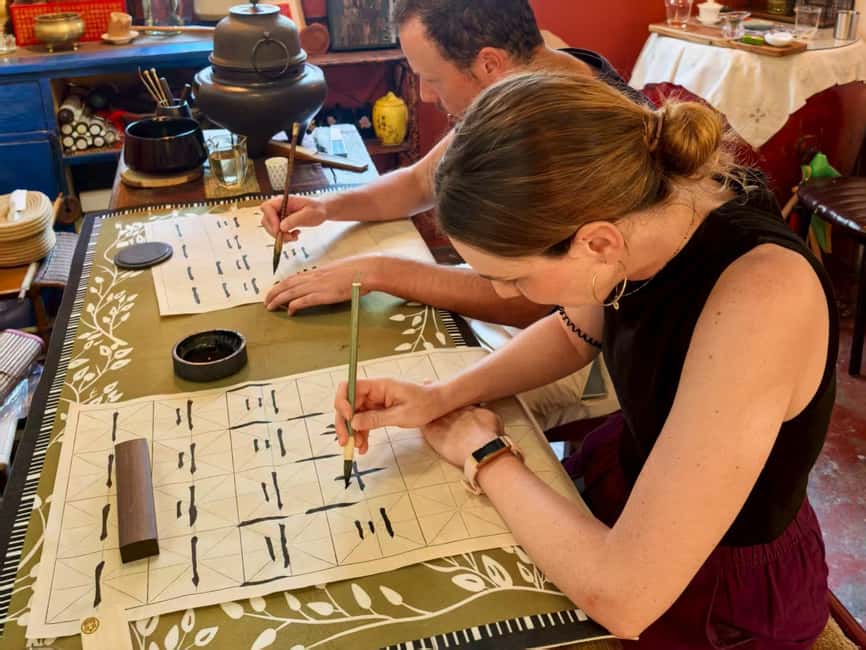
Many cultural activities let you look at an old object or watch a short demonstration. Here, you put your own hand into the tradition. That matters with calligraphy, because the shape of a character comes from the order, pressure, and movement of each brushstroke.
You do not need to know Chinese. The class begins with simple characters and basic strokes, making the first steps manageable. Characters such as 一 for one, 十 for ten, 大 for big, 小 for small, and 米 for rice give you a useful introduction to line control and structure.
The lesson then moves toward characters with stronger cultural and emotional associations. You may practice 永 for forever, 龙 for dragon, 武 for martial, and 爱 for love. These are not just decorative symbols. They give you a feel for how Chinese writing can carry an idea, a sound, and a visual balance at the same time.
I especially like the choice to write your name in Chinese. It gives the lesson a direct personal connection, rather than leaving you with a page of characters that mean little to you. Your name can become a keepsake, and the process also shows how Chinese characters are selected and used for names.
More Tea Tastings in China
- Tea Tasting and Pairing Concept Workshop
★ 5.0 · 57 reviews - Biking Real Shanghai& Tea Tasting Experience
★ 4.5 · 45 reviews - Private Shanghai City and Zhujiajiao Combo Tour with Boating, Tea Tasting, Lunch
★ 5.0 · 15 reviews
A three-hour route from first stroke to finished keepsake
The workshop is built around a steady progression. You begin with the tools and the basic marks, then move into characters, history, tea, and finished artwork.
Getting comfortable with brush, ink, and paper
The materials are included, so you do not need to bring special equipment. You work with a brush, ink, paper, and inkstone, the traditional tools that make the activity feel like calligraphy rather than ordinary handwriting.
At first, the brush may feel less predictable than a pen. The ink flows differently, and pressure changes the thickness of a line. That is part of the lesson. Basic strokes teach you how a character is built, while also showing why neat calligraphy depends on control and rhythm.
This early stage is useful for beginners because it takes the pressure off producing a beautiful character right away. You get a chance to understand the tools before working on meaningful words.
Learning how Chinese characters developed
Yunyun guides you through about 3,000 years of Chinese character evolution. The history lesson gives context to the marks on the page and helps explain why characters can look both artistic and structured.
You learn that Chinese writing is not simply a collection of pictures. Characters have forms, components, and cultural associations. Even a simple character can open a window onto older ways of recording ideas and communicating across generations.
This portion should appeal to anyone who enjoys museums, historic districts, or language. It also keeps the workshop from becoming a basic craft session. You are making something, but you are also learning why the writing looks and behaves the way it does.
Same city, a very different cup:
- One-Day Hangzhou Dragon Well Tea Culture & West Lake Private Tour
★ 5.0 · 98 reviews - Traditional Chinese Tea Ceremony Experience
★ 4.7 · 74 reviews - Beijing Culture: Tea Ceremony, Heritage Instrument & Calligraphy
★ 5.0 · 57 reviews - Tea Village in lost Town and Buddha 1 day tour
★ 5.0 · 32 reviews
Practicing useful and meaningful characters
The practice set moves from simple lines to characters connected with size, food, time, strength, and affection. The sequence helps you see how small differences in a stroke can change a character’s appearance and meaning.
You also learn to write your name in Chinese characters. That can be one of the most memorable parts of the class, especially if you have never studied Chinese. Yunyun’s English instruction makes the process accessible, and the teaching style is described as patient and clear, a real advantage when a writing system feels unfamiliar.
Do not expect instant brush mastery. Calligraphy rewards patience, and the point of the class is to give you a first feel for the discipline. Your final work may have a few uneven lines. That is normal, and it is part of what makes the piece yours.
Tea, snacks, and a quieter side of Xi’an
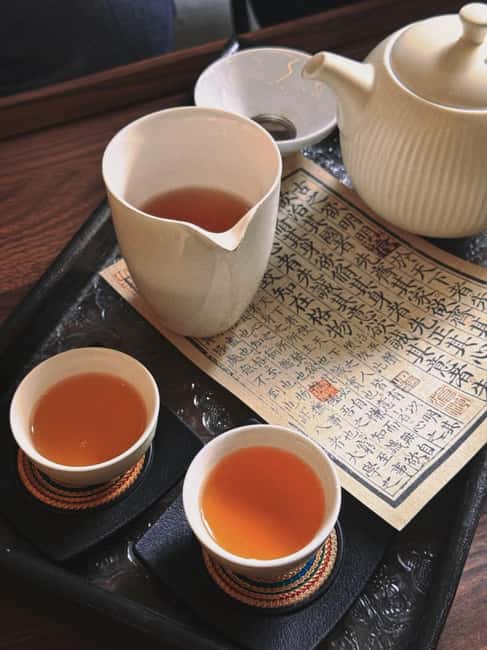
Tea is not just a drink added to the schedule. It creates a pause between practice sessions and adds a social rhythm to the class. You enjoy traditional Chinese tea with local snacks in a tea-room setting at the hotel.
The atmosphere has been described as charming and relaxed, with a traditional scholar feel. That setting helps the workshop avoid the hurried pace of a large group activity. You can listen, practice, ask questions, and look at the work around you without being pushed through a long list of stops.
I would treat the tea portion as part of the cultural lesson, not as a full tea ceremony unless that is specifically confirmed when you book. The available details promise tea service and local snacks, plus learning about tea, but they do not describe a formal tasting menu or a long lecture on tea varieties.
The result is a good balance. If you want three hours of nonstop sightseeing, this is not the right choice. If you need a quiet break from Xi’an’s busy streets and major sights, the slower pace is a strong reason to consider it.
Your choice of fan or traditional scroll
The workshop includes a finished artwork option. You choose between a painted folding fan and a traditional scroll painting, then select favorite words or sentences to have written on the piece.
This is more personal than buying a standard souvenir. A fan is easy to carry and display, while a scroll may feel more like a classic piece of Chinese art. The supplied information does not specify the exact dimensions, so I would ask about size if luggage space matters to you.
You also receive personalized bookmarks. They are smaller and easier to pack than the larger artwork, and they extend the name-writing lesson into another practical keepsake.
One useful tip: think ahead about the ideas you want represented. Love, forever, dragon, and martial spirit are among the suggested themes, but you can choose favorite words or sentences. If you have a family name, travel motto, or short phrase in mind, bring it up early so the instructor can explain what is possible.
The teaching style and group size
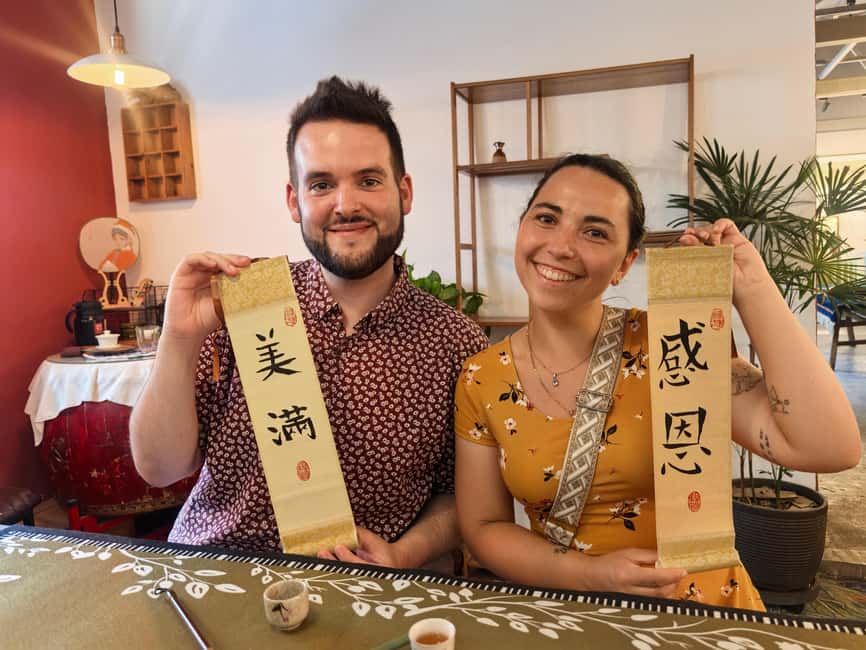
The instructor is Yunyun, and the workshop is taught in English. That is important because calligraphy instruction depends on small corrections. You want to understand not only where to place the brush, but also how to move it and how much pressure to use.
The small group is limited to eight participants. That does not guarantee constant one-to-one instruction, but it is a much better setup for hands-on brush practice than a crowded class. You should have room to work and a reasonable chance to ask questions.
The teaching style suits nervous beginners. Yunyun has been praised for clear explanations, patience, friendliness, and making people feel at ease. One useful detail is that the same instructor may also lead a separate Xi’an walking tour, so you can potentially pair the workshop with a city introduction if her schedule allows. That is not required for this activity, but it could make a strong cultural day.
The class is suitable for culture enthusiasts, first-time calligraphy students, families with older children, small groups of friends, and local residents looking for a mindful activity. It is not suitable for children under 12.
What the $55 price includes
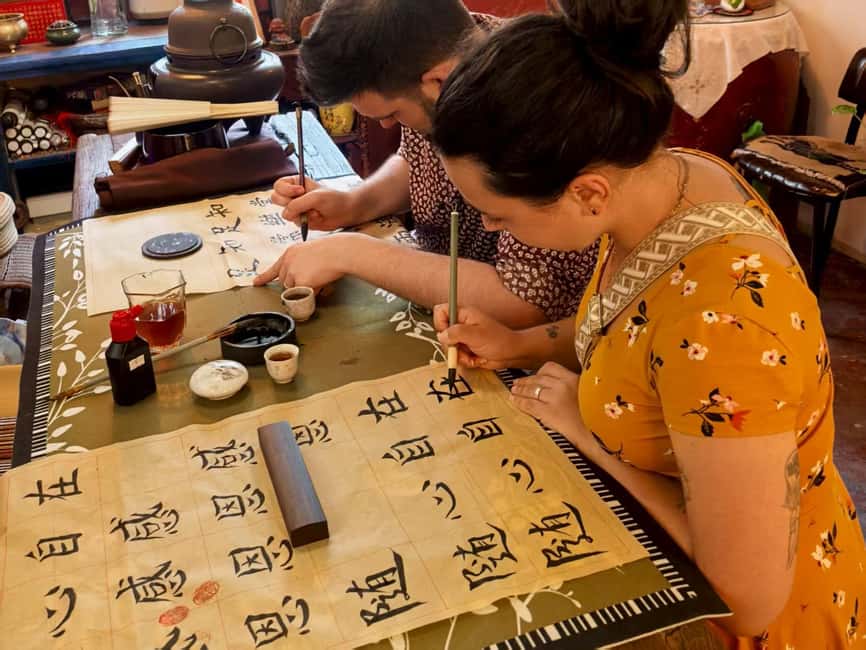
At $55 per person, this is not the cheapest way to spend three hours in Xi’an. It is also not simply an admission ticket. The price includes professional instruction, tea and local snacks, all writing materials, a painted folding fan or traditional scroll, and personalized bookmarks.
That package gives the cost more weight. You are paying for guided instruction and a custom keepsake, not just a table, brush, and cup of tea. The value is strongest if you care about the finished artwork or want a meaningful cultural activity rather than another packaged attraction.
The value is weaker if you are mainly looking for a quick introduction to Chinese writing. You could learn a few characters in a shorter session, and the three-hour length may feel long if you have little interest in hands-on practice.
For most people considering this class, I would judge the price by the personal result. A mass-produced souvenir can be cheaper, but it will not carry your name, your chosen phrase, or the memory of learning to make the marks yourself.
Meeting point and practical planning
The meeting point is Room 0102, Unit 1, Building 7, No. 6 Xiamaling, Beilin District, Xi’an City, Shaanxi Province. The Chinese address is:
西安市碑林区下马陵6号第7幢1单元0102室垣里私厨
Save the Chinese address on your phone. It is useful for showing a driver or checking directions, especially since the meeting point is given as a room within a building rather than a famous public landmark.
The workshop lasts three hours, and start times depend on availability. Plan your sightseeing around it rather than trying to squeeze it between two distant attractions. A quiet class is more enjoyable when you arrive without watching the clock.
The activity is wheelchair accessible. It offers free cancellation up to 24 hours before the start time, and you can reserve now and pay later. Those policies help if your Xi’an plans are still changing, though you should confirm the exact start time before arranging other bookings.
Who will get the most from this experience
You should consider booking if you want to create something by hand and learn the cultural meaning behind it. The class works particularly well for first-time visitors who have already seen Xi’an’s major historic sights and want a slower, more personal activity.
It is also a good match for language lovers. Chinese characters can seem difficult from a distance, but writing even a few basic forms helps you understand their structure. Learning your name adds a personal goal that keeps the lesson engaging.
Families can join if everyone is at least 12 and enjoys a quiet, seated activity. Friends and couples may like the shared experience, especially because each person can choose different words and produce a different keepsake.
I would hesitate if you dislike crafts, have limited patience for careful practice, or want a performance rather than participation. The workshop asks you to concentrate. The reward comes from the process, not from watching an expert produce perfect calligraphy while you sit back.
What to know before you book
Wear something that can tolerate a small ink mark, even though the activity provides the tools. You do not need to bring paper, ink, or a brush.
Keep your expectations realistic. You are learning basic strokes in one session, not becoming a professional calligrapher. The finished fan, scroll, and bookmarks are valuable because they connect you to the lesson, not because they will look like museum pieces.
The English instruction is a major benefit, especially for beginners. Still, if you have a specific sentence in mind for the fan or scroll, clarify the wording before the final writing begins. A short phrase is likely to be easier to handle than a long passage, but the supplied details do not promise that every sentence can be used.
Should you book the Xi’an calligraphy workshop?
I would book this experience if you want a calm cultural break with a clear personal result. The combination of Yunyun’s patient English instruction, tea and snacks, Chinese character history, and a custom fan or scroll gives you more than a standard craft class.
I would skip it if your Xi’an schedule is packed with major sights or if you want an active outdoor tour. Three hours is a real commitment, and the class is best enjoyed at an unhurried pace.
For beginners, culture lovers, and anyone who prefers a keepsake with a story, the $55 price is fair. You leave with new characters, a better sense of how Chinese writing works, and artwork tied to your own visit to Xi’an.
FAQ
How long does the Xi’an Chinese calligraphy workshop last?
The workshop lasts three hours.
How much does the experience cost?
The price is $55 per person.
Is the workshop taught in English?
Yes. The instructor teaches in English.
Who leads the calligraphy class?
The instructor is Yunyun from YunyunTours.
Do beginners need prior Chinese or calligraphy experience?
No. The class is designed for complete beginners and teaches basic strokes and meaningful characters.
What characters might I practice?
The workshop may include 一 for one, 十 for ten, 大 for big, 小 for small, 米 for rice, 永 for forever, 龙 for dragon, 武 for martial, and 爱 for love.
Can I learn to write my name in Chinese?
Yes. Learning to write your name in Chinese is part of the workshop.
What materials are included?
The experience includes ink, paper, an inkstone, and writing materials needed for the class.
What artwork can I take home?
You can choose between a painted folding fan and a traditional scroll painting. Personalized bookmarks are also included.
Is the activity suitable for children?
The workshop is not suitable for children under 12.
Where does the workshop meet?
It meets at Room 0102, Unit 1, Building 7, No. 6 Xiamaling, Beilin District, Xi’an City, Shaanxi Province, China.
Is the venue wheelchair accessible?
Yes. The activity is wheelchair accessible.
Can I cancel for a full refund?
Yes. You can cancel up to 24 hours in advance for a full refund.
Can I reserve without paying immediately?
Yes. The reserve-now, pay-later option lets you hold a place without paying at the time of booking.
More Food and Drink Tours in China
- Shanghai 3-Hour Afternoon Tea Tasting and Dessert Tour
★ 4.9 · 15 reviews - Tea Tasting & Brewing Experience
★ 5.0 · 10 reviews - Xi’an Noodle Making and Tea Tasting Experience
★ 5.0 · 6 reviews - Jakarta: Volcano, Tea/Rice Fields, Hot Spring, Local Food
★ 4.9 · 515 reviews
More Tea and Calligraphy Workshops in China
- Beijing Culture Event: Tradition Music, Tea Ceremony, Calligraphy
★ 5.0 · 11 reviews - Xi’an Calligraphy & Tea Ceremony – Dive into Ink & Brush Artistry
★ 5.0 · 4 reviews - Kyoto: Tea Ceremony Meditation – Make Matcha with Tea Master
★ 4.8 · 406 reviews - Osaka: Tea Ceremony, Calligraphy, and Kimono Experience
★ 4.9 · 130 reviews
Fresh tea listings around China
- 3 hours Xi’an Mahjong Class with Local Tea★ 5.0 · 2 reviews
- Xi’an Calligraphy & Tea Ceremony – Dive into Ink & Brush Artistry★ 5.0 · 4 reviews
- Xi’an Noodle Making and Tea Tasting Experience★ 5.0 · 6 reviews
- Half-day Tour: Largest Tea Plantation & Amazing Xianggong Hill★ 5.0 · 9 reviews
- Qixianfeng Tea Plantation Tour in Yangshuo★ 4.6 · 4 reviews
- Shanghai 3-Hour Afternoon Tea Tasting and Dessert Tour★ 4.9 · 15 reviews
- Afternoon Tea and Dessert Tour on the Huaihai Road in Shanghai★ 5.0 · 19 reviews
- Private Shanghai City and Zhujiajiao Combo Tour with Boating, Tea Tasting, Lunch★ 5.0 · 15 reviews
Tea Tastings, compared.
Twinings 2-Hour Tea Tasting Masterclass in London
Read our review →

Munnar: Tea trail, Tea Factory, and Tea Tasting Tour
Read our review →

Matcha Experience with of Japanese Tea Tasting in Tokyo
Read our review →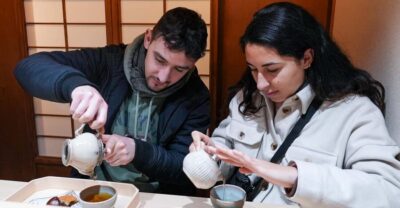
Nara:5 Type of Tea Tasting & Mindful Tea Ceremony
Read our review →
Montmartre Hill French Afternoon Tea Tasting Tour with Crepes and Macarons
Read our review →
Munnar Tea Trail Tour , Tea factory visit & Tea Tasting
Read our review →Browse the lists this tour appears in