
Review · TEA CEREMONY EXPERIENCES
Tea ceremony by the tea master in Kyoto SHIUN AN
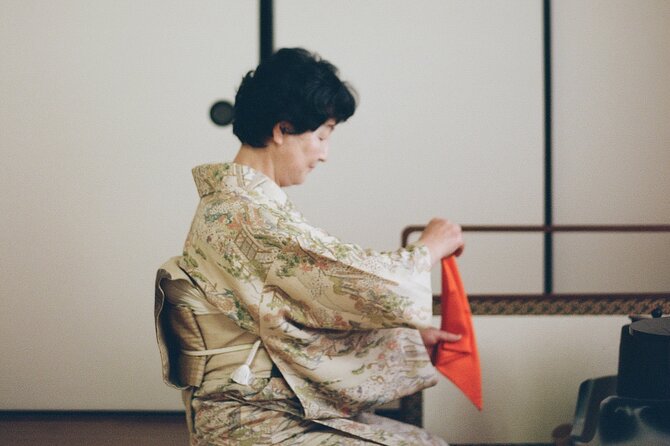
At SHIUN AN, you do more than watch someone whisk matcha. You enter a quiet tea room near Daitoku-ji, study the scroll and flowers, watch a formal ceremony, and then make your own bowl under the tea master’s guidance. It is a compact introduction to one of Japan’s most careful and thoughtful arts.
I like the small group size, usually no more than six people, and the fact that you receive both a demonstration and hands-on instruction. I also like the setting near Daitoku-ji, a temple closely tied to Zen and tea culture, rather than a busy sightseeing district. The main drawback is practical: the house can be difficult to find, and sitting on the floor or climbing stairs may be uncomfortable for some people.
Key points at a glance
- A qualified tea master leads the ceremony: Each tea master has a Tea Name, indicating a full professor qualification in the tea tradition.
- You make your own matcha: After watching the formal preparation, you learn the basic movements and whisk your own bowl.
- Two bowls of matcha and two Japanese sweets are included: One bowl is served during the ceremony, and another is prepared during the hands-on lesson.
- The usual group limit is six: During peak periods, the maximum may rise to eight, so the setting can be intimate but is not guaranteed to be tiny.
- The location is near Daitoku-ji and Kinkaku-ji: Kinkaku-ji, the Golden Pavilion, is about four bus stops away.
- Plan extra time for arrival: The address is in a quiet residential area and can take patience to locate, especially if you rely on local buses.
Why this tea ceremony feels more substantial than a quick matcha lesson
Many short tea activities focus only on whisking green tea. SHIUN AN gives you a wider view. The tea ceremony is presented as a spiritual practice shaped by discipline, attention, and self-discovery, with links to Zen thought.
That does not mean you need to know anything about Zen before arriving. The tea master explains the ceremony in accessible terms, including the purpose of the utensils, the order of movements, and the reason the room is arranged as it is.
The ceremony takes place in a traditional setting near Daitoku-ji, one of Kyoto’s important Zen temple complexes. Daitoku-ji has a long connection with famous priests and with the development of Japanese tea culture. That setting adds useful context: you are not simply learning how to make a fashionable drink. You are seeing how tea, architecture, seasonality, manners, and meditation meet in Japanese culture.
The experience lasts about 45 minutes, though several descriptions refer to it as roughly an hour once explanations and questions are included. I would keep your schedule flexible rather than planning a major attraction immediately afterward.
More Tea Ceremonies in Kyoto
- Kyoto: Tea Ceremony in a Traditional Tea House in Kiyomizu
★ 4.9 · 3,519 reviews - Kyoto: Tea Ceremony Ju-An at Jotokuji Temple
★ 4.9 · 3,207 reviews - Kyoto: 45-Minute Tea Ceremony Lesson Experience
★ 4.3 · 2,378 reviews
Entering the room near Daitoku-ji
The meeting point is 955-1 Idacho in Kyoto’s Kamigyo Ward. SHIUN AN is in a quiet residential area, not in the central Gion district. That gives the activity a calmer feel, but it also means you should not expect to spot it instantly among major signs and landmarks.
Use a reliable map and leave early. The location has been difficult for some people to find, and local buses can take longer than expected. One practical approach is to take public transportation toward the area, then use a taxi or ride service for the final stretch if needed. One direct account estimated a short taxi ride from the nearest subway area at about 1,000 yen, though the exact cost depends on where you begin.
The location works especially well if you are already visiting northern Kyoto. Daitoku-ji is nearby, and Kinkaku-ji is only about four bus stops away. You can pair the tea ceremony with the Golden Pavilion, but do not assume the connection is as quick as the map suggests. Kyoto buses can be busy, and a 45-minute activity needs a punctual arrival.
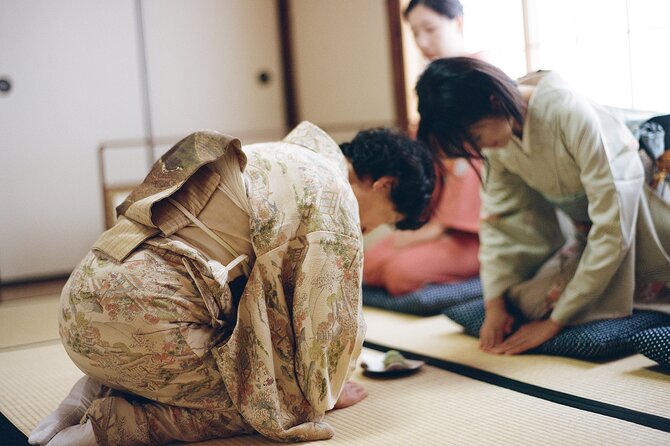
Once inside, you receive white socks and a folding fan for use during the ceremony. The socks are a thoughtful detail because you will be entering a tatami room. Wear comfortable clothing that allows you to sit neatly and move without fuss.
The opening lesson: scrolls, flowers, and room design
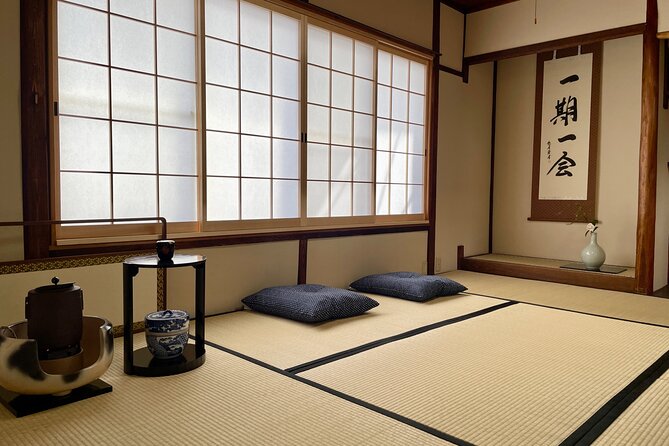
The tea master begins by showing you into the tea room. Before the formal tea service, you have time to look at the hanging scroll and flower arrangement.
These details are not random decoration. In tea practice, the scroll and flowers help set the tone for the season and the gathering. The room’s layout, the position of the utensils, and the way the setting directs your attention all form part of the ceremony.
The tea master explains these points before beginning. This is one of the strongest parts of the activity because it gives you a way to read what you are seeing. Without that introduction, a visitor might notice a beautiful room but miss why the objects were chosen or where attention is meant to go.
An English interpreter helps explain the ceremony and answer questions. The interpreter also makes the finer points easier to follow, especially when the tea master is demonstrating a sequence of movements that would be hard to understand through gestures alone.
Watching the formal preparation
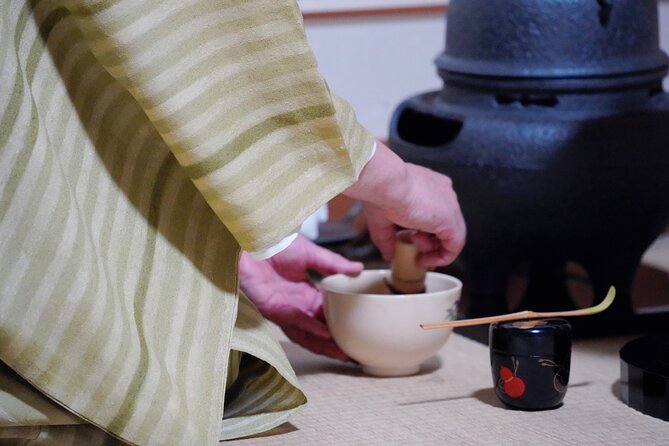
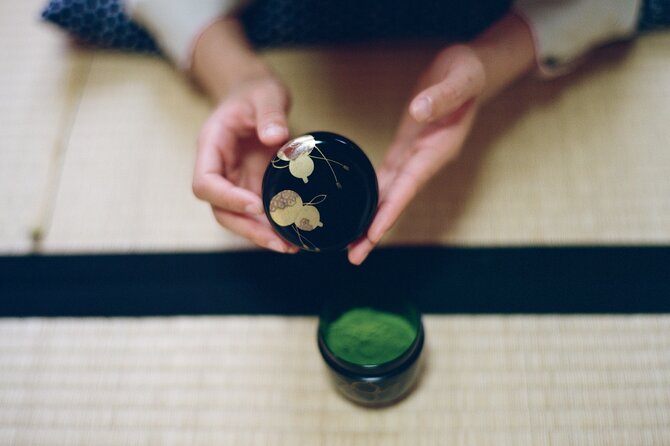
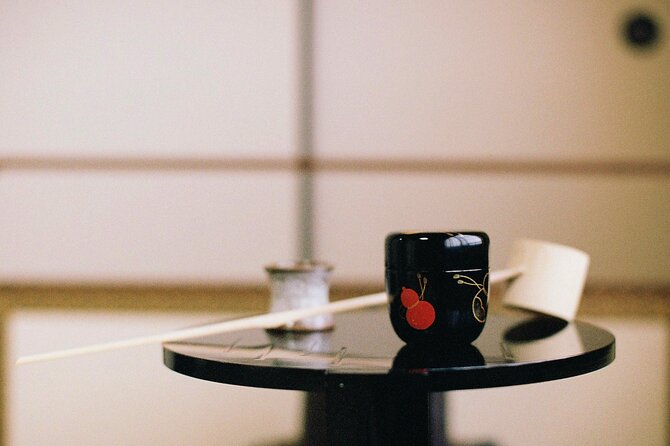
The tea master then prepares matcha in the traditional manner. The process is precise, quiet, and measured. You will see the tea container, bowl, scoop, whisk, and other items handled in a set order.
The tea master’s qualifications matter here. Each instructor has a Tea Name, described as a full professor qualification. That does not turn the activity into a formal class, but it does signal that the ceremony is being taught by someone with serious training rather than by a casual demonstrator.
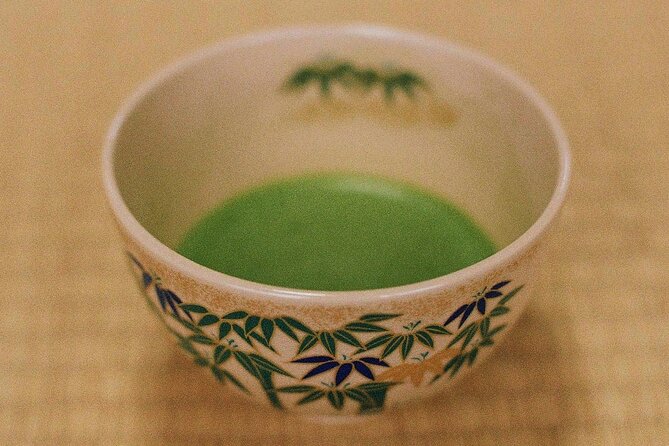
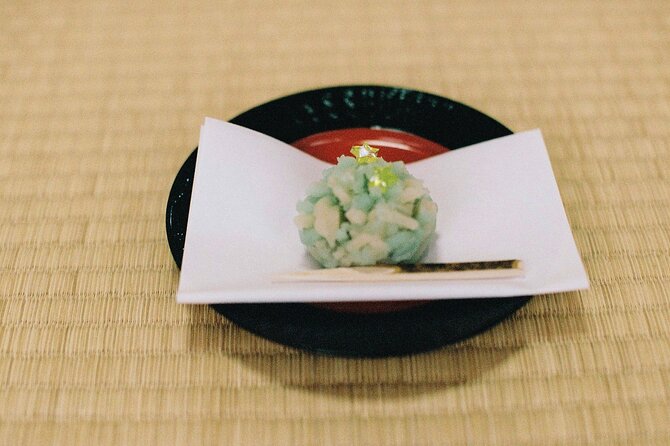
You receive a Japanese sweet with the first bowl of matcha. The sweet provides a small contrast to the tea’s bitter edge and gives you a taste of the traditional pairing. Two kinds of Japanese sweets are included during the activity.
The ceremony may feel slow if you are used to fast sightseeing. That is part of the point. The pauses allow you to notice the sound of the whisk, the placement of the bowl, the way the tea master moves, and the etiquette surrounding each object.
Same city, a very different cup:
- Kyoto: Table-Style Tea Ceremony at a Kyo-Machiya
★ 4.9 · 1,211 reviews - Kimono Tea Ceremony at Kyoto Maikoya, NISHIKI
★ 5.0 · 911 reviews - Kyoto: Kimono Tea Ceremony at Orizuruya Gion
★ 4.9 · 618 reviews - Kyoto: Tea Ceremony in 100-year-old Kyo-Machiya Townhouse
★ 4.8 · 546 reviews
Making your own bowl of matcha
After watching the tea master, you get your own turn. Tea bowls, tea containers, scoops, and whisks are provided, so you do not need to bring anything.
The instruction covers the basic method of preparing matcha. You learn how much powder to use, how to add water, and how to whisk the tea. The tea master guides the process and answers questions, which makes this more useful than simply receiving a bowl and copying someone from a distance.
Do not expect to produce a bowl as smooth and balanced as the tea master’s on your first attempt. The difference is part of the lesson. Proper matcha preparation takes practice, and the ceremony shows how much control goes into what can look like a very simple drink.
You receive two bowls of matcha in total. One is served as part of the formal presentation, and the other is connected with your own preparation. The two sweets give the short session a little more substance, though this is still a cultural activity rather than a meal.
I especially like this format because you leave with a physical understanding of the craft. You have felt the whisk in your hand, handled the tea bowl, and seen why the movements need care.
What sitting on the floor is really like
The tea room uses traditional tatami flooring, and sitting in the preferred formal position may not be easy for everyone. One person was unable to remain in that position for the full time, while another account noted that the staff accommodated a husband who could no longer sit on the floor.
That flexibility is important. You should tell the provider in advance if you have a mobility concern, difficulty with stairs, or trouble sitting low for 45 minutes. The activity is designed around a traditional room, so it cannot be treated like a standard chair-based tour, but the staff appear willing to help where possible.
The building may also include difficult stairs. If stairs or floor seating are serious concerns, ask before booking rather than assuming the traditional setting will be easy to manage. Service animals are allowed, but the supplied information does not give further details about access inside the room.
Group size, translation, and the pace of the visit
The normal maximum is six people per session. During peak seasons, that can increase to eight. Six is a useful limit because you can see the demonstration clearly and have a reasonable chance to ask questions.
A smaller group also protects the quiet mood. A tea ceremony loses some of its effect if people are constantly arriving, taking photos, or speaking over the explanation. SHIUN AN appears designed for a more focused session.
An English translator is present to explain the tea master’s presentation. This makes a major difference if you want more than a visual introduction. You can ask about the meaning of the utensils, the ceremony’s movements, the tea tradition, and the sweets.
The tone is welcoming rather than stiff. The tea master and assistants are described as warm and patient, and the activity is suitable for people who know little about Japanese tea. It also works for children who already have an interest in Japanese culture, though the quiet format may not suit every young child.
The setting makes this a good northern Kyoto pairing
The location is not near Gion, and that is both a drawback and a benefit. If your day is centered on Yasaka Shrine, Higashiyama, or the downtown shopping streets, getting to SHIUN AN will require a separate trip.
On the other hand, the northern location fits neatly with a visit to Daitoku-ji and Kinkaku-ji. Daitoku-ji’s Zen background gives the tea ceremony useful cultural context. Kinkaku-ji is only about four bus stops away, so you can plan the two sights on the same side of the city.
I would avoid booking the ceremony between two tightly timed attractions across town. Give yourself room for public transportation, finding the house, and settling into the room before the start time. Arriving late would mean missing the opening explanation, which is one of the most useful parts.
Is the $33.03 price good value?
At $33.03 per person, this is a fair price for a short cultural activity that includes a qualified tea master, an interpreter, two bowls of matcha, two sweets, the utensils, white socks, and a folding fan.
The value is strongest if you want instruction rather than a staged photo opportunity. You are not only served tea. You learn how the room works, watch a formal preparation, and make your own bowl.
The price is less appealing if you mainly want a quick drink or a central Kyoto location. The journey to a residential area takes planning, and the session is brief. You are paying for teaching, atmosphere, and access to a traditional practice, not for a large meal or a full afternoon tour.
For a first tea ceremony, I think the balance is good. It offers enough explanation to make the ritual understandable without requiring a half-day commitment.
Who will enjoy SHIUN AN most?
I would recommend this activity to you if you:
- Want a quiet cultural experience away from Kyoto’s busiest streets
- Have an interest in matcha, Japanese customs, Zen, or traditional arts
- Prefer a small group to a large demonstration
- Want to try making tea instead of only watching
- Are willing to sit on tatami flooring and follow a careful sequence
- Can fit the northern Kyoto location into your day
It is also a good choice for someone who has seen a tea ceremony before but wants more explanation. One experienced Japan visitor found the instruction more informative than expected, which makes sense because the session explains the meaning behind the visible gestures.
You may want a different activity if you need step-free access, dislike floor seating, have a very tight schedule, or want a ceremony close to Gion. The location and traditional format are central to the experience, not minor details.
Booking, cancellation, and practical planning
Confirmation is provided when you book, and the ticket is mobile. No pickup or drop-off is included, so you are responsible for reaching the address and returning to your own plans afterward.
You can cancel for a full refund up to 24 hours before the start time. Cancellations or changes made less than 24 hours before the start time are not refunded or accepted. Cutoff times use Kyoto local time.
The activity requires a minimum number of participants. If the provider cancels because that minimum is not met, you can choose another date or experience, or receive a full refund. Tell SHIUN AN about food allergies before the ceremony.
Should you book this tea ceremony?
Book it if you want a well-explained, hands-on introduction to Japanese tea in a traditional room. The small group, qualified tea master, English translation, sweets, and chance to make your own matcha give it more substance than a quick demonstration.
Think twice if you need easy access, a central location, or a chair-based activity. For everyone else, SHIUN AN is a sensible choice for a quieter Kyoto afternoon, especially when paired with Daitoku-ji or Kinkaku-ji. Leave early, plan for the floor, and allow the ceremony’s careful pace to do its work.
FAQ
How long does the tea ceremony last?
The activity lasts approximately 45 minutes. Some descriptions refer to the complete visit as about an hour when explanations and questions are included.
Where does the tea ceremony take place?
It takes place at 955-1 Idacho, Kamigyo Ward, Kyoto, 602-8302, Japan, near Daitoku-ji Temple.
How many people can join each session?
The usual maximum is six people. During peak seasons, the maximum may increase to eight.
Is the tea ceremony near Kinkaku-ji?
Yes. Kinkaku-ji, also called the Golden Pavilion, is about four bus stops away.
Is an English translator provided?
Yes. An English translator helps explain the tea master’s presentation and provides context during the ceremony.
Do I get to make my own matcha?
Yes. After watching the tea master, you learn the basic steps and prepare your own bowl of matcha.
How much matcha and how many sweets are included?
You receive two bowls of matcha and two kinds of Japanese sweets.
Are the tea utensils provided?
Yes. Tea bowls, tea containers, tea scoops, and tea whisks are provided. White socks and a folding fan are also included.
Can I join if I have trouble sitting on the floor?
The ceremony takes place on tatami flooring, and sitting in the preferred position may be difficult. The staff have accommodated people who could not sit on the floor in the standard way, but you should explain your needs before booking.
What is the cancellation policy?
You can cancel at least 24 hours before the start time for a full refund. Cancellations or changes made less than 24 hours before the start time are not accepted or refunded.
Fresh tea listings around Kyoto
- Authentic Tea Ceremony & Sushi in The Museum of Kyoto★ 5.0 · 3 reviews
- Kyoto: Nighttime Zen Meditation and Matcha Tea Experience★ 5.0 · 7 reviews
- Kyoto Fushimiinari:Wagashi Making & Small Group Tea Ceremony★ 5.0 · 14 reviews
- 2 Types of Japanese Sweets making and Tea Ceremony★ 4.6 · 17 reviews
- Kyoto Hidden Riverside Zen Mediation and Uji Matcha Experience★ 5.0 · 9 reviews
- Whisk Your Own Matcha: A Zen Matcha Experience at Temple★ 3.6 · 7 reviews
- Matcha Grinding Experience and Walking Tour in Uji Kyoto★ 5.0 · 26 reviews
- Kyoto: Traditional Tea Ceremony with Matcha & Sweets in Gion★ 4.9 · 27 reviews
Tea Ceremony Experiences, compared.
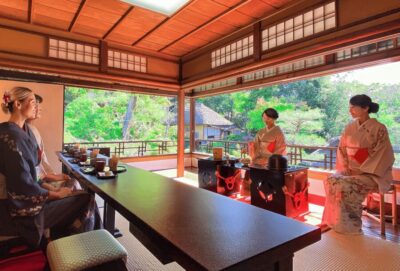
Kyoto: Tea Ceremony in a Traditional Tea House in Kiyomizu
Read our review →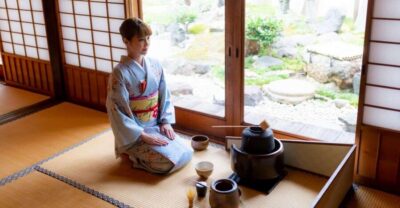
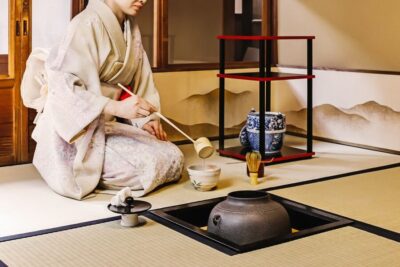
Kyoto: 45-Minute Tea Ceremony Lesson Experience
Read our review →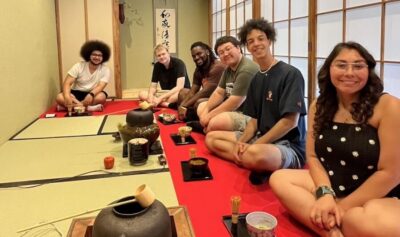
Kyoto: Table-Style Tea Ceremony at a Kyo-Machiya
Read our review →
Browse the lists this tour appears in