
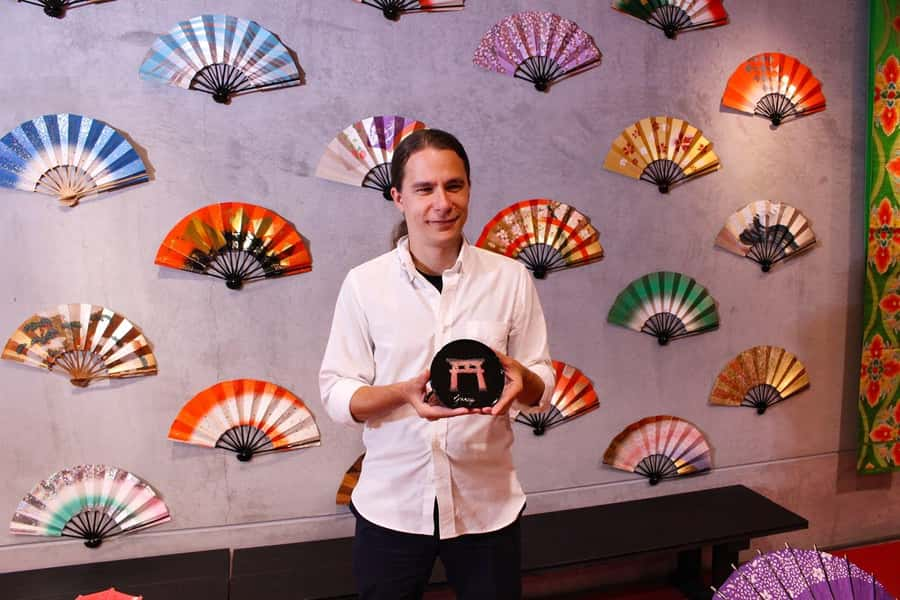
Review · MATCHA EXPERIENCES
Osaka: Maki-e lacquer Painting and Matcha Experience
Osaka’s maki-e workshop gives you a quick look at three Japanese traditions in one sitting: gold-powder lacquer decoration, matcha, and seasonal wagashi sweets. You create a small painted design, prepare powdered green tea, and finish with a photo in Japanese clothing beside swords.
I like the easy location near the Osaka cruise pier, and I like the private format, which should give you more room to ask questions than a large class. At $42 per person, it is also a reasonable way to fill an hour in the Osaka Bay Area. The catch is that this is a short introductory activity, not a serious lacquer-art course, and the setting may feel more commercial than traditional.
Key points at a glance
- Gold powder maki-e: Apply lacquer and gold powder in a simple hands-on introduction to a delicate Japanese craft.
- Matcha and wagashi: Prepare your own powdered green tea and taste it with a seasonal Japanese confection.
- One-hour format: The compact schedule works well before or after a cruise visit, though it limits the amount of instruction.
- English-speaking host: The activity is guided in English, with Taki receiving especially warm personal praise.
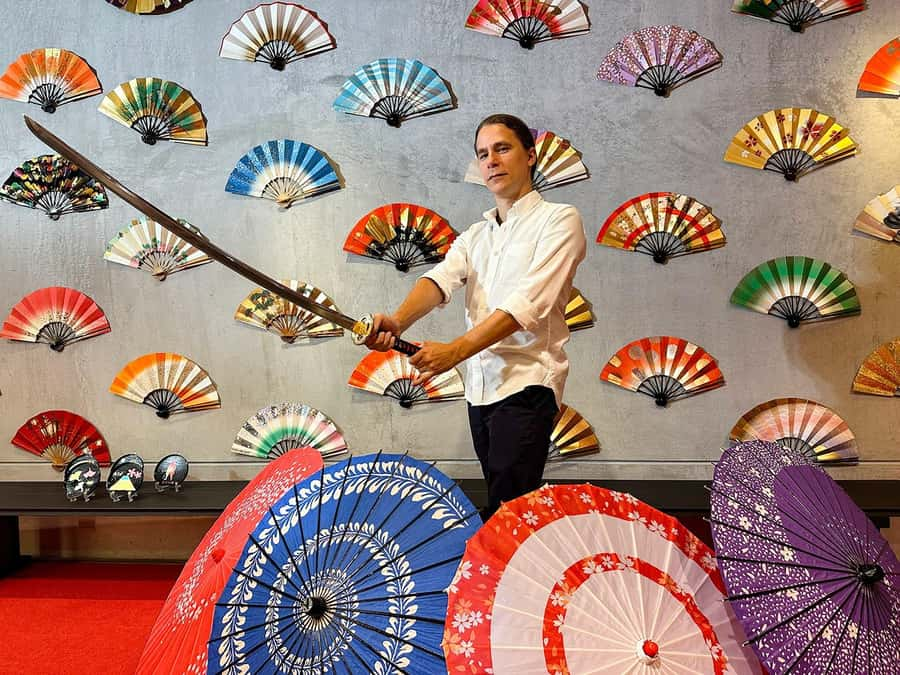
- Costume photo spot: Pose with swords and Japanese costumes for a lighthearted souvenir photograph.
- Private group: You book a private experience rather than joining a large shared class.
What the one-hour Osaka experience actually offers
This is a compact cultural workshop rather than a full tour of Osaka. You meet on the second floor of Osaka Bunkakan, also called Osaka Cultural Museum, in the Tempozan area. The meeting point is in front of Hibiki, and the listed coordinates are 34.6539195, 135.42956.
From there, the session stays in the same building and returns to the same point. That matters if you have a ship departure, a timed attraction, or only a free hour between plans. You are not spending half the booking on transfers.
The experience is offered to a private group and conducted in English. The private setup is useful for couples, families, and small groups who want to move at their own pace. It also gives you a better chance to ask about the craft, tea, or Japanese customs without competing with a large crowd.
The schedule is tight. In one hour, you cover painting, tea, sweets, and photos. I would treat this as a sampler of Japanese culture, not as a complete lesson in any one subject.
More Matcha Experiences in Osaka
- Matcha Making Class in Osaka with Authentic Japanese Sweets Set
★ 5.0 · 509 reviews - Osaka: Matcha Making Experience with Japanese Sweets
★ 5.0 · 146 reviews - Osaka Temple Cool Foot Bath & Matcha Experience〈45min〉
★ 4.9 · 82 reviews
Starting at Osaka Bunkakan in Tempozan
Finding the correct meeting point is the first practical task. You should wait in front of Hibiki on the second floor of Osaka Bunkakan, rather than simply standing somewhere in the wider Osaka Bay complex.
The location is especially handy for cruise passengers. It is reported to be about a five-minute walk from the cruise pier, making this one of the easier shore activities to fit into a port day. You still need to allow time to find the building and meeting point, but the short walk is a real advantage.
The setting is not presented as a historic workshop or a traditional house. It is a cultural venue in the Osaka Bay Area, and one negative account found the building too large, empty, and commercial in feel. That is worth knowing before you book. You are paying for the activities and the guide, not for an atmospheric old-town setting.
Once you meet the guide, the practical benefit is simplicity. The whole session takes place at the same location, and the guide leads you through the three parts in sequence.
Painting gold powder in the maki-e style
Maki-e is a Japanese lacquer decoration method in which designs are made with lacquer and finished with powdered materials, often including gold. The appeal comes from the fine surface detail and the way the powder catches the light.
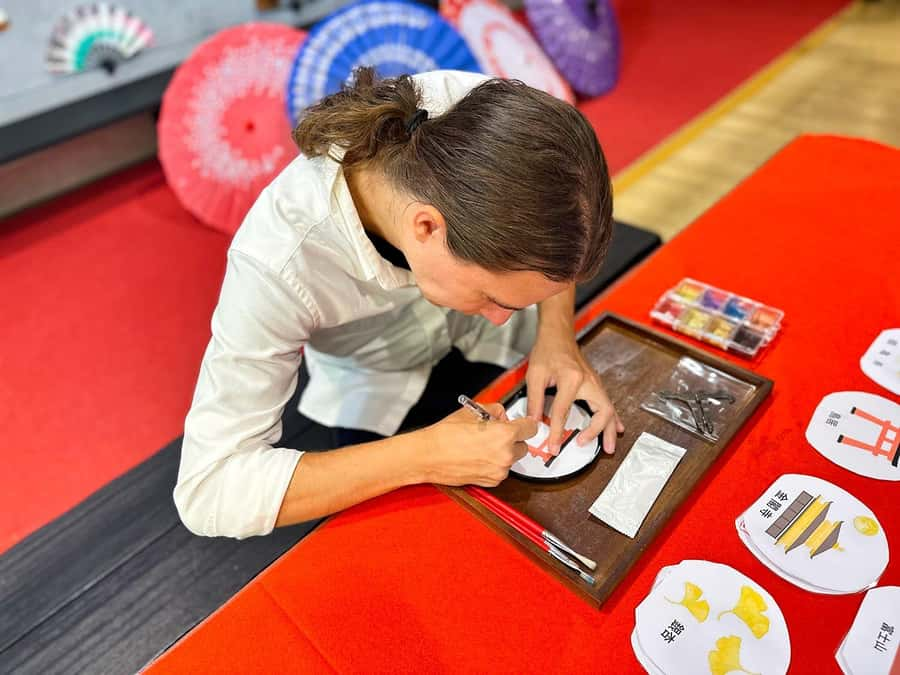
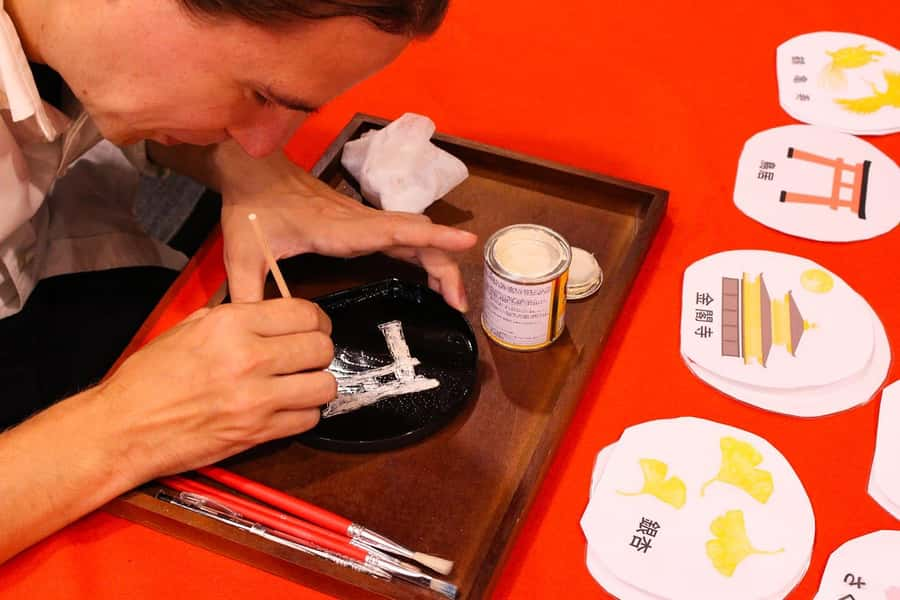
Here, you receive a hands-on introduction using gold powder. The supplied description does not promise a museum-level demonstration or a long lesson in traditional brushwork. Instead, you can expect a straightforward activity in which you apply lacquer and add gold powder to create a design.
That simplicity can be a strength. You do not need art training, and the short format keeps the task approachable. Children and first-time craft participants may enjoy the clear, tactile process. You get to make something yourself rather than only watching a demonstration.
It can also be a limitation. One especially harsh assessment described the activity as little more than spreading lacquer and blowing glitter onto it. That reaction suggests that anyone expecting a demanding craft class, fine artistic coaching, or access to professional lacquer techniques may feel disappointed.
I would set your expectations at introductory level. The value is in trying a traditional method and learning where it fits in Japanese culture. It is not in producing a flawless work of art in a few minutes.
The activity also gives you a useful glimpse into the patience behind Japanese decorative crafts. Even a simple gold-powder design hints at the control and precision required in more advanced maki-e work. The finished piece may be modest, but the idea behind it has real cultural weight.
Preparing matcha with a seasonal wagashi
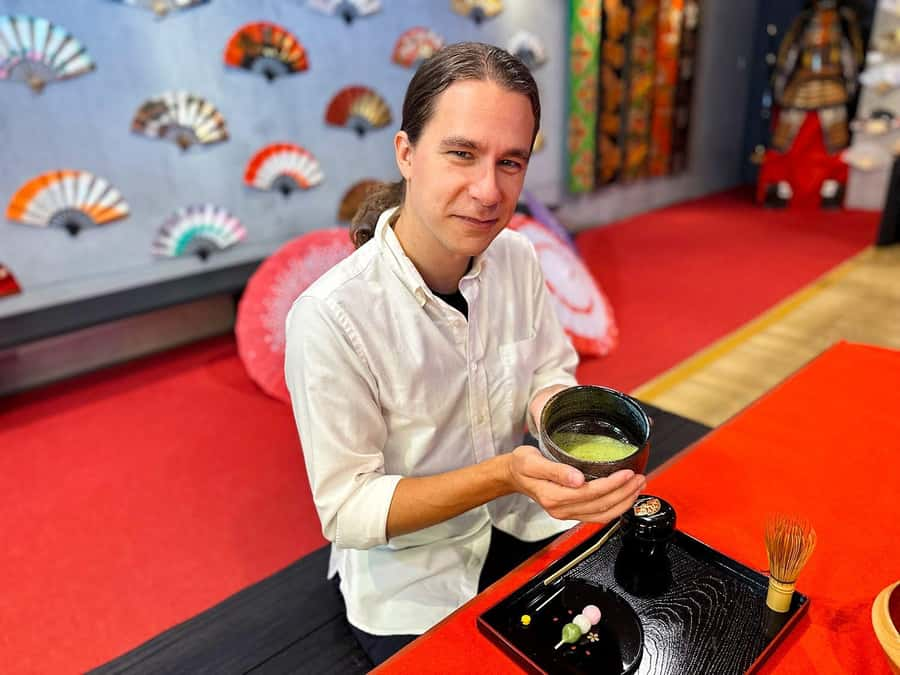
The second part shifts from visual craft to tea culture. You prepare your own matcha, the powdered green tea used in the Japanese tea tradition, and drink it with seasonal wagashi.
The exact preparation method is not specified, so you should not expect a detailed tea ceremony with every formal movement. This is described as a matcha-making experience within a one-hour workshop. The focus is on participation and tasting.
That makes the tea portion a good counterpoint to the painting. You first work with lacquer and gold powder, then slow down for a drink and a sweet. The seasonal wagashi adds an important detail because Japanese confectionery often changes with the time of year in appearance, ingredients, and shape.
The tea and sweet also help explain balance in Japanese food culture. Matcha has a strong, grassy, sometimes bitter taste. Wagashi provides a sweet companion. You are not simply being handed a cup of tea and a snack. You are trying a small food tradition in the way it is commonly paired.
Food and drink beyond the listed wagashi are not included. If you need a larger meal, plan that separately in the Osaka Bay Area. This experience is a tasting and cultural lesson, not a lunch stop.
Same city, a very different cup:
- Osaka: Tea Ceremony Experience
★ 4.9 · 1,426 reviews - Tea Ceremony Experience in Osaka Doutonbori
★ 5.0 · 754 reviews - Osaka: Tea Ceremony, Calligraphy, and Kimono Experience
★ 4.9 · 130 reviews - Osaka: Japanese Traditional Sweets Making and Tea Ceremony
★ 4.7 · 118 reviews
Finishing with swords and Japanese costumes
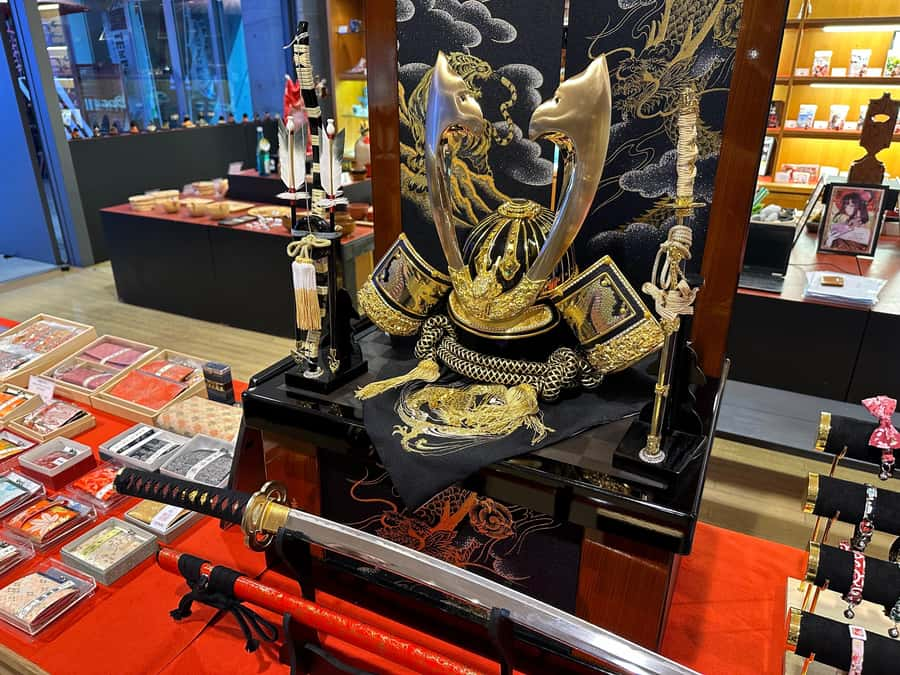
The final part is the most playful. You can pose at a photo spot with swords and Japanese costumes.
This is not described as a historical lecture on samurai equipment, and the available details do not identify the costumes or swords in more depth. Think of it as a photo opportunity that rounds out the session. After the quiet concentration of painting and tea preparation, the costume picture adds a lighter finish.
Bring a camera. You may also want to make sure your phone has enough storage and battery, since the photo is one of the clearest souvenirs from the experience. Comfortable clothing is recommended, which makes sense for a session involving craft work and dressing up.
The photo portion will appeal most to families, couples, and friends who enjoy a little theater in their sightseeing. If you prefer a serious art lesson with no staged elements, this part may feel less important.
Still, the mix is sensible for a one-hour booking. You get a craft activity, a taste of tea culture, and a visual souvenir rather than spending the full hour on one basic painting exercise.
What the private format changes
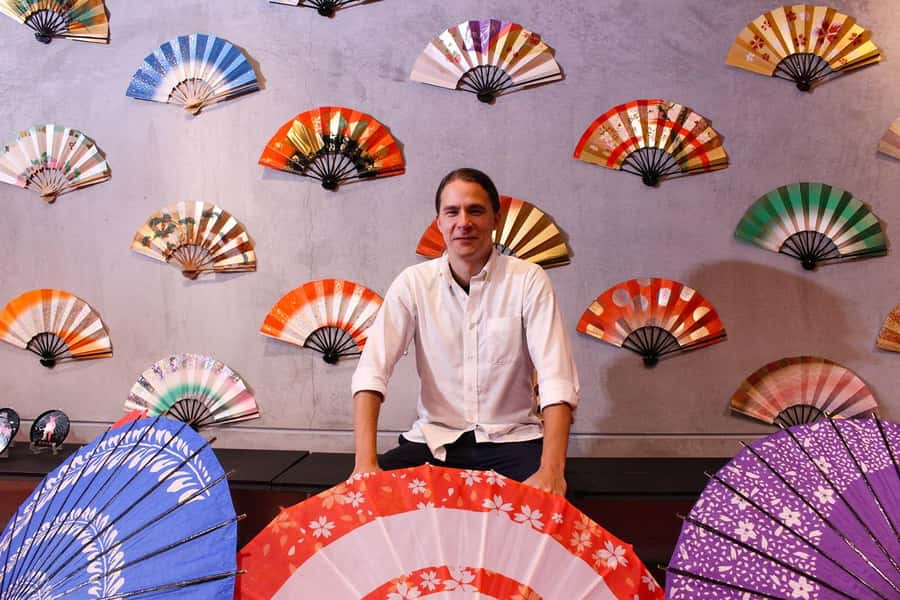
The private-group arrangement is one of the stronger features of this booking. You are not placed in a large class with an unknown number of people, so the guide can focus on your group’s questions and pace.
The English-speaking guide is central to the experience. Taki is the one named host associated with particularly positive feedback, with personal praise for both the welcome and the overall handling of the activity. A warm host matters here because the session depends on explanation as much as equipment.
At the same time, the guide’s role appears to be that of an activity host rather than a master craft instructor. One poor assessment described the staff member as more of a salesperson than an artist. I would not book this expecting a specialist lecture on lacquer chemistry, workshop tools, or the full development of maki-e through Japanese history.
Instead, you are buying a friendly, guided introduction. If the host explains the background clearly and helps you complete the activity, the format can work well. If you want technical depth, look for a longer specialist workshop.
Is $42 a fair price for one hour?
At $42 per person, the price is fair if you value convenience and variety. The fee covers the gold-powder painting, matcha preparation, seasonal wagashi, the private guide, and the costume photo session.
The cost becomes more attractive for a cruise stop or a tightly planned day. You can walk from the pier, stay in one building, and finish in an hour. That saves the time and transport expense that a more distant cultural attraction might require.
The price is less compelling if you judge it solely by the amount of instruction. You are not spending several hours learning a demanding craft. The painting is an introductory activity, and the matcha segment is also brief. A person looking for serious art training may find the cost high for the depth provided.
I see the value in the combination. Paying $42 for only a basic lacquer exercise would be harder to defend. Adding tea, wagashi, an English-speaking guide, and a photo session makes it a broader cultural sampler.
The private format also affects the calculation. For a group that wants its own time and a simple plan, the fee may feel worthwhile. Solo visitors should think more carefully about how much they value the personal format.
Who should book this Osaka activity?
I would recommend it most strongly to:
- Cruise passengers with a free hour near Osaka Bay
- Families looking for a hands-on Japanese activity
- First-time visitors who want a simple introduction to maki-e and matcha
- Couples or friends who want a costume photograph
- People who prefer a private group to a large class
- Visitors who enjoy trying several small cultural activities in one booking
You may want to skip it if you are seeking a formal tea ceremony, a long history lesson, or advanced lacquer instruction. The activity is short and practical. It gives you a taste of several traditions, but it does not provide the time needed for expert-level teaching.
The mixed response also tells you something useful about expectations. The warmest experiences have centered on the welcoming host and the convenient location. The sharpest criticism has focused on the commercial setting and the basic nature of the craft. Those are not minor details. They should guide your decision.
Practical advice before you go
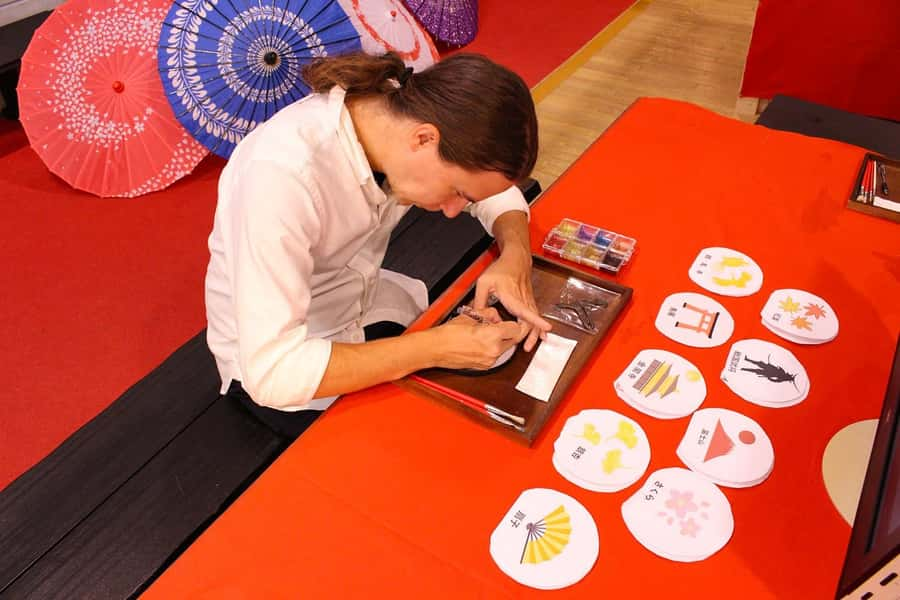
Arrive at the second-floor meeting point in front of Hibiki, and do not rely on the general building name alone. The meeting coordinates are useful if you are coming from the cruise pier or navigating the Tempozan area.
Wear comfortable clothes that you do not mind wearing during a hands-on craft. Bring a camera, since the sword and costume photo is part of the experience. Smoking is not allowed.
The activity has English guidance, but the supplied information does not identify the guide for every departure. Taki is the named host associated with especially positive feedback, but you should not assume he will lead every session.
You can cancel up to 24 hours before the start for a full refund. A reserve-now, pay-later option is also available, which helps if your Osaka plans may change. Check the available start times because the activity lasts one hour and does not run at every moment of the day.
My verdict: a handy cultural sampler, not an art school
Book this experience if you want a convenient, private introduction to Japanese craft and tea near the Osaka cruise area. The combination of gold-powder painting, matcha, wagashi, and costume photos gives you several memorable activities for $42.
Go in expecting a simple workshop in a commercial cultural venue. Do not expect a masterclass in maki-e or a formal tea ceremony. With those limits in mind, the short duration and easy location make this a practical choice for families, cruise passengers, and first-time visitors who want to try something distinctly Japanese without giving up half a day.
FAQ
Where does the experience meet?
Meet in front of Hibiki on the second floor of Osaka Bunkakan, also called Tempozan Osaka Bunkakan. The listed coordinates are 34.6539195, 135.42956.
How long does the experience last?
The guided workshop lasts one hour and returns to the same Osaka Bunkakan meeting point.
What activities are included?
The experience includes gold-powder maki-e lacquer painting, matcha preparation, seasonal wagashi, and a photo session with swords and Japanese costumes.
Is the experience conducted in English?
Yes. The activity has an English-speaking live guide.
Is this a private activity?
Yes. The group type is listed as private.
What should I bring?
Bring a camera and wear comfortable clothes. Smoking is not allowed during the activity.
Fresh tea listings around Osaka
- Osaka:Zen Tea Ceremony and Foot Bath Experience<45min>★ 5.0 · 7 reviews
- Nara Deer Park, Uji Matcha, & Hot Spring Full-Day Tour from Osaka★ 4.0 · 21 reviews
- Osaka: Tea Ceremony, Calligraphy, and Kimono Experience★ 5.0 · 6 reviews
- Osaka: Nara, Todaiji, Uji Matcha, and Hot Spring Tour★ 4.0 · 7 reviews
- Discover Japanese Tea Blending Techniques in Osaka★ 5.0 · 19 reviews
- Osaka Japanese Cooking And Matcha Class near Osaka Castle★ 5.0 · 22 reviews
- Craft Sushi and Matcha Ice Cream in Central Osaka (3-Course Meal)★ 5.0 · 2 reviews
- ZEN therapy | Shiatsu-style massage, EnergyTherapy & Japanese Tea★ 5.0 · 5 reviews
Matcha Experiences, compared.
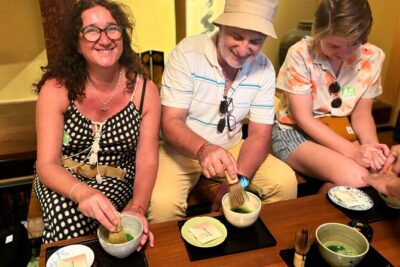
World Heritage Kyoto & Nara Uji Authentic Matcha Experience
Read our review →
Matcha Making Class in Tokyo with Authentic Japanese Sweets Set
Read our review →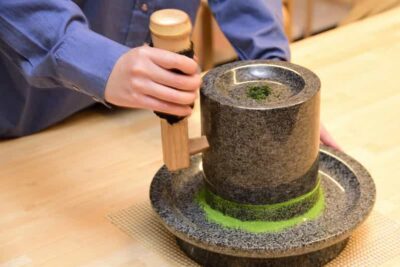
Kyoto: Tea Museum Tickets and Matcha Grinding Experience
Read our review →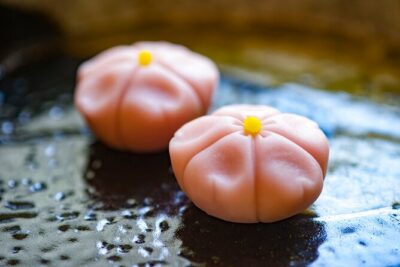
Matcha Making Class in Osaka with Authentic Japanese Sweets Set
Read our review →
Kyoto: Tea Ceremony Meditation – Make Matcha with Tea Master
Read our review →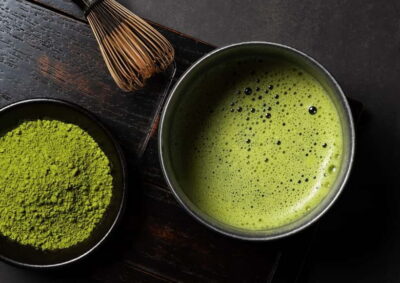
Tokyo: Matcha Making Experience with Mochi Sweets in Asakusa
Read our review →
Kyoto: Kimono Tea Ceremony with Matcha and Sweet
Read our review →
Browse the lists this tour appears in