
Review · NARA TEA TOURS
Nara Takayama Tea Whisk Craft and Tea Culture Experience
The remarkable part of this visit is watching Tango Tanimura turn one piece of bamboo into a working tea whisk by hand. His family has practiced this craft for generations, and Takayama is regarded as the birthplace of Japan’s chasen, the whisk used in the tea ceremony. You are not just looking at finished souvenirs. You are seeing a difficult craft performed in its home setting.
I like the small-scale setting and the chance to make a tea tool yourself. I also like the personal guidance from English-speaking guides such as Benoit and Yoshi, who can help you understand both the craft and the local area. The main drawback is practical: Tanimura Tango is not easy to reach by public bus, and transportation to the workshop is not included in the listed price.
Key points at Tanimura Tango
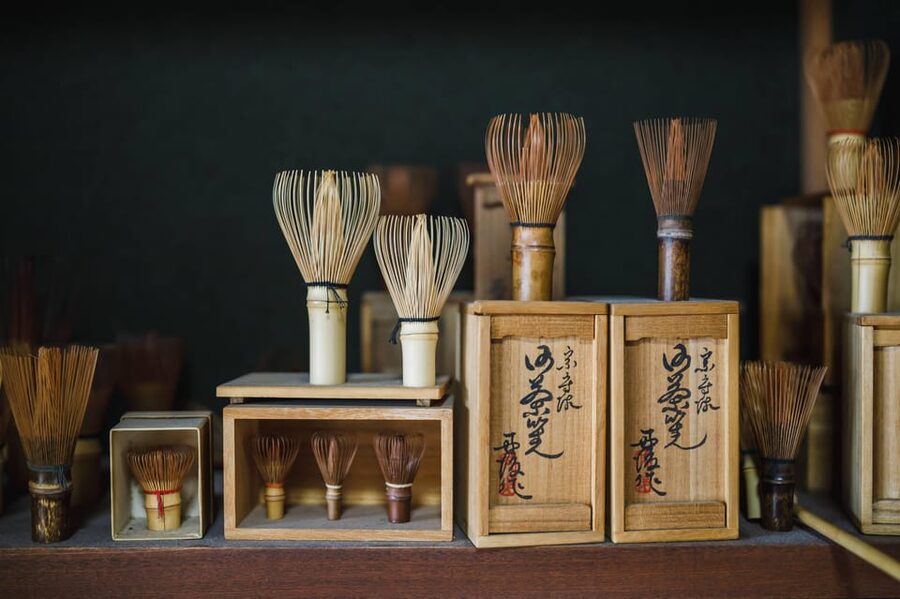
- Watch a 20th-generation artisan at work: Tango Tanimura demonstrates the delicate process of shaping bamboo into a chasen.
- Choose your level of participation: Pick chashaku carving, chasen making, or a tea ceremony, or select the Premium Plan for all of them.
- Make a useful handmade souvenir: Your tea whisk or scoop connects directly to the craft you have just seen.
- Visit Takayama, Nara: This bamboo-rich village is known as the birthplace of Japan’s tea whisk tradition.
- Allow 150 to 330 minutes: The shorter choices focus on one activity, while the Premium Plan fills most of an afternoon.
- Plan your transport carefully: The workshop is the meeting and ending point, and getting there by bus can be awkward.
Why Takayama is the right place for a tea whisk lesson
Takayama, in Nara Prefecture, is closely linked with Japanese tea whisk making. Tea whisk production is said to have begun here about 500 years ago, helped by the bamboo found in the area. Today, only a small number of makers in Japan continue the craft, and the Tanimura family is one of them.
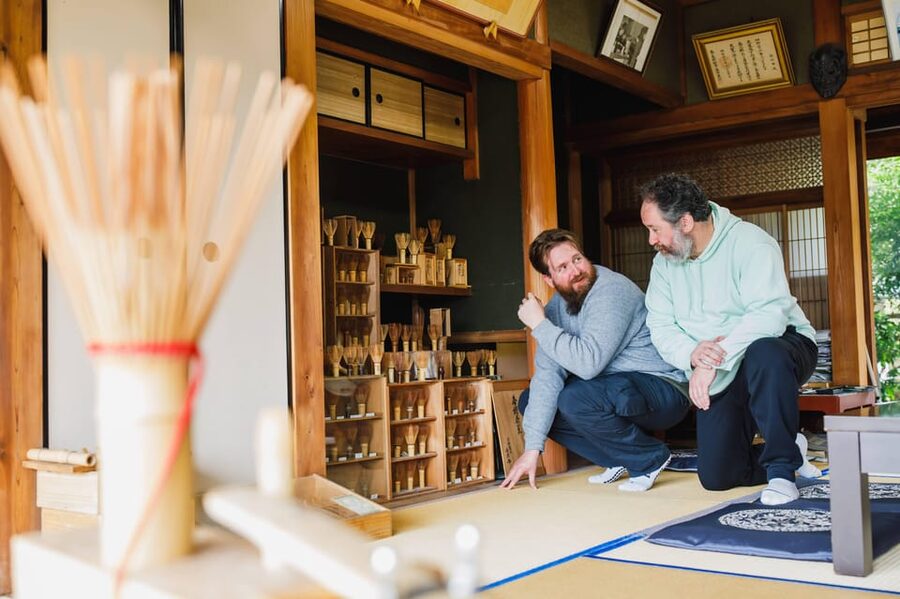
That setting changes the feel of the activity. A whisk lesson in a city shop could teach you the basic motions, but here the work is tied to a living family workshop. You see the finished tools, the working space, and the person responsible for preserving the technique.
I would not book this simply as a general sightseeing stop. The appeal is more focused. You should have some interest in matcha, Japanese craft, tea ceremony customs, or the patience required to make a useful object by hand. If that sounds like you, the visit offers something more personal than a standard cultural demonstration.
More tea experiences around Japan if you are still choosing
- Kyoto: Tea Ceremony in a Traditional Tea House in Kiyomizu
★ 4.9 · 3,519 reviews - Kyoto: Tea Ceremony Ju-An at Jotokuji Temple
★ 4.9 · 3,207 reviews - Kyoto: 45-Minute Tea Ceremony Lesson Experience
★ 4.3 · 2,378 reviews
Meeting the Tanimura family workshop
You meet your guide in front of Tango Tanimura’s house. Look for the guide holding a DeepExperience sign. All activities take place at Tanimura Tango, so you do not spend the afternoon moving between several attractions.
The workshop is also the family home, which gives the visit a quiet, intimate quality. Finished tea whisks are displayed around the space, and the atmosphere is that of a working craftsman’s home rather than a large museum. That can be a strength, since you are close to the process. It also means you should treat the setting with care and follow instructions about photography.
Photography is allowed, but you should respect the artisan’s privacy. You must not record the demonstration. This is a reasonable rule in a craft built on hand movements and techniques passed through generations.
The activity is available as a private or small-group visit. That matters here. A large crowd would make it harder to see the artisan’s hands and ask questions, while a smaller group allows the guide to adjust explanations to your interests.
Watching Tango Tanimura shape a chasen
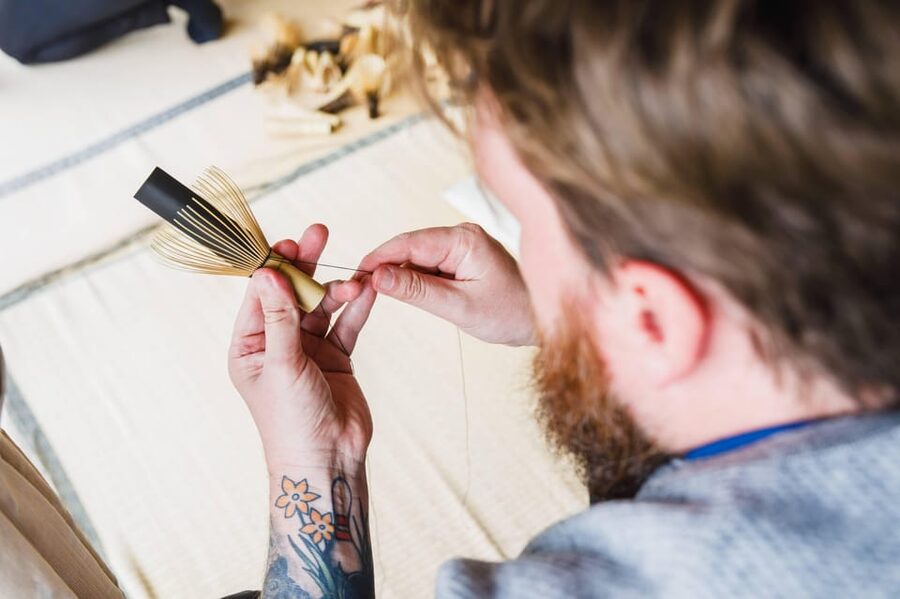
Every option includes a demonstration of chasen making. This is the fixed center of the visit, even if you choose only one additional activity.
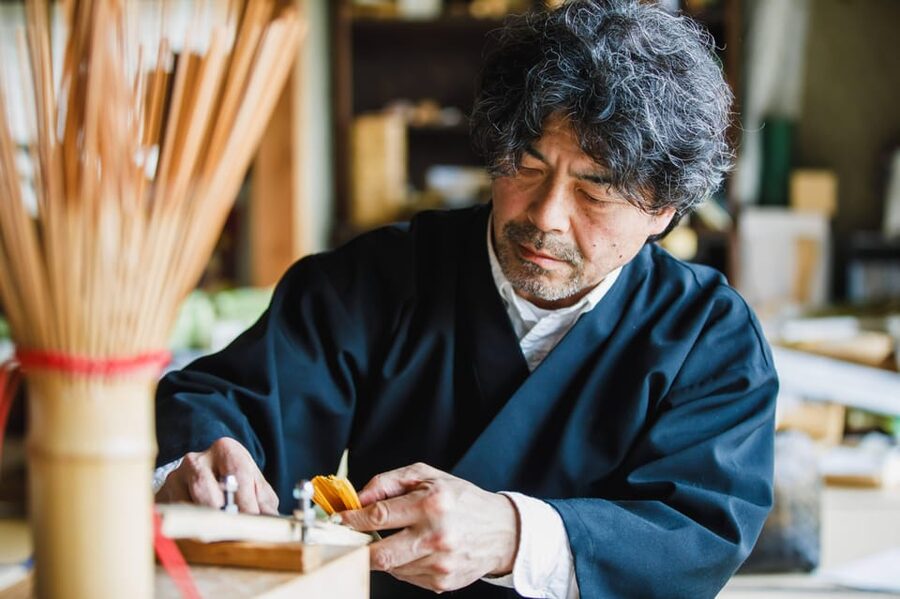
Tango Tanimura is the 20th-generation head of his family. He demonstrates how a single piece of bamboo becomes a tea whisk with fine, flexible tines. The work requires control rather than speed. The finished whisk may look simple, but the demonstration shows how much judgment goes into preparing and shaping it.
This is the moment I would pay closest attention to. The important lesson is not only what the artisan does, but how little room there is for error. The whisk must work properly in a bowl of matcha, and its form needs to be both delicate and durable.
Your guide explains what you are seeing in English or Japanese. Benoit has been praised for being helpful and professional, while Yoshi has provided station pickup and clear English explanations for some visitors. Do not assume pickup is part of every booking, but an English-speaking guide can make a real difference when the demonstration moves quickly or uses specialized terms.
The demonstration is included even in the shorter choices, so you do not have to choose the longest plan to see the master at work. That helps the basic options offer good value for people who want the craft story without a full tea program.
Choosing your hands-on activity
After the demonstration, you choose the part that best fits your interests. The standard choices are chashaku carving, chasen making, or a tea ceremony. The Premium Plan combines them all.
Same city, a very different cup:
- World Heritage Kyoto & Nara Uji Authentic Matcha Experience
★ 5.0 · 1,573 reviews - Osaka: Tea Ceremony Experience
★ 4.9 · 1,426 reviews - Kyoto: Table-Style Tea Ceremony at a Kyo-Machiya
★ 4.9 · 1,211 reviews - Kanazawa: Kenrokuen Tea Ceremony Experience
★ 4.8 · 1,139 reviews
Carving a chashaku
A chashaku is the slender scoop used to measure matcha. Under the artisan’s guidance, you carve your own scoop by hand.
This is likely the best choice if you want a shorter, more manageable craft session. A tea scoop is smaller and less complex than a whisk, so it gives you a direct role without asking you to master the full chasen process. You still leave with an object you made yourself, not a factory-produced keepsake.
The value here is personal. Your scoop will not have the exact finish of a professional artisan’s work, and that is part of the point. It records your attempt and the guidance you received.
Making your own chasen
The chasen workshop lets you work with the same type of tea tool demonstrated by Tango Tanimura. You learn through direct practice, then take your finished whisk home.
This is the most natural choice for someone especially interested in matcha. It also asks more of your hands and attention than simply watching a demonstration. The craft depends on careful handling, so wear comfortable clothing and be ready to work patiently.
A handmade chasen is a useful souvenir, but you should not expect a beginner-made whisk to match the master’s. The value lies in understanding the process and carrying home a reminder of the workshop, not in producing a flawless professional tool.
Joining the tea ceremony
The tea ceremony option shifts the focus from making tools to using them. You learn how tea utensils, manners, preparation, and hospitality fit together.
This is a good choice if you want cultural context rather than a craft project. The ceremony helps explain why the whisk and scoop matter. They are not merely decorative objects. Their shape and use are part of a larger practice built around attention, respect, and hospitality.
If you are already comfortable with tea ceremony customs, you may prefer the craft choices. If Japanese tea culture is new to you, the ceremony provides a clear introduction without requiring you to make anything.
What the Premium Plan adds
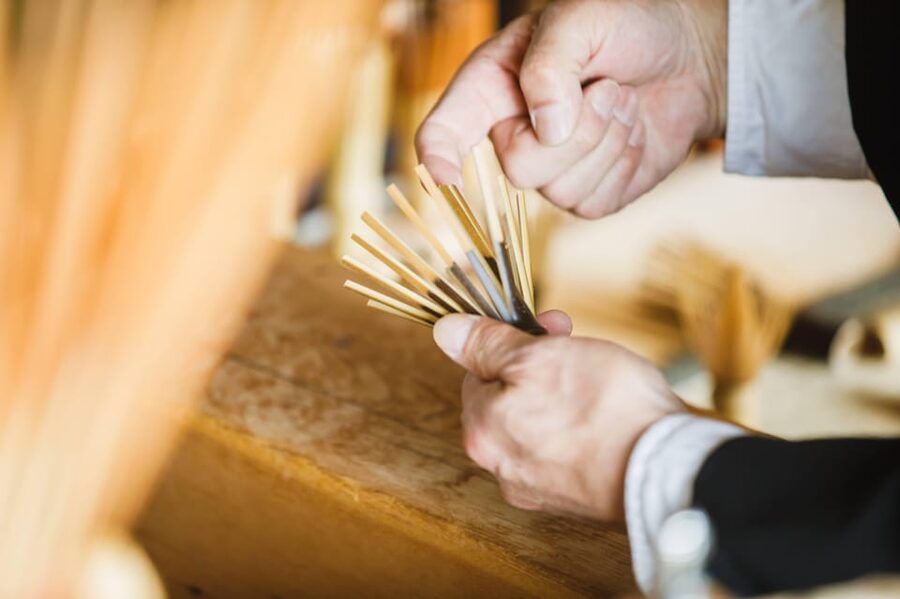
The Premium Plan includes the tea ceremony, lunch, the chasen workshop, chashaku carving, and matcha whisking. It is the fullest version of the visit and can last up to 330 minutes.
The matcha whisking session gives you a chance to prepare tea with utensils connected to the same tradition you have just studied. That practical step helps bring the demonstration to life. You are no longer only watching the artisan explain a tool. You are using one in the setting where it belongs.
Lunch is another reason to consider the Premium Plan if you want the visit to occupy much of your day. The meal is described as a seasonal boxed lunch, which fits the quiet, traditional character of the workshop. The supplied details do not specify the menu, so do not book it expecting a particular dish.
At $141 per person, the Premium Plan costs more than a quick craft class, but the price covers several separate elements: the artisan demonstration, two hands-on craft activities, tea ceremony instruction, matcha preparation, and lunch. I see the strongest value here for people who would otherwise book several cultural activities during their Nara visit.
You may not need the Premium Plan if you mainly want to watch the master or make one small object. Choosing one activity keeps the visit shorter and more focused. The best choice depends on whether you want a single craft lesson or a full afternoon centered on tea culture.
Timing, transport, and the practical details
The duration ranges from 150 to 330 minutes. Check the available starting times when you book, since the exact length depends on your selected option.
You should plan your route to Takayama before the day of the visit. Transportation to and from Tanimura Tango is not included. One visitor had Yoshi pick them up at a train station and considered that help essential because reaching the village by bus was difficult. That is useful local advice, but it does not mean station pickup is guaranteed with every reservation.
Ask about transport when arranging your visit rather than arriving at the station without a plan. The meeting point is in front of the Tanimura home, and both the starting and ending points are listed there.
Wear comfortable clothing suitable for handcraft work. You do not need to dress formally for the crafting sessions, and practical clothes will make it easier to concentrate. Since the visit takes place in a private workshop, follow the guide’s instructions about where to stand, what to touch, and when to take photographs.
English and Japanese are available. Private and small-group formats are also offered, which should suit people who prefer a quieter cultural activity. The workshop is not designed as a broad Nara highlights tour, so pair it with other sightseeing only after allowing enough time for the craft session.
The value of meeting a living artisan
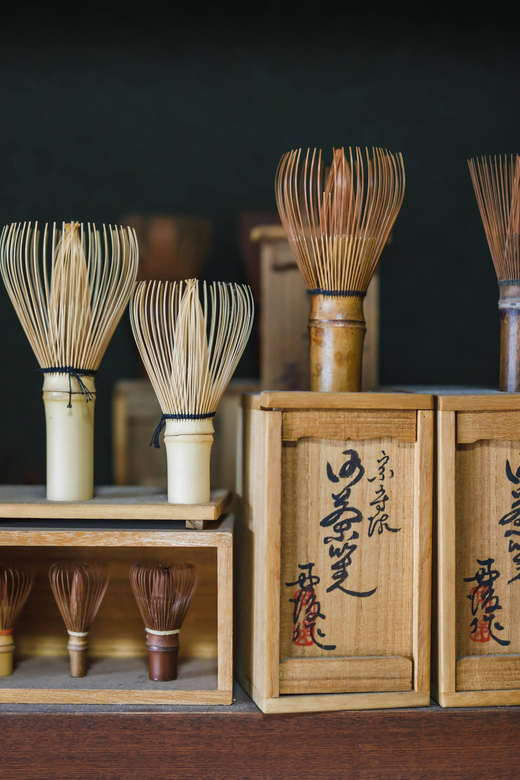
Many cultural activities show you the final object. This one gives you a better look at the work behind it.
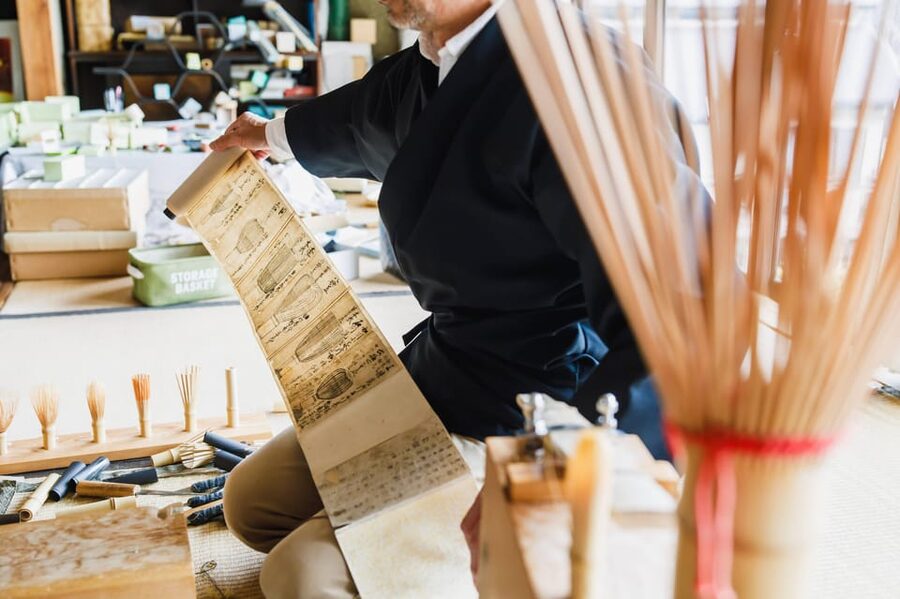
Tango Tanimura’s demonstration connects the finished chasen to bamboo, hand tools, repeated practice, and family instruction. You see why a tea whisk can command respect despite its modest size. It is a functional object shaped by a long chain of decisions, and the demonstration makes those decisions visible.
The personal contact is also important. Meeting the artisan gives the craft a human face. You are not simply buying a whisk in a shop and reading a label about its origin. You are watching the maker explain the work and, depending on your choice, trying part of it yourself.
That is why I would rate the demonstration as the strongest part of the activity. The craft is difficult to copy from a written description. Seeing the movements directly gives you a clearer sense of the skill involved.
Who should book this visit
This experience suits you if you:
- Have an interest in matcha or Japanese tea ceremony
- Enjoy hands-on craft activities
- Prefer private or small-group cultural visits
- Want to meet a practicing artisan
- Value a handmade souvenir over a standard souvenir
- Have enough time to reach Takayama and stay for the full session
It may not suit you if you want a fast stop, dislike making things by hand, or are only interested in major temples and famous sights. The workshop requires time and attention. You also need to handle the transport planning yourself unless a separate pickup arrangement is made.
Families and mixed-interest groups may want to choose the shorter option, especially if not everyone wants to spend several hours on tea culture. The Premium Plan is better for a group that genuinely wants the full sequence of demonstration, making, tea, and lunch.
Should you book the Nara tea whisk experience?
I would book it if you want a close look at a Japanese craft that is still practiced in its traditional home. The strongest reasons are the chance to watch Tango Tanimura work, the choice of a handmade chashaku or chasen, and the calm setting of the family workshop.
Choose one focused activity if you want to keep the cost and time under control. Choose the Premium Plan if you want a full cultural afternoon and will make good use of the tea ceremony, lunch, and matcha whisking.
The one serious consideration is access. Since transport is not included and the village can be awkward to reach by bus, sort out your route before booking. If you can manage that part, this is a thoughtful choice for anyone who wants more than a quick photograph and a packaged souvenir.
FAQ
Where does the tea whisk experience take place?
All activities take place at Tanimura Tango in Takayama, Nara. Meet your guide in front of Tango Tanimura’s house and look for a guide holding a DeepExperience sign.
How long does the activity last?
The available duration is between 150 and 330 minutes. The exact length depends on the option you select and the available starting time.
What activities can I choose?
You can choose chashaku carving, a chasen workshop, or a tea ceremony. The Premium Plan includes all of these activities.
What does the Premium Plan include?
The Premium Plan includes the tea ceremony, lunch, chasen workshop, chashaku carving, and a matcha whisking experience.
Is the artisan demonstration included?
Yes. A chasen crafting demonstration by Tango Tanimura is included with every option.
Is transportation to the workshop included?
No. Transportation to and from Tanimura Tango is not included. One visitor received station pickup from a guide, but you should confirm any transport arrangement before your visit.
Can I cancel or pay later?
You can cancel up to 24 hours in advance for a full refund. Reserve now and pay later is available, so you do not have to pay at the time of booking.
Fresh tea listings around Japan
- Yokohama : Tea Ceremony with Sweets and Souvenir★ 5.0 · 5 reviews
- Walking Tour: Yanaka,Nezu& Sendagi: Tea Ceremony & Old Tokyo★ 5.0 · 3 reviews
- Visit local home for music and tea ceremony near Disney★ 4.9 · 13 reviews
- Yokohama: Sushi & Gyoza Cooking with Matcha & GreenTea Experience★ 5.0 · 3 reviews
- Trip to Kamakura & Enoshima: Shrines, Seaside, Temples &Tea★ 5.0 · 11 reviews
- Uji: Private immersion into Kyoto’s tea and reglious culture★ 5.0 · 17 reviews
- Uji Tea Ceremony and UNESCO Heritage Walking Tour★ 5.0 · 20 reviews
- Kyoto tea town for matcha lovers★ 5.0 · 16 reviews
Nara Tea Tours, compared.
World Heritage Kyoto & Nara Uji Authentic Matcha Experience
Read our review →
Nara:Authentic Tea Ceremony(Max 5 ppl) -Master Matcha Making
Read our review →
Nara:5 Type of Tea Tasting & Mindful Tea Ceremony
Read our review →
Nara:Tea Tasting&Private Tea Ceremony -Master Matcha Making-
Read our review →
Full Day Nara Deer, Temple, Shrine, Activities & Tea Ceremony
Read our review →
Nara:Private Tea Ceremony(Max 5 ppl) -Master Matcha Making-
Read our review →Browse the lists this tour appears in