
Review · TEA CEREMONY EXPERIENCES
Kyoto: Quiet and Graceful Tea Ceremony
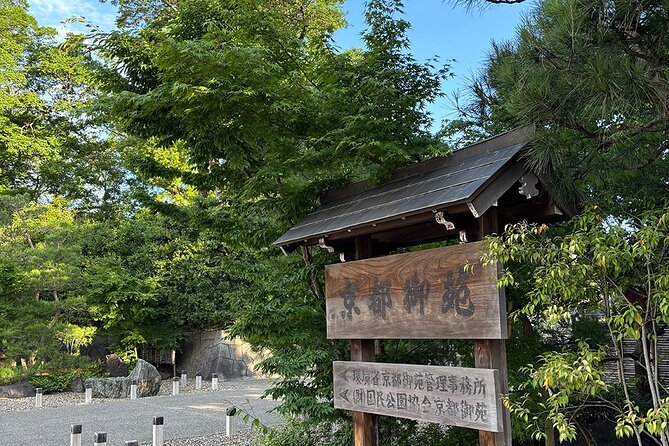
Kyoto’s tea ceremony is not a theatrical show with loud narration and costume changes. It is a short, calm lesson in matcha preparation, etiquette, and hospitality, held in a private tea room. You watch the host work, taste a seasonal sweet and Kyoto matcha, then take part in making tea yourself.
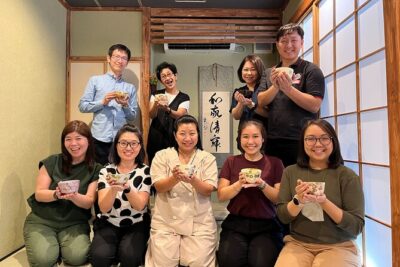
I like the small group format, with no more than eight people, and the chance to ask questions without competing with a busload of sightseers. I also like the genuine setting: this takes place in a tea master’s private house rather than a polished tourist venue. The tradeoff is clear: kimono rental is not included, photos are not allowed during the tea performance, and some people find the 45-minute visit a little brief.
Key points at a glance
- Watch each matcha movement up close: The host prepares premium Kyoto matcha with measured, deliberate steps.
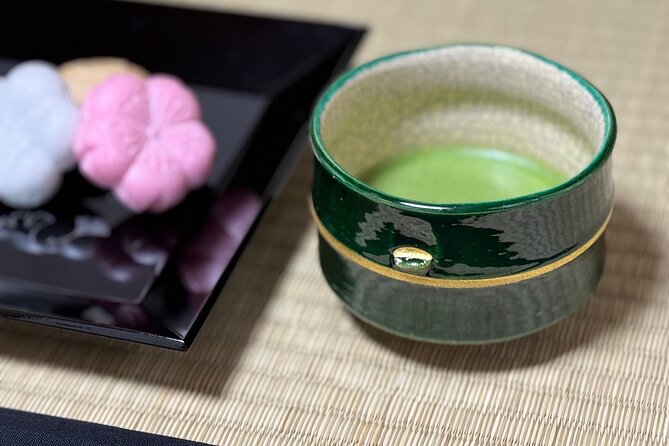
- Taste sweets before drinking tea: Traditional seasonal Japanese sweets balance matcha’s bitter edge.
- Make your own tea: The session is not only a demonstration. You get a chance to prepare matcha yourself.
- Expect a private-house setting: The tea room is designed for tea ceremony, but it feels more personal than a formal commercial venue.
- Small groups keep it calm: The maximum is eight people, making questions and explanations easier.
- Plan for a simple cultural lesson: This is about ritual and hospitality, not kimono dressing, extensive photography, or a long performance.
A quiet introduction to Kyoto’s tea tradition
This experience gives you a compact look at one of Japan’s most careful cultural practices. A tea ceremony is not simply a way to drink green tea. The host’s movements, the placement of utensils, the way you enter the room, and the order of serving all carry meaning.
You begin at Omotenashi Tea Ceremony, at 450-1 Sanbongicho in Kyoto’s Nakagyo Ward. The listed meeting point is 南総合会計事務所, so read your confirmation carefully and allow time to find the address. The activity ends at the same place.
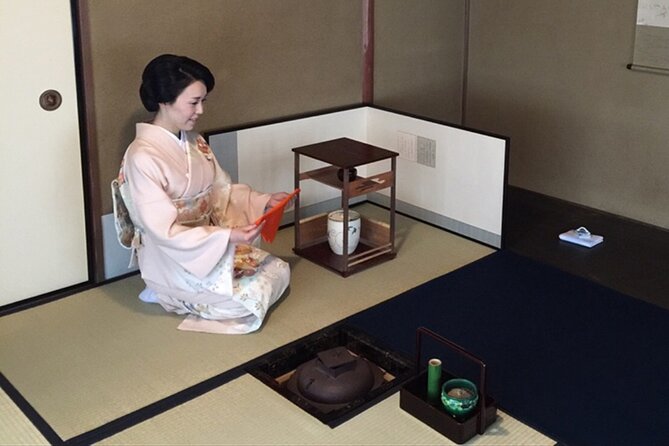
The setting is a private tea room specially designed for tea ceremony. That matters. You will not be stepping into a grand temple or a lavish historic tea house. Instead, you get a more direct look at how the ceremony works in an intimate home setting. Some people will find this more genuine and personal. Others may prefer a more decorated venue with a garden, kimono rental, and plenty of photo opportunities.
The ceremony lasts about 45 minutes. That is enough time to understand the basic sequence and try the tea, but not enough for a long study of tea history or several different styles of preparation.
More Tea Ceremonies in Kyoto
- Kyoto: Tea Ceremony in a Traditional Tea House in Kiyomizu
★ 4.9 · 3,519 reviews - Kyoto: Tea Ceremony Ju-An at Jotokuji Temple
★ 4.9 · 3,207 reviews - Kyoto: 45-Minute Tea Ceremony Lesson Experience
★ 4.3 · 2,378 reviews
Entering the room and learning proper etiquette
Part of the value comes before the matcha is even whisked. The host explains how to enter the tea room, where to sit, and how to behave during the preparation. You do not need prior knowledge of Japanese customs. The instructions are meant to make first-time visitors comfortable.
This is useful because tea ceremony etiquette can seem mysterious when you only see it from a distance. Here, you can ask why a gesture is made or why a utensil is placed in a certain position. Hosts have been described as patient, warm, and open to questions, and Mai is specifically praised for giving detailed explanations in a friendly way.
The tone is quiet. That quiet may be the best part of the experience. The host’s movements are slow and controlled, and the room gives you a chance to pay attention to small details. You are not being hurried from one display to the next.
Still, quiet does not mean elaborate. If you expect a grand production with a kimono-clad master, formal musicians, or a large historic setting, adjust your expectations. This is a modest, focused introduction.
Watching matcha prepared with careful ritual
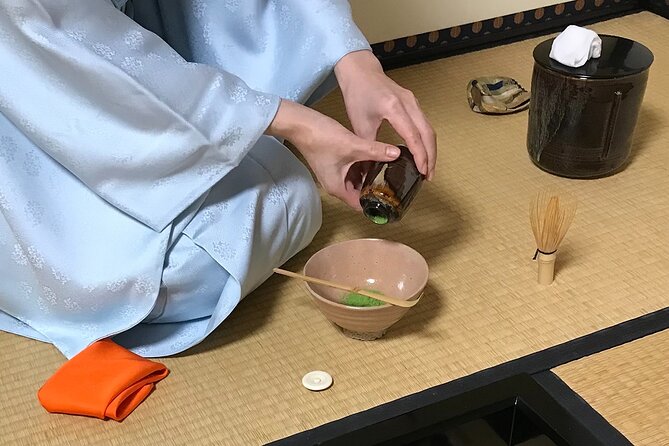
The center of the visit is the tea preparation. The host demonstrates how premium matcha is handled, measured, and whisked. The process is precise, and you will notice that the ceremony gives as much attention to motion and presentation as it does to the final drink.
The host’s hands do most of the talking at first. Utensils are placed with care, water is added in the proper sequence, and the matcha is whisked into a smooth drink. You can watch without needing to perform anything right away.
I like this part because it shows why drinking matcha in a café is not the same experience. A café can serve a good cup, but it usually does not explain the ritual, the etiquette, or the intention behind the preparation. Here, the tea becomes a lesson in attention.
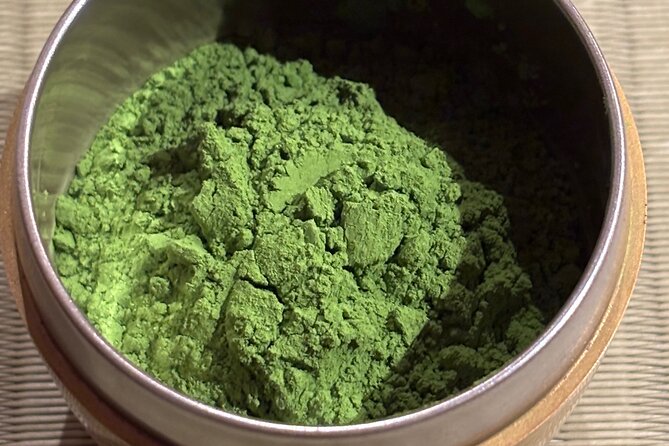
The matcha is sourced from Kyoto producers, and the experience includes traditional Japanese seasonal sweets. The sweet comes as an important counterpoint to the tea. Matcha can be grassy, bitter, and intense, while the confection provides a gentle sweetness before you drink.
Do not expect a large meal. Tea and sweets are included, but this is a cultural activity, not a food tour. If you are hungry, eat beforehand.
Tasting seasonal sweets and Kyoto matcha
The sweets are part of the ceremony, not a random snack added to the booking. Their sweetness prepares your palate for matcha and helps explain the balance built into the traditional sequence.
The exact sweet can vary by season. That is one of the pleasant details of the experience, though it also means you should not book expecting a specific dessert. Some children may not enjoy the traditional sweet. Hosts have shown flexibility with families, including offering a more familiar snack when a child did not like the confection, but that should be seen as kindness rather than a guaranteed menu item.
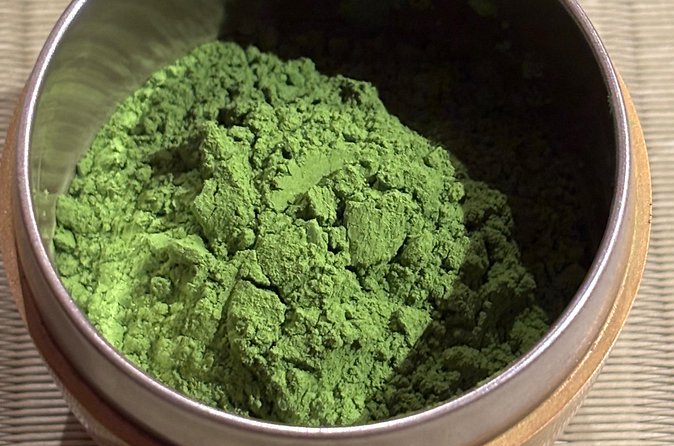
The tea itself receives strong praise for flavor. You may find it more intense than the matcha drinks served with milk or sugar. If you normally prefer sweetened drinks, the host’s explanation helps you approach the taste with the right expectations.
This is also a good moment to ask questions. The ceremony is formal, but the teaching style is approachable. You can learn about the tools, the order of service, and the meaning of the gestures without feeling that you are taking an exam.
Same city, a very different cup:
- Kyoto: Table-Style Tea Ceremony at a Kyo-Machiya
★ 4.9 · 1,211 reviews - Kimono Tea Ceremony at Kyoto Maikoya, NISHIKI
★ 5.0 · 911 reviews - Kyoto: Kimono Tea Ceremony at Orizuruya Gion
★ 4.9 · 618 reviews - Kyoto: Tea Ceremony in 100-year-old Kyo-Machiya Townhouse
★ 4.8 · 546 reviews
Making your own matcha
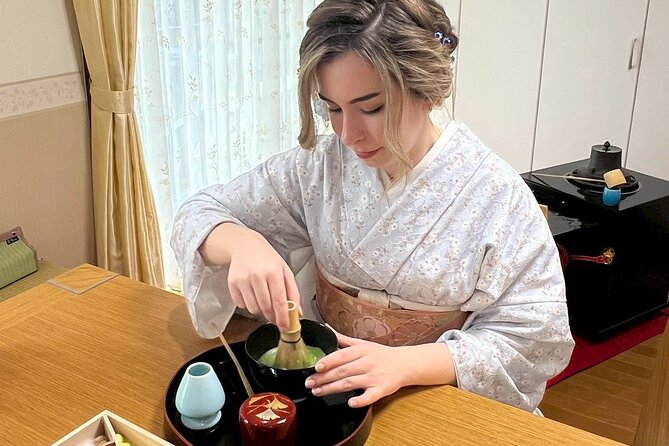
After watching the host, you get to take part in the process. You prepare your own tea, following the demonstrated steps. This hands-on section makes the activity more useful than a performance you simply watch from a seat.
You may be surprised by how much technique is involved in getting the texture right. The whisking motion needs practice, and the finished cup may not look exactly like the host’s. That is part of the fun. You are there to understand the process, not to become a tea master in 45 minutes.
Families can enjoy this part, especially because children have a clear role. It also gives solo visitors a natural way to take part rather than sitting silently through the entire session.
Photos are allowed before and after the ceremony, and the experience gives you a chance to make photos while preparing your own matcha. During the formal tea performance, photography and video are not allowed. This rule protects the quiet atmosphere, but it will disappoint anyone hoping to record every graceful movement.
If photos matter to you, take a few before the ceremony begins and again after the formal portion ends. Do not assume you can photograph the tea preparation itself.
What the private setting feels like
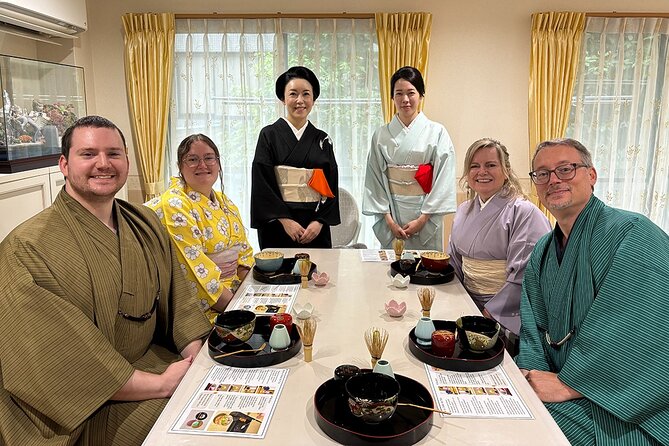
The private-house setting is central to the character of this activity. It is intimate, calm, and less commercial than a large cultural attraction. You may feel as if you are being welcomed into someone’s carefully prepared tea room rather than attending a staged show.
That intimacy has two sides. The room can feel personal and peaceful, but it is not necessarily luxurious. One person described the setting as simple and somewhat like being in someone’s home. If you want ornate furnishings, a broad garden view, or a highly dressed-up presentation, this may feel too plain for the price.
Temperature is another practical point. A visitor attending in November found the house quite cold. Tatami rooms and traditional spaces may not feel as warm as a modern hotel lounge, so bring a layer in cooler months.
The host’s warmth can make a big difference. The best sessions seem to balance precise ritual with relaxed conversation. Hosts such as Mai have been praised for being graceful, clear, and easy to approach. Staff have also welcomed solo visitors warmly, so you do not need a partner or group to make the activity work.
Is $56.49 a fair price?
At $56.49 per person, this is not the cheapest way to drink matcha in Kyoto. You are paying for instruction, a prepared tea room, a host’s time, seasonal sweets, premium matcha, and the chance to make tea yourself.
I think the price makes sense if you want a focused cultural lesson in a small group. The maximum group size of eight gives the host room to explain the process and answer questions. You also avoid arranging tea, sweets, and instruction separately.
The value is weaker if you mainly want a photo session or a dressed-up cultural show. Kimono rental is not included. There is no promise of a long ceremony, extensive food, or photography during the formal preparation. Some people may find 45 minutes too short for the cost, especially if they expected a more elaborate venue.
The best way to judge the price is to ask what you want from the visit. For a calm introduction with personal instruction, the cost is reasonable. For costume rental and a highly decorative setting, compare other Kyoto experiences before booking.
Who will enjoy this most?
I would recommend this activity to couples who want a quiet break, solo visitors interested in Japanese customs, and families with children old enough to sit attentively for a short ceremony. It also suits anyone who prefers a small, personal setting to a large tourist attraction.
It is a good choice early in your Kyoto visit because it gives you context for matcha, hospitality, and traditional etiquette. It can also work late in the day when you want something slower than temple-hopping.
You should think twice if you dislike sitting quietly, have no interest in ritual, or expect to wear a kimono. The experience does not include dressing up. You should also be comfortable with the fact that photos and videos are restricted during the central performance.
The activity is accessible by public transportation, and service animals are allowed. Confirmation is provided at booking. You can cancel for a full refund up to 24 hours before the start time, but cancellations or changes inside that window are not refunded or accepted.
A useful choice for a short Kyoto cultural stop
This tea ceremony does not try to be everything. It offers a short, careful introduction to matcha and the spirit of omotenashi, or attentive hospitality. The strongest elements are the quiet room, the careful demonstration, the seasonal sweet, and the chance to prepare your own tea.
I would book it if you want a genuine, low-key cultural activity and value explanation over spectacle. I would skip it if your main goal is kimono photography, a grand tea house, or a long formal performance. For the right visitor, 45 minutes is enough to slow down, learn the basic ritual, and leave Kyoto with a better understanding of what is in that small bowl of green tea.
FAQ
How long does the tea ceremony last?
The experience lasts approximately 45 minutes.
What is included in the experience?
Tea and traditional Japanese seasonal sweets are included. You also watch the tea preparation and have the chance to make matcha yourself.
Is kimono rental included?
No. Kimono rental is not included in this tea ceremony.
Can I take photos during the ceremony?
Photos and videos are not allowed during the formal tea performance. Photos are allowed before and after the ceremony, and during the portion when you make your own matcha.
Where does the experience meet?
The listed meeting point is 南総合会計事務所, 450-1 Sanbongicho, Nakagyo Ward, Kyoto, 604-0871, Japan.
Where does the activity end?
The activity ends back at the meeting point.
How many people can join?
The maximum group size is eight people.
Can I cancel for a refund?
Yes. You can receive a full refund if you cancel at least 24 hours before the experience begins. Cancellations or changes made less than 24 hours before the start time are not accepted, and the payment is not refunded.
Fresh tea listings around Kyoto
- Traditional Tea Ceremony in Kyoto★ 4.5 · 3 reviews
- Kyoto: Authentic Tea Ceremony in a Small Group★ 5.0 · 7 reviews
- Uji Walking Tour – Byodo-in temple and Tea Ceremony from Kyoto★ 3.5 · 3 reviews
- Tea Ceremony in 150 Years Old Townhouse with Tables and Chairs★ 5.0 · 22 reviews
- Tea ceremony at Kyoto’s Zen Temple Teahouse★ 5.0 · 2 reviews
- Tea Ceremony Experience in Traditional Kyoto Townhouse★ 5.0 · 19 reviews
- Sencha-do the Japanese Tea Ceremony Workshop in Kyoto★ 5.0 · 21 reviews
- Silent Beauty of Kyoto Zen Walk and Tea Experience★ 5.0 · 2 reviews
Tea Ceremony Experiences, compared.
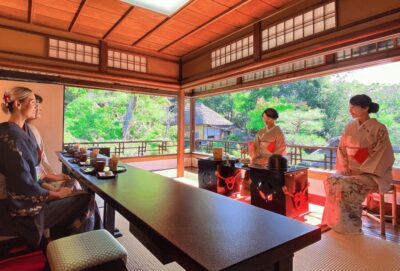
Kyoto: Tea Ceremony in a Traditional Tea House in Kiyomizu
Read our review →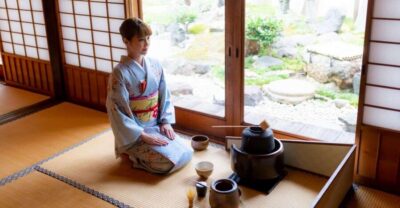
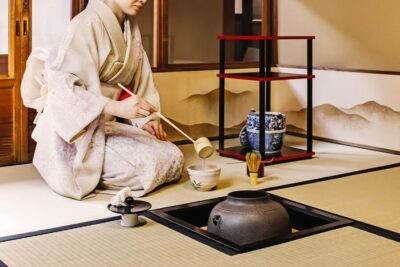
Kyoto: 45-Minute Tea Ceremony Lesson Experience
Read our review →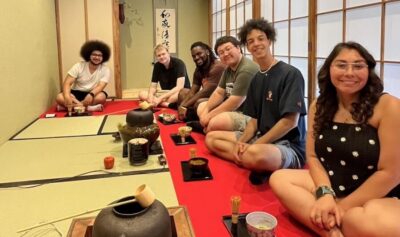
Kyoto: Table-Style Tea Ceremony at a Kyo-Machiya
Read our review →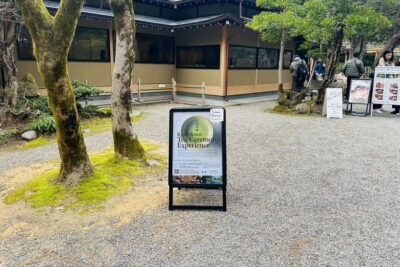
Browse the lists this tour appears in