
Review · TEA CEREMONY EXPERIENCES
Kyoto Kiyomizu Tea Ceremony with Scenic Garden Views
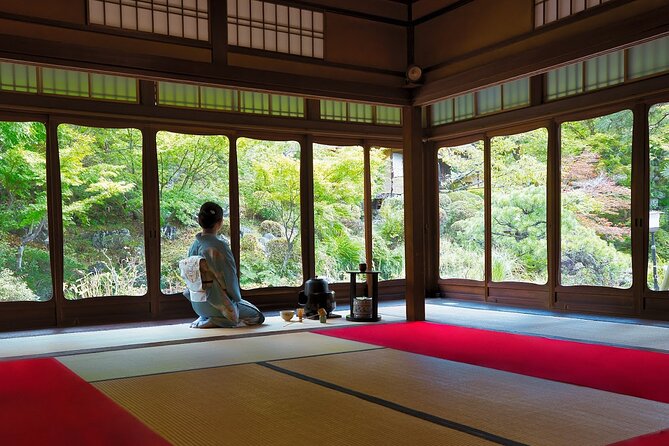
The best part of this Kyoto tea ceremony is the setting. You sit in a traditional teahouse with broad garden views, watching a tea master purify the utensils, whisk matcha, and handle the tea bowl with careful, practiced movements. It feels far removed from ordering matcha at a café.
I especially like the small-group format, which gives you room to ask questions, and the fact that you get two cups of matcha: one prepared for you, then another you learn to make yourself. The main drawback is time. At about 45 minutes, this is a polished introduction rather than a full study of tea ceremony, and some people may find the $50.87 price high for a short activity.
Key points at a glance
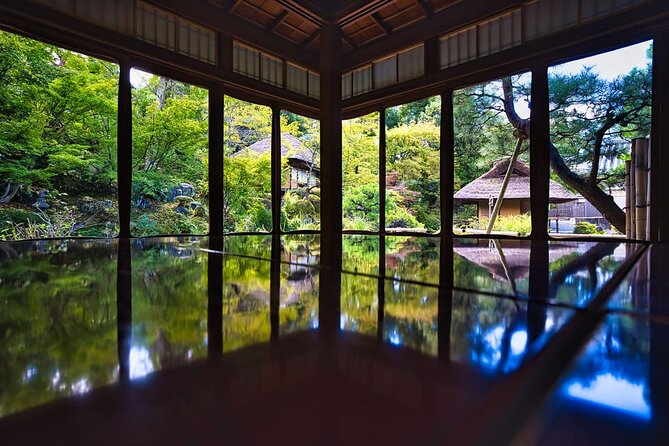
- Garden-facing tea room: Large windows give you peaceful views while the ceremony unfolds.
- Two stages of matcha: First watch the tea master, then prepare a cup under instruction.
- English explanations: An assistant explains the customs, movements, and cultural meaning.
- Traditional sweets included: Wagashi is served with the matcha and helps balance its earthy taste.
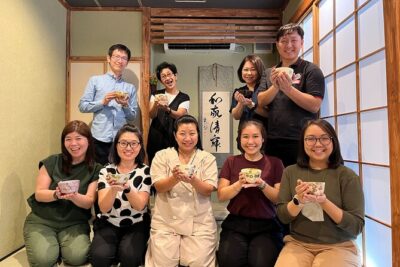
- Small group of up to 12: The format keeps the experience personal without making it private.
- Plan for floor seating: The activity is not recommended for people with foot or knee problems, and wearing socks is a good idea.
Entering Tea Ceremony SAKAGUCHIAN near Kiyomizu
The meeting point is Tea Ceremony SAKAGUCHIAN at 3-chōme-334 Kiyomizu in Kyoto’s Higashiyama Ward. The activity begins and ends there, so you do not need to arrange transport between separate parts of the experience.
This location matters. Kiyomizu is one of Kyoto’s most atmospheric areas, with old streets, temples, wooden buildings, and plenty of sightseeing nearby. You can pair the ceremony with a visit to Kiyomizu-dera or use it as a quiet pause after walking through the neighborhood.
Once inside, the mood changes. The outside streets can be busy, but the tea room is designed for calm attention. You face the garden, settle into the traditional setting, and give yourself roughly an hour away from the usual sightseeing rush.
The room has large windows or broad openings that frame the garden. The view is not a side attraction you glimpse on arrival and then forget. It remains part of the experience while the tea master works in front of you.
More Tea Ceremonies in Kyoto
- Kyoto: Tea Ceremony in a Traditional Tea House in Kiyomizu
★ 4.9 · 3,519 reviews - Kyoto: Tea Ceremony Ju-An at Jotokuji Temple
★ 4.9 · 3,207 reviews - Kyoto: 45-Minute Tea Ceremony Lesson Experience
★ 4.3 · 2,378 reviews
Why the garden view changes the experience
A tea ceremony can take place in many settings, including restaurants, cultural centers, and hotel rooms. Here, the garden gives the ceremony a stronger sense of place.
The changing seasons are part of Japanese tea culture, and the garden helps you notice that idea without needing a long lecture. Summer greenery, seasonal color, carefully arranged plants, and the quiet view outside all support the ceremony’s focus on simplicity and attention.
I like this combination because you are not only watching someone prepare a drink. You are seeing how the room, the garden, the utensils, the sweets, and the movements work together. The setting also gives you something to look at during pauses, which helps the 45 minutes feel relaxed rather than rigid.
The garden is not presented as a separate sightseeing stop, so do not book this expecting a long garden tour. You remain in the tea room and view the grounds from there. Still, the setting is one of the strongest reasons to choose this experience over a more basic matcha lesson.
Watching the tea master prepare matcha
The ceremony begins with the tea master performing the preparation rather than rushing straight to a tasting. You watch the utensils being purified, the tea being measured and whisked, and the bowl being handled according to established customs.
The movements are slow and precise. That pace is useful because it lets you see small details that are easy to miss in a crowded demonstration. The tea master’s gestures are not random decoration. Each part of the process has a place, and the assistant explains what you are seeing.
You will also learn how to handle the tea bowl and how to drink the matcha properly. The instruction is practical, not simply a display for photographs. You are shown how the bowl is approached, held, and appreciated as part of the ceremony.
The assistant’s English explanations are an important part of the experience. You can ask questions about the ceremony, the tools, the clothing, the garden, and the customs surrounding tea. Several sessions have been praised for clear interpretation and for making the process understandable without flattening it into a quick tourist performance.
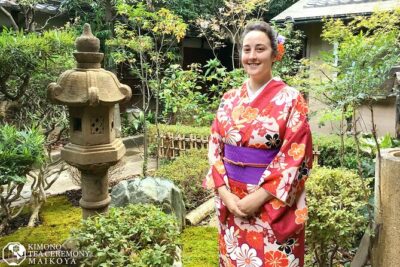
The tea master may be dressed in formal ceremonial clothing, adding to the visual sense of occasion. The attention to movement, clothing, room design, and utensils helps explain why tea ceremony is treated as an art rather than just a method for making a drink.
Two cups of matcha, two different roles
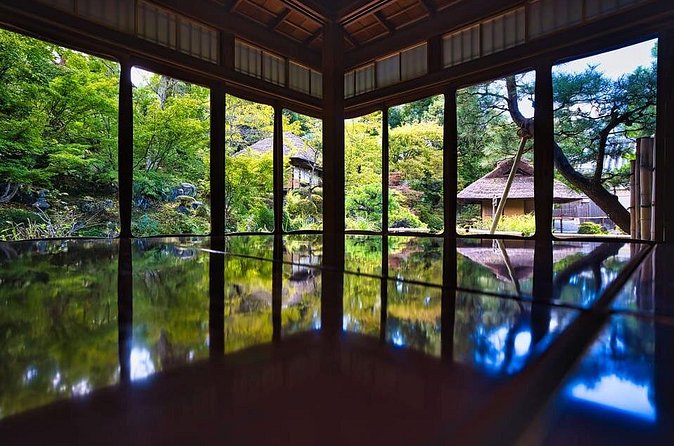
The first cup is prepared for you. This lets you concentrate on the ceremony itself, from the sound of the whisk to the final presentation of the bowl.
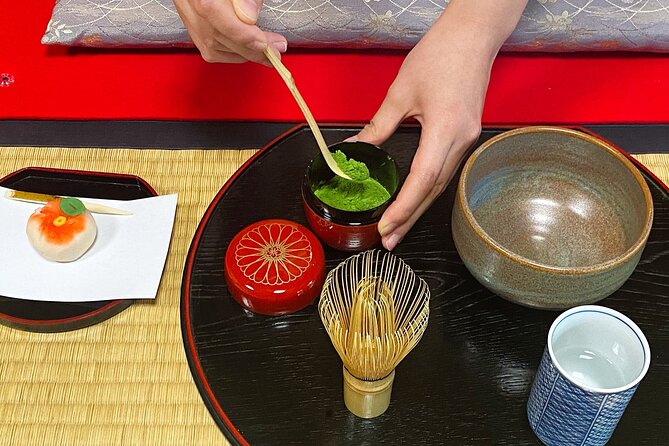
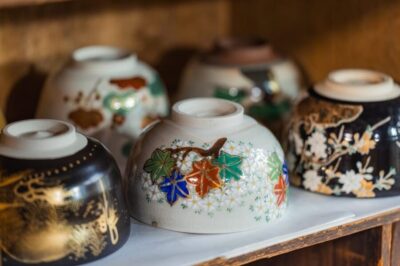
Matcha has a distinct taste. It is finely ground green tea with an earthy, slightly bitter character, and it is not the same as a sweet green tea drink from a café. The wagashi served alongside it helps balance the tea and gives you a traditional flavor pairing.
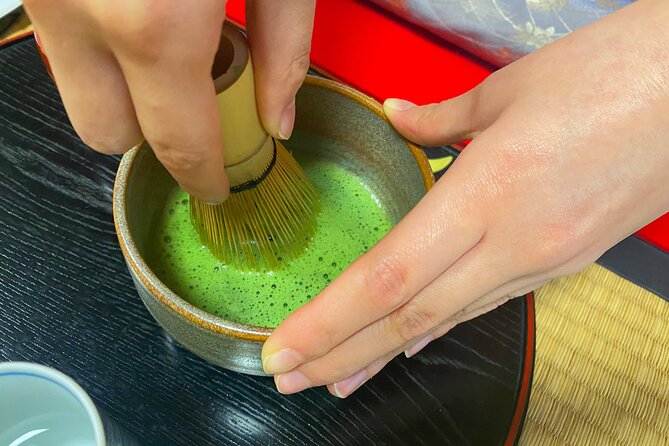
The second cup is more hands-on. You learn to whisk the matcha yourself and create the frothy surface that makes the drink so recognizable. This is a simple task in theory, but the texture depends on technique, rhythm, and the way you use the whisk.
I consider the second cup a major advantage. A demonstration can be beautiful but passive. Making the tea gives you a physical sense of the process and helps the lesson stay with you after you leave.
Do not expect to become a tea master in one short session. You receive an introduction to the technique, not years of training. That is exactly why the 45-minute format works best for curious first-time visitors who want context and a taste of the practice.
Same city, a very different cup:
- Kyoto: Table-Style Tea Ceremony at a Kyo-Machiya
★ 4.9 · 1,211 reviews - Kimono Tea Ceremony at Kyoto Maikoya, NISHIKI
★ 5.0 · 911 reviews - Kyoto: Kimono Tea Ceremony at Orizuruya Gion
★ 4.9 · 618 reviews - Kyoto: Tea Ceremony in 100-year-old Kyo-Machiya Townhouse
★ 4.8 · 546 reviews
Wagashi and the taste of the ceremony
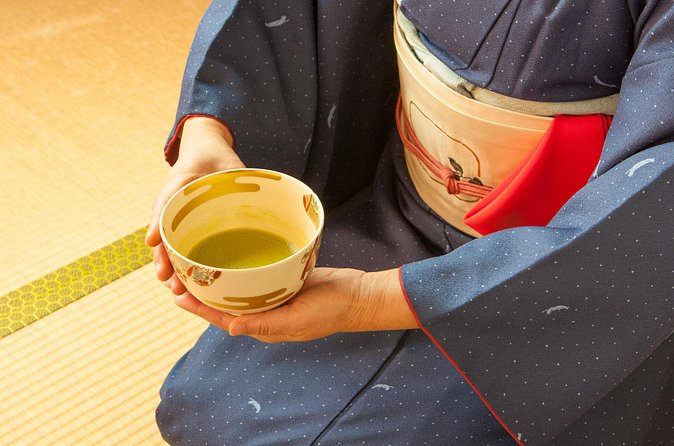
Traditional wagashi sweets are included with the matcha. Their delicate appearance and sweetness provide a useful contrast to the tea’s stronger flavor.
The sweet is not just an extra dessert. In the tea ceremony, the food and tea are meant to work together. You eat the wagashi before or alongside the matcha according to the guidance you receive, then notice how it changes the tea’s taste.
The details of the wagashi can vary, and no specific seasonal sweet is promised. What you can count on is the inclusion of traditional Japanese sweets as part of the session.
If you usually order sweetened matcha drinks, keep an open mind. This is a more direct taste of powdered tea. The experience gives you a chance to understand why the sweets matter rather than judging the tea by the standards of a modern café beverage.
What the 45-minute schedule feels like
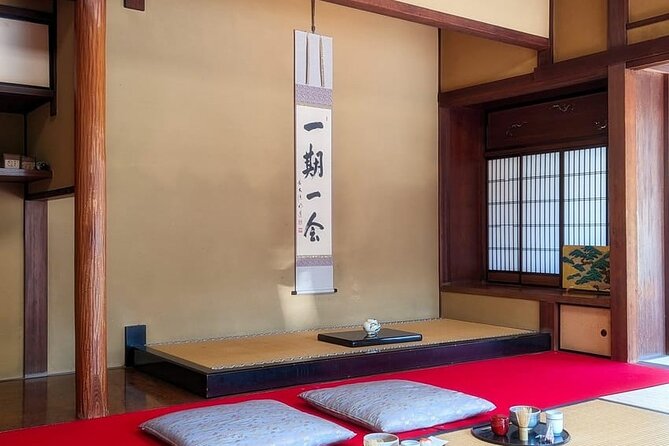
The activity is short enough to fit neatly into a sightseeing day. You could schedule it between visits in Higashiyama, use it as a rest from walking, or place it in the middle of a longer Kyoto itinerary.
A typical flow includes:
- Arrival at the tea room and settling into the garden-facing space
- An explanation of tea ceremony customs and background
- The tea master’s full preparation
- Your first cup of matcha with wagashi
- Instruction on whisking and preparing the second cup
- Time for questions and photographs before returning to the meeting point
The exact timing of each part can vary, but the experience is designed as a complete introduction. It does not leave you waiting through a long transfer or move you between several venues.
Some people will find 45 minutes ideal. It is long enough to see the main movements, taste the tea, and try the technique, but short enough to avoid fatigue. Others may feel that the activity only scratches the surface of formal tea ceremony. That criticism is fair, especially at $50.87 per person.
I would think of the price as paying for several elements at once: the tea master’s demonstration, the English explanation, two matcha servings, wagashi, the traditional room, and the garden view. If you mainly want a drink, it is expensive. If you want cultural instruction in a carefully arranged setting, the value is easier to see.
The small-group advantage
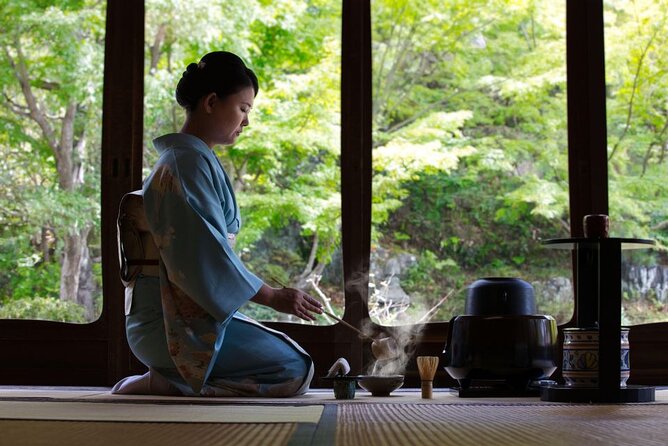
The group size is capped at 12 people. That is not a private ceremony, but it is small enough to keep the room from feeling like a stage show.
A smaller group also gives you a better chance to see the tea master’s hands and utensils. When the assistant pauses for questions, you can ask about details that would be hard to cover in a large class.
The atmosphere is intended to be warm and respectful. The hosts explain the process and help you understand what to do, so you do not need prior knowledge of Japanese customs. The tone is formal enough to preserve the ceremony’s character, but approachable enough for families and first-time visitors.
I would choose this format over a large demonstration if you care about learning the reason behind each step. If you prefer a private lesson or a longer, more technical workshop, this may feel too limited.
Practical comfort and etiquette
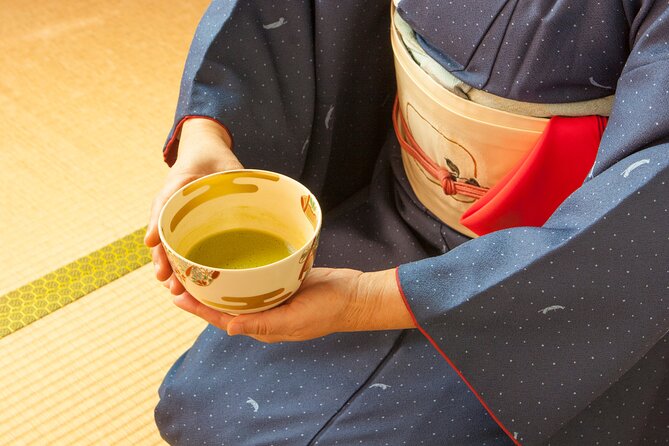
The activity takes place in a traditional tea room, and people with foot or knee problems are specifically advised not to book it. Floor seating or kneeling may be part of the experience, so consider your comfort before paying.
Wear or bring socks. One participant specifically found this useful, and socks are a sensible choice for a traditional room where shoes may not be worn inside. Comfortable clothing will also make it easier to sit quietly and handle the tea bowl.
Photography is included, but video recording is not. You should expect photographs to be possible as part of the activity, while filming is excluded. The setting is attractive enough for pictures, but remember that the ceremony itself asks for patience and attention.
The experience requires good weather. If poor weather causes cancellation, you are offered another date or a full refund. For a normal cancellation, you can receive a full refund if you cancel at least 24 hours before the start time. Changes or cancellations inside that window are not accepted.
Who will enjoy this most
I would recommend this ceremony to you if you want a calm cultural activity that fits into a busy Kyoto day. It suits first-time visitors who want more than a quick photo, families looking for a shared experience, and anyone interested in Japanese food, design, ritual, or traditional arts.
It is also a good choice if you prefer explanation in English. The assistant translates and provides background, so you are not left guessing why the tea master pauses, turns the bowl, or cleans a utensil.
The setting works well for couples, parents with older children, and small groups of friends. It can also provide a welcome change of pace after several hours of temple visits and street walking.
I would be more cautious if you have limited mobility, dislike floor seating, or want a long technical lesson. You may also find the cost hard to justify if your only goal is to taste matcha. The activity is strongest when you value the setting, instruction, and ceremony as much as the drink.
Is the Kyoto garden-view tea ceremony worth booking?
I think it is worth booking if you want a well-organized introduction to tea ceremony in a beautiful setting. The combination of a tea master’s demonstration, clear English guidance, two cups of matcha, wagashi, and garden views gives you more than a simple tasting.
The main question is time and price. At $50.87 for roughly 45 minutes, this is not the cheapest Kyoto activity, and it will not satisfy someone looking for an in-depth study. But for a focused cultural break near Kiyomizu, the format is easy to fit into your day and offers a genuine look at the care behind matcha preparation.
Book it if you can sit comfortably, appreciate quiet rituals, and want to understand what you are seeing. Skip it if you need a fully accessible activity, want video recording, or would rather spend the money on a longer workshop.
FAQ
Where does the tea ceremony take place?
It takes place at Tea Ceremony SAKAGUCHIAN, located at 3-chōme-334 Kiyomizu, Higashiyama Ward, Kyoto, 605-0043, Japan.
How long does the activity last?
The tea ceremony lasts approximately 45 minutes.
How much matcha is included?
The experience includes two cups of matcha. The tea master prepares one, and you learn how to prepare the second.
Are traditional sweets included?
Yes. Wagashi, traditional Japanese sweets, are included with the tea ceremony.
How large is the group?
The activity allows a maximum of 12 participants.
Can I cancel for a full refund?
Yes. You can cancel at least 24 hours before the start time for a full refund. If poor weather causes the activity to be canceled, you are offered another date or a full refund.
Fresh tea listings around Kyoto
- Authentic Tea Ceremony & Sushi in The Museum of Kyoto★ 5.0 · 3 reviews
- Kyoto: Nighttime Zen Meditation and Matcha Tea Experience★ 5.0 · 7 reviews
- Kyoto Fushimiinari:Wagashi Making & Small Group Tea Ceremony★ 5.0 · 14 reviews
- 2 Types of Japanese Sweets making and Tea Ceremony★ 4.6 · 17 reviews
- Kyoto Hidden Riverside Zen Mediation and Uji Matcha Experience★ 5.0 · 9 reviews
- Whisk Your Own Matcha: A Zen Matcha Experience at Temple★ 3.6 · 7 reviews
- Matcha Grinding Experience and Walking Tour in Uji Kyoto★ 5.0 · 26 reviews
- Stunning Private Tea Ceremony: Camellia Garden Teahouse★ 5.0 · 28 reviews
Tea Ceremony Experiences, compared.
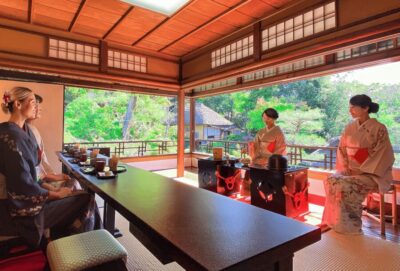
Kyoto: Tea Ceremony in a Traditional Tea House in Kiyomizu
Read our review →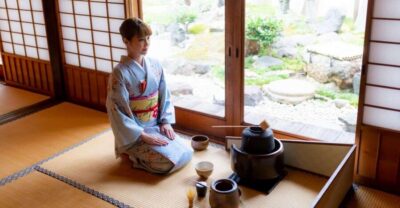
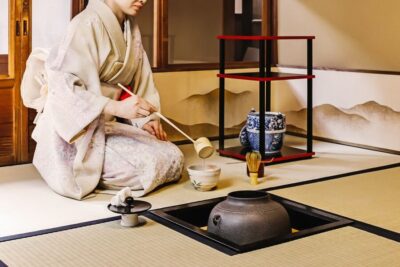
Kyoto: 45-Minute Tea Ceremony Lesson Experience
Read our review →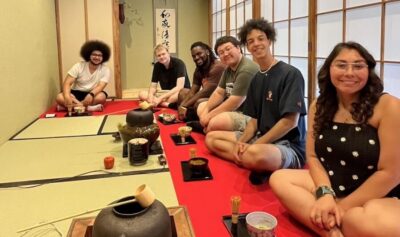
Kyoto: Table-Style Tea Ceremony at a Kyo-Machiya
Read our review →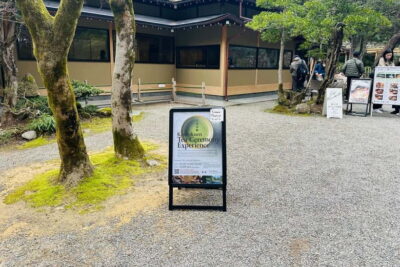
Browse the lists this tour appears in