
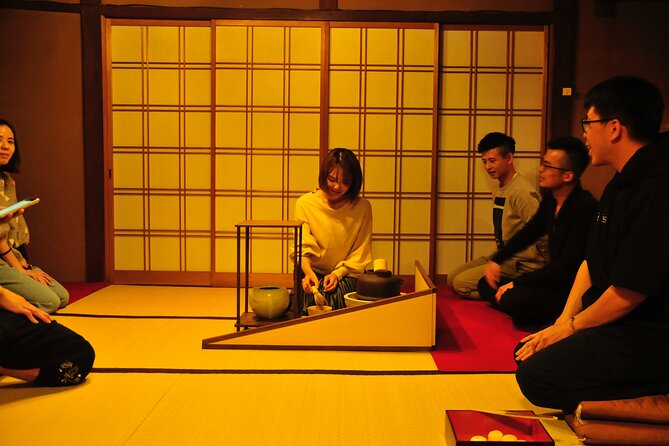
Review · TEA CEREMONY EXPERIENCES
Kyoto Japanese Tea Ceremony Experience in Ankoan
Kyoto Japanese Tea Ceremony Experience in Ankoan turns matcha preparation into a friendly, hands-on lesson rather than a ceremony you simply watch. Yuka begins with welcome tea and conversation, then explains the meaning, manners, movements, and tools before guiding you through the process yourself.
I especially like the watch, copy, and practice approach, which helps first-time visitors follow the ritual without feeling lost. I also like the open conversation about daily Japanese life and culture, plus the chance to prepare tea for another participant. The small group, capped at eight, keeps the experience personal.
The main point to check is the timing. The experience is listed at about one hour, while the fuller description says 90 minutes and some participants found it closer to two hours. It is also held on the floor, so it is not a good choice if you have knee pain.
Key points at a glance
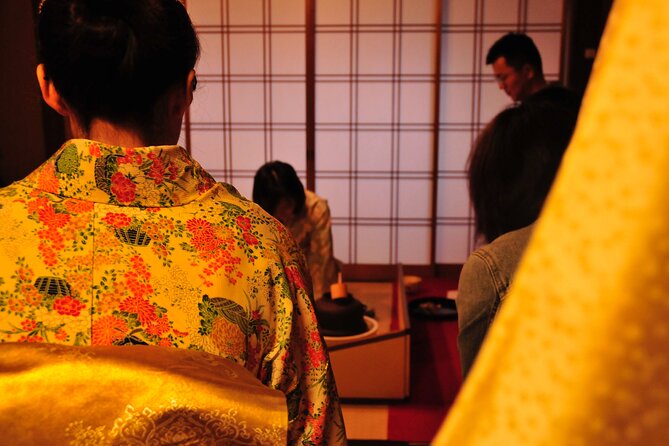
- You make your own matcha: After watching the tea master, you prepare your tea with step-by-step help.
- Yuka leads the experience: She welcomes you with tea, speaks very good English, and explains both tea customs and wider Japanese culture.
- The ritual is shared: You offer your tea to another participant, adding a social element to the lesson.
- Wagashi is included: The matcha is served with a traditional Japanese sweet.
- Groups stay small: No more than eight people take part, making questions and personal instruction easier.
- The setting is in northern Kyoto: Ankoan is near public transportation and close to temples, useful if you want to pair the visit with sightseeing.
What the Ankoan tea ceremony is really like
Many tea ceremonies are best understood as lessons in attention, not as quick cups of green tea. At Ankoan, you get enough explanation to see why the movements matter, then enough practice to make the ritual your own.
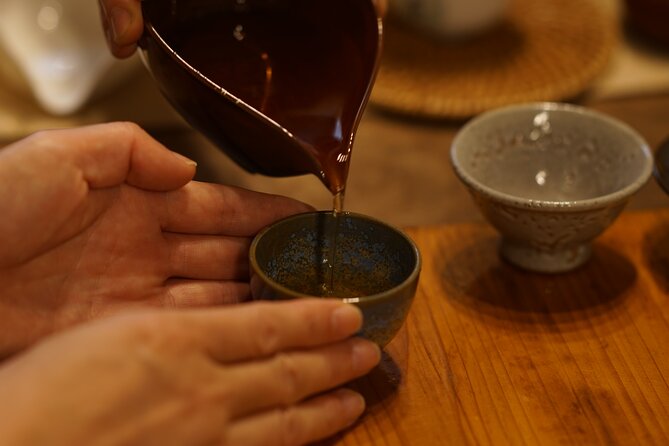
The session begins with a welcome tea served by Yuka. This first drink is less formal and gives you time to settle in after the journey from your hotel. You can ask questions, talk about tea, or bring up broader subjects such as how Japanese people live and how cultural customs developed.
That informal opening is useful. Japanese tea etiquette can feel intimidating if you are expected to know the rules before you arrive. Here, the conversation gives you a gentle start, and you can ask about things that would be hard to understand from a silent demonstration.
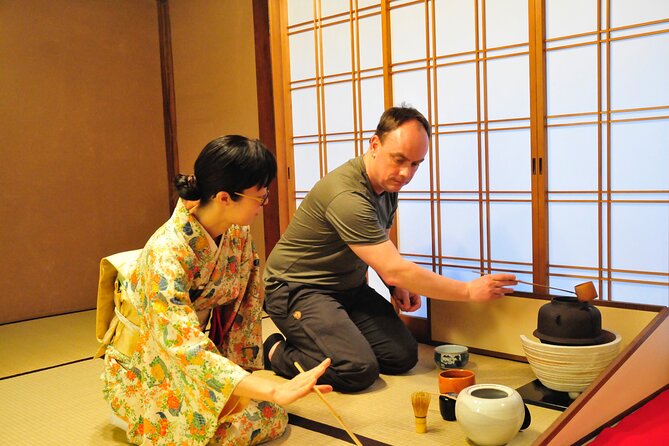
After the welcome, you move to another matcha tearoom for the main part of the experience. The change of room helps mark the shift from casual conversation to the more focused tea ceremony. You watch the preparation first, including the handling of the matcha and the proper way to serve it.
More Tea Ceremonies in Kyoto
- Kyoto: Tea Ceremony in a Traditional Tea House in Kiyomizu
★ 4.9 · 3,519 reviews - Kyoto: Tea Ceremony Ju-An at Jotokuji Temple
★ 4.9 · 3,207 reviews - Kyoto: 45-Minute Tea Ceremony Lesson Experience
★ 4.3 · 2,378 reviews
Watching the matcha demonstration
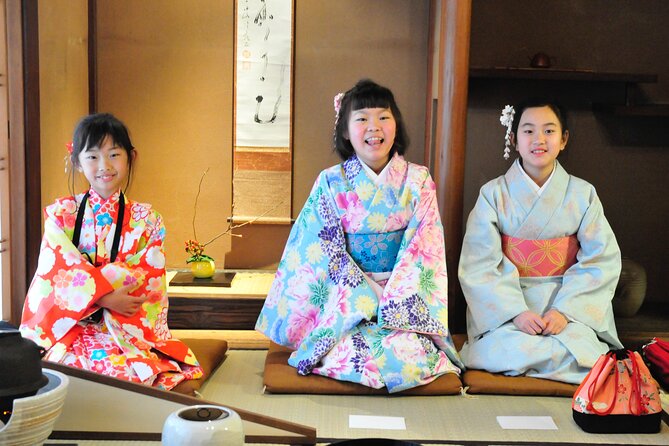
The demonstration is the part to watch closely. The value is not simply seeing someone whisk a powdered tea. You are introduced to the order of the actions, the manners around serving and receiving tea, and the small details that give the ceremony its calm rhythm.
Yuka explains what she is doing as she works. The supplied information does not list every utensil or movement by name, so you should not expect a technical school in every element of tea practice. You can expect a clear introduction to the basic ideas and behavior associated with the ceremony.
This makes the experience suitable for beginners. If you know little about matcha, the demonstration gives you a framework. If you have already attended a tea ceremony, the chance to ask questions and prepare the tea yourself adds a different kind of value.
Pay attention to the social side as well. Japanese tea ceremony is not only about the person making the drink. It also concerns the relationship between host and guest, the care taken in presentation, and the shared mood of the room. Those ideas become easier to grasp once you see how the tea is offered and received.
Preparing your own bowl of matcha
The hands-on portion is the heart of the visit. After watching Yuka, you make matcha yourself. She stays nearby to explain each step and correct you when needed, so you do not need prior experience.
This is a good example of why a practical cultural activity can be more useful than a museum display. You are not only hearing about Japanese customs. You are using the tools, following the order of the actions, and feeling how much care goes into a bowl that can be prepared in a short time.
The instruction follows a simple progression: watch the teacher, repeat the method, then taste what you made. That structure keeps the session relaxed. You can concentrate on the motions without worrying about making a serious mistake.
The ceremony also includes a thoughtful exchange. You prepare tea to be tasted by another participant, as tradition calls for. That detail gives the activity a human touch. Instead of making a private drink only for yourself, you take part in an act of hospitality.
You then taste the matcha you prepared. Expect the flavor to be more grassy and direct than the sweetened green tea served in many cafés. The point is not to produce a perfect café drink. It is to understand the process and the meaning attached to sharing it.
Wagashi and the taste of the ritual
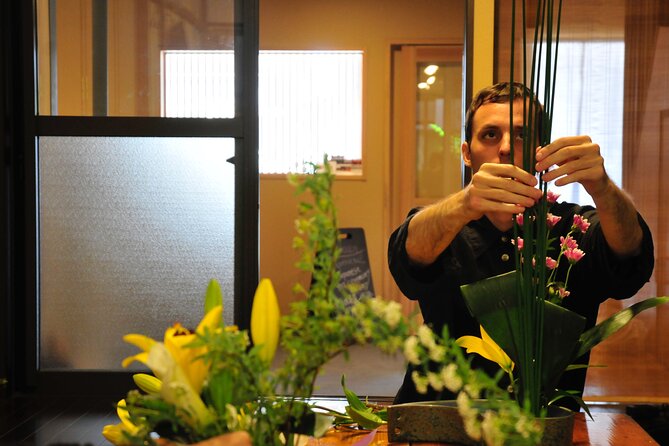
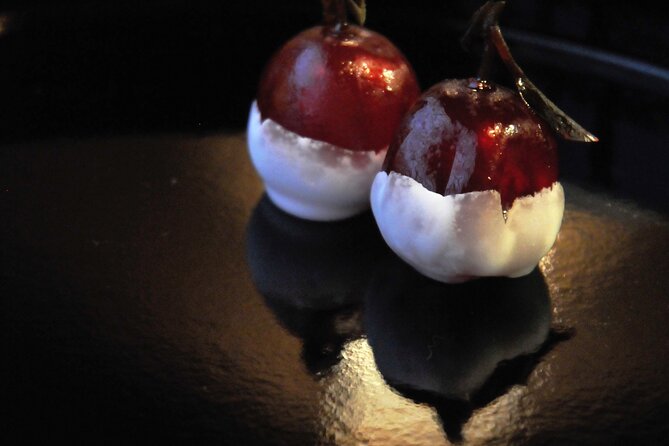
The matcha is served with wagashi, a traditional Japanese sweet. The sweet provides a useful contrast to the tea’s sharper flavor and is part of the pleasure of the ceremony.
The information provided does not specify the exact type or flavor of wagashi served on a particular day. That may change with the session. You should think of it as a small seasonal or traditional accompaniment rather than a full snack or meal.
Coffee and tea are listed as included, but this is not a food tour. Come for the cultural lesson and the calm pace, not for a substantial refreshment stop.
Same city, a very different cup:
- Kyoto: Table-Style Tea Ceremony at a Kyo-Machiya
★ 4.9 · 1,211 reviews - Kimono Tea Ceremony at Kyoto Maikoya, NISHIKI
★ 5.0 · 911 reviews - Kyoto: Kimono Tea Ceremony at Orizuruya Gion
★ 4.9 · 618 reviews - Kyoto: Tea Ceremony in 100-year-old Kyo-Machiya Townhouse
★ 4.8 · 546 reviews
Conversation beyond the tea room
One of the strongest features is the conversation around the ceremony. Yuka discusses tea and matcha, but the session can also cover Japanese daily life, the roots of cultural practices, and the ideas behind the ritual.
That makes a difference in Kyoto, where it is easy to move from one famous sight to the next without understanding much about ordinary customs. A conversation in a tea room gives you a chance to ask the questions that do not fit neatly into a temple visit.
English is supported, and Yuka is described as having very good English skills. A French-speaking participant also found the explanations helpful, but English is the language clearly identified for the experience. The description says Chinese and English are accepted in the provider name, though specific Chinese-language arrangements are not explained.
The tone is social rather than stiff. Families have brought small children, and children as young as eight have taken part in making tea. Young visitors may not follow every formal detail, but the practical steps give them something to do. You should still judge your own child’s patience, since the ceremony includes quiet observation and careful movements.
The setting at Ankoan in northern Kyoto
Ankoan is at 63 Murasakino Monzencho, in Kyoto’s Kita Ward, postal code 603-8216. The activity starts and ends at the same meeting point.
The venue is near public transportation, but private transportation is not included. You will need to make your own way there. The location can work well with a visit to nearby temples, and one participant paired the tea experience with temple sightseeing in the area.
Do not treat the address as if it were in central Gion. Allow time to reach the Kita Ward meeting point, especially if you have a fixed dinner reservation or train to catch afterward. Since confirmation is subject to availability and is sent within 48 hours of booking, check the confirmed meeting details before setting your day around it.
Indoor photography is allowed. That is handy if you want a few pictures of the room, your tea preparation, or the tools. Use common courtesy during the formal demonstration and follow Yuka’s directions about when to take pictures.
How long should you allow?
The tour summary gives an approximate duration of one hour. The detailed experience description says 90 minutes, and one participant described an experience lasting around two hours. The practical advice is simple: keep your schedule loose.
A one-hour appointment may work between two fixed activities, but I would not book this immediately before a timed train, meal, or ticketed attraction. Conversation, questions, family participation, and the hands-on tea preparation can extend the visit.
The flexible timing is not necessarily a problem. It reflects the social nature of the session. If everyone is curious and asking questions, the host may allow the discussion to continue rather than rush you out of the room.
Who will enjoy this experience most?
This tea ceremony suits you if you want to do more than observe. The best fit is a first-time visitor to Japanese tea practice who wants clear instruction, an approachable host, and a chance to make matcha personally.
It also works well for:
- Couples looking for a quiet cultural activity
- Families with children who can follow simple instructions
- Visitors who want to ask questions in English
- People who enjoy food and drink experiences with cultural context
- Anyone wanting a slower break from temple visits and city sightseeing
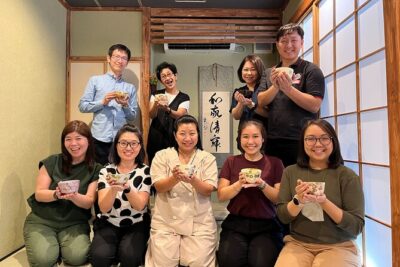
The small group size matters here. With no more than eight participants, you have a better chance to hear the explanations and receive individual help. It also makes the act of serving tea to another participant feel natural rather than staged for a large audience.
This is less suitable if you want a grand, highly formal performance with no audience participation. It is also a poor fit if you cannot sit comfortably on the floor or have knee pain. The activity specifically is not recommended for people with knee pain.
Is the $32.84 price good value?
At $32.84 per person, the cost is reasonable for a small-group cultural activity that includes instruction, tea, matcha preparation, and wagashi. You are paying for direct guidance and conversation, not just admission to a room where someone performs a ritual.
The value is strongest if you take part fully. Watching the demonstration alone would make the price less attractive, but preparing your own tea, serving another person, and asking questions add substance to the hour or 90 minutes.
The price does not include private transportation, so add the cost of reaching Ankoan from your hotel. It also does not represent a meal. If you are comparing this with a short café stop, it costs more. If you are comparing it with a private cultural lesson, a small group of eight or fewer offers a fair middle ground.
The 4.9 rating from 22 reviews and 95 percent recommendation rate point to a consistently strong experience, though the sample is not large. The most repeated praise focuses on Yuka’s warmth, clear English, cultural explanations, and willingness to involve children and beginners.
Practical details before you book
Your reservation is confirmed within 48 hours, subject to availability. Since the activity is often booked about 12 days in advance, reserve early if your Kyoto dates are tight.
You receive a mobile ticket, which keeps check-in simple. Still, make sure you know the exact meeting point at Ankoan and allow time to reach northern Kyoto. The activity returns to the same location, so you can plan a nearby temple visit afterward without arranging a separate pickup.
Free cancellation is available up to 24 hours before the start time for a full refund. Changes or cancellations made less than 24 hours before the start time are not accepted for a refund. The cut-off uses local Kyoto time.
The experience requires good weather. If poor weather causes cancellation, you are offered another date or a full refund. Since the activity takes place indoors, this condition may relate to access or operating arrangements rather than the tea ceremony itself.
Should you book the Ankoan tea ceremony?
Book it if you want a warm introduction to Japanese tea culture and prefer doing the work yourself. Yuka’s friendly hosting, strong English, and willingness to explain the meaning behind the ritual are the main reasons this experience works so well.
I would choose it over a purely staged ceremony if you enjoy conversation and hands-on learning. I would also recommend it for families, since children can participate instead of sitting through a long formal performance.
Think twice if you have knee pain, need an exact one-hour appointment, or want a large-scale traditional presentation. For everyone else, the combination of matcha, wagashi, cultural discussion, and personal practice offers a useful and pleasant pause in a busy Kyoto schedule.
FAQ
Where does the tea ceremony take place?
It takes place at Tea ceremony Japan, Ankoan, 63 Murasakino Monzencho, Kita Ward, Kyoto, postal code 603-8216.
Where does the activity end?
The activity ends back at the Ankoan meeting point.
How long does the tea ceremony last?
The tour summary lists approximately one hour. The detailed description gives 90 minutes, while one participant described a session lasting around two hours. Allow extra time for questions and conversation.
What is included in the experience?
Tea and coffee are listed as included. The experience also includes matcha preparation, matcha tasting, and wagashi as part of the tea ceremony.
Is private transportation included?
No. Private transportation is not included, so you must make your own way to the meeting point.
How many people can join?
The maximum group size is eight people.
Can children participate?
Yes. Families with small children have taken part, and an eight-year-old was able to make tea during the experience.
Can I take photographs?
Yes. Indoor photography is allowed.
Is the experience suitable for someone with knee pain?
No. The activity is not recommended for people with knee pain.
How does cancellation work?
You can cancel at least 24 hours before the start time for a full refund. Cancellations or changes made less than 24 hours before the start time are not accepted for a refund. If poor weather causes cancellation, you are offered a different date or a full refund.
Fresh tea listings around Kyoto
- Traditional Tea Ceremony in Kyoto★ 4.5 · 3 reviews
- Kyoto: Authentic Tea Ceremony in a Small Group★ 5.0 · 7 reviews
- Uji Walking Tour – Byodo-in temple and Tea Ceremony from Kyoto★ 3.5 · 3 reviews
- Tea ceremony at Kyoto’s Zen Temple Teahouse★ 5.0 · 2 reviews
- Tea Ceremony Experience in Traditional Kyoto Townhouse★ 5.0 · 19 reviews
- Tea Ceremony in 150 Years Old Townhouse with Tables and Chairs★ 5.0 · 22 reviews
- Sencha-do the Japanese Tea Ceremony Workshop in Kyoto★ 5.0 · 21 reviews
- Silent Beauty of Kyoto Zen Walk and Tea Experience★ 5.0 · 2 reviews
Tea Ceremony Experiences, compared.
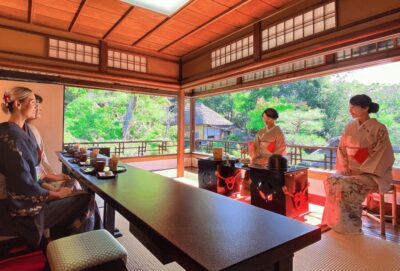
Kyoto: Tea Ceremony in a Traditional Tea House in Kiyomizu
Read our review →
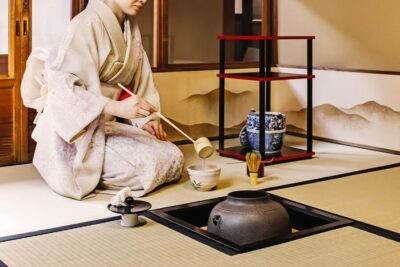
Kyoto: 45-Minute Tea Ceremony Lesson Experience
Read our review →
Kyoto: Table-Style Tea Ceremony at a Kyo-Machiya
Read our review →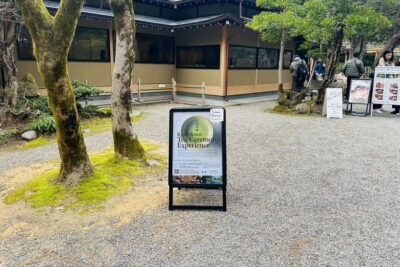
Browse the lists this tour appears in