
Review · TEA CEREMONY EXPERIENCES
Hiroshima Local guided Hiking Tour&Open-air Tea Ceremony
Mt. Futaba gives you a different Hiroshima: quiet shrine paths, shaded woods, and a mountaintop view that reaches across the city to the Seto Inland Sea and Miyajima. The unusual finish is Nodate tea, a simple open-air ceremony served near Kinko Inari Shrine rather than inside a formal tea room.
I like two things right away. First, the route connects Shinto worship, Buddhist symbolism, Hiroshima’s recovery, and time in nature without feeling like a standard city tour. Second, guides such as Nana, Michi, and Naomi make the experience personal, explaining rituals and local stories as you walk. The small group, capped at six, helps.
The catch is the climb. You must go up about 500 steps, and some paths are steep or uneven. It is manageable for many people, with regular pauses, but this is not a flat stroll. Hot weather can make the ascent much harder.
Key points before you book
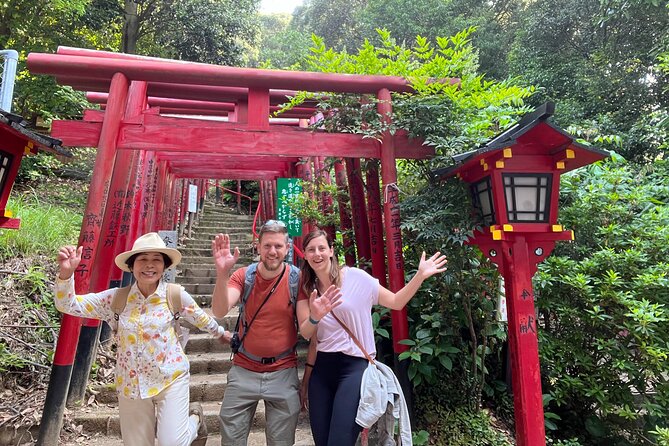
- A sacred route above Hiroshima Station: Visit Hiroshima Toshogu and Kinko Inari Shrine before reaching the Futabayama Peace Pagoda.
- About 500 steps uphill: The hike is described as easy to moderate, but you need steady footing and reasonable fitness.
- Open-air tea with a view: Nodate tea is served outdoors near the mountain shrine, with Hiroshima and Miyajima below.
- A small, personal group: A maximum of six participants gives you more time to ask questions and follow the guide’s pace.
- Morning timing is useful: The 7:30 start ends around 10:30, leaving the rest of your day open. Other start times are also offered.
- Your booking supports conservation: Five percent of the fee goes to Futaba Mountain conservation activities.
Why this hike adds something different to Hiroshima
Most first visits to Hiroshima focus on the Peace Memorial Park, the Atomic Bomb Dome, and the museum. You should see those places. This tour gives you another way to understand the city, through mountain shrines, religious customs, forest quiet, and a view of how Hiroshima rebuilt itself.
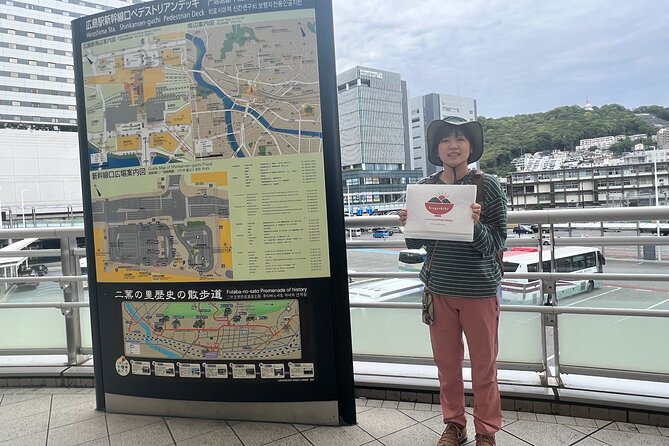
The Futaba Mountains rise close to Hiroshima Station, so you do not spend half the morning getting to the trailhead. You meet at the station’s Shinkansen exit, receive an outline of the route, and walk toward the first shrine. That easy start matters. You can fit the tour into a short visit, then continue to the Peace Memorial Park, Miyajima, or another part of the city later.
The experience also connects several traditions. Hiroshima Toshogu is a Shinto shrine. Kinko Inari brings another set of Shinto practices and mountain worship. The Futabayama Peace Pagoda adds a Buddhist element. Your guide explains how to approach the sites and what different rituals mean, which turns a series of pretty stops into a more useful cultural visit.
More Tea Ceremonies in Japan:
- Kyoto: Tea Ceremony in a Traditional Tea House in Kiyomizu
★ 4.9 · 3,519 reviews - Kyoto: Tea Ceremony Ju-An at Jotokuji Temple
★ 4.9 · 3,207 reviews - Kyoto: 45-Minute Tea Ceremony Lesson Experience
★ 4.3 · 2,378 reviews
Starting at Hiroshima Station at 7:30
The earliest departure is the most practical choice for many visitors. The meeting point is at Hiroshima Station, and the tour is scheduled to return around 10:30. That leaves you most of the day for major sights, shopping, food, or a ferry trip.
The route also offers later starts at 10:00 and 13:00. The exact timing shown for the stops changes with the departure time, so check the selected option carefully. A later start may work better if you dislike early mornings, but it will take a larger part of your day and may be less comfortable in summer heat.
Arrive early. The activity has a strict late-arrival rule: more than 10 minutes late without contact can lead to automatic cancellation with the full fee charged. Since the meeting point is at a large station, allow time to find the Shinkansen exit and the stated meeting location.
The group limit is six people. That is a real advantage on a narrow trail and at small religious sites. You can ask about shrine customs without trying to speak over a bus-sized group, and the guide can pause when someone needs a breather.
Hiroshima Toshogu, the first cultural stop
The first main stop is Hiroshima Toshogu, reached soon after the station. Here you begin learning how local religious places work, rather than simply photographing the gates and buildings.
The guide explains the shrine’s cultural importance and helps you notice details you could easily miss alone. You might learn how to approach a Shinto shrine, how offerings work, and what certain gestures mean. One family even had the chance to make an offering and post a wish, a small act that made the visit feel more personal.
This is a good opening because the route starts with culture before the physical effort becomes serious. You get your bearings, meet the guide, and learn enough basic etiquette to feel more comfortable at the next shrines.
Do not expect a grand, lengthy temple visit. The stop is scheduled for about 30 minutes, so the focus is on interpretation and the route ahead, not a long period of independent exploration.
Climbing Kinko Inari and the 500-step test
From Hiroshima Toshogu, the trail continues toward Kinko Inari Shrine and into Mt. Futaba. This is where the tour shifts from city walking to a proper uphill outing.
The official description calls out 500 steps. That number deserves attention. Several accounts describe the climb as easy to moderate because the guide stops often, but the effort depends on your age, fitness, footwear, and the day’s temperature. A person used to hiking may find it straightforward. If you rarely walk uphill, you will feel it.
The route is described as well maintained, with some steep and uneven sections. Wear shoes with a firm sole. You do not need to be an expert hiker, but sandals or smooth city shoes would be a poor match for the steps and forest paths.
Nana, Michi, and Naomi are among the guides associated with this experience. The strongest part of their role is not simply leading the way. They explain Shinto customs, talk about the meaning of the shrines, and keep the pace human. Frequent pauses let you catch your breath while still learning something.
On a very hot day, hydration becomes important. One participant described a 36-degree day with a real-feel temperature near 40 degrees, and another noted that Nana made sure the group drank water and stopped often. If you visit in summer, choose the early departure if possible and bring water.
More Walks and Hikes in Japan:
- Hiroshima: Morning Hiking Tour with Open-air Tea Ceremony
★ 4.8 · 58 reviews - Tuk-Tuk Safari Liptons seat,Tea Fields Hike,TeaFactory Tour
★ 4.8 · 46 reviews - Private Munnar Tea Trek
★ 4.6 · 38 reviews - Full Day Sreemangal Tea Garden & National Park Hiking Tour
★ 5.0 · 6 reviews
Futabayama Peace Pagoda and the Hiroshima view
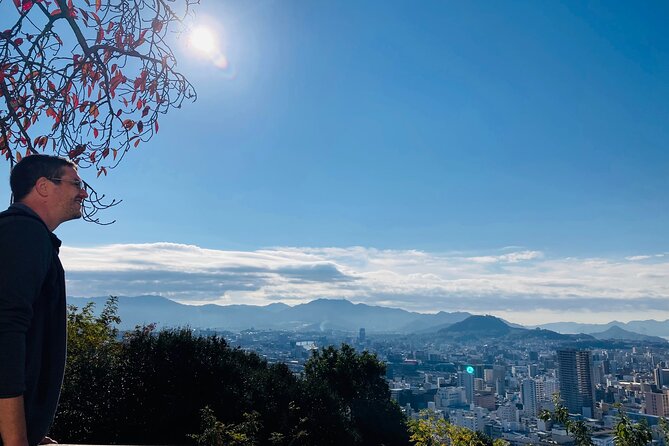
The trail reaches the Futabayama Peace Pagoda, one of the tour’s main rewards. From the mountaintop, you can look over Hiroshima City, the Seto Inland Sea, and Miyajima.
This viewpoint gives the tour its emotional center. From above, Hiroshima is not only a place of tragedy. You see a city surrounded by water, hills, and working neighborhoods, a place that has recovered and continues to live. The guide uses the view to add historical context rather than turning it into a simple photo stop.
Give yourself time here. The published schedule allows about 35 minutes around the viewpoint and forest area, though the exact pacing can change. Bring a camera if you like, but the value is also in standing quietly and getting a sense of the city’s shape.
The view may not be perfectly clear every day. Weather affects visibility, and the experience requires good conditions overall. Still, the shrine route, woodland, and guide’s explanations mean the tour has more to offer than the panorama alone.
Forest bathing and a quieter pace
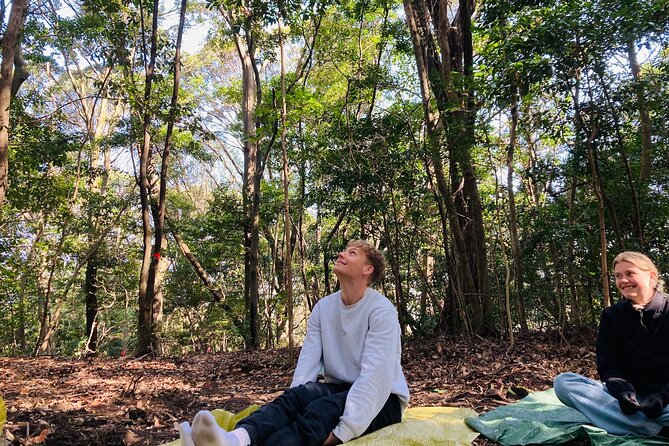
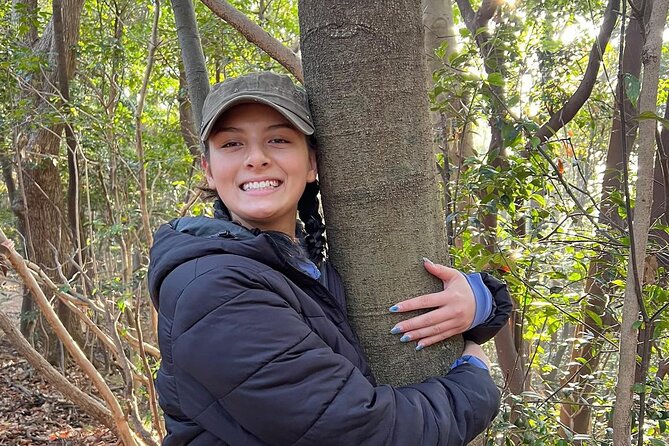
After the viewpoint, the experience includes Shinrinyoku, often translated as forest bathing. This is not a strenuous activity or a formal medical treatment. It is a guided pause in the woods, using the setting to slow down and pay attention.
The activity can include meditation and attention to your senses. One account described laying ground sheets in a clearing and focusing on sounds, sights, and other sensations. That pause changes the rhythm of the morning. You stop trying to reach the next landmark and simply notice the forest around you.
I like this part because it gives the tour a purpose beyond sightseeing. Hiroshima can be an emotionally heavy destination, especially after the Peace Memorial Museum. A quiet period among the trees offers a different kind of reflection without pretending to replace the city’s major historical sites.
The forest section may feel unusual if you expect a fast sightseeing schedule. You are giving up some time for another shrine or a longer viewpoint stop. That is a fair trade if you want a slower, more thoughtful morning.
Nodate tea at the Okumiya Shrine
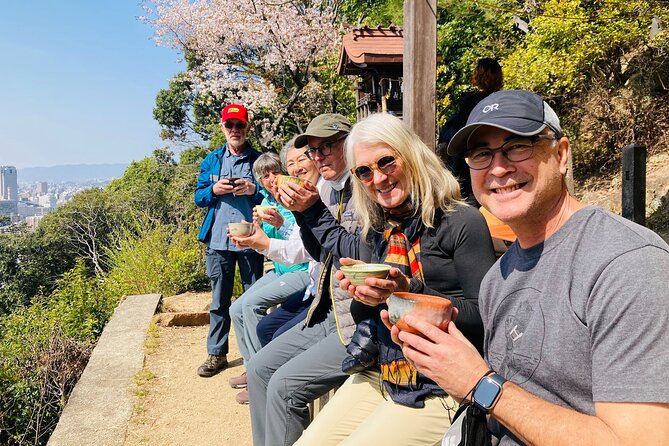
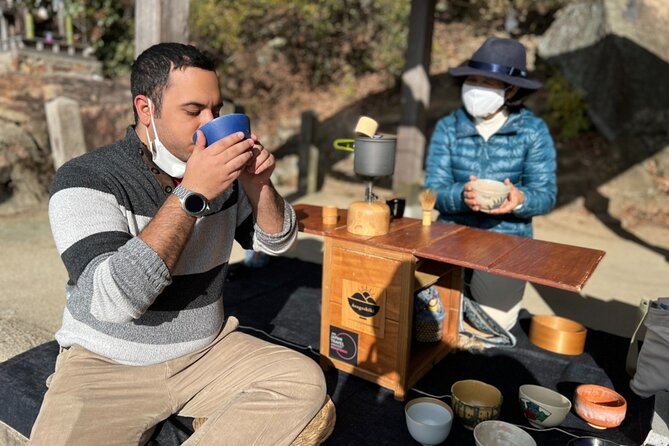
The open-air tea ceremony is the tour’s signature feature. At Kinko Inari’s Okumiya Shrine, the guide prepares and serves Nodate tea outdoors, with the mountain view nearby.
Do not book this expecting a full formal tea-school performance in a dedicated tea house. Nodate is more informal and connected to the setting. You sit in the open air, take in the view, and share tea in a quiet place reached by foot.
The timing allows about an hour for this final mountain section. That gives you room to rest after the climb, ask questions, and enjoy the tea without being rushed. The experience has been especially useful for people who want to try Japanese tea culture but do not want a highly formal ceremony.
The tea may be especially welcome after an uphill walk. One visit took place in extreme heat and included cold green tea, which served as a refreshing break. The exact tea service can vary, so you should treat the ceremony as a cultural experience rather than a fixed menu.
The setting is the key. You are not only learning how tea is served. You are sharing it near a sacred site, above the city, after walking through the forest. That combination is hard to reproduce on a standard downtown tour.
Returning to Hiroshima Station
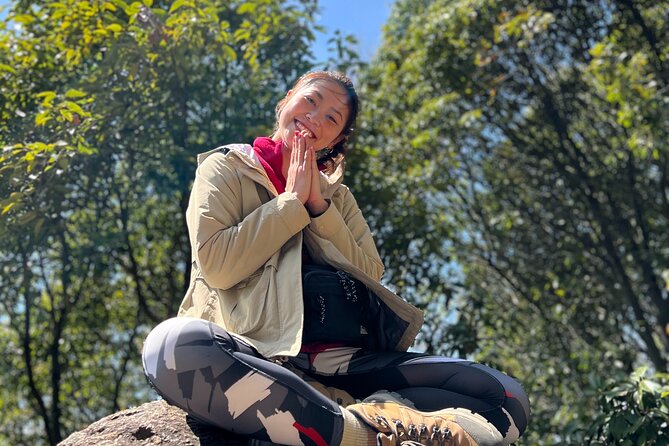
The route finishes back at the station, with the morning option scheduled to end around 10:30. This makes the tour easy to combine with other plans.
You could continue to the Peace Memorial Park, though you may want a short rest first, especially after a hot or humid climb. You could also use the station as a base for lunch or onward rail travel. The return point removes the need to arrange a taxi from a remote trailhead.
The full experience lasts about three hours. That includes the station meeting, shrine visits, uphill walk, viewpoint, forest activity, tea ceremony, and descent. It is a compact outing, but the physical effort makes it feel more substantial than a simple morning walk.
What the $109.43 price really buys
At $109.43 per person, this is not a cheap way to see a viewpoint. You are paying for a small group, a local guide, cultural explanations, a planned mountain route, the tea experience, and the convenience of starting and ending at Hiroshima Station.
The value is strongest if you care about context. Walking between shrines alone would cost little, but you would miss much of the meaning behind the rituals and may not know the best route through the mountain. The tea ceremony also gives the tour something distinctive that you are unlikely to get from a regular city walk.
The value is weaker if you only want exercise or a photo from the top. You could seek out a mountain walk independently, and the 500 steps may not feel worth the price if you are not interested in Shinto practice, Buddhist sites, or guided reflection.
Five percent of the fee supports Futaba Mountain conservation activities. That does not transform the price, but it adds a useful connection between your visit and the care of the place you are using.
Who should choose this experience
I would recommend it most strongly to you if you want:
- A small-group activity close to Hiroshima Station
- A break from museums and busy sightseeing areas
- An introduction to Shinto customs with clear explanations
- A moderate uphill walk with frequent stops
- A viewpoint over Hiroshima, the Seto Inland Sea, and Miyajima
- A less formal, outdoor tea experience
- A morning activity that leaves the afternoon free
Families can take part, and children from birth through age five can participate free of charge. Still, parents should think about the 500 steps and uneven sections rather than focusing only on the age policy.
This is less suitable if you need a flat route, dislike stairs, or want a private, formal tea ceremony. It may also be a poor choice during very hot weather unless you are prepared with water, suitable clothing, and an early start.
The tour requires good weather. If poor weather forces cancellation, you are offered another date or a full refund. You can cancel for a full refund up to 24 hours before the start time, but late cancellations are not refunded.
Should you book the Mt. Futaba hike?
Book it if you want Hiroshima to feel like more than a list of memorial sites. The tour gives you shrines, mountain air, forest quiet, a thoughtful guide, and tea above the city in one well-sized outing.
Choose the 7:30 departure if you can manage it, especially in warm months. Bring water, wear proper walking shoes, and be honest about the steps. If those conditions suit you, this is a strong choice for a personal and culturally focused morning.
FAQ
Where does the tour start and finish?
It starts at Hiroshima Station, at the Shinkansen exit area, and ends back at the same meeting point.
How long does the experience last?
The tour lasts approximately three hours. The earliest listed schedule runs from 7:30 to about 10:30.
How many steps are involved?
You need to climb about 500 steps on the hike. The route also includes some steep and uneven sections.
What places do you visit?
The route includes Hiroshima Toshogu Shrine, Kinko Inari Shrine, the Futabayama Peace Pagoda, and the Okumiya Shrine area.
Is the tea ceremony formal?
The tour includes Nodate, an open-air tea ceremony performed by the guide at the mountain shrine. It is an outdoor experience with views rather than a ceremony in a dedicated tea room.
How many people can join?
The activity has a maximum of six participants.
Can I cancel for a refund?
You can cancel at least 24 hours before the start time for a full refund. Cancellations or changes made less than 24 hours before the start time are not accepted or refunded.
Fresh tea listings around Japan
- Cycling Tour at Uji’s Matcha Green Tea Fields and Heritage★ 5.0 · 10 reviews
- Authentic Japanese tea tasting: sencha, matcha and gyokuro★ 5.0 · 12 reviews
- Asakusa Cultural Walk & Matcha Making Tour★ 4.5 · 7 reviews
- Authentic Tea Ceremony & Sushi in The Museum of Kyoto★ 5.0 · 3 reviews
- At an Antique Shop, Tea Ceremony and Japanese Sweets Forming★ 5.0 · 5 reviews
- Authentic Japanese Tea Ceremony Experience in Kamakura★ 4.5 · 8 reviews
- Japanese Sweets Making & Tea Ceremony in Yokohama, suburban Tokyo★ 5.0 · 4 reviews
- Matcha tasting for all five senses at Hotel Yokohama★ 5.0 · 7 reviews
Tea Ceremony Experiences, compared.
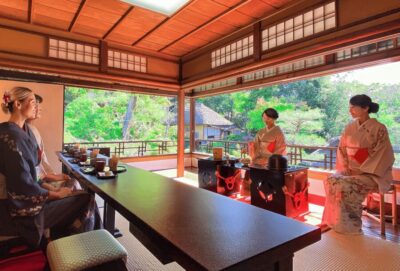
Kyoto: Tea Ceremony in a Traditional Tea House in Kiyomizu
Read our review →
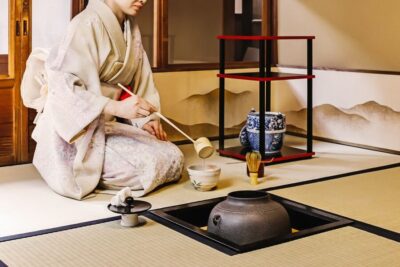
Kyoto: 45-Minute Tea Ceremony Lesson Experience
Read our review →
Kyoto: Table-Style Tea Ceremony at a Kyo-Machiya
Read our review →
Browse the lists this tour appears in