
Review · MATCHA EXPERIENCES
Matcha Tea Bowl Experience in Osaka
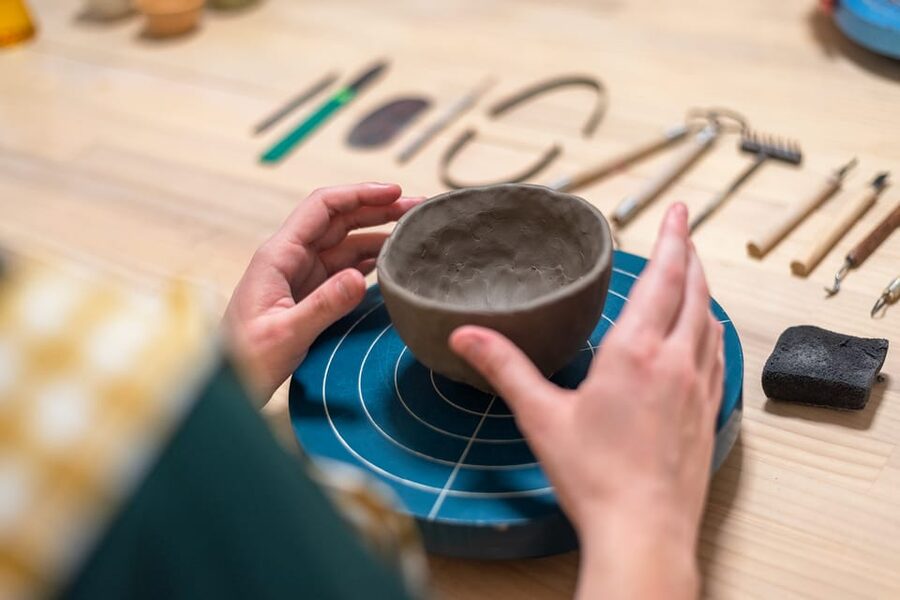
The best part of this Osaka workshop is that you do not simply buy a ceramic souvenir. You make a matcha bowl by carving its clay yourself, leaving behind the small marks and uneven edges that give kurinuki pottery its wabi-sabi character. Anna, a ceramist trained in Osaka, guides you through the process in English, Spanish, Catalan, or Japanese.
I like the private format and the chance to learn what a bowl means in Japanese tea ceremony, not just how to decorate one. I also like the personal touch of signing your bowl with Japanese characters and choosing its glaze color. The main drawback is practical: your bowl is shipped about two months later, and postage is not included in the $83 price.
Key points to know before booking
- Carve, do not just paint: You use tools to cut and shape the clay with the traditional kurinuki method.
- Meet Anna at JR Teradacho Station: The meeting point is the north exit, where you will look for a Ceramics Tocoton sign.
- Your bowl comes later: Firing, glazing, and shipping take about two months, with delivery costs based on your country and group size.
- Tea ceremony is part of the lesson: You learn about the chawan, prepare matcha, and enjoy Japanese sweets with it.
- Private and hands-on: The activity is for a private group, and no previous pottery experience is required.
- A small ceramic gift is included: The optional combined workshop also includes a small dish for sweets.
Why making a chawan feels more personal than buying one
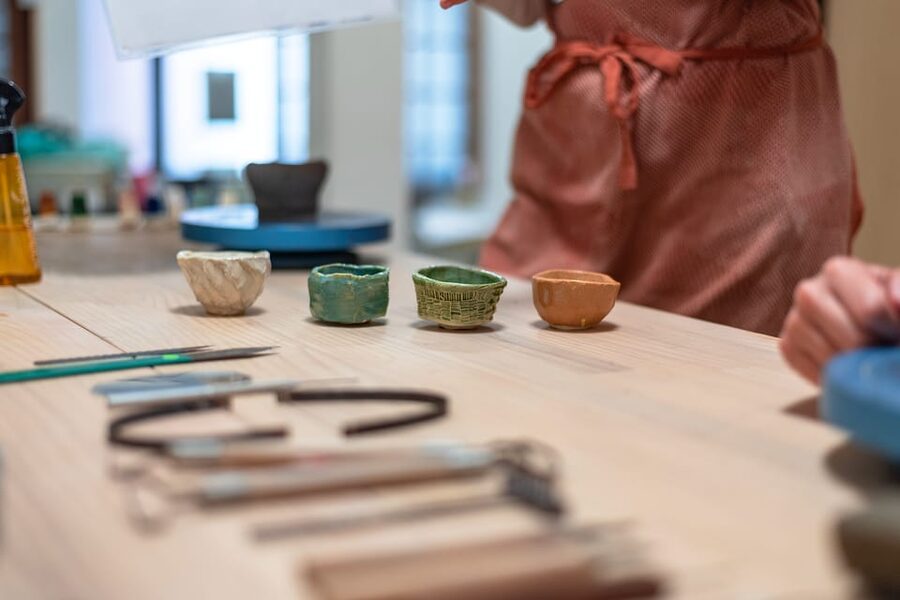
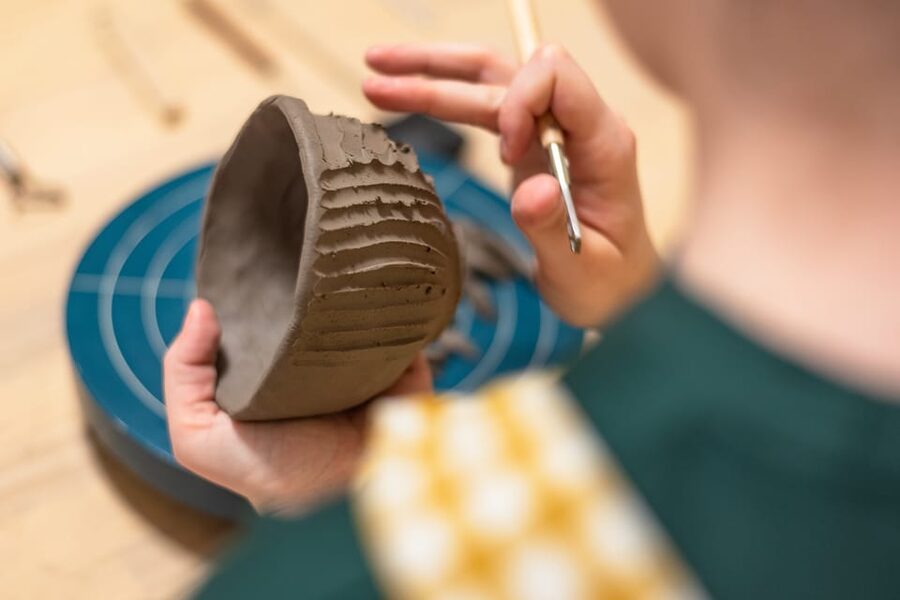
Osaka is full of easy-to-pack souvenirs, but few carry your own fingerprints in such a literal way. In this workshop, you start with clay and use carving tools to create a bowl with your own shape, texture, and marks.
The method is called kurinuki. Rather than building a bowl from perfectly uniform sections, you carve and shape the clay into form. The result can have a hand-cut rim, shallow tool marks, and slight irregularities. Those details are not treated as mistakes. They are part of the bowl’s character.
That idea connects to wabi-sabi, a Japanese appreciation of simplicity, age, and imperfection. You do not need to arrive with a polished artistic plan. In fact, the workshop works well if you are curious but not especially crafty. Anna helps correct small errors and shows you how to keep the bowl usable.
You can also sign the bottom or side of the bowl with Japanese characters. That gives the finished piece a clear link to your time in Japan, rather than making it look like a generic item from a shop shelf.
More Matcha Experiences in Osaka
- Matcha Making Class in Osaka with Authentic Japanese Sweets Set
★ 5.0 · 509 reviews - Osaka: Matcha Making Experience with Japanese Sweets
★ 5.0 · 146 reviews - Osaka Temple Cool Foot Bath & Matcha Experience〈45min〉
★ 4.9 · 82 reviews
Meeting Anna near JR Teradacho Station
Your starting point is the north exit of JR Teradacho Station. Look for the sign marked Ceramics Tocoton. Station pickup is included, which removes some of the usual worry about finding a small studio in an unfamiliar part of Osaka.
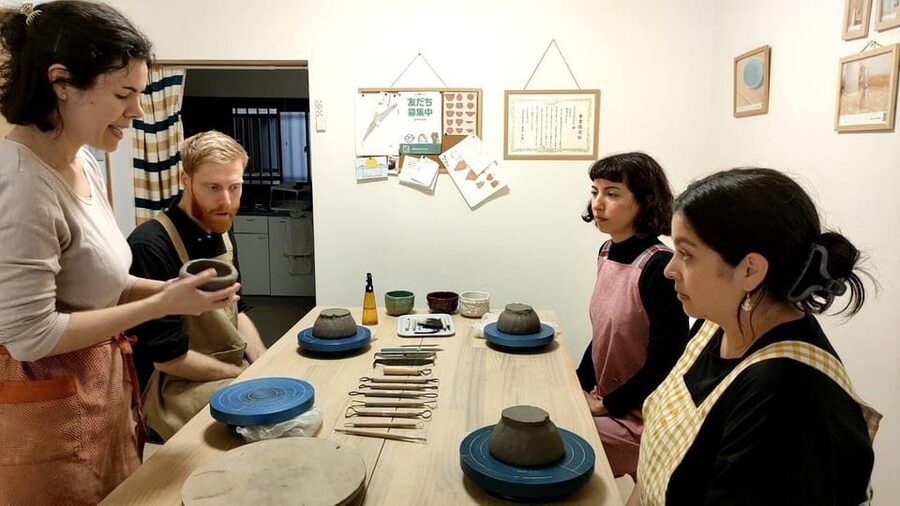
The activity takes place in a traditional building and is offered as a private group experience. That matters here. Pottery requires close attention, and a small setting gives you room to ask simple questions without feeling rushed or lost in a class full of people.
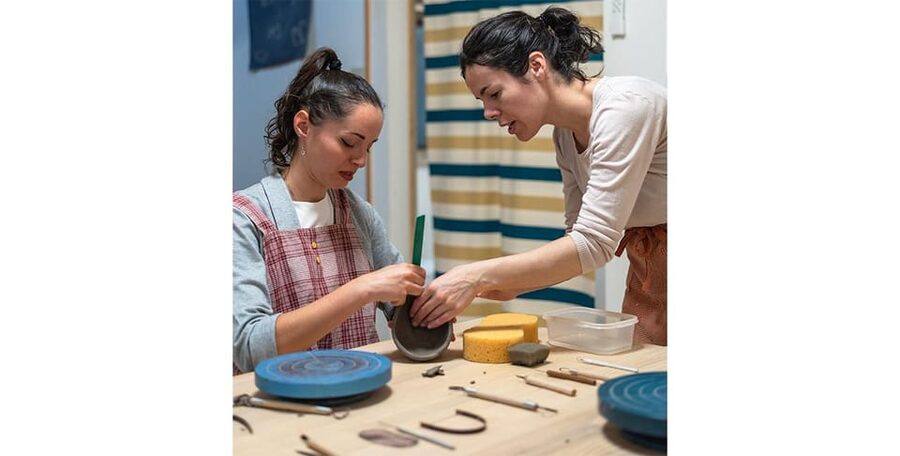
Anna studied ceramics in Osaka and has also studied pottery in Barcelona. Her role is not limited to demonstrating a few techniques. She explains the practical side of forming the bowl and the cultural meaning behind it. You can ask about the pottery itself, matcha, tea ceremony, and other parts of Japanese culture as you work.
Previous pottery experience is not needed. That makes this a good choice if you have never handled clay before, although you should still expect to do real hands-on work rather than watch a demonstration.
Carving your own bowl with the kurinuki method
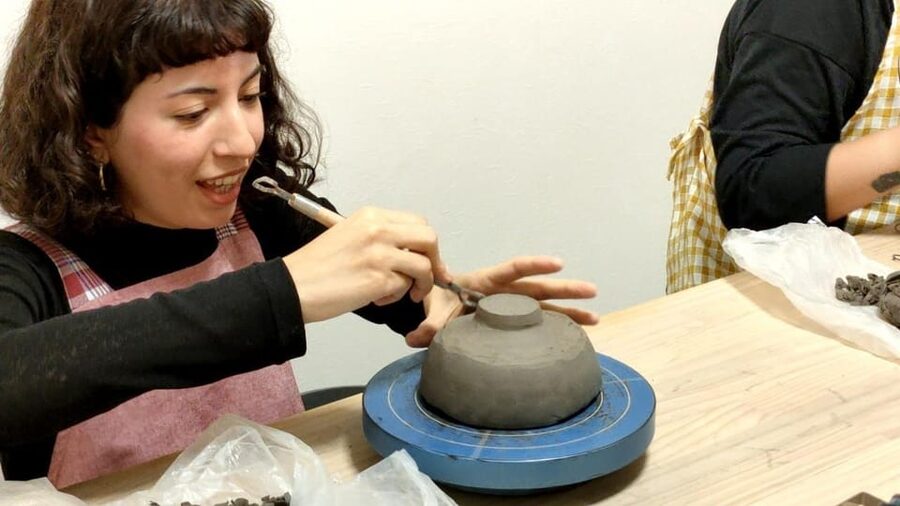
The central part of the workshop is decorating and shaping your matcha bowl. You use different tools to carve the clay and create a design that belongs to you.
This is not the kind of class where every finished bowl looks alike. One person might make a restrained bowl with soft, shallow marks. Another might cut stronger lines or create a more irregular shape. The process gives you room to let your individual style show, even if your style is simply I hope this turns out well.
Anna guides you through the decisions and can help fix small mistakes. That support is important because clay can change quickly under your hands. A cut that looks too deep can alter the bowl’s feel, while a rim that is slightly uneven may become one of its most appealing features.
The workshop also gives you technical and cultural explanations as you go. You learn not only how to make the bowl, but why a matcha bowl is shaped and handled with care in tea ceremony.
At the end, you choose the color for the glaze. This is one of the most enjoyable choices, but remember that the final color may not look exactly like the wet sample or studio reference before firing. The important point is that the completed piece will carry both your design and the ceramic process.
What the bowl means in a Japanese tea ceremony
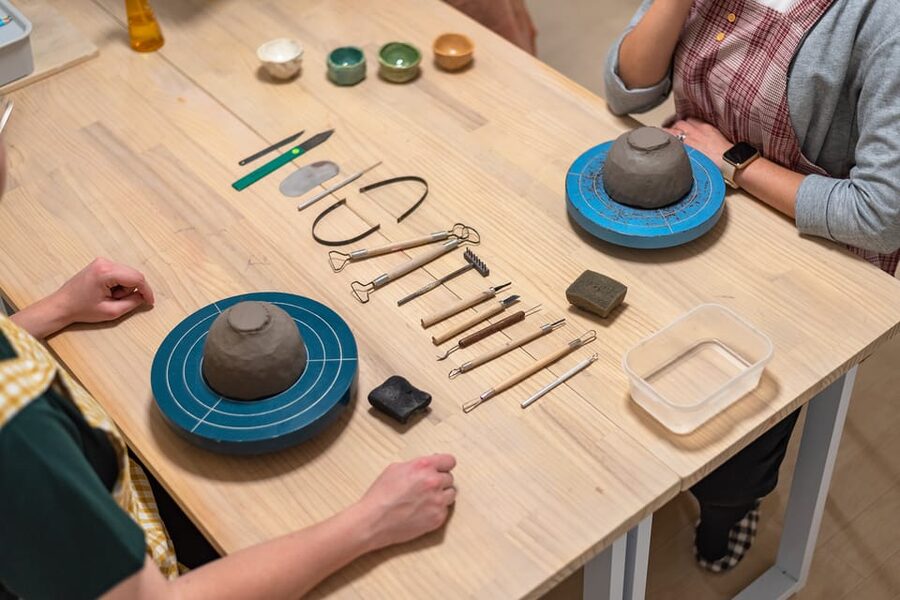
A chawan is more than a cup for green tea. Its shape, weight, texture, and imperfections affect how the tea is prepared and held.
The cultural explanation helps place your pottery work in context. You learn about the role of the bowl in the tea ceremony and about the other objects and customs connected with preparing matcha. That makes the workshop more than a craft souvenir session.
The tea portion also gives your hands a break from carving. You prepare matcha and enjoy it with Japanese sweets. The combination is simple, but it lets you experience the bowl as a working object rather than something you only pack into a suitcase.
The optional combined workshop puts this lesson first. Tea ceremony masters Kiyomi and Masako introduce you to the basics, guide you in preparing matcha, and serve it with Japanese sweets. Afterward, you work with Anna to shape and decorate your bowl.
If tea ceremony is your main interest, the combined option is the better fit. If you mainly want to make pottery and only want a cultural introduction to tea, the regular bowl workshop may be enough.
Same city, a very different cup:
- Osaka: Tea Ceremony Experience
★ 4.9 · 1,426 reviews - Tea Ceremony Experience in Osaka Doutonbori
★ 5.0 · 754 reviews - Osaka: Tea Ceremony, Calligraphy, and Kimono Experience
★ 4.9 · 130 reviews - Osaka: Japanese Traditional Sweets Making and Tea Ceremony
★ 4.7 · 118 reviews
A private class with room for questions
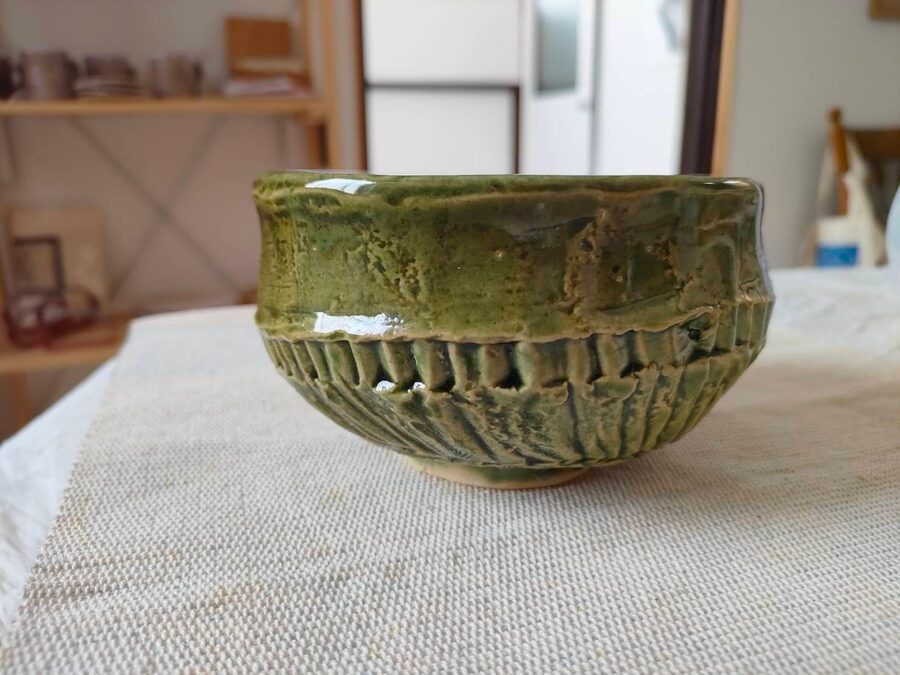
The private format is one of the strongest reasons to choose this experience. Pottery classes can be hard to enjoy when you have to keep pace with a large group. Here, you can take time with the texture and shape of your bowl while asking Anna for help.
The stated duration is 90 minutes to two hours. The exact length can depend on the session and what you choose to do. It is long enough to make a meaningful piece, but it is not a full-day pottery course.
You will not leave with the bowl in hand. The bowl needs to be fired and finished, then shipped to the address you provide in about two months. Shipping is not included, and the cost depends on your country and the number of people in your group.
That delay is worth planning around. If you are moving between hotels, give an address that will still work later, or ask the provider about the best delivery arrangement before booking. You should also treat the postage as part of the real cost of the experience, even though it is calculated separately.
The workshop includes all materials and equipment, drinks, technical and cultural explanations, and a ceramic gift. The extra gift is useful because it gives you something to take home right away while you wait for the bowl.
The optional tea ceremony and neighborhood time
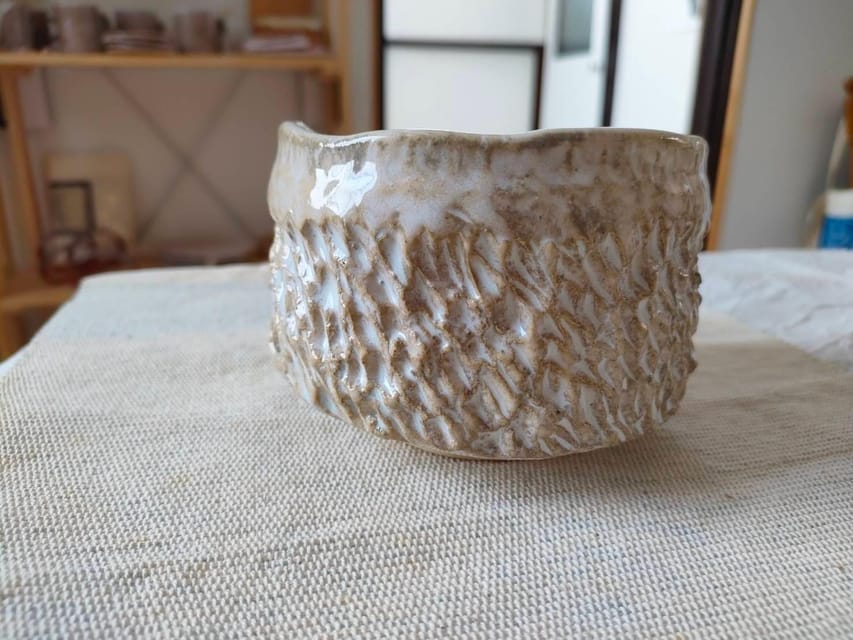
The combined workshop links two traditions that are often sold separately: preparing matcha and making the bowl used for it.
You begin with Kiyomi and Masako, who teach the basics of tea ceremony. You prepare and drink matcha with Japanese sweets, then move to Anna’s pottery session. This order makes sense. You first see how the chawan is used, then make one with that experience fresh in your mind.
The combined option also includes a small dish as a gift. It is intended for sweets at home, so you leave with a modest piece of tableware even before your bowl arrives.
Afterward, you can explore Osaka’s Ikuno Ward. The activity does not promise a specific sightseeing route, restaurant, or attraction, so keep your own plans flexible. Still, adding local time after the workshop can turn the session into more than a single appointment.
This option is best for you if you want a fuller cultural outing and enjoy learning through both food and craft. It may feel less suitable if you want a quick pottery activity with no extra structure.
Is $83 a good value?
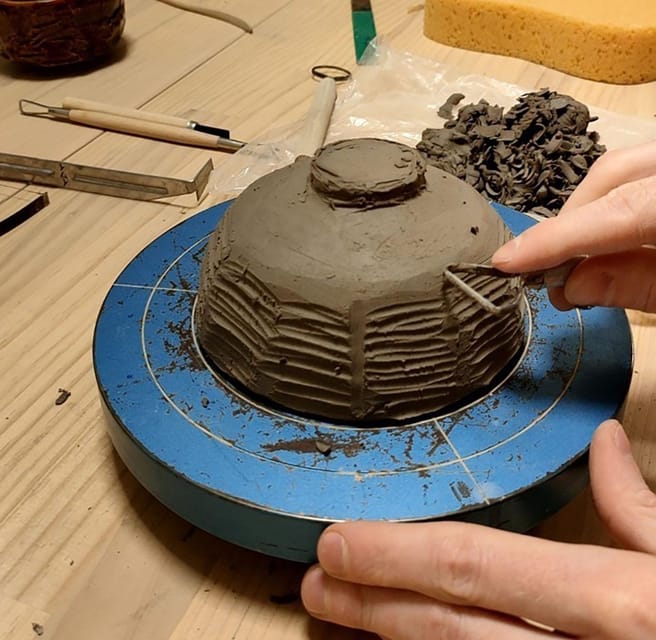
At $83 per person, this is not the cheapest way to spend an afternoon in Osaka. You can buy a ready-made bowl for less, and a short museum visit may cost less still.
The value comes from the combination of instruction, private access, materials, cultural context, a drink, sweets in the tea ceremony option, and a handmade piece designed by you. You are paying for time with a working ceramist, not only for the clay.
The price makes the most sense if you care about authentic souvenirs or enjoy learning a skill while you travel. It is less convincing if you want an instant keepsake, dislike waiting for delivery, or have no interest in pottery and matcha.
The included ceramic gift helps soften the wait. Still, calculate the final total with shipping before you commit, since postage is not part of the listed price.
Who will enjoy this Osaka experience?
I would choose this workshop for couples, friends, solo visitors, and families with children aged six or older who enjoy hands-on activities. The private format also works well for people who prefer a calm lesson over a large organized group.
It suits first-time visitors who want cultural context without signing up for a long formal tea ceremony. You learn the basics, make something useful, and get a chance to talk with a local artist.
It is also a good fit for anyone searching for a souvenir that feels tied to the trip. A store-bought bowl may be more polished, but your handmade chawan carries the decisions you made in Osaka.
The activity is not suitable for children under six. The space is not adapted for wheelchair users, so accessibility needs should be considered before booking.
You should arrive on time. If you will be more than 15 minutes late, contact the provider. Arriving over 15 minutes late is treated as a no-show.
Languages, cancellation, and planning details
The workshop can be conducted in English, Spanish, Catalan, or Japanese. That wide language range is useful for mixed-language groups and for anyone who wants technical explanations without guessing at instructions.
You can reserve now and pay later, which helps if your Osaka schedule is still changing. Free cancellation is available up to 24 hours in advance for a full refund.
Alcohol and drugs are not allowed. The workshop requires attention and careful use of tools, so this is a sensible rule rather than a minor formality.
Because the experience lasts between 90 minutes and two hours, check the available starting times before arranging another activity. Leave some breathing room afterward if you want to explore Ikuno Ward or stop for food.
My take: should you book it?
Book this experience if you want to make a personal souvenir, enjoy quiet hands-on work, and like learning the meaning behind Japanese objects. Anna’s patient guidance, the private format, and the chance to carve a genuinely individual bowl make the session more worthwhile than a simple pottery painting class.
Choose the combined option if matcha and tea ceremony are central to your plans. Choose the standard workshop if the bowl itself is your priority.
Skip it if you need a souvenir immediately, cannot manage separate shipping costs, or want a fast sightseeing stop with no creative work. For everyone else, this is a thoughtful Osaka activity that gives you something to use at home and a better understanding of why the chawan matters.
FAQ
Where does the matcha tea bowl workshop meet?
The meeting point is the north exit of JR Teradacho Station in Osaka. Look for a sign marked Ceramics Tocoton.
How long does the experience last?
The activity lasts between 90 minutes and two hours. Starting times vary, so check availability when booking.
Who teaches the pottery workshop?
Anna leads the pottery session. She is a ceramist who studied ceramics in Osaka and pottery in Barcelona.
Is previous pottery experience required?
No. The workshop is suitable for beginners, and Anna guides you through the process.
What pottery technique will I use?
You will use the traditional Japanese kurinuki technique, carving the clay with tools to create a personal design.
When will I receive my finished bowl?
Your bowl will be shipped to the address you provide in about two months. Shipping costs are not included and depend on the destination country and number of people.
Is a tea ceremony included?
The workshop includes explanations about matcha bowls and their role in tea ceremony, as well as preparing matcha and enjoying a drink. A combined option adds a lesson with tea ceremony masters Kiyomi and Masako, along with Japanese sweets.
Is the experience suitable for children and wheelchair users?
The activity is not suitable for children under six. The space is not adapted for wheelchair users.
Fresh tea listings around Osaka
- Osaka:Zen Tea Ceremony and Foot Bath Experience<45min>★ 5.0 · 7 reviews
- Nara Deer Park, Uji Matcha, & Hot Spring Full-Day Tour from Osaka★ 4.0 · 21 reviews
- Osaka: Tea Ceremony, Calligraphy, and Kimono Experience★ 5.0 · 6 reviews
- Osaka: Nara, Todaiji, Uji Matcha, and Hot Spring Tour★ 4.0 · 7 reviews
- Discover Japanese Tea Blending Techniques in Osaka★ 5.0 · 19 reviews
- Osaka Japanese Cooking And Matcha Class near Osaka Castle★ 5.0 · 22 reviews
- Craft Sushi and Matcha Ice Cream in Central Osaka (3-Course Meal)★ 5.0 · 2 reviews
- ZEN therapy | Shiatsu-style massage, EnergyTherapy & Japanese Tea★ 5.0 · 5 reviews
Matcha Experiences, compared.
World Heritage Kyoto & Nara Uji Authentic Matcha Experience
Read our review →
Matcha Making Class in Tokyo with Authentic Japanese Sweets Set
Read our review →
Kyoto: Tea Museum Tickets and Matcha Grinding Experience
Read our review →
Matcha Making Class in Osaka with Authentic Japanese Sweets Set
Read our review →
Kyoto: Tea Ceremony Meditation – Make Matcha with Tea Master
Read our review →
Tokyo: Matcha Making Experience with Mochi Sweets in Asakusa
Read our review →
Kyoto: Kimono Tea Ceremony with Matcha and Sweet
Read our review →
Browse the lists this tour appears in