
Review · KIMONO & TEA CEREMONY
Samurai Show, Tea Ceremony, Japanese Traditional Activities
The best thing about this Osaka experience is that you do not just sit and watch. You learn tea ceremony movements, put brush to paper, try Japanese instruments, and take part in a lighthearted samurai performance. Hands-on activities make the culture easier to remember than a quick museum visit.
I like the range for the price, especially the tea ceremony and calligraphy. I also like that staff help with each station, photos, and simple Japanese phrases. The main drawback is pacing: the advertised time is about two and a half hours, but many people spend three to four hours if they add costume dressing or take part in every activity.
Key points at a glance
- Tea ceremony and calligraphy: Learn the basic manners of making green tea and create a piece of Japanese calligraphy to take home.
- Samurai performance: Watch a staged sword show, then try safe movements yourself with guidance.
- Traditional music: See Japanese instruments played and have a chance to handle and practice them.
- Good rainy-day choice: The main program takes place indoors, though the provider says poor weather can affect scheduling.
- Costume options: Kimono, samurai armor, and ninja experiences are not included in the standard ticket.
- Central meeting point: Start and finish at Shinsaibashi ARTY Inn, 2-chōme-17-3 Nishishinsaibashi, near public transport and Dotonbori.
What the $44.92 Osaka experience really includes
At $44.92 per person, this is a solid-value introduction to several parts of Japanese culture in one sitting. You are not paying for a formal temple ceremony or a long historical tour. You are paying for a guided activity session with demonstrations, practice time, and friendly help as you move from one station to the next.
That distinction matters. If you want quiet observation and strict ceremony, this may feel theatrical and busy. If you want to try several things without spending a full day arranging separate bookings, it makes good sense.
The standard ticket includes the tea ceremony, calligraphy, traditional Japanese music, and samurai performance. The program is listed at about 150 minutes, with a maximum of 20 people. That group size is small enough for instruction to be practical, though the experience can run longer when everyone wants photographs, costume time, or extra activities.
The price also works well for families. Children can watch the performances, try instruments, practice calligraphy, and join the safe samurai movements. Adults who normally skip staged cultural shows may also find the participation keeps the afternoon lively.
More Kimono and Tea Ceremonies in Osaka
- Osaka: Tea Ceremony, Calligraphy, and Kimono Experience
★ 4.9 · 130 reviews - Samurai dress-up and shows, plus Tea Ceremony & Calligraphy
★ 5.0 · 27 reviews - Premium Kimono Dressing, Tea Ceremony, Calligraphy, Samurai show
★ 5.0 · 18 reviews
Finding the venue near Dotonbori
The activity begins at Shinsaibashi ARTY Inn at 2-chōme-17-3 Nishishinsaibashi in Osaka’s Chuo Ward. It is near public transportation and close to the Dotonbori area, so it is easy to pair with a meal, shopping, or an evening walk through central Osaka.
You return to the same meeting point at the end. That is useful if you are planning your day around Namba and Shinsaibashi. You do not need to arrange a one-way transfer or find your way to a second part of town after the program.
Allow more time than the official two-and-a-half-hour estimate. One full afternoon account lasted roughly three to four hours, and another suggested setting aside at least three hours. You may finish closer to the scheduled time if you watch the activities without taking every optional turn, but the program is not a quick in-and-out attraction.
The tea ceremony: careful movements made approachable
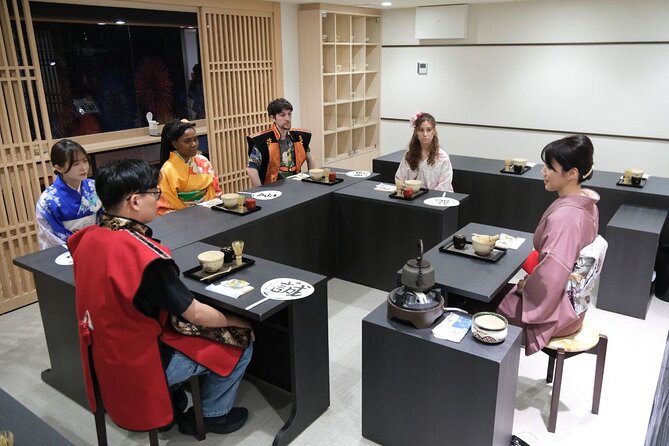
The tea ceremony is one of the quieter parts of the session. You learn how green tea is prepared and how to take part correctly, rather than simply watching someone perform the ritual at a distance.
That practical approach gives you useful cultural context. Small actions, such as how you receive the tea and how you pay attention to the preparation, become easier to understand when an instructor explains them in person.
Do not expect the calm, formal setting of a specialist tea house. This is part of a larger activity program, and the atmosphere is designed to be welcoming to beginners. That makes it a good first encounter, especially if you are unsure about the etiquette or worried about doing something wrong.
I would treat this as an introduction rather than a complete study of tea culture. The value is in learning the basic form and seeing why attention, respect, and presentation matter in Japanese customs.
Calligraphy with something to take home
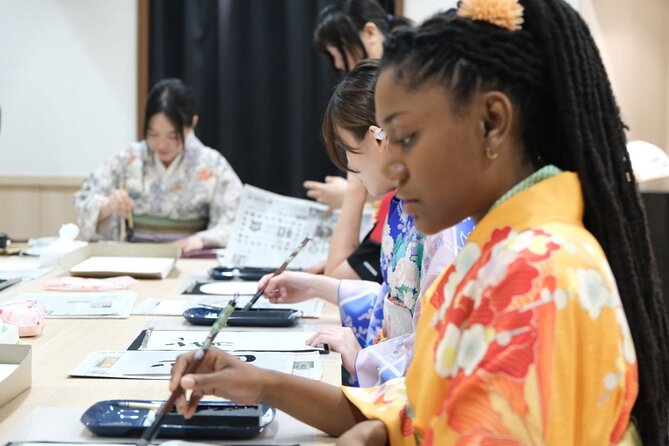
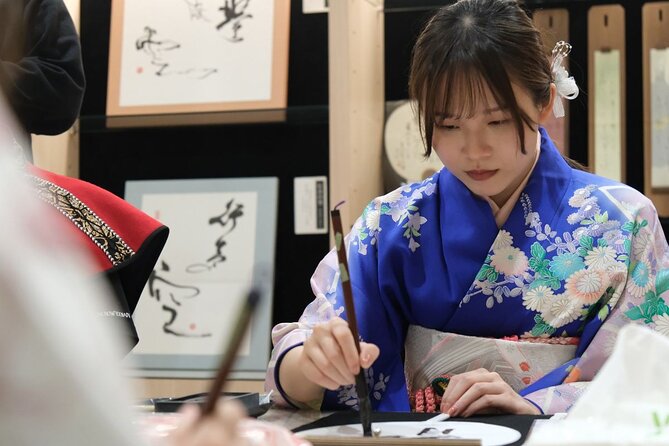
Calligraphy gives the session a tangible souvenir. You use a brush and ink, receive guidance, and create a personalized piece. One account specifically described making a fan that could be taken home, though the exact souvenir may depend on the current program.
This station is more satisfying than simply taking a photograph of an example. You get to feel how the brush moves and see how much control is needed to make a clean character. Even a wobbly first attempt has a story behind it.
You do not need prior artistic skill. The point is not to produce museum-quality work. It is to slow down, follow instructions, and try a traditional craft that most visitors would not easily arrange on their own.
If you are buying this for children, calligraphy is a good counterpoint to the louder samurai show. It gives them a quieter task and a physical reminder of the afternoon.
More Tea Ceremonies in Osaka
- Osaka: Tea Ceremony Experience
★ 4.9 · 1,426 reviews - Tea Ceremony Experience in Osaka Doutonbori
★ 5.0 · 754 reviews - Osaka: Japanese Traditional Sweets Making and Tea Ceremony
★ 4.7 · 118 reviews - Osaka: Private Tea Ceremony and Calligraphy Experience
★ 5.0 · 50 reviews
Samurai show, safe sword practice, and a little theater
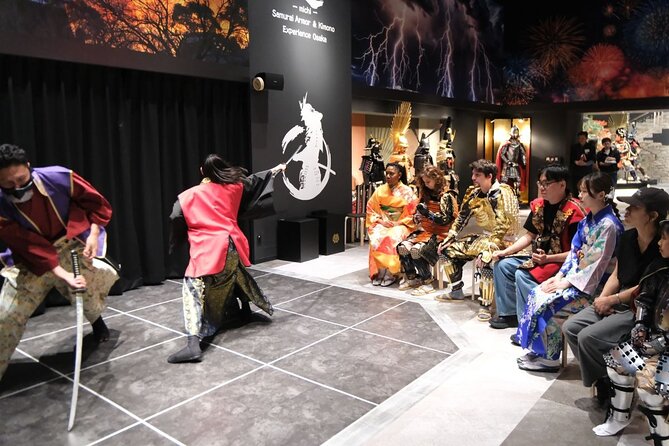
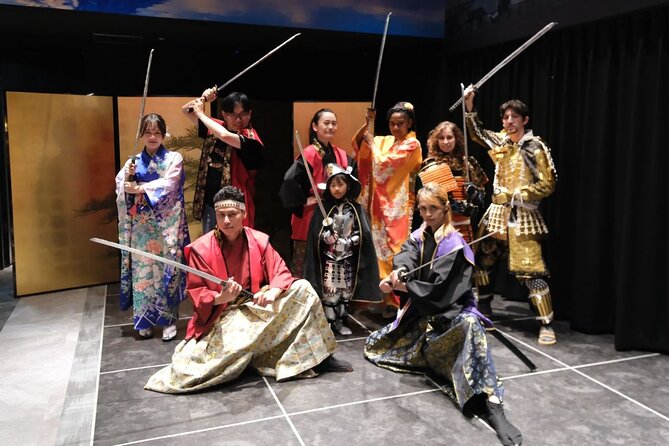
The samurai performance is the headline act for many people. Expect staged sword action, dramatic movement, and a chance to practice simple samurai techniques with guidance. The swords used for participation are not real weapons, so this is a controlled performance rather than combat training.
The tone is playful. One staff member who worked with families was described as especially funny, and children enjoyed practicing on him. That humor is part of the appeal, but it also explains why the show may not satisfy someone seeking a serious martial arts demonstration.
You may see more than one samurai performance depending on the timing and the program running that day. Some accounts described two different shows, followed by chances to join the action. Since the supplied schedule only promises a samurai performance, I would not book solely on the expectation of two separate shows.
The costumes and props are made for presentation. One account found the samurai segment weaker than the tea, music, and calligraphy because the pieces were reproductions. That is a fair warning. Come for a fun cultural show and basic participation, not an authentic battlefield reconstruction.
Japanese music you can try instead of merely hearing
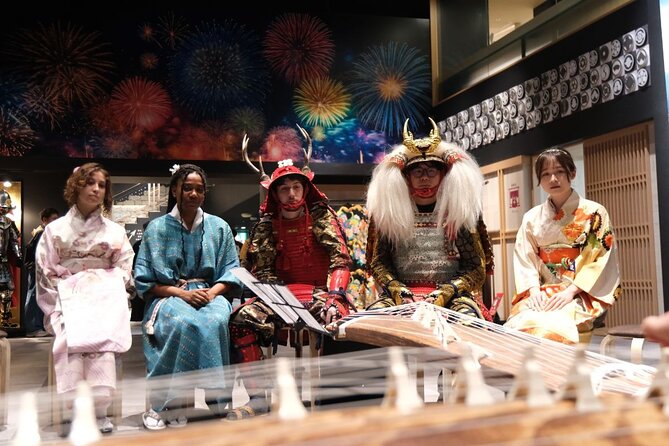
The music portion adds welcome variety. You watch performers play traditional instruments, then get a chance to handle and practice one yourself. Accounts describe trying instruments such as a Japanese guitar, harp, and flute, as well as a complex Japanese keyboard-style instrument.
You will not become a musician in one afternoon. The point is to hear the sound up close and discover how unfamiliar the technique can be. Even making a poor noise becomes part of the fun, especially when instructors keep the mood relaxed.
This is one of the strongest features for people who like active learning. A concert can show you what an instrument sounds like. Here, you also learn how it feels in your hands and how difficult it is to produce a simple tone.
The exact instruments and order may vary. The confirmed program includes traditional Japanese music and interactive activities, but it does not promise a particular instrument for every booking.
Costume upgrades and what the base ticket leaves out
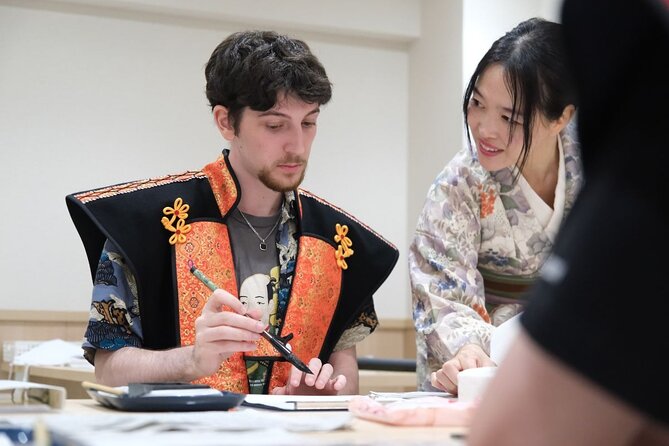
The standard $44.92 ticket does not include samurai armor, kimono, or ninja dress. That is important because the promotional description places costumes near the cultural activities, while the inclusions list treats them as separate options.
A kimono upgrade was described at 5,000 yen by one participant, with attendants helping dress the person, take photographs, and provide socks and undergarments to keep. Prices and arrangements can change, so confirm the current cost before booking if costume photos are central to your plan.
Samurai armor is also offered as an option, but no current price is provided here. The same applies to the ninja experience. You should budget for these separately and avoid assuming that the base ticket includes dress-up.
I see the costume option as worthwhile for a special photograph or family occasion, but it will add time. If you only have two hours before dinner or a train, stick to the included program.
Language help, group size, and the general pace
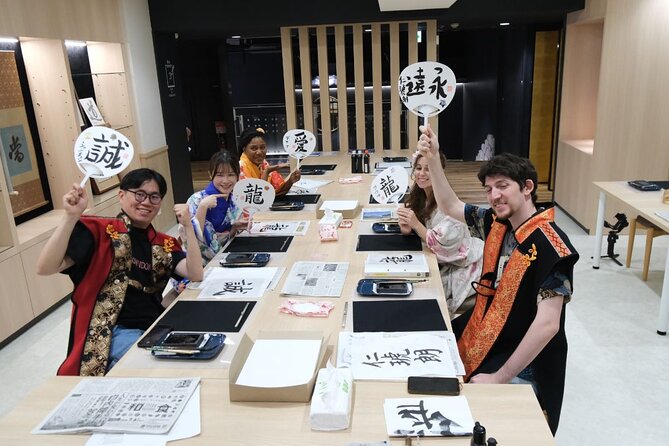
The staff guide people from one activity to another and help with instructions, photographs, and simple Japanese language practice. Several staff members were praised by name, including Yui and Miyu, for making the experience warm and easy to follow.
That support is useful because the program shifts quickly from demonstration to participation. You are not left to guess how to hold a brush, receive tea, or move during the samurai practice.
The maximum group size is 20. That is not a private lesson, but it should allow the instructors to keep an eye on participants. Families of different ages can take part, and one group of ten people with children and grandchildren found the staff patient and helpful.
The atmosphere is more entertainment-focused than solemn. You may hear laughter during the sword practice and musical attempts. I consider that a strength for most first-time visitors, but a possible weakness if you want a deeply formal cultural setting.
Is it a good rainy-day plan?
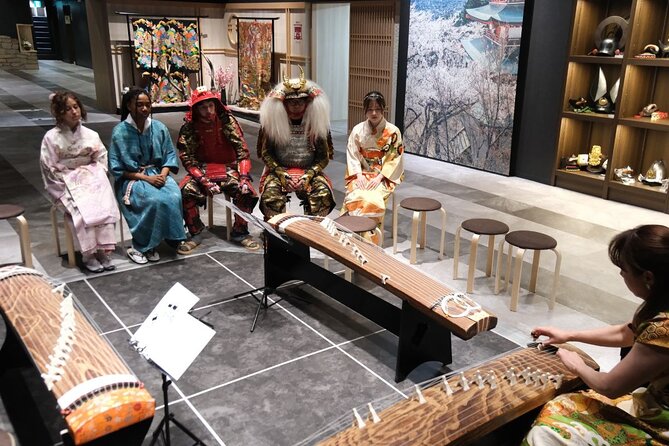
The activities take place in a large indoor facility, making this a useful choice when Osaka weather spoils outdoor plans. A rainy day can make a hands-on indoor session especially convenient, since you can spend several hours learning and watching without carrying an umbrella from one sight to another.
There is a small complication in the booking terms. The provider says the experience requires good weather and may be canceled if conditions are poor, with a different date or full refund offered. Since the program is described as indoor, check the status before setting your day around it.
The free cancellation policy allows a full refund when you cancel at least 24 hours before the start time. Changes or cancellations inside that window are not accepted for a refund. Cutoff times use Osaka local time.
Who should book this Osaka cultural activity?
I would recommend it most to first-time visitors who want a broad introduction rather than a specialist lesson. You get tea, calligraphy, music, and samurai performance in one booking, which is efficient when your Osaka schedule is tight.
Families are a strong match. The show provides energy, while calligraphy and tea offer calmer activities. The staff support also helps when children or adults are trying unfamiliar tasks.
It suits couples and solo visitors who enjoy taking part, not just watching. If you like leaving with a souvenir, the calligraphy activity and optional costume photographs add appeal.
I would be more cautious if you are seeking historical depth or high-level martial arts. The samurai show is staged and playful, and some props are reproductions. You will learn useful cultural basics, but this is not a substitute for a museum, a serious tea-school lesson, or a formal kendo class.
Should you book the Samurai Show and Tea Ceremony?
For $44.92, I think this is a good buy if you want several Japanese cultural activities under one roof. The tea ceremony, calligraphy, and instrument practice provide real participation, while the samurai show supplies the theatrical fun.
Book it when you can spare at least three hours, especially if you want a kimono or samurai armor upgrade. Skip it if your priority is a quiet, traditional ceremony or an expert-level performance.
My practical advice is simple: reserve the base experience for a broad, family-friendly introduction, then confirm costume prices and timing before adding an upgrade. With that expectation, this makes a useful and entertaining Osaka afternoon.
FAQ
How long does the experience last?
The scheduled duration is about 2 hours and 30 minutes, or approximately 150 minutes. You may need three to four hours if you take part in every activity, allow time for photos, or add costume dressing.
What activities are included?
The standard experience includes a tea ceremony, calligraphy, traditional Japanese music, and a samurai performance. Interactive practice is part of the program.
Are kimono and samurai armor included?
No. Samurai armor, kimono, and ninja experiences are not included in the standard ticket. They are optional additions, and current upgrade prices should be confirmed before booking.
Where does the activity start and finish?
It starts at Shinsaibashi ARTY Inn, 2-chōme-17-3 Nishishinsaibashi, Chuo Ward, Osaka. The activity ends back at the same meeting point.
How many people can join?
The maximum group size is 20 people. Most people can participate, according to the supplied activity information.
Can I cancel for a full refund?
Yes, if you cancel at least 24 hours before the experience start time. Cancellations or changes made less than 24 hours in advance are not refunded. If the provider cancels because of poor weather, you will be offered another date or a full refund.
More Shows in Osaka
- Kyoto: Wazuma Magic Show & Tea Ceremony
★ 4.8 · 29 reviews - Chengdu: Sichuan Opera Show ShufengYayun & Covered Bowl Tea
★ 4.2 · 14 reviews - Agadir/Taghazout: Sandboarding & Sunset Tea with Fire Show
★ 5.0 · 6 reviews
Fresh tea listings around Osaka
- Osaka Temple Head Spa &Matcha Facial – Refresh & Glow〈90min〉★ 5.0 · 24 reviews
- Premium Kimono Dressing, Tea Ceremony, Calligraphy, Samurai show★ 5.0 · 18 reviews
- Samurai dress-up and shows, plus Tea Ceremony & Calligraphy★ 5.0 · 27 reviews
- Osaka; Japanese Tea ceremony experience, Macha and Sencha★ 4.9 · 29 reviews
- Osaka: Private Tea Ceremony and Calligraphy Experience★ 5.0 · 50 reviews
- Osaka Temple Cool Foot Bath & Matcha Experience〈45min〉★ 4.9 · 82 reviews
- Osaka: Tea Ceremony, Calligraphy, and Kimono Experience★ 4.9 · 130 reviews
- Osaka: Japanese Traditional Sweets Making and Tea Ceremony★ 4.7 · 118 reviews
Kimono & Tea Ceremony, compared.
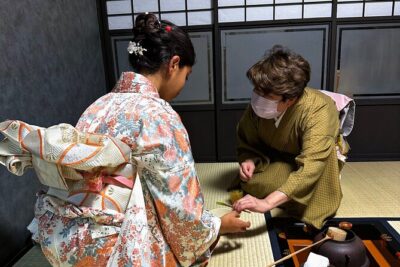
KYOTO Tea Ceremony with kimono near by Imamiya Jinjya Shrine
Read our review →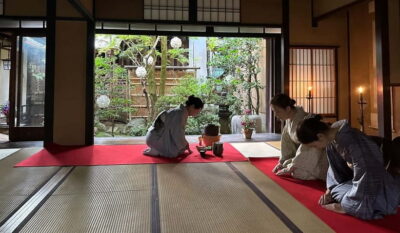
Kyoto: Kimono and Tea Ceremony Experience at Cultural Asset
Read our review →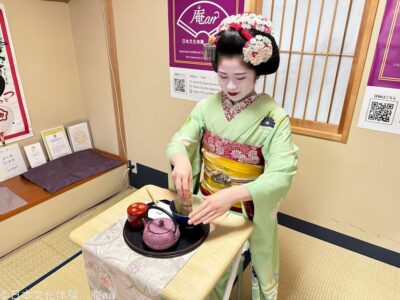
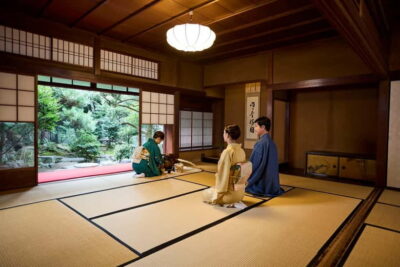
Kyoto: Kimono Tea Ceremony with Matcha and Sweet
Read our review →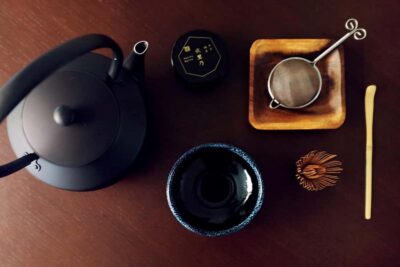
Browse the lists this tour appears in