
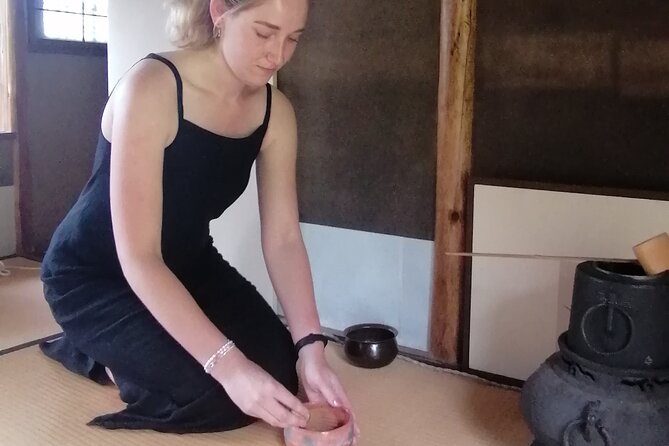
Review · TEA CEREMONY EXPERIENCES
The Art of Mindful Living: Tea Ceremony in Kyoto
The best part of this Kyoto experience is its personal scale. In a traditional home, Naomi explains the meaning behind tea ceremony, prepares organic Uji matcha, serves a Japanese sweet, and then lets you make the tea yourself. Watching is only half the experience. You take part.
I like the calm garden setting and the practical teaching. You learn how to drink matcha, why the ceremony follows a set rhythm, and how different Japanese teas compare. The hands-on finish makes the lesson stick. The main drawback is location: Kaze no Waon is in western Kyoto, away from the central sightseeing districts, so you need to plan extra travel time.
Key points to know
- Make your own matcha: After watching Naomi, you whisk tea yourself.
- Organic Uji matcha: The tea comes from Kyoto, and one serving of Japanese sweets is included.
- Historic home and garden: The ceremony takes place in a Japanese old house with a dedicated tea room and garden photo spots.
- Flexible for families and diets: Vegan sweets, allergy accommodations, chairs, and cocoa for children are available.
- Optional kimono rental: Kimono costs ¥4,000, hakama costs ¥8,000, and a baby romper-style kimono costs ¥600.
- Small-group format: Sessions are limited to six people unless arranged otherwise, and private bookings are possible.
A quiet tea lesson inside an old Kyoto home
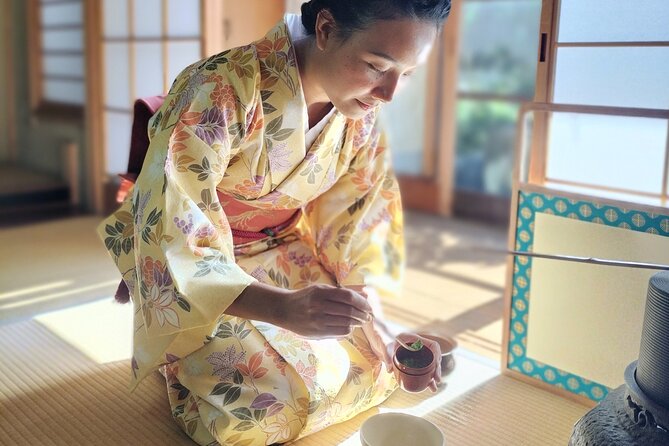
This is not a quick matcha tasting at a counter. You enter a Japanese home, move into a room prepared for tea ceremony, and learn why each gesture matters. The setting gives the activity a sense of place that a modern café cannot provide.
Naomi leads the session in English and keeps the subject approachable. She covers the history of tea ceremony, the effects and character of matcha, types of matcha and Japanese tea, and the basic way to drink it. You do not need prior knowledge or special clothing.
The ceremony has a gentle rhythm. First, you watch Naomi prepare the tea. Then you receive matcha and a Japanese sweet while she explains what is happening. Finally, you try whisking your own cup. That order works well because you see the movements before attempting them.
Chairs are available, which matters if sitting on the floor is uncomfortable. The room is traditional, but the experience does not require you to behave like a tea student from the start. Naomi’s teaching makes room for questions and beginners.
More Tea Ceremonies in Kyoto
- Kyoto: Tea Ceremony in a Traditional Tea House in Kiyomizu
★ 4.9 · 3,519 reviews - Kyoto: Tea Ceremony Ju-An at Jotokuji Temple
★ 4.9 · 3,207 reviews - Kyoto: 45-Minute Tea Ceremony Lesson Experience
★ 4.3 · 2,378 reviews
Why the garden adds more than a photo stop
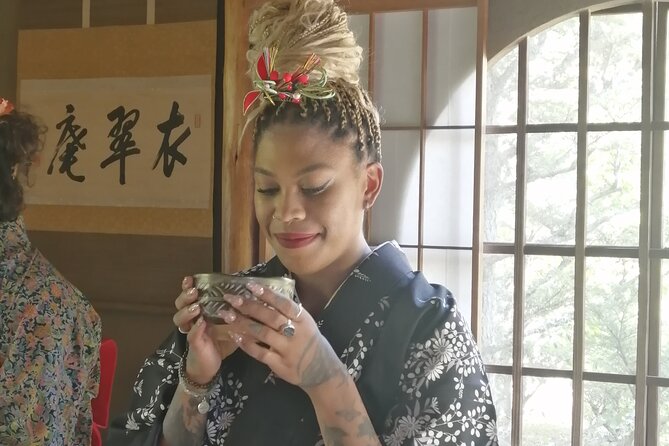
The house includes a beautiful garden, and you can take photographs there before the ceremony or during suitable moments. This gives the visit a second pace: a focused indoor lesson followed by a little time outdoors among a quieter setting.
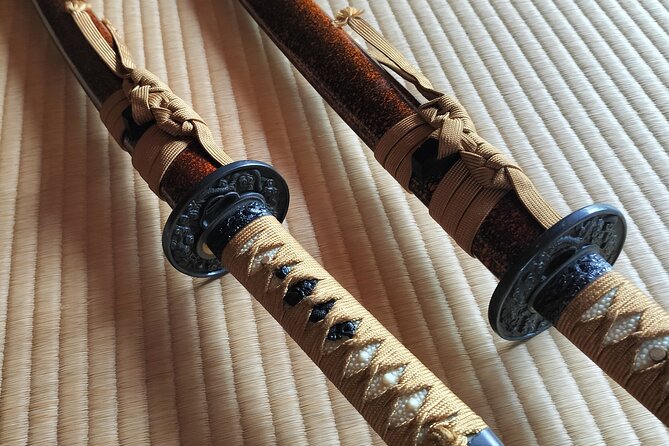
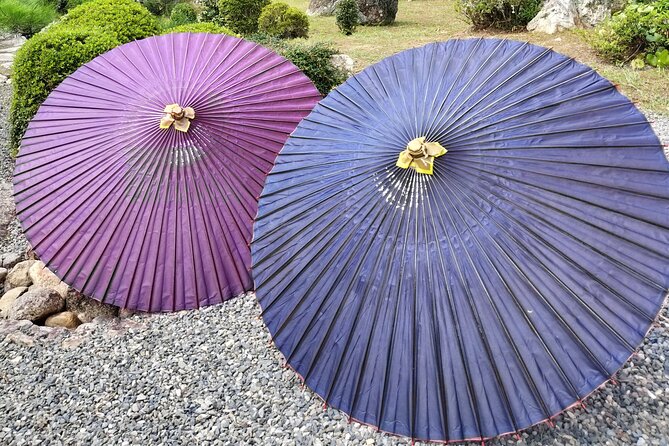
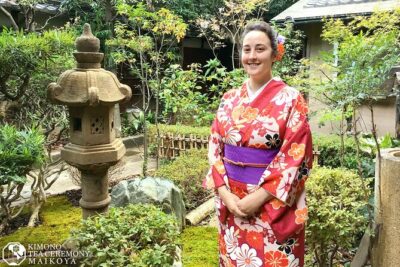
The garden is especially useful if you are booking a kimono rental. You can take pictures in the traditional clothing, using the garden as a backdrop rather than posing only inside the tea room. For a private tea ceremony, you can also use a Japanese traditional umbrella and an imitation sword for photographs. These props are for pictures only.
Rain changes the photo plan. You can still take photographs while holding an umbrella, but you cannot wear a kimono outside in the rain without an umbrella and remain dry. The activity requires good weather, so poor conditions can lead to a new date or a full refund.
I would treat the garden as part of the experience, not as a guaranteed photography session in every condition. The ceremony itself remains the main reason to book. The garden adds atmosphere and useful pictures, but weather and timing can limit how long you spend outside.
What happens during the one-hour session
The activity lasts about one hour. That is enough time for an introduction, a demonstration, tea and sweets, and your own attempt at making matcha, without turning the lesson into a long formal ritual.
1. Start with tea ceremony basics
Naomi begins by explaining the background of Japanese tea ceremony and the role of matcha. You learn about the different kinds of Japanese tea and receive guidance on how to drink matcha properly.
This opening is valuable because tea ceremony can seem mysterious if you only watch the movements. The explanation gives you a reason for the bows, tools, serving order, and attention to detail. You come away with more than a cup of green tea.
The tone is educational but not stiff. The host’s aim is to explain both the theory and the experience, so you can understand the ideas behind the ritual while still enjoying the moment.
Same city, a very different cup:
- Kyoto: Table-Style Tea Ceremony at a Kyo-Machiya
★ 4.9 · 1,211 reviews - Kimono Tea Ceremony at Kyoto Maikoya, NISHIKI
★ 5.0 · 911 reviews - Kyoto: Kimono Tea Ceremony at Orizuruya Gion
★ 4.9 · 618 reviews - Kyoto: Tea Ceremony in 100-year-old Kyo-Machiya Townhouse
★ 4.8 · 546 reviews
2. Watch the tea being prepared
Next, Naomi performs the ceremony. You watch the way matcha is handled and served, then drink it with a Japanese sweet.
The sweet is not an afterthought. One traditional sweet is included in the price, and you can choose between a cake with bean paste or a fresh-fruit daifuku. If you want to try both, the additional charge is ¥500 per person.
The matcha is organic Uji matcha from Kyoto. It is not presented as a famous luxury brand, but the tea is selected for quality and gives you a direct taste of a product associated with the region. Matcha can be grassy and strong compared with ordinary brewed tea, so having a sweet alongside it makes the flavor easier to enjoy.
3. Whisk your own matcha
The final part is the most active. You prepare matcha yourself under Naomi’s direction.
This simple task changes your role. Instead of sitting silently through a formal display, you handle the tools and learn the basic motion required to create a frothy cup. You may not produce a perfect bowl on your first attempt, but that is part of the appeal. The point is to understand the process and enjoy the act of making tea.
Families tend to benefit from this format because children can do something with their hands. Children who do not want matcha can have cocoa instead. That option makes the session more workable for mixed-age groups.
Naomi’s teaching style and the personal touch
Naomi is the central figure in this experience. She explains the ceremony in English, communicates before and after booking, and adjusts the session for different needs. Her niece has also helped during some sessions, adding a family feel to the visit.
The host’s approach is one of the strongest reasons to choose this activity. You are not simply handed a bowl of matcha and left to guess what to do. Naomi explains the background, demonstrates the ceremony, answers questions, and guides you through your own tea.
The session can also feel reflective. Tea ceremony is presented not only as a cultural practice but as a way to slow down and pay attention. That idea does not require you to adopt a new lifestyle. Even if you are more interested in Japanese culture than meditation, the quiet structure of the activity gives the hour a welcome pause from sightseeing.
Private sessions are available, but you must contact the provider before booking. Larger groups may also be accommodated by arrangement, even though standard group sessions have a maximum of six people. Confirm those details in advance rather than assuming a regular booking will cover a large party.
The old-house setting and practical comfort
The ceremony room is inside a Japanese old residence. That setting is an important part of the value. You are learning in a domestic space designed for the activity, rather than in a hotel meeting room or a busy public venue.
The traditional setting may involve floor-level seating, but chairs are provided. If you have limited mobility or simply dislike sitting on the floor, tell the host what you need. The available chairs make the activity more comfortable, though the supplied information does not promise full accessibility throughout the building.
You can enter the premises with a stroller, but you cannot bring it inside the building. Families with babies should plan to leave the stroller outside the indoor area and use the baby kimono option only if it suits their child.
The meeting point is Kaze no Waon, at 14 Utanokitanoinchō in Kyoto’s Ukyo Ward. It is near public transportation, but it is not close to the busiest central districts. The host places it in the direction of Kinkakuji Temple and Arashiyama, so you may find it easiest to pair this activity with sightseeing in western Kyoto rather than crossing the city just for the one-hour session.
Kimono and hakama options
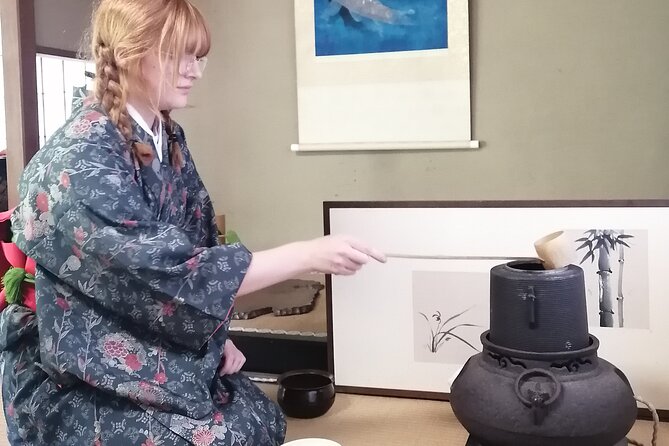
Kimono rental costs ¥4,000 while the tea ceremony is taking place. A hakama rental costs ¥8,000. There is also a baby romper-style kimono for ¥600, and an undershirt rental for ¥200.
These are add-ons, not part of the base price. Hair styling and makeup are not provided, but hair accessories are available for kimono renters to use. Allow extra time for changing, since traditional clothing takes longer to put on than everyday clothes.
The kimono option makes sense if photographs are a major goal or if you want the clothing to be part of the cultural activity. It is less appealing if your schedule is tight and you mainly want a short introduction to matcha. Ask about the timing and total cost before arriving, especially if you are considering private service or more than one rental.
For photographs, the traditional umbrella is a useful prop, particularly in damp weather. The imitation sword can add a playful touch, but both items are for photos only. They are not part of the tea ceremony itself.
Food choices, allergies, and children
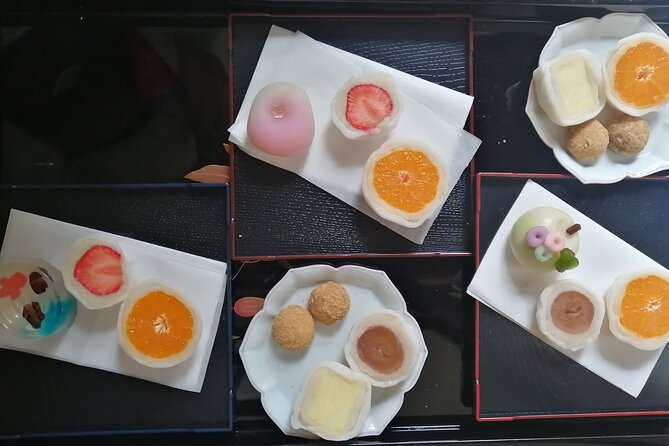
The standard booking includes one snack, meaning one Japanese sweet served with the matcha. You can choose a traditional bean-paste sweet or fresh-fruit daifuku. The extra ¥500 charge for trying both is modest, but you should request it if you want a fuller tasting.
Food allergies and vegan requirements can be accommodated. Contact the provider ahead of time with clear information rather than waiting until the session begins. The supplied details do not list every ingredient or guarantee every possible substitution, so specific dietary questions are best handled before booking.
Children can receive cocoa instead of matcha. This is a thoughtful option for families, since the tea’s bitter, grassy flavor is not a natural favorite for every child. The ceremony still gives children a cultural activity to watch and a calm setting to explore, though very young children may find the quiet pace harder than adults do.
Is $44.42 a fair price?
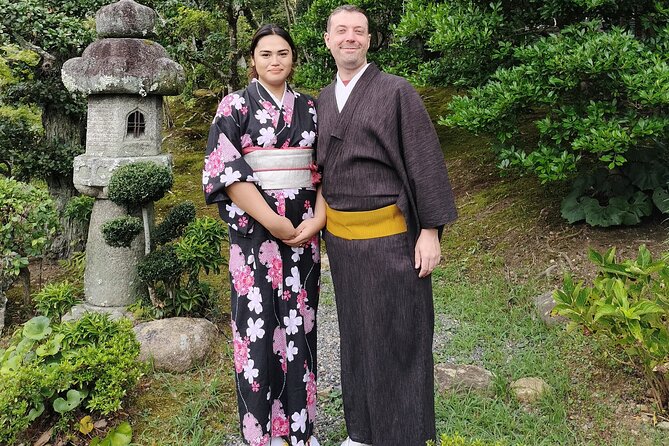
At $44.42 per person, this is more than the cost of buying a matcha drink and a sweet at a café. The price pays for the host’s instruction, the private residence setting, the tea ceremony demonstration, your own attempt at making matcha, and access to the garden during the experience.
I think the value is strongest if you want context and participation. A quick drink gives you flavor, but this session explains how matcha fits into Japanese culture and gives you a chance to practice the preparation. The small group limit also makes the fee easier to justify than a large commercial demonstration.
The price is less attractive if you only want a photograph in a kimono or a fast cup of green tea. Kimono, hakama, extra sweets, and other options cost more, so your final total can rise quickly. Treat the base price as the cost of the tea lesson, not as a package covering every photo and clothing option.
Booking tends to happen about 13 days ahead on average. That suggests planning in advance is sensible, especially if you need a private session, a large group arrangement, a kimono, or dietary accommodations.
Who will enjoy this Kyoto experience
I would recommend this activity to you if you want a quieter cultural stop with real instruction. It suits couples, families, and small groups who prefer conversation and participation over a quick staged display.
It is also a good fit if you want to understand tea ceremony before visiting other traditional sites in Kyoto. The lesson gives you useful cultural context without requiring a full day or advanced knowledge.
You may want to skip it if your itinerary stays entirely in central Kyoto and every hour is already committed. The location is a genuine drawback for a short activity. You should also think twice if you dislike sweet bean paste, matcha, or calm ceremonies, although the fresh-fruit daifuku and cocoa options help.
The one-hour length makes it easy to pair with western Kyoto sightseeing. Just allow enough time for transportation, and do not assume the session is a quick walk-in stop near Kyoto Station or Gion.
Booking, weather, and cancellation details
You receive confirmation within 48 hours, subject to availability, and the ticket is mobile. Standard sessions have a maximum of six people, while larger groups may be possible by arrangement.
Free cancellation is available until 24 hours before the start time. Cancellations or changes made less than 24 hours in advance are not refunded or accepted. Since poor weather can affect the garden and the activity requires good weather, a weather cancellation brings either a different date or a full refund.
A minimum number of participants may also apply. If the activity is canceled because that minimum is not met, you are offered another date or experience, or a full refund.
Should you book the tea ceremony?
Book it if you want to do more than drink matcha. Naomi’s lesson combines a traditional home, a garden, clear cultural background, Japanese sweets, and hands-on tea making. The organic Kyoto Uji matcha, child-friendly cocoa, allergy and vegan options, and available chairs make it more adaptable than many formal tea experiences.
The main question is location. If you are already planning time around Kinkakuji or Arashiyama, this is an easy cultural addition. If you are staying in central Kyoto and have only one free hour, the journey may outweigh the activity.
For the best value, reserve ahead, confirm any dietary or private-session needs, and decide before arrival if you want kimono rental. If a calm setting, personal teaching, and a chance to make your own tea sound better than a fast café stop, this is a worthwhile Kyoto experience.
FAQ
How long does the tea ceremony experience last?
The experience lasts approximately one hour.
Where does the activity take place?
It takes place at Kaze no Waon, 14 Utanokitanoinchō, Ukyo Ward, Kyoto, 616-8201, Japan. The activity ends back at the meeting point.
How many people can join a standard session?
A standard group session has a maximum of six people. Larger sessions may be arranged, and private bookings are available by contacting the provider before booking.
Is kimono rental included?
No. Kimono rental is an optional ¥4,000 add-on. Hakama rental costs ¥8,000, a baby romper-style kimono costs ¥600, and an undershirt rental costs ¥200. Hair styling and makeup are not provided.
Can the activity accommodate dietary needs?
Yes. Food allergies and vegan requirements can be accommodated. You can choose a Japanese sweet with bean paste or a fresh-fruit daifuku. One sweet is included, and trying both costs an additional ¥500 per person.
What happens if the weather is poor?
If the experience is canceled because of poor weather, you are offered a different date or a full refund. Garden photographs may also be limited in rain, though you can take pictures while holding an umbrella.
Fresh tea listings around Kyoto
- Kyoto: Authentic Tea Ceremony in a Small Group★ 5.0 · 7 reviews
- Uji Walking Tour – Byodo-in temple and Tea Ceremony from Kyoto★ 3.5 · 3 reviews
- Traditional Tea Ceremony in Kyoto★ 4.5 · 3 reviews
- Tea Ceremony Experience in Traditional Kyoto Townhouse★ 5.0 · 19 reviews
- Tea Ceremony in 150 Years Old Townhouse with Tables and Chairs★ 5.0 · 22 reviews
- Tea ceremony at Kyoto’s Zen Temple Teahouse★ 5.0 · 2 reviews
- Sencha-do the Japanese Tea Ceremony Workshop in Kyoto★ 5.0 · 21 reviews
- Silent Beauty of Kyoto Zen Walk and Tea Experience★ 5.0 · 2 reviews
Tea Ceremony Experiences, compared.
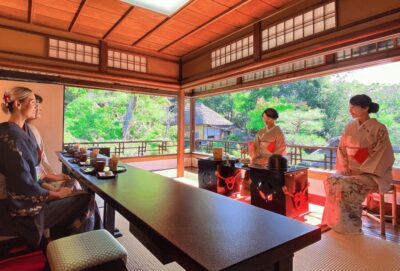
Kyoto: Tea Ceremony in a Traditional Tea House in Kiyomizu
Read our review →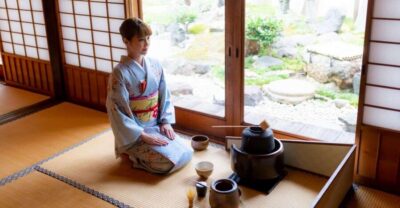
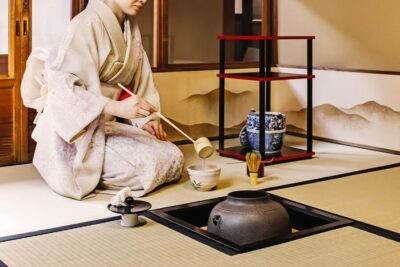
Kyoto: 45-Minute Tea Ceremony Lesson Experience
Read our review →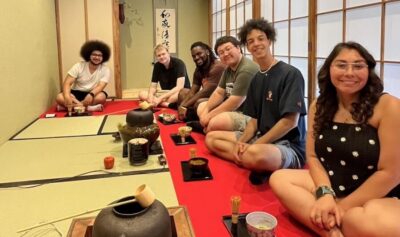
Kyoto: Table-Style Tea Ceremony at a Kyo-Machiya
Read our review →
Browse the lists this tour appears in