
Review · KIMONO & TEA CEREMONY
Sheraton Miyako Hotel Osaka: Tea Ceremony with Kimono Rental
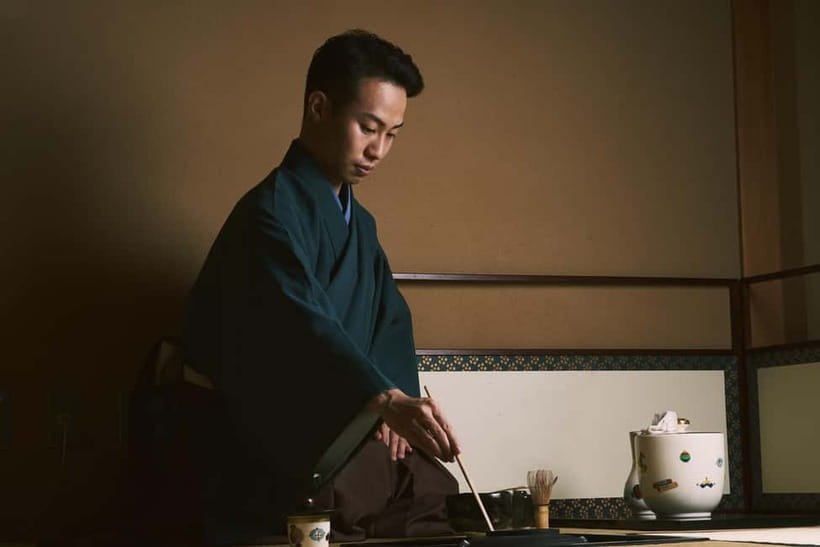
At the Sheraton Miyako Hotel Osaka, you do not just watch a tea ceremony. You wear a kimono, sit in a small traditional tea room, and prepare your own bowl of matcha under the care of a certified tea master. The setting is especially appealing: a quiet room on the fourth floor, with a small Japanese garden outside.
I like the small group of no more than 10, since it gives you a real chance to ask questions and try the tea yourself. I also like the practical approach: you learn enough about the ceremony, etiquette, and matcha to repeat the experience at home. The main caution is that you must arrive on time, and the experience is not suitable for wheelchair users or people with back problems.
Key points at a glance
- Kimono rental over your clothes: You receive a kimono that is designed to be easy to wear, with guidance from the staff.
- A certified tea master leads the session: You watch a formal preparation before making your own matcha.
- Traditional Urakuan tea room: The ceremony takes place on the fourth floor of the Sheraton Miyako Hotel Osaka.
- Seasonal Japanese sweets included: The sweets are served with matcha and form part of the tasting experience.
- Tatami or chair seating: You may sit on the floor with a cushion or request a chair.
- English and Japanese instruction: The session is offered in both languages, with a maximum of 10 people.
A quiet tea room inside a large Osaka hotel
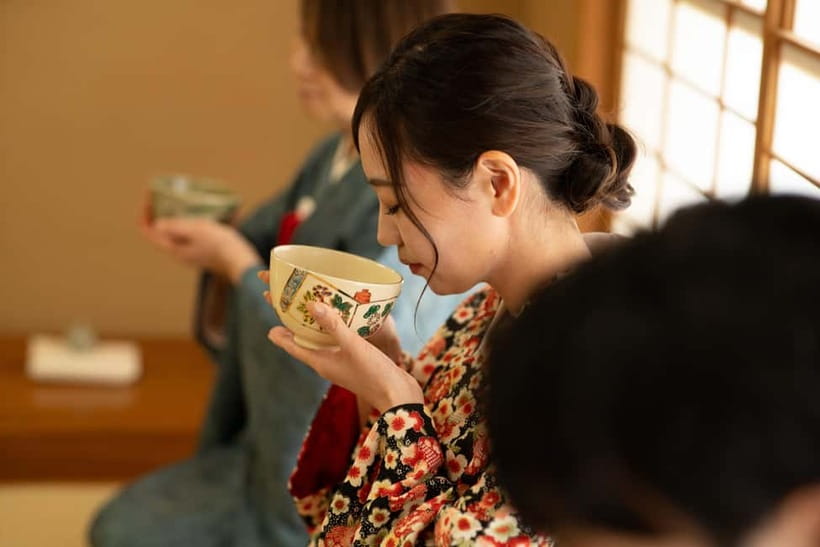
The Sheraton Miyako Hotel Osaka may sound like an ordinary hotel meeting point, but the tea room, called Urakuan, gives this activity a different feel. You go to the fourth floor, away from the usual pace of Osaka, and enter a space arranged for a traditional tea ceremony.
That contrast is part of the appeal. You do not need to travel far outside the city or build a full day around the activity. At the same time, you are not simply sitting in a hotel lounge with a cup of green tea. The ceremony takes place in a proper tea room, and a small Japanese garden is outside.
The experience lasts 75 minutes. That is long enough to cover the cultural background, watch the tea master work, taste the tea and sweets, and prepare matcha yourself. It is also short enough to fit into a busy Osaka schedule.
You will meet at the tea room itself at 6-chōme-1-55 Uehonmachi, Tennoji Ward. Hotel pickup and drop-off are not included, so you need to make your own way to the Sheraton Miyako Hotel Osaka.
More Kimono and Tea Ceremonies in Osaka
- Osaka: Tea Ceremony, Calligraphy, and Kimono Experience
★ 4.9 · 130 reviews - Samurai Show, Tea Ceremony, Japanese Traditional Activities
★ 5.0 · 56 reviews - Samurai dress-up and shows, plus Tea Ceremony & Calligraphy
★ 5.0 · 27 reviews
Putting on a kimono without a full dressing appointment
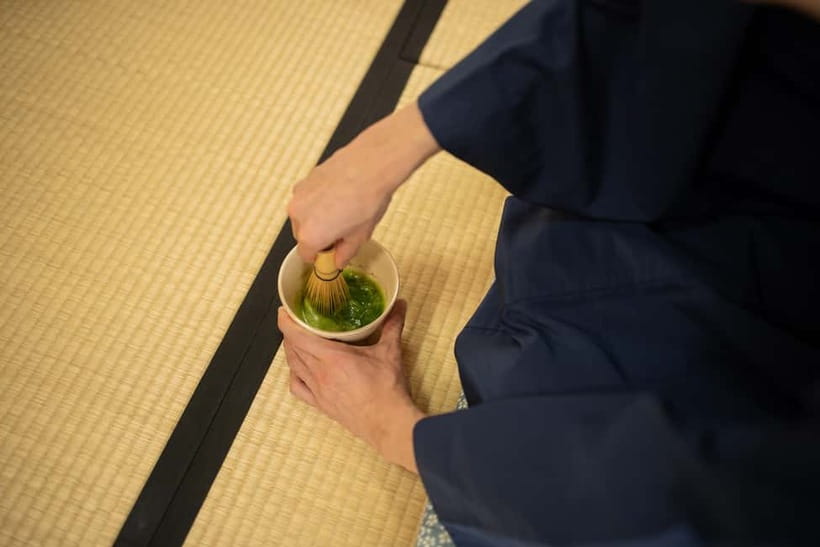
The kimono rental adds more than a photo opportunity. It changes how you approach the ceremony and helps you pay attention to the manners of the setting.
The provided kimono is intended to be worn over your regular clothes. Staff guide you through putting it on, and suitable options are available for both women and men. This is not described as a long professional dressing session, so you should expect a straightforward rental process rather than a full costume transformation.
Wear comfortable clothes underneath. Loose or easy-to-adjust clothing will make the process simpler, though the activity does not require a special dress code beyond comfort.
The kimono also gives you useful context. Traditional tea ceremony etiquette can feel abstract when explained in a classroom. Once you are dressed for the occasion and seated in the tea room, small details of posture, movement, and respect make more sense.
There is time for photos during the visit. You can take pictures in the tea room and around the small garden, but the main purpose remains the ceremony itself. If you want polished costume portraits, this may not be the right activity. If you want a cultural session that includes memorable photos, it is a good fit.
Watching the tea master prepare matcha
The ceremony begins after you have put on the kimono. The instructor explains the culture, background, traditions, and etiquette connected with Japanese tea.
You then watch the tea master prepare the matcha. This demonstration is important because it lets you see the care behind the drink before you try it yourself. The preparation is not treated as a quick recipe. It is presented as a set of actions shaped by Japanese custom.
The instruction is available in English and Japanese. A language-specific guide is not named, so you should expect the tea master or accompanying instructor to explain the process in the language selected for the session.
The calm pace gives you time to notice the setting and follow the demonstration. This is a better choice for you if you enjoy learning through observation rather than rushing from one activity to the next.
A small group helps here. With no more than 10 participants, you are less likely to feel lost in the room, and there is room for the teacher to explain what you are seeing. The two available ratings also describe the experience as a very small gathering, with only a few people taking part at one session.
Making your own bowl of matcha
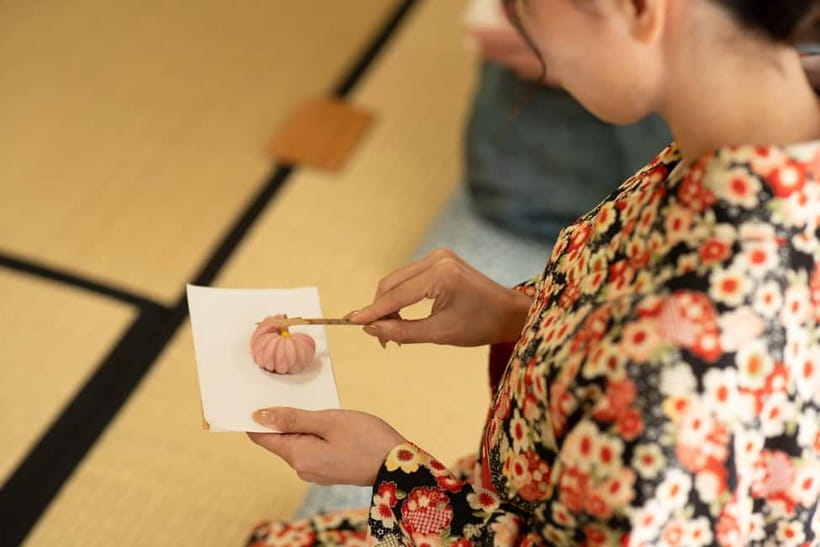
The most useful part of the session comes after the demonstration. You prepare your own matcha and drink it.
You will quickly notice the difference between tea made by an experienced tea master and tea made by a first-time participant. That is not a flaw. It is one of the best reasons to have a guided demonstration first. You learn by comparing your result with the master’s preparation, then receive a practical sense of how skill affects the taste.
The session also teaches you how to enjoy matcha at home. You are not only shown a formal ritual that belongs in a tea room. You leave with a basic understanding of how to prepare and drink the tea yourself.
That makes the activity more useful than a ceremony where you simply sit and watch. You take part, make a small mistake if needed, and see how the drink changes. The teacher is there to guide you, not to judge your technique.
Matcha and Japanese sweets are included. The sweets served during the session may be seasonal, which adds a small connection to the time of year. You should not expect a meal. Think of it as a focused tea tasting with a traditional sweet to accompany the drink.
More Tea Ceremonies in Osaka
- Osaka: Tea Ceremony Experience
★ 4.9 · 1,426 reviews - Tea Ceremony Experience in Osaka Doutonbori
★ 5.0 · 754 reviews - Osaka: Japanese Traditional Sweets Making and Tea Ceremony
★ 4.7 · 118 reviews - Osaka: Private Tea Ceremony and Calligraphy Experience
★ 5.0 · 50 reviews
Why the seasonal sweets matter
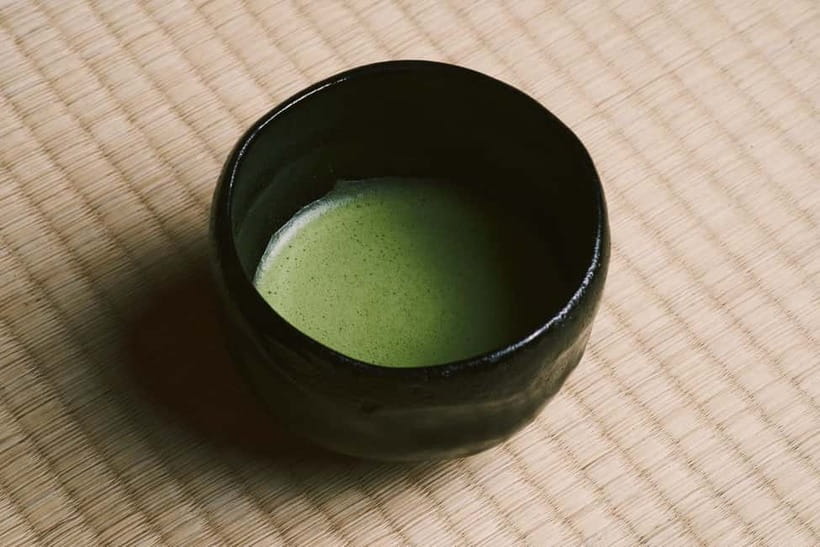
The sweets are not just an extra snack. In a tea ceremony, the balance between the sweet and the bitter matcha matters. The sweetness prepares your palate for the tea and makes the flavor easier to appreciate.
The exact sweets are not specified in advance, so you should expect the selection to vary. That is part of the appeal, but it also means you cannot plan around a particular dessert.
The included food is suitable for anyone looking for a light cultural tasting. If you need a full meal, eat before or after the activity. The 75-minute session is built around tea, etiquette, and participation, not lunch or dinner.
The quality of both the tea and sweets has been singled out as a positive feature. That makes the $103 price easier to understand, though the value depends on what you want from the experience. You are paying for the instructor, the tea room, kimono rental, instruction, tea, sweets, and a small-group setting. If you only want to taste matcha, this is expensive. If you want a guided cultural activity with a chance to make your own tea, the price is more reasonable.
Tatami seating, cushions, and the practical comfort issue
The traditional choice is to sit on tatami mats. You may use a cushion, and you can request a chair instead of sitting on the floor.
This flexibility matters. Sitting on tatami for 75 minutes may be uncomfortable if you are not used to it, especially if your knees, hips, or back are sensitive. You do not need to force yourself into a formal floor position. Ask for a chair when you arrive or during the reservation process.
The experience is not suitable for people with back problems. It is also not suitable for wheelchair users. That may reflect the layout of the tea room and the process of wearing a kimono, but the practical point is simple: check the arrangements carefully before booking.
If you have no mobility concerns, the cushion and chair option still make the activity easier. You can focus on the teacher and the tea instead of worrying about holding an uncomfortable pose.
Who will get the most from this Osaka activity?
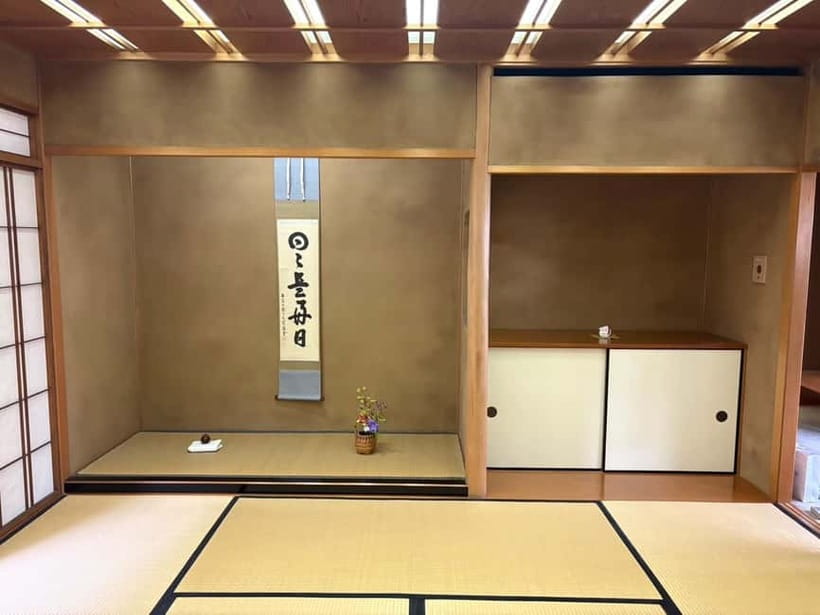
I would choose this experience for you if you want a cultural activity with real participation, rather than a quick photo stop. It works particularly well for first-time visitors who want an introduction to matcha and Japanese etiquette without committing to a long formal course.
It also suits couples, solo visitors, and small groups. The 10-person limit keeps the room from feeling crowded and gives the tea master room to help each person make tea.
Families should consider the seating and the quiet nature of the ceremony before booking. The supplied information does not state a minimum age, so you will need to ask the provider if children are part of your plans.
This is also a good choice near the end of a Japan trip. You can enjoy the ceremony, learn a method for preparing matcha, and carry that skill home. One booking described it as a fitting activity on the final day in Osaka, which makes sense: it is calm, memorable, and does not demand a full day of sightseeing.
You should skip it if you want a fast, casual drink, a large performance, or a lively group event. The value comes from quiet attention, instruction, and the chance to try the process yourself.
Timing, language, and arrival advice
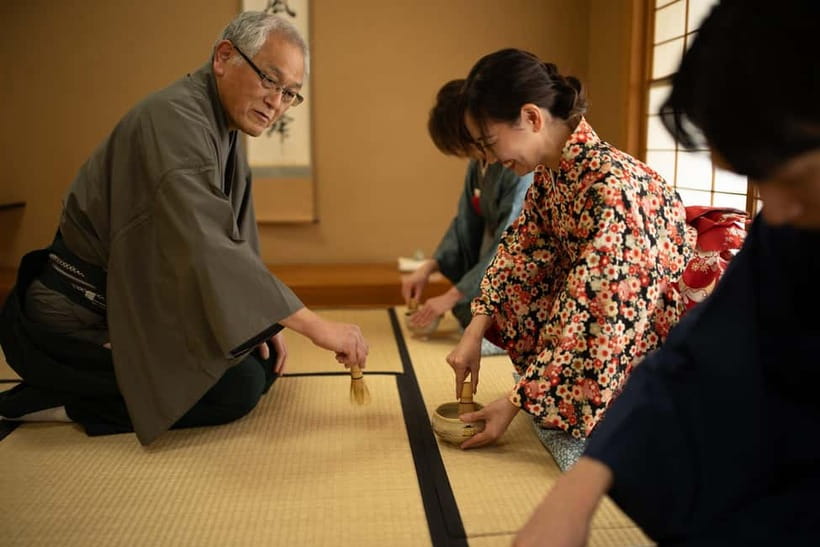
The activity starts at scheduled times, and late entry is not permitted. Plan to arrive before the class begins, not at the exact start time. You need enough time to find the hotel, reach the fourth-floor tea room, and settle in.
English and Japanese are available. If you have questions about the ceremony or want help with the tea-making step, a smaller group should make it easier to ask.
The meeting point is specific: the Urakuan tea room on the fourth floor of the Sheraton Miyako Hotel Osaka. You do not receive hotel transportation, so build your own arrival time into your Osaka plans.
The flexible booking terms are useful if your schedule is still changing. You can reserve now and pay later, and cancellation is allowed up to 24 hours before the session for a full refund. Those terms do not remove the need to arrive on time on the day itself.
Is the $103 cost fair?
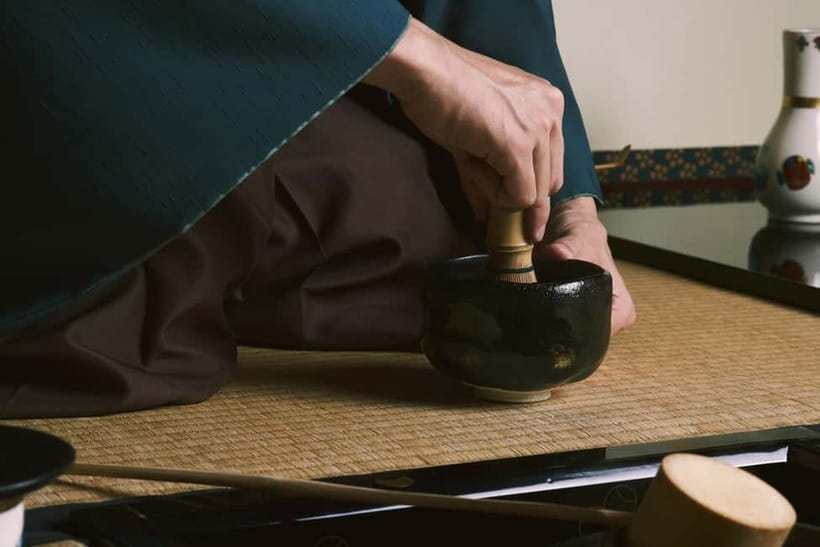
At $103 per person, this is not a budget cup of tea. The price becomes easier to judge when you separate the parts of the experience.
You receive a kimono rental, instruction from a certified tea master, a demonstration, your own tea-making attempt, matcha, Japanese sweets, and use of a traditional tea room. The group limit is 10, which is smaller and more personal than a large cultural show.
I like that the activity teaches a skill you can repeat at home. That gives the booking some value after you leave Osaka. The tea and sweets are also not incidental, and the use of seasonal sweets adds a thoughtful touch.
Still, the price may feel high if you mainly want to dress in a kimono and take pictures. You are paying for the ceremony and instruction, so choose it only if those parts matter to you.
Should you book the Sheraton Miyako tea ceremony?
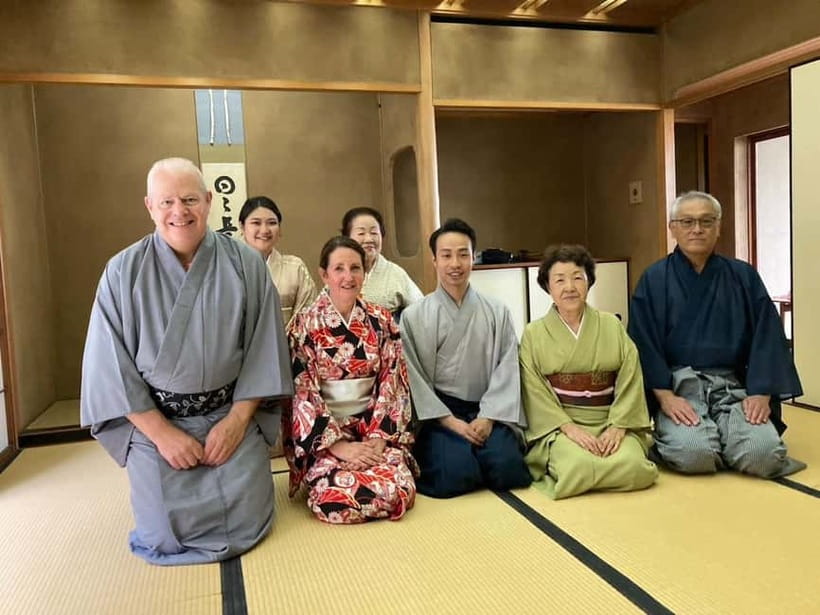
Book it if you want a quiet, hands-on introduction to matcha, especially one that combines a kimono, a certified tea master, and a proper tea room. The small group, chair option, seasonal sweets, and chance to prepare your own tea all add practical value.
Think twice if you have back problems, use a wheelchair, dislike sitting quietly, or want a cheap way to sample green tea. You must also arrive before the scheduled start, since late entry is not permitted.
For the right visitor, this is a thoughtful 75-minute activity rather than a quick tourist photo. You leave with a better sense of Japanese tea etiquette, a bowl of matcha you made yourself, and a simple way to continue the experience at home.
FAQ
Where does the tea ceremony take place?
It takes place in the Urakuan tea room on the fourth floor of the Sheraton Miyako Hotel Osaka, at 6-chōme-1-55 Uehonmachi, Tennoji Ward, Osaka.
How long does the experience last?
The tea ceremony with kimono rental lasts 75 minutes.
Is kimono rental included?
Yes. Kimono rental is included, and the provided kimono is designed to be worn over your regular clothes. Guidance is provided to help you put it on.
Do I make my own matcha?
Yes. You first watch the tea master prepare matcha, then make your own tea and drink it.
Are tea and Japanese sweets included?
Yes. The experience includes matcha, green tea, and Japanese sweets. The sweets may be seasonal.
Can I sit on a chair instead of the tatami?
Yes. Participants normally sit on tatami mats, but chairs are available upon request. A cushion is also provided.
What languages are offered?
The experience is offered in English and Japanese.
How many people can join?
This is a small-group activity limited to 10 participants.
Is the activity suitable for wheelchair users or people with back problems?
No. The activity is not suitable for wheelchair users or people with back problems.
Fresh tea listings around Osaka
- Osaka:Zen Tea Ceremony and Foot Bath Experience<45min>★ 5.0 · 7 reviews
- Nara Deer Park, Uji Matcha, & Hot Spring Full-Day Tour from Osaka★ 4.0 · 21 reviews
- Osaka: Tea Ceremony, Calligraphy, and Kimono Experience★ 5.0 · 6 reviews
- Osaka: Nara, Todaiji, Uji Matcha, and Hot Spring Tour★ 4.0 · 7 reviews
- Discover Japanese Tea Blending Techniques in Osaka★ 5.0 · 19 reviews
- Osaka Japanese Cooking And Matcha Class near Osaka Castle★ 5.0 · 22 reviews
- Craft Sushi and Matcha Ice Cream in Central Osaka (3-Course Meal)★ 5.0 · 2 reviews
- ZEN therapy | Shiatsu-style massage, EnergyTherapy & Japanese Tea★ 5.0 · 5 reviews
Kimono & Tea Ceremony, compared.
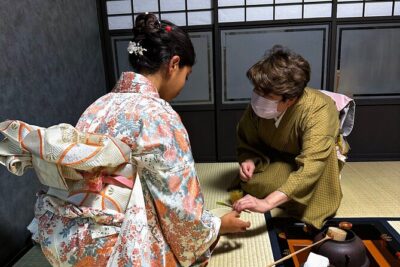
KYOTO Tea Ceremony with kimono near by Imamiya Jinjya Shrine
Read our review →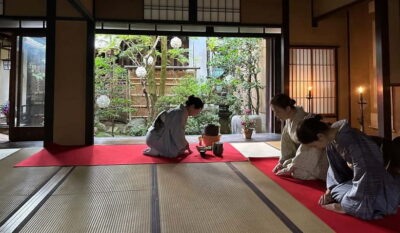
Kyoto: Kimono and Tea Ceremony Experience at Cultural Asset
Read our review →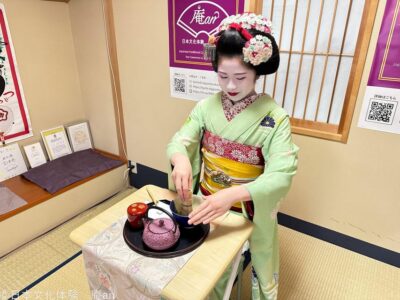
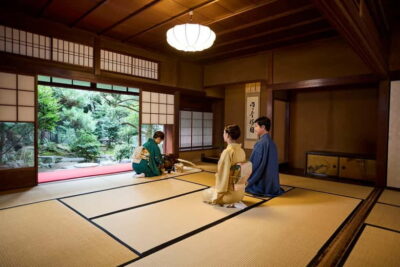
Kyoto: Kimono Tea Ceremony with Matcha and Sweet
Read our review →
Browse the lists this tour appears in