
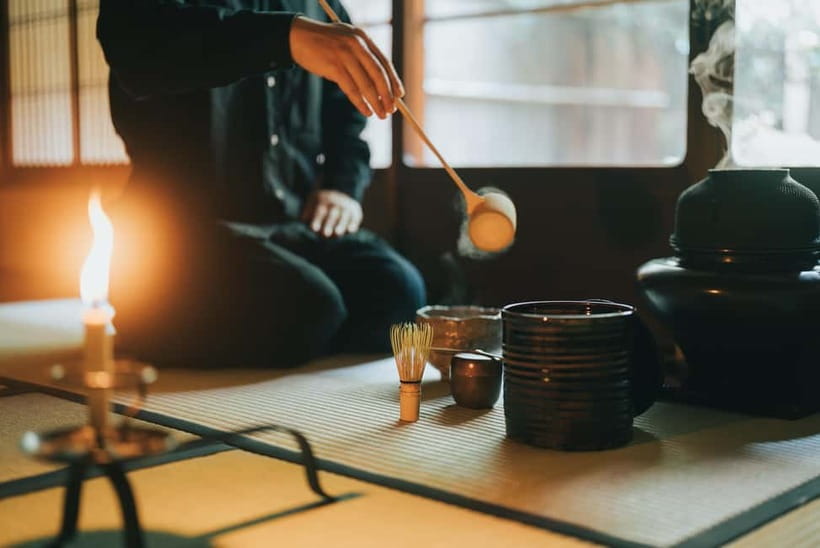
Review · TEA CEREMONY EXPERIENCES
Kyoto: Mindful Tea Ceremony in 100-Year-Old Teahouse
Kyoto’s Oboro tea ceremony turns a simple bowl of matcha into a lesson in slowing down. In a 100-year-old teahouse, candlelight softens the room, a garden appears beyond the tea-room window, and the sound of simmering water gets your attention better than any phone notification. The ceremony has traditional roots, but it does not make you memorize rules before you can enjoy it.
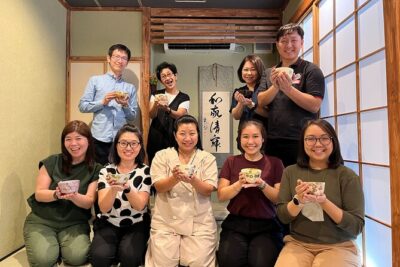
I like the small group of up to eight, which gives you room to watch the host’s hands and ask sensible questions. I also like the gentle teaching style, with hosts including Taku, Taiku, Noki, and Naoki bringing history and meaning into the ritual without turning it into a lecture. The main consideration is the pace: you must arrive early, remove your shoes, wear socks, and respect a quiet room. Anyone with back problems may find the seating uncomfortable.
Key points at a glance
- A candlelit 100-year-old teahouse: The low lighting and traditional interior make the setting part of the experience, not just a backdrop.
- A calm introduction to matcha: You watch the host purify the utensils, whisk the tea, and present each bowl with a bow.
- A small English-speaking group: With no more than eight people, you can see the details and ask questions without breaking the quiet mood.
- Seasonal tea and sweets: A welcome tea and Japanese sweet prepare your palate before the main matcha.
- Three stages of quiet reflection: The movement through separate rooms gives the short session a clear sense of beginning, preparation, and farewell.
- A useful parting gift: You receive a handmade candle, a small reminder of the calm you found inside.
Why This Kyoto Tea Ceremony Feels Different
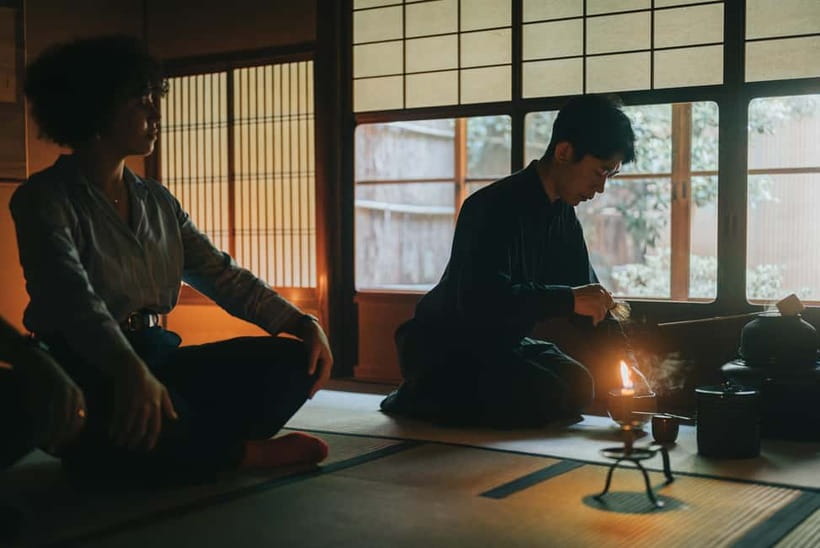
Many visitors encounter Japanese tea ceremony as a formal display, complete with exact gestures and rules. Oboro takes a softer route. You still see the careful movements, the purified utensils, the whisking, the bow, and the respectful handling of the bowl. But the host explains what is happening in English and gives you permission to focus on the experience rather than worry about perfect etiquette.
That matters if this is your first tea ceremony. You are not expected to arrive with a working knowledge of every custom. You can watch quietly, ask questions, or simply let the room settle around you. The ceremony is traditional without feeling like a test.
The atmosphere does much of the work. Candlelight replaces bright overhead lighting. The décor is restrained. A garden view adds a natural point of focus, and small sounds become easier to notice: water heating, the whisk moving through the tea, and the quiet shift of a bowl across the mat or table.
At 45 minutes, this is not an all-day cultural program. That is part of its appeal. You can fit it between major Kyoto sights, yet the calm change of pace may feel more valuable than another hurried stop on a packed schedule.
More Tea Ceremonies in Kyoto
- Kyoto: Tea Ceremony in a Traditional Tea House in Kiyomizu
★ 4.9 · 3,519 reviews - Kyoto: Tea Ceremony Ju-An at Jotokuji Temple
★ 4.9 · 3,207 reviews - Kyoto: 45-Minute Tea Ceremony Lesson Experience
★ 4.3 · 2,378 reviews
Entering Oboro’s 100-Year-Old House

Allow yourself extra time to find Oboro. The meeting point is easiest to locate by searching Google Maps for Oboro: Mindful Tea Ceremony. Arrive 10 minutes early, since shoes must be removed and late entry is not allowed after 10 minutes.
The first room helps you shift gears. You can store belongings if needed, settle into a comfortable seat, and receive a short explanation of what will happen. This opening is useful because it removes the usual uncertainty. You know when to watch, when to taste, and how much participation is expected.
The old house is one of the main reasons to book this particular experience. The traditional interior gives the ceremony a sense of place that a modern hotel room could not provide. You may move through three rooms, with each one marking a different phase of the visit. That movement gives the short program a gentle rhythm rather than making it feel like a single demonstration.
You should not expect a large museum-style building or a show built for crowds. The charm is the opposite. Space is limited, the décor is modest, and the room asks you to pay attention to small details. If you want dramatic architecture or a long tour of Kyoto’s tea culture, this will feel brief. If you want a focused moment in an old Japanese home, it works well.
A Welcome Tea Before the Main Matcha
The ceremony begins with a welcome tea and a seasonal sweet. This first taste gives you time to settle before the more formal matcha preparation begins. It also shows how tea and sweets work together, with sweetness preparing your palate for the stronger, more vegetal flavor of green tea.
One particularly memorable detail is the welcome drink in summer. It may be a smooth, chilled green tea served with ice. This is a smart seasonal change, since Kyoto’s heat can make a hot drink seem like hard work. The cooler tea still introduces Japanese tea flavors while keeping the opening comfortable.
The sweet is not treated as an afterthought. It complements the tea and adds a small point of curiosity to the opening. You may find the taste and texture unfamiliar, which is exactly why it is useful to try it here, with the host there to explain what you are having.
This part is relaxed, but the quiet mood has already begun. You are not rushing through a snack before the main event. You are being eased into the idea that taste, texture, sound, and pace all matter.
Watching the Matcha Preparation
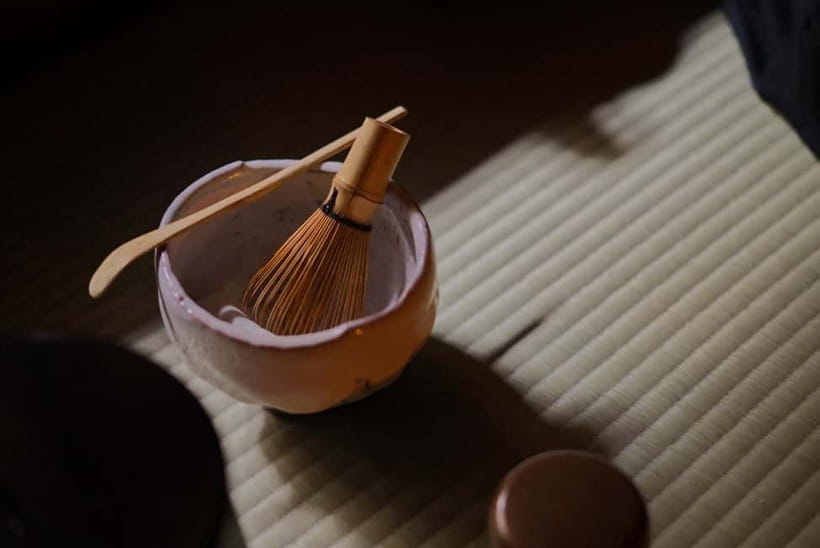
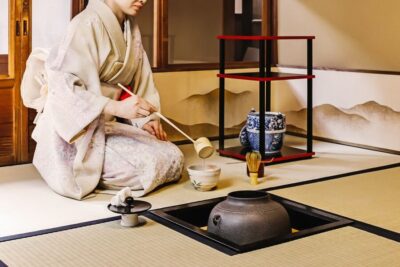
In the main tearoom, the host prepares each bowl in a measured sequence. The utensils are purified, the matcha is placed in the bowl, water is added, and the tea is whisked until it reaches the proper texture. The host then presents it with a graceful bow.
You do not need to copy every movement. You can watch the process, listen to the explanation, and notice how much care goes into actions that might otherwise look ordinary. The point is not speed. It is attention.
The host explains why the steps matter, along with background on Japanese tea ceremony and the tea itself. English instruction is included, and the hosts are used to questions. Taku, Taiku, Noki, and Naoki are among the names associated with sessions here, though the particular host may vary with the date and time you choose.
The best teaching here is practical. You learn how to hold the bowl, how to approach the tea, and what to notice in the taste. You also get a sense of which matcha qualities are considered desirable. The information gives the ceremony context without burying the room in technical terms.
The young tea master described in one session was 21, which adds an interesting modern note to an old practice. That detail captures what works about the experience: the tradition is presented by someone living in the present, not preserved as a frozen performance from another era.
Same city, a very different cup:
- Kyoto: Table-Style Tea Ceremony at a Kyo-Machiya
★ 4.9 · 1,211 reviews - Kimono Tea Ceremony at Kyoto Maikoya, NISHIKI
★ 5.0 · 911 reviews - Kyoto: Kimono Tea Ceremony at Orizuruya Gion
★ 4.9 · 618 reviews - Kyoto: Tea Ceremony in 100-year-old Kyo-Machiya Townhouse
★ 4.8 · 546 reviews
Drinking Matcha Without Worrying About Rules
When your bowl arrives, you lift it gently and taste the tea. Matcha is not usually delicate in the way a light green tea can be. It has a fuller flavor and a fine texture, sometimes with a pleasantly bitter edge. The seasonal sweet helps balance it.
If you normally avoid matcha, do not assume this will taste like the sweetened matcha drinks sold in cafés. The traditional preparation is more direct. Some people who do not usually enjoy matcha find the quality and ceremony make it easier to appreciate. Others may still find the flavor intense. The host’s explanation helps you understand what you are tasting, but it will not turn a strong green tea into a dessert.
The ceremony’s relaxed tone is important here. You are not being judged on how elegantly you drink. You can follow the basic guidance, take your time, and observe the people around you. That makes the experience friendly for first-time visitors while preserving the dignity of the ritual.
Silence is part of the setting, so save extended conversation for the opening or closing moments. Questions are welcome, but a quiet room is not a flaw to overcome. It is the main reason the session feels different from a standard sightseeing activity.
Candlelight, Garden Views, and the Value of Quiet
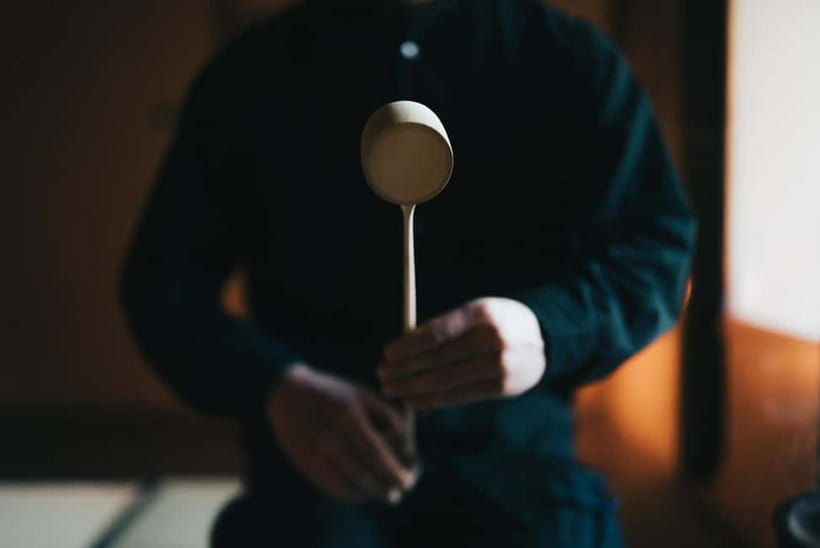
The candlelight is not just decoration. It reduces visual clutter and makes the smallest things easier to notice. You may find yourself watching steam rise from the water, following the host’s hands, or noticing the scent of fresh matcha.
A garden visible through the tea-room window adds another layer of calm. You do not need a grand view. A small, carefully framed piece of nature is enough to give your eyes somewhere restful to land.
This setting also changes how time feels. Kyoto can be noisy and demanding, especially after a morning of temples, buses, shopping streets, and crowded stations. Here, you are asked to sit still and let the pace become slower. The benefit is not that you learn to escape modern life forever. It is that 45 minutes can reset your attention before you return to it.
The session has a meditative quality, but it is not presented as a formal meditation class. You can simply be quiet and breathe. You can also take part in the cultural explanation and conversation. That balance is useful for people who want a mindful experience but do not want a strict spiritual program.
What the $45 Price Really Buys You
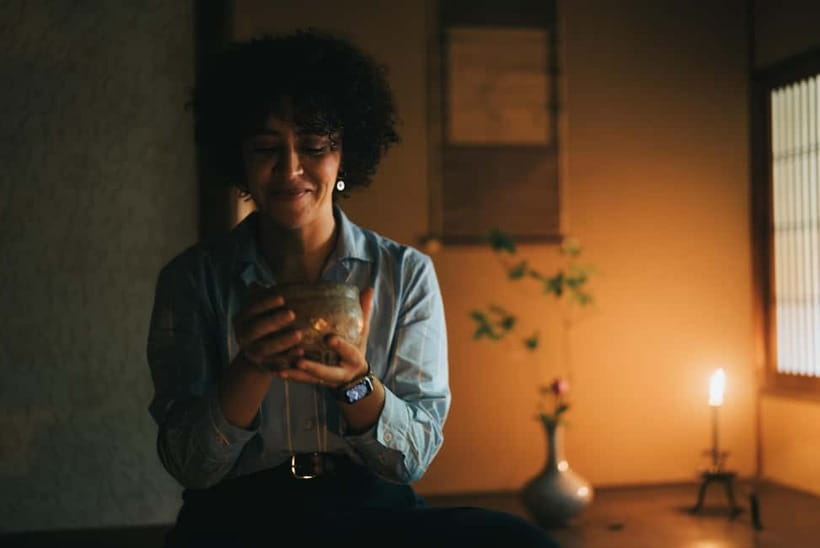
At $45 per person, this is not the cheapest way to drink tea in Kyoto. You can find inexpensive matcha elsewhere. The price makes more sense when you consider what is included: English instruction, all tea ceremony equipment, seasonal sweets, the candlelit setting, a small group, and the handmade candle you take home.
You are also paying for access to a traditional house and for a host who can explain the meaning behind each step. The setting and the teaching are the real value, not the amount of tea in your bowl.
I consider the price fair for a focused cultural activity, especially if you want something more personal than a large demonstration. It is less convincing if your only goal is to taste matcha or take photographs. Flash photography is not allowed, and the quiet rules limit the kind of souvenir images you can collect.
The small group helps justify the cost. With eight people or fewer, you should have a clear view of the preparation, and the host can answer questions without turning the ceremony into a crowded show. The short duration also keeps the commitment manageable.
Practical Advice Before You Book
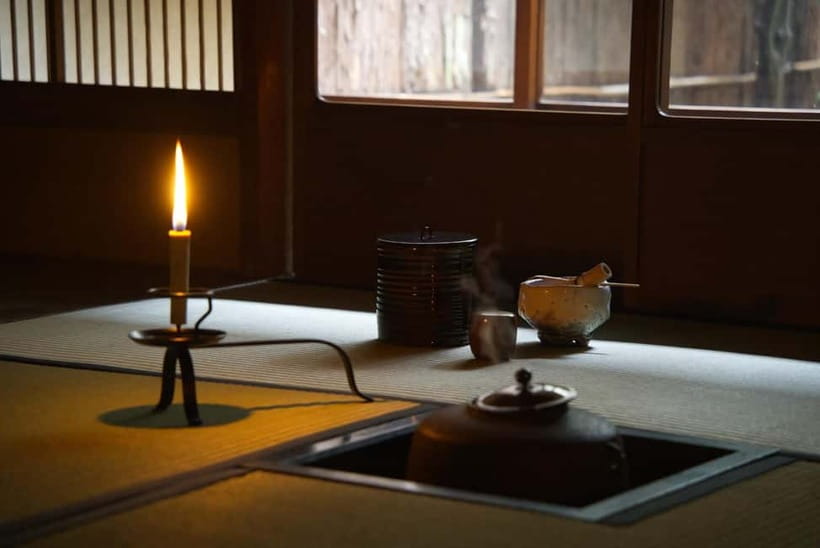
Wear comfortable clothes and socks. Shoes come off, and socks are specifically required. Choose clothing that lets you sit comfortably and quietly for the duration of the session.
People with back problems should think carefully before booking, since the seating and posture may not suit them. The experience is not suitable for wheelchair users or children under six. Smoking is not allowed.
Photography is allowed without flash. Take pictures only when appropriate, and do not let your camera interrupt the quiet mood. The host can explain when it is suitable to photograph the room or the tea.
Summer sessions may use chilled water and ice for the tea ceremony. This is a pleasant seasonal variation, not a lesser version of the traditional experience. If you are hoping specifically for a hot bowl of matcha, check the season before booking.
The activity offers free cancellation up to 24 hours in advance and allows you to reserve now and pay later. Those terms are helpful when your Kyoto schedule depends on weather, train plans, or changing temple reservations.
Who Will Enjoy Oboro Most
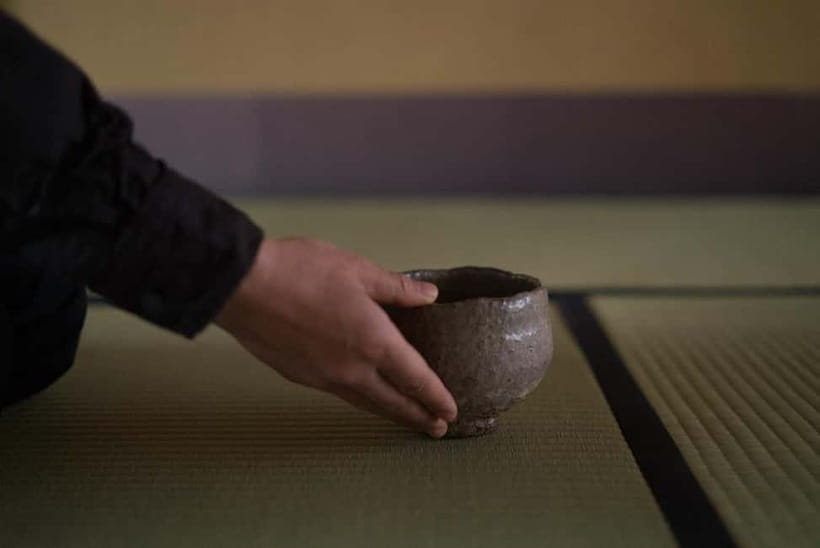
I would choose this for anyone who wants a calm cultural break between Kyoto’s major sights. It suits first-time visitors because the host gives clear English guidance and does not assume you know tea ceremony etiquette.
It is also a good choice for couples, parents with older children who can remain quiet, solo visitors, and anyone interested in Japanese design, food, ritual, or mindfulness. The handmade candle makes the ending feel personal without adding clutter to your luggage.
You may enjoy it less if you need constant activity, dislike matcha, have trouble sitting comfortably, or want a large-scale historical presentation. The program is quiet by design. Its success depends on your willingness to slow down.
I especially like it after a busy morning. The ceremony gives you a reason to stop checking the time and notice what is in front of you. That is a modest gift in a city with more sights than any one visit can handle.
Should You Book This Kyoto Tea Ceremony?
Book it if you want a small, sincere introduction to Japanese tea ceremony in a traditional setting rather than a quick cup of matcha with a photo opportunity. The candlelight, garden view, old house, seasonal sweet, and careful preparation give the 45 minutes a clear sense of purpose.
Skip it if you want a long program, easy wheelchair access, lively conversation, or no restrictions on photography. For everyone else, Oboro offers good value at $45, particularly because the English instruction, small group, traditional house, and parting candle turn a short activity into a memorable pause in your Kyoto schedule.
FAQ
How long does the tea ceremony last?
The experience lasts 45 minutes.
How much does the experience cost?
The price is $45 per person.
Is the ceremony conducted in English?
Yes. English instruction is included, and the instructor language is English.
How many people are in each group?
The experience is offered as a small group with no more than eight participants.
What should I wear or bring?
Wear comfortable clothes and socks. Shoes must be removed before entering the session.
Can I take photographs?
Photography is allowed without flash. Flash photography is not allowed.
What happens if I arrive late?
You should arrive 10 minutes early. You will not be allowed to enter if you are more than 10 minutes late.
Is the tea different in summer?
Yes. In summer, the ceremony uses chilled water and ice.
Who should not book this activity?
It is not suitable for children under six, people with back problems, or wheelchair users.
Fresh tea listings around Kyoto
- Cycling Tour at Uji’s Matcha Green Tea Fields and Heritage★ 5.0 · 10 reviews
- Authentic Tea Ceremony & Sushi in The Museum of Kyoto★ 5.0 · 3 reviews
- Kyoto Hidden Riverside Zen Mediation and Uji Matcha Experience★ 5.0 · 9 reviews
- Whisk Your Own Matcha: A Zen Matcha Experience at Temple★ 3.6 · 7 reviews
- Kyoto: Nighttime Zen Meditation and Matcha Tea Experience★ 5.0 · 7 reviews
- Kyoto Fushimiinari:Wagashi Making & Small Group Tea Ceremony★ 5.0 · 14 reviews
- 2 Types of Japanese Sweets making and Tea Ceremony★ 4.6 · 17 reviews
- Matcha Grinding Experience and Walking Tour in Uji Kyoto★ 5.0 · 26 reviews
Tea Ceremony Experiences, compared.
Kyoto: Tea Ceremony in a Traditional Tea House in Kiyomizu
Read our review →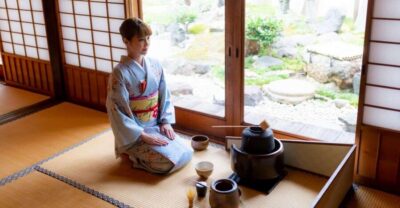
Kyoto: 45-Minute Tea Ceremony Lesson Experience
Read our review →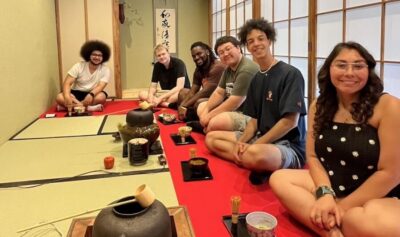
Kyoto: Table-Style Tea Ceremony at a Kyo-Machiya
Read our review →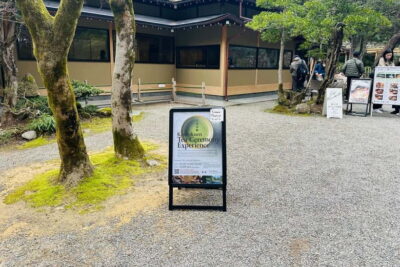
Browse the lists this tour appears in