
Review · TEA CEREMONY EXPERIENCES
Experience a tea ceremony in an authentic tearoom, in Kyoto!
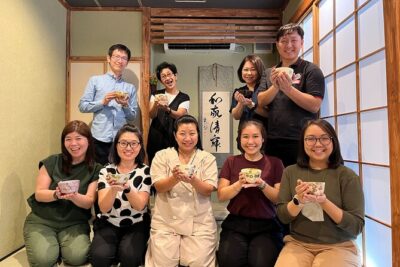
Kyoto’s tea ceremony is less about drinking a cup of green tea than learning how a few quiet movements can express care, respect, and attention. Here, you enter an authentic tea room in a 130-year-old townhouse, watch Kaori demonstrate the ritual, and then make your own matcha.
I like two things right away: the setting feels rooted in old Kyoto rather than built for a large tour crowd, and the lesson is hands-on. You also get traditional dried sweets from the long-established Kyoto confectioner Shioyoshi-ken before drinking the tea. The main consideration is time. At about 45 minutes, this is a well-made introduction, not a full study of tea ceremony.
Key points
- A 130-year-old townhouse: Enter the tea room through the garden for a sense of place that a modern activity room cannot provide.
- Kaori leads the lesson: She explains the customs in clear English and patiently guides beginners through each step.
- You make your own matcha: This is not just a demonstration. You whisk and drink your own tea.
- Traditional sweets are included: The small dried sweets are wasanbon sugar confections from Kyoto’s historic Shioyoshi-ken shop.
- Small groups keep it personal: The maximum is 10 people, and some bookings have been private ceremonies for families or small groups.
- Good for a short cultural stop: The session lasts about 45 minutes, with some participants describing it as close to an hour.
Entering the 130-year-old Kyoto townhouse
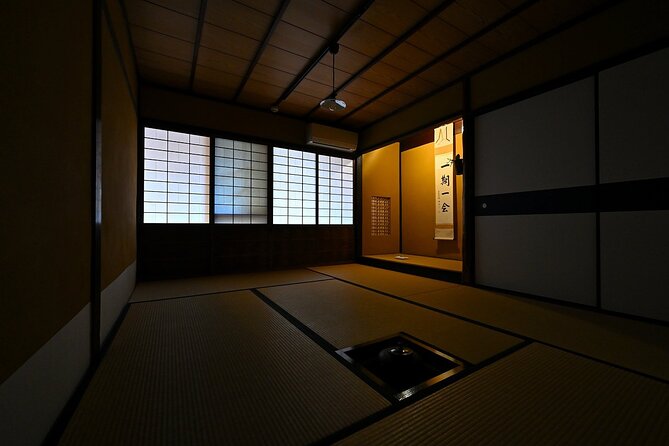
The meeting point is at 22-26 Nishinokyō Ikenouchichō in Nakagyo Ward, Kyoto. The activity ends at the same place, and the location is near public transportation.
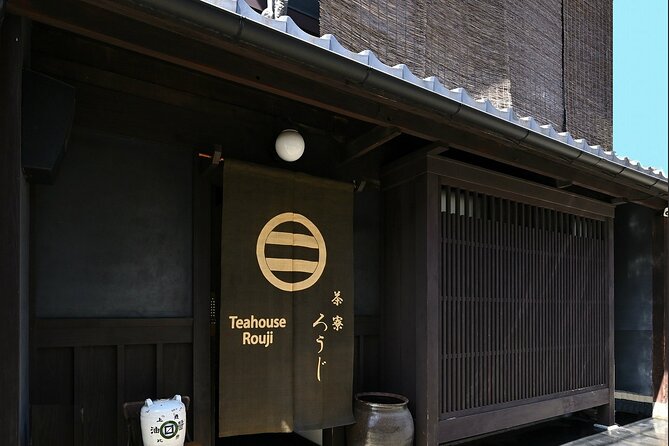
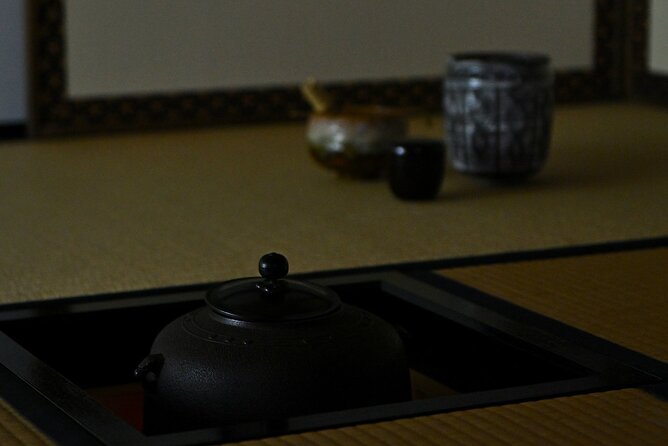
The first appealing detail is the building itself. You are not simply seated in a hotel room and handed a bowl of green tea. You enter the tea room from the garden of a townhouse that is about 130 years old. That change of pace matters in Kyoto, where the best cultural experiences often begin with the setting.
The tea room is designed for calm. You leave the noise of the street behind and pay attention to the small details of the ceremony: the movements, the tools, the sweets, and the way the tea is presented. The old house gives the lesson a proper home, even though the session is brief.
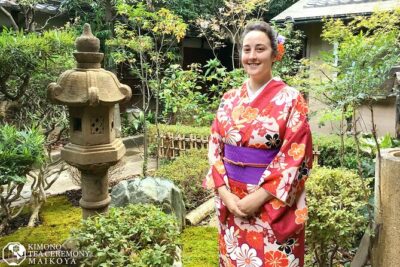
There is no stated dress code. A kimono is not included, so you should not book this expecting a costume experience or a photo session in formal Japanese clothing. One person found the lack of a kimono disappointing, but that is not part of the advertised activity. The focus is tea ceremony itself.
More Tea Ceremonies in Kyoto
- Kyoto: Tea Ceremony in a Traditional Tea House in Kiyomizu
★ 4.9 · 3,519 reviews - Kyoto: Tea Ceremony Ju-An at Jotokuji Temple
★ 4.9 · 3,207 reviews - Kyoto: 45-Minute Tea Ceremony Lesson Experience
★ 4.3 · 2,378 reviews
Kaori’s introduction to tea ceremony
Kaori leads the experience and explains the history and customs in English. Clear communication is especially important here because tea ceremony has many small rules that can seem mysterious if you only watch from a distance.
She explains how to appreciate the tea, how to drink it, and why the ceremony follows a careful order. You also learn about the connection between Zen ideas and Japanese tea culture. The goal is not to turn you into a tea master in one sitting. It is to help you understand what you are seeing and why the gestures matter.
The atmosphere is quiet and patient. That is useful for first-time visitors, families, and anyone who worries about making a mistake. You are taught what to do before you are asked to do it, and the instructions are presented as part of the experience rather than as a test.
The ceremony can feel formal, but the teaching style is friendly. Kaori has been praised for her warm manner, excellent English, and willingness to answer questions. She also adjusts when someone cannot sit in the traditional way, which makes the activity more practical for people with stiff knees or limited flexibility.
Watching the demonstration with Kyoto sweets
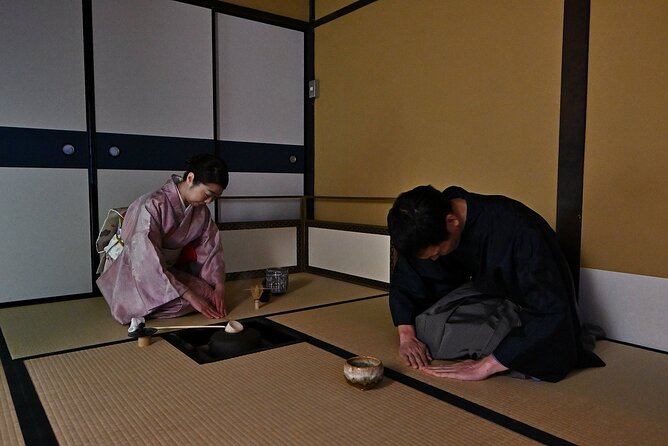
After the introduction, Kaori demonstrates the preparation and serving of matcha. This is the moment to watch closely. Tea ceremony is built from small actions, and the meaning is easier to understand when you see the full sequence before trying it yourself.
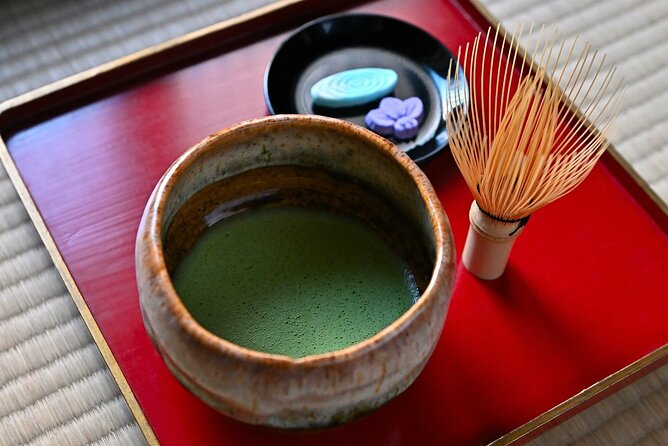
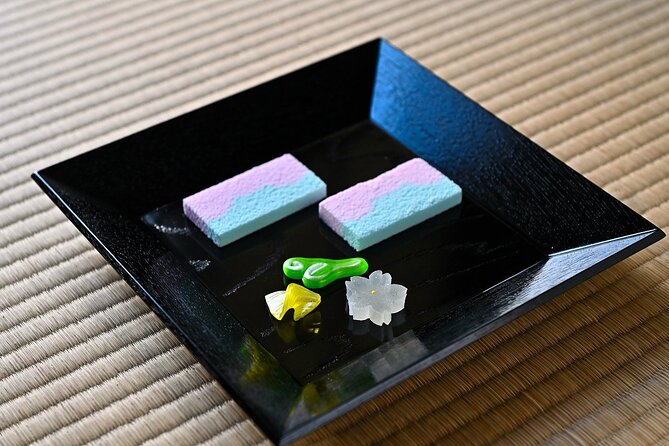
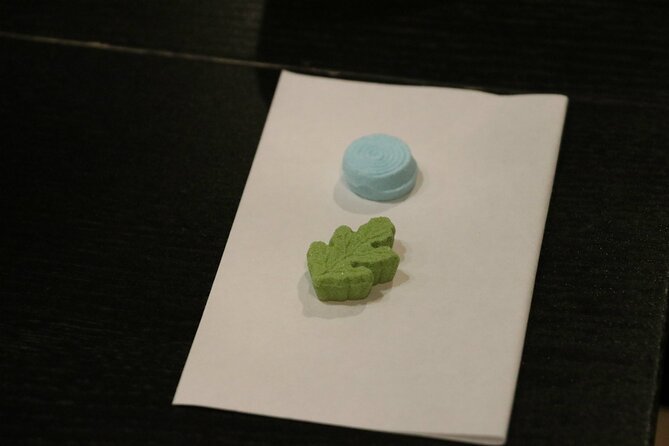
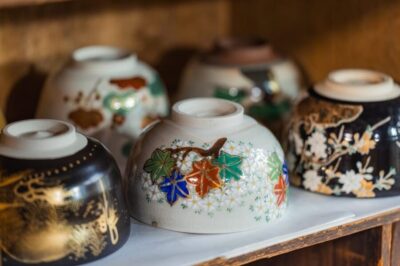
You receive dried sweets to eat before the matcha. The sweets are made with wasanbon, a fine Japanese sugar used in traditional tea settings, and come from Shioyoshi-ken, a long-established Kyoto confectionery shop. They are small and sweet, so do not expect a substantial snack or dessert.
The sweetness has a purpose. Matcha can have a strong, slightly bitter flavor, and the confection prepares your palate for it. It also gives you a taste of how tea ceremony links food, presentation, and timing.
This detail will matter to some people more than others. If you are looking for a large food tasting, you may find the portions modest. If you care about traditional practice, the sweets are an appropriate part of the ceremony rather than an extra treat added for tourists.
Whisking your own bowl of matcha
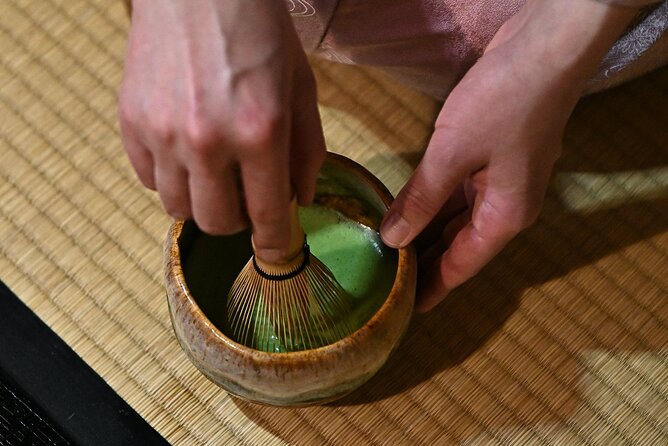
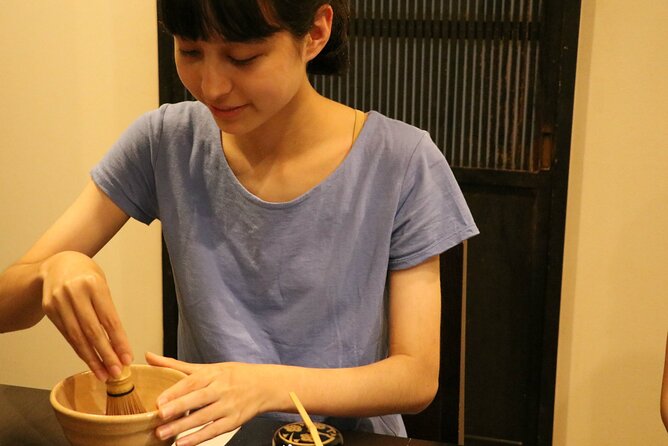
The hands-on part follows the demonstration. You learn how to make matcha yourself, with Kaori explaining the steps for beginners.
This is the strongest part of the activity for many people because it turns an observation into a skill. You are not only watching a formal ritual. You are holding the tools, whisking the tea, and tasting the result of your own work.
The lesson also includes advice on making matcha at home without a complete tea ceremony setup. That practical touch gives the experience a life beyond Kyoto. You may decide to buy a bamboo whisk afterward, as one participant did, or simply remember the method and try it with the equipment you have.
Do not expect your first bowl to look perfect. That is part of the fun. The value is in learning the basic motion and understanding the care that goes into the drink. The instruction is designed for people who have never prepared matcha before.
Same city, a very different cup:
- Kyoto: Table-Style Tea Ceremony at a Kyo-Machiya
★ 4.9 · 1,211 reviews - Kimono Tea Ceremony at Kyoto Maikoya, NISHIKI
★ 5.0 · 911 reviews - Kyoto: Kimono Tea Ceremony at Orizuruya Gion
★ 4.9 · 618 reviews - Kyoto: Tea Ceremony in 100-year-old Kyo-Machiya Townhouse
★ 4.8 · 546 reviews
What the 45-minute timing means
The listed duration is approximately 45 minutes. Several descriptions of the experience put it closer to an hour, so allow a little extra time if your Kyoto schedule is tight.
This is a sensible length for a first introduction. You receive an explanation, a demonstration, sweets, and a chance to make tea without giving up half a day. It also suits families, couples, and people fitting the activity between sightseeing stops.
The short format has limits. You will not study the different schools of tea ceremony, spend a long time discussing utensils, or receive an extended cultural lecture. If you already have substantial experience with Japanese tea, the lesson may feel basic.
For most first-time participants, the compact format is an advantage. You get the main ideas and the hands-on element without turning a cultural activity into a long classroom session.
Group size, comfort, and accessibility
The maximum group size is 10 people. That is small enough for questions and personal instruction, though the actual atmosphere depends on the number booked for your time slot. Families of three or four have had private ceremonies, which can make the experience feel especially personal.
Traditional tea ceremony often involves sitting on the floor. The activity can be difficult for people with bad knees, though a stool is available if needed. If you have mobility concerns, mention them when arranging the activity or speak with the host at the start.
The setting is intimate, and that means the experience is not built around moving from one attraction to another. You spend the time in one tea room, listening and practicing. Wear clothing that lets you sit comfortably, and plan to arrive ready for a quiet activity rather than a fast-paced tour.
There is no mention of a special accessibility setup beyond the available stool, so people with major mobility needs should confirm details before booking.
Is $39.63 a fair price?
At $39.63 per person, the price is reasonable if you want a guided introduction in a historic setting with a hands-on lesson. You are paying for more than a cup of matcha. The fee includes the instruction, the demonstration, the sweets, the tea, and use of the old townhouse tea room.
The value is strongest for first-time visitors who would not know how to approach tea ceremony on their own. Without guidance, it is easy to see only a sequence of bows, utensils, and careful movements. Kaori explains the meaning and shows you how to take part.
The price may feel high if you judge the activity by the amount of food or the length of the session. The sweets are tiny, and the total time is under an hour for many bookings. One person considered it expensive for such a short experience, while another found it a worthwhile cultural introduction.
My advice is simple: book it for the setting and instruction, not for refreshments. If you want a meal, a long workshop, or a kimono rental, spend your money elsewhere. If you want a focused introduction to matcha in an old Kyoto house, the cost makes sense.
Who will enjoy this tea ceremony most?
This suits you if you want a first look at Japanese tea culture without committing to a long formal lesson. It is also a good choice for families, since the format is short and the activity includes something to do rather than only something to watch.
Couples and small groups may appreciate the calm setting. The maximum group size is 10, and smaller bookings can create a private-feeling session. The host’s clear English also helps if you want cultural explanations rather than a silent demonstration.
It is a good match for:
- First-time visitors to Japan
- Families seeking a short cultural activity
- Anyone curious about making matcha at home
- People who prefer small-group experiences
- Visitors who value historic buildings and traditional arts
You may want a different activity if your main goal is wearing a kimono, sampling many kinds of sweets, or spending several hours on tea study. None of those are promised here.
Practical booking details to know
Confirmation is sent within 48 hours, subject to availability. The activity requires a minimum number of participants, so an alternative date or a full refund may be offered if that minimum is not reached.
You can cancel for a full refund up to 24 hours before the start time. Changes or cancellations made within 24 hours are not accepted for a refund, and the cut-off uses Kyoto local time.
Take your confirmation details seriously. One scheduling problem led to a participant arriving at a time that did not match the host’s schedule, and the session did not take place. The account involved conflicting messages and a request to contact the booking platform for any refund. To avoid this kind of trouble, check the final time and meeting details shortly before you leave, and contact the booking platform directly if anything looks unclear.
The experience is available with a mobile ticket, which keeps the arrival process simple. Still, allow time to find the townhouse, especially if you are coming from another part of Kyoto.
Tea ceremony compared with other Kyoto activities
Kyoto offers many ways to encounter Japanese culture, from temples and gardens to cooking classes and craft workshops. This tea ceremony occupies a useful middle ground. It is more personal and participatory than simply watching a performance, but less demanding than a full tea-school lesson.
The old townhouse gives it a stronger sense of place than an activity held in a generic venue. The sweets from Shioyoshi-ken add a specific Kyoto connection. Most important, you make the tea yourself, so you leave with a small practical skill.
The trade-off is narrow focus. You will spend the whole session on one tradition. If you want several cultural activities in one booking, this will feel limited. If you want to slow down and pay attention to one carefully ordered practice, the focus is a benefit.
Should you book it?
Book this tea ceremony if you want an authentic, beginner-friendly introduction to matcha, especially in a small group and an old Kyoto townhouse. Kaori’s clear English, patient teaching, and practical advice make the experience approachable, while the demonstration and hands-on preparation give you more than a passive cultural show.
Skip it if you expect a kimono, a full meal, a long ceremony, or extensive tea training. At $39.63 for roughly 45 minutes, the value depends on caring about the setting and the lesson rather than the quantity of food.
For a first encounter with tea ceremony, I would choose it as a short, meaningful Kyoto stop. Arrive with comfortable expectations: you will learn the basics, taste traditional sweets and matcha, and whisk your own bowl in a historic home. That is plenty for one calm hour.
FAQ
Where does the tea ceremony take place?
It takes place at 22-26 Nishinokyō Ikenouchichō in Nakagyo Ward, Kyoto, Japan. The tea room is inside a 130-year-old Kyoto townhouse, and the activity ends at the meeting point.
How long does the experience last?
The listed duration is approximately 45 minutes. Some descriptions place the experience closer to one hour, so allow a little extra time in your schedule.
How much does the tea ceremony cost?
The listed price is $39.63 per person.
Is the tea ceremony suitable for beginners?
Yes. The instructor explains the history, customs, drinking etiquette, and matcha preparation step by step. You also make your own tea under instruction.
Are sweets included?
Yes. You receive dried wasanbon sweets from the historic Kyoto confectionery shop Shioyoshi-ken before drinking the matcha.
Is the activity held in English?
The experience is led by Kaori, who is described as speaking excellent English and providing detailed explanations.
Can I cancel for a full refund?
Yes, if you cancel at least 24 hours before the experience’s start time. Cancellations or changes made less than 24 hours in advance are not accepted for a refund.
Fresh tea listings around Kyoto
- Cycling Tour at Uji’s Matcha Green Tea Fields and Heritage★ 5.0 · 10 reviews
- Authentic Tea Ceremony & Sushi in The Museum of Kyoto★ 5.0 · 3 reviews
- Kyoto: Nighttime Zen Meditation and Matcha Tea Experience★ 5.0 · 7 reviews
- Kyoto Fushimiinari:Wagashi Making & Small Group Tea Ceremony★ 5.0 · 14 reviews
- 2 Types of Japanese Sweets making and Tea Ceremony★ 4.6 · 17 reviews
- Kyoto Hidden Riverside Zen Mediation and Uji Matcha Experience★ 5.0 · 9 reviews
- Whisk Your Own Matcha: A Zen Matcha Experience at Temple★ 3.6 · 7 reviews
- Matcha Grinding Experience and Walking Tour in Uji Kyoto★ 5.0 · 26 reviews
Tea Ceremony Experiences, compared.
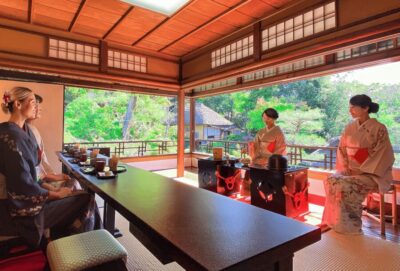
Kyoto: Tea Ceremony in a Traditional Tea House in Kiyomizu
Read our review →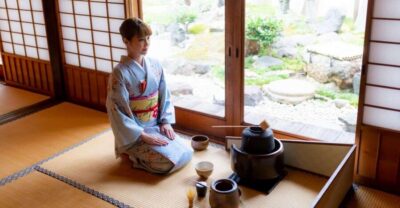
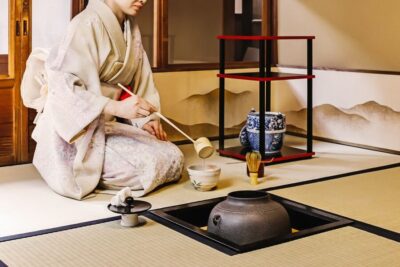
Kyoto: 45-Minute Tea Ceremony Lesson Experience
Read our review →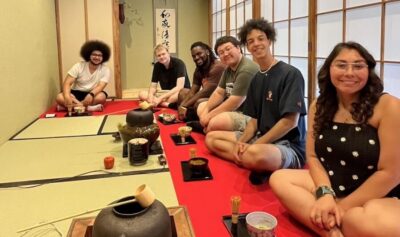
Kyoto: Table-Style Tea Ceremony at a Kyo-Machiya
Read our review →
Browse the lists this tour appears in