
Review · TEA CEREMONY EXPERIENCES
Kyoto: Newly Opened Tea Ceremony – Sanjo Chasuian
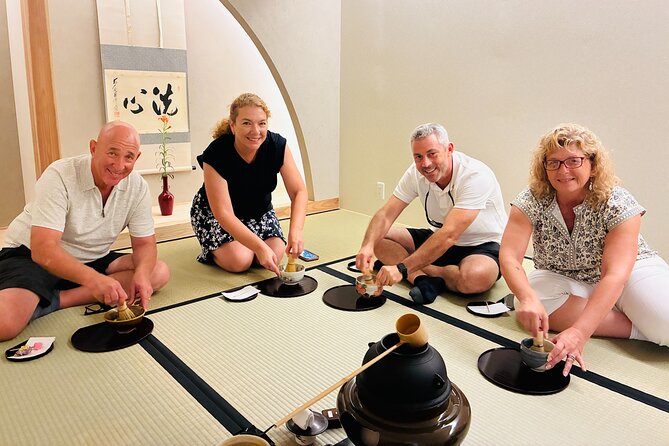
Sanjo Chasuian gives you something many tea demonstrations skip: you make the second bowl yourself. After an English explanation of tea ceremony customs, your host prepares matcha for you, then guides you through choosing a tea bowl, measuring the tea, and whisking it into a smooth froth.
I especially like the two-part format and the calm, central location. You get the quiet beauty of watching a practiced host, then the useful lesson of trying it with your own hands. The seasonal wagashi from a Kyoto confectioner with more than a century of history adds a proper local touch. The one drawback is the strict timing: arrive late, even by one minute, and you cannot enter once the door is locked.
Key points to know before booking
- Two bowls of matcha: One is prepared by the host, and the second is whisked by you or your companion.
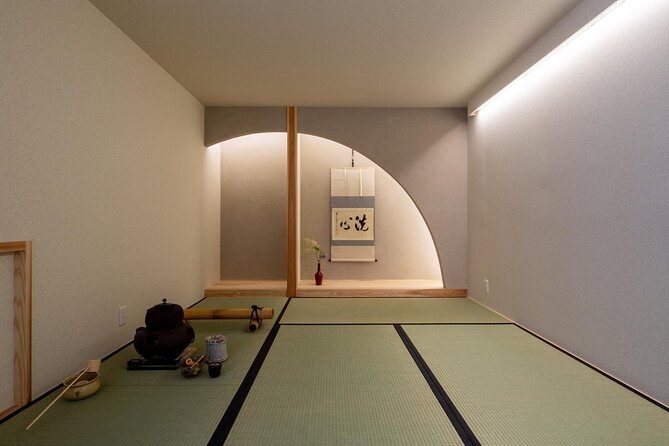
- A rare nijiriguchi entrance: You can see the traditional crawl-in doorway that leads into the tea room.
- Five minutes from Karasuma Oike Station: This is an easy addition to a day around central Kyoto and Nijo Castle.
- English instruction: Guides including Yuko and Reina explain both the ceremony and its meaning in clear, accessible English.
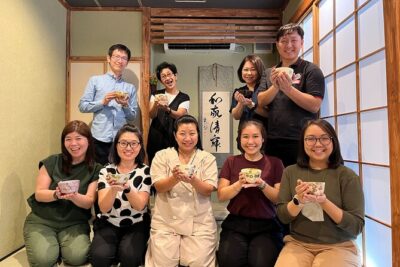
- Small groups of up to 10: The shared session offers a more personal setting than a large tourist demonstration.
- Socks are required: Wear them or bring a pair, and arrive at least five minutes before the start.
A quiet hour in central Kyoto
Kyoto can fill your day with temples, trains, crowds, and a lot of walking. Sanjo Chasuian offers a useful pause. The experience lasts one hour, but it gives you a close look at an important part of Japanese culture without asking you to commit half a day.
The facility is newly opened and sits about a five-minute walk from Subway Karasuma Oike Station. That location matters. You can reach it easily from many central Kyoto neighborhoods, and it works well before dinner, after visiting Nijo Castle, or between other sights around the Karasuma and Sanjo area.
Look for the large plate bearing the Sanjo Chasuian logo. Open the door and staff will welcome you. The meeting instructions are simple, but do not treat the starting time casually. Entry begins five minutes before the session, and once the ceremony starts, the door is locked. A late arrival means missing the experience and losing the payment.
The shared plan allows up to 10 participants. That is small enough for the host to watch your technique and answer questions, though it is not a private ceremony. If you want the room entirely to yourself, ask about the Private Plan when booking.
More Tea Ceremonies in Kyoto
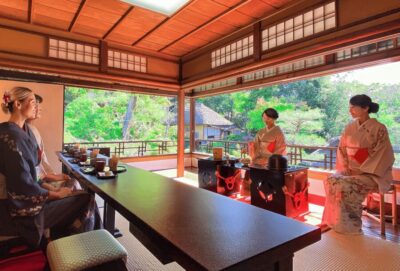
- Kyoto: Tea Ceremony in a Traditional Tea House in Kiyomizu
★ 4.9 · 3,519 reviews - Kyoto: Tea Ceremony Ju-An at Jotokuji Temple
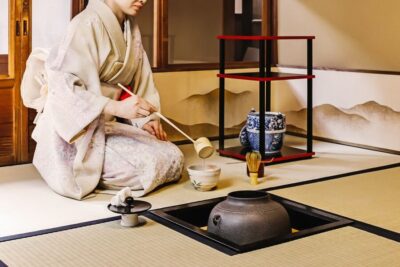
★ 4.9 · 3,207 reviews - Kyoto: 45-Minute Tea Ceremony Lesson Experience
★ 4.3 · 2,378 reviews
The opening lesson explains more than matcha
The session begins with an English introduction to the history and meaning of the tea ceremony. This is not just filler before the tea arrives. It helps you understand why the host handles each object with care and why the ceremony moves at such a measured pace.
The tea ceremony is built around attention to the present moment, respect between host and guest, and care for utensils and surroundings. The explanation gives you a framework for the gestures you are about to see. Without it, a formal tea preparation can look like a series of mysterious hand movements. With it, you can follow the purpose behind the quiet pauses and careful placement of each item.
The guides are consistently praised for being warm, patient, and clear in English. Yuko and Reina are among the hosts named in session feedback, and both are described as taking time with questions. One guide, Renna, is also singled out for explaining the process clearly in English. The exact host depends on the date and session, but the format remains focused on instruction rather than a fast performance.
One practical benefit of the introduction is that the actual ceremony can remain quiet. You learn what will happen beforehand, so you do not need constant narration during the formal part. That preserves the stillness of the room while keeping you informed.
Watching the host prepare the first bowl
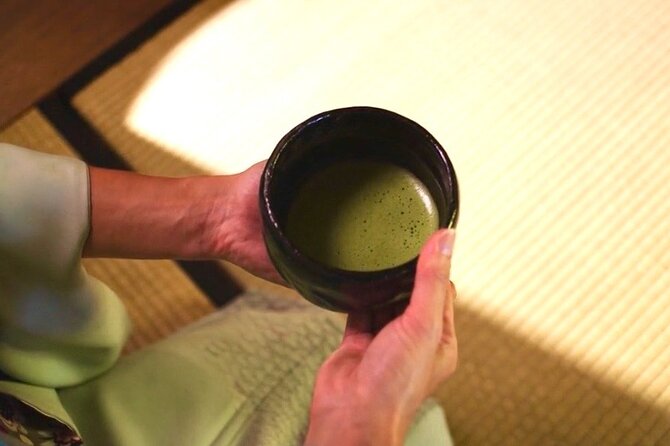
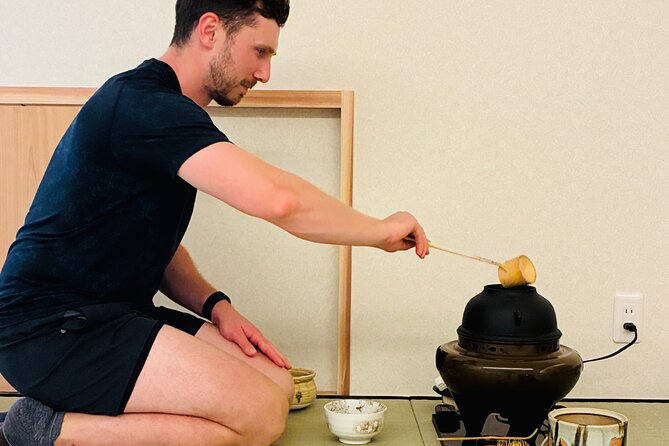
After the introduction, your host prepares the first bowl of matcha. This is the demonstration portion, and it is where the ceremony’s precision becomes easiest to appreciate.
You will see the host handle the tea bowl, whisk, scoop, and other items in a set order. The movements are controlled and deliberate. Several people describe the preparation as resembling an elegant dance, which is a useful way to think about it. The point is not speed or showmanship. The point is care.
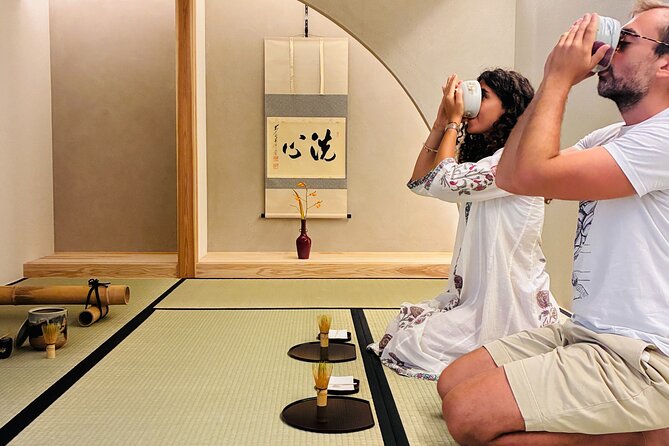
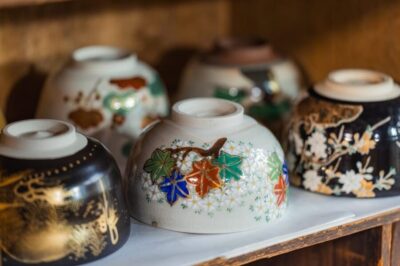
You then receive the matcha with a seasonal Japanese sweet. The sweet is a traditional wagashi supplied by a Kyoto confectioner with more than 100 years of history. Its role is practical as well as decorative. Japanese sweets are often served with matcha because their sweetness balances the tea’s grassy bitterness.
The exact sweet changes with the season, so you should expect something chosen for the time of year rather than one fixed snack. It is presented as part of the ceremony, not as a separate food tasting. If you enjoy Japanese confectionery, this small detail adds real value to the hour.
The matcha itself comes from Kyoto. You receive one bowl prepared by the host and another later in the session. If you do not usually drink matcha, the first bowl gives you a chance to taste it before you have to make your own.
Making your own matcha is the best part
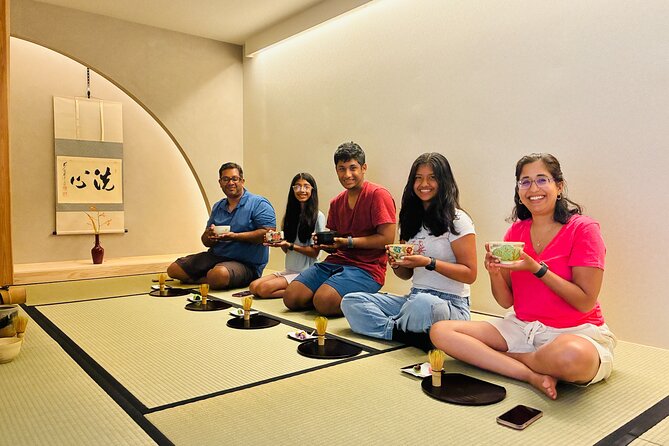
The hands-on portion turns this from a demonstration into a lesson. You choose a tea bowl, follow the host’s instructions, and whisk your own matcha. You can prepare it yourself or make it with a companion, depending on how you book and share the activity.
The process looks simple until you try it. Your host shows you how to use the whisk and helps you find the right motion. The goal is not to produce a perfect bowl on the first attempt. It is to notice the concentration required and understand how much control goes into a drink that may seem effortless when someone else makes it.
This is where the experience earns its $31 price. You are not paying only to sit in a pleasant room and watch a ceremony. You receive instruction, two servings of Kyoto matcha, a seasonal sweet, and direct practice with the tools. For a one-hour activity in central Kyoto, that is a fair package, particularly if you want a cultural activity that fits neatly into a busy sightseeing day.
The hosts may also take photographs and short videos while you prepare your tea. That is useful because your attention can stay on the whisk and bowl rather than on trying to record every movement. Photography should still be handled with respect for the quiet setting and other people in the room.
You drink the bowl you prepare. That gives the lesson a satisfying finish, even if your whisking is less polished than the host’s. The contrast between the two bowls also helps you notice how technique affects the tea.
Same city, a very different cup:
- Kyoto: Table-Style Tea Ceremony at a Kyo-Machiya
★ 4.9 · 1,211 reviews - Kimono Tea Ceremony at Kyoto Maikoya, NISHIKI
★ 5.0 · 911 reviews - Kyoto: Kimono Tea Ceremony at Orizuruya Gion
★ 4.9 · 618 reviews - Kyoto: Tea Ceremony in 100-year-old Kyo-Machiya Townhouse
★ 4.8 · 546 reviews
The nijiriguchi changes the feeling of the room
Sanjo Chasuian includes a nijiriguchi, the small crawl-in entrance associated with a traditional tea room. You enter by bending or lowering yourself rather than walking through a standard doorway.
The entrance has symbolic meaning. It asks everyone to leave ordinary status and outside distractions behind before entering the tea room. The host and guest pass through the same modest opening, which reflects the tea ceremony’s emphasis on humility and equality inside the room.
You do not need to be an expert in tea culture to appreciate the effect. The physical act of lowering yourself changes your pace immediately. It marks a clear break between the street outside and the quiet ceremony inside.
There is one practical point to consider. The facility lists the experience as unsuitable for wheelchair users, and the crawl-in entrance may be difficult for anyone with limited mobility. Chairs are available for people who prefer not to sit on the floor, but you should confirm your needs with the provider before booking.
A good choice for first-time tea ceremony visitors
This experience is designed for international visitors, and all guidance is provided in English. That makes it a strong first introduction if you want context rather than a ceremony you simply watch in silence.
The small group size also helps. With no more than 10 people, the host can show you how to hold the whisk, explain the objects, and respond to questions. The atmosphere remains formal, but the teaching style is friendly. You are not expected to know how to bow, handle the bowl, or drink the tea correctly before you arrive.
I would recommend it especially to:
- First-time visitors to Japan who want a clear introduction to matcha culture.
- Couples or friends who like taking part rather than only observing.
- People who want a peaceful one-hour break from a packed Kyoto schedule.
- Visitors staying near central Kyoto who value an easy subway connection.
- Anyone interested in Japanese sweets as well as tea.
It may be less suitable if you want a long, highly formal tea ceremony conducted entirely in Japanese. It is also not the right pick for a large family group with young children. The activity is not suitable for children under six, and children under five or anyone requiring an interpreter must use the Private Plan rather than the Shared Plan. Wheelchair users should also choose another activity.
What to wear and how to prepare
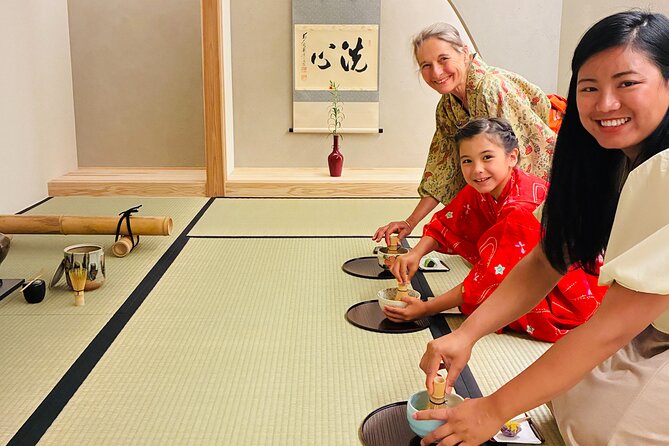
Bring or wear socks. This is a firm requirement, not merely a suggestion. Comfortable clothes are sensible, especially if you will sit for part of the ceremony or use the nijiriguchi.
The facility does not offer standard kimono rental or dressing. An optional uchikake, a coat-style kimono, may be available for ¥1,500 including tax. You request it on the day, and quantities are limited, so it cannot be reserved in advance. This is an optional extra, not part of the $31 price.
Some people have been helped with traditional coats or loose kimono pieces during the visit, but you should not book this expecting a full dressing service. The main event is tea, not costume rental.
You can also purchase matcha, tea bowls, and selected tea items after the session. The purchases are optional and not presented as a required part of the activity. If you find a bowl or tea set you like, this gives you a practical souvenir tied directly to what you learned.
How the experience compares with a larger demonstration
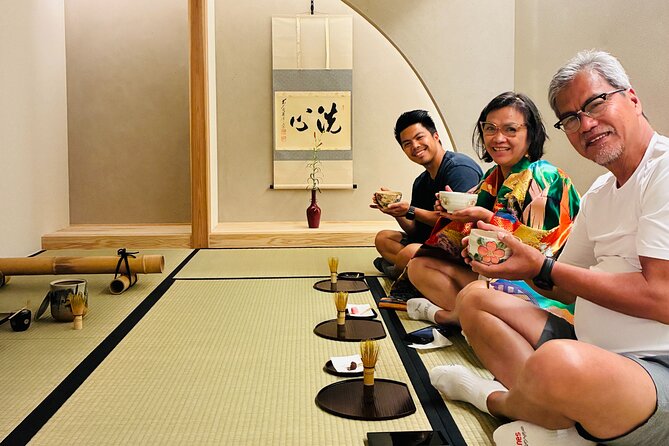
A large cultural show can be easier to fit into a group itinerary, but it often gives you less personal instruction. Sanjo Chasuian’s limit of 10 people keeps the session intimate without requiring you to pay for a fully private booking.
The strongest difference is the second bowl. You do not simply watch an expert and leave with a general impression of matcha. You handle the whisk and try to reproduce the technique. That makes the ceremony easier to remember and gives you a better sense of the work behind the polished movements.
The tradeoff is that a shared session may include people with different levels of curiosity. Some participants may want many questions answered, while others may prefer a quiet presentation. The guides appear to manage this balance well, but a private session is the better fit if you want to control the pace or need an interpreter.
The one-hour length is another advantage. You receive enough explanation and practice to understand the basics, but the activity does not take over your day. At the same time, do not expect a long tea school lesson or an extensive menu of sweets. This is a compact introduction.
Timing, cancellation, and practical value
The listed price is $31 per person, with a grand opening discount advertised through September 15. Prices and promotions can change, so check the current booking page before you commit.
At that price, I see good value in the combination of location, instruction, two bowls of matcha, wagashi, and a small group. The experience is especially worthwhile if you have never made matcha and want a cultural activity that does not require complicated transport.
You can cancel up to 24 hours in advance for a full refund, and the reserve-now, pay-later option keeps your plans flexible. Those policies help if your Kyoto schedule is still moving around. They do not protect you from arriving late, however. The no-entry rule after the start time is the detail most likely to cause trouble, so plan to reach the building early.
The facility also offers sake tasting, but that is separate from the tea ceremony described here. Do not assume the $31 booking includes sake.
Should you book Sanjo Chasuian?
I would book this if you want a well-paced first tea ceremony with English instruction, hands-on practice, and a central Kyoto location. The two bowls make the session more rewarding than a simple demonstration, while the seasonal wagashi and nijiriguchi add genuine cultural detail.
Book with care if you are traveling with young children, need wheelchair access, require an interpreter, or dislike strict start times. For everyone else, arriving early with socks and an hour to spare should set you up for a calm and memorable introduction to Kyoto’s matcha tradition.
FAQ
Where is Sanjo Chasuian located?
Sanjo Chasuian is about a five-minute walk from Subway Karasuma Oike Station in Kyoto. Look for the large plate with the Sanjo Chasuian logo and name.
How long does the tea ceremony last?
The experience lasts one hour. Starting times vary, so check availability when booking.
How much does the experience cost?
The listed price is $31 per person. A grand opening discount is advertised through September 15, but you should confirm the current price before booking.
Is the experience conducted in English?
Yes. Sanjo Chasuian provides the guidance and explanations in English.
How much matcha is included?
You receive two bowls of matcha. The host prepares the first, and you or your companion prepares the second with instruction.
Is a Japanese sweet included?
Yes. A traditional seasonal Japanese confectionery is included. It comes from a Kyoto confectioner with more than 100 years of history.
Do I need to bring anything?
You must bring or wear socks. Chairs are available if you prefer to sit on a chair.
Can children or wheelchair users join?
The activity is listed as unsuitable for children under six and wheelchair users. Children under five or anyone requiring an interpreter must book the Private Plan rather than the Shared Plan.
Fresh tea listings around Kyoto
- Cycling Tour at Uji’s Matcha Green Tea Fields and Heritage★ 5.0 · 10 reviews
- Authentic Tea Ceremony & Sushi in The Museum of Kyoto★ 5.0 · 3 reviews
- 2 Types of Japanese Sweets making and Tea Ceremony★ 4.6 · 17 reviews
- Kyoto Hidden Riverside Zen Mediation and Uji Matcha Experience★ 5.0 · 9 reviews
- Whisk Your Own Matcha: A Zen Matcha Experience at Temple★ 3.6 · 7 reviews
- Kyoto: Nighttime Zen Meditation and Matcha Tea Experience★ 5.0 · 7 reviews
- Kyoto Fushimiinari:Wagashi Making & Small Group Tea Ceremony★ 5.0 · 14 reviews
- Matcha Grinding Experience and Walking Tour in Uji Kyoto★ 5.0 · 26 reviews
Tea Ceremony Experiences, compared.
Kyoto: Tea Ceremony in a Traditional Tea House in Kiyomizu
Read our review →
Kyoto: 45-Minute Tea Ceremony Lesson Experience
Read our review →
Kyoto: Table-Style Tea Ceremony at a Kyo-Machiya
Read our review →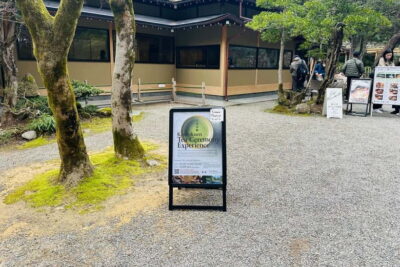
Browse the lists this tour appears in