
Review · TEA CEREMONY EXPERIENCES
Traditional Tea Ceremony Experience in Kyoto
Kyoto’s tea tradition comes down to a simple bowl, hot water, powdered tea, and careful movement. This 30-minute matcha session gives you a practical look at that tradition without asking you to set aside half a day. You’ll watch the tea being made, learn the basic etiquette, and drink single-origin matcha with a Japanese dried sweet called ohigashi.
I like the very low price of $7 and the easy location, only a minute from Gojo Station. I also like the chairs and tables, since you won’t need to kneel on the floor. The main thing to consider is the limited English support. The explanation can be basic, and in a crowded room it may be hard to hear every word.
Key points to know before booking
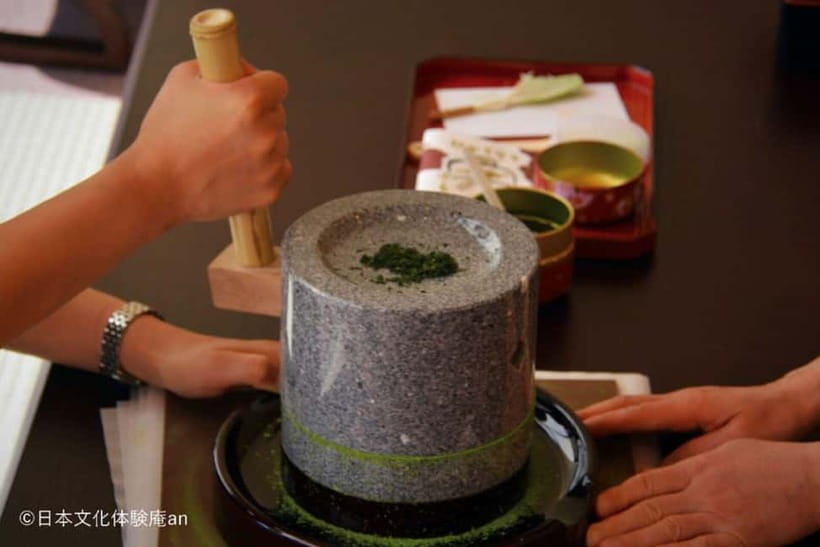
- Single-origin matcha: You’ll see how powdered tea is mixed with hot water, then taste a rich cup for yourself.
- Ohigashi is included: The dry Japanese sweet gives you a traditional companion for the slightly bitter tea.
- Tables and chairs: This is a more accessible setup than a floor-based tea ceremony.
- Gojo Station is close: The venue is one minute from Exit 1 of the Subway Karasuma Line.
- The lesson is brief: Plan on about 25 to 30 minutes, with a simple introduction rather than a long cultural lecture.
- English is limited: Japanese is the listed language, with English translation provided as much as possible if requested.
A short Kyoto tea lesson with a clear purpose
I see this experience as an introduction, not a full study of the Japanese tea ceremony. In half an hour, you can learn the basic shape of the ritual, see the tools in use, and understand how matcha is prepared. That makes it a handy choice if you have a packed Kyoto schedule or simply want more meaning behind the green drink you see across Japan.
The session includes one set of ote-mae, the Japanese tea ceremony procedure. You’ll watch a tea master or instructor handle the preparation and explain the meaning of the movements and utensils. The supplied information does not give the instructor’s name, so you should not expect a named host in advance.
The tone appears calm and educational. One attendee described it as educational and calming, which fits the format well. Another found the session useful for learning the basic do’s and don’ts, along with some background on matcha.
Still, keep the time frame in mind. The activity lasts 30 minutes, and actual instruction may run closer to 25 minutes. One recent session divided its spoken explanation between English and Korean, leaving roughly 12 minutes in each language. If you want a long discussion of tea schools, seasonal customs, or the social history of matcha, this will probably feel too light.
More Tea Ceremonies in Kyoto
- Kyoto: Tea Ceremony in a Traditional Tea House in Kiyomizu
★ 4.9 · 3,519 reviews - Kyoto: Tea Ceremony Ju-An at Jotokuji Temple
★ 4.9 · 3,207 reviews - Kyoto: 45-Minute Tea Ceremony Lesson Experience
★ 4.3 · 2,378 reviews
What happens during the 30 minutes
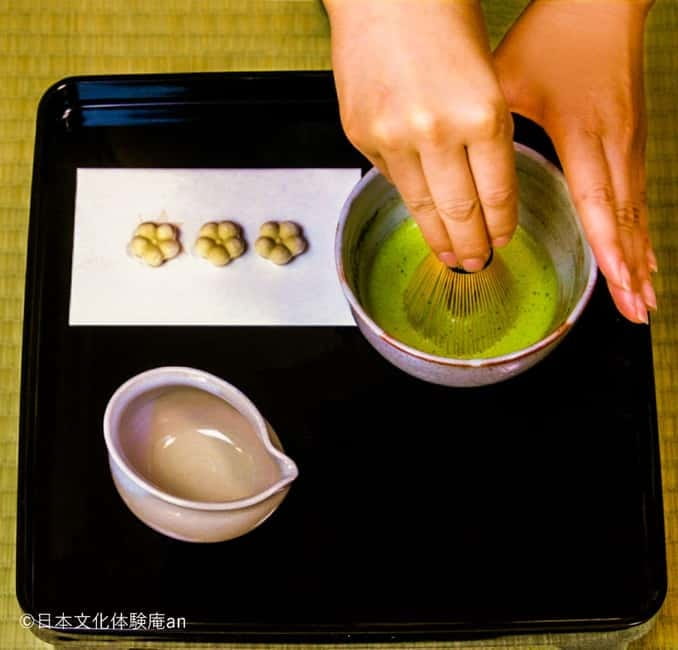
The experience begins with a demonstration. You’ll see how matcha is turned from fine green powder into a drink with hot water and a whisking motion. The process looks simple, but the ceremony gives attention to the order, pace, and handling of each item.
The basic preparation is easy to understand. Hot water is added to matcha, then the tea is mixed until ready to drink. The value lies less in technical complexity and more in watching a familiar beverage treated with care.
You’ll also receive ohigashi, a Japanese dried sweet. It is an important part of the tasting because its sweetness helps balance matcha’s strong, grassy bitterness. The sweet is small, but it gives you a better sense of how tea and food work together in a traditional setting.
The instructor explains the meaning of the actions and utensils as much as time allows. You may learn when to watch, how to receive the tea, and which small points of etiquette matter. The session does not appear to be built around a long hands-on workshop, so expect a guided viewing and tasting rather than an extended practice class.
The activity is held with table and chair seating. That detail matters. Traditional tea settings often involve sitting on tatami, and not everyone finds that comfortable. Here, you can focus on the demonstration instead of worrying about your knees or posture.
Why single-origin matcha matters here
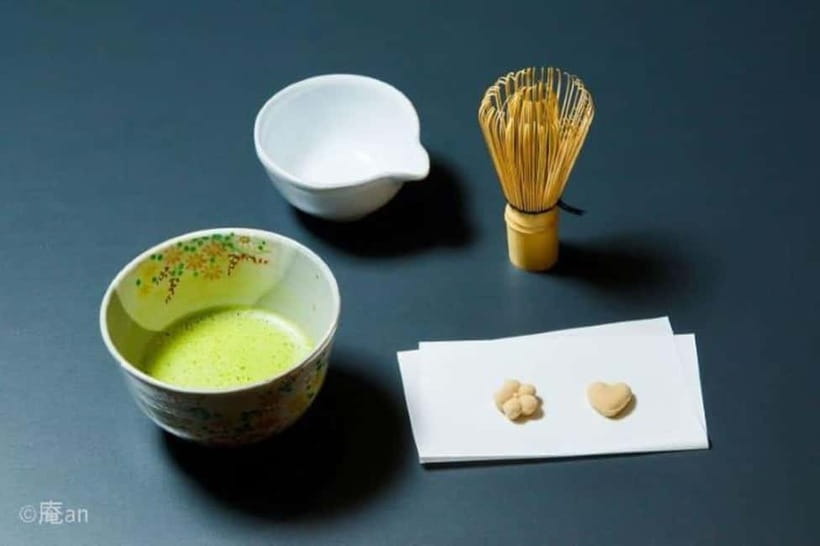
The tea served is described as single-origin matcha. That tells you the powder comes from one stated source rather than being presented simply as a generic blend, though the supplied details do not identify the growing region or producer.
Matcha is finely powdered green tea. Because you drink the powder itself rather than steeping leaves and removing them, the flavor can be bold. You may notice a strong, rich taste, and the experience gives you a chance to understand why a sweet is served alongside it.
One attendee described the matcha as very rich and appreciated the snack served with it. That is useful advice: do not expect a mild cup like ordinary green tea. The ohigashi is not an afterthought. It helps soften the tea’s sharper edge and makes the tasting more comfortable for first-time drinkers.
If you already enjoy matcha, you may appreciate the chance to focus on preparation and etiquette. If you are new to it, the short format lets you try it without committing to a full tea course.
Kyoto context without a long lecture
Kyoto is closely associated with the Japanese tea ceremony, and that setting gives this short activity more weight than a casual café tasting. The point is not only to drink matcha. You are seeing a formal way of preparing and serving it, with attention to movement, objects, and the person receiving the tea.
The lesson can help you notice details elsewhere in Japan. Afterward, you may recognize the difference between powdered matcha made for ceremony and a sweet matcha drink sold at a modern café. You may also have a better sense of why Japanese service traditions place so much importance on sequence and manners.
I would keep your expectations realistic, though. The available information says you’ll learn about the ceremony’s significance and philosophy, but the short schedule limits how far that discussion can go. One attendee wanted more about the history, cultural role, typical occasions for drinking matcha, and the people who traditionally drink it. Instead, the explanation stayed close to the practical steps: add water and mix.
That does not make the experience poor value. It simply tells you what kind of value you are buying. This is a quick cultural sample, not a scholarly talk.
Same city, a very different cup:
- Kyoto: Table-Style Tea Ceremony at a Kyo-Machiya
★ 4.9 · 1,211 reviews - Kimono Tea Ceremony at Kyoto Maikoya, NISHIKI
★ 5.0 · 911 reviews - Kyoto: Kimono Tea Ceremony at Orizuruya Gion
★ 4.9 · 618 reviews - Kyoto: Tea Ceremony in 100-year-old Kyo-Machiya Townhouse
★ 4.8 · 546 reviews
The Gojo Station location makes this easy
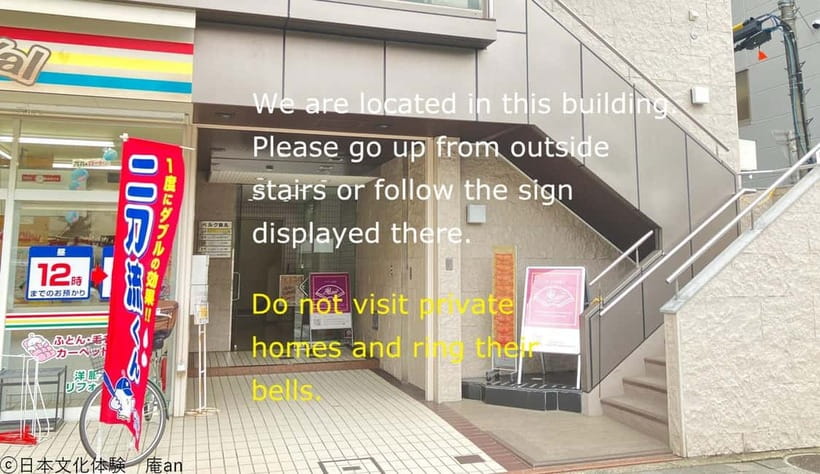
The meeting point is one minute from Exit 1 of Gojo Station on the Subway Karasuma Line. The entrance faces Gojo-dori, the main street, and the listed coordinates can help if you are using a map application.
For a busy day in Kyoto, this location is useful. You can fit the tea session between visits without arranging a long transfer across town. Gojo Station also makes the activity straightforward to reach by subway, though you should still allow enough time to find the exact entrance.
Arrive early. The venue will not hold the activity for late arrivals, regardless of the reason. A missed train, a slow lunch, or difficulty finding the door could mean losing your booking.
The building has no elevator. You need to use stairs to reach the venue, so wheelchair access should be confirmed carefully before booking. The activity is described as wheelchair accessible, but the stair information is an important practical qualification. If you have mobility concerns, contact the provider before paying.
English support and the sound level
Japanese is the listed language. English translation is offered as much as possible if you request it, but it is not presented as a guaranteed full English-language class.
This is the biggest issue for many international visitors. A recent session included explanations in English and Korean, and the content was considered basic. Another attendee found the room crowded and had trouble hearing the guide.
You can still get something from the visual part of the session. The preparation is easy to follow, and the tea, sweet, and gestures communicate much even without perfect translation. But if your main reason for booking is detailed cultural explanation, ask about English support before confirming.
I would also avoid treating this as a quiet private ceremony. The format may place several people together, and the room can become difficult to hear in. Sit as close to the instructor as possible if seating allows.
What the $7 price really buys you
At $7 per person, this is one of the easier Kyoto activities to add to your budget. You receive a matcha preparation demonstration, a serving of single-origin matcha, ohigashi, and a short introduction to tea ceremony etiquette.
That price is especially fair if you want a first taste of the tradition rather than a long formal event. You are paying for access to a cultural demonstration and a tasting, not an elaborate meal or a private lesson.
The value drops if you expect a detailed history class, extensive English interpretation, or a long hands-on workshop. The tea itself is the center of the experience, while the cultural explanation is necessarily compressed.
A completion certificate is available for an additional 300 JPY. It is optional and best treated as a small souvenir, not a reason to book. One attendee enjoyed receiving a matcha certificate, but the certificate is separate from the included tea ceremony set.
Children under two who sit on a parent’s lap are free. Everyone else who participates needs a place and a booking. People who do not participate cannot simply enter and wait inside.
Who will enjoy this tea ceremony most
I would recommend this activity to first-time visitors who want a quick, approachable introduction to matcha. It also suits you if you have limited time, prefer chair seating, or want a quiet change of pace between larger Kyoto sights.
It can work well for families, provided the child can manage a short, calm presentation. The under-two policy helps parents, but the activity is still a formal tasting rather than a play-based attraction.
Matcha fans may enjoy the focus on single-origin tea and the chance to watch preparation in a traditional context. The session also makes a sensible rainy-day stop because the core activity takes place indoors.
I would be more cautious if you need full English instruction, dislike crowded rooms, or want a detailed explanation of Japanese tea culture. You may leave satisfied with the demonstration but still wishing the instructor had covered more history and meaning.
Booking, timing, and cancellation details
Operating hours are 10:00 to 17:00. Reservations received after 17:00 are processed the next day, so late-evening booking requests may not receive an immediate response.
You can reserve now and pay later, which helps if your Kyoto schedule is still shifting. Free cancellation is available up to 24 hours in advance for a full refund. After that point, cancellation fees apply, and changing the date or time after a fee has been charged can create another specified charge.
Do not book this with a tight connection afterward. The official duration is 30 minutes, but you also need time to reach the venue, climb the stairs, and find the entrance. The provider will not cover transport costs if you cancel or miss the event.
The overall rating is 4.3 from 64 ratings, which fits the experience’s strengths and limits: the tea and calm atmosphere work well, while language, sound, and the short lesson can affect how much you take away.
My call: book it for a quick cultural taste
I would book this tea ceremony if I wanted a simple Kyoto matcha experience at a very small cost. The station location, chair seating, ohigashi, and short schedule make it easy to fit into a day of sightseeing.
I would not book it as my main tea-culture experience. For that, you need more time and stronger language support than this format promises. Before reserving, ask specifically about English translation and seating if those points matter to you.
For most visitors, the best approach is to arrive on time, sit near the instructor, listen for the etiquette tips, and treat the session as a focused introduction. You’ll leave having tasted matcha in a traditional setting and knowing a little more about the care behind each bowl.
FAQ
How long does the tea ceremony experience last?
The scheduled duration is 30 minutes. Some sessions may finish in about 25 minutes, so plan for a short introduction rather than a long class.
Where does the experience meet?
The venue is one minute from Exit 1 of Gojo Station on the Subway Karasuma Line. The entrance faces Gojo-dori.
Is matcha included?
Yes. The experience includes single-origin matcha and a Japanese dried sweet called ohigashi.
Are seats provided?
Yes. You will sit at tables and chairs rather than on the floor.
Is the experience offered in English?
Japanese is the listed language. English translation will be provided as much as possible if you request it, but full English instruction is not guaranteed.
Is the venue wheelchair accessible?
The activity is described as wheelchair accessible, but the building has no elevator and requires stairs to reach the venue. Contact the provider before booking if this affects you.
Can I cancel for a full refund?
You can cancel up to 24 hours in advance for a full refund. Cancellation fees apply after that point, and late arrivals are not accommodated.
Fresh tea listings around Kyoto
- Cycling Tour at Uji’s Matcha Green Tea Fields and Heritage★ 5.0 · 10 reviews
- Authentic Tea Ceremony & Sushi in The Museum of Kyoto★ 5.0 · 3 reviews
- Kyoto Fushimiinari:Wagashi Making & Small Group Tea Ceremony★ 5.0 · 14 reviews
- 2 Types of Japanese Sweets making and Tea Ceremony★ 4.6 · 17 reviews
- Whisk Your Own Matcha: A Zen Matcha Experience at Temple★ 3.6 · 7 reviews
- Kyoto Hidden Riverside Zen Mediation and Uji Matcha Experience★ 5.0 · 9 reviews
- Kyoto: Nighttime Zen Meditation and Matcha Tea Experience★ 5.0 · 7 reviews
- Matcha Grinding Experience and Walking Tour in Uji Kyoto★ 5.0 · 26 reviews
Tea Ceremony Experiences, compared.
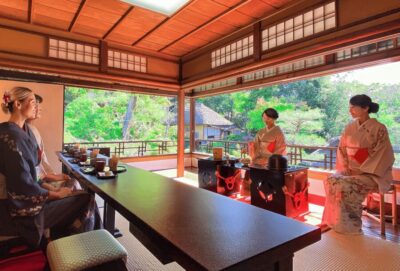
Kyoto: Tea Ceremony in a Traditional Tea House in Kiyomizu
Read our review →
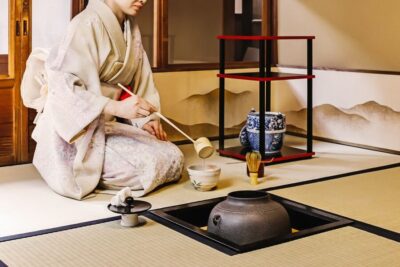
Kyoto: 45-Minute Tea Ceremony Lesson Experience
Read our review →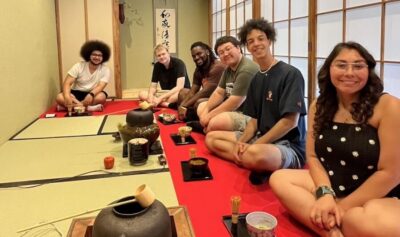
Kyoto: Table-Style Tea Ceremony at a Kyo-Machiya
Read our review →
Browse the lists this tour appears in