
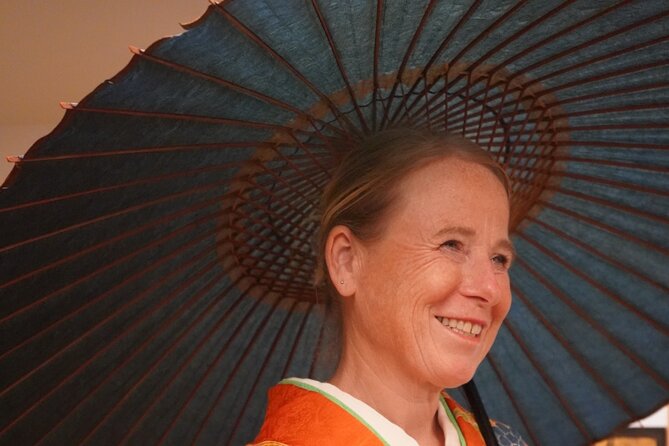
Review · KIMONO & TEA CEREMONY
Private Kimono and tea ceremony at local home near Tokyo Disney
The best part of this experience is its small, home-based setting. Instead of dressing in a busy rental shop, you enter a local photo studio in an ordinary Japanese home near Tokyo Disney and spend time with the host in a private setting. The session includes 100% silk kimono, traditional hairstyling, photographs, and a tea ceremony after you change back.
I like the very small group size, which keeps the dressing and photo session personal. I also like that the host explains the kimono itself, including the hand-painted details and the special status of the long-sleeved furisode. The main drawback is the fixed format: women’s groups are limited to two, makeup is not provided, and the activity is not offered during the height of summer.
Key points to know before booking
- The setting is a local home photo studio near Shin-Urayasu Station, not a large cultural attraction or theme park venue.
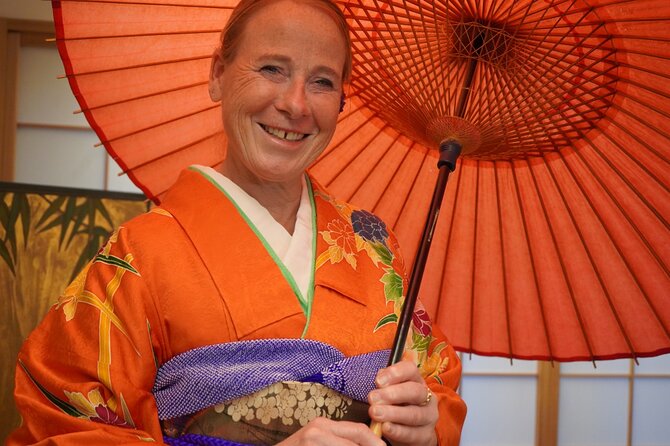
- Pure silk kimonos and a furisode option give the dressing session more substance than a simple costume rental.
- A maximum of three people per day keeps the experience private, though no more than two women can join one group.
- The tea ceremony comes after you change back, so you can enjoy the formal tea without sitting in a heavy kimono.
- A Sony α7 camera and SD card are included, with the photo data supplied as-is and without retouching.
- Couples receive different clothing, with a silk kimono for the woman, a cotton kimono for the man, and a decorative katana.
A quiet cultural stop near Tokyo Disney
This experience works best for you if you want something personal and homey rather than a polished stage show. The meeting point is Shin-Urayasu Station in Urayasu, Chiba, a practical base near Tokyo Disney Resort, though the activity itself is not inside the resort.
You meet at 1 Chome-1 Irifune, near the station, and return there when the session ends. The location is close to public transportation, but the supplied details do not give a walking time from the station, so I would allow a little spare time to find the exact meeting point.
The private format matters here. With only your group taking part, you will not be rushed through a line of other people waiting for the same costume rack. The stated daily limit is three participants, and no more than two women are permitted in one group.
That makes this a good choice for a couple, a solo visitor, or a small family group. If you are traveling with a larger party, this is not the right fit unless your group can be divided into separate bookings.
More Kimono and Tea Ceremonies in Tokyo
- Kimono Tea Ceremony at Tokyo, Asakusa Maikoya
★ 5.0 · 638 reviews - Tokyo: Matcha and Kimono Experience
★ 4.7 · 219 reviews - Tokyo: Asakusa Kimono Dressing and Matcha Experience
★ 4.9 · 173 reviews
The kimono is the main event
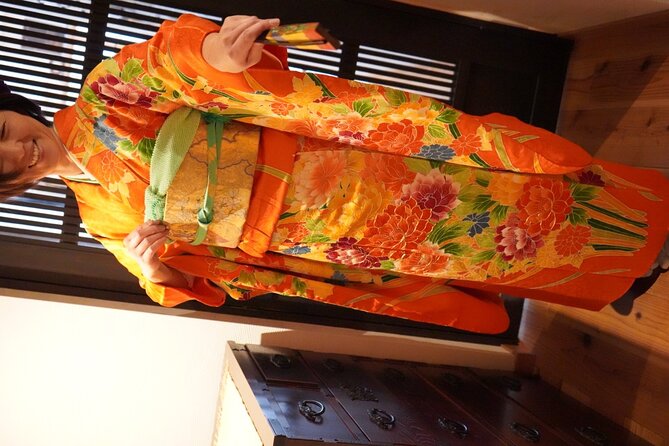
The clothing is not described as a simple synthetic costume. The women’s garments are made from 100% pure silk, and the collection includes the furisode, a formal kimono known for its long sleeves and detailed patterns.
The material changes the feel of the session. Silk has a smooth, substantial texture, and the hand-painted details give you something to look at beyond the general shape of the outfit. The host also explains the kimono, which adds useful context to the photographs. You are not just putting on colorful clothing for a few quick pictures.
A furisode is especially associated with formal wear for young unmarried women, though the experience details do not specify which exact kimono each person will receive. If that particular style matters to you, ask about available choices when booking.
For couples, the clothing is arranged differently. The woman wears one silk kimono, while the man wears a cotton kimono and can use a decorative katana as a prop. Ninja costumes are also available. These options give the photographs a playful side, though the silk kimono remains the most refined part of the session.
A practical note: kimono dressing can feel snug and structured. You will want comfortable underclothes and a little patience while the layers are arranged. The activity does not provide makeup because of possible skin irritation, so arrive with your full makeup already applied if you want a finished portrait look.
Hair accessories complete the portrait
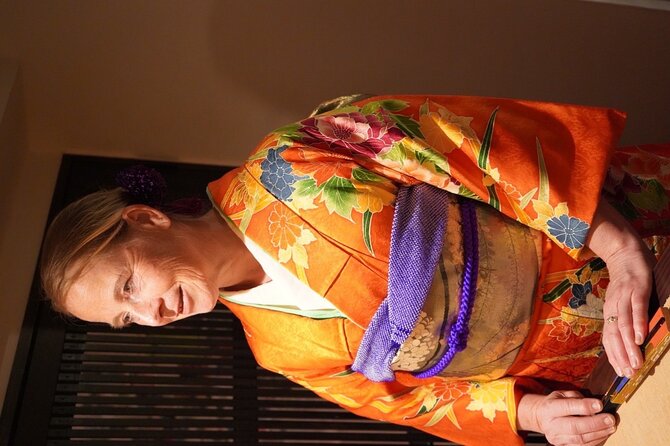
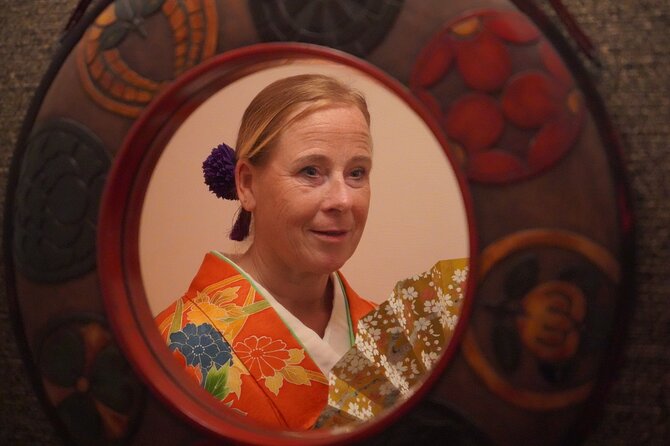
After dressing, you receive guidance in traditional hairstyling. You can choose from an array of decorative hair accessories to finish the look.
This is a useful inclusion because hair can make a kimono portrait feel complete. The activity does not offer makeup, but the hair arrangement and accessories provide some of the visual detail that makeup services might otherwise supply.
You should plan your arrival with your hair and face ready. Since the photo data is given without retouching, what you bring to the session is what will appear in the final files. That is not a flaw, but it is worth knowing before you book. This is a natural photo record, not a studio package with digital editing.
The host’s explanations also add value at this point. Understanding why the sleeves, fabric, pattern, and accessories matter gives you more to remember when you see the images later. The strongest part of the experience is not simply dressing up. It is learning enough about the clothing to recognize what you are wearing.
The photo session uses a Sony α7
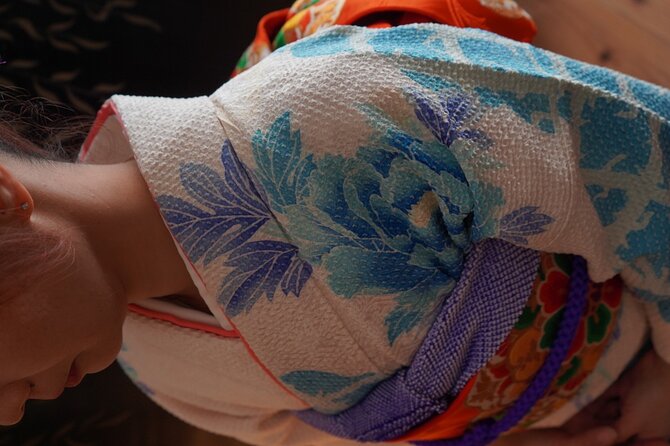
Photography is built into the experience rather than treated as an afterthought. A high-quality Sony α7 camera is available to capture your session, and you receive one SD card with all the photo data when you leave.
You can also bring your own camera for extra shots. That gives you a choice: use the supplied camera for the main portraits and your own phone or camera for personal images, or ask to use both during the session.
The details do not promise professional retouching, special lighting, printed photographs, or a fixed number of images. The data is delivered as-is. I would book this for the chance to leave with a full set of digital memories, not for a magazine-style portrait package.
The SD card is a practical touch. You do not have to wait for an online gallery or depend on a later download link. Make sure your own device can read the card when you return home, and consider backing up the images as soon as you can.
The decorative katana and Ninja costumes can add variety to the photo session. Couples may prefer a mix of formal silk portraits and more playful poses. Solo visitors can also use the available props, although the exact photo arrangements are not specified.
More Tea Ceremonies in Tokyo
- Tokyo: Traditional Tea Ceremony with a Tea Master
★ 5.0 · 528 reviews - Tea Ceremony Workshop in Tokyo by the Experienced Instrucor
★ 5.0 · 189 reviews - Asakusa: Kimono Tea Ceremony with Matcha and Sweet
★ 4.9 · 153 reviews - Tea Ceremony Experience in a Private Tea Room in Shibuya
★ 4.9 · 125 reviews
Tea comes after the kimono
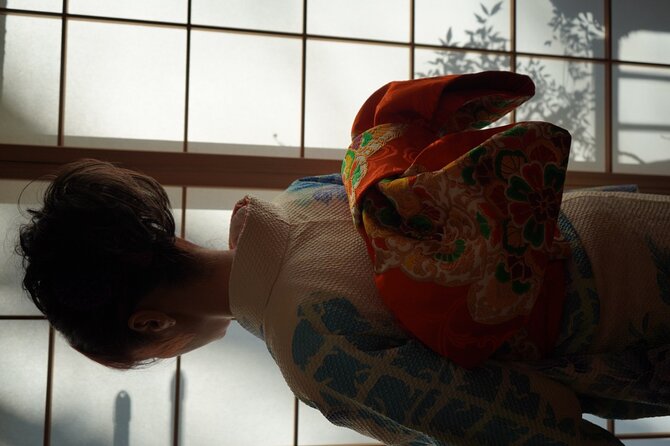
The tea ceremony takes place after you have changed back into your own clothes. That order is sensible. You can focus on the dressing and photography first, then sit down for a quieter cultural activity without worrying about keeping an elaborate kimono perfectly arranged.
The tea portion includes one cup of whisked green tea and traditional Japanese confections. Coffee, tea, and bottled water are also included, though the listed inclusions do not explain whether the general tea is separate from the whisked green tea.
You should view this as an introduction to tea ceremony, not a long formal school lesson. The supplied details do not state how many specific movements or customs are taught, nor whether you will prepare the tea yourself. What is clear is that you receive one cup of whisked green tea with traditional sweets in the same private home setting.
This pairing gives the experience a better rhythm. The kimono session is visual and hands-on, while the tea ceremony offers a slower close. You get a taste of two parts of Japanese culture without spending a full day at a formal cultural school.
How long the visit takes
The duration depends on the size and makeup of your group:
- One participant: about 2.5 hours
- Two participants: about 3 hours
- Three participants: about 3.5 hours
- One couple: about 3 hours
- Two couples: about 3.5 hours
The general duration is advertised as about three hours, but solo visitors should not assume a full three-hour session, and three-person groups should leave more room in the day.
The longer timing for larger groups makes sense. Each person needs dressing, hairstyling, photographs, and time to change before the tea ceremony. If you are planning Tokyo Disney Resort on the same day, do not squeeze this between tightly timed rides or reservations.
A morning or afternoon booking would work well with a flexible day in Urayasu. The activity starts and ends at Shin-Urayasu Station, so it can fit into a broader Tokyo itinerary, but you should allow time for local transport before and after the visit.
The experience is not offered during the height of summer. That restriction may relate to the heat of wearing layered silk clothing, but the stated information does not give a reason. If your trip falls in midsummer, confirm availability before making plans.
Is $164.19 a fair price?
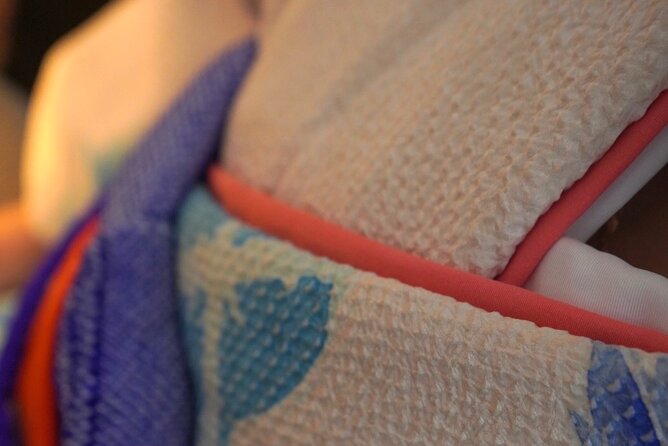
At $164.19 per person, this is not a cheap costume rental. The value comes from the number of elements packed into one private session: kimono dressing, pure silk garments, hairstyling, accessories, photography with a Sony α7, an SD card, refreshments, and a tea ceremony.
For one person, the listed session lasts about 2.5 hours. For two people, it lasts about three hours, and the private format means the time is devoted to your party rather than split with strangers. That helps justify the cost if you care about personal attention and photographs.
I would compare this with the cost of separate kimono rental, a professional photo session, and a tea ceremony in Tokyo. The exact comparison will vary, but combining those pieces in a private home setting can be good value for someone who wants both cultural context and keepsake images.
The price is harder to justify if you only want to wear a kimono for a few minutes or take casual phone pictures. You can find simpler rental experiences for less, especially in tourist districts. This activity asks you to pay for the setting, the silk garments, the host’s explanations, the camera equipment, and the small group format.
Group discounts are listed, but the specific discount amount is not provided. Check the price for your exact party size before booking, especially if you are considering two couples.
Who will enjoy this most?
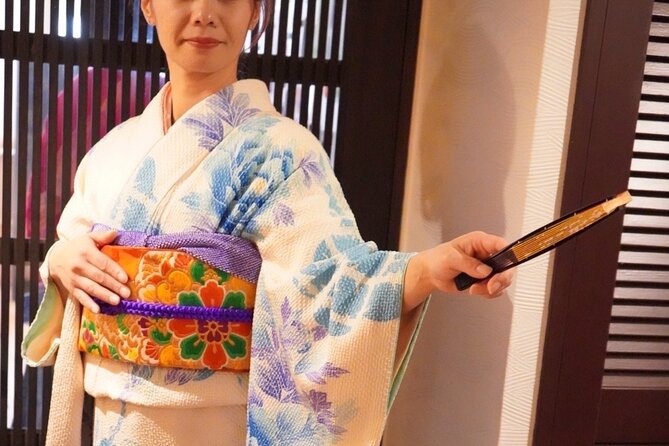
I would recommend this to a first-time visitor who wants a close look at Japanese clothing without committing to a full cultural course. It is also a strong choice for couples who want coordinated portraits, a decorative katana, and a calm activity near Tokyo Disney.
Families may like the Ninja costumes and the private setting, but the maximum of three participants limits the fit. A larger family would need to ask about separate arrangements, and no such arrangement is promised.
Solo visitors are welcome and receive a shorter session. The smaller format may actually suit someone who wants more time focused on one outfit and a personal photo set, but the per-person price remains the same listed rate.
This is less suitable for anyone who dislikes posed photographs, has little interest in traditional clothing, or wants a highly formal tea ceremony with extensive instruction. It is also not a good summer choice if the activity is unavailable during the hottest part of the season.
Practical planning before you go
Arrive with makeup already done. No makeup service is provided, and the operator recommends full makeup before arrival to reduce the chance of skin irritation.
Wear clothing that is easy to change out of. You will dress in a kimono, complete the photo session, and then change back into your own clothes before tea. The details do not specify changing-room arrangements, so practical, comfortable clothing is the safest choice.
Bring your own camera if you want extra images, but remember that the Sony α7 is available for the main session. You receive the photo data on an SD card when you leave, with no retouching.
Keep the meeting point in mind. The activity begins and ends at Shin-Urayasu Station, not at Tokyo Disney Resort. The station is near public transportation, but you should not treat the booking as a hotel pickup or park admission add-on.
The cancellation terms are friendly if your plans change early. You can receive a full refund when canceling at least 24 hours before the start time. Within 24 hours, cancellations and changes are not accepted for a refund.
My call: book it for the personal setting
I would book this if you want more than a quick rental photo. The pure silk garments, furisode option, traditional hairstyling, private home setting, camera session, and tea ceremony create a well-rounded three-hour cultural visit.
The best reason to choose it is the intimate scale. You get time to look closely at the clothing, ask about what you are wearing, and leave with your own photo files instead of passing through a crowded shop.
I would skip it if your priority is the lowest possible price, a full formal tea lesson, or a large-group activity. I would also confirm dates carefully if you are visiting in the height of summer, since the service is not offered then.
For a couple staying near Tokyo Disney, or a solo visitor who values personal attention and lasting photographs, this is a thoughtful way to add traditional Japan to an otherwise theme-park-focused itinerary.
FAQ
Where does the kimono and tea ceremony experience begin?
It begins at Shin-Urayasu Station, at 1 Chome-1 Irifune, Urayasu, Chiba 279-0012, Japan. The activity ends back at the meeting point.
How many people can join one booking?
The experience accommodates a maximum of three participants per day. No more than two women are allowed in one group.
How long does the experience last?
A solo session takes about 2.5 hours. Two participants take about three hours, while three participants take about 3.5 hours. One couple takes about three hours, and two couples take about 3.5 hours.
Is makeup included?
No. Makeup services are not provided because of the risk of skin irritation. You are advised to arrive with your full makeup already applied.
What photographs and equipment are included?
A high-quality Sony α7 camera is available for the session, and you receive one SD card containing all the photos when you leave. The photo data is provided as-is, without retouching, and you may bring your own camera for additional pictures.
Can I cancel for a full refund?
Yes, if you cancel at least 24 hours before the experience start time. Cancellations or changes made within 24 hours are not accepted for a refund.
Fresh tea listings around Tokyo
- Yokohama : Tea Ceremony with Sweets and Souvenir★ 5.0 · 5 reviews
- Walking Tour: Yanaka,Nezu& Sendagi: Tea Ceremony & Old Tokyo★ 5.0 · 3 reviews
- Private Mochi・Matcha sweets Making Class Near Shibuya Area★ 5.0 · 22 reviews
- 2 Hours Mochi &Nerikiri Making & Matcha Class in Bunkyo★ 5.0 · 21 reviews
- Kimono and Tea Ceremony in Asakusa Private Food Tour With Guide★ 5.0 · 4 reviews
- Tokyo: Tea Ceremony & Japanese Sweets Making★ 5.0 · 10 reviews
- Tokyo Sweets Tour: Hidden Gems & Matcha at an Old Tea House★ 5.0 · 6 reviews
- Tokyo: Matcha Tea Ceremony Experience at Japanese room in Shibuya★ 5.0 · 11 reviews
Kimono & Tea Ceremony, compared.
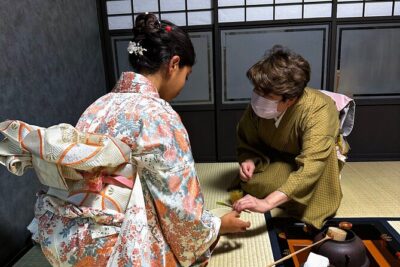
KYOTO Tea Ceremony with kimono near by Imamiya Jinjya Shrine
Read our review →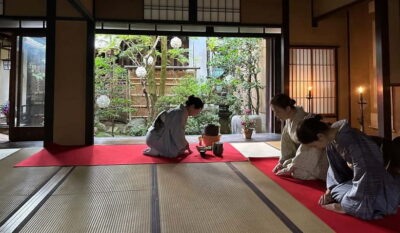
Kyoto: Kimono and Tea Ceremony Experience at Cultural Asset
Read our review →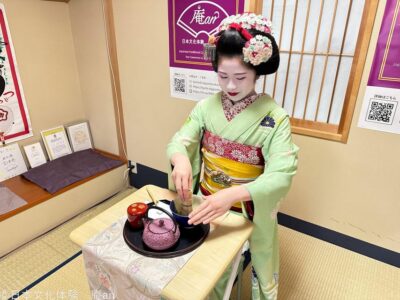
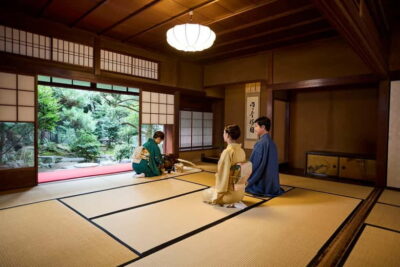
Kyoto: Kimono Tea Ceremony with Matcha and Sweet
Read our review →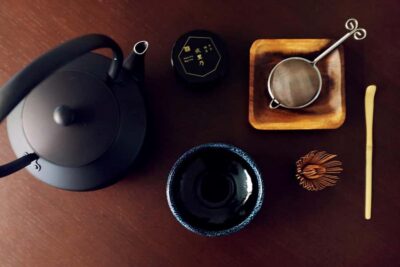
Browse the lists this tour appears in