
Review · KIMONO & TEA CEREMONY
Live the Shōgun Story Samurai Knives and Tea Ceremony in Sakai
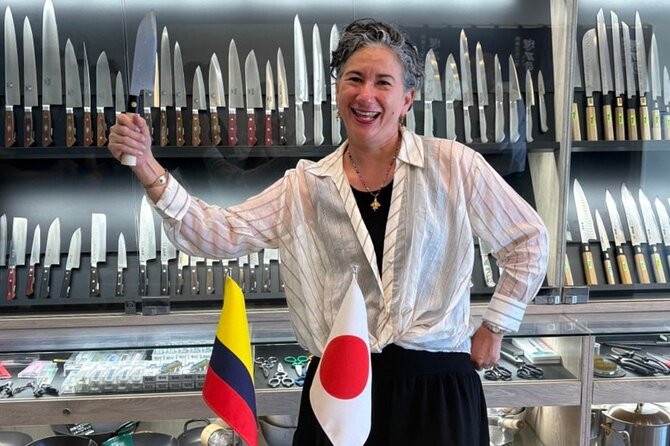
Sakai’s best story is told through things you can eat, hold, and use. On this private tour, you trace the old trade city, sit down to seasonal kaiseki, take part in a tea ceremony, and fit a handle to a personalized knife at Sakai Tōji. The result is more than a history walk: you leave with a useful object tied to local craft.
I like the clear mix of food and tradition, especially the chance to carry home an engraved blade rather than a generic souvenir. I also like the guide-led approach. Junya keeps the history light and engaging, and can adjust the meal if traditional Japanese food is not your favorite. The main consideration is the price, $379 per person, and the strict no-refund policy.
Key points to know before booking
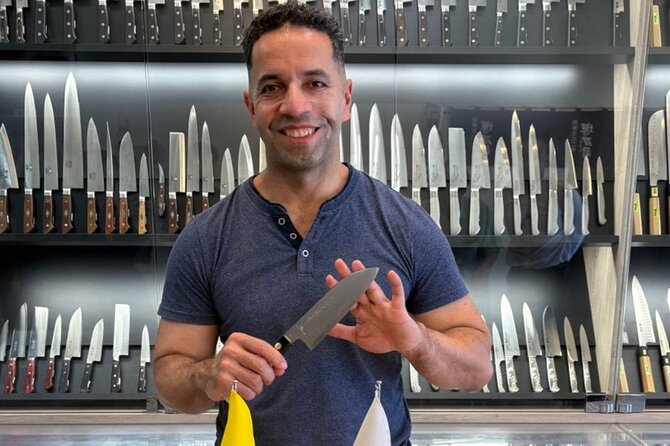
- Make your own Sakai knife: Fit the handle at Sakai Tōji and take home a personalized engraved blade.
- Meet guide Junya: The history is presented in a friendly, easygoing way rather than as a long lecture.
- Taste seasonal kaiseki: Lunch at Ume-no-Hana includes several courses, with vegan options available.
- Visit the birthplace of tea master Sen no Rikyu: The tea ceremony at Rishō-no-Mori adds a quiet, reflective pause.
- See several sides of Sakai: The route covers Edo-period trade, samurai craft, tea culture, and European missionary history.
- Plan for a fixed five-hour outing: Start at 10:50 a.m. at Sakai Station East Exit and finish back at the same meeting point.
Why Sakai is the right place for this story
Sakai sits in Osaka Prefecture, but it feels like a place with its own strong identity. Its importance grew from trade, skilled workshops, and ties to Japan’s samurai age. This tour uses those connections to explain the city without asking you to spend the day inside a museum.
The central idea is simple: Sakai’s past is still visible in its tools, food, tea customs, and streets. You begin near Porto no Suke Bridge, a useful first stop because it links the modern city with Sakai’s role as an Edo-period trade hub. You are not just hearing that Sakai was important. You are being shown how commerce helped support the crafts and traditions that followed.
I find this approach more useful than a standard sightseeing loop. You get a thread to follow. Trade leads to craft, craft leads to the knife workshop, and tea and food explain another side of the city’s cultural life.
More Kimono and Tea Ceremonies in Osaka
- Osaka: Tea Ceremony, Calligraphy, and Kimono Experience
★ 4.9 · 130 reviews - Samurai Show, Tea Ceremony, Japanese Traditional Activities
★ 5.0 · 56 reviews - Samurai dress-up and shows, plus Tea Ceremony & Calligraphy
★ 5.0 · 27 reviews
Starting at Sakai Station at 10:50 a.m.
The meeting point is 堺駅東口タクシー乗り場3, at the Sakai Station East Exit taxi stand, 3 Chome Ebisujimacho, Sakai Ward, Sakai, Osaka 590-0985. The tour begins at 10:50 a.m., so you will want to allow enough time to reach the station and find the correct exit.
The location is near public transportation, which makes this a practical choice if you are based in Osaka. The activity ends back at the meeting point, so you do not need to work out a separate return route after the final stop. A mobile ticket is provided, another small convenience when you are moving around Japan.
This is a private activity for your group only. That matters here. Food customs, tea ceremony etiquette, and knife-making all raise questions, and a private format gives you room to ask them without holding up a larger group.
The published schedule is about five hours. It is long enough to connect the stops, but not so long that it takes over your entire day. You should still treat the timing as fixed, since the tour includes a meal, a tea ceremony, a workshop, and several walking sections.
Porto no Suke Bridge and Sakai’s trading past
Your first historical stop is Porto no Suke Bridge. The focus is Sakai’s role as a trade center during the Edo period, when goods, ideas, and specialist skills moved through the city.
This opening gives the rest of the tour a useful frame. The knife workshop will mean more if you understand that Sakai’s crafts did not develop in isolation. Trade helped create demand for fine tools and connected the city to a wider world.
Do not expect a long architectural tour based on the information provided. The value of this stop is the explanation. Guide Junya’s strength is making the story understandable and keeping it from becoming a dry list of dates. One particularly appealing part of the experience is the balance between education and conversation. You learn about Sakai without feeling trapped in a classroom.
Kaiseki lunch at Ume-no-Hana
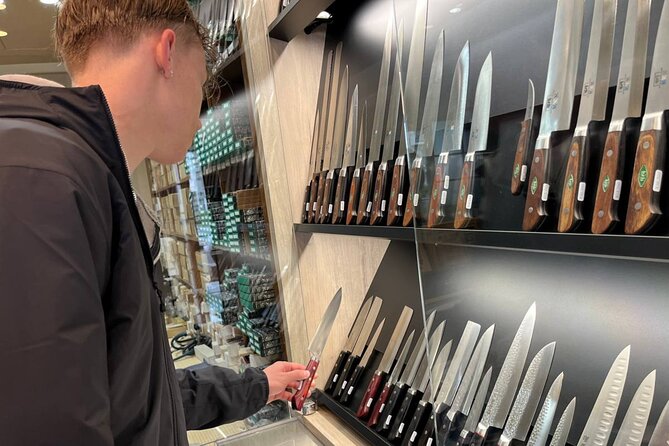
Lunch at Ume-no-Hana brings the history to the table. The restaurant serves seasonal kaiseki, a style of dining built around several carefully arranged courses and the ingredients of the season.
Kaiseki is not simply a large meal. Its appeal comes from pacing, presentation, and the way each course contributes to the whole. For you, this means lunch is part of the cultural program, not just a break between sights.
That can also be the most personal part of the tour. Traditional Japanese food is not a universal favorite, and the available information makes clear that Junya is willing to be flexible if some dishes do not suit you. Vegan options are available, which makes the lunch more workable for plant-based diners.
You should still communicate dietary needs when booking or before the tour, since the information confirms vegan choices but does not list other dietary arrangements. The meal is a strong value point if you enjoy food as a way to understand place. It may feel less worthwhile if you prefer a quick, casual lunch or have a narrow list of foods you eat.
More Tea Ceremonies in Osaka
- Osaka: Tea Ceremony Experience
★ 4.9 · 1,426 reviews - Tea Ceremony Experience in Osaka Doutonbori
★ 5.0 · 754 reviews - Osaka: Japanese Traditional Sweets Making and Tea Ceremony
★ 4.7 · 118 reviews - Osaka: Private Tea Ceremony and Calligraphy Experience
★ 5.0 · 50 reviews
Tea at Rishō-no-Mori
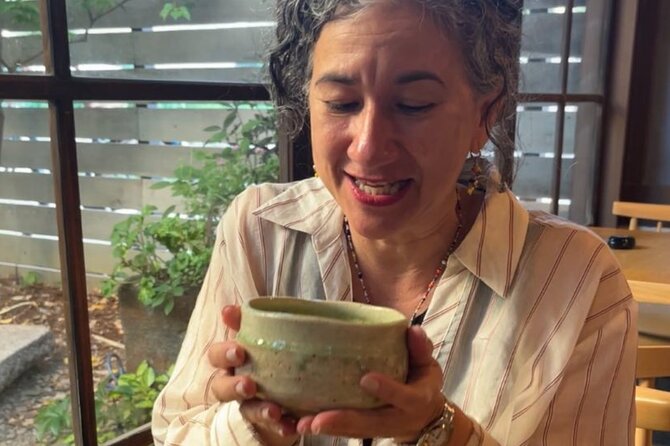
After lunch, the mood changes at Rishō-no-Mori. Here you take part in a traditional Japanese tea ceremony in a quiet setting.
The ceremony connects directly with Sakai’s cultural identity and the legacy of Sen no Rikyu, the famous tea master associated with the city. Tea ceremony can seem formal from the outside, but this setting gives you a chance to see why small gestures, simple objects, and careful preparation matter in Japanese culture.
You do not need to treat the ceremony as a performance. It is better understood as a period of attention and restraint. After a multi-course meal and the historical explanation at Porto no Suke Bridge, this slower stop gives the day a change of pace.
The practical drawback is that tea ceremony customs may feel unfamiliar if you prefer active sightseeing. I see that as part of the point, but you should book this tour because you want a cultural activity that asks you to observe and take part, not just photograph a location.
Fitting a handle at Sakai Tōji
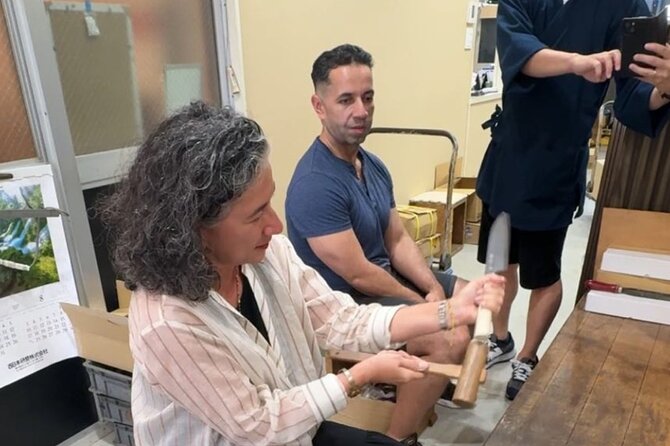
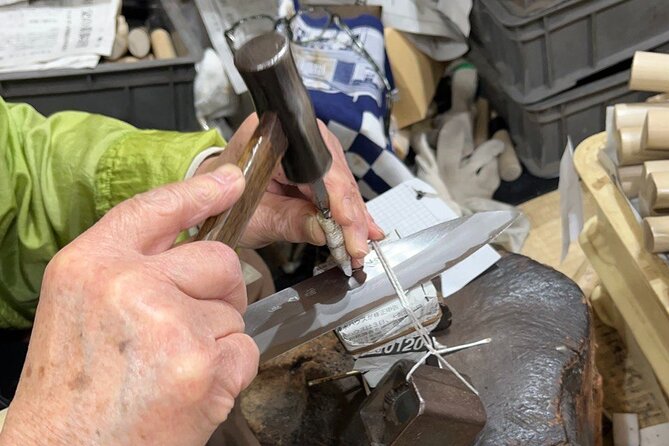
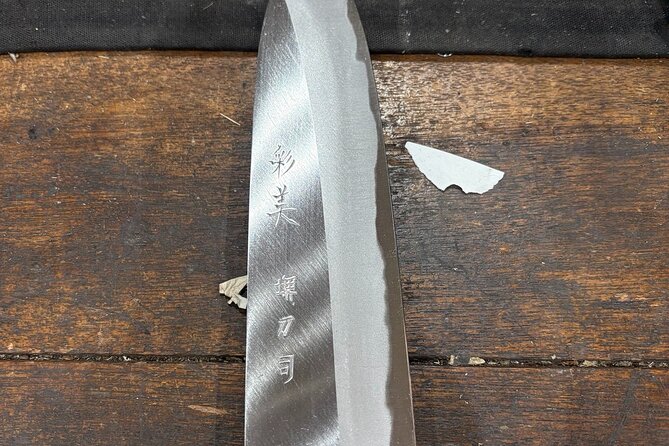
The most memorable hands-on portion takes place at Sakai Tōji, a workshop known for traditional blade-making. You fit a knife handle under local guidance and receive your own engraved, personalized blade.
This is the part that gives the tour lasting value. Many cultural outings end with photographs and a few facts. Here, you take home a practical object connected to the place you visited. The blade becomes a reminder of Sakai’s craft tradition, not merely a product bought from a shop shelf.
It is important to understand the activity accurately. The information describes a hands-on knife handle fitting experience, not a full lesson in forging a blade from raw steel. If your main goal is to operate a forge or make every part of a knife yourself, this may not match your expectations. If you want guided participation and a finished item with your name or chosen engraving, it is a much better fit.
The local assistance is also important. Knife work benefits from careful instruction, and the personal nature of a private tour should make it easier to follow the process at your own pace. The finished knife can be kept and treasured, but you should also remember that it is a real blade. The available details do not specify rules for carrying it during the rest of your Japan trip, so plan sensibly and ask the provider if you need guidance.
Xavier Park and Sakai’s European connection
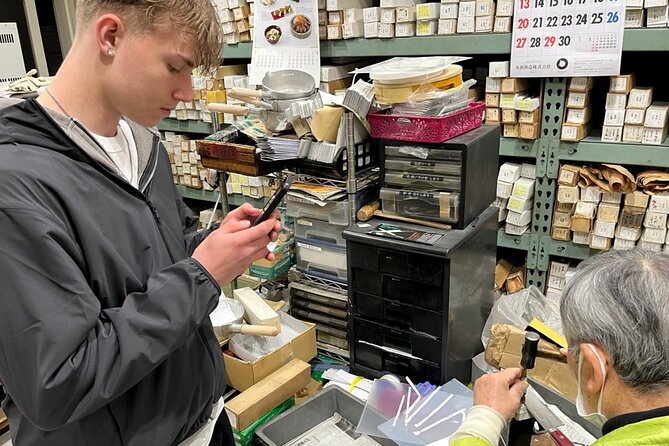
The final stop is Xavier Park, reached by a short walk from the workshop. The park recalls the European missionaries who came to Japan in the 16th century, including Francis Xavier.
This stop widens the story beyond samurai and Japanese tradition. Sakai was connected not only to domestic trade but also to encounters with people arriving from far beyond Japan. That makes Xavier Park a fitting ending after the earlier discussion of commerce and exchange.
The information provided does not promise a long visit or a major monument tour here. Think of it as a concise historical stop that adds an international layer to the day. If you enjoy seeing how local history connects with wider events, you will appreciate the change of focus. If your main interest is knives and tea, this will probably feel like a shorter add-on rather than the central attraction.
After Xavier Park, you walk back to the meeting point, where the activity ends.
What the $379 price covers in practical terms
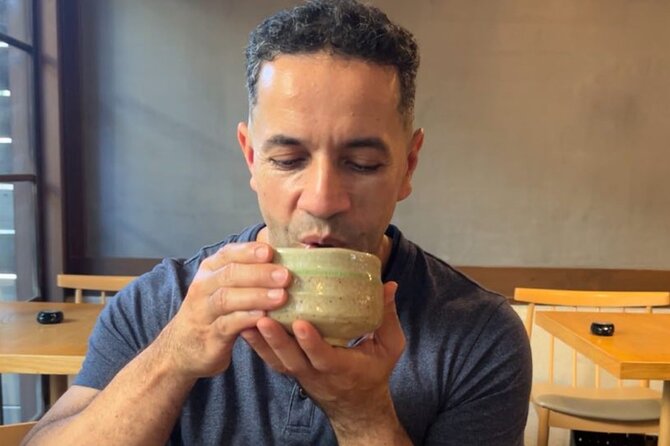
At $379 per person, this is not a budget walking tour. The value depends on how many parts of the experience you would normally book separately.
You are paying for a private guide, a five-hour program, a seasonal multi-course lunch, a tea ceremony, a workshop visit, and a personalized engraved blade. The combination is unusual. A standard food tour might not include the tea ceremony or craft session, while a knife workshop alone would not give you the same historical route through Sakai.
I would consider the price reasonable for someone who places a high value on personal guidance and a lasting handmade item. It is harder to justify if you are mainly seeking sightseeing or the lowest-cost way to see Sakai. The private format also matters more for couples, families, or small groups who want the day shaped around their own questions and pace.
The two strongest value points are the personalized knife and the human scale of the tour. Junya’s friendly style helps turn the history into a conversation, and the ability to adjust the meal is useful if your tastes differ from the standard menu.
Who will enjoy this five-hour Sakai experience
I would recommend this tour most strongly to you if you enjoy:
- Japanese food and seasonal dining
- Traditional arts and workshops
- Samurai-era history and local stories
- Small private tours rather than large group outings
- Souvenirs with a real connection to the place
- A slower cultural activity such as a tea ceremony
Families with older children may also like the knife-making section, though the provided information does not give an age requirement. You should confirm suitability for children before booking if that is important to your group.
This is less suitable if you want a fast list of famous sights, dislike formal cultural customs, or have no interest in owning a knife. It may also be a poor match if your schedule cannot handle a fixed five-hour outing beginning at 10:50 a.m.
The tour’s tone appears especially well suited to people who want history without a heavy academic lecture. Junya’s approach is described as fun and educational, and that balance is one of the experience’s strongest features.
Practical details to keep in mind
Confirmation is provided at booking, and you can use a mobile ticket. The activity is near public transportation, begins at the Sakai Station East Exit taxi stand, and returns to the same meeting point.
The tour is non-refundable and cannot be changed for any reason. If you cancel or request an amendment, the amount paid is not refunded. That makes it important to check your date, meeting point, dietary needs, and group details before paying.
The published rating is based on only two written ratings, so I would not treat the perfect score as a broad statistical measure. Still, the specific praise is useful: the guide’s friendly manner, the chance to craft something with local heritage, and the clear history explanations are exactly the parts that give this tour its character.
Should you book this Sakai tour?
Book it if you want one carefully arranged day that ties together trade, food, tea, blades, and international contact. The engraved knife gives the experience a lasting physical result, while the private format and Junya’s flexible guiding style keep the day personal.
Skip it if $379 feels high for a half-day, if you want a full forging lesson, or if traditional food and tea ceremony do not appeal to you. For the right person, this is not just a Sakai sightseeing loop. It is a practical way to understand the city through the objects and customs that shaped it.
FAQ
Where does the tour begin?
It begins at 堺駅東口タクシー乗り場3, the Sakai Station East Exit taxi stand, at 3 Chome Ebisujimacho, Sakai Ward, Sakai, Osaka 590-0985, Japan.
What time does the tour start?
The start time is 10:50 a.m.
How long does the activity last?
The tour lasts approximately five hours.
Where does the tour end?
The activity ends back at the meeting point.
Is this a private tour?
Yes. Only your group participates in the activity.
Is lunch included?
The itinerary includes a multi-course lunch at Ume-no-Hana, a restaurant known for seasonal kaiseki cuisine.
Are vegan meal options available?
Yes, vegan options are available at lunch.
Can I take home a personalized knife?
Yes. At Sakai Tōji, you take part in a knife handle fitting experience and take home your own engraved, personalized blade.
Fresh tea listings around Osaka
- Osaka:Zen Tea Ceremony and Foot Bath Experience<45min>★ 5.0 · 7 reviews
- Nara Deer Park, Uji Matcha, & Hot Spring Full-Day Tour from Osaka★ 4.0 · 21 reviews
- Osaka: Tea Ceremony, Calligraphy, and Kimono Experience★ 5.0 · 6 reviews
- Osaka: Nara, Todaiji, Uji Matcha, and Hot Spring Tour★ 4.0 · 7 reviews
- Discover Japanese Tea Blending Techniques in Osaka★ 5.0 · 19 reviews
- Osaka Japanese Cooking And Matcha Class near Osaka Castle★ 5.0 · 22 reviews
- Craft Sushi and Matcha Ice Cream in Central Osaka (3-Course Meal)★ 5.0 · 2 reviews
- Tea and Calligraphy Session at a Table in Osaka★ 5.0 · 4 reviews
Kimono & Tea Ceremony, compared.
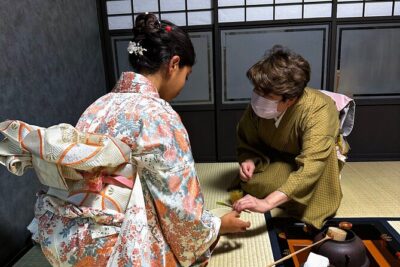
KYOTO Tea Ceremony with kimono near by Imamiya Jinjya Shrine
Read our review →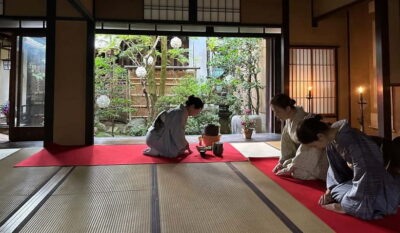
Kyoto: Kimono and Tea Ceremony Experience at Cultural Asset
Read our review →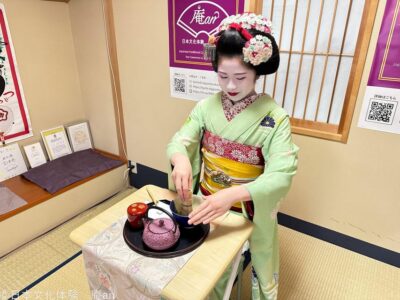
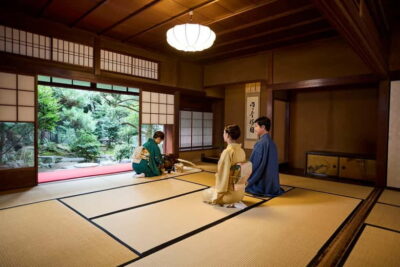
Kyoto: Kimono Tea Ceremony with Matcha and Sweet
Read our review →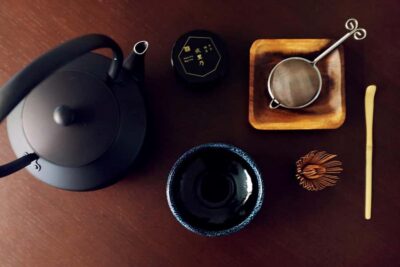
Browse the lists this tour appears in