
Review · HALF-DAY
Half-Day Zenkoji Tour with Tea Experience
Nagano’s spiritual side comes into focus through three very different tastes: smoky sake, warm oyaki dumplings, and freshly whisked matcha. The heart of the tour is Zenkoji Temple, where your English-speaking guide explains Buddhism in Japan and leads you through a goma prayer fire ceremony.
I like the compact group size, capped at eight people, and the way food is tied to place rather than treated as a separate add-on. I also like the clean route from Nagano Station to the brewery, temple, and tea house. The main caution is simple: you will walk, and the tour is not a good fit if you want a relaxed, mostly seated afternoon.
Key points to know before booking
- Three sides of Nagano in four hours: taste local food and sake, visit Zenkoji, then make matcha.
- A small group of eight or fewer: this gives you a better chance to hear the guide and ask questions.
- Two oyaki dumplings serve as a simple lunch: useful, but not enough for anyone expecting a full meal.
- The goma prayer fire ceremony is included: a valuable part of the Zenkoji visit, not just a quick temple photo stop.
- Start at 12:15 pm at Nagano Station: the tour ends at Patio Daimon, not back at the station.
- Walking matters: the short route between the brewery and temple is convenient, but the full outing involves time on foot.
A short route with a strong sense of place
This half-day tour works because it does not try to cover all of Nagano. Instead, it links three local customs that are easy to miss if you visit on your own: fermented foods, temple worship, and tea preparation.
You meet at Nagano Station at 12:15 pm. From there, the route moves toward Ogawanoshodaimonten, a local stop for oyaki and sake. Zenkoji Temple comes next, followed by a tea experience at Patio Daimon. The listed activities take about three hours and 35 minutes, with the full tour lasting roughly four hours.
That timing is useful if you have only one afternoon in Nagano. You get a clear introduction without giving up an entire day. It also means the pace is fairly purposeful. You are not signing up for long periods of free time at each stop.
The maximum group size is eight. That is a practical advantage at a temple, where a guide speaking to a large crowd can make the visit feel distant. With fewer people, you should have an easier time staying close to the guide and following explanations during the prayer ceremony.
More Half-Day Trips in Japan:
- Half-Day Private Trip to Waterfalls and Tea Factory
★ 5.0 · 30 reviews - Half-Day Hangzhou Yunxi Bamboo Forest and Tea Plantation Experience
★ 5.0 · 22 reviews - Half-day Private Mahjong course in Local Tea House
★ 5.0 · 16 reviews
Oyaki and sake at Ogawanoshodaimonten
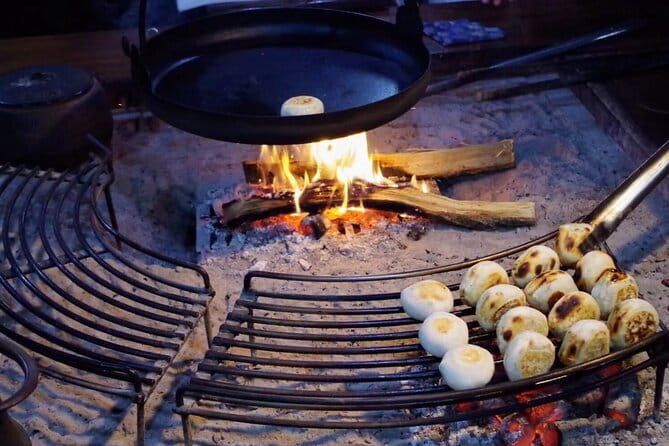
The tour begins with oyaki, one of Nagano’s most useful foods for a short sightseeing day. These dumplings are made with fermented buckwheat dough and rice powder, then filled with vegetables, fruit, or anko bean paste. Two oyaki are included as a simple lunch.
Do not expect a long restaurant meal. The food is meant to give you a taste of a local staple and keep you going through the temple visit. I like this arrangement because oyaki is closely tied to the region, and the dumplings are more revealing than a generic sandwich or boxed meal.
The filling can make a big difference. Vegetable versions are hearty and savory, while anko gives you a sweet finish. Since the available flavors are not specified, you should treat the selection as part of the day rather than plan around one particular filling.
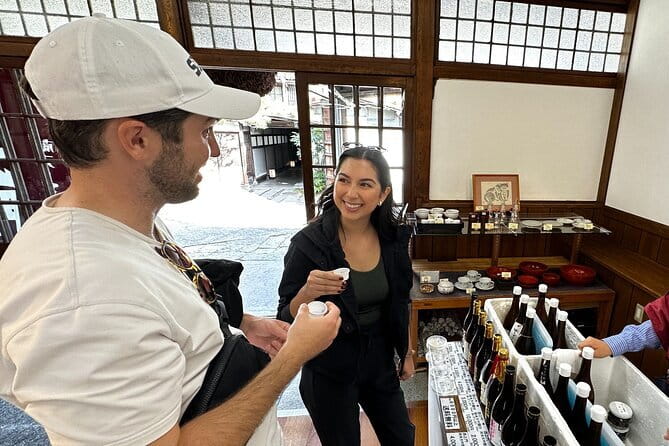
The same stop includes a sake tasting at a local brewery. This adds a second look at fermentation, but in a very different form. Oyaki is humble, filling food. Sake brings in the careful craft of brewing and the drinking culture connected with Japanese meals and ceremonies.
The tasting is included, but additional drinks and snacks are not. If you need a larger lunch, plan to eat before or after the tour. The provided food is best understood as a sample and light meal, not a full dining experience.
This first stop lasts about one hour, including the food and sake. That is enough time to taste without letting the opening stretch into a long culinary session. It also leaves the main part of the afternoon for Zenkoji.
Zenkoji Temple and the goma prayer fire
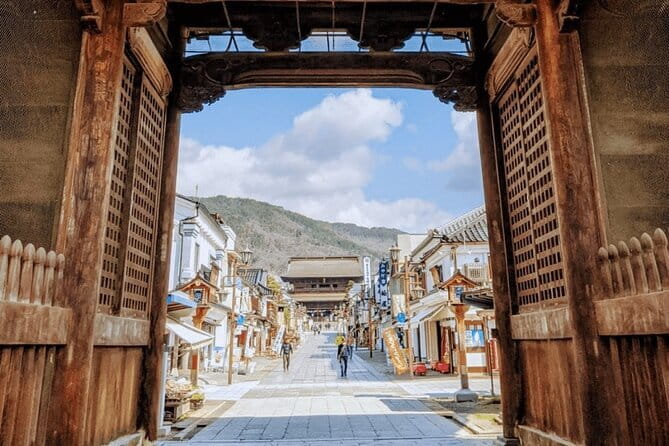
Zenkoji is the main reason to choose this tour over a simple food walk. The temple is only a short walk from the brewery, so the route feels connected rather than stitched together by transport.
Your guide leads the visit and explains the temple’s story, its religious role, and the place of Buddhism in Japan. The wording of the tour promises an enjoyable introduction rather than a lecture, which suits a first visit. You get context for what you are seeing instead of simply moving through the grounds and taking pictures.
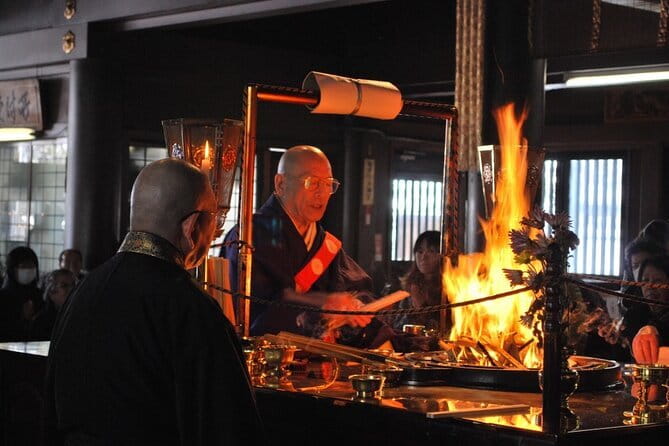
The included goma prayer fire ceremony gives the temple visit extra weight. Goma is a Buddhist fire ritual in which prayers are offered through a sacred flame. The ceremony makes the visit feel active and religious, not just historical.
That distinction matters. Zenkoji is not presented as an old building to admire from outside. The tour gives you a chance to see how worship fits into the site and why temples remain part of daily spiritual life in Japan.
The temple portion lasts about one hour and 50 minutes, making it the longest stop. That is a good balance. You have enough time for explanation and the ceremony, but you are not locked into a full-day temple program.
I would pay attention to the guide’s explanations here. The value of Zenkoji is not only in the architecture. Without context, a large Japanese temple can become a blur of gates, roofs, incense, and statues. A guide helps you connect those details to Buddhist practice.
The trade-off is that a guided temple visit gives you less freedom to set your own pace. If you prefer to linger at one spot, wander alone, or spend most of your time taking photographs, the fixed schedule may feel tight. The tour is designed for understanding the place, not for unstructured exploration.
Making matcha at Patio Daimon
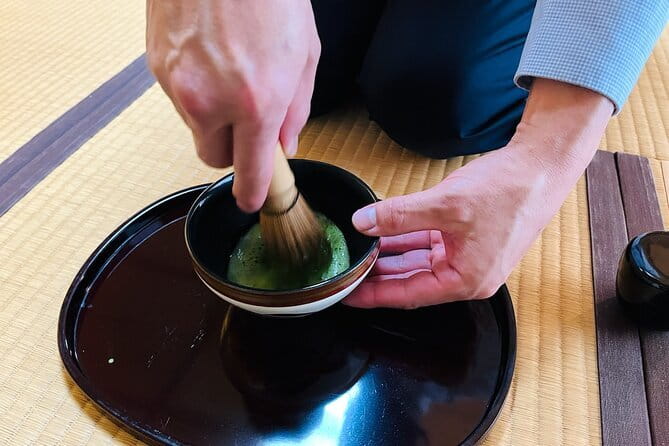
The final stop moves from temple worship to the formal art of tea. At Patio Daimon, you make your own matcha and learn about the performance and customs connected with this Japanese experience. Traditional sweets are included with the tea.
This is a hands-on finish, which gives the afternoon a different rhythm. At Zenkoji, you listen and observe. At Patio Daimon, you take part. Making matcha also gives you a better sense of the care behind a drink that can look simple when served by someone else.
The tea portion lasts about 45 minutes. That is long enough to learn the basic process without turning the final stop into an extended class. You should expect guidance rather than advanced tea training.
The sweets matter, too. Matcha can have a strong, bitter flavor, and traditional sweets help balance it. Together, the tea and sweets offer a small lesson in contrast, texture, and presentation.
I like ending here. The tour begins with everyday food, moves into formal religious practice, and closes with a carefully prepared drink. You finish with a quiet activity rather than another crowded sightseeing stop.
The end point is Patio Daimon, at 54 Daimoncho, Nagano. Since the tour does not return you to Nagano Station, take a moment before booking to consider your next stop. The end location is part of the plan, not a minor detail.
More tea experiences around Japan if you are still choosing
- Kyoto: Tea Ceremony in a Traditional Tea House in Kiyomizu
★ 4.9 · 3,519 reviews - Kyoto: Tea Ceremony Ju-An at Jotokuji Temple
★ 4.9 · 3,207 reviews - Kyoto: 45-Minute Tea Ceremony Lesson Experience
★ 4.3 · 2,378 reviews - World Heritage Kyoto & Nara Uji Authentic Matcha Experience
★ 5.0 · 1,573 reviews
What the $121.50 price gives you

At $121.50 per person, this is not a cheap way to see Zenkoji. The value comes from the combination of a small group, a guide, food, sake, a temple visit, a prayer ceremony, and a tea activity.
If you only want to enter Zenkoji and walk around, you can spend less by visiting independently. The tour earns its price through interpretation and structure. You are paying for someone to connect the brewery, temple, and tea house into one readable afternoon.
The included items are substantial:
- An English-speaking guide
- A guided Zenkoji visit
- The goma prayer fire ceremony
- Two oyaki dumplings
- Sake tasting
- Matcha and traditional sweets
- The tea-making activity
- A mobile ticket
Transport to Nagano is not included. That specifically includes the Shinkansen, or bullet train, to and from Nagano City. If you are coming from Tokyo or another city, add that cost to your budget.
Additional food, snacks, and drinks are also excluded. The two oyaki are helpful, but I would not count on them as a large lunch if you arrive hungry. The price makes more sense for someone who wants several organized cultural activities in one afternoon than for someone focused on the lowest possible cost.
Walking, timing, and group size
The tour starts at Nagano Station at 12:15 pm. That late-morning-to-afternoon timing can work well after a morning train arrival or a separate morning activity. It is less useful if your train reaches Nagano late, since the start time is fixed.
The route is near public transportation, and the meeting point is at the station. That simplifies the start. You do not need to find a remote hotel pickup point or arrange a taxi to the first stop.
You should still wear comfortable shoes. One person specifically noted that the tour is not a good choice if you dislike walking, and that is sensible advice. The stops are close enough to connect on foot, but the visit includes movement between locations and time standing or walking at Zenkoji.
The activity is listed as suitable for most people. That is broad guidance, not a promise that it will suit every mobility need. If walking or standing is difficult for you, check the route with the provider before booking.
A maximum of eight people is one of the strongest practical features. Small groups usually make it easier to hear temple explanations and follow instructions during the tea session. It also keeps the food and tasting stops from feeling like a large organized group outing.
Who will get the most from this tour
I would choose this tour if you have one day or less in Nagano and want more than a quick temple visit. It gives you food, drink, religion, and a hands-on cultural activity without requiring a full-day commitment.
It suits first-time visitors who want an English-speaking guide to explain what they are seeing. It also fits people who like a clear schedule and prefer not to work out the best order of stops themselves.
Food-curious visitors will appreciate the oyaki and sake, especially if they want regional items rather than familiar Japanese restaurant fare. The tea session will appeal to anyone who enjoys learning by doing.
This is less suitable for you if your main goal is shopping, photography, or a long private visit inside Zenkoji. It is also not ideal if you need a full lunch, dislike walking, or want transport costs bundled into the tour price.
The tour has a cultural focus rather than a thrill-seeking one. Its best moments are likely to come from small details: the flavor of a filling, the sound and movement of a prayer ceremony, or the process of whisking matcha correctly.
Booking details worth keeping in mind
You receive confirmation at booking, and the ticket is mobile. The experience has free cancellation if you cancel at least 24 hours before the scheduled start time. Cancellations made less than 24 hours ahead are not refundable, and changes inside that window are not accepted.
Availability can affect particular activities. If a listed part of the program cannot operate on your date, the provider may contact you about a suitable adjustment. That is worth remembering if the goma ceremony or tea session is the main reason you are booking.
The tour is commonly booked well ahead, with an average booking time of 54 days before the activity. With only eight places available, advance planning is sensible, especially if your Nagano visit falls during a busy period.
Should you book the Zenkoji afternoon?
Book it if you want a guided introduction to Nagano that joins local food with religious and tea traditions. The strongest reasons are the small group, the included goma prayer fire ceremony, and the fact that you make your own matcha rather than simply watch someone serve it.
Skip it if you want the cheapest temple visit, a large meal, or a slow afternoon with little walking. At $121.50, the tour is priced for a bundled cultural experience, not a basic attraction ticket.
For the right person, it is an efficient and thoughtful way to meet Nagano: two oyaki, a sake tasting, a major Buddhist temple, and a cup of matcha, all before dinner.
FAQ
Where does the tour start?
It starts at Nagano Station in Kurita, Nagano, at 12:15 pm.
Where does the tour end?
The tour ends at Patio Daimon, located at 54 Daimoncho, Nagano.
How long does the experience last?
The tour lasts approximately four hours.
Is transportation to Nagano included?
No. Transport fees, including the Shinkansen or bullet train to and from Nagano City, are not included.
What food and drinks are included?
The tour includes two oyaki dumplings, a sake tasting, matcha, and traditional sweets served with the tea experience.
Is the Zenkoji prayer ceremony included?
Yes. The guided Zenkoji visit includes a goma prayer fire ceremony.
How many people can join the tour?
The tour has a maximum of eight travelers.
Fresh tea listings around Japan
- Yokohama : Tea Ceremony with Sweets and Souvenir★ 5.0 · 5 reviews
- Walking Tour: Yanaka,Nezu& Sendagi: Tea Ceremony & Old Tokyo★ 5.0 · 3 reviews
- Visit local home for music and tea ceremony near Disney★ 4.9 · 13 reviews
- Yokohama: Sushi & Gyoza Cooking with Matcha & GreenTea Experience★ 5.0 · 3 reviews
- Trip to Kamakura & Enoshima: Shrines, Seaside, Temples &Tea★ 5.0 · 11 reviews
- Uji: Private immersion into Kyoto’s tea and reglious culture★ 5.0 · 17 reviews
- Uji Tea Ceremony and UNESCO Heritage Walking Tour★ 5.0 · 20 reviews
- Kyoto tea town for matcha lovers★ 5.0 · 16 reviews
Half-Day, compared.
Half-Day Private Trip to Waterfalls and Tea Factory
Read our review →
Half-Day Hangzhou Yunxi Bamboo Forest and Tea Plantation Experience
Read our review →
Half-day Private Mahjong course in Local Tea House
Read our review →
Half-day Tour: Largest Tea Plantation & Amazing Xianggong Hill
Read our review →
Half-Day Hangzhou Private Tour with Green Tea Village and Lingyin Temple
Read our review →
Private Half-Day Tea Village Discovery with lunch in Yogyakarta
Read our review →Browse the lists this tour appears in