
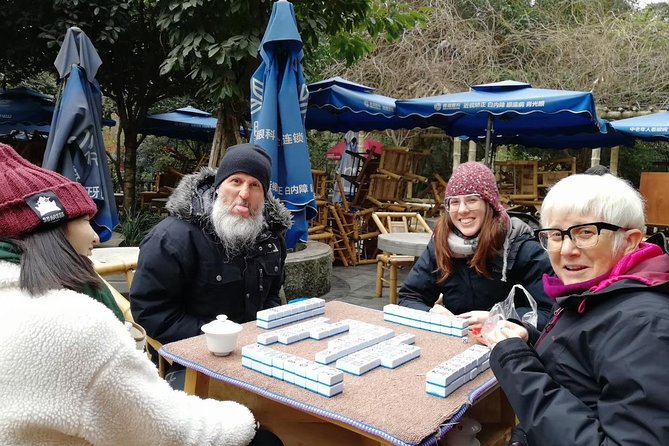
Review · CHENGDU TEA TOURS
Half-day Private Mahjong course in Local Tea House
Chengdu’s food culture and mahjong tradition come together in this small private outing. You start with a local spice market, then move to a cozy tea room where an English-speaking guide explains the rules of mahjong, a tile game often compared to gin rummy. The market visit gives the game a useful cultural setting: you see the Sichuan ingredients that shape the city’s famous cuisine before sitting down to play.
I like the local neighborhood setting and the patient, personal teaching style reported by the guide Lance. I also like that a solo booking can still work, even though mahjong is normally played by four people. Hotel pickup, tea, snacks, and food tasting add real value to the $60 price.
The main thing to consider is the pace. Three hours is enough for an introduction, but not for a full study of Sichuan cooking or advanced mahjong strategy. The activity also ends back at the meeting point, so confirm the pickup and return details before you go.
Key points at a glance
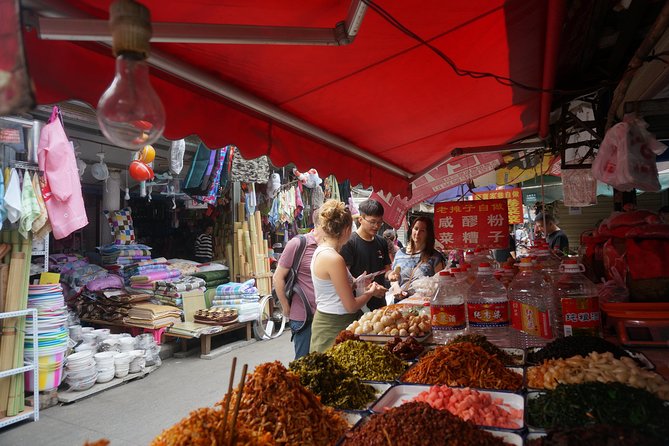
- A market before the mahjong table: See Sichuan spices and cooking ingredients in a working local market rather than only hearing about them in a classroom.
- Private instruction: Your group participates alone, giving the guide room to adjust the lesson to your experience.
- Solo-friendly format: A single participant can take part, even though mahjong normally needs four players.
- Tea-house atmosphere: Learn the game in a cozy room with Chinese features, alongside tea, snacks, and afternoon refreshments.
- Useful Chengdu context: The guide can point out local sights and explain food culture during the ride and market visit.
- Flexible cancellation: You receive a full refund if you cancel at least 24 hours before the start time.
A market lesson in Sichuan flavor
The tour begins with a visit to an authentic local spice market in Chengdu. This is not just a quick stop for photographs. Your guide introduces the spices and ingredients used in Sichuan cooking, helping you connect the strong flavors on your plate with the products sold in everyday food markets.
That context matters. Chengdu cuisine is famous for heat, but Sichuan cooking is not simply about adding more chili. The market gives you a chance to see the building blocks behind that flavor, including the different spices and ingredients used in local dishes. Since the tour includes food tasting, snacks, and drinks, you get more than a visual introduction.
I like this order. You first see ingredients in their natural setting, then move indoors for a cultural activity. It makes the mahjong lesson feel connected to Chengdu life rather than like a separate tourist class.
The market is also the part of the tour most likely to feel different from a standard city sightseeing route. You are taken into a less touristed area, and the experience focuses on how people shop and eat locally. Keep in mind that a food market can be active and informal. This is a guided visit, not a carefully staged culinary demonstration, so you should expect observation and explanation rather than a full cooking lesson.
More Half-Day Trips in China:
- Half-Day Hangzhou Yunxi Bamboo Forest and Tea Plantation Experience
★ 5.0 · 22 reviews - Half-day Tour: Largest Tea Plantation & Amazing Xianggong Hill
★ 5.0 · 9 reviews - Half-Day Private Trip to Waterfalls and Tea Factory
★ 5.0 · 30 reviews
Learning mahjong without feeling lost
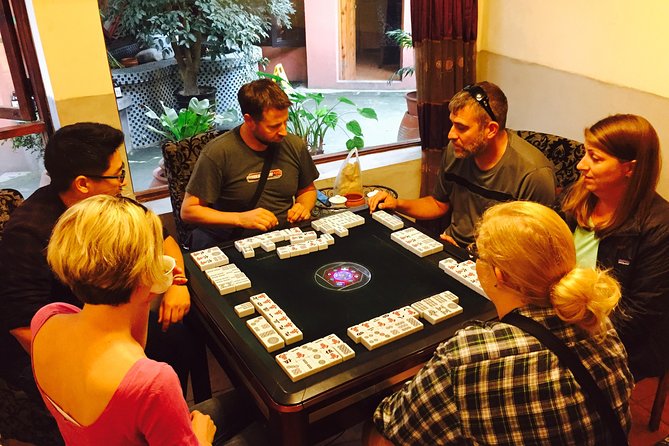
After the market, you go to a cozy room with Chinese-style details and begin the mahjong class. An English-speaking guide explains the basic rules in an easy way, then lets you test what you have learned through play.
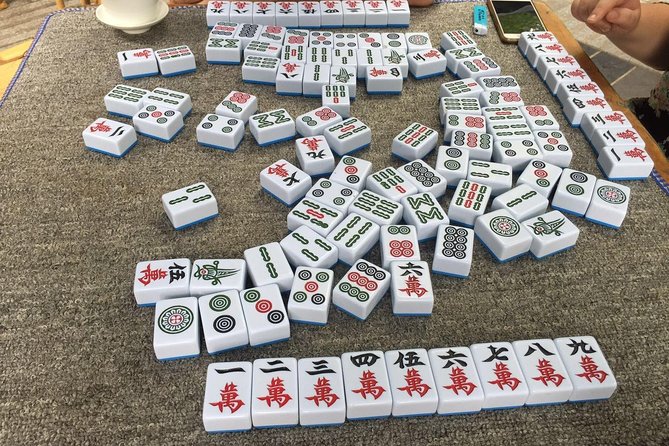
Mahjong can look confusing at first. The tiles, combinations, turn order, and scoring system are not obvious when you watch a local game from the outside. A private class helps because you can ask questions as they come up. You are not trying to follow a fast game among experienced players. You are learning the structure one step at a time.
The experience describes mahjong as a traditional game with similarities to gin rummy. That is a useful starting point, but you should not expect the two games to work in exactly the same way. The class is designed as an introduction, with the guide teaching rules and basic play rather than promising expert-level strategy.
One practical advantage is the private format. Only your group takes part, so the guide can spend time on points that cause trouble. If you are solo, the class can still go ahead. One participant described having a one-on-one session with Lance, who provided the market visit, tea, and mahjong instruction. Since a normal mahjong game usually needs four people, the exact play format may be adapted for smaller groups, so it is sensible to ask how your session will work if you are booking alone.
Tea, snacks, and a slower Chengdu afternoon
Tea is part of the setting, not an afterthought. You learn and play in a tea-house-style room, with coffee or tea, bottled water, afternoon tea, and snacks included. Food tasting is also part of the package.
This gives the class a relaxed rhythm. You are not rushing from one sight to another. After the market, you can sit down, handle the tiles, and focus on a social pastime that has long been part of daily life in China.
I especially like this for people who want a cultural activity with conversation. The game creates an easy reason to interact with the guide, and the small-group arrangement makes the session feel more personal than a large cooking or sightseeing class. The setting also works well if you are curious about local customs but do not want a lecture-heavy museum visit.
Still, tea-house atmosphere should not be confused with a full traditional tea ceremony. The information provided promises tea and a Chinese-style room, not a formal ceremony or detailed tea education. Food tasting and snacks are included, but this is not a complete meal. If you book it around lunchtime, plan another meal separately.
What the guide adds to the experience
The guide is central to the quality of this activity. Lance is named in the experience information and has handled hotel pickup coordination, market visits, local explanations, and mahjong teaching. One useful detail is that the operator may contact you soon after booking to clarify your hotel location. That can help avoid confusion in a city where pickup points and hotel names may not always be obvious in English.
During the drive, the guide may point out places you pass on the way to the market. This adds a little city orientation before the main activity begins. The strongest value, though, is the guide’s role as a bridge between the market and the game.
You should expect a friendly, personable teaching style rather than a formal academic course. The guide is described as patient and eager to show visitors the neighborhood. That matters with mahjong because the first lesson can feel intimidating if the instructor moves too fast.
The experience is private, but the guide is still the person who sets the tone. If you have a particular interest in food, local markets, or mahjong rules, raise it early. The three-hour schedule leaves some room for conversation, but it cannot cover everything in detail.
More tea experiences around China if you are still choosing
- One-Day Hangzhou Dragon Well Tea Culture & West Lake Private Tour
★ 5.0 · 98 reviews - Traditional Chinese Tea Ceremony Experience
★ 4.7 · 74 reviews - Beijing Culture: Tea Ceremony, Heritage Instrument & Calligraphy
★ 5.0 · 57 reviews - Tea Tasting and Pairing Concept Workshop
★ 5.0 · 57 reviews
Is $60 a fair price in Chengdu?
At $60 per person, this is not the cheapest way to spend an afternoon in Chengdu. You are paying for a private activity rather than a self-guided market walk or a casual tea-house visit.
The price includes several useful pieces: hotel pickup and drop-off, a professional guide, the market visit, mahjong instruction, tea or coffee, bottled water, snacks, afternoon tea, and food tasting. For a solo visitor, the value is stronger because the session can still run privately instead of requiring you to find three other players.
For a couple or family, the price buys convenience and a planned cultural exchange. You do not need to work out the rules yourself, locate a suitable local market, or arrange transport between stops. The group discount option may improve the value for larger bookings, though the exact discount is not specified.
The tradeoff is that the class is fairly focused. You are not getting a full-day Chengdu tour, a complete Sichuan cooking course, or an advanced mahjong workshop. I would judge the price favorably if you value personal instruction and local contact. If you only want to see a market or drink tea, you can likely spend less elsewhere, but you would lose the organized link between the two.
Timing, meeting point, and transport
The activity lasts about three to four hours, with the main class described as three hours. That makes it easy to fit into a Chengdu itinerary without giving up a full day.
Hotel pickup and drop-off are offered, which is useful if you are staying outside the immediate meeting area. The listed starting point is on Zhangjia Alley in Jinniu District, Chengdu, and the activity ends back at the meeting point. Because both hotel pickup and a fixed meeting point are listed, confirm the exact arrangement for your booking, especially if you are relying on transport back to your hotel.
The meeting area is near public transportation, and most people can participate. Children must be accompanied by an adult, and the minimum age is five. The activity is private, so only your own group takes part.
The operator averages bookings about 43 days ahead, which suggests that advance planning is sensible, especially if your Chengdu schedule is tight. Confirmation is provided at booking. You can cancel for a full refund up to 24 hours before the local start time, but cancellations or changes inside that window are not refunded or accepted.
Who will enjoy this Chengdu activity?
I would choose this for a first visit to Chengdu if you want something more personal than a list of major sights. It suits solo visitors particularly well because the guide can teach you directly, and the private structure avoids the awkwardness of joining a large class.
It also fits couples, families with older children, and small groups looking for an afternoon activity. Children from age five may participate with an adult, though young children may not have the patience for a tile game lasting several hours.
Food lovers will appreciate the spice-market introduction, but you should book this for cultural context rather than a full meal. Mahjong fans will enjoy learning the basics, but serious players should treat it as an introductory lesson, not a competition or advanced strategy course.
The experience may be less suitable if you prefer a fast sightseeing tour. The market and tea-house class are the point, so much of the time is spent looking, talking, and learning at a relaxed pace.
Should you book the mahjong and spice-market class?
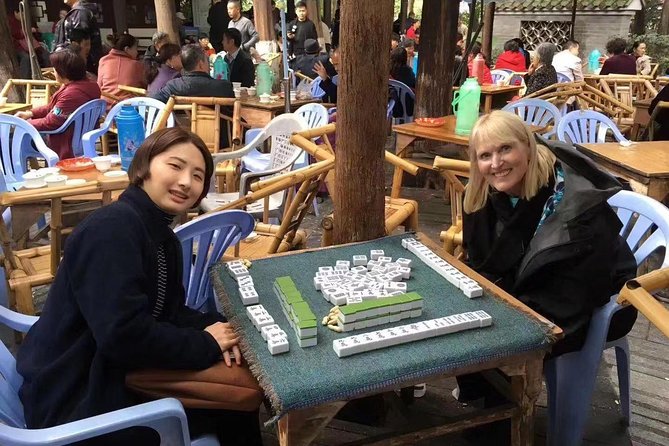
Book it if you want local food culture, a personal guide, and a hands-on tradition in one compact outing. The strongest reasons are the private format, the option for solo participation, the local market setting, and the relaxed tea-house lesson with Lance or another English-speaking guide.
I would skip it only if you want a substantial meal, a formal cooking class, or a full day of Chengdu sightseeing. For everyone else, $60 is reasonable when you count the transport, instruction, refreshments, and private attention. Confirm the pickup details, allow three to four hours, and arrive ready to learn a game that may take more than one round to understand.
FAQ
How long does the mahjong and spice-market experience last?
The experience lasts approximately three to four hours. The mahjong course itself is described as three hours.
Where does the activity start?
The listed meeting point is Zhangjia Alley in Jinniu District, Chengdu, Sichuan, China. Hotel pickup is also offered, so confirm the exact pickup arrangement when booking.
Where does the activity end?
The activity ends back at the meeting point.
Is hotel pickup and drop-off included?
Yes. Hotel pickup and drop-off are included in the experience.
Is this a private activity?
Yes. Only your group participates in the private tour or activity.
Can a solo visitor book this experience?
Yes. A solo participant can take part, even though mahjong is normally played by four people. The play format may be adapted for a smaller group.
What is included in the price?
The price includes an afternoon tea, bottled water, food tasting, a professional guide, hotel pickup and drop-off, snacks, and coffee or tea.
Can children participate?
Yes. The minimum age is five, and children must be accompanied by an adult.
What is the cancellation policy?
You can cancel at least 24 hours before the local start time for a full refund. Cancellations or changes made less than 24 hours before the start are not accepted and are not refunded.
Fresh tea listings around China
- Chongqing 1941 theatre: Tea Art Performance with Folk Art★ 3.8 · 8 reviews
- Beijing:Learn Calligraphy & Enjoy Kung Fu Tea Ceremony★ 5.0 · 2 reviews
- Beijing: Temple Of Heaven+Tai Chi Class+Tea Ceremony★ 5.0 · 8 reviews
- Beijing Hands-On Culture Tour: Tea, Instrument, Calligraphy★ 5.0 · 6 reviews
- Beijing: Chinese Culture Tea Ceremony Reservation Service★ 4.8 · 4 reviews
- Xi’an Noodle Making and Tea Tasting Experience★ 5.0 · 6 reviews
- Half-day Tour: Largest Tea Plantation & Amazing Xianggong Hill★ 5.0 · 9 reviews
- Xi’an Chinese Calligraphy Workshop: Ink Art & Tea Tasting★ 5.0 · 4 reviews
Chengdu Tea Tours, compared.

Leshan Buddha + Panda Base or Old Tea House Private Day Tour
Read our review →
Chengdu: Sichuan Opera Show ShufengYayun & Covered Bowl Tea
Read our review →
Experience Chengdu: Private Tea-Making Day Tour of Mengdingshan Tea Plantation
Read our review →Browse the lists this tour appears in