
Review · TEA PLANTATION & FARM TOURS
Experience Chengdu: Private Tea-Making Day Tour of Mengdingshan Tea Plantation
Mengdingshan gives you more than a pretty tea field. You follow the leaf from tea terrace to teacup, with a local farmer showing you how delicate leaves are picked, processed, and brewed. The setting also carries centuries of tea tradition, with cultivation here dating to the Western Han period.
I like the private format, especially the freedom to ask questions through your English-speaking guide. I also like the hands-on finish: you do not just sip tea, you make some and take it home. The main drawback is the travel time, about two hours each way from Chengdu, so much of your day goes to the road.
Key points at a glance
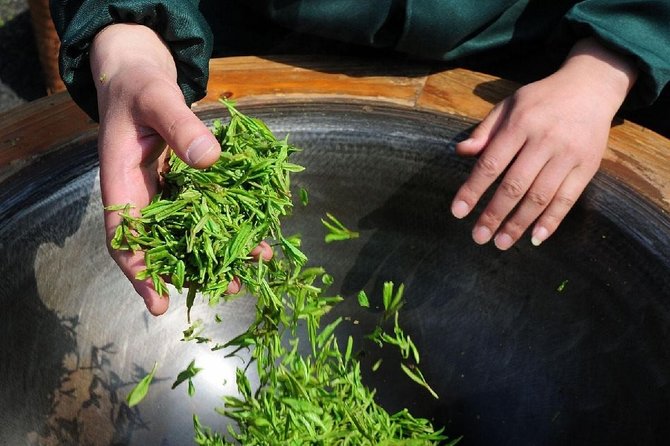
- Pick and process your own tea: Watch a leaf-picking lesson, collect leaves, and learn how they become finished tea.
- Meet a local farmer: The farming visit gives the day a personal link that a standard sightseeing stop cannot provide.
- Travel privately from Chengdu: Hotel pickup, a private air-conditioned vehicle, and drop-off keep the long drive simple.
- Eat lunch near the plantation: A traditional Chinese meal at a local restaurant breaks up the day and adds a local-food element.
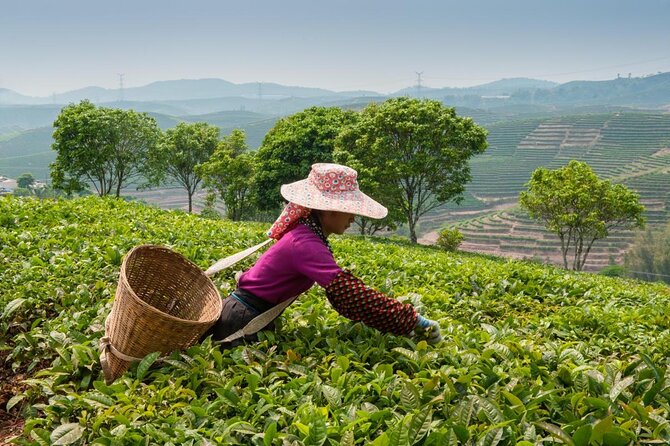
- See Mengdingshan’s tea terraces: The orderly fields are the visual heart of the outing, especially for anyone who enjoys rural scenery.
- Take home a useful souvenir: Your finished tea is lighter and more meaningful than a factory-wrapped gift.
Why Mengdingshan makes a good tea day
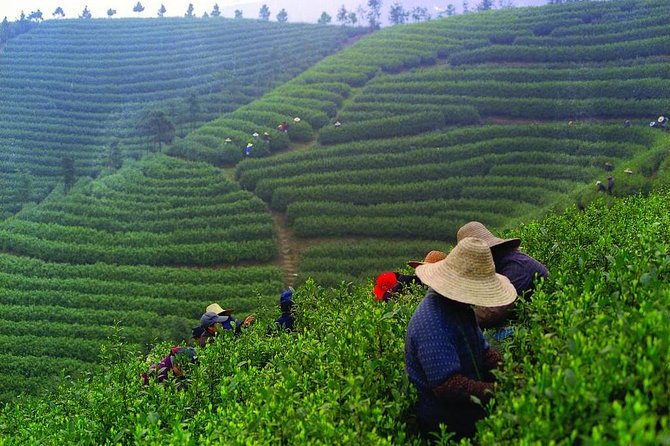
Tea is often presented to visitors as a finished product. Here, you see the work behind it. Mengdingshan is known as one of the earliest places associated with tea cultivation, dating back to the Western Han period. That gives the visit a sense of place instead of making it just another farm stop.
You begin with the broad setting: mountain air, rows of tea bushes, and terraces shaped for growing and picking. Then the focus narrows to the plant itself. Your guide points out different kinds of tea bushes and explains how the leaves are handled.
I like that the day connects scenery with a practical activity. You are not simply walking past green fields while someone recites facts. You are asked to notice the leaves, pick them carefully, and understand how small changes in handling affect the final drink.
The experience also works well for first-time tea visitors. You do not need to know the difference between tea types before arriving. The farmer demonstrates the work, and the guide translates and explains it as you go.
More Private Tea Experiences in China
- One-Day Hangzhou Dragon Well Tea Culture & West Lake Private Tour
★ 5.0 · 98 reviews - Beijing: Mutianyu Great Wall and Tea House Private Tour
★ 5.0 · 11 reviews - 1-day Village Tea Picking, Roasting & Serving Guided Private Tour from Hangzhou
★ 5.0 · 9 reviews
The two-hour ride from Chengdu
Pickup begins at about 9 a.m. at your Chengdu hotel. You travel in a private, climate-controlled vehicle, with an English-speaking guide accompanying you. The drive to Mengdingshan takes about two hours, so the journey is a meaningful part of the day rather than a short transfer.
That private ride is one of the tour’s practical strengths. You do not have to find a rural bus connection, arrange a separate taxi, or manage directions in an area outside Chengdu. Your guide can also talk about the region and explain what you will see before you arrive.
Guides have included Jenny and Coral, both noted for fluent English and a warm, local perspective. One guide, Coral, was paired with a driver named Jerry on a particularly well-regarded outing. Another guide, Jenny, has been praised for making the drive and lunch conversation useful as well as pleasant.
Still, be realistic about the timing. Four hours of round-trip driving leaves roughly three hours at the main destination, plus lunch and transitions. If you have only a short stay in Chengdu, compare this with closer city activities before booking.
The upside is that the private vehicle makes the distance manageable. You can relax on the way out and rest on the return instead of piecing together transport after a full day outdoors.
Lunch before the tea fields
Before heading into the plantation, you stop at a nearby local restaurant for a Chinese lunch. The meal is included, and the setting is described as rustic rather than formal.
This is a useful part of the schedule. Tea picking and walking through the fields are easier when you are not trying to fit lunch into the middle of the farm visit. It also gives you a chance to try local Chinese dishes in a setting connected to the surrounding area.
The meal is not presented as a cooking class or a carefully designed food tour, so keep your expectations in the right place. You should see it as a substantial regional lunch that supports the main tea activity.
Past tours have included a Sichuan-style home-cooked meal, a detail worth noting if you want more than a generic restaurant stop. Exact dishes can vary, and the provided information does not specify a fixed menu.
Walking into Mengdingshan’s tea terraces
After lunch, your guide leads you toward the plantation and introduces you to a local farmer. The walk brings you through the tea-growing area, with the terraces providing the main visual appeal.
The fields offer a calmer contrast to Chengdu. Instead of city streets, you get planted rows, mountain views, and the repeated shapes of tea bushes. For photographers, the terraces are likely to be the most rewarding part of the day, though the exact view will depend on weather and season.
Your guide explains the plantation’s place in tea cultivation and identifies different bushes along the route. This is where the tour gains much of its value. A guide can help you notice why the plants are grown in rows and what makes a leaf suitable for picking.
Weather matters here. The tour operates subject to favorable conditions, and the company may offer another date or a substitute tour if poor weather forces a cancellation. Even in good weather, this is an outdoor visit, so sensible walking shoes and clothing suited to the forecast are the practical choice.
The supplied information does not give a detailed accessibility assessment. Most people can take part, but the route includes walking through tea fields and terraces. If you have mobility concerns, ask the operator about the current path before paying.
More Tea Plantation Tours in China
- Half-Day Hangzhou Yunxi Bamboo Forest and Tea Plantation Experience
★ 5.0 · 22 reviews - Half-day Tour: Largest Tea Plantation & Amazing Xianggong Hill
★ 5.0 · 9 reviews - Qixianfeng Tea Plantation Tour in Yangshuo
★ 4.6 · 4 reviews
Picking leaves with a local farmer
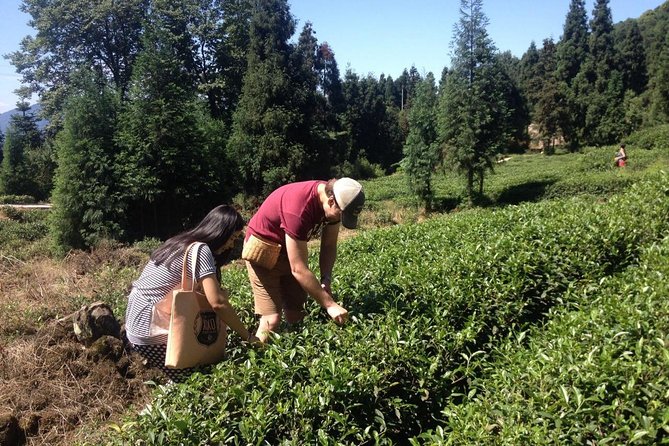
The farm visit becomes hands-on when the farmer demonstrates how to pick tea leaves. You then try it yourself, handling the young leaves with care.
This simple activity helps you understand why tea production is labor-intensive. The leaves are small and delicate, and picking them is not the same as gathering a handful of herbs. Your guide can explain the process in English while the farmer shows the physical technique.
You may also have the chance to collect tea flowers, an unusual detail included in one account of the day. That adds another small connection to the farm, though the exact activity may depend on the season and what is available during your visit.
The farmer is important to the experience. You are not only looking at an agricultural display prepared for tourists. You are meeting someone connected to the work, while your guide bridges the language gap and places the process in context.
This part suits curious adults, families with older children, and anyone who likes learning by doing. It may be less appealing if you want a fast sightseeing circuit with little walking or participation.
From fresh leaves to finished tea
After picking, you go to the factory or processing area to learn how the leaves become tea. The tour covers several types of tea and includes processing the leaves you picked.
The exact machinery and sequence are not specified, so you should not expect a technical factory tour with a fixed demonstration at every station. What you can expect is a guided explanation of the stages from fresh leaf to drinkable tea, followed by a chance to work with the product yourself.
This is the most educational section of the day. Tea looks simple in a cup, but the making process explains why different teas vary in color, aroma, and taste. Your guide translates the farmer’s instructions and helps connect the physical work with the tea you later taste.
You then brew and sample tea. Tasting is more useful after the farm lesson because you can link what is in the cup to the leaves and processing you have just seen.
Finally, you take tea home. This is a better souvenir than a standard purchase because you handled the leaves and followed their progress. Pack it carefully in your luggage, and you will have a small reminder of the day rather than a decorative object that sits unused.
What the private format is worth
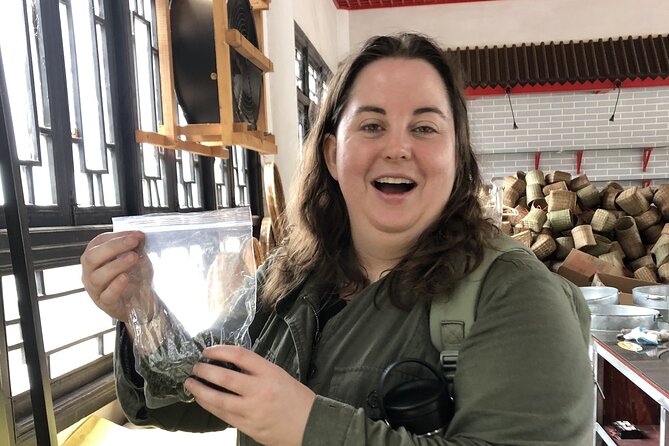
The price is listed at $240 per person. That is not a bargain for a simple countryside transfer, but the value changes if you use the full package: private hotel pickup and drop-off, a private vehicle, an English-speaking guide, plantation admission, lunch, tea making, tea tasting, and tea to take home.
You are paying for a full day outside Chengdu, not only for entry to a field. The private format is especially useful for two or more people who want to ask questions, set their own pace, and avoid joining an unknown group.
Group discounts are available, which can improve the per-person cost for families or friends traveling together. The tour is private, so only your group participates.
I would compare the price with the cost and hassle of arranging rural transport, a translator, a meal, and a farm visit separately. For a solo visitor, the amount is harder to justify. For a small private group with a strong interest in tea, the convenience and personal attention make more sense.
The most valuable element is not the admission ticket. It is the translation and interpretation. Without that bridge, the tea terraces would still be attractive, but you would miss much of the process and local context.
Who will enjoy this day most
I would choose this tour if you want a slower rural day after time in Chengdu’s busy center. It suits you if you like food, plants, photography, hands-on activities, and conversations with local people.
It is also a good match if you have already seen Chengdu’s main urban sights and want a different side of Sichuan. The tea fields offer a clear change of pace from pandas, markets, and city restaurants.
Families can enjoy the picking and tea-making portions, provided everyone is comfortable with the walking and long drive. Couples and small groups may appreciate the privacy more than solo visitors.
Tea specialists may find the process rewarding, but the tour is not described as an advanced technical workshop. You will learn the basic path from harvest to brewing, rather than receive professional training in tea production.
I would hesitate if your schedule is tight, you dislike long road journeys, or you want a packed sightseeing day with several major attractions. The tour has one main focus, and it gives that focus time.
Weather, timing, and useful planning notes
The start time is about 9 a.m., and the full outing lasts roughly six to eight hours. The return trip to Chengdu takes about two hours, so you should keep the evening flexible rather than schedule a time-sensitive activity immediately afterward.
Weather can affect the plan. If conditions are poor, you may be offered another date or a substitute experience of equal value. Confirm the arrangement before departure if the forecast looks unsettled.
Wear practical shoes for walking through the plantation. The tour includes fields, terraces, and an outdoor setting, so comfort matters more than dressing formally for lunch.
Hotel pickup and drop-off are included, which removes one of the day’s biggest uncertainties. Confirmation is provided when you book, and free cancellation is available until 24 hours before the local start time. Changes or cancellations inside that window are not accepted for a refund.
Should you book the Mengdingshan tea tour?
Book it if you want to understand how tea is made, not just drink it. The strongest parts are the private transport, the local farmer, the clear English guidance, the tea terraces, and the chance to take home tea you helped process.
The long drive is the fair trade-off. You spend about four hours on the road for a focused countryside experience that lasts only part of the day. For a small group with enough time in Chengdu, that exchange can be worthwhile. For a solo visitor or anyone seeking the lowest-cost excursion, it may not be.
One extra option is worth asking about: a past arrangement combined Mengdingshan with the Bifengxia Panda Centre. That is not part of the standard experience described here, but the operator has accommodated such a plan before. Confirm availability before booking, since it could change the timing and price.
FAQ
How long does the Mengdingshan tea tour last?
The experience lasts approximately six to eight hours, including the drive from Chengdu and the return journey.
What time does the tour start?
The scheduled start time is 9:00 a.m.
Is hotel pickup included?
Yes. Private hotel pickup and drop-off in Chengdu are included.
Is transportation private?
Yes. You travel in a private, comfortable, air-conditioned vehicle, and only your group takes part in the activity.
Is lunch included?
Yes. Lunch at a local Chinese restaurant is included in the tour.
What will I do at the tea plantation?
You will meet a local farmer, walk through the tea terraces, watch a leaf-picking demonstration, pick leaves yourself, learn how tea is processed, and taste tea.
Can I take tea home?
Yes. Tea making, tea tasting, and tea to take home are included.
What happens if the weather is poor?
The tour is subject to suitable weather. If it is canceled because of poor conditions, you can be offered another date or a substitute tour of equal value.
Fresh tea listings around China
- Chongqing 1941 theatre: Tea Art Performance with Folk Art★ 3.8 · 8 reviews
- Beijing:Learn Calligraphy & Enjoy Kung Fu Tea Ceremony★ 5.0 · 2 reviews
- Beijing: Temple Of Heaven+Tai Chi Class+Tea Ceremony★ 5.0 · 8 reviews
- Beijing Hands-On Culture Tour: Tea, Instrument, Calligraphy★ 5.0 · 6 reviews
- Beijing: Chinese Culture Tea Ceremony Reservation Service★ 4.8 · 4 reviews
- Xi’an Chinese Calligraphy Workshop: Ink Art & Tea Tasting★ 5.0 · 4 reviews
- Qixianfeng Tea Plantation Tour in Yangshuo★ 4.6 · 4 reviews
- 3 hours Xi’an Mahjong Class with Local Tea★ 5.0 · 2 reviews
Tea Plantation & Farm Tours, compared.

From Taipei: Thousand Island Lake and Pinglin Tea Plantation
Read our review →
Active Volcano, Rice Field, Hot Spring, Fruit market, Tea Plantation with Lunch
Read our review →
Furnas: Tea Plantations, Lake and Volcano Guided Tour
Read our review →
São Miguel: Furnas Volcano & Tea Plantation Tour with Lunch
Read our review →
Furnas Volcano & Tea Plantation With Traditional Lunch, East Tour
Read our review →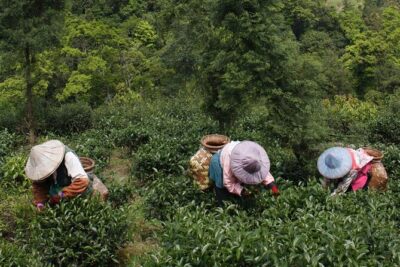
Thousand Island Lake and Pinglin Tea Plantation from Taipei
Read our review →
Furnas: Volcano Wonders, Tea Plantation & Waterfall Tour
Read our review →Browse the lists this tour appears in