
Review · TEA CEREMONY EXPERIENCES
Kyoto Private Tea Ceremony at a Japanese Inns
Kyoto’s temples may close after dark, but this candlelit tea ceremony keeps the city’s cultural life going. Inside a traditional inn, you’ll use a normally private 20-tatami banquet room for a compact program that mixes ceremony, photos, meditation, and hands-on matcha making. The dark room and flickering candles give the evening a theatrical touch without turning it into a stage show.
I like the small private format, limited to your own group of two to six people. I also like the practical welcome for international families: translator devices let you ask questions in your own language, and staff help with photographs. The main consideration is time. At about 59 minutes, this is an introduction to tea ceremony rather than a long, highly formal study of it.
Key points to know before booking
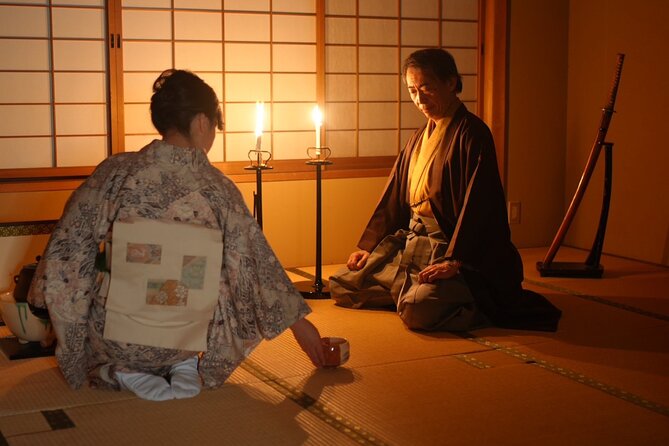
- Candlelit setting: The ceremony takes place after dark in a private 20-tatami room inside a long-established Kyoto inn.
- Four-part program: Expect kimono photos, four minutes of Zen meditation, a 20-minute demonstration, and 20 minutes of matcha whisking.
- Private group: Only your party participates, with group sizes from two to six people.
- Easy communication: Translation devices are available, so Japanese language ability is not required.
- Family-friendly pricing: Adults are listed at ¥15,000, while children under 15 are ¥3,000.
- Flexible cancellation: Cancel at least 24 hours before the start time for a full refund, subject to the stated weather and minimum-group conditions.
A Kyoto evening inside a private ryokan room
The setting does much of the work here. Rather than visiting a large public attraction, you enter a traditional Kyoto inn and use a 20-tatami banquet room that is normally closed to the public. A tatami room of this size gives the ceremony room to breathe, while candlelight changes the mood from ordinary sightseeing to something quieter and more focused.
This is especially useful if you have already spent the day moving between temples. Kinkaku-ji, Ginkaku-ji, and Kiyomizu-dera are major daytime sights, but they do not provide the same kind of evening activity once they close. Here, you get a short cultural program that fits neatly after dinner or between other nighttime plans.
The experience is private, not a large shared demonstration. That matters because you can ask questions, pose for photographs, and take your turn with the tea utensils without competing with a crowd. The group limit of two to six people also suits couples, families, and small friend groups.
The room’s candlelight is atmospheric, but you should not expect a museum-like presentation with every historical detail explained at length. The program is designed to let you participate. If you want a formal lesson lasting several hours, this will feel brief. If you want a clear first look at Japanese tea culture in less than an hour, the timing is useful.
More Private Tea Experiences in Japan
- Private Tea Ceremony and Sake Tasting in Kyoto Samurai House
★ 5.0 · 163 reviews - Kyoto: Private Tea Ceremony with a Garden View
★ 4.9 · 61 reviews - Kyoto Private Tea Ceremony with Tea Master at Home
★ 5.0 · 58 reviews
The first 15 minutes: kimono, haori, and photographs
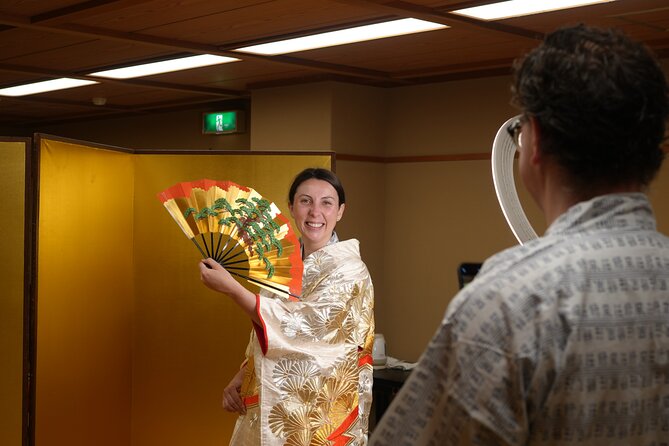
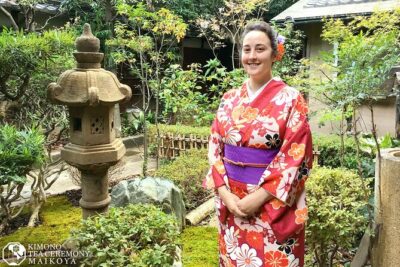
The experience begins with dressing and photography, which takes about 15 minutes. Women can wear a bridal uchikake, while men can wear a haori. Traditional props include folding fans and swords, and staff provide professional lighting while helping with photographs.
This opening section gives the activity a playful side. You are not simply sitting and watching tea preparation. You get a visual introduction to Japanese clothing and can take home photographs that show the setting and costumes clearly.
For families, this may be the most immediately enjoyable part. Children who are less interested in the quiet rules of tea ceremony can take part in the costume session first. The sword and fan props add a little theater, though you should think of them as photo accessories rather than a historical weapons demonstration.
The photography also solves a common problem with cultural activities: trying to manage a phone while wearing unfamiliar clothing or sitting in a formal room. Staff assist with taking pictures, so you can focus on posing and on being present with your group.
There is a practical limit here. Fifteen minutes is enough for a short costume session and a set of photographs, but not for a full dressing service with extensive styling. If clothing and portrait photography are your main reason for booking, keep your expectations focused on a quick, guided photo opportunity.
Four quiet minutes of Zen meditation
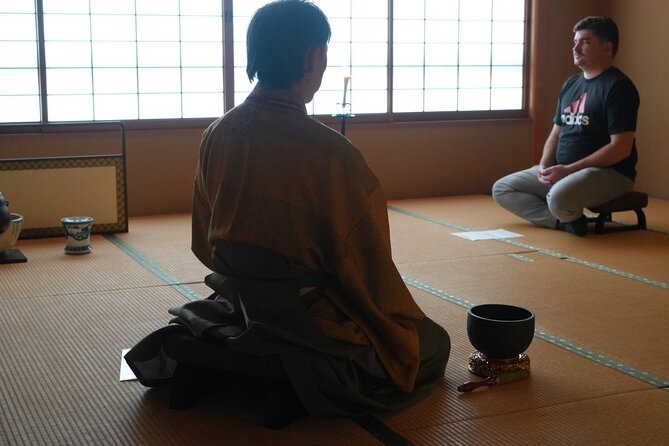
After the photographs, you spend about four minutes in Zen meditation. That may sound short, and it is. Still, the pause gives the program a useful rhythm before the tea demonstration begins.
The meditation is intended to settle the room and your attention. In a candlelit space, even a few quiet minutes can help you shift away from the noise of central Kyoto. You do not need prior meditation experience, and the short duration makes this manageable for children or first-time participants.
I see this as a transition rather than a full Zen lesson. You will not receive an extended introduction to Buddhist practice in four minutes. Instead, the activity uses a brief period of stillness to prepare you for the deliberate movements that follow.
That small change of pace is one of the program’s better choices. Without it, the ceremony could feel like a quick succession of costumes, tea, and photographs. The meditation reminds you that tea ceremony is also about attention, restraint, and the way a host welcomes people into a shared space.
The 20-minute tea ceremony demonstration
The central demonstration lasts about 20 minutes. You are welcomed as a participant, watch the preparation of matcha, receive a bowl of tea, and see how a traditional tea gathering unfolds.
Tea ceremony is not just a matter of drinking powdered green tea. The order of movements, the handling of utensils, and the manner of serving all matter. Even in a short introduction, you can notice that the ceremony values calm, care, and respect between host and guest.
The hosts, Matsuda and Mayumi, are named as the people behind the experience. Their warm, friendly approach is a key part of the program’s appeal. The use of translator devices means the conversation does not depend on one language, and children can ask questions in their own language.
That translation support is more important than it may first appear. Tea ceremony has unfamiliar objects and customs, and a silent demonstration can leave you wondering what you are seeing. A device that lets you ask questions helps connect the movements to their meaning.
You should not expect every rule of tea ceremony to be covered in 20 minutes. The format gives you a guided taste, not a complete education in tea schools, seasonal utensils, or the long history of the practice. For most first-time visitors, that is a reasonable tradeoff. You get enough context to follow the ceremony, then enough time to take part yourself.
You will also receive matcha and sweets. The food element is modest, but it helps you understand how tea and a small sweet work together in the traditional sequence. This is not advertised as a meal, so plan to eat elsewhere if you need dinner.
More Tea Ceremonies in Kyoto
- Kyoto: Tea Ceremony in a Traditional Tea House in Kiyomizu
★ 4.9 · 3,519 reviews - Kyoto: Tea Ceremony Ju-An at Jotokuji Temple
★ 4.9 · 3,207 reviews - Kyoto: 45-Minute Tea Ceremony Lesson Experience
★ 4.3 · 2,378 reviews - Kyoto: Table-Style Tea Ceremony at a Kyo-Machiya
★ 4.9 · 1,211 reviews
The final 20 minutes: whisk your own matcha
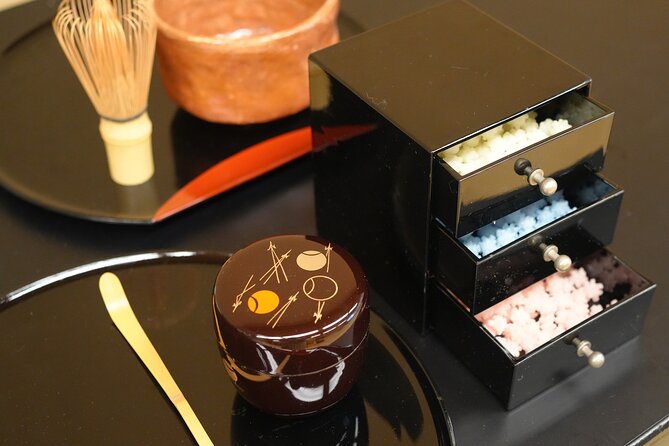
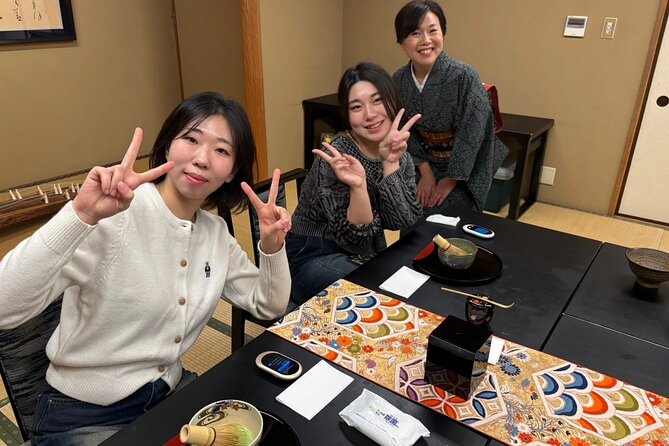
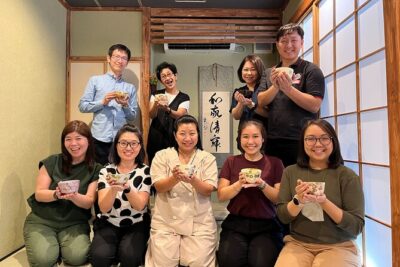
The last major section gives you about 20 minutes to make matcha yourself. This is where the activity shifts from watching to doing.
You receive the ingredients and utensils needed for the experience, then practice whisking the tea. The motion looks simple, but producing a pleasant bowl takes some coordination. That hands-on step helps you remember the ceremony far better than observation alone.
The matcha-making session also gives the program a relaxed finish. You can ask questions while practicing, compare results within your group, and take photographs along the way. Since the activity is private, you do not have to worry about holding up a large class.
Matcha has a distinct bitter taste, and the sweets help balance it. If you are new to powdered green tea, do not expect it to taste like a mild cup of brewed tea. The point is to learn the method and experience the flavor in its proper setting.
For children, whisking may be more engaging than the demonstration. For adults, it provides a simple connection to the preparation you have just watched. The session does not turn you into a tea master, but it gives you a practical understanding of how the tea is made.
Why the private format matters
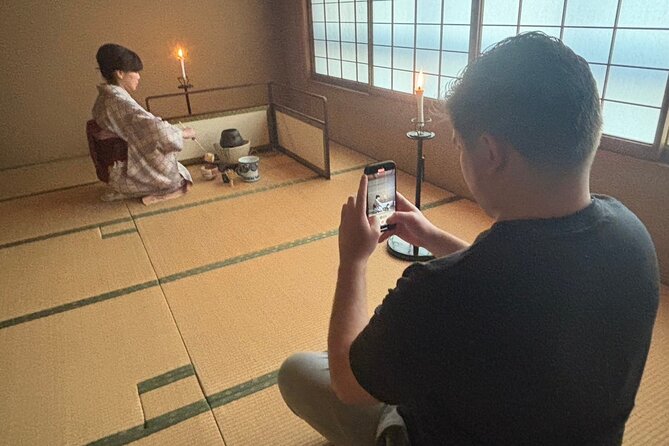
The private format is one of the strongest reasons to choose this activity. You can book for two to six people, and only your group takes part. That lets you set a comfortable pace within the fixed 59-minute schedule.
A private room is particularly helpful for families. Children can ask questions, move through the costume session, and try the whisking activity without worrying about disturbing strangers. The translation devices add another layer of ease for mixed-language families.
Couples may appreciate the candlelight and photographs. The program has a romantic setting, but it is not presented as an elaborate dinner or a long date-night event. It is better suited to couples who want a cultural activity with a few keepsake photos.
Small groups of friends can enjoy the photo props and matcha session together. The sword and fan accessories add a light, informal note, while the meditation and ceremony keep the evening tied to Japanese tradition.
The private format also helps if you are nervous about making a mistake. Tea ceremony has formal-looking movements, but the hands-on portion is meant for beginners. You can follow the instructions, ask questions, and enjoy the process without feeling like you are performing for a room full of people.
Price, timing, and overall value
The listed price is $97.98 per person, while the stated local prices are ¥15,000 for adults and ¥3,000 for children under 15. The dollar amount can shift with exchange rates and booking conditions, so check the final total at the time you reserve.
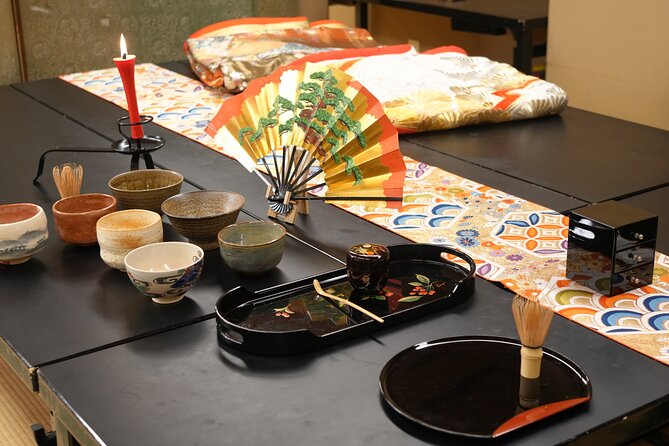
For an adult, this is not the cheapest way to taste matcha in Kyoto. You are paying for more than tea: a private inn setting, traditional clothing, guided photography, a tea demonstration, meditation, utensils, sweets, translation support, and a hands-on session.
The value is strongest if you would otherwise pay separately for costume photographs or if you are traveling with children. The child price is much lower than the adult price, which can make the activity more appealing for families. The group privacy also adds value compared with a crowded public demonstration.
The value is weaker if you are mainly seeking a long, scholarly explanation of tea ceremony. The entire program lasts about 59 minutes, with the demonstration taking 20 minutes and the matcha-making section another 20. The remaining time covers dressing, photographs, and meditation.
I would think of this as a polished cultural introduction with strong visual appeal. It is not a replacement for a full tea-school lesson. It is a compact evening activity that gives you several ways to participate.
Location and getting there

The meeting point is ZEN: Tea Ceremony Experience in Kyoto at 490 Kanayacho, Green Fu-so, 4th floor, Shimogyo Ward, Kyoto 600-8323. The activity ends at the same place.
The venue is near public transportation, which makes it practical for an evening schedule. The information provided does not specify a particular station, walking time, or detailed arrival directions, so you should allow enough time to find the building and reach the fourth floor.
A mobile ticket is provided, which is convenient for a short activity. Keep the booking confirmation easy to access on your phone. Advance reservation is required, and the experience is usually booked about eight days ahead, so I would not leave it until the final evening of your Kyoto stay.
The stated group size is two to six people. If you are traveling alone, this particular format may not suit you, since the activity requires a minimum number of participants and is designed around a private group.
Translation, photographs, and practical comfort
No Japanese is required. Translation devices are available throughout the activity, and staff can assist with photography. This makes the program much easier for international visitors than a ceremony conducted with no explanation.
Photos are welcome during the experience. The professional lighting is especially useful in a dim room, where ordinary phone photographs can come out dark or blurry. You still may want to ask before photographing a specific part of the ceremony, but the activity is designed to include pictures.
The candlelit room creates atmosphere, though it may not suit anyone who prefers a brightly lit, highly casual space. The setting is meant to feel quiet and traditional. Bring patience for the slower pace, especially during the meditation and demonstration.
The experience includes matcha and sweets, but no broader meal is included in the information provided. I would plan your dinner separately. The 59-minute duration makes it easy to place before or after a meal.
Cancellation and weather conditions
You can cancel for a full refund up to 24 hours before the scheduled start time. Cancellations made less than 24 hours before the experience are not refunded, and changes within that same period are not accepted.
The experience also requires good weather. If poor weather causes a cancellation, you are offered another date or a full refund. A minimum number of participants is required as well, and if that condition is not met, you are offered a different date or experience, or a full refund.
These rules are worth noting when planning the final night of a trip. Book early enough to get the time you want, but keep the 24-hour cut-off in mind if your plans may change.
Who should book this Kyoto tea ceremony?
I would recommend it most strongly to families, couples, and small groups who want a private cultural activity with photographs. The costume session gives children something active to do, while the translation devices make it easy for everyone to follow the program.
It also suits first-time visitors who want to try tea ceremony without committing to a long formal class. You will see the basic flow, taste matcha and sweets, and whisk your own tea before returning to the meeting point.
You may want to choose another experience if you are looking for a full meal, a long meditation session, or advanced instruction in tea ceremony. The short schedule keeps the activity convenient, but it also limits how far the teaching can go.
Should you book it?
Book this experience if you want a private, photo-friendly introduction to Japanese culture after dark. The combination of a traditional inn, candlelight, kimono or haori, Zen meditation, tea service, and hands-on matcha making gives you a varied evening in less than an hour.
I would be especially comfortable recommending it to families because of the child pricing, private format, and translation support. Couples and small groups should also find plenty to enjoy, especially if photographs are part of the appeal.
Skip it if your priority is a long, highly formal tea lesson. For everyone else, the program offers a friendly and well-organized way to add a quieter side of Kyoto to a busy sightseeing schedule.
FAQ
Where does the tea ceremony take place?
It takes place at ZEN: Tea Ceremony Experience in Kyoto, located at 490 Kanayacho, Green Fu-so, 4th floor, Shimogyo Ward, Kyoto 600-8323.
How long does the experience last?
The experience lasts approximately 59 minutes.
What activities are included?
The program includes kimono or haori dressing and photographs, four minutes of Zen meditation, a 20-minute tea ceremony demonstration, and about 20 minutes of making your own matcha.
Is the activity private?
Yes. Only your own group participates, and the group size is two to six people.
Do I need to speak Japanese?
No. Translation devices are available to support communication in different languages.
What tea and food are included?
The experience includes matcha green tea and sweets.
Are photographs allowed?
Yes. Photos are welcome, and staff assist with photography. Professional lighting is used during the costume photo session.
What is the adult price?
The stated adult price is ¥15,000 per person. The displayed price is also listed as $97.98 per person.
What is the child price?
Children under 15 are listed at ¥3,000.
Can I cancel for a full refund?
Yes, if you cancel at least 24 hours before the experience start time. Cancellations within 24 hours are not refunded. Weather or minimum-participant cancellations may result in another date or a full refund.
More Private Tea Experiences in Kyoto
- Stunning Private Tea Ceremony: Camellia Garden Teahouse
★ 5.0 · 28 reviews - KYOTO: Private Tea Ceremony in Hidden Townhouse (Kid-Friendly)
★ 5.0 · 20 reviews - Kyoto Private Tea Ceremony at a Japanese Inns
★ 5.0 · 3 reviews - Kyoto Newly Opened Private Tea Ceremony – Sanjo Chasuian
★ 5.0 · 2 reviews
Fresh tea listings around Kyoto
- Traditional Tea Ceremony in Kyoto★ 4.5 · 3 reviews
- Kyoto: Authentic Tea Ceremony in a Small Group★ 5.0 · 7 reviews
- Uji Walking Tour – Byodo-in temple and Tea Ceremony from Kyoto★ 3.5 · 3 reviews
- Tea Ceremony in 150 Years Old Townhouse with Tables and Chairs★ 5.0 · 22 reviews
- Tea ceremony at Kyoto’s Zen Temple Teahouse★ 5.0 · 2 reviews
- Tea Ceremony Experience in Traditional Kyoto Townhouse★ 5.0 · 19 reviews
- Sencha-do the Japanese Tea Ceremony Workshop in Kyoto★ 5.0 · 21 reviews
- Silent Beauty of Kyoto Zen Walk and Tea Experience★ 5.0 · 2 reviews
Tea Ceremony Experiences, compared.
Kyoto: Tea Ceremony in a Traditional Tea House in Kiyomizu
Read our review →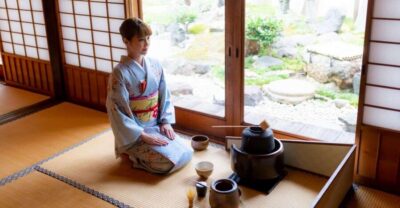
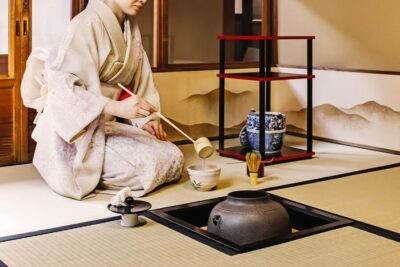
Kyoto: 45-Minute Tea Ceremony Lesson Experience
Read our review →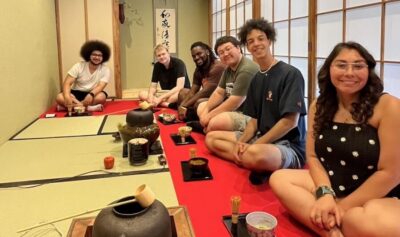
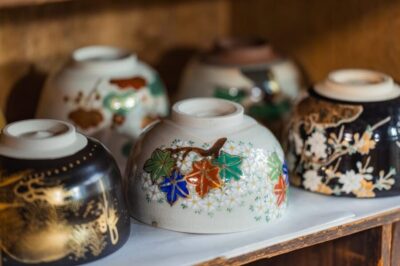
Kyoto: Table-Style Tea Ceremony at a Kyo-Machiya
Read our review →
Browse the lists this tour appears in