
Review · TEA CEREMONY EXPERIENCES
KYOTO: Private Tea Ceremony in Hidden Townhouse (Kid-Friendly)
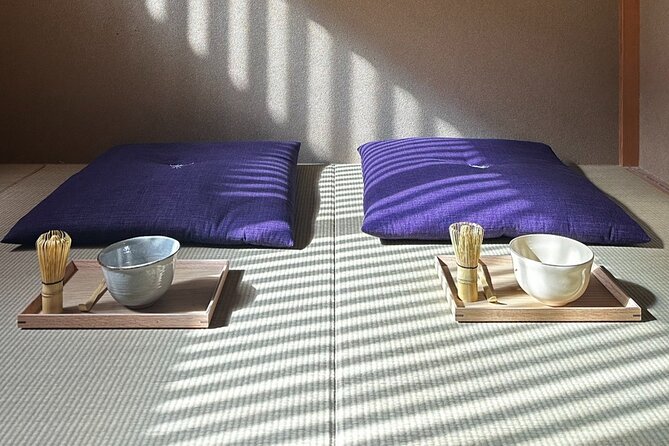
The most appealing part of this Kyoto experience is its private townhouse setting. Instead of sitting in a large class, you get the room and the host’s attention for your own group, making it easier to ask questions, take photos, and let children follow along.
I like two things in particular: you learn stone-milling and matcha preparation, not just the polite movements of a ceremony, and the 45-minute format fits neatly into a busy Kyoto day. The main consideration is that this is a short introduction, not a long formal tea school session.
Key points
- Private group setting: Only your party takes part, so the pace can suit adults and children.
- Stone-milled matcha: You see and take part in preparing matcha powder with a stone mill.
- Practical tea lesson: The preparation steps are simple enough to try again at home.
- More than a demonstration: You make, taste, and drink your own matcha, including a latte.
- Short Kyoto activity: The session lasts about 45 minutes and returns you to the meeting point.
- Well-liked host style: Yuki is singled out for being polite, friendly, and clear in explaining the process.
A quiet townhouse introduction to Kyoto tea
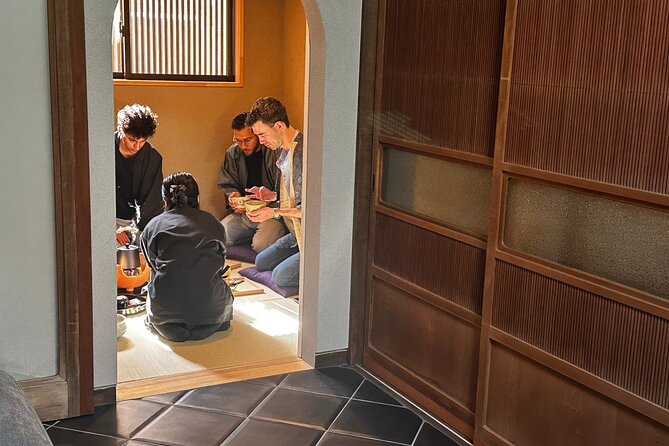
Kyoto has no shortage of tea-related activities, but many are built around a fixed performance. Here, the private format changes the feel. You are not simply watching someone whisk a bowl of green tea while trying to copy every movement from the back of a room. You have time to see the tools, follow the order of the ceremony, and make your own drink.
The setting is a hidden townhouse at WOM-Way of Matcha, located at 863-41 Jurakucho in Kyoto’s Kamigyo Ward. The exact address matters because this is not a major tourist landmark with a large sign and a lobby. You should allow enough time to find the meeting point rather than assuming you can stroll in at the last minute.
The activity is priced at $51.24 per person. That is a fair price if you want a private cultural lesson rather than a quick cup of tea. You are paying for personal attention, the hands-on preparation, and a family-friendly format. If you only want to drink matcha, a café will cost less. If you want to understand how the drink is made and take part in the ritual, this offers more value.
More Private Tea Experiences in Japan
- Private Tea Ceremony and Sake Tasting in Kyoto Samurai House
★ 5.0 · 163 reviews - Kyoto: Private Tea Ceremony with a Garden View
★ 4.9 · 61 reviews - Kyoto Private Tea Ceremony with Tea Master at Home
★ 5.0 · 58 reviews
What happens during the 45-minute session
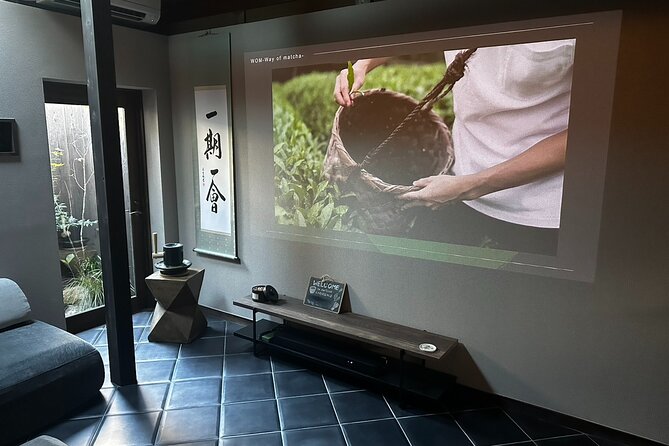
The experience follows a clear sequence. You begin with footage of tea plantations, then move into matcha preparation, watch a ceremony demonstration, and make and taste your own drink. The order works well because you first see where the tea comes from, then learn how it becomes the powder used in the bowl.
At 45 minutes, the pace is brisk. That is useful if you are fitting the activity between sightseeing stops, but it also means the host cannot spend a long time on every part of Japanese tea culture. You will get a focused introduction, not an extended course.
The private format helps here. A public class may need to follow the clock for a larger group, while a private session gives your host room to explain a step again if a child is curious or if you want a better photograph. The activity is designed for your personal party only.
Starting with tea plantation footage
The opening footage of tea plantations gives the session some useful context. Before you handle the powder or bowl, you get a visual sense of tea production and the source of matcha. It is a short film rather than a visit to a plantation, so you should not expect a field excursion or a full agricultural lesson.
This opening is especially helpful for children. A bowl of bright green powder can seem mysterious when it appears without explanation. Seeing the tea-growing process first gives younger participants a simple starting point, then the rest of the activity becomes a story about how the tea reaches the cup.
For adults, the footage also keeps the session from feeling like a string of isolated instructions. You are given a basic connection between the tea plant, the powder, and the finished drink. In a short activity, that kind of structure makes the lesson easier to remember.
Making matcha powder with a stone mill
The most unusual hands-on element is the stone-milling step. You make matcha powder with a stone mill, which gives you a physical look at how the tea is prepared before it is whisked and tasted.
This is a good feature for anyone who wants more than a staged ceremony. You are not only learning how to hold a bowl or copy a gesture. You are seeing one part of the preparation that is normally hidden from the person ordering tea in a café.
Do not expect to mill a large quantity or become an expert in tea production during the session. The purpose is to show the process and let you take part. Still, it is a memorable detail, and it gives children something concrete to do before the more formal demonstration.
The stone mill also adds a slower, more tactile moment to the activity. Matcha preparation can look very precise from a distance. Working with the mill helps you understand that the drink begins with careful physical preparation, not just a scoop from a tin.
More Tea Ceremonies in Kyoto
- Kyoto: Tea Ceremony in a Traditional Tea House in Kiyomizu
★ 4.9 · 3,519 reviews - Kyoto: Tea Ceremony Ju-An at Jotokuji Temple
★ 4.9 · 3,207 reviews - Kyoto: 45-Minute Tea Ceremony Lesson Experience
★ 4.3 · 2,378 reviews - Kyoto: Table-Style Tea Ceremony at a Kyo-Machiya
★ 4.9 · 1,211 reviews
Watching the tea ceremony demonstration
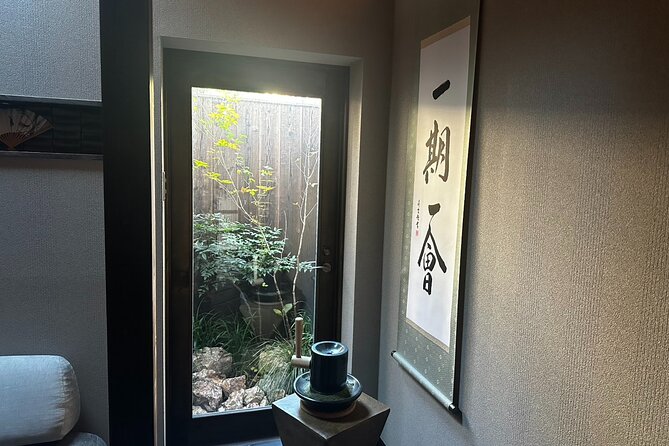
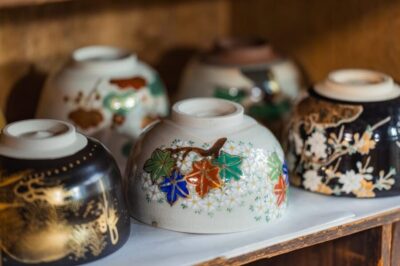
Next, the host demonstrates the tea ceremony. This is the point where you see how the tools, bowl, powder, and water come together in an organized sequence.
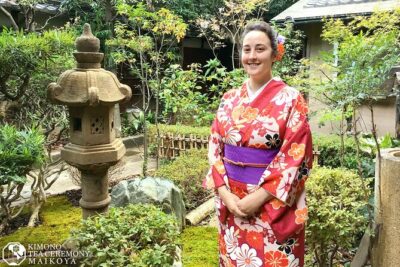
A private demonstration is easier to follow than one delivered across a crowded room. You can watch the host’s hands closely and ask about a step while it is still fresh. Yuki is associated with the experience and is described as polite, friendly, and careful in explaining the process. The host’s manner matters here because tea ceremony movements can seem formal or unfamiliar at first.
The ceremony portion is traditional in tone, but the setting is not presented as a strict examination of etiquette. The experience is intended to be approachable, and children are welcome. You can expect guidance rather than pressure to perform perfectly.
That makes this a good choice for first-time participants. You receive an introduction to the order and care of the ceremony without needing prior knowledge. At the same time, anyone looking for a long, highly formal tea ceremony should keep expectations in check. The whole visit lasts less than an hour, so the demonstration is necessarily selective.
Making and tasting your own matcha
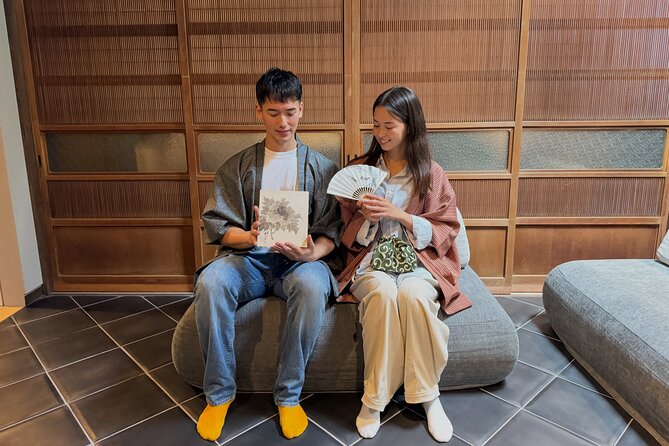
After watching, you make your own cup. This is where the session becomes personal. You have seen the process once, and now you get to try the preparation yourself with the host nearby.
The value of this part goes beyond the drink in front of you. The goal is to give you matcha preparation techniques you can recreate at home. You may not leave with every detail of the ceremony memorized, but you should have a better sense of the sequence and the care required.
The host can give your group direct attention because no other participants are sharing the class. That is useful if your whisking feels awkward or if a child wants to try a step independently. It also lets adults focus on the ritual without worrying that they are holding up a larger group.
The tasting provides an immediate payoff. You do not just watch a demonstration and leave with a few photographs. You drink the tea you helped prepare, which makes the lesson easier to recall later.
Finishing with a matcha latte
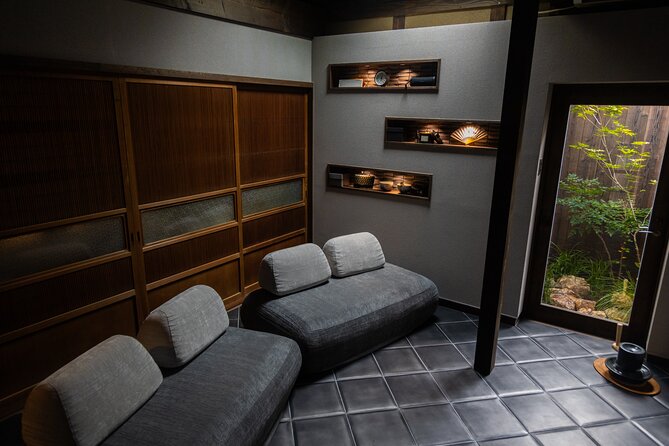
The session also includes making a matcha latte. This is a relaxed finish and gives you a second way to enjoy the tea.
The latte is useful for people who find straight matcha too strong or unfamiliar. It also gives children a more approachable option, depending on their tastes. The experience does not present matcha as a single fixed drink. Instead, you see both the traditional preparation and a modern, easy-to-repeat version.
That balance is one of the activity’s strengths. You get a glimpse of formal tea ceremony, but you also learn something you might actually make in your own kitchen. The latte element keeps the session from feeling overly solemn and helps bridge the gap between cultural demonstration and everyday use.
You should not assume the class becomes a full cooking workshop. The available information points to making and tasting the latte as part of the tea activity, not a long recipe lesson with many variations.
Why the private format matters for families
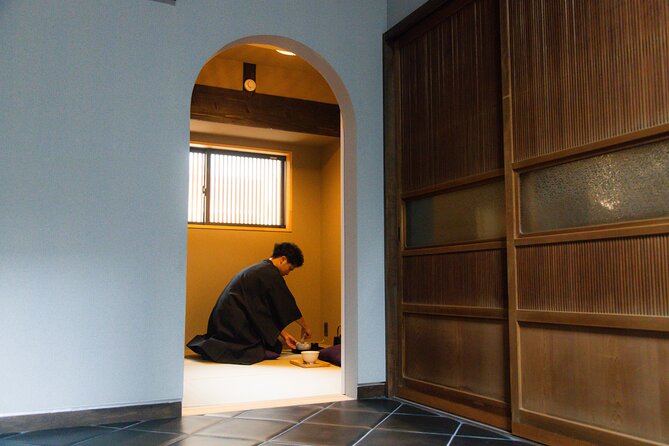
Children are welcome, and the private setup is a real advantage for families. A child can ask questions, try the milling or whisking, and take photos without feeling watched by a room full of strangers.
The activity is also short enough for many family schedules. Forty-five minutes is long enough to hold attention and short enough to avoid turning the tea lesson into a major commitment. If your children are interested in making things with their hands, the stone mill and tea preparation should give them clear points of focus.
Still, the private format does not remove the need for supervision. The ceremony involves tea tools and careful preparation, and the host’s guidance is part of the experience. The supplied details confirm that children are welcome, but they do not specify an age range or special child equipment. You should judge the fit for your own family.
Adults without children can enjoy the private setup just as much. If you want a quiet introduction, a chance to ask questions, or a more personal cultural activity, you are not giving up anything by choosing a family-friendly session.
Photos, pace, and personal attention
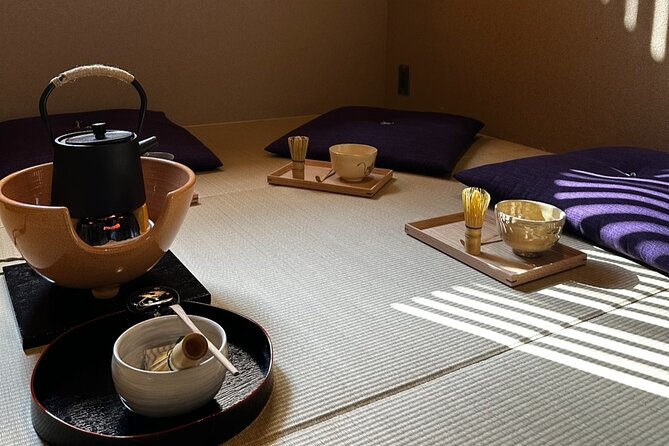
You have time to capture photos during the experience. That is worth noting because a formal demonstration can sometimes move too quickly for pictures. Here, the private arrangement gives your group a better chance to photograph the tea, the tools, and the ceremony without blocking another party.
You should still stay present during the demonstration. The session is short, and constant photography could make you miss the small details the host is explaining. Take a few pictures, then put the phone away while you try the process yourself.
The personal attention is the central benefit. The experience has a 4.9 rating from 20 reviews and a 100 percent recommendation figure, with special praise for the host’s kindness and clear explanations. Those numbers do not tell you everything about the session, but they support the idea that the human side of the activity is a major reason to book.
Location and practical planning
The meeting point is private tea ceremony, WOM-Way of Matcha, at 863-41 Jurakucho, Kamigyo Ward, Kyoto, 602-8156, Japan. The activity ends at the same place, so you do not need to arrange a separate return transfer or wonder where the final part of the session takes place.
The mobile ticket makes entry simple. You should have the booking details ready on your phone and arrive with enough time to locate the townhouse. Because the setting is described as hidden, do not treat the address as an afterthought.
The experience runs for approximately 45 minutes. There is no transportation included in the details provided, so plan your own way to the meeting point and from there to your next Kyoto stop.
Free cancellation is available if you cancel at least 24 hours before the start time. Cancellations made less than 24 hours in advance are not refunded, and changes inside that window are not accepted. The cut-off uses Kyoto local time.
Who gets the best value for $51.24
At $51.24 per person, I would choose this for someone who values access and participation. The private group setting is the key. You are not paying only for matcha. You are paying for a host-led lesson, a private room, stone-milling, a demonstration, your own preparation, a tasting, and a latte activity.
The price makes the most sense for couples, families, or small groups who would otherwise book several separate cultural activities. It is also a good fit if you want a compact Kyoto experience that does not take half a day.
The value is weaker if you are already familiar with matcha preparation or want a long, highly technical study of tea ceremony. The session gives you a useful introduction, but its 45-minute length puts a natural limit on depth.
Should you book this Kyoto tea ceremony?
Book it if you want a short, private, hands-on cultural activity with a friendly host and enough flexibility for children. The stone-milling step, personal tea preparation, photo time, and matcha latte make it more engaging than a demonstration where you only watch.
I would especially recommend it for first-time matcha drinkers, families, and anyone with a tight Kyoto schedule. Skip it if you want an extended formal ceremony, a plantation visit, or a full-day tea course. For the right audience, $51.24 buys a personal lesson and a drink you helped make, not just a seat in a performance.
FAQ
How long does the private tea ceremony last?
The activity lasts approximately 45 minutes.
Where does the tea ceremony take place?
It takes place at WOM-Way of Matcha, 863-41 Jurakucho, Kamigyo Ward, Kyoto, 602-8156, Japan.
Where does the activity end?
The experience ends back at the meeting point.
Is this a private activity?
Yes. Only your group participates.
Are children allowed to join?
Yes. The experience is family-friendly, and children are welcome.
What will I do during the experience?
You will watch tea plantation footage, make matcha powder with a stone mill, watch a tea ceremony demonstration, prepare and taste your own tea, and make a matcha latte.
Can I cancel for a full refund?
Yes, if you cancel at least 24 hours before the experience start time. Cancellations made less than 24 hours before the start time are not refunded, and changes during that period are not accepted.
More Private Tea Experiences in Kyoto
- Stunning Private Tea Ceremony: Camellia Garden Teahouse
★ 5.0 · 28 reviews - Kyoto Private Tea Ceremony at a Japanese Inns
★ 5.0 · 12 reviews - Kyoto Private Tea Ceremony at a Japanese Inns
★ 5.0 · 3 reviews - Kyoto Newly Opened Private Tea Ceremony – Sanjo Chasuian
★ 5.0 · 2 reviews
Fresh tea listings around Kyoto
- Traditional Tea Ceremony in Kyoto★ 4.5 · 3 reviews
- Kyoto: Authentic Tea Ceremony in a Small Group★ 5.0 · 7 reviews
- Uji Walking Tour – Byodo-in temple and Tea Ceremony from Kyoto★ 3.5 · 3 reviews
- Tea Ceremony Experience in Traditional Kyoto Townhouse★ 5.0 · 19 reviews
- Tea Ceremony in 150 Years Old Townhouse with Tables and Chairs★ 5.0 · 22 reviews
- Tea ceremony at Kyoto’s Zen Temple Teahouse★ 5.0 · 2 reviews
- Sencha-do the Japanese Tea Ceremony Workshop in Kyoto★ 5.0 · 21 reviews
- Silent Beauty of Kyoto Zen Walk and Tea Experience★ 5.0 · 2 reviews
Tea Ceremony Experiences, compared.
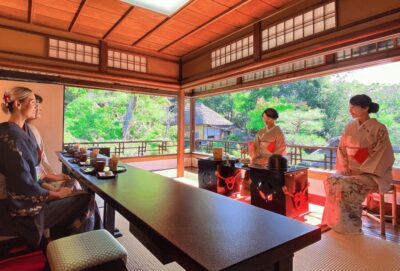
Kyoto: Tea Ceremony in a Traditional Tea House in Kiyomizu
Read our review →
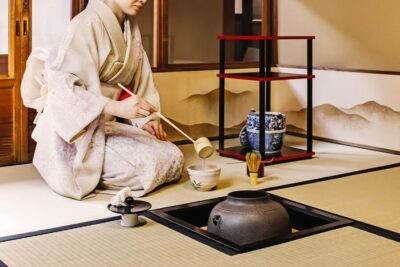
Kyoto: 45-Minute Tea Ceremony Lesson Experience
Read our review →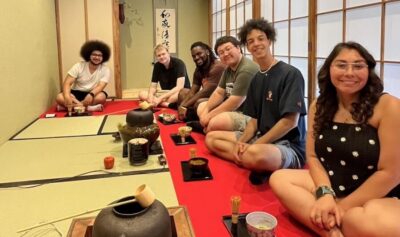
Kyoto: Table-Style Tea Ceremony at a Kyo-Machiya
Read our review →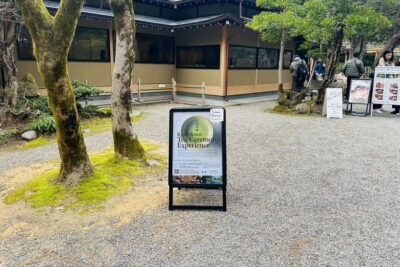
Browse the lists this tour appears in