
Review · WALKING TOURS
The Way of Tea: Kyoto Crafts, Hidden Temples & Wabi-Sabi Walk
Kyoto’s tea culture makes the most sense when you see it beside the places and objects that shaped it. This small-group walk links Gion’s old streets with Kennin-ji Temple, a quiet temple garden, handmade ceramics, and a final matcha ceremony in a traditional house.
I like the compact group, limited to seven people, because you can ask questions without shouting across a crowd. I also like the route’s clear progression from tea history and crafts to making matcha yourself. The main caution is communication: one past participant found the guide’s English too soft and difficult to hear, so this tour may disappoint if you need constant, detailed commentary.
Key points at a glance
- Gion begins the tea story: Start with a walk through Kyoto’s historic entertainment district and a visit to a famous matcha shop.
- Kennin-ji is included: Temple admission is covered, and the visit adds architecture and religious context to the tea theme.
- Crafts are part of the route: See local craft shops and learn why every raku tea bowl has its own character.
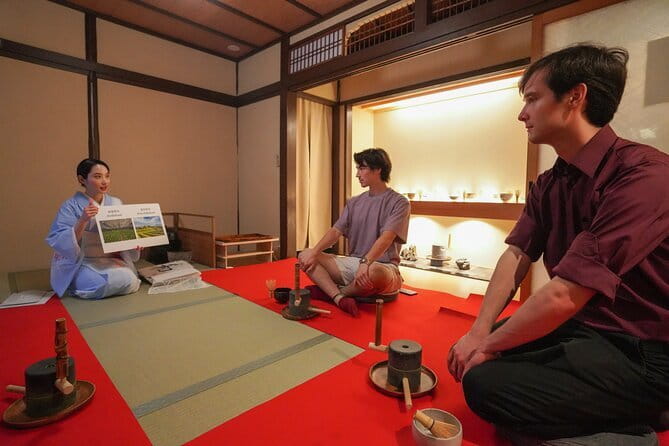
- The tea ceremony is hands-on: Finish with matcha preparation and instruction from a tea master in a real tea house.
- Seven people is the maximum: The small group gives you better access to the guide than a large city tour.
- The tour is walk-based: Wear comfortable shoes, arrive early, and prepare for Kyoto’s heat or cold.
From Gion Shijo Station into Kyoto’s tea culture
Meet in front of the Statue of Izumo-no-Okuni, directly outside Exit 5 of Gion Shijo Station on the Keihan Line. Look for the guide holding an orange sign marked Magical Trip Tour. This is a practical meeting point, but do not cut it close. The group leaves on time, and missing the start means no joining later, refund, or rescheduling.
The first part takes you through Gion, one of Kyoto’s best-known traditional districts. Here, the subject is not simply how to drink tea. You begin with where Japanese tea came from, how matcha is made, and why the drink became tied to ceremony, hospitality, and careful attention to objects.
The walk includes a famous matcha shop. The visit is listed at about 30 minutes, with no separate admission charge. You should think of this as an introduction rather than a long tasting session, since additional food and drinks are not included. If you want sweets or another drink, budget for those separately.
I like starting here because it gives the rest of the tour a purpose. After seeing matcha as a finished product, you move toward the places and tools connected with preparing it. The Gion setting also makes the tea lesson feel connected to Kyoto rather than detached inside a classroom.
More Walking Tours in Kyoto:
- Kyoto Tea Ceremony & Kiyomizu-dera Temple Walking Tour
★ 5.0 · 115 reviews - Matcha Grinding Experience and Walking Tour in Uji Kyoto
★ 5.0 · 26 reviews - London: Kensington Palace Afternoon Tea & Guided Walk
★ 4.6 · 341 reviews
Kennin-ji Temple adds a quiet pause
The next stop is Kennin-ji Temple, with about 30 minutes set aside for the visit. Admission to two temples is included in the tour price, although only Kennin-ji is named specifically in the route description. That inclusion matters in Kyoto, where several small entrance fees can quickly add up during a day of sightseeing.
Kennin-ji has been part of Kyoto’s religious life for centuries. Your guide provides context as you look around the historic temple grounds. The stop is not designed as a long, independent temple visit, so you will get an introduction and time to take in the setting rather than an exhaustive tour of every building.
This is a good point in the route for anyone who wants more than a tea demonstration. Tea ceremony is often presented as a self-contained cultural activity, but here you see it alongside temple spaces, traditional design, and the slower pace of a historic district.
The short timing is also the limitation. Thirty minutes can feel brief if you prefer to study temple architecture or sit quietly in a garden. If Kennin-ji is a major priority for you, plan a separate return visit rather than expecting this tour to cover everything.
Craft shops and the meaning of a tea bowl
The route then turns to Kyoto craft shops for another 30-minute section. The supplied details do not name each shop, so you should expect a general introduction to local craft rather than a guaranteed visit to a particular maker or store.
The most specific craft stop is a tea bowl shop featuring raku ware. Your guide explains how each cup has its own character, history, and meaning. That detail is important. In tea culture, the bowl is not just a container. Its shape, glaze, texture, and imperfections affect how the tea is prepared and received.
You may find this part especially useful if you enjoy ceramics or want a clearer idea of what you are looking at in Kyoto shops. A handmade tea bowl can seem simple at first glance. Once you learn to notice its uneven edges and surface, the object becomes easier to read.
Shopping is not listed as an included feature, and the tour does not include extra purchases. Treat this stop as an explanation of craft, not as a promise that you will leave with a bowl. If you do buy something, remember that ceramics need careful packing for the rest of your Japan trip.
The craft segment also gives the walk a nice rhythm. You begin with the drink, see a temple tied to Kyoto’s traditional culture, and then examine one of the objects used in the ceremony. That order makes the final tea house visit easier to understand.
A quiet temple and garden away from the main route
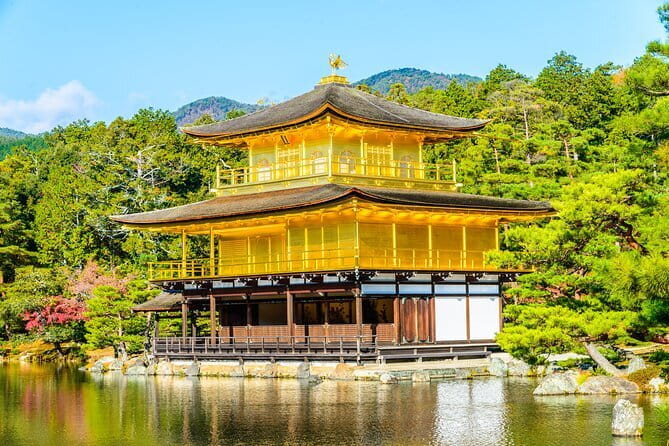
Another 30-minute stop brings you to a hidden temple and garden. The information provided does not identify its name, so you should not book this tour expecting a specific landmark by title. The appeal is the contrast with Kyoto’s major sights: a quieter religious setting where the garden and atmosphere receive attention.
This stop connects directly with the idea of wabi-sabi, the appreciation of simplicity, age, irregularity, and imperfection. Those ideas are not presented only as abstract design terms. You see them in the garden, in the temple setting, and later in the tea bowl.
I like this part of the route because it gives you a break from collecting famous sights. Kyoto can become tiring when every stop is a major gate, hall, or photo point. A smaller garden can help you notice details that are easy to miss when you are rushing between headline attractions.
Still, keep your expectations measured. The stop lasts about 30 minutes, and the exact temple is not specified. You are getting a short guided encounter, not an extended meditation visit or a full garden study.
More tea experiences around Kyoto if you are still choosing
- Kyoto: Tea Ceremony in a Traditional Tea House in Kiyomizu
★ 4.9 · 3,519 reviews - Kyoto: Tea Ceremony Ju-An at Jotokuji Temple
★ 4.9 · 3,207 reviews - Kyoto: 45-Minute Tea Ceremony Lesson Experience
★ 4.3 · 2,378 reviews - Kyoto: Table-Style Tea Ceremony at a Kyo-Machiya
★ 4.9 · 1,211 reviews
The final hour belongs to matcha
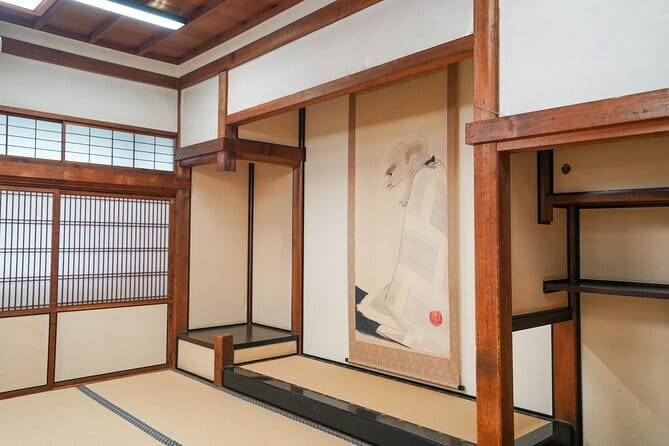
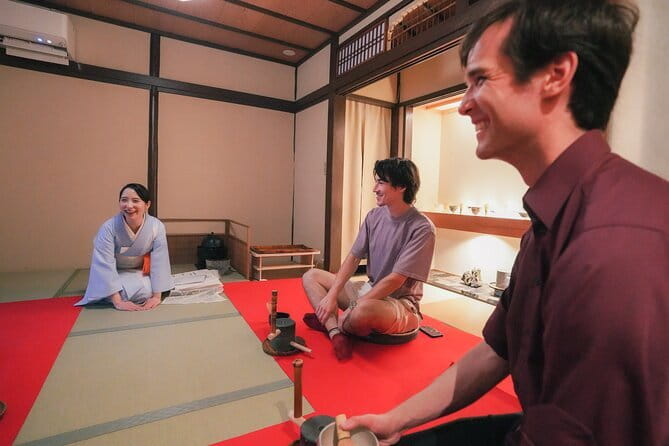
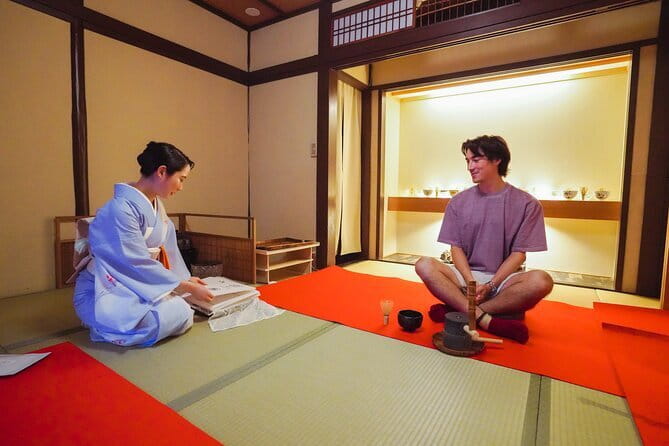
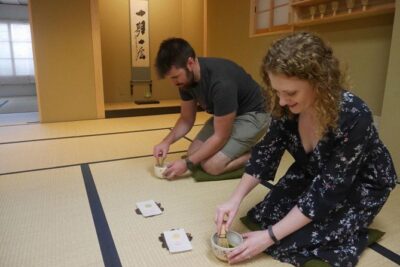
The tour finishes at Chayu, a tea experience location in a traditional Japanese house. This is the core activity for many people. You receive instruction from a tea master and take part in making matcha rather than only watching someone else prepare it.
The tea ceremony lasts about one hour. Matcha is included, as is the experience itself. You do not need to arrange a separate tea house booking, and you finish the walk at the tea experience location in the Kiyomizu area.
The ceremony works best after the earlier stops. You have already heard about tea, seen a matcha shop, considered the role of temple spaces, and looked closely at a tea bowl. By the time you sit down, the movements and objects have some context.
Do not expect a casual café stop. A traditional tea ceremony has a set pace and a formal structure. The point is not to gulp down a sweet drink and move on. You will receive instruction and take part under the tea master’s direction, with the earlier discussion of wabi-sabi in mind.
Children younger than six may come on the tour, but one adult must remain outside the tea ceremony facility with them during the experience. Anyone aged six or older can take part in the ceremony. This rule is worth considering before you book, especially for families with young children.
What the $94.45 price covers
At $94.45 per person, this is not the cheapest way to see a Kyoto temple or drink matcha. The value comes from combining several small experiences that would be harder to arrange in a single outing.
Your price includes an English-speaking local guide, admission to two temples, the matcha ceremony, and photos taken during the tour. It also removes the need to work out the walking order between Gion, the temple visits, the craft stops, and the tea house.
The maximum group size of seven improves the value. You have a better chance to ask about tea bowls, temple details, or ceremony etiquette than you would on a large bus tour. A small group also makes the tea house portion feel less like a scheduled production.
The price is less attractive if you mainly want a long temple visit or a large meal. Extra food and drinks are not included, and the route spends only about 30 minutes at several stops. You are paying for the combination and the guidance, not for extensive time at one attraction.
For a first Kyoto visit, I think the price can be fair if tea culture is high on your list and you value structure. Independent visitors who are comfortable navigating Kyoto and arranging their own tea ceremony may find better savings elsewhere.
Timing, walking, and weather
The tour lasts approximately three hours and 30 minutes, though the included guide service is also described as three hours. Allow the full three and a half hours so you are not scheduling another fixed activity too tightly afterward.
The meeting point is near public transportation at Gion Shijo Station. The tour ends in the Kiyomizu area at 4-chōme-172-7 Kiyomizu, rather than returning you to the station where you started. That one-way design is useful if you plan to continue sightseeing around Kiyomizu, but less convenient if you left luggage or another plan near Gion.
Wear shoes suited to walking and temple visits. The route includes streets, temple grounds, craft shops, a garden, and a traditional house. Specific accessibility details are not provided, although most people can participate.
Kyoto’s weather deserves serious attention. Summer temperatures can reach 40°C, while winter lows may fall to -5°C. Bring water and sun protection in hot weather, and dress warmly in winter. Rain can also affect the schedule, since the tour may be canceled for unsafe weather.
A mobile ticket is provided, which keeps the booking simple. You can cancel or reschedule for free up to 24 hours before the start time. Changes made inside that 24-hour window are not accepted, and late arrival is especially risky because the group cannot wait.
Communication and guide quality
The tour is conducted in English, and the small group should give you a chance to ask questions. No guide’s personal name is supplied, so you should not book based on a particular named guide.
There is one clear communication caution. A previous participant found the guide spoke very softly, making the English hard to understand, and also felt the explanations about some places were limited. The guide was described as trying to help, but the communication problem made the experience frustrating.
That does not mean every departure will have the same issue. Guide quality can vary, and the tour has a very high overall rating of 4.9 from 41 ratings, with 98 percent recommending it. Still, I would treat clear speaking and detailed interpretation as important factors when deciding.
If hearing every word matters to you, stay near the guide and ask politely for repetition when needed. A group of seven makes that easier. You can also ask specific questions at the temple, craft shop, and tea bowl stop instead of relying only on a general explanation.
Who should book this Kyoto walk?
I would recommend it most strongly to first-time visitors who want a guided introduction to tea culture without spending a full day on one formal ceremony. The route gives you several small windows into Kyoto: neighborhood history, a temple, a garden, crafts, ceramics, and hands-on matcha preparation.
It also suits you if you like cultural context but do not want to plan every detail yourself. The guide handles the route, temple admissions are included, and the tour finishes with the main activity already arranged.
Families can book, but check the age rule carefully. Children six and older may join the ceremony. Younger children can accompany the tour only if an adult stays outside during that portion.
You may want a different plan if you prefer independent sightseeing, long temple visits, extensive shopping, or a quiet ceremony with no walking between stops. The schedule is compact, and some stops are introductions rather than full visits.
Should you book it?
Book this tour if you want Kyoto’s tea culture explained through places and objects, not just served in a cup. The small group, included temple admissions, local guide, and one-hour tea ceremony create a useful half-day introduction, especially for a first visit.
Pause before booking if you need highly detailed historical commentary or have difficulty hearing softly spoken guides. Also check the weather, arrive early at Gion Shijo Station, and remember that the tour ends in Kiyomizu rather than back at the starting point.
For the right visitor, $94.45 is a reasonable price for a carefully linked experience. You are not buying a grand temple tour or a food excursion. You are buying a short, focused look at how Kyoto connects tea, temples, gardens, and handmade objects.
FAQ
Where does the tour start?
It starts in front of the Statue of Izumo-no-Okuni, outside Exit 5 of Gion Shijo Station on the Keihan Line.
How do I identify the guide?
The guide will hold an orange sign marked Magical Trip Tour.
Where does the tour end?
The tour ends at the tea experience location at 4-chōme-172-7 Kiyomizu, in Kyoto’s Higashiyama Ward.
How long does the experience last?
The experience lasts approximately three hours and 30 minutes.
What is included in the price?
The price includes the tea ceremony, matcha, admission to two temples, an English-speaking local guide, and photos taken during the tour.
Are food and additional drinks included?
No. Additional food and drinks are not included.
How large is the group?
The tour has a maximum of seven travelers.
Can children join the tea ceremony?
Children aged six and older can join the tea ceremony. Younger children may come on the tour, but an accompanying adult must remain outside the facility during the ceremony.
What happens if I arrive late?
The tour starts on time. If you miss the group because you are late, you cannot join later, receive a refund, or reschedule.
Can I cancel for free?
Yes. You can cancel for a full refund up to 24 hours before the experience starts. Cancellations and changes made less than 24 hours before the start are not accepted.
Fresh tea listings around Kyoto
- Cycling Tour at Uji’s Matcha Green Tea Fields and Heritage★ 5.0 · 10 reviews
- Authentic Tea Ceremony & Sushi in The Museum of Kyoto★ 5.0 · 3 reviews
- Kyoto Fushimiinari:Wagashi Making & Small Group Tea Ceremony★ 5.0 · 14 reviews
- 2 Types of Japanese Sweets making and Tea Ceremony★ 4.6 · 17 reviews
- Whisk Your Own Matcha: A Zen Matcha Experience at Temple★ 3.6 · 7 reviews
- Kyoto Hidden Riverside Zen Mediation and Uji Matcha Experience★ 5.0 · 9 reviews
- Kyoto: Nighttime Zen Meditation and Matcha Tea Experience★ 5.0 · 7 reviews
- Matcha Grinding Experience and Walking Tour in Uji Kyoto★ 5.0 · 26 reviews
Walking Tours, compared.

London: Kensington Palace Afternoon Tea & Guided Walk
Read our review →
Kyoto Tea Ceremony & Kiyomizu-dera Temple Walking Tour
Read our review →
Antalya: Old Town Walking Tour with Turkish Tea and Baklava
Read our review →
Uji: UNESCO Heritage & Tea Ceremony Walking Tour
Read our review →
Tea planation walking In Munnar- (by Munnar Info)
Read our review →
London: Buckingham Palace Walk & Tea at Kensington Palace
Read our review →Browse the lists this tour appears in