
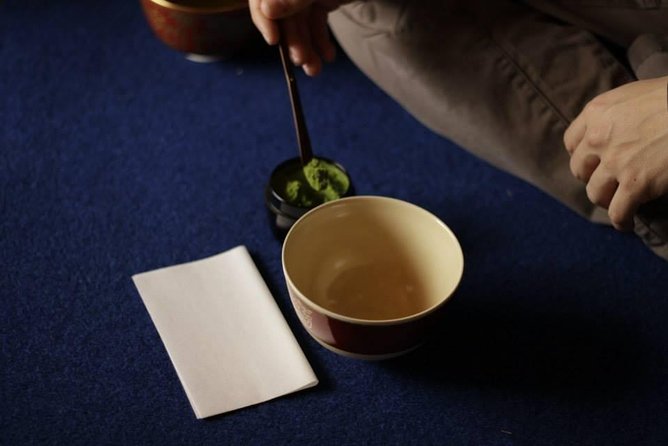
Review · TEA CEREMONY EXPERIENCES
Authentic Kyoto Tea Ceremony: Camellia Flower Teahouse
Kyoto’s tea ceremony is not just about drinking matcha. At Camellia Flower Teahouse, you watch the careful movements, learn why the room is arranged as it is, taste a seasonal sweet, then make your own frothy bowl. That last step is humbling. The whisk looks simple until you try to produce the fine foam.
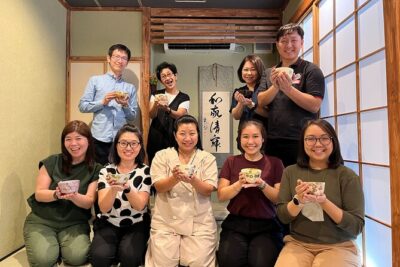
I like the small group size, capped at eight, and the fact that the instructor explains the ritual in fluent English rather than asking you to sit quietly and guess. I also like the practical finish: you handle the bowl, scoop, and whisk yourself. The main drawback is the setting. One review found the room very small and plain, so this is better understood as a focused cultural lesson than a grand theatrical show.
Key points to know before booking
- You make your own matcha: Tea bowls, scoops, and bamboo whisks are provided, with clear instruction from the host.
- The session lasts about 45 minutes: It fits neatly between sightseeing stops in Higashiyama.
- The group is limited to eight people: That keeps the teaching personal, though the room may feel close.
- You learn the meaning behind the gestures: The host explains cleansing, respect, utensils, decoration, and room layout.
- Chairs and tables are available: You do not have to sit on the floor, but the experience is not wheelchair accessible.
- Kimono rental is optional: It costs extra and must be requested by message, but it can add a more traditional feel.
What happens inside Camellia Flower Teahouse
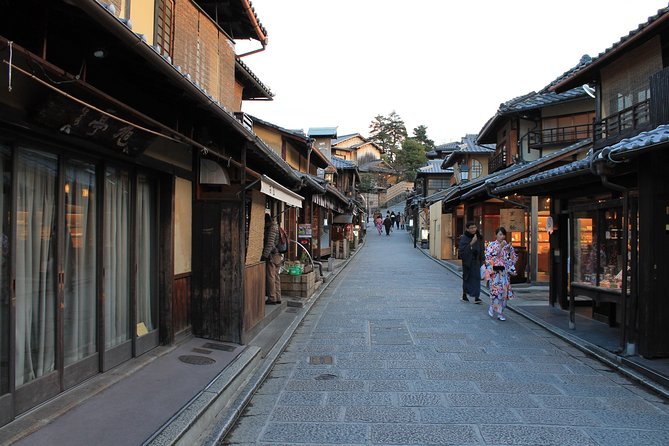
The experience begins at Camellia Flower Teahouse, at 349-13 Masuyacho in Kyoto’s Higashiyama Ward. The address places you in one of Kyoto’s best-known sightseeing areas, and the activity is near public transportation. Pickup and drop-off are not included, so you make your own way there and return to the same meeting point afterward.
Your host starts with an introduction to matcha and the tea ceremony. This opening matters because the ritual can seem mysterious if you only see the finished performance. Here, you learn that the movements are not random decoration. The utensils, room arrangement, seasonal details, and gestures all help create a respectful meeting between the person preparing the tea and the person receiving it.
The ceremony also gives you a useful window into Kyoto beyond temples and gardens. The host connects the tea ritual with Japanese ideas of cleanliness, mindfulness, hospitality, and respect. One especially useful point is the meaning of cleansing with water. It is not simply a practical step before drinking. It signals a change in attention and helps prepare both host and guest for the encounter.
The session is led in English by instructors from one of Kyoto’s three main schools of tea ceremony. The supplied information does not give the individual guides’ names, so you should expect a qualified English-speaking host rather than a named guide. The teaching style appears to be warm and patient, with room for questions instead of a rigid lecture.
More Tea Ceremonies in Kyoto
- Kyoto: Tea Ceremony in a Traditional Tea House in Kiyomizu
★ 4.9 · 3,519 reviews - Kyoto: Tea Ceremony Ju-An at Jotokuji Temple
★ 4.9 · 3,207 reviews - Kyoto: 45-Minute Tea Ceremony Lesson Experience
★ 4.3 · 2,378 reviews
Watching the formal tea preparation
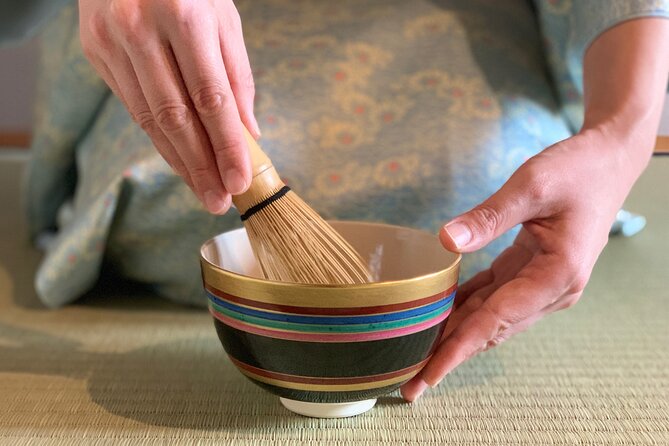
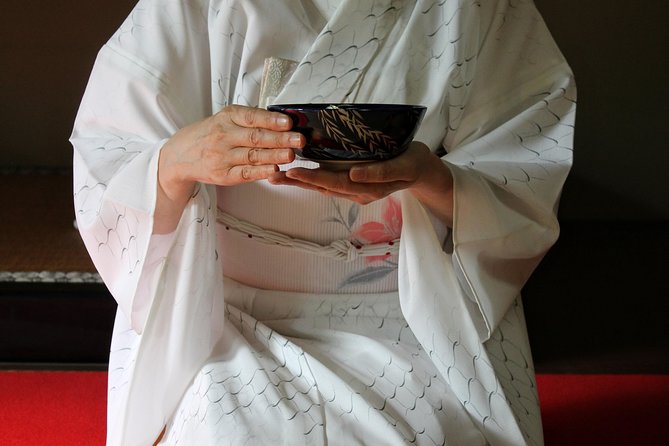
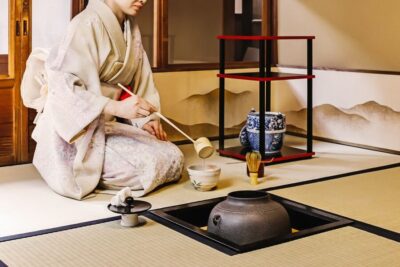
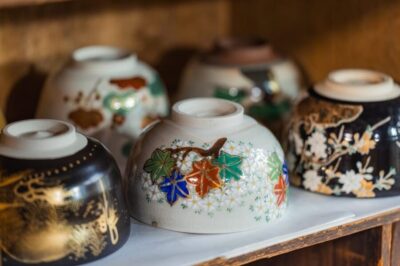
Before you take over the whisk, the instructor performs the tea ceremony for you. This is the part to watch closely. The movements are precise, quiet, and economical. The host handles the tea bowl, scoop, and whisk with care, explaining what each item does and why each stage matters.
You also learn how the room’s decoration and layout affect the ceremony. That detail is easy to miss when you visit a tea room on your own. Here, the host directs your attention to the setting and shows how the space supports the mood of the ritual.
The formal preparation has a calm pace. If you have spent the morning moving quickly through Kyoto’s crowded sightseeing streets, those 45 minutes can feel like a useful pause. The experience is not a long ceremonial performance, though. You get an introduction, a demonstration, time for questions, a sweet, and hands-on practice within one short session.
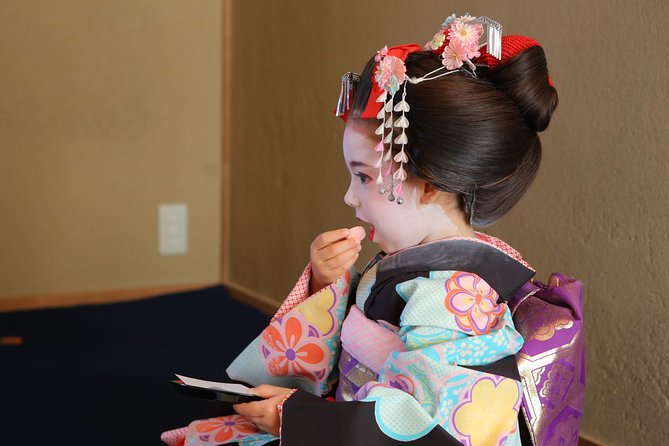
A seasonal sweet accompanies the tea. Its role is not only to provide a snack. The sweetness balances the strong, grassy taste of matcha and forms part of the traditional order of the experience. You should expect the focus to remain on the ceremony rather than on a large tasting menu.
Making your own bowl of matcha
The most engaging part comes at the end, when each person prepares a bowl of matcha. Camellia provides the tea bowl, tea scoop, and whisk, so you do not need to bring anything special.
The instructor shows you the basic method, then lets you practice. You will learn how much to use, how to hold the whisk, and how to work the tea into a frothy drink. The task is simple enough for beginners, but it also shows why proper tea preparation takes training. A bowl can taste good even when your technique is not perfect, and that is part of the fun.
This hands-on element makes the session useful for families and first-time visitors. Children aged six and older can join, and the activity accepts all ages within that limit. The children in the supplied feedback enjoyed learning the process, which suggests that the lesson works best when younger participants are ready to listen and take part rather than simply watch.
You are encouraged to ask questions throughout. Ask about the tools, the schools of tea, the meaning of the gestures, or the matcha itself. The teaching is not limited to a set speech. The chance to talk with the host is one reason this short activity can feel more substantial than its 45-minute length suggests.
How authentic is this Kyoto tea ceremony?
The experience presents itself as an authentic tea ceremony, and several elements support that claim. The instructors come from one of Kyoto’s three main tea schools. The session covers the ceremony’s manners and meaning, not just the fashionable image of whisking green tea. You watch a formal preparation, learn about the room, receive a seasonal sweet, and practice the craft yourself.
Still, you should set sensible expectations. This is a compact introduction for visitors, not a full study of tea ceremony. A traditional tea practice can take years to learn, and a 45-minute session cannot cover every rule or school. What you receive is a well-shaped first lesson that gives you enough context to notice more when you encounter tea culture elsewhere in Japan.
The room may also affect your impression. One piece of feedback described it as very small and plain, with the ceremony feeling less dramatic as a result. If you expect a grand interior or a lavish production, you may find the surroundings modest. If you value direct teaching and a chance to practice, the plain setting may matter less.
Same city, a very different cup:
- Kyoto: Table-Style Tea Ceremony at a Kyo-Machiya
★ 4.9 · 1,211 reviews - Kimono Tea Ceremony at Kyoto Maikoya, NISHIKI
★ 5.0 · 911 reviews - Kyoto: Kimono Tea Ceremony at Orizuruya Gion
★ 4.9 · 618 reviews - Kyoto: Tea Ceremony in 100-year-old Kyo-Machiya Townhouse
★ 4.8 · 546 reviews
Floor seating, chairs, and kimono rental
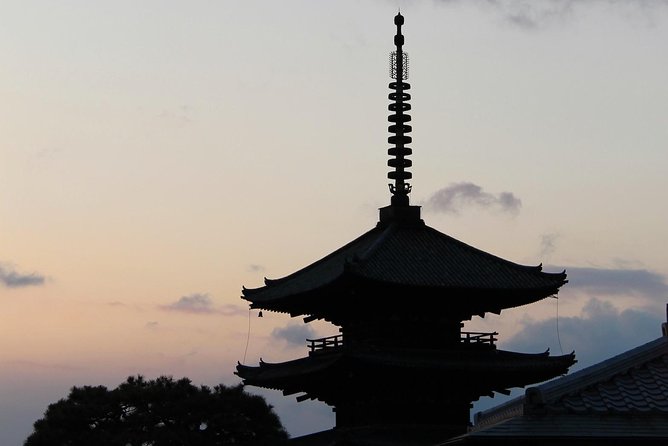
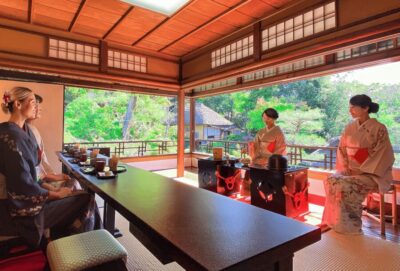
Tea ceremony is often associated with sitting on the floor. Camellia keeps that option, but chairs and tables are available if you prefer them. This is an important comfort detail, especially if you have knee trouble or simply are not used to sitting on tatami or another low surface.
The experience is not wheelchair accessible. Service animals are allowed, and the activity is near public transportation. Children under six cannot participate. The group limit is eight people, which helps keep questions manageable but does not guarantee a private session.
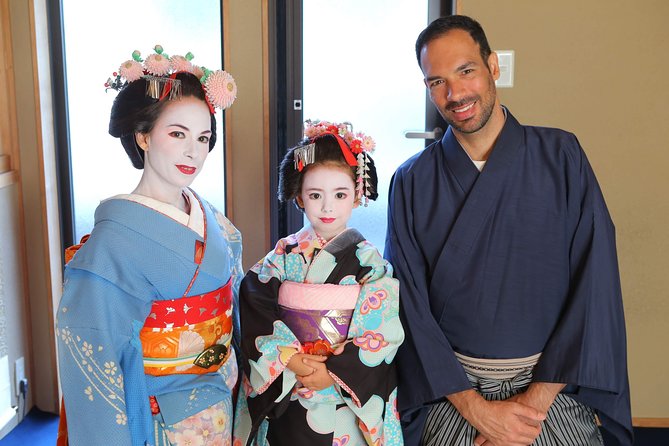
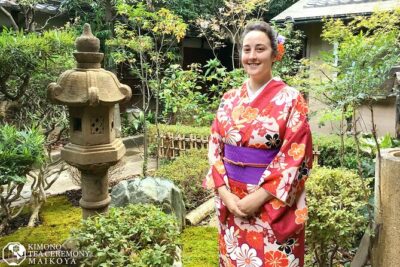
You can request kimono rental for an additional charge by sending a message. The rental is not included in the stated price. Some people particularly enjoyed combining the kimono with the ceremony, and the dressing process can make photographs feel more traditional. I would treat it as an optional extra, not a requirement. The tea lesson itself does not depend on what you wear.
If you do choose the kimono option, allow enough time for the added arrangements. The supplied details do not state how long dressing takes or what styles are available, so confirm those points directly before booking.
Is $36.48 a fair price?
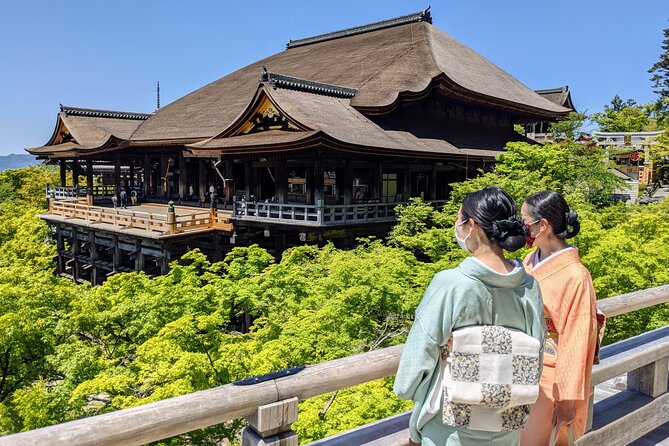
At $36.48 per person, this is a reasonably priced cultural activity in Kyoto, especially because the fee includes instruction, matcha, a seasonal sweet, and the tools needed for your own bowl. You are paying for access to a trained host and a structured introduction, not merely for a cup of tea.
The value is strongest if you want context. A café serving matcha may cost less, but it will not normally explain the ceremony’s etiquette, room arrangement, utensils, and history or let you practice under guidance. A longer private ceremony would offer more individual attention, but it would also cost more. The group format keeps the price moderate while still limiting attendance to eight.
The price is less compelling if you mainly want photos or a lavish setting. The room is described as small and plain, and the ceremony finishes in about 45 minutes. In that case, the activity may feel brief. You are buying a concise lesson and a chance to participate, not an all-day cultural program.
There are group discounts, which may help families or friends traveling together. The listing provides no discount amount, so check the final booking price rather than assuming a fixed saving.
Where it fits in a Kyoto day
The activity works well as a pause during a Higashiyama sightseeing day. Because it begins and ends at the same location and lasts about 45 minutes, you can plan it around other visits in the district. Do not treat the stated duration as a full block for your day, though. Add time to find the meeting point and settle in.
The short format also suits a first or last day in Kyoto. You get a clear introduction to an important part of Japanese culture without committing half a day. It can also provide a change of pace after several hours of temples, shopping, and walking.
The provider states that the experience requires good weather and may cancel if conditions are poor. If that happens, you are offered a different date or a full refund. For ordinary cancellations, you can receive a full refund if you cancel at least 24 hours before the local start time. Late cancellations and late changes are not refunded or accepted.
Who will enjoy this most?
I would recommend Camellia Flower Teahouse to first-time visitors who want a simple explanation of tea ceremony before trying to understand it on their own. It also suits couples, families with children aged six or older, and anyone who likes learning by doing.
It is a good match if you have been curious about matcha but do not know the correct way to prepare it. The host handles the difficult cultural context, then gives you a manageable task. You leave with a better sense of why the tea is whisked, why the movements matter, and why the ceremony feels more like an exchange than a beverage service.
The session is less suitable if you need step-free wheelchair access, want a private experience, or expect a large, ornate tea room. It may also feel too short for someone already familiar with the ceremony and looking for advanced instruction. In that case, a private option might be worth asking about, though the supplied details do not specify its price or exact format.
Practical tips for a better session
- Arrive ready to participate rather than simply take photographs. Photos and short videos are permitted, but keep your attention on the demonstration.
- Ask questions. The English-speaking hosts expect them, and the meaning behind the gestures is where much of the value lies.
- Choose chair seating if floor sitting will be uncomfortable. You can still take part fully.
- Consider the kimono only if the added cost and arrangements fit your plans. It is optional, not needed for the ceremony.
- Bring a calm attitude. The activity is built around careful movement and quiet attention, not speed.
- If you are booking for children, remember that everyone must be at least six years old.
- Leave room in your schedule for finding the address in Higashiyama and returning to the meeting point at the end.
Should you book Camellia Flower Teahouse?
Book it if you want a short, hands-on introduction to Kyoto’s tea culture, with an English-speaking instructor and a small group. The chance to watch a formal preparation, taste matcha with a seasonal sweet, and whisk your own bowl gives the session a clear beginning, middle, and end.
Skip it if your priority is a grand interior, a long ceremony, or wheelchair access. The room may be modest, and 45 minutes passes quickly. For most first-time visitors, though, the price is fair and the format is practical. Add the optional kimono if photographs and dress are important to you, but book the basic experience for the teaching, the calm, and the chance to try the craft yourself.
FAQ
How long does the Camellia tea ceremony last?
The experience lasts approximately 45 minutes.
Where does the tea ceremony take place?
It takes place at Tea Ceremony Camellia FLOWER, located at 349-13 Masuyacho, Higashiyama Ward, Kyoto, 605-0826, Japan.
What is included in the experience?
Tea bowls, tea scoops, and tea whisks are provided. You also receive matcha and a seasonal sweet as part of the ceremony.
Can I make my own matcha?
Yes. The instructor explains the basic process, and each participant has the opportunity to whisk their own bowl of matcha.
Is the activity suitable for children?
Children aged six and older can join. Children under six cannot participate.
Do I have to sit on the floor?
No. Floor seating is customary, but chairs and tables are available if you prefer them.
Is kimono rental included?
No. Kimono rental costs extra and can be requested by message.
Fresh tea listings around Kyoto
- Cycling Tour at Uji’s Matcha Green Tea Fields and Heritage★ 5.0 · 10 reviews
- Authentic Tea Ceremony & Sushi in The Museum of Kyoto★ 5.0 · 3 reviews
- Kyoto Fushimiinari:Wagashi Making & Small Group Tea Ceremony★ 5.0 · 14 reviews
- 2 Types of Japanese Sweets making and Tea Ceremony★ 4.6 · 17 reviews
- Kyoto Hidden Riverside Zen Mediation and Uji Matcha Experience★ 5.0 · 9 reviews
- Whisk Your Own Matcha: A Zen Matcha Experience at Temple★ 3.6 · 7 reviews
- Kyoto: Nighttime Zen Meditation and Matcha Tea Experience★ 5.0 · 7 reviews
- Matcha Grinding Experience and Walking Tour in Uji Kyoto★ 5.0 · 26 reviews
Tea Ceremony Experiences, compared.
Kyoto: Tea Ceremony in a Traditional Tea House in Kiyomizu
Read our review →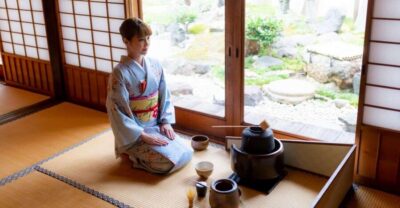
Kyoto: 45-Minute Tea Ceremony Lesson Experience
Read our review →
Kyoto: Table-Style Tea Ceremony at a Kyo-Machiya
Read our review →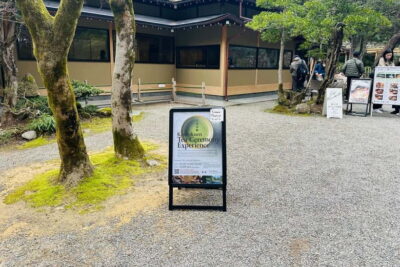
Browse the lists this tour appears in