
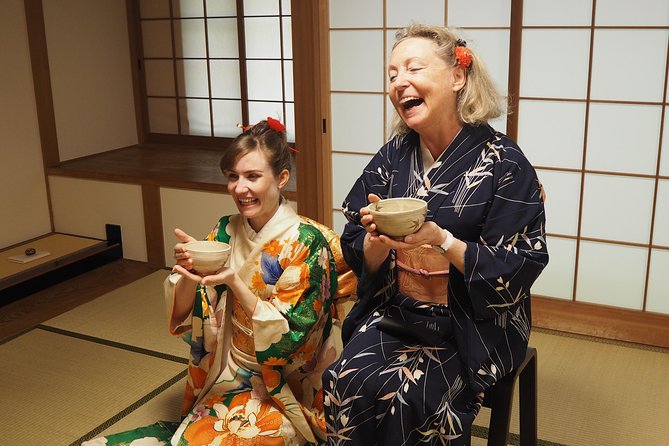
Review · KIMONO & TEA CEREMONY
Kimono and Tea Ceremony in Miyajima
Miyajima’s best cultural moments often happen away from the torii crowds, and this one takes place at quiet Tokuju-ji Temple, close to the ferry port. You choose a kimono from more than 100 options, receive careful help dressing, then watch and perform a matcha tea ceremony.
I like the small-group setting and the chance to make your own tea, rather than simply watching a demonstration. I also like the garden photographs and the thoughtful staff, who help with the clothing and explain each step clearly. The main consideration is that the ceremony uses tables rather than floor seating, and the full activity lasts only about an hour.
Key points to know before booking
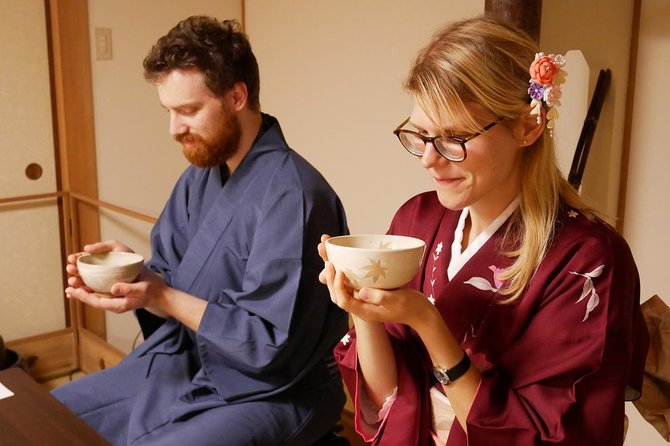
- Choose from more than 100 kimono: Staff help you select and fit traditional clothing for the ceremony.
- A quiet temple setting: Tokuju-ji is near the ferry port but away from Miyajima’s busiest shopping streets.
- You make your own matcha: After watching the tea master, you prepare and taste tea yourself.
- Photos are part of the experience: Staff take pictures during the dressing and ceremony, with images available after a questionnaire.
- Small groups keep things personal: The activity is advertised for a maximum of 10 people, with many sessions described as intimate groups of around six.
- Good for families: Children age six and older can take part, and the staff are especially patient with younger participants.
Why this one-hour ceremony works so well on Miyajima
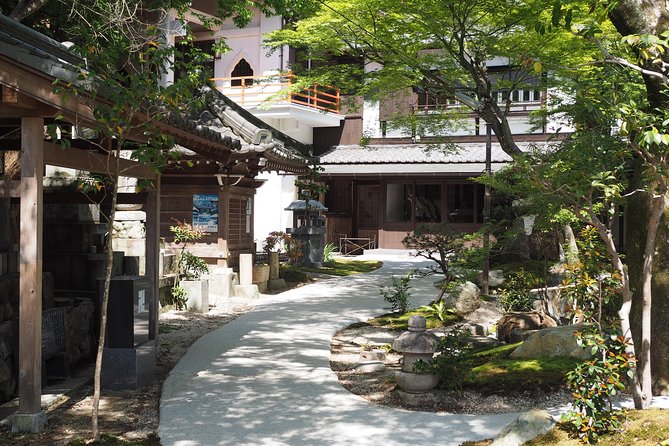
Miyajima is famous for its floating torii gate, deer, temple buildings, and crowded lanes near the ferry terminal. This experience gives you a different hour: quiet, formal, and focused on one of Japan’s most graceful customs.
The setting matters. You meet at Tokuju-ji Temple, a short walk from the ferry area, but the ceremony takes place away from the main business streets. That makes it easier to settle down after arriving on the island. You are not rushing from one sight to another. You are sitting, watching, learning, and handling the tea yourself.
I like the balance between dressing up and learning something real. This is not only a photo stop with a costume. Staff explain how to wear the kimono, a tea master demonstrates the ceremony, and you get a turn preparing matcha. The result feels more complete than simply renting clothing for a walk around town.
At the same time, keep your expectations sensible. The session lasts about one hour, so you will not become a tea ceremony expert. You will learn the basic manners, see the movements up close, prepare your own tea, and gain a clear introduction to the custom.
More Tea Ceremonies in Japan:
- Kyoto: Tea Ceremony in a Traditional Tea House in Kiyomizu
★ 4.9 · 3,519 reviews - Kyoto: Tea Ceremony Ju-An at Jotokuji Temple
★ 4.9 · 3,207 reviews - Kyoto: 45-Minute Tea Ceremony Lesson Experience
★ 4.3 · 2,378 reviews
Meeting at Tokuju-ji Temple near the ferry port
The official meeting point is Tokuju-ji Temple, also identified as 徳寿寺, at 741-1 Miyajimachō, Hatsukaichi, Hiroshima. It is close to public transportation and near the ferry port, which makes this a practical addition to a day trip from Hiroshima.
You should allow time to get your bearings after arriving on Miyajima. The activity ends back at the same meeting point, so you can continue sightseeing afterward without having to arrange a separate return trip.
The temple location is one of the experience’s strongest features. It gives the ceremony a sense of place without requiring a long journey across the island. You get a traditional setting, garden space for photos, and a quiet break from the busy streets, all within a compact visit.
The supplied directions do not give a walking time from the ferry, so use the temple address carefully when planning. A mobile ticket is provided, and confirmation arrives when you book.
Choosing and wearing one of more than 100 kimono
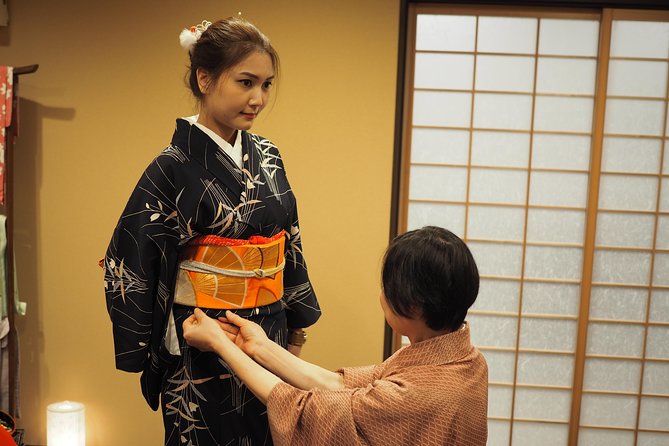
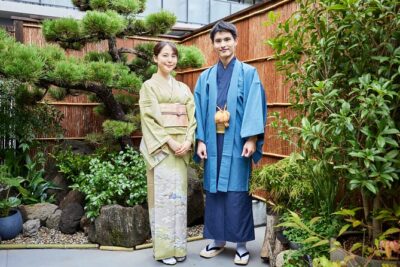
The activity begins with dressing, not tea. You choose a favorite kimono from a collection of more than 100, then staff provide the other items needed to complete the outfit.
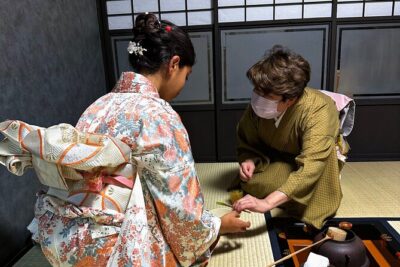
This part takes patience and skill. The staff do the fitting, adjust the layers, and guide you through the process step by step. Several people have appreciated the care given to both male and female participants, as well as the quality and variety of the fabrics.
The large selection is useful because you are not simply handed a standard outfit. You can choose a color and pattern that feels right for you. If you are tall or wear a larger clothing size, the available information includes a positive account of staff accommodating a tall participant in a size 18. That suggests flexibility, though you should still contact the operator in advance if fit is a major concern.
The kimono dressing is also a cultural lesson in its own right. You see how much structure goes into the garment and why putting it on is not a quick costume change. It adds ceremony before the tea even begins.
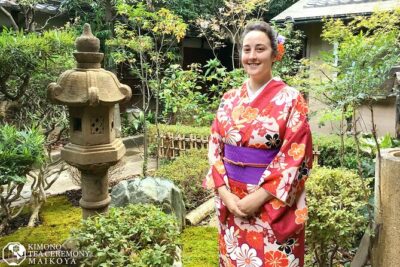
You should plan to move carefully once dressed. The clothing is formal, and the purpose is to appreciate it rather than treat it like ordinary sightseeing clothes. Staff allow time for photos in the garden and around the temple grounds, so you do not have to hurry through the picture-taking.
Watching the tea master before making matcha yourself
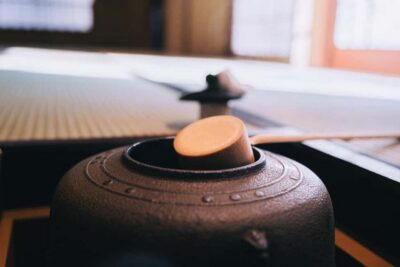
Once everyone is dressed, the tea portion begins. A tea master conducts the ceremony while explaining how to drink matcha with the proper manners. You are shown the order of movements and the quiet attention expected during the ritual.
This demonstration is valuable because tea ceremony can look mysterious if you only see it from a distance. Small gestures matter: how the tea is presented, how you receive it, and how you handle the bowl. The explanation gives those actions meaning without turning the hour into a lecture.
The ceremony also introduces the Buddhist principles connected with tea preparation. One activity description refers to the four principles of tea-making in Buddhism, giving you a little cultural context alongside the practical instruction.
Then you prepare your own matcha. You learn the basic method, make the tea, and taste what you have prepared. That hands-on step is the reason I would choose this activity over a ceremony where you only sit and watch. You leave with enough knowledge to recreate the drink for friends at home.
Tea is served with a sweet. Local Miyajima chocolate is also offered, and it has become a memorable part of the experience for many people. The chocolate gives you something familiar alongside the bitter, grassy flavor of matcha.
Do not assume you will love the taste of matcha immediately. It is more concentrated and savory than the sweetened green tea many people know. The good news is that making it yourself turns the tasting into part of the lesson, not a test of your palate.
More Kimono and Tea Ceremonies in Japan:
- Kimono Tea Ceremony at Kyoto Maikoya, NISHIKI
★ 5.0 · 911 reviews - Kimono Tea Ceremony at Tokyo, Asakusa Maikoya
★ 5.0 · 638 reviews - Kyoto: Kimono Tea Ceremony at Orizuruya Gion
★ 4.9 · 618 reviews - KYOTO Tea Ceremony with kimono near by Imamiya Jinjya Shrine
★ 5.0 · 343 reviews
A calm setting, with tables instead of floor seating
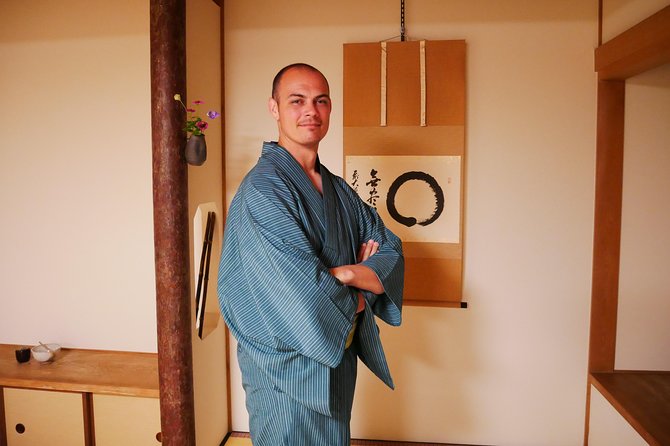
The ceremony takes place in a calm temple environment, and quiet is part of the appeal. You get a chance to slow down and notice the movements, the garden, and the formal rhythm of the tea.
One detail may surprise you: the ceremony uses tables rather than traditional floor seating. If you imagined kneeling on tatami, this may feel less theatrical. On the other hand, sitting at a table is more comfortable for many people, including older visitors and anyone unused to sitting on the floor.
The operator explains that table-style tea practice has been used in Japan for more than 100 years and is not only a concession to foreign visitors. That is useful context. The format remains connected to Japanese practice while making the activity easier for a broad range of participants.
The peaceful atmosphere is a better reason to book than the promise of a dramatic show. This is a gentle cultural activity. You watch carefully, follow instructions, and enjoy the quiet.
Photos, garden time, and a useful souvenir
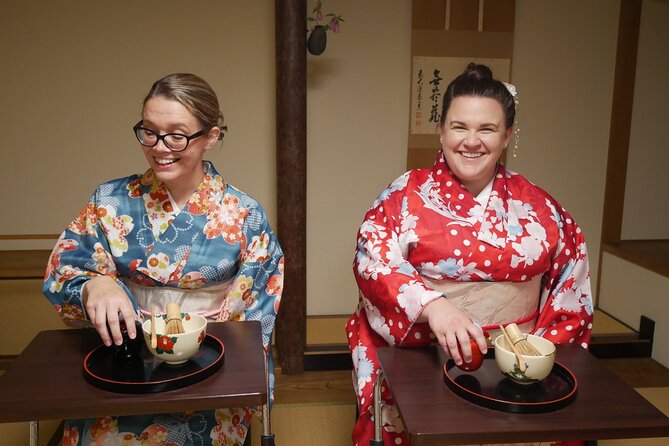
Staff take photos during the dressing and tea lessons. After answering a questionnaire, you can receive the pictures. This is a welcome feature because wearing a kimono is one of the visual highlights of the hour, and it is difficult to photograph yourself while taking part in the ceremony.
You also get time to take your own pictures in the garden and temple grounds. The setting gives you more than a plain indoor backdrop. A few minutes outside lets you enjoy the clothing without feeling that every moment must follow the formal ceremony.
If photos are important to you, ask staff about the exact delivery process during the visit. The information confirms that pictures are provided after a questionnaire, but it does not state a fixed delivery method for every booking.
The ceremony itself can become the souvenir. You learn a repeatable way to prepare matcha, and the lesson is simple enough to remember. If you buy a tea set afterward, you have a practical reminder of the experience rather than only a photograph.
How personal is the small-group format?
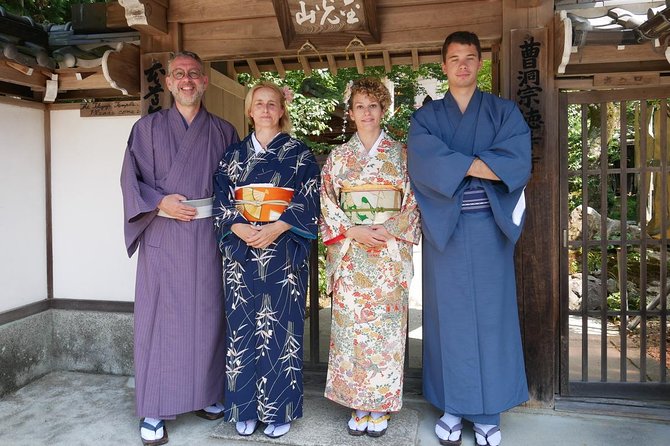
The activity has a maximum of 10 participants, while its description emphasizes an intimate group of around six. That is small enough for you to see the tea master clearly and ask questions without competing with a large crowd.
The size also matters during dressing. Staff can give more direct attention to choosing the kimono, adjusting it, and helping with photos. Families with children benefit from this pace. The available information includes a family group with five children, and the staff were patient during both dressing and tea.
Small does not mean private. You may share the session with another couple or group, so do not book expecting a one-to-one appointment unless that is confirmed separately. Still, a maximum of 10 is far more manageable than a large city attraction with a room full of participants.
English support is available. One account specifically praised the English-speaking translator, and the staff are described as able to answer questions about the ceremony and Japanese culture. The exact staffing can vary by session, so the level of translation may not be identical every time.
Is $85.89 a fair price?
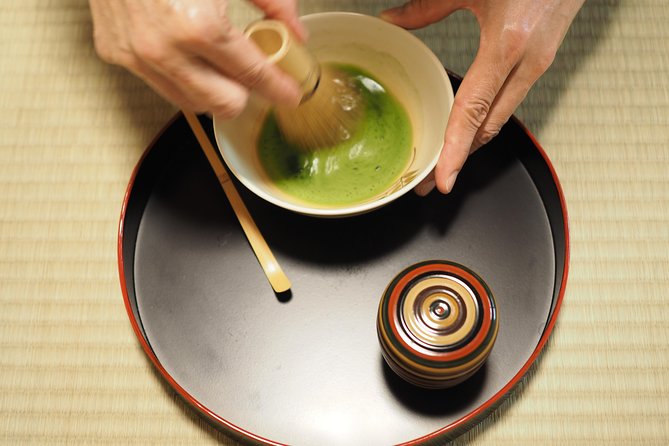
At $85.89 per person, this is not a cheap add-on if you are only counting the one-hour duration. But the price includes several linked parts: kimono use, professional dressing, the tea demonstration, your own matcha preparation, a sweet, and staff-taken photographs after the questionnaire.
You are also paying for the temple setting and the care involved in making the activity run smoothly. Dressing a full kimono is not the same as picking up a rental outfit and putting it on yourself. The staff time is a major part of the value.
I would consider the price fair for someone who wants a cultural activity built around participation. It is less compelling for someone who mainly wants a kimono photo and does not care about tea customs. In that case, a shorter or simpler clothing rental might better suit your budget, though this experience includes instruction that a photo-only option would not.
The best value comes when you treat it as a focused cultural lesson during a full Miyajima day. You get a quiet pause between sightseeing stops, a traditional setting, and something you can repeat at home.
Who should book this Miyajima experience?
This is a strong choice for first-time visitors who want a clear introduction to Japanese tea ceremony without committing half a day. It also suits couples, families, and small groups who want photographs as well as instruction.
Children must be at least six years old. Younger children cannot join under the stated rules, and the formal pace may not suit every child. Older children who enjoy dressing up, making drinks, or asking cultural questions should find plenty to hold their attention.
I would also recommend it if you are staying in Hiroshima and have only one day for Miyajima. The location near the ferry port reduces wasted time, and the experience ends where it starts. You can fit it around other island sights.
You may want to skip it if you dislike formal clothing, cannot comfortably sit at a table for the session, or want a long, highly detailed study of tea ceremony. The hour offers an introduction, not advanced training.
Practical details that affect your plans
The experience is available to visitors age six and up and has a maximum capacity of 10 people. It uses a mobile ticket, and booking confirmation is provided immediately.
Free cancellation is available when you cancel at least 24 hours before the start time. Changes or cancellations made inside that window are not accepted for a refund. The activity depends on good weather, and if poor weather forces cancellation, you are offered another date or a full refund.
Because the ceremony is near the ferry port, it can fit neatly into a day on Miyajima. Still, do not schedule it so tightly that a delayed ferry or crowded arrival leaves you rushing. You need to arrive at the temple meeting point ready to begin the dressing process.
The activity ends back at Tokuju-ji Temple. That makes it simple to continue toward Miyajima’s other sights, return to the ferry, or spend more time around the temple area.
Should you book it?
I would book this if you want more than a quick kimono photograph. The strongest parts are the thoughtful dressing help, the quiet temple setting, the chance to prepare your own matcha, and the small-group attention.
The price is reasonable for a bundled cultural lesson, though the one-hour duration means you should value quality and focus rather than quantity. The table seating may disappoint anyone expecting a floor-based ceremony, but it also makes the experience easier for many people.
For a first visit to Miyajima, this is a smart way to add context and calm to a busy sightseeing day. If you want a hands-on introduction, book it. If you only want to see the island’s major landmarks as quickly as possible, spend the hour elsewhere.
FAQ
Where does the kimono and tea ceremony take place?
The activity takes place at Tokuju-ji Temple, also written as 徳寿寺, at 741-1 Miyajimachō, Hatsukaichi, Hiroshima. It is near the Miyajima ferry port.
How long does the activity last?
The experience lasts approximately one hour.
How many people can join?
The activity has a maximum of 10 participants. It is also presented as a small-group experience, often with around six people.
Can children participate?
Yes. The minimum age is six.
Do I need to bring a kimono?
No. The experience provides kimono, and you can choose from more than 100 options. Staff help you dress.
Do I make my own matcha?
Yes. You watch the tea ceremony, learn how to drink matcha properly, and prepare and taste your own tea.
Are sweets included?
Yes. Tea is served with a sweet, and Miyajima chocolate is also provided during the experience.
Can I cancel for a refund?
You can cancel for a full refund up to 24 hours before the start time. If poor weather causes the operator to cancel, you are offered another date or a full refund.
Fresh tea listings around Japan
- Cycling Tour at Uji’s Matcha Green Tea Fields and Heritage★ 5.0 · 10 reviews
- Authentic Japanese tea tasting: sencha, matcha and gyokuro★ 5.0 · 12 reviews
- Asakusa Cultural Walk & Matcha Making Tour★ 4.5 · 7 reviews
- Authentic Tea Ceremony & Sushi in The Museum of Kyoto★ 5.0 · 3 reviews
- Authentic Japanese Tea Ceremony Experience in Kamakura★ 4.5 · 8 reviews
- At an Antique Shop, Tea Ceremony and Japanese Sweets Forming★ 5.0 · 5 reviews
- Japanese Sweets Making & Tea Ceremony in Yokohama, suburban Tokyo★ 5.0 · 4 reviews
- Matcha tasting for all five senses at Hotel Yokohama★ 5.0 · 7 reviews
Kimono & Tea Ceremony, compared.
KYOTO Tea Ceremony with kimono near by Imamiya Jinjya Shrine
Read our review →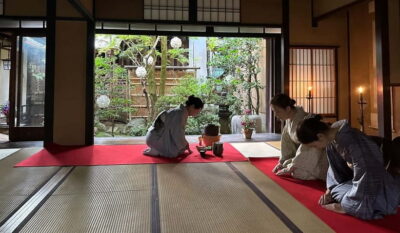
Kyoto: Kimono and Tea Ceremony Experience at Cultural Asset
Read our review →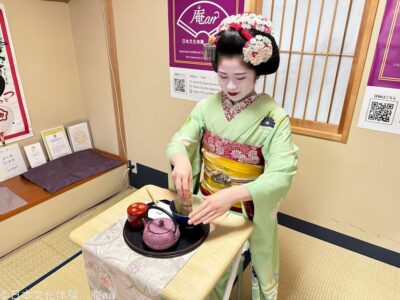
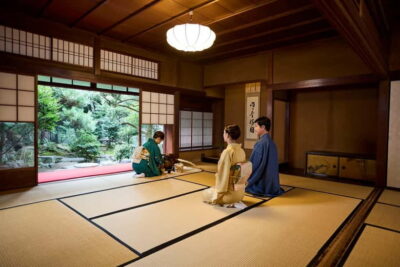
Kyoto: Kimono Tea Ceremony with Matcha and Sweet
Read our review →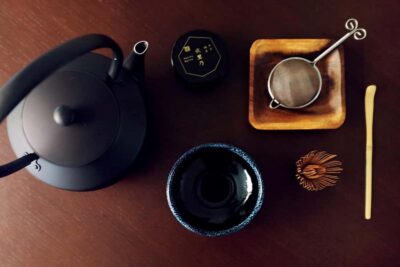
Browse the lists this tour appears in