
Review · MATCHA EXPERIENCES
Matcha Making Experience in Shinjuku
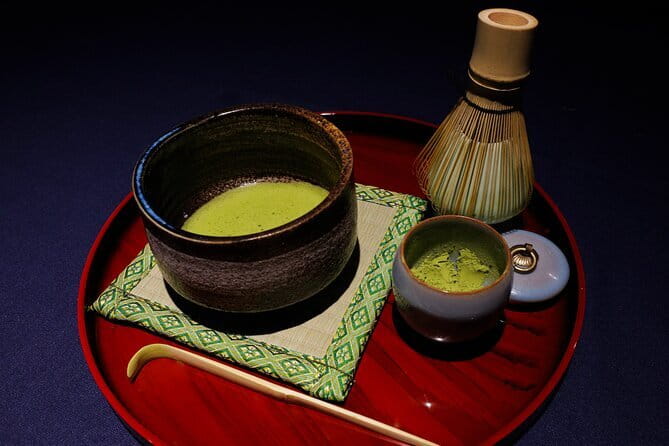
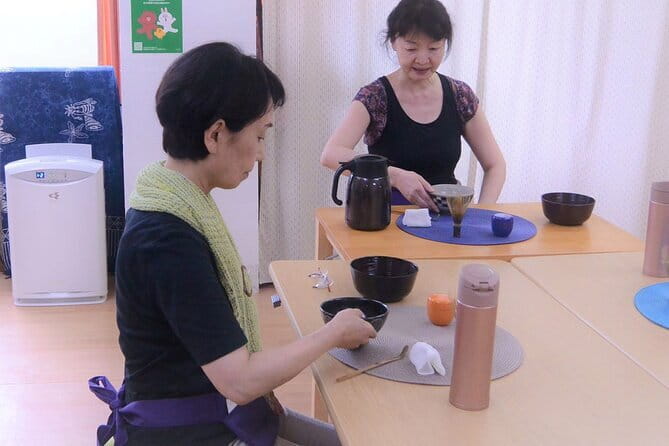
Matcha is not simply green tea in powdered form. In this Shinjuku class, you learn how to turn bright green powder and hot water into a smooth drink with a bamboo whisk, then enjoy it with a traditional sweet. The useful part is the hands-on lesson: you leave knowing the basic movements instead of merely watching a ceremony.
I like that all equipment and ingredients are provided, so you can arrive empty-handed. I also like the short, focused format, with history and tea rituals folded into about an hour. The main drawback is that the class may include up to 20 people, and the stated itinerary also names Senso-ji Temple, Tokyo Tower, and Yokohama Landmark Tower, which do not fit naturally into a one-hour Shinjuku tea lesson. Confirm the schedule before booking.
Key points at a glance
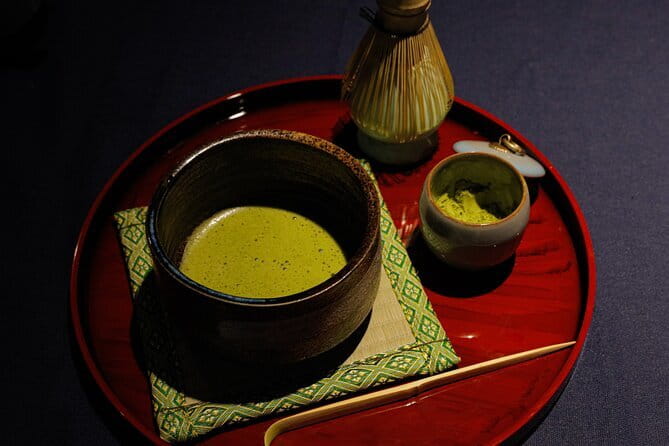
- You whisk your own matcha: Learn to use a bamboo whisk, called a chasen, rather than just watching a demonstration.
- A sweet comes with the tea: The prepared matcha is served with a traditional sweet, giving you the classic bitter-sweet pairing.
- The class is based in Shinjuku: Meet at a flower-decorated house near Shinjuku Station, with the activity ending at the same place.
- The lesson lasts about one hour: This fits neatly before dinner, shopping, or another Tokyo visit.
- A kimono-clad instructor may lead the class: One account describes the instructor in a kimono and praises the clear explanation of matcha techniques and tradition.
- The group may reach 20 people: That keeps the price reasonable, but the setting may feel less personal than a private tea lesson.
What this Shinjuku matcha class really teaches
The appeal here is simple: you do something with your hands. Matcha preparation can look mysterious when presented as a formal Japanese tea ceremony, with exact gestures, special tools, and careful movements. This lesson breaks the process into manageable steps.
You learn that matcha is powdered green tea, not a tea bag or loose leaves steeped in water. The powder is whisked directly into the drink. That means the way you combine the powder and water matters, and the bamboo whisk does more than stir. It helps create the light, fine foam associated with properly prepared matcha.
The instructor also explains the history and customs surrounding the drink. That context gives the activity more weight than a quick café stop. You are not only tasting a fashionable green drink. You are learning why the preparation is treated with care and how it connects with Japanese tea practice.
The class is described as a traditional tea experience rather than a full, formal tea ceremony. That distinction matters. You should expect an approachable lesson where you participate, not a long ceremonial performance with every rule and movement presented in full detail.
More Matcha Experiences in Tokyo
- Matcha Making Class in Tokyo with Authentic Japanese Sweets Set
★ 5.0 · 744 reviews - Tokyo: Matcha Making Experience with Mochi Sweets in Asakusa
★ 4.9 · 388 reviews - Asakusa Cultural Walk & Matcha Making Tour
★ 5.0 · 245 reviews
Inside the one-hour lesson
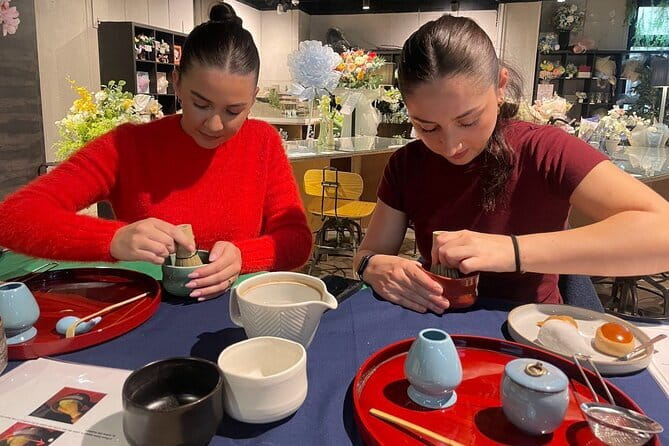
The usual flow begins with an introduction to matcha and the Japanese tea ceremony. You hear about the drink’s place in Japanese culture before handling the equipment. This is a good order for beginners because the tools make more sense once you know why they are used.
Next comes the practical section. You prepare the tea with a chasen, the traditional bamboo whisk. The supplied details do not specify every step, such as the exact amount of powder or water, so your instructor will guide you through the working method on the day. You can expect the important lesson to be the whisking technique and the proper approach to preparing the drink.
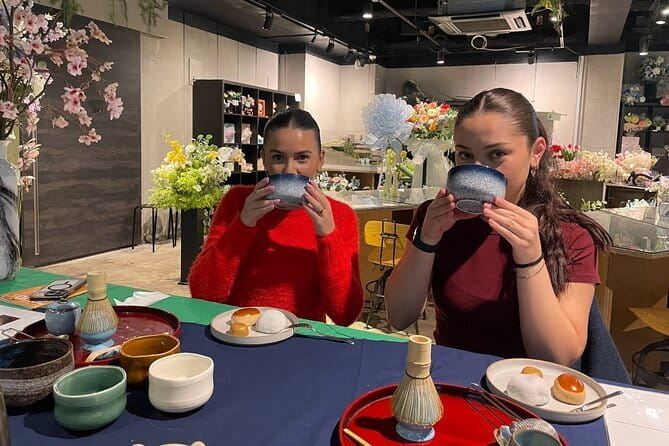
Then you taste the cup you made. That moment gives the class a clear payoff. You can see how the texture and foam change the experience, and you have a chance to pair the earthy, sometimes bitter taste of matcha with a sweet.
A traditional sweet is included. This is not a minor extra. Matcha can taste strong if you are used to sweetened café drinks, and the sweet provides the familiar counterpoint used in Japanese tea settings.
The entire activity lasts about an hour, so the pace should be fairly direct. You will not spend half a day in a tea house. Instead, you get a compact cultural lesson that can fit into a busy Tokyo schedule.
Why the hands-on part is worth your time
I prefer cultural activities that teach you a small skill you can remember after the holiday. This one does that. Once you have used a bamboo whisk and prepared your own cup, matcha on a menu becomes easier to understand.
The lesson also helps you avoid a common mistake: treating matcha as just another sweet green beverage. The traditional drink may be more earthy and bitter than a matcha latte. Learning the basic preparation gives you a better sense of the ingredient itself.
You also gain a small ritual to take home. The supplied information does not say that you receive a whisk or matcha powder as a souvenir, so do not book this expecting a take-home kit. The lasting benefit is the technique and the cultural context.
The class suits first-time visitors especially well. You do not need prior knowledge, and you do not need to bring tools or ingredients. If you already know how to prepare matcha, the history and ceremony discussion may be more valuable to you than the whisking practice.
The instructor and the feel of the class
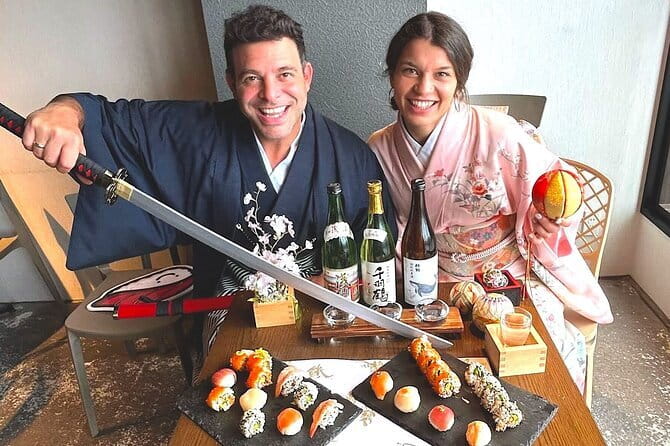
No instructor name is provided, so you cannot choose a particular teacher in advance. One detailed account describes the instructor as wearing a kimono and giving a clear explanation of the tea process, traditions, and techniques. That suggests a presentation with a clear visual connection to Japanese tea culture, though clothing and teaching style may vary by session.
A kimono can help set the tone, but the quality of this experience depends more on how well the instructor demonstrates the whisking and explains the customs. The most useful teaching will show you what to do, then let you try it yourself.
The maximum group size is 20 people. That is small enough for a shared class, but it is not an intimate private ceremony. If you want long one-to-one coaching or plenty of time for questions, a smaller class may suit you better. If you enjoy meeting other people and want a reasonably priced introduction, the group format is likely a fair trade.
Same city, a very different cup:
- Kimono Tea Ceremony at Tokyo, Asakusa Maikoya
★ 5.0 · 638 reviews - Tokyo: Traditional Tea Ceremony with a Tea Master
★ 5.0 · 528 reviews - Dynamic Tokyo: Tokyo Tower, Tea Experience, Bay Cruise Day Tour
★ 4.5 · 521 reviews - Tokyo: Matcha and Kimono Experience
★ 4.7 · 219 reviews
Finding the meeting point in Shinjuku
The meeting point is listed as a flower-decorated house at:
Japan, 160-0022 Tokyo, Shinjuku City, Shinjuku, 3-chōme 6-7, 第6三和ビル, 4階.
The wording suggests a distinctive building marker, but the address is still worth checking carefully before you set out. Shinjuku is dense, busy, and full of buildings with similar signs. Use the mobile ticket and booking confirmation, allow extra time, and look for the flower-decorated house described in the directions.
The activity ends back at the meeting point. That makes planning easier. You can arrange dinner, shopping, or another Shinjuku stop afterward without figuring out a new return location.
The experience is near public transportation, which is useful in a district where walking distances and station exits can be confusing. The supplied information does not identify a specific station exit, so do not rely on a general assumption that every Shinjuku exit is equally convenient.
The unusual itinerary details you should clarify
The stated itinerary names three stops: Senso-ji Temple, Tokyo Tower, and Yokohama Landmark Tower Sky Garden. These are major Tokyo-area sights, but they do not match a one-hour matcha-making activity that begins and ends in Shinjuku.
There is also no private transportation included. The experience is described as a matcha lesson, not a sightseeing transfer, and the tour summary gives a duration of about one hour. For that reason, I would treat those three names as a scheduling detail that needs confirmation rather than assume you will visit all of them during the class.
Senso-ji Temple is in Asakusa, Tokyo Tower is in the Minato district, and Yokohama Landmark Tower is in Yokohama. Visiting all three would require substantial travel time, and it would be impossible to combine them naturally with a one-hour Shinjuku activity without a much longer program.
Before paying, check the exact confirmation for the date, meeting point, and activity flow. Do not arrive expecting a temple and tower sightseeing tour. The reliable core of the experience is the matcha lesson in Shinjuku.
What the $32.66 price includes
At $32.66 per person, the price is reasonable if you want instruction rather than just a cup of matcha. You are paying for the lesson, the equipment, the ingredients, the cultural explanation, and the sweet served with the tea. All fees and taxes are included.
The value is strongest for someone who would otherwise buy matcha in a café but wants a more active cultural experience. You get a skill, a guided explanation, and a tasting in about an hour. That is a useful amount of time for the cost, particularly in expensive central Tokyo.
The price does not include private transportation, additional meals, or extra drinks. Those exclusions are easy to overlook because the word experience can sound like a larger outing. Plan to pay separately for anything beyond the supplied tea and sweet.
I would not compare this price with a full formal tea ceremony. This is a shorter, more practical class. It is best judged as an introductory workshop, not as an elaborate half-day cultural program.
Who should book this activity
This class is a good match for:
- First-time matcha drinkers who want to understand the taste and preparation
- Couples looking for a short cultural activity in Shinjuku
- Families or small groups who prefer participation over a long performance
- Visitors with a free hour before dinner or after sightseeing
- Anyone curious about Japanese tea customs but unsure about joining a formal ceremony
It may be less suitable if you dislike powdered tea, want a private instructor, or expect a full traditional ceremony with an extensive series of rituals. The maximum group size of 20 also means the atmosphere may be shared rather than quiet and personal.
You should also think about timing. One hour is convenient, but it leaves little room for delays at the meeting point or extended questions. If tea culture is one of your main reasons for visiting Japan, look for a longer ceremony as well. If you want a well-sized introduction, this format makes sense.
Booking and cancellation details
The experience is normally booked about seven days ahead, so you do not need to plan many months in advance. Still, popular Tokyo time slots can fill, and booking around a week ahead is a sensible approach.
Confirmation is provided when you book, and the mobile ticket means you do not need to print a voucher. Keep the ticket available on your phone and check the meeting instructions before leaving.
Free cancellation is available up to 24 hours before the start time for a full refund. Cancellations or changes made less than 24 hours before the start time are not refunded or accepted. The cut-off uses local Tokyo time.
The activity requires good weather and a minimum number of participants. If poor weather or low enrollment causes cancellation, you are offered another date or experience, or a full refund.
Final verdict: book it for a practical taste of tea culture
I would book this matcha class if you want a short, hands-on introduction that fits neatly into a Tokyo day. The best features are the supplied equipment, the chance to whisk your own tea, the history and ritual explanation, and the sweet served alongside the drink.
The kimono detail described by one participant adds a traditional touch, while the one-hour length keeps the commitment easy. The main cautions are the possible 20-person group and the confusing sightseeing stops listed alongside a Shinjuku tea lesson.
Check the final schedule carefully, then book if the activity is confirmed as the one-hour Shinjuku class. For a modest price, you get more than a drink: you learn how matcha is made and why the preparation matters.
FAQ
How long does the matcha-making experience last?
The experience lasts approximately one hour.
Where does the activity begin?
It begins at a flower-decorated house in Shinjuku, at Japan, 160-0022 Tokyo, Shinjuku City, Shinjuku, 3-chōme 6-7, 第6三和ビル, 4階.
Where does the activity end?
The activity ends back at the meeting point.
Is equipment provided?
Yes. The equipment and ingredients needed to prepare the matcha are provided.
Is a sweet included?
Yes. The experience includes a cup of prepared matcha accompanied by a traditional sweet.
Is transportation included?
No. Private transportation is not included.
How many people can join the class?
The activity can have a maximum of 20 participants.
Can I cancel for a full refund?
Yes. You can cancel at least 24 hours before the start time for a full refund. Cancellations made less than 24 hours before the start time are not refunded.
Fresh tea listings around Tokyo
- Yokohama : Tea Ceremony with Sweets and Souvenir★ 5.0 · 5 reviews
- Walking Tour: Yanaka,Nezu& Sendagi: Tea Ceremony & Old Tokyo★ 5.0 · 3 reviews
- Private Mochi・Matcha sweets Making Class Near Shibuya Area★ 5.0 · 22 reviews
- Private Kimono and tea ceremony at local home near Tokyo Disney★ 5.0 · 6 reviews
- 2 Hours Mochi &Nerikiri Making & Matcha Class in Bunkyo★ 5.0 · 21 reviews
- Kimono and Tea Ceremony in Asakusa Private Food Tour With Guide★ 5.0 · 4 reviews
- Tokyo: Tea Ceremony & Japanese Sweets Making★ 5.0 · 10 reviews
- Tokyo Sweets Tour: Hidden Gems & Matcha at an Old Tea House★ 5.0 · 6 reviews
Matcha Experiences, compared.
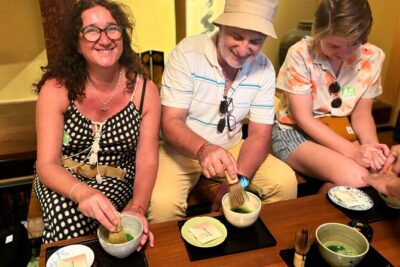
World Heritage Kyoto & Nara Uji Authentic Matcha Experience
Read our review →
Matcha Making Class in Tokyo with Authentic Japanese Sweets Set
Read our review →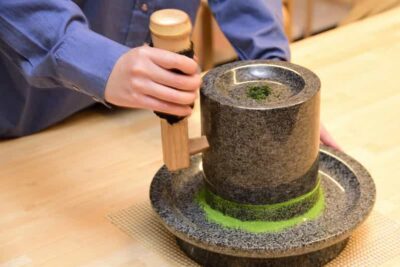
Kyoto: Tea Museum Tickets and Matcha Grinding Experience
Read our review →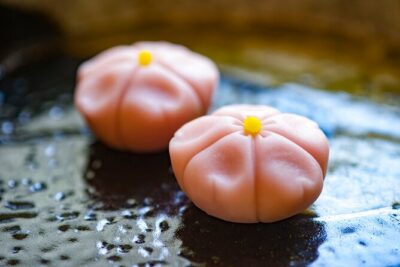
Matcha Making Class in Osaka with Authentic Japanese Sweets Set
Read our review →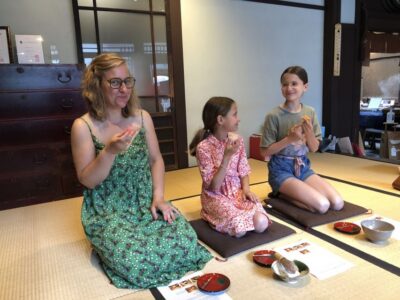
Kyoto: Tea Ceremony Meditation – Make Matcha with Tea Master
Read our review →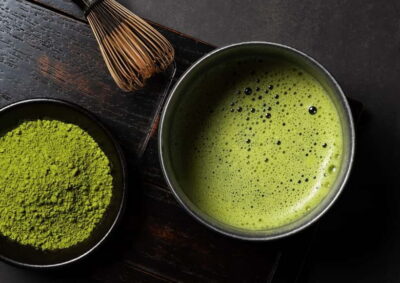
Tokyo: Matcha Making Experience with Mochi Sweets in Asakusa
Read our review →
Kyoto: Kimono Tea Ceremony with Matcha and Sweet
Read our review →
Browse the lists this tour appears in