
Review · MATCHA EXPERIENCES
Tokyo Small-Group Ramen, Gyoza & Matcha Class with a Pro Chef
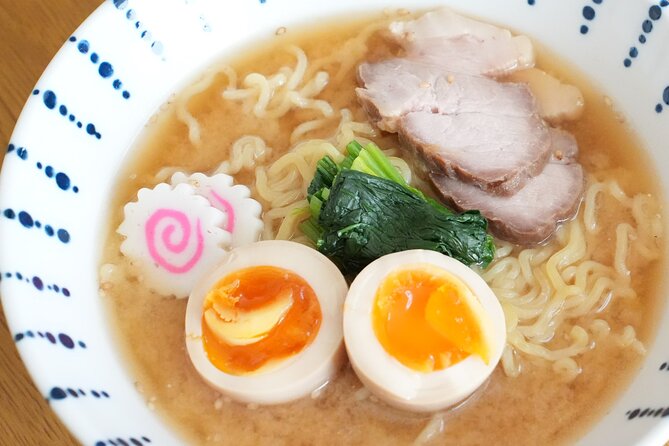
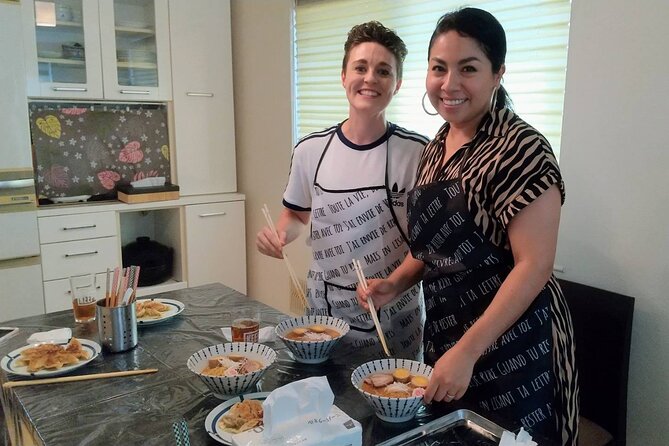
Making ramen from its foundations is the main appeal here. You do not simply sit down to a bowl and call it Japanese cooking. You learn about dashi, build miso ramen, fold gyoza, then prepare matcha with Japanese sweets.
I like the maximum group size of four, which gives you room to ask questions instead of fighting for the chef’s attention. I also like the useful take-home recipes and the fact that the class includes dinner, an apron, photos, matcha, and sweets. The catch is important: no vegetarian, vegan, halal, or gluten-free menu is available.
Key points before you book
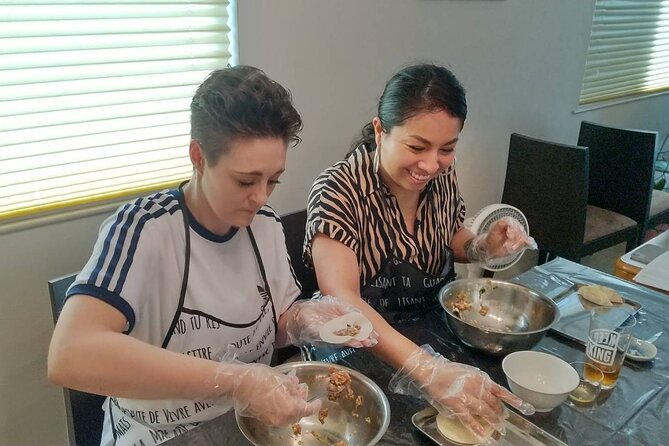
- A four-person class: Small numbers allow the English-speaking chef to adjust the lesson to your pace.
- More than a ramen demo: You make dashi, miso ramen, gyoza, matcha, and enjoy seasonal Japanese sweets.
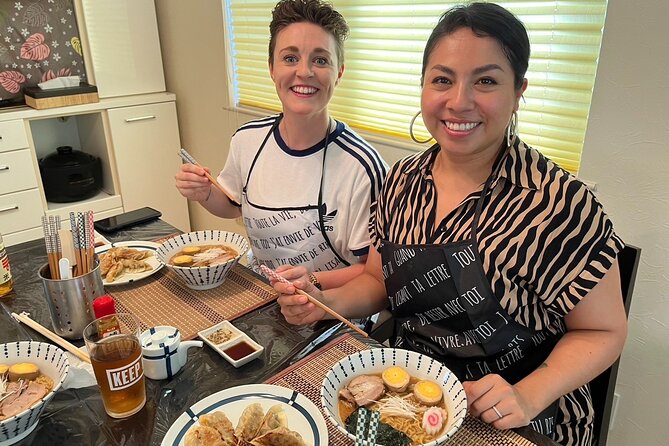
- A full meal is included: Your dinner consists of the ramen and gyoza you prepare.
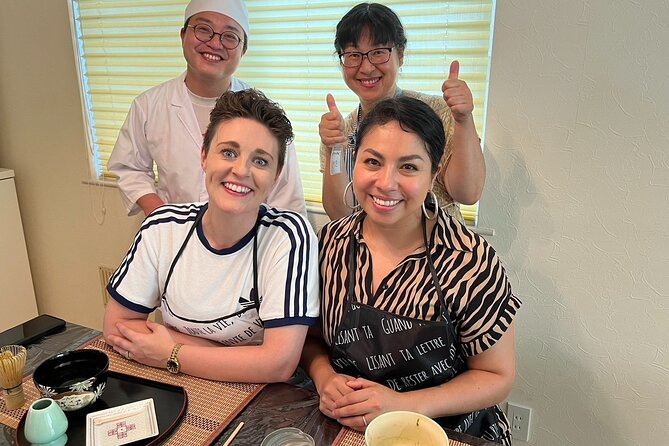
- Useful extras: You receive recipes, an apron, and photos taken during the class.
- Good Ikebukuro location: The class is in Zoshigaya, with access from Shibuya and Shinjuku by train.
- Strict menu limits: Vegetarian, vegan, halal, and gluten-free diets cannot be accommodated.
What this two-hour Tokyo cooking class actually offers
This is a compact, hands-on lesson rather than a long food tour. In about two hours, you work through several familiar Japanese foods and finish by eating what you have prepared.
The central project is miso ramen. The lesson begins with dashi, the savory base that gives many Japanese dishes their depth. From there, you move toward a bowl of miso ramen, learning techniques you can repeat at home rather than merely watching a chef cook.
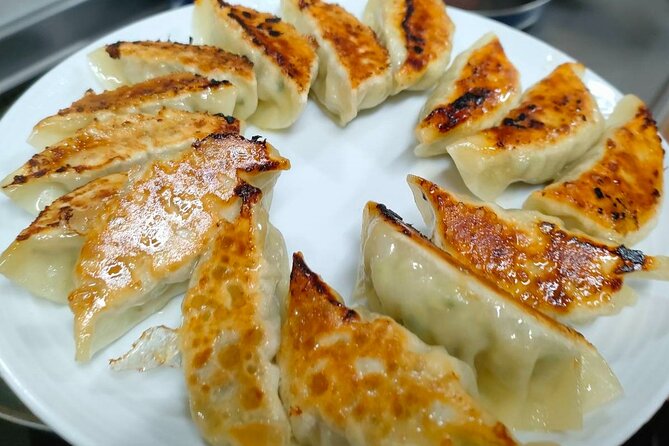
Gyoza adds a different kind of work. Ramen depends on broth and balance, while gyoza asks you to shape and prepare small dumplings. The class describes them as juicy, so expect this part to focus on producing a satisfying filling and finished dumpling rather than on a quick restaurant-style demonstration.
Matcha gives the session a quieter second half. You prepare your own green tea and have it with seasonal Japanese sweets. That makes the class more than a dinner-making exercise. You get a short introduction to a Japanese tea custom, though this is still a two-hour food class, not a formal tea ceremony.
More Matcha Experiences in Tokyo
- Matcha Making Class in Tokyo with Authentic Japanese Sweets Set
★ 5.0 · 744 reviews - Tokyo: Matcha Making Experience with Mochi Sweets in Asakusa
★ 4.9 · 388 reviews - Asakusa Cultural Walk & Matcha Making Tour
★ 5.0 · 245 reviews
Building dashi before the miso ramen
Learning dashi is one of the best reasons to choose this class. Many first-time visitors know ramen as a finished bowl, but the base matters just as much as the noodles and toppings. By starting with dashi, you get a clearer sense of how Japanese cooking creates flavor without relying only on heavy seasoning.
The lesson then turns to miso ramen. You will learn how the components come together and receive a recipe to use later. That practical handout matters because a cooking class can fade quickly once you return home. A written recipe gives you a chance to repeat the dish while the methods are still fresh.
The available details do not specify every ingredient, cooking station, or step. That is worth keeping in mind. You should expect instruction in the main techniques, but not a professional culinary-school course covering every regional ramen style.
The chef teaches at your pace, which is especially helpful if your cooking experience is limited. You can ask about unfamiliar ingredients and techniques through the English-speaking guide. Since the group is capped at four, this should feel more like a private lesson than a large demonstration.
Folding gyoza and eating the finished dinner
Gyoza is a useful companion to ramen because it gives the class a second style of Japanese cooking. You are not only making soup. You are also working with filled dumplings and learning how a small, carefully prepared item fits into a Japanese meal.
The supplied description calls the result juicy gyoza. Still, the class does not provide a detailed folding method or list of fillings, so I would not book it expecting a specialized dumpling workshop. Think of gyoza as one substantial section of a broad lesson.
The best part of the format is that you eat the ramen and gyoza as dinner. The meal is included in the $104.51 price, along with matcha and Japanese sweets. That helps the cost make more sense than a class where you pay for instruction and still need to find dinner afterward.
A past booking included grandparents and their 19-year-old foodie grandson. The group enjoyed the food, had its questions answered, and appreciated that the scheduled time was respected. That combination suggests a good fit for mixed-age groups, families, and anyone who wants a clear, contained activity rather than a long evening commitment.
Matcha and seasonal sweets add a cultural pause
The matcha portion changes the rhythm of the class. After the savory work of dashi, ramen, and gyoza, you prepare green tea and enjoy it with Japanese sweets.
The seasonal sweets are an appealing detail because they connect the tea to the time of year. The exact sweets are not specified, so you should not expect a particular confection. You can expect a sweet accompaniment to the matcha portion of the class.
This part also gives you a chance to notice the contrast between Japanese food traditions. Ramen and gyoza are practical, filling foods. Matcha and sweets bring more attention to preparation and presentation. In a short lesson, that contrast gives the experience a wider cultural frame.
It is best to keep your expectations realistic. The activity promises a matcha experience, not a full tea ceremony with formal etiquette instruction. If your main goal is tea culture, this class offers an introduction. If your main goal is dinner, the ramen and gyoza remain the stronger reason to book.
Same city, a very different cup:
- Kimono Tea Ceremony at Tokyo, Asakusa Maikoya
★ 5.0 · 638 reviews - Tokyo: Traditional Tea Ceremony with a Tea Master
★ 5.0 · 528 reviews - Dynamic Tokyo: Tokyo Tower, Tea Experience, Bay Cruise Day Tour
★ 4.5 · 521 reviews - Tokyo: Matcha and Kimono Experience
★ 4.7 · 219 reviews
Why the four-person limit matters
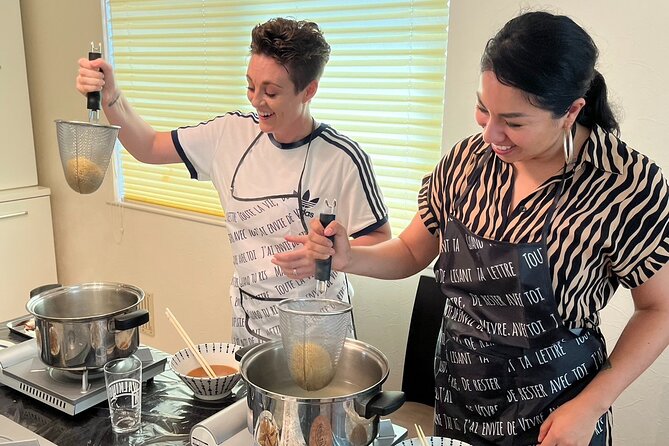
A small group can make or break a cooking class. With a maximum of four people, you have a better chance to receive direct corrections and ask about unfamiliar steps. The chef can also adjust the pace instead of pushing everyone through a fixed lecture.
That matters for gyoza in particular, where a small change in handling can affect the final result. It also helps with matcha, where clear demonstration and personal guidance can make the process less awkward for a first-timer.
The class is led by an English-speaking guide, so you should be able to follow explanations of ingredients and techniques without needing to translate every instruction. No guide name is provided, but the chef is described as experienced and able to teach participants at their own pace.
Small group does not mean private. Other people may join, up to the four-person limit. If you want a completely private class, confirm that option before booking rather than assuming the small size guarantees it.
Zoshigaya access and what to do afterward
The meeting point is at 3-chōme-1-7 Zōshigaya, Toshima City, Tokyo 171-0032. The classroom is described as being in Zoshigaya, close to Ikebukuro and reachable by public transportation.
From Shibuya, the Fukutoshin Line offers a direct route toward the area, with access near Shinjuku along the way. The location works well if you are staying in one of Tokyo’s major visitor districts and want a food activity without arranging private transport.
Ikebukuro gives you an easy plan before or after class. The area has shopping tied to Animate, the Pokémon Center, and electronics stores. You can also visit Kishimo Shrine near the classroom, known for its red torii gates. A short shrine walk can turn the cooking lesson into a wider afternoon or evening in northwest Tokyo.
The activity begins and ends at the same meeting point. That is convenient, but it also means the class does not include transport between food stops or a guided neighborhood walk. You are responsible for getting there and deciding what to do next.
Allow extra time to find the classroom, especially if you are unfamiliar with Tokyo’s station exits. The meeting point is specific, and arriving early is wiser than trying to locate it at the last moment.
Is $104.51 a fair price?
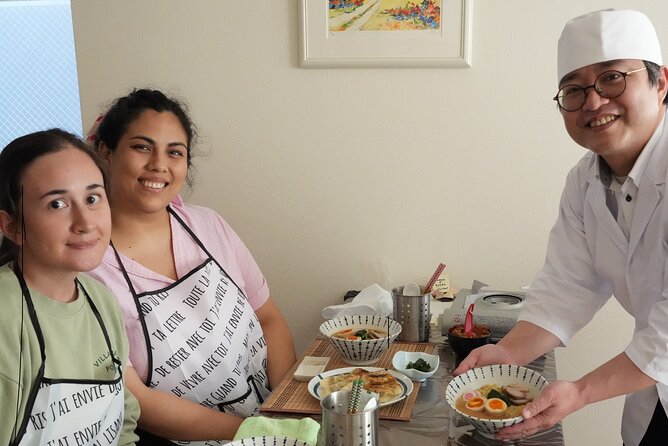
At $104.51 per person, this is not a bargain meal. It becomes better value when you count what is included: roughly two hours of instruction, dinner, matcha, Japanese sweets, recipes, an apron, and photos.
The small group is the biggest value factor. A cheaper class with a large group may offer less personal help. Here, the four-person limit gives you a better chance to practice rather than watch from the back of a room.
The recipes also add lasting value. You can try the ramen and gyoza again at home, although the exact ease of recreating them will depend on your access to Japanese ingredients and your own kitchen setup.
Alcohol costs extra. Sake, Hakkaisan in a 180-milliliter serving, and Kirin Ichiban Shibori beer in a 350-milliliter serving are available for 500 yen each, payable in cash. Soda is not included either.
I would see the price as reasonable for someone who values instruction and a small group, but less attractive if you mainly want a cheap dinner. You are paying for the lesson, not only for the food.
Who should book this cooking class?
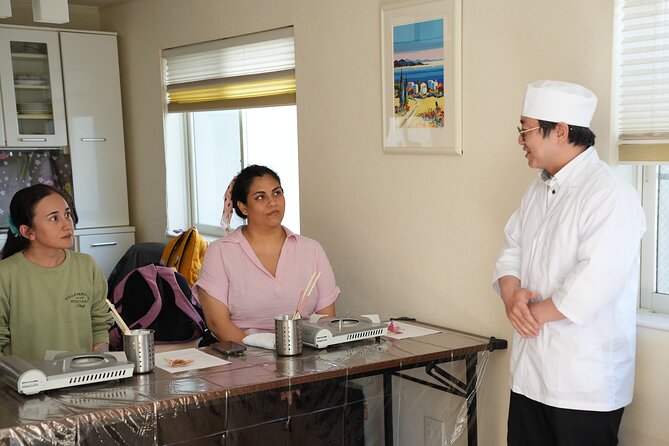
This class suits first-time visitors who want a practical food activity in Tokyo. It also works for families and mixed-age groups, as shown by the successful booking with grandparents and a 19-year-old food enthusiast.
You will likely enjoy it if you want to ask questions, practice a few techniques, and finish with a proper meal. The format should appeal to people who prefer a short activity that fits neatly into a busy Tokyo schedule.
It is also a good choice for food-focused visitors who already plan to explore Ikebukuro. You can combine the class with shopping, the Pokémon Center, Animate, electronics stores, or a visit to Kishimo Shrine.
This is not the right booking for anyone with strict dietary requirements. No vegetarian, vegan, halal, or gluten-free menu is offered, and the organizers say they cannot accommodate those restrictions. If you avoid meat or wheat, do not assume substitutions will be possible.
You should also skip it if your main aim is a formal tea ceremony, a full-day culinary course, or a broad tour of Tokyo’s food districts. The activity is focused, short, and built around four food experiences.
Booking details and cancellation
Confirmation is sent within 48 hours of booking, subject to availability. The activity requires a minimum number of participants, so it can be canceled if that minimum is not reached. In that case, you are offered another date or experience, or a full refund.
You can cancel for a full refund up to 24 hours before the start time. Cancellations or changes made less than 24 hours before the activity are not refunded or accepted. The cut-off uses Tokyo local time.
The ticket is mobile, and private transportation is not included. Plan your route to Zoshigaya in advance and keep the meeting address available on your phone.
Should you book it?
Book this class if you want to learn several Japanese staples in one compact session, especially if you value direct help from an English-speaking chef. The four-person limit, included dinner, take-home recipes, apron, photos, matcha, and sweets give the $104.51 price a reasonable foundation.
Do not book it if you need vegetarian, vegan, halal, or gluten-free food, or if you want a formal tea ceremony. For everyone else, this is a focused way to cook, eat, and spend time near Ikebukuro without giving up a full day of sightseeing.
FAQ
Where does the cooking class take place?
The class takes place at 3-chōme-1-7 Zōshigaya, Toshima City, Tokyo 171-0032, Japan. The classroom is in Zoshigaya, near Ikebukuro.
How long does the experience last?
The class lasts approximately two hours.
What food will I prepare?
You will learn to make dashi, miso ramen, and gyoza. You will also prepare matcha and enjoy Japanese sweets.
Is dinner included?
Yes. Dinner includes the miso ramen and gyoza you prepare during the class.
Is the class taught in English?
Yes. An English-speaking guide explains the ingredients and techniques.
How many people can join the class?
The activity has a maximum of four participants.
Are recipes provided?
Yes. Take-home recipes for the ramen and gyoza are provided.
Can dietary restrictions be accommodated?
No. Vegetarian, vegan, halal, and gluten-free menus are not available, and dietary restrictions cannot be accommodated.
Can I cancel for a refund?
Yes. You can receive a full refund if you cancel at least 24 hours before the scheduled start time. Cancellations made less than 24 hours in advance are not refunded.
Fresh tea listings around Tokyo
- Yokohama : Tea Ceremony with Sweets and Souvenir★ 5.0 · 5 reviews
- Walking Tour: Yanaka,Nezu& Sendagi: Tea Ceremony & Old Tokyo★ 5.0 · 3 reviews
- Private Mochi・Matcha sweets Making Class Near Shibuya Area★ 5.0 · 22 reviews
- Private Kimono and tea ceremony at local home near Tokyo Disney★ 5.0 · 6 reviews
- 2 Hours Mochi &Nerikiri Making & Matcha Class in Bunkyo★ 5.0 · 21 reviews
- Kimono and Tea Ceremony in Asakusa Private Food Tour With Guide★ 5.0 · 4 reviews
- Tokyo: Tea Ceremony & Japanese Sweets Making★ 5.0 · 10 reviews
- Tokyo Sweets Tour: Hidden Gems & Matcha at an Old Tea House★ 5.0 · 6 reviews
Matcha Experiences, compared.
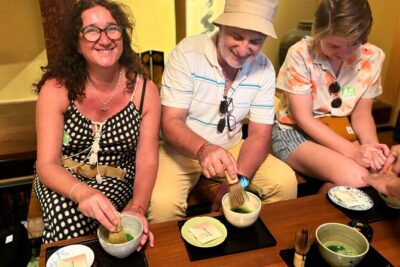
World Heritage Kyoto & Nara Uji Authentic Matcha Experience
Read our review →
Matcha Making Class in Tokyo with Authentic Japanese Sweets Set
Read our review →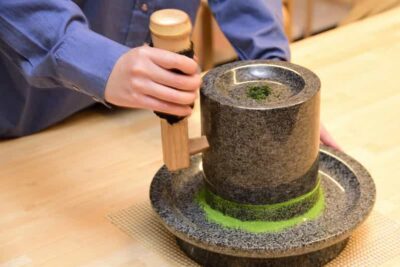
Kyoto: Tea Museum Tickets and Matcha Grinding Experience
Read our review →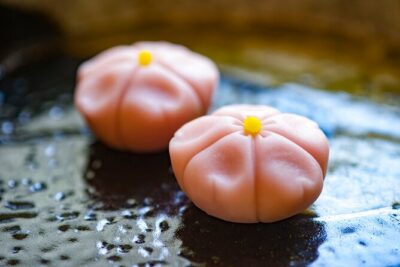
Matcha Making Class in Osaka with Authentic Japanese Sweets Set
Read our review →
Kyoto: Tea Ceremony Meditation – Make Matcha with Tea Master
Read our review →
Tokyo: Matcha Making Experience with Mochi Sweets in Asakusa
Read our review →
Kyoto: Kimono Tea Ceremony with Matcha and Sweet
Read our review →
Browse the lists this tour appears in