
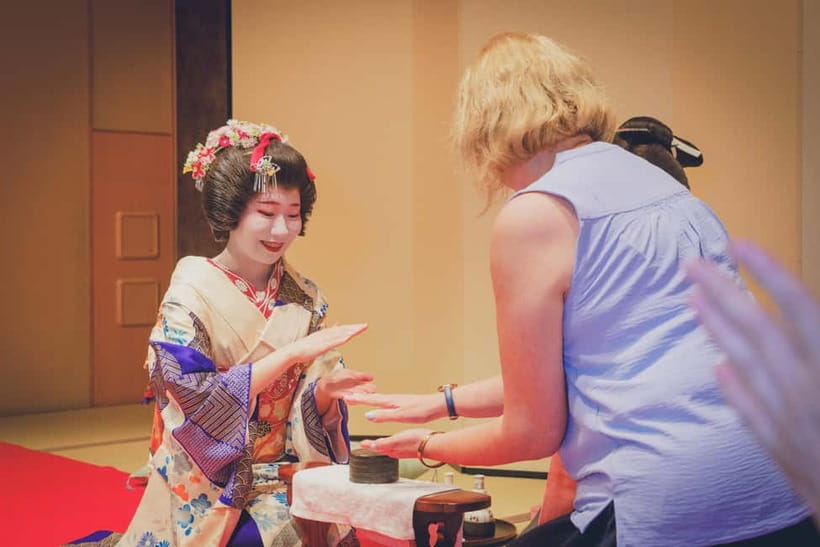
Review · KIMONO & TEA CEREMONY
Asakusa: Geisha Performance and Tea House Experience
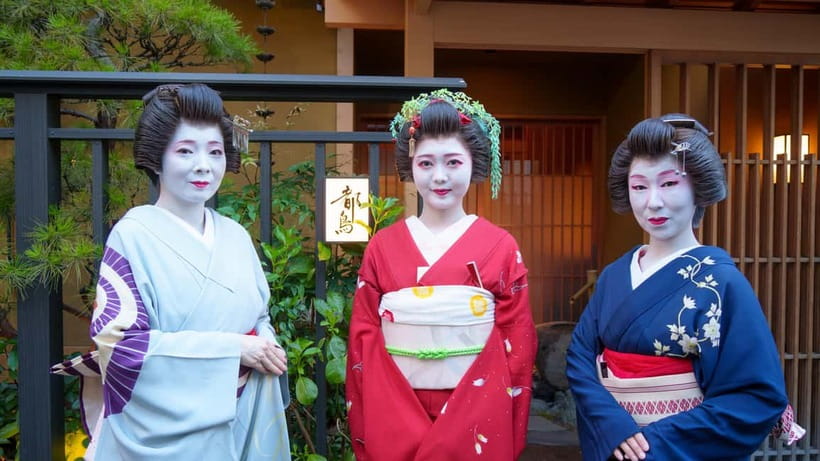
The most memorable part of this Asakusa experience is the chance to meet working geisha in a small tea house setting, not simply watch a staged cultural show from a distance. You’ll see a graceful dance with live shamisen music, then join the performers for the playful Konpira Fune Fune game.
I especially like the direct conversation, which lets you ask about geisha life, and the mix of polished performance with matcha, sweets, and laughter. The main catch is the required extra drink order, and at $106 for 75 minutes, this is a special-occasion experience rather than a casual bargain.
Key points at a glance
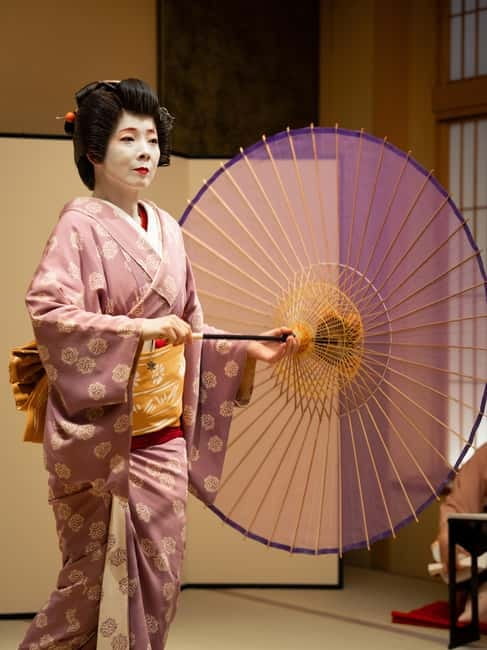
- Real geisha in Asakusa: Meet performers connected with Japan’s living geisha tradition in an intimate tea house setting.
- Dance and shamisen music: Enjoy a formal performance accompanied by live music, singing, and traditional costume.
- A game everyone can join: Learn Konpira Fune Fune, an ozashiki-asobi game that turns the room into a friendly contest.
- Questions are encouraged: English host and translation support help you speak with the geisha directly.
- Matcha and seasonal sweets: The tea service adds a quiet, graceful counterpoint to the lively games.
- A required drink purchase: Each person must order one alcoholic or non-alcoholic drink beyond the complimentary matcha.
Meeting geisha behind Asakusa’s quiet door
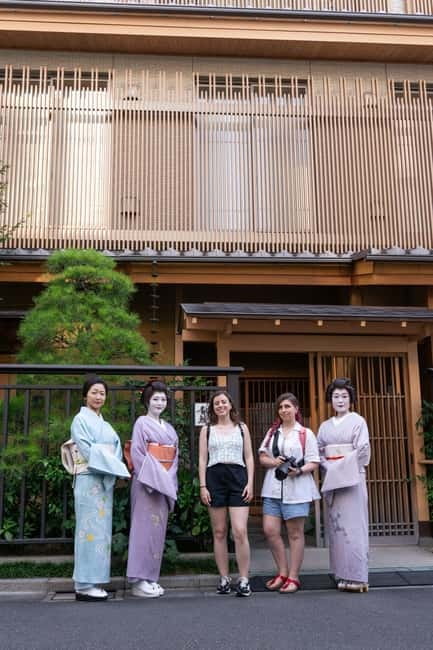
Asakusa is famous for Senso-ji Temple, Kaminarimon Gate, souvenir streets, and old-style entertainment districts. This experience takes you into a different side of the neighborhood, one connected with the private tea house culture that once served elite patrons.
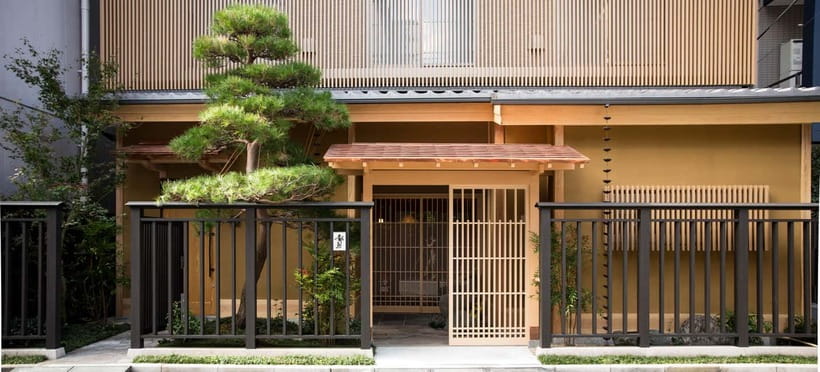
The setting matters. You are not just watching a short dance in a theater. You enter Miyakodori’s Ozashiki Tea House, meet the people hosting the event, and take part in customs that depend on conversation and participation. One account describes entering through a less obvious door before being welcomed by the owner and shown to the banquet area. That small transition helps set the mood.
The room is designed for an ozashiki, or traditional banquet gathering. You may sit on low stools rather than standard dining chairs, as one visitor described. That arrangement keeps you close to the performers and makes the later games easier to follow, though anyone who dislikes low seating may want to keep the short duration in mind.
The group can be relatively small, with one session described as having about 16 participants. Group size may vary, but this is not presented as a huge stage production. The more intimate format gives you a better chance to see the performers clearly and ask a question.
More Kimono and Tea Ceremonies in Tokyo
- Kimono Tea Ceremony at Tokyo, Asakusa Maikoya
★ 5.0 · 638 reviews - Tokyo: Matcha and Kimono Experience
★ 4.7 · 219 reviews - Tokyo: Asakusa Kimono Dressing and Matcha Experience
★ 4.9 · 173 reviews
A 75-minute program with a thoughtful rhythm
The experience lasts 75 minutes, which is long enough to offer several different elements without taking half a day from your Tokyo plans. You can schedule it around time at Senso-ji, the Sumida River area, or nearby Asakusa restaurants.
The program begins with a welcome. This is when the host helps you settle in and explains what will happen. An English-speaking host or greeter is available, and translation support has been part of the interaction between international visitors and the performers.
The order of every small moment may vary, but the core pattern is clear: welcome, dance and music, a traditional game, conversation, matcha with sweets, and a photograph. That balance is one of the strongest parts of the experience. You get formal art, relaxed contact, food, and participation instead of one long performance.
Plan to arrive early. It gives you time to locate the venue and settle down before the program starts. One practical detail is easy to miss: one drink must be ordered for each person. The drink can be alcoholic or non-alcoholic, but it is separate from the complimentary matcha and costs extra.
The dance, costumes, and live shamisen
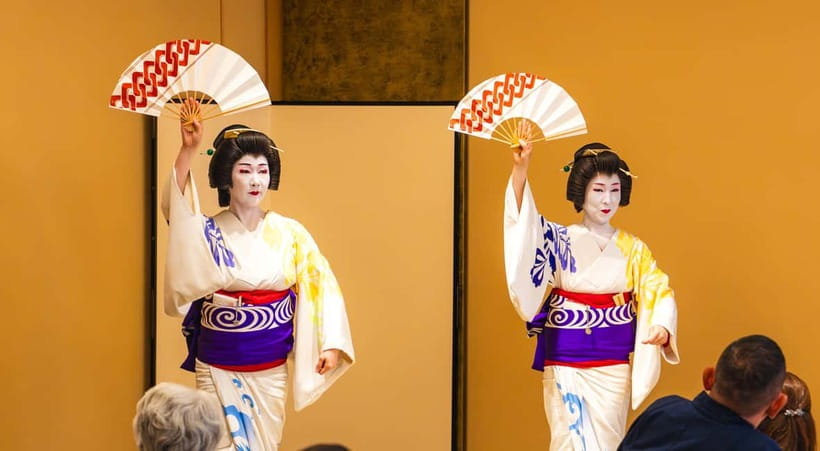
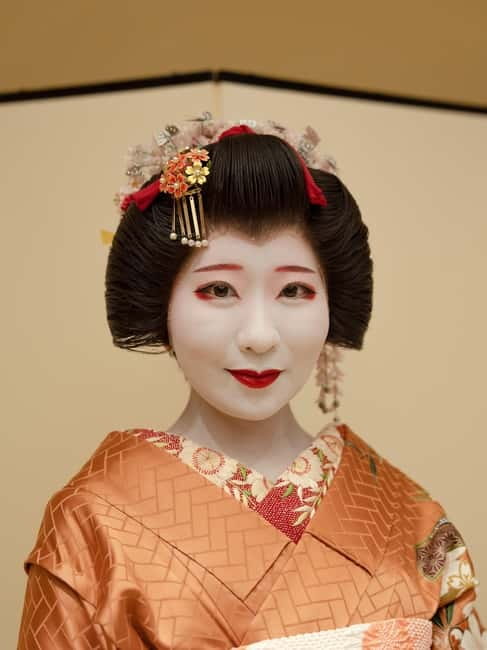
The performance is the artistic heart of the visit. Geisha dance with controlled gestures and careful posture, where a small movement can carry more weight than a big theatrical flourish. The effect is quiet and precise rather than loud or flashy.
Live shamisen music makes a real difference. The shamisen is a three-stringed Japanese instrument with a sharp, expressive sound. Instead of hearing recorded music behind the dance, you hear the performer respond in the room. Singing may also be included.
One session featured geiko Chizuru and maiko Tamaaki, accompanied by Shisa on shamisen and vocals. These names may not appear in every scheduled performance, so do not treat them as a guarantee, but they give you a useful sense of the caliber and format of the presentation.
The clothing, makeup, and movements are part of the art. It is easy to focus only on the visual beauty, but I find the discipline more interesting. The dancers have trained to make formal gestures look natural. Their skill is clearest when you watch the hands, fan work, pauses, and changes in expression.
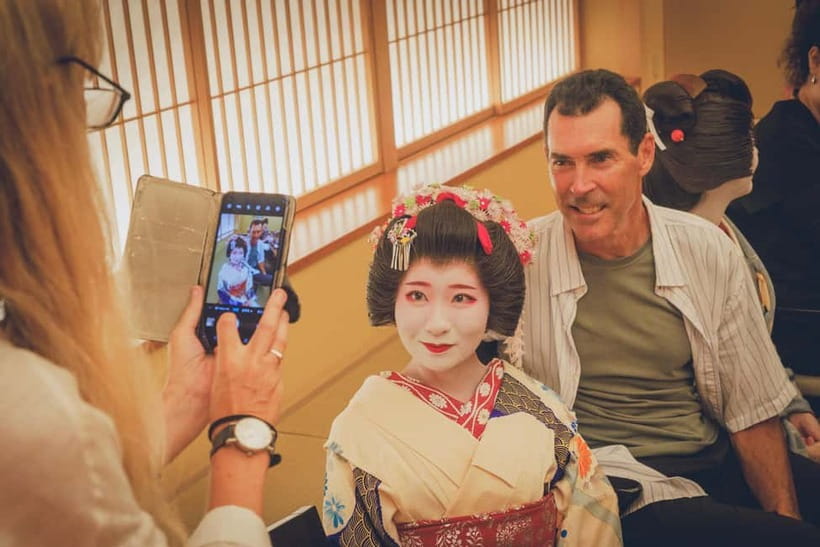
Photography should be handled respectfully during the performance. The most reliable photo opportunity comes at the end, when you can pose with the geisha for a commemorative picture.
Konpira Fune Fune brings the room to life
After the formal performance, the tone changes. You learn an ozashiki-asobi game called Konpira Fune Fune. It is a traditional entertainment game based on rhythm, quick reactions, and a shared sense of humor.
You do not need specialist cultural knowledge to join. The performers guide you through the rules, and the fun comes from trying to keep up rather than from playing perfectly. This is a good feature for couples, families, and small groups because everyone can watch the action and then take part.
The game also explains something important about geisha culture. Geisha are not simply dancers who appear for a brief show. Their work has traditionally included music, conversation, games, hosting, and the ability to make people feel at ease. Konpira Fune Fune gives you a small but lively example of that social skill.
The game can be especially useful if you are concerned that a formal performance might feel too distant. It breaks the ice without taking away the grace of the earlier dance. Families with children have enjoyed the combination, although very young children may not sit quietly through every part of the program.
Same city, a very different cup:
- Matcha Making Class in Tokyo with Authentic Japanese Sweets Set
★ 5.0 · 744 reviews - Tokyo: Traditional Tea Ceremony with a Tea Master
★ 5.0 · 528 reviews - Dynamic Tokyo: Tokyo Tower, Tea Experience, Bay Cruise Day Tour
★ 4.5 · 521 reviews - Tokyo: Matcha Making Experience with Mochi Sweets in Asakusa
★ 4.9 · 388 reviews
Conversation makes this more than a stage show
The opportunity to ask questions is one of the best reasons to choose this experience. You can learn about the geisha’s work and daily life directly, with English assistance helping bridge the language gap.
Keep your questions polite and curious. Ask about training, music, dance, clothing, performance routines, or the difference between geiko and maiko. The point is not to treat the performers as museum objects. You are meeting working artists and hosts whose skill includes making conversation feel personal.
Past sessions have included a friendly host, translator, and owner who helped create an open atmosphere. The owner, or proprietress, has also been part of the welcome and hospitality. That personal touch adds context that a short performance alone cannot provide.
Conversation may be one of the most valuable parts for you if you have already seen temples and museums. Those places explain Japan through objects and architecture. Here, you learn through people. The experience gives you a brief view of a cultural tradition that is still practiced, while making clear that it is a profession built on training and hospitality.
Matcha, sweets, and a slower final act
The matcha service offers a calm pause after the game. You receive freshly whisked matcha and seasonal Japanese sweets. The sweets are a light accompaniment, not a meal, so eat beforehand if you need dinner or a substantial snack.
Seasonal sweets are worth noticing rather than swallowing quickly. Japanese confectionery often uses shape, color, and texture to reflect the time of year. The provided details do not specify the exact sweet served on your date, so expect a seasonal selection rather than a particular named item.
Matcha has a firm, grassy taste and can be unfamiliar if you usually drink mild tea. The whisking and presentation are part of the experience, so think of it as a cultural tea service rather than simply a beverage stop.
You also choose one additional drink per person. Alcohol is available, but you can select a non-alcoholic option. This requirement is the clearest extra cost to plan for, and it is worth knowing before you book. The complimentary matcha does not satisfy the drink order.
What $106 buys you
At $106 per person, the price is high for a 75-minute activity. If you measure value by minutes alone, it will not compete with a full-day tour or a museum pass.
The better comparison is with a private cultural performance and hosted introduction. Your fee covers real geisha, live shamisen music, dance, a guided game, matcha, seasonal sweets, English assistance, conversation, and a commemorative photo. You are paying for access to a type of entertainment that is not easy to arrange independently.
The small-group format can also matter. A large public show might offer a longer performance, but you would lose the personal questions and shared game. Here, the conversation and participation are central parts of what you are buying.
I would consider it good value for a honeymoon, birthday, anniversary, or a first visit to Japan when you want one distinctive cultural evening. It is less attractive if your budget is tight, you dislike organized activities, or you want a full meal rather than sweets and drinks.
Remember that transportation and meals beyond the sweets are not included. You arrange your own way to Asakusa, and you should budget for the required drink.
Who will enjoy this Asakusa experience
This suits solo visitors particularly well because the program gives you easy ways to connect with the room. You will not be left sitting alone during the main activities, and the question period offers a natural chance to participate.
Couples may appreciate the polished performance and final photograph. It also works well for small groups who want an evening activity that feels more personal than a standard sightseeing stop.
Families can attend, and children may enjoy the costumes, music, and game. The tone is refined, so parents should consider their children’s patience during the formal dance and conversation. The experience is not described as a meal or a child-focused show.
It is a strong choice for anyone interested in performing arts, Japanese customs, photography, or the social side of cultural history. You do not need prior knowledge of geisha traditions. The host and translator help explain the setting.
A few practical things to know before booking
The experience is in Asakusa, a district of Tokyo on Honshu. Transportation is not included, so leave enough time to find the tea house. Arriving early is sensible, especially if you are unfamiliar with the area or are making a tight connection from another attraction.
The event lasts 75 minutes. Check the available starting times before building your day around it. Since the program includes live performers, a welcome, games, food, and conversation, arriving late could mean missing more than a single opening remark.
English support is available. The exact balance of English conversation and translation may depend on the people hosting your session, but the activity is intended for international visitors.
The setting is traditional and may include low stools. If you need a particular seating arrangement, ask the provider before booking. The supplied information does not give specific accessibility details, so do not assume that every mobility need can be accommodated.
Cancellation is free up to 24 hours before the start time, and you can reserve now and pay later. Those terms help if your Tokyo schedule is still changing, but they do not remove the need to check the exact booking conditions at the time you reserve.
Should you book the Miyakodori experience?
Book it if you want a direct meeting with geisha rather than a quick photo stop or a distant stage performance. The strongest reasons are the live shamisen music, the graceful dance, the chance to ask questions, and the playful Konpira Fune Fune game. Matcha and seasonal sweets round out the visit without turning it into a rushed meal.
Think twice if you want the lowest-cost cultural activity, need a full dinner, or prefer to explore without a fixed schedule. The required drink order is an extra expense, and $106 is a serious price for 75 minutes.
For the right visitor, this is a memorable use of an evening in Asakusa. You leave with a photo, but the better souvenir is the understanding that geisha entertainment is built from many skills: music, dance, hosting, conversation, and play.
FAQ
Where does the geisha experience take place?
It takes place at Miyakodori’s Ozashiki Tea House in Asakusa, a district of Tokyo on Honshu.
How long does the activity last?
The cultural experience lasts 75 minutes.
How much does the experience cost?
The listed price is $106 per person. One alcoholic or non-alcoholic drink must also be ordered per person, separate from the complimentary matcha.
Is a meal included?
No. Seasonal Japanese sweets and freshly whisked matcha are included, but meals and other food are not.
Is matcha included?
Yes. Freshly whisked matcha is included, along with seasonal Japanese sweets.
Can I speak with the geisha?
Yes. The experience includes an opportunity to ask the geisha questions. English support is provided by the host or greeter, with translation assistance available.
Is transportation included?
No. You arrange your own transportation to the venue in Asakusa.
Can I cancel for a refund?
You can cancel up to 24 hours in advance for a full refund. Reserve-now, pay-later booking is also available.
Fresh tea listings around Tokyo
- Authentic Japanese tea tasting: sencha, matcha and gyokuro★ 5.0 · 12 reviews
- At an Antique Shop, Tea Ceremony and Japanese Sweets Forming★ 5.0 · 5 reviews
- Mochi Matcha Gluten Free Japanese Sweets Class near Shibuya area★ 5.0 · 26 reviews
- Tokyo: Two Types of Japanese Sweets Making and Tea Ceremony★ 4.6 · 26 reviews
- Japanese Matcha Tea Ceremony and Kimono Experience in Hanayaka★ 5.0 · 26 reviews
- Matcha Experience with of Japanese Tea Tasting in Tokyo★ 5.0 · 31 reviews
- Tokyo:Genuine Tea Ceremony, Kimono Dressing, and Photography★ 5.0 · 33 reviews
- EDOCCO Tea House–A Quick Dive into Japanese Traditional Culture★ 5.0 · 34 reviews
Kimono & Tea Ceremony, compared.
KYOTO Tea Ceremony with kimono near by Imamiya Jinjya Shrine
Read our review →
Kyoto: Kimono and Tea Ceremony Experience at Cultural Asset
Read our review →
Kyoto: Kimono Tea Ceremony with Matcha and Sweet
Read our review →
Browse the lists this tour appears in