
Review · TEA PLANTATION & FARM TOURS
Scenic Green Tea Fields of Hidden Kyoto & Local Tea Exp (Private)
Kyoto’s best countryside views begin where the city crowds thin out. This private trip takes you to Wazuka and Ujitawara, where tea bushes climb hills in neat green rows and local farms supply highly regarded Uji-style tea. You also get Byodo-in’s Phoenix Hall, a tea cafe, and Shoju-in’s famous heart-shaped window.
I like the private vehicle and flexible pickup, especially for a group of up to six. I also like the mix of polished sights and ordinary rural scenery, from ancient temple architecture to mountain roads lined with bamboo and tall cedar trees. The main drawback is the long driving time between stops, and the ¥1,600 in listed temple admissions is extra, along with your own tea or coffee purchases.
Key points at a glance
- Wazuka’s tea fields provide the tour’s most distinctive views, with carefully planted rows climbing the hills.
- Guide Daiki brings history, tea culture, and local context to the drive and temple visits.
- Byodo-in Phoenix Hall adds a major cultural sight to a day otherwise focused on the countryside.
- A private van or convertible Mini Cooper makes pickup and drop-off more convenient than public transport.
- Tea tasting and shopping offer a chance to buy local tea at prices described as one-half to one-third of city prices.
- Shoju-in’s heart-shaped window gives the final temple stop a memorable visual detail.
Why this private Kyoto tea tour is different
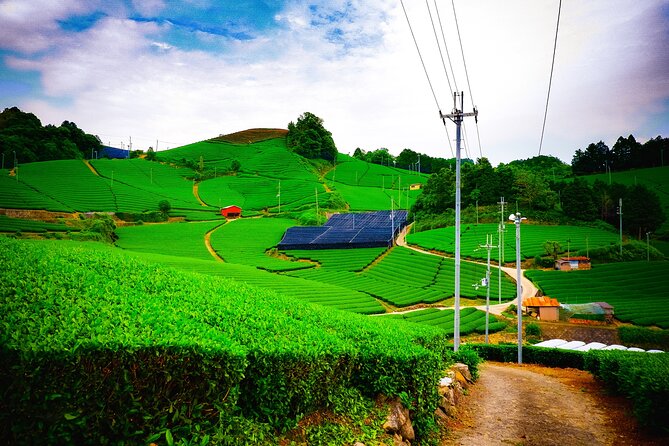
Many Kyoto day trips stay within the city or follow the familiar route to Arashiyama, Fushimi Inari, and Kiyomizu-dera. This experience heads south into tea country, where the scenery feels quieter and more agricultural.
The tour lasts about five and a half hours and begins at 1 p.m. That timing works well if you want a slower morning in Kyoto, though it means the final stops may take place later in the day. The exact order can change because of closures, road conditions, crowds, or seasonal plans.
The strongest feature is the combination of private transport and a guide who can adjust the day. Daiki is repeatedly praised for his energy, patience, and ability to explain Japanese history and culture in a clear way. That matters here because the appeal is not just looking at tea fields. You are learning why this part of Kyoto matters, how tea shaped local life, and how temples, monks, samurai, and ninja traditions connect with the region.
More Green Tea Tours in Japan
Byodo-in Phoenix Hall and the Buddhist Pure Land
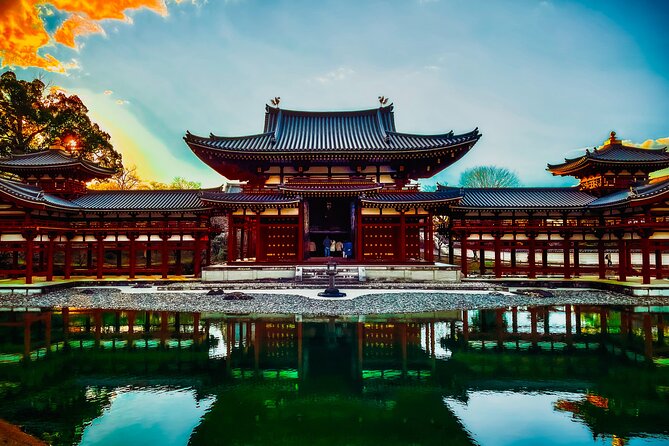
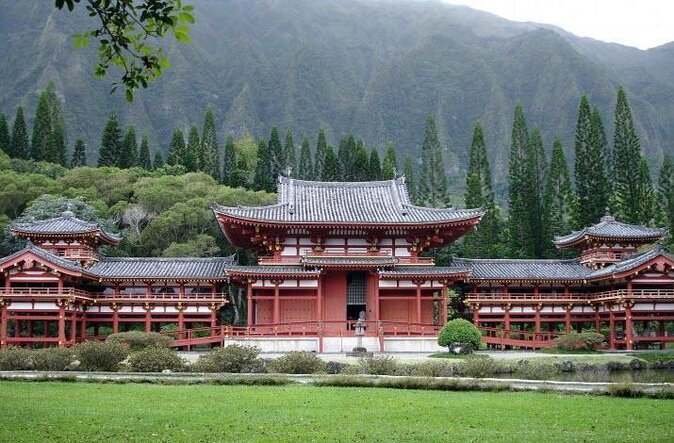
The first major stop is Byodo-in, the temple whose Phoenix Hall appears on Japan’s 10-yen coin. The building dates back roughly 1,000 years and represents the Buddhist Pure Land, or paradise, on earth.
You have about two hours here, making it the most substantial stop on the route. The temple gives the day a strong cultural opening before you move into the tea-growing countryside. Its symmetry, pond setting, and famous roof ornaments make it one of Kyoto’s most recognizable historic sights.
Admission is not included. The listed price is ¥600 per person. That extra cost is modest, but remember to add it to the tour price when comparing options.
The two-hour block also gives you time to look beyond a quick photo. You can take in the Phoenix Hall, the temple grounds, and the connection between religious art and Japanese ideas of paradise. If you have already visited many Kyoto temples, Byodo-in still provides a different experience because its setting and central hall are unusually focused and recognizable.
Wazuka-cha Cafe and the taste of local tea
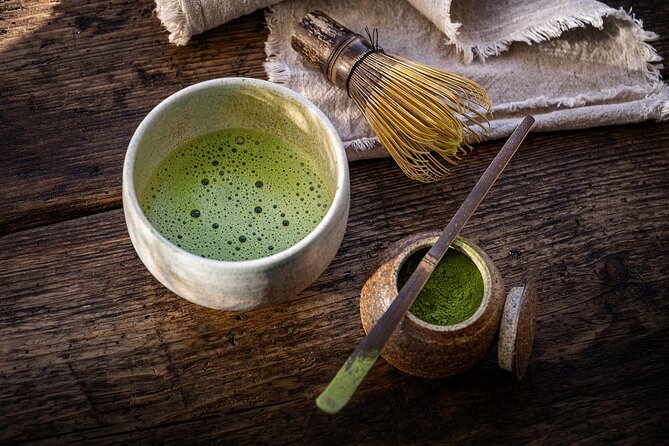
After Byodo-in, the tour turns toward tea. At Wazuka-cha Cafe, you can taste local green tea and matcha, with time set aside for the cafe visit and tea shopping.
The tea here is presented as especially pure and authentic, with a direct connection to the farms in the surrounding area. You should treat that claim as part of the local pitch rather than as a scientific ranking, but the setting gives it weight. You are tasting tea close to where it is grown, rather than buying a generic matcha drink in central Kyoto.
Your own tea and coffee purchases are not included. That is worth noting because the cafe stop is likely to tempt you into trying more than one drink or taking tea home. The tour also presents local tea as costing around one-half to one-third of city prices, though the exact amount will depend on the product you choose.
I would save room in your luggage for tea. It is one of the more practical souvenirs from this outing, and buying directly in the production area gives you a better connection to what you have seen during the day.
Ishitera’s tea fields reaching uphill
The Ishitera Tea Plantation is the visual centerpiece. Here, the tea bushes are planted in tidy, repeating rows that rise across the hills. The effect is highly geometric, especially in photographs, but it is also a working farming area rather than a landscaped park built for sightseeing.
You have about 30 minutes at this stop. That is enough for photos and a short look around, but not a long farm visit. The tour description emphasizes year-round appeal, including winter, when the evergreen tea plants can still provide strong color.
This is where comfortable shoes help. The tour involves short walks and some stairs, and tea fields are not always flat. You do not need to prepare for a strenuous hike, but this is not a purely vehicle-based sightseeing ride either.
The appeal of Ishitera is its sense of place. You are seeing the crop in its growing environment, with hills shaped by farming rather than by temple design. If your ideal Kyoto day includes quiet roads, open views, and photographs that look very different from central Kyoto, this stop will likely be the highlight.
More Green Tea Tours in Kyoto:
- Uji: Green Tea Tour with Byodoin and Koshoji Temple Visits
★ 4.8 · 72 reviews - Osaka; Japanese Tea ceremony experience, Macha and Sencha
★ 4.9 · 29 reviews - Slow Cycling Tour at Uji’s Matcha Green Tea Fields and Heritage
★ 5.0 · 25 reviews - Authentic Japanese tea tasting: sencha, matcha and gyokuro
★ 5.0 · 12 reviews
Ujitawara and the story of Japanese tea
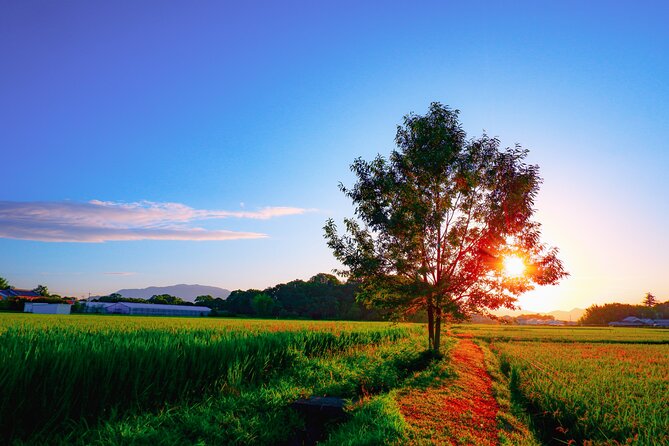
The next countryside stop is Ujitawara-cho, another major tea-producing area. It is described as a place connected with the invention of Japanese green tea and matcha, giving the visit more historical weight than a simple photo stop.
The planned visit lasts about 30 minutes and includes a walk into a tea farm for photographs. That small detail matters. You are not only viewing the fields from a roadside pullout. You get closer to the rows and see how the plants are arranged across the farm.
The historical explanation is one of the reasons a private guide helps. Tea is easy to reduce to a tasting experience, but its story reaches into religion, farming, trade, ceremony, and daily life. Daiki’s role is to connect those pieces as you move between the sights.
The stop is short, so you should not expect a full farm lesson or an extended tea-making demonstration. Think of it as a close-up countryside visit that complements the wider views at Ishitera.
Shoju-in and the heart-shaped window

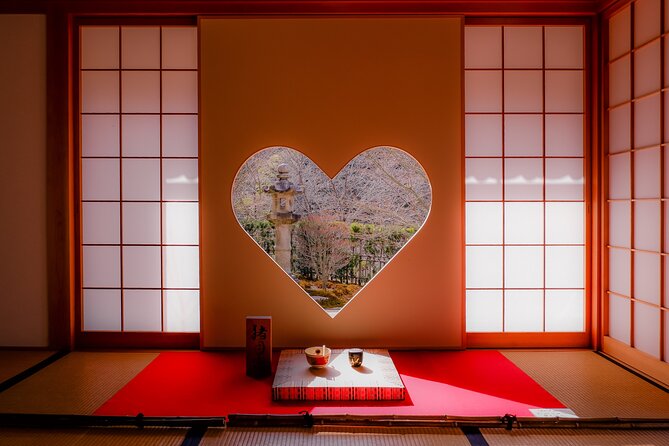
Shoju-in, also written as Seijuin in some tour information, comes near the end of the route. It sits in the southern Kyoto countryside and is known for a heart-shaped window in its tea room.
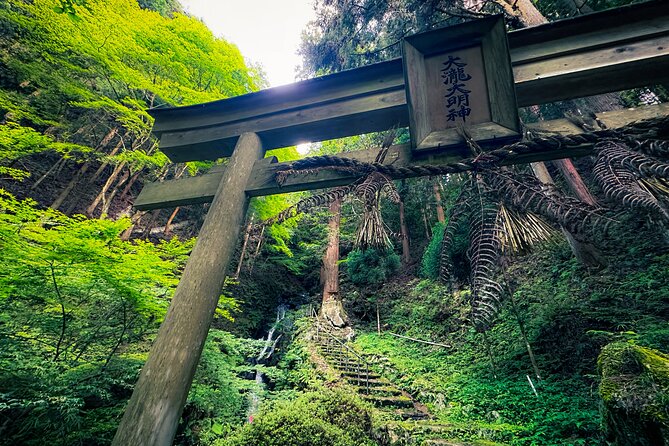
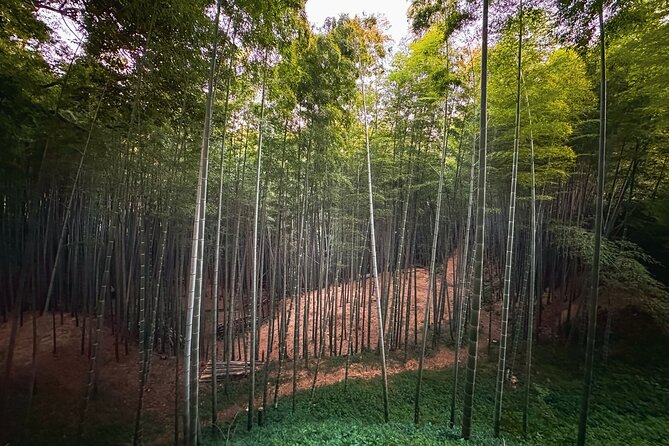
The temple is reached after a substantial drive from central Kyoto, but that journey is part of the experience. The route takes you away from the city and through rural scenery. One account of the day describes mountain roads, bamboo, and tall Japanese cedar groves, which helps explain why the drive feels like more than dead time between attractions.
You have about an hour and a half here, longer than at either tea-field stop. The extra time lets you enjoy the temple setting rather than rushing in for one photograph. The heart-shaped window is the obvious draw, but the surrounding rural atmosphere gives the stop its character.
Admission is extra at ¥1,000 per person. This is the largest single admission cost on the tour, so include it when calculating the final price. The temple stop also requires some walking and stairs.
A private ride that changes the pace
For groups of two to six, the tour includes an air-conditioned Nissan van. For a solo participant, the vehicle is listed as an open-air convertible Mini Cooper. That is a fun contrast, especially on the rural roads, though a van will be the more practical choice for larger groups and luggage.
Pickup and drop-off are described as pinpoint and flexible, with the possibility of setting different starting and ending locations. That can save you a return trip across Kyoto, and Daiki has sometimes dropped people near a restaurant so they could go straight to dinner.
Fuel and highway fees are included. This is important because the tea country is not an easy collection of central Kyoto sights. You are paying for access to places that would take planning, connections, and considerable time by public transport.
The private format also means you are not tied to a stranger’s pace. If you need a little longer for photographs, or if the group wants to move on sooner, the day can feel less rigid. The itinerary can still change because of traffic, closures, weather, or crowd levels, so do not treat each listed time as guaranteed.
What the ¥250.38 group price buys you
The advertised price is $250.38 per group of up to six. For six people, that works out to roughly $42 per person before admission fees and personal purchases. For a solo participant, the same group price is much harder to justify on cost alone, although the convertible Mini Cooper and private guide add a special character.
The value comes mainly from transport and access. You are not simply paying for a guide at a temple. You are covering a private vehicle, fuel, highway charges, pickup, drop-off, and a route through several rural areas that would be awkward to connect independently in half a day.
For a small group, the price is appealing because the cost does not rise per person up to six. For one or two people, it becomes a premium outing. You should compare it with the value of your time, not only with the price of a train ticket.
Add ¥600 per person for Byodo-in and ¥1,000 per person for Shoju-in. Tea or coffee at the cafe is also on your own account. Those are straightforward extras, but they should be part of your budget from the start.
What the guide adds to the day
Daiki is the name most closely linked with this experience. The strongest descriptions of his style point to patience, enthusiasm, and broad explanations of Japanese history and culture.
That combination suits this route. The tea fields are beautiful enough to photograph without help, but a guide gives them more meaning. You can learn why Wazuka and Ujitawara matter, how tea culture developed, and how old religious and military traditions shaped the area.
The guide also appears willing to make the day personal. Past outings have included bonus shrines, restaurant drop-offs, and, in some cases, longer custom routes covering parts of Kyoto, Nara, and Osaka. Those additions are not guaranteed on this five-and-a-half-hour version, so you should not book it expecting an eight- or nine-hour custom adventure. Still, the private format offers more room for conversation than a large group bus.
Who should book this countryside outing
I would choose this tour if you have already seen several central Kyoto temples and want a different side of the region. It suits people who care about scenery, tea, photography, local roads, and historical context in equal measure.
It is also a good fit for families or small groups. A private van removes the strain of organizing several rural train and bus connections, and the ability to set pickup and drop-off points is useful when your evening plans are elsewhere.
Solo visitors can enjoy it, but the price requires more thought. The Mini Cooper makes the ride distinctive, and the private attention can be valuable, yet the per-person cost is high compared with a shared activity.
I would be less enthusiastic if you want a slow agricultural workshop, a formal tea ceremony, or a full day at one temple. The itinerary gives you several short experiences, with driving between them. Its strength is variety and access, not depth at a single farm or temple.
Practical details before you go
The start time is 1 p.m., and the total duration is about five hours and 30 minutes. Pickup is offered, and the tour provides mobile ticketing and confirmation at booking.
Wear shoes suitable for short walks and stairs. You should also allow for changing conditions on the road and possible itinerary changes caused by closures, traffic, weather, or seasonal crowds.
The activity is private, so only your group participates. Service animals are allowed, and most people can take part. Free cancellation is available if you cancel at least 24 hours before the local start time. Cancellations or changes inside that window are not refunded or accepted.
Should you book this tea-country tour?
Book it if you want Kyoto beyond the main temple circuit and value a private vehicle, a flexible guide, and real countryside views. The tea fields at Ishitera and Ujitawara give the day its strongest identity, while Byodo-in and Shoju-in keep it from becoming only a scenic drive.
For a group of four to six, the price is reasonable for private transport and a guide across rural Kyoto. For a solo visitor, it is a special-interest splurge. Either way, go in expecting driving, short walks, temple admissions, and personal tea costs, not a single extended farm visit.
If those tradeoffs suit you, this is a smart way to reach Kyoto’s tea country without giving up the comfort and context of a private outing.
FAQ
How long does the tour last?
The tour lasts approximately five hours and 30 minutes.
What time does the tour start?
The listed start time is 1 p.m.
How many people can join the private tour?
The tour is priced per group for up to six people. Only your group participates.
Is pickup available?
Yes. Pinpoint pickup and drop-off are offered, and different start and end locations can be arranged.
What vehicle is used?
Groups of two to six use an air-conditioned Nissan van. Solo participants use a convertible Mini Cooper.
Are temple admission fees included?
No. Byodo-in admission is listed at ¥600 per person, and Shoju-in admission is listed at ¥1,000 per person.
Is tea or coffee included at the cafe?
No. Tea and coffee purchased for your own use are not included.
Can the itinerary change?
Yes. The route may change because of unexpected closures, road conditions, crowd levels, or seasonal arrangements. Short walks and stairs are required.
More Tea Plantation Tours in Kyoto
- From Taipei: Thousand Island Lake and Pinglin Tea Plantation
★ 4.7 · 519 reviews - Active Volcano, Rice Field, Hot Spring, Fruit market, Tea Plantation with Lunch
★ 5.0 · 513 reviews - Furnas: Tea Plantations, Lake and Volcano Guided Tour
★ 4.8 · 511 reviews - São Miguel: Furnas Volcano & Tea Plantation Tour with Lunch
★ 4.9 · 375 reviews
Fresh tea listings around Kyoto
- Cycling Tour at Uji’s Matcha Green Tea Fields and Heritage★ 5.0 · 10 reviews
- Authentic Tea Ceremony & Sushi in The Museum of Kyoto★ 5.0 · 3 reviews
- Kyoto: Nighttime Zen Meditation and Matcha Tea Experience★ 5.0 · 7 reviews
- Kyoto Fushimiinari:Wagashi Making & Small Group Tea Ceremony★ 5.0 · 14 reviews
- 2 Types of Japanese Sweets making and Tea Ceremony★ 4.6 · 17 reviews
- Whisk Your Own Matcha: A Zen Matcha Experience at Temple★ 3.6 · 7 reviews
- Kyoto Hidden Riverside Zen Mediation and Uji Matcha Experience★ 5.0 · 9 reviews
- Matcha Grinding Experience and Walking Tour in Uji Kyoto★ 5.0 · 26 reviews
Tea Plantation & Farm Tours, compared.
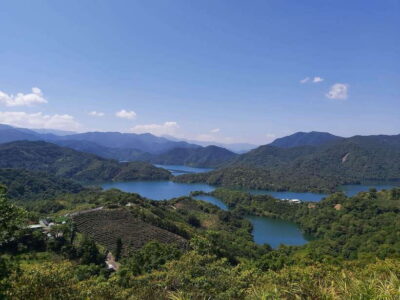
From Taipei: Thousand Island Lake and Pinglin Tea Plantation
Read our review →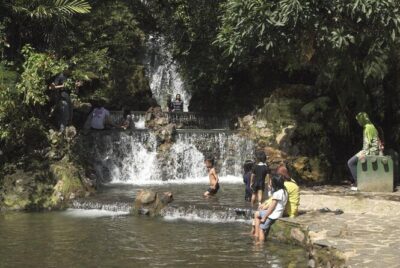
Active Volcano, Rice Field, Hot Spring, Fruit market, Tea Plantation with Lunch
Read our review →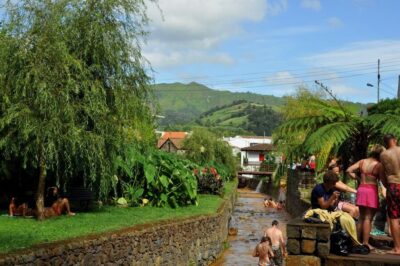
Furnas: Tea Plantations, Lake and Volcano Guided Tour
Read our review →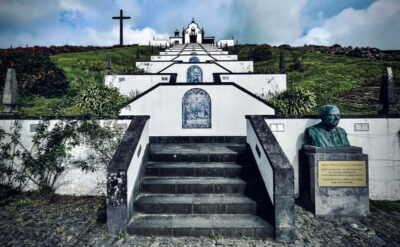
São Miguel: Furnas Volcano & Tea Plantation Tour with Lunch
Read our review →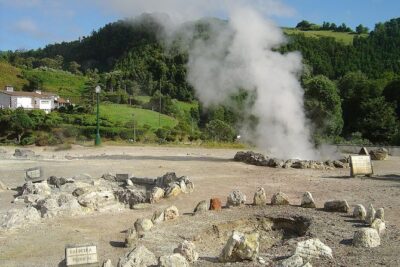
Furnas Volcano & Tea Plantation With Traditional Lunch, East Tour
Read our review →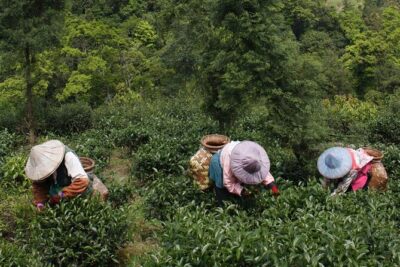
Thousand Island Lake and Pinglin Tea Plantation from Taipei
Read our review →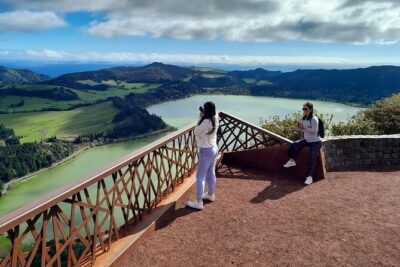
Furnas: Volcano Wonders, Tea Plantation & Waterfall Tour
Read our review →Browse the lists this tour appears in