
Review · GREEN TEA TOURS
Boseong Tour : Green Tea Field, Mountain & Lake Trail (Private)
Boseong is Korea’s tea country, and Daehan Dawon’s rolling rows of tea bushes are the reason to make the trip. This private day adds much more than a photo stop: you’ll follow a lakeside path, learn about Korean tea, taste local food, and walk an old mountain route once used to move flat stones for traditional underfloor heating.
I especially like the hands-on tea ceremony, which gives the famous crop some cultural context, and the mix of easy walking with a short mountain climb. The main drawback is the long day and the road time from Gwangju, with about 70 minutes each way and another 40 minutes between the tea museum and lake.
- Daehan Dawon tea fields: Walk uphill through one of Boseong’s grandest tea plantations to a viewpoint.
- Korean tea ceremony: Prepare and taste tea while learning how tea is made and used in Korea.
- 3.9-kilometer Haepyeong Lake Trail: Enjoy cedar, bamboo, maple, and cherry trees beside calm water.
- Mt. Obongsan cart trail: Choose a 15-minute walk to a waterfall or about 40 minutes to the peak.
- Local tastes included: Lunch, green tea ice cream, green tea tasting, and a rice vinegar drink are covered.
- Private guide Veronica: Her warm English conversation and practical help are a major part of the experience.
Why Boseong makes a better day trip than a simple tea stop
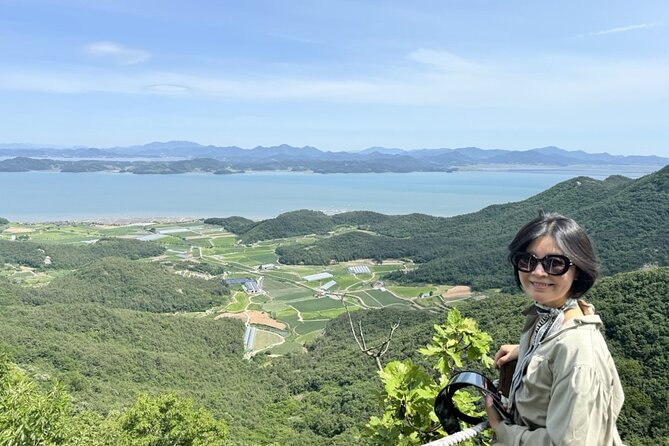
Boseong sits in South Jeolla, in the southwestern corner of Korea. Its soil and climate suit tea, and the crop covers entire hillsides rather than appearing in a small garden behind a museum. That scale is what gives Daehan Dawon its appeal. You are not just looking at tea leaves. You are walking through broad, carefully planted slopes with layered views across the countryside.
The tour begins in Gwangju at 9:30 a.m. and lasts about 10 hours. Since this is a private outing, only your group takes part. That matters here because the day has several walking choices, and the guide can give you time at the places that interest you most rather than moving a large group on a fixed schedule.
Guide Veronica is associated with this experience and is especially good for visitors who want conversation along the way. She speaks English well, explains Korean history, and is willing to help with unfamiliar food or local customs. I would still confirm the guide when booking, but her friendly, capable approach is one of the strongest reasons to choose this private format.
Daehan Dawon, where Boseong turns green
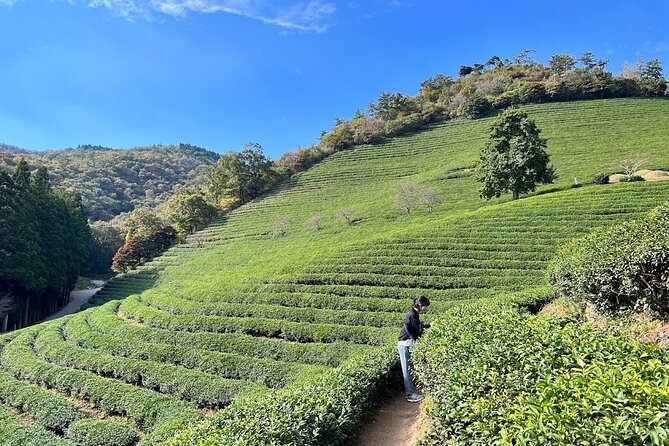
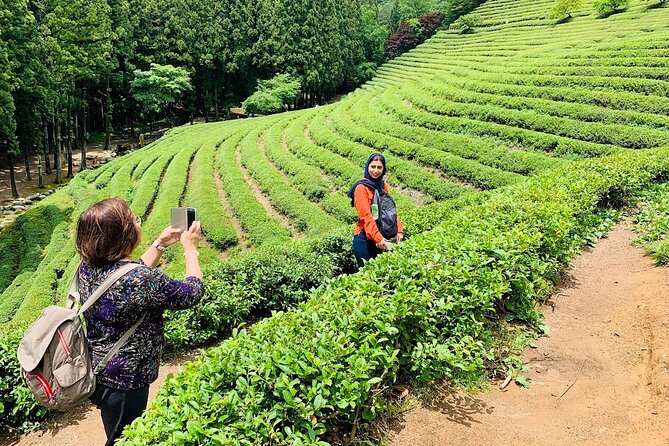
Your first major stop is Boseong Green Tea Field, also known as Daehan Dawon. Set aside about two hours here. Admission is included, and the usual walk follows paths through the plantation toward an upper observatory.
The route gives you fresh air, close views of the tea bushes, and a broad look over the planted hillsides. The field remains green throughout the year, so this is not a stop that depends entirely on one narrow season. Light, weather, and the condition of nearby trees will change, of course, but the tea plantation itself is the dependable feature.
The walk uphill is not presented as a serious hike, yet you should wear shoes suited to uneven paths. If you prefer to take photographs, allow time rather than treating the stop as a quick glance. The plantation is the visual centerpiece of the day, and rushing through it would miss the point.
At the end, you get green tea ice cream. It is a small treat, but a fitting one. The flavor lets you try Boseong tea in a sweeter, colder form before the day moves on to a proper meal and tea preparation.
More Green Tea Tours in the world:
- Experience all of Japanese culture and Japanese food experience classes “origami, udon, Japanese food, green tea, calligraphy” in 4 hours
★ 5.0 · 105 reviews - Uji: Green Tea Tour with Byodoin and Koshoji Temple Visits
★ 4.8 · 72 reviews - Scenic Green Tea Fields of Hidden Kyoto & Local Tea Exp (Private)
★ 5.0 · 32 reviews
Lunch in Boseong-eup, with local choices
Lunch takes about an hour and 10 minutes at a local restaurant in Boseong-eup. The featured dish is grilled pork patties mixed with green tea powder, served with rice. This is a useful chance to try tea as part of a savory meal rather than treating it only as a drink.
Vegetarian choices are available, though the details should be confirmed when you book. The tour information lists steamed rice wrapped in a lotus leaf, Italian pasta, and cockle bibimbap as possible alternatives. Cockle bibimbap is another local specialty, while pasta gives you a simpler option if seafood or unfamiliar flavors are not appealing.
I like that lunch is built into the day instead of leaving you to search for food between rural stops. The tradeoff is that you have less control than you would at an independent restaurant visit. Tell Veronica about dietary needs early, especially since the menu options can vary.
Alcohol is not included. Lunch is covered, along with the other listed admissions and tastings, so you should not need to keep calculating small entrance charges as the day goes on.
The Korea Tea Museum and a real tea ceremony
The Korea Tea Museum gives the plantation some useful background. Its displays explain the process from cultivation through production, using graphic panels, images, and dioramas. You can see how tea moves from hillside crop to finished drink.
The best part is the tea ceremony room. This is not simply a display case or a short explanation from behind a rope. You take part in learning how tea is prepared and drunk in Korea, with a green tea tasting included.
For me, this is what keeps the visit from being only a scenic outing. The fields show you where the tea grows, and the museum explains how it is produced. The ceremony adds the social and practical side: how tea is handled, served, and enjoyed.
Plan on about an hour and 10 minutes here. If you already know a great deal about tea, some of the museum material may feel basic. The hands-on class still gives the stop value, particularly if Korean tea customs are new to you.
A short Nokcha-ro viewpoint stop
The stop at Nokcha-ro lasts about 20 minutes. It is brief, but it offers a different view from Daehan Dawon. Here, you can see a tea farm with a lake in the distance and pause for photographs or a rest.
Do not expect another full plantation walk. This is a scenic break between longer parts of the day. Its usefulness is practical as well as visual, since the itinerary includes several walks and a little time to sit can help before the afternoon trail.
More tea experiences around the world if you are still choosing
- Kyoto: Tea Ceremony in a Traditional Tea House in Kiyomizu
★ 4.9 · 3,519 reviews - London: Afternoon Tea Cruise on the River Thames
★ 4.4 · 3,274 reviews - Kyoto: Tea Ceremony Ju-An at Jotokuji Temple
★ 4.9 · 3,207 reviews - Afternoon Tea Bus Tour in Dublin
★ 5.0 · 2,791 reviews
Haepyeong Lake Trail, a quiet 3.9-kilometer walk
After the tea museum, the drive to Haepyeong Lake takes about 40 minutes. This is the longest transfer between the main sightseeing stops, so the private vehicle matters. You can use the ride to rest after the morning plantation walk.
The trail around Haepyeong Lake covers 3.9 kilometers, or about 2.4 miles. It is described as easy, making it a good contrast with the uphill paths at Daehan Dawon and the optional mountain walk later.
The route passes stone towers, cedar trees, bamboo, maple trees, and cherry blossoms. Which trees are at their best will depend on the time of year, but the variety keeps the walk from feeling repetitive. The lake provides a calm setting, and the forest gives you shade and a change from the open tea fields.
This is the part of the tour I would value most after a busy city stay. You get room to walk quietly without turning the day into a demanding trek. It also shows a side of Boseong that has little to do with tea production.
The trail connects with Choroo Vinegar Park, where grain vinegar is made through natural fermentation. There is a designed café, and the included rice vinegar beverage gives you a chance to try something unusual. It may be sharper than the drinks you normally order, but that is precisely why it earns a place in the schedule.
The trail and vinegar park take about an hour and 10 minutes together. That is enough for a walk and a drink, not a long, unhurried afternoon by the lake. If you prefer extended hiking, you may find this section too short. If you want a gentle nature break, the timing works well.
Mt. Obongsan and the old stone-cart route
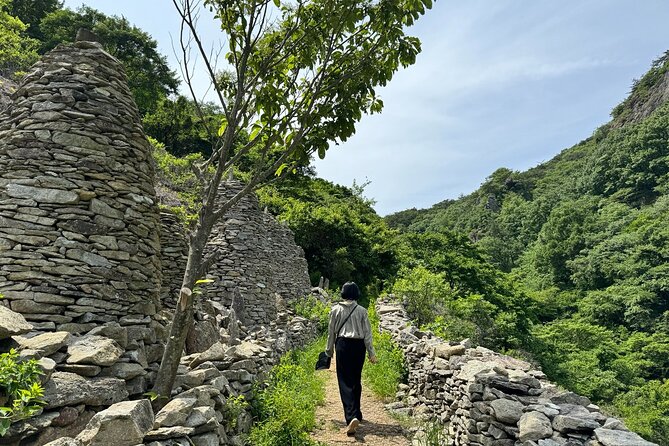
The final major activity is Mt. Obongsan. This is not just a wooded hill added to fill time. The mountain was an important source of Goodeuljang, the flat stone used in ondol, Korea’s traditional underfloor heating system.
Quarrying took place actively from the 1940s through the 1980s, and the area once supplied about 70 percent of the nation’s Goodeuljang. The old cart route remains in place. Cows once pulled carts down this route to carry the quarried stones from the mountain.
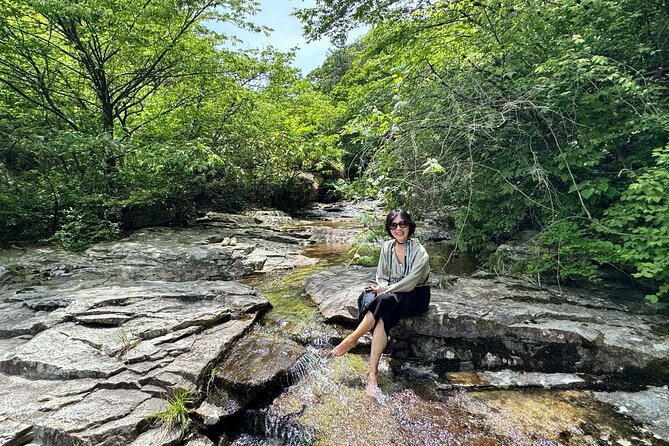
You can hike about 15 minutes to a waterfall or continue for roughly 40 minutes to the peak. The route includes rocky ridges, rock formations, stone pagodas, and waterfalls. It is more demanding than the lake trail, so the tour asks for moderate physical fitness.
This choice is one of the private tour’s practical advantages. You do not have to reach the peak simply because it is written into a group schedule. The waterfall option gives you a short taste of the route, while the longer climb suits you if you still have energy and want the best views.
Wear proper walking shoes and be honest about your comfort on rocks and inclines. The tour information does not describe the peak walk as technical, but it is still a mountain route rather than a flat promenade. Rain could also affect footing, which is one reason the outing requires good weather.
What the $190 price includes
At $190 per person, this is an expensive day for a solo visitor. It is easier to justify for two or more people who value a private vehicle, a guide, and a flexible pace. Group discounts may improve the value for larger bookings.
The price includes private transportation, admissions, lunch, green tea ice cream, the tea ceremony with green tea tasting, and the rice vinegar drink. Those inclusions matter because the day crosses several rural areas, where arranging separate transport would be inconvenient.
You are also paying for time efficiency. From Gwangju to Boseong takes about 70 minutes, the museum to Haepyeong Lake takes another 40 minutes, and the return to Gwangju takes about 70 minutes. A private vehicle ties these stops together without requiring you to work out local connections.
I would not book this solely for the tea fields. If Daehan Dawon were the only stop, the price would feel harder to defend. The value comes from the full combination of tea scenery, food, museum instruction, ceremony, lake walking, vinegar tasting, and mountain heritage in one day.
Who will get the most from this day
This outing suits you if you like nature, local food, and cultural explanation in equal measure. It is particularly useful if you are staying in Gwangju and want to see rural South Jeolla without renting a car or piecing together transport.
It also works well for a solo visitor. A private guide can make a long day feel more social, and Veronica is comfortable explaining food and local customs in English. Couples and small groups will appreciate being able to choose the shorter or longer Mt. Obongsan walk.
You should think twice if you want a slow, single-site visit. The schedule covers a lot of ground, and the drive times are real. It also may not suit you if you dislike uphill walking or need a fully flat route.
The weather policy is worth noting. Poor weather can lead to a different date or a full refund. You can cancel for a full refund up to 24 hours before the start time, while cancellations or changes made later are not accepted.
Should you book the Boseong day trip?
Book it if you want Boseong as a complete day rather than a quick photograph of tea fields. The strongest reasons are the tea ceremony, the included local meal, the quiet lake trail, and the story behind Mt. Obongsan’s stone-cart route.
Skip it if you are looking for the cheapest way to see Daehan Dawon or if a 10-hour outing with several walks sounds tiring. For everyone else, the private format makes the long transfer worthwhile, and the day gives you a well-rounded look at Boseong, from its tea-covered hills to its forest paths, local flavors, and working heritage.
FAQ
Where does the Boseong tour start?
The tour starts from Gwangju Metropolitan City, with pickup offered. The stated start time is 9:30 a.m.
How long does the experience last?
The full experience lasts about 10 hours.
Is transportation included?
Yes. Private transportation is included, and only your group participates in the activity.
What food is included?
Lunch is included, along with green tea ice cream. The main meal is grilled pork patties with green tea powder and rice. Vegetarian alternatives listed include lotus-leaf rice, cockle bibimbap, or Italian pasta, depending on the arrangement.
Is the tea ceremony included?
Yes. The Korea Tea Museum visit includes a tea ceremony class and green tea tasting.
How long is the Haepyeong Lake walk?
The Haepyeong Lake Trail is 3.9 kilometers, or about 2.4 miles.
Can I choose how far to hike on Mt. Obongsan?
Yes. You can hike about 15 minutes to the waterfall or continue for about 40 minutes to the peak. A moderate level of physical fitness is recommended.
Fresh tea listings around the world
- York: Private Horse-Drawn Carriage Ride and Afternoon Tea★ 5.0 · 3 reviews
- Yokohama : Tea Ceremony with Sweets and Souvenir★ 5.0 · 5 reviews
- Walking Tour: Yanaka,Nezu& Sendagi: Tea Ceremony & Old Tokyo★ 5.0 · 3 reviews
- Washington, D.C.: Tea Around Town Bus Tour with Landmarks★ 3.4 · 7 reviews
- Yogyakarta: Prambanan Tour, Sukuh Temple & Tea Plantation★ 5.0 · 3 reviews
- Tea Route: Lake, Forest, Tea Plantation & 3 Course Lunch★ 3.6 · 7 reviews
- Wadi Rum: 2-Hour Jeep Tour with Bedouin Tea★ 5.0 · 11 reviews
- Visit local home for music and tea ceremony near Disney★ 4.9 · 13 reviews
Green Tea Tours, compared.
Uji: Green Tea Tour with Byodoin and Koshoji Temple Visits
Read our review →
Scenic Green Tea Fields of Hidden Kyoto & Local Tea Exp (Private)
Read our review →
Osaka; Japanese Tea ceremony experience, Macha and Sencha
Read our review →
Slow Cycling Tour at Uji’s Matcha Green Tea Fields and Heritage
Read our review →
Sencha-do the Japanese Tea Ceremony Workshop in Kyoto
Read our review →Browse the lists this tour appears in