
Review · MATCHA EXPERIENCES
Hands-On Japanese Craft in Tokyo with Mochi Wagashi & Matcha
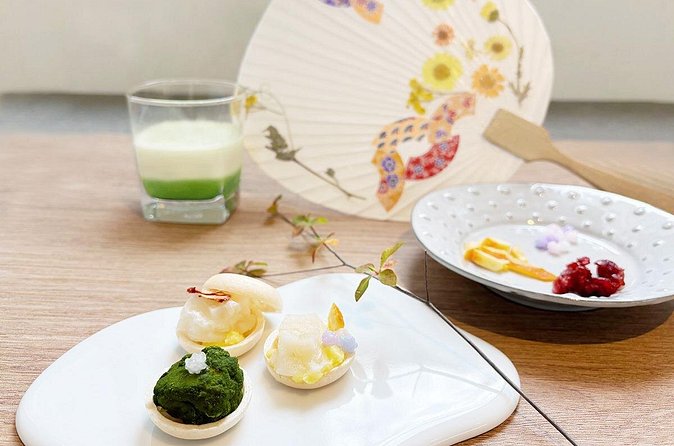
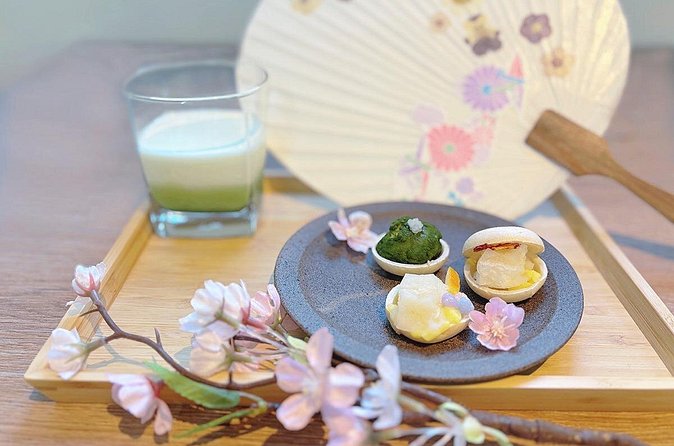
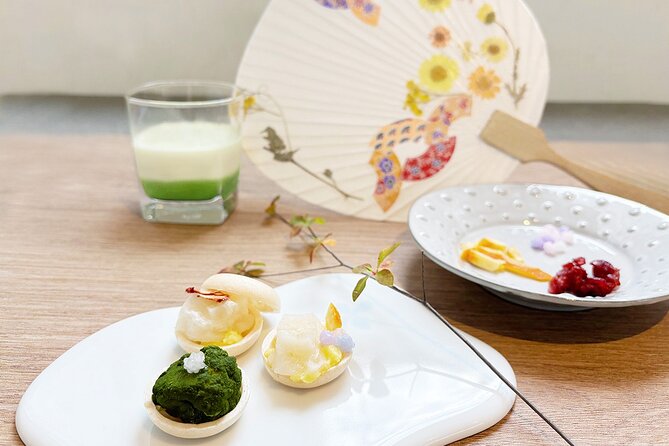
Tokyo has plenty of sights you can only photograph. This experience gives you something to make and take home: a round Japanese uchiwa fan decorated with pressed flowers and origami paper. You also prepare matcha latte and taste two playful wagashi, so the session joins craft, food, and a little Japanese design in one compact visit.
I like the easy entry point. You do not need artistic skill or a love of strong green tea to enjoy it. I also like the useful souvenir: your fan is personal, light, and far more meaningful than a shop-bought trinket. The main consideration is time. At about 90 minutes, this is a focused workshop rather than a full cooking class or a long cultural lesson.
Key points at a glance
- Pressed-flower uchiwa: Create a round Japanese fan with dried flowers and patterned origami, then take it home.
- Beginner-friendly matcha: Prepare matcha with milk for a smooth latte that is milder than plain matcha.
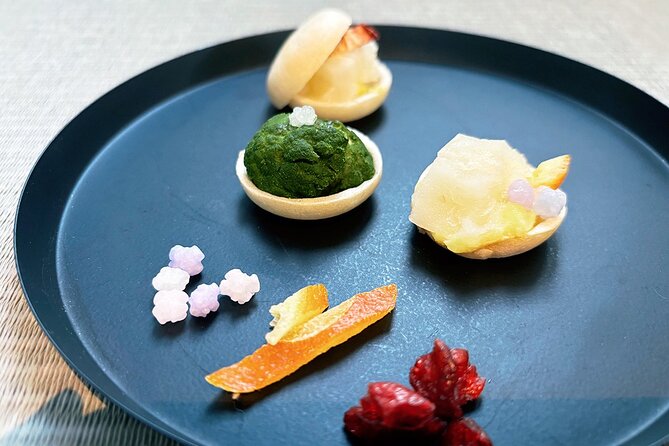
- Two unusual wagashi: Try modern monaka with custard, mochi, and dried fruit, plus a sweet shaped like a moss ball.
- Small maximum group: The session accepts up to 15 people, allowing support during the craft and drink preparation.
- Short Tokyo activity: The 90-minute format fits neatly into a day of sightseeing.
- Flexible booking terms: Cancellation is free up to 24 hours before the start time, subject to the stated weather and minimum-group rules.
Making a Japanese fan you can actually use
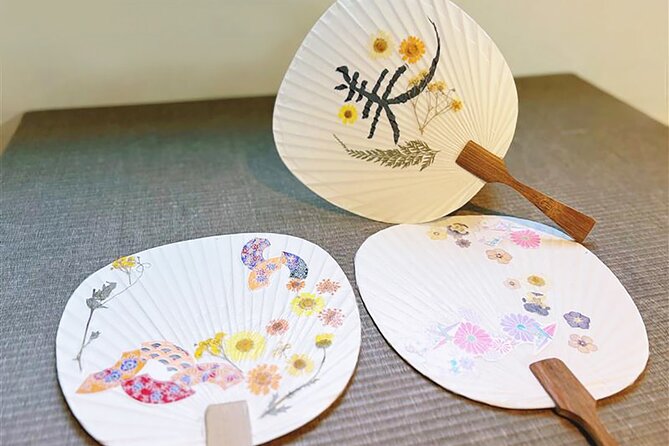
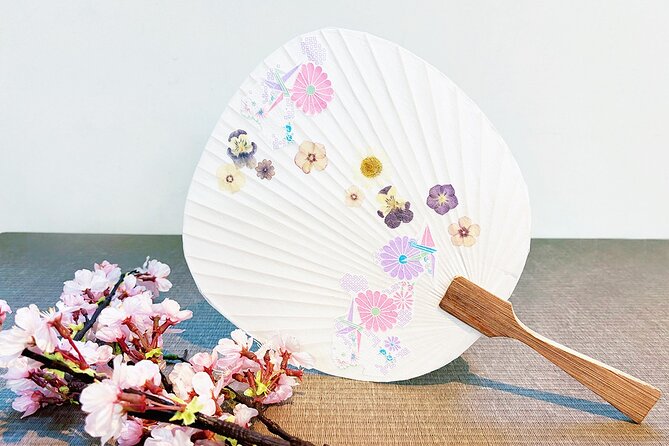
The heart of the session is the uchiwa, a traditional Japanese round fan. Unlike a folding sensu fan, an uchiwa has a firm, flat shape. It has long been used to move air in warm weather, and its simple form gives you a clean surface for decoration.
You begin with a blank fan and choose from prepared pressed flowers and Japanese-patterned origami paper. The design is yours. You can keep it restrained with a few flowers and a simple paper accent, or build a busier arrangement with several colors and shapes.
The activity is inspired by an appreciation of plants and nature, which gives the craft more meaning than a basic paper decoration. You are working with real botanical shapes, not just printed images. Since each person places the pieces differently, no two fans should look exactly alike.
One detail makes the process especially interesting: the flower design is imprinted with an iron. That step helps turn the arrangement into a finished piece rather than leaving you with loose decorations attached to a flat fan. Staff support is available as you work, which matters if you are not used to craft activities or feel unsure about composition.
You do not need to arrive with a design plan. Samples are available to help you begin, and the activity is described as easy to enjoy even for people who do not consider themselves creative. I would still suggest taking a moment to look at the flowers and paper before you start. A little planning can keep the fan from feeling crowded.
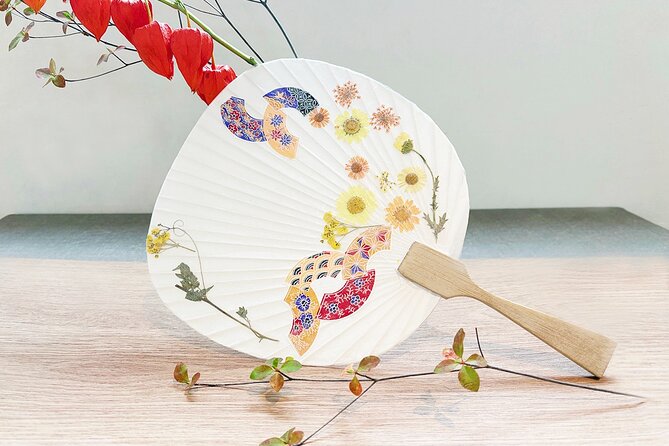
The finished uchiwa is the strongest souvenir here. It is small enough to pack, light enough to carry around Tokyo, and connected to something you did yourself. It also has a practical use as a summer fan, although you may prefer to display it carefully if the pressed flowers are delicate.
More Matcha Experiences in Tokyo
- Matcha Making Class in Tokyo with Authentic Japanese Sweets Set
★ 5.0 · 744 reviews - Tokyo: Matcha Making Experience with Mochi Sweets in Asakusa
★ 4.9 · 388 reviews - Asakusa Cultural Walk & Matcha Making Tour
★ 5.0 · 245 reviews
Why the matcha latte works for first-timers
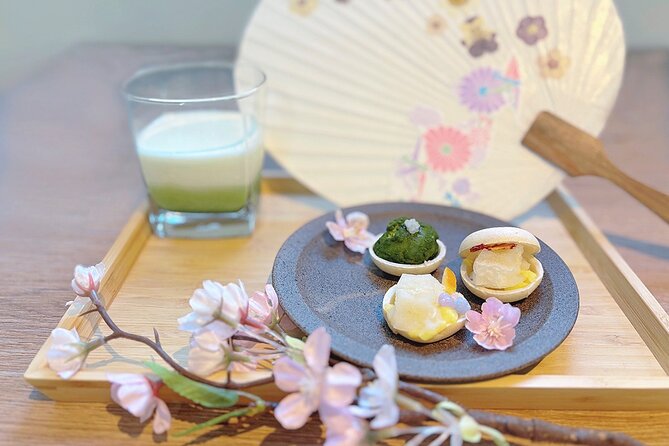
The drink portion uses powdered Japanese green tea, or matcha, mixed with milk. That distinction matters. Plain matcha has a concentrated flavor and can taste bitter or grassy if you are new to it. Milk softens the drink and gives it a creamy texture.
You are guided through making your own matcha latte rather than simply receiving a finished cup. That hands-on step keeps the activity from feeling like a standard café stop. You get to take part in the preparation and learn how the ingredients come together.
The format should suit people with mixed tastes. Some members of your group may already enjoy matcha, while others may be trying it for the first time. The milk-based version gives cautious drinkers a gentler introduction, and the supplied information specifically presents it as suitable for first-timers and children.
Do not expect a formal tea ceremony. This is a relaxed food and craft workshop, not a traditional performance with ceremonial rules. That is a benefit if you want something social and approachable, but a limitation if your main goal is to study precise tea ceremony practice.
The preparation also gives you a chance to compare the drink with matcha desserts and sweets. Matcha can taste different when paired with milk, custard, mochi, or dried fruit. If you are unsure about green tea, try the latte with an open mind rather than ordering it as you might order coffee.
Two wagashi with very different personalities
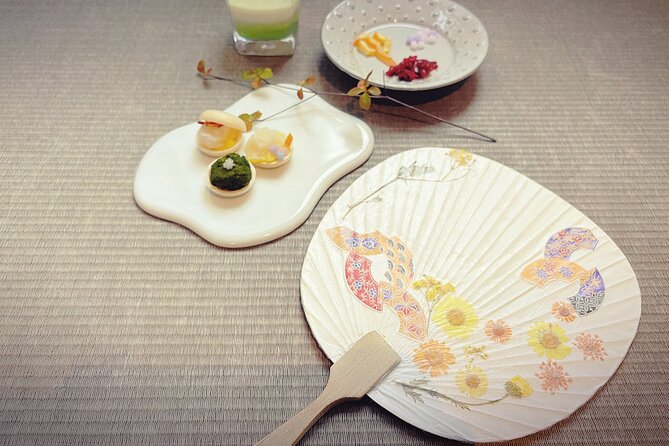
The tasting includes two Japanese sweets, and they are not simply two versions of the same treat. Each has a distinct look and texture.
The first is a modern monaka. Traditional monaka uses crisp wafer shells with a sweet filling, often bean paste. This version takes a different route. It combines the wafer with custard cream, mochi, and your choice of dried fruit.
That combination gives you several textures in one bite: a light crunch from the wafer, soft chew from the mochi, smooth custard, and fruit for added flavor and texture. It is also a useful choice if you do not enjoy the taste of traditional red bean paste. The preparation keeps the idea of monaka while making it more familiar to people who prefer cream-based desserts.
The second sweet is shaped like a kokedama, a Japanese moss ball. Kokedama is a gardening style in which a plant grows from a soil ball covered with moss. Here, that round plant form becomes a cute dessert.
The kokedama-inspired sweet is the more visual of the two. It connects dessert with Japanese gardening and gives you a small example of how food can borrow from nature for its shape. The supplied details do not specify every ingredient, so you should not book this expecting a particular flavor profile beyond the fact that it is a sweet.
Together, the two wagashi make the tasting feel more considered. You are not just handed a plate of generic snacks. One sweet updates a classic Japanese confection, while the other uses a familiar natural image as its design cue.
A compact 90-minute plan in Tokyo
The full program lasts about one hour and 30 minutes and begins and ends at the meeting point in Tokyo. There is no hotel pickup or drop-off, so you need to make your own way there and plan your route before the start time.
The exact meeting address is not supplied in the available details, so check the booking confirmation carefully. Confirmation is provided at booking, and the mobile ticket makes it easy to keep the reservation on your phone. I would arrive with enough time to find the location without rushing, especially if this is your first activity of the day.
The order is built around two parts:
- First, you design and finish your uchiwa with flowers and origami.
- Then, you prepare matcha latte and enjoy the two wagashi.
This order makes sense. The craft requires attention and leaves you with something to carry, while the drink and sweets provide a calm finish. It also lets you photograph the fan and food together before you leave.
With a maximum of 15 people, the group is not private, but it is limited enough for staff to help with the steps. That is important during the flower placement and the matcha preparation. A larger group could make a hands-on craft feel like a demonstration. Fifteen is still enough for a social atmosphere, though you should not expect a one-on-one lesson.
The session ends back at the meeting point. That makes it easy to connect with another Tokyo plan, but remember that the activity itself does not include transportation afterward.
More Tea and Sweets Making in Tokyo
- Make Traditional Nerikiri Sweets & Matcha experience in Shibuya
★ 5.0 · 130 reviews - Sweets Making and Kimono Tea Ceremony at Tokyo Maikoya
★ 5.0 · 57 reviews - Japanese Traditional Sweets making and Tea Ceremony
★ 4.7 · 50 reviews - Mochi Matcha Gluten Free Japanese Sweets Class near Shibuya area
★ 5.0 · 26 reviews
What the price means at $78.69
At $78.69 per person, this is not the cheapest way to drink matcha or buy a fan. The value comes from combining several elements in one guided session: instruction, materials, a handmade souvenir, a matcha latte, and two wagashi.
The uchiwa matters most in the price calculation. You are not paying only for a snack tasting. You are paying for the chance to create a finished object with prepared materials and staff assistance. If you enjoy making things, that gives the experience more value than a short tasting at a café.
The food portion adds variety but is not a full meal. The matcha latte and sweets should be treated as a cultural snack, not lunch. If you arrive hungry, plan another meal before or after the session.
I see the price as reasonable for someone who values an organized activity and wants a personal souvenir. It is less convincing for someone who only wants to sample matcha or who prefers independent shopping. In that case, you may find better value elsewhere by buying a drink and a fan separately.
The compact length also helps. You do not need to give up half a day of Tokyo sightseeing. You can fit the workshop between larger attractions, provided your meeting point is convenient for your route.
The atmosphere and level of support
The experience is designed to be friendly and approachable. Staff help with the fan, matcha, and sweets, and the available feedback highlights patient, polite support even when a larger group is present.
That support is useful for more than beginners. Craft work has small decisions that can slow you down, especially when you are arranging flowers or using an iron to imprint the design. Clear help lets you enjoy the creative part without worrying about making an irreversible mistake.
The session can also work well for families. The mild matcha latte is less demanding than plain matcha, and the fan decoration gives younger participants a clear task. Still, the supplied details do not state a minimum age, so confirm age rules if you are booking for small children.
You should also know that the workshop may include people with different goals. One person may focus on making a beautiful fan, another may care most about the matcha, and someone else may mainly want photos. The format supports all three, but it is not built around a long lecture or a formal historical presentation.
Weather and cancellation details to keep in mind
Free cancellation is available if you cancel at least 24 hours before the scheduled start time. Changes or cancellations made within 24 hours are not accepted for a refund, and the cut-off uses Tokyo local time.
The experience requires good weather. If poor weather causes cancellation, you are offered another date or a full refund. The activity also requires a minimum number of people. If that minimum is not reached, you are offered another date or experience, or a full refund.
These rules are worth noting because the weather condition may affect your plans. Keep your booking confirmation handy and avoid arranging a tight, nonrefundable activity immediately afterward. The mobile ticket is convenient, but it does not remove the need to check the start time and meeting point.
Who will enjoy this most
I would recommend this experience to you if you want a short, hands-on cultural activity rather than a passive sightseeing stop. It fits first-time matcha drinkers, craft lovers, families, couples, and solo visitors who like leaving a place with something they made.
It is especially good for someone who has already seen major Tokyo landmarks and wants a quieter activity. The fan offers a personal link to Japanese summer culture, while the sweets show how traditional forms can be reworked with custard, mochi, fruit, and playful shapes.
You may want to skip it if you are looking for a substantial cooking lesson, a full tea ceremony, or a long explanation of Japanese craft history. The session is intentionally light and social. The value is in doing a few approachable activities well, not in covering every detail of Japanese food and design.
Should you book this Tokyo craft experience?
Book it if you want to make a useful souvenir, try a gentle version of matcha, and taste two distinctive Japanese sweets in about 90 minutes. The pressed-flower uchiwa is the lasting part, and the staff support makes the activity suitable even if you do not think of yourself as creative.
Think twice if $78.69 feels high for a snack-sized experience or if your main aim is a formal tea ceremony. For the right person, though, the combination of craft, food, and a small group makes this a pleasant break from Tokyo’s busy sightseeing rhythm.
FAQ
How long does the experience last?
The activity lasts approximately one hour and 30 minutes.
Where does the activity begin and end?
It starts in Tokyo and ends back at the meeting point.
What do I make during the workshop?
You design and decorate a round Japanese uchiwa fan using pressed flowers and Japanese-patterned origami paper. You take the finished fan home.
What food and drink are included?
The program includes one matcha latte and two types of wagashi: a modern monaka and a kokedama-inspired sweet.
Is the matcha latte suitable for beginners?
Yes. The matcha is mixed with milk, making it smoother and milder than plain matcha. The activity information presents it as suitable for first-timers and children.
What is in the modern monaka?
The modern monaka uses a crisp wafer with custard cream, mochi, and dried fruit toppings. The specific dried fruit choice is not stated.
Does the price include transportation?
No. Hotel pickup and drop-off are not included. You make your own way to the meeting point.
How many people can join the activity?
The maximum group size is 15 people.
Can I cancel for a full refund?
Yes, if you cancel at least 24 hours before the scheduled start time. Cancellations or changes within 24 hours are not refunded. If poor weather or an insufficient minimum group causes the activity to be canceled, you are offered another date or experience, or a full refund.
Fresh tea listings around Tokyo
- Yokohama : Tea Ceremony with Sweets and Souvenir★ 5.0 · 5 reviews
- Walking Tour: Yanaka,Nezu& Sendagi: Tea Ceremony & Old Tokyo★ 5.0 · 3 reviews
- Private Mochi・Matcha sweets Making Class Near Shibuya Area★ 5.0 · 22 reviews
- Private Kimono and tea ceremony at local home near Tokyo Disney★ 5.0 · 6 reviews
- 2 Hours Mochi &Nerikiri Making & Matcha Class in Bunkyo★ 5.0 · 21 reviews
- Tokyo Sweets Tour: Hidden Gems & Matcha at an Old Tea House★ 5.0 · 6 reviews
- Kimono and Tea Ceremony in Asakusa Private Food Tour With Guide★ 5.0 · 4 reviews
- Tokyo: Tea Ceremony & Japanese Sweets Making★ 5.0 · 10 reviews
Matcha Experiences, compared.
World Heritage Kyoto & Nara Uji Authentic Matcha Experience
Read our review →
Matcha Making Class in Tokyo with Authentic Japanese Sweets Set
Read our review →
Kyoto: Tea Museum Tickets and Matcha Grinding Experience
Read our review →
Matcha Making Class in Osaka with Authentic Japanese Sweets Set
Read our review →
Kyoto: Tea Ceremony Meditation – Make Matcha with Tea Master
Read our review →
Tokyo: Matcha Making Experience with Mochi Sweets in Asakusa
Read our review →
Kyoto: Kimono Tea Ceremony with Matcha and Sweet
Read our review →
Browse the lists this tour appears in