
Review · GREEN TEA TOURS
Korean Green Tea Tour – from Boseong to Gangjin (Private)
The most unusual part of this day is its three-part taste of Korean tea: leaf tea, powdered tea, and rice cake tea. You move from Boseong’s famous hill farms to Gangjin’s older tea traditions, with a tea ceremony and several stops that are hard to connect by public transport.
I like the mix of big scenery and small details. The sweeping fields at Daehan Dawon are photogenic, while the Gangjin stops explain how tea was made, served, and passed down. I also like that guides such as Veronica and Vicky can add context, help with food choices, and adjust the pace to your interests.
The main drawback is the long day in a vehicle: roughly 70 minutes from Gwangju to Boseong, 50 minutes to Gangjin, and another 70 minutes back. Lunch costs extra, and the outdoor portions depend on good weather.
What makes this tea day different
- Three Korean tea regions and styles: Taste ordinary leaf tea, powdered green tea, and Gangjin’s traditional rice cake tea.
- A real tea ceremony in Boseong: Learn how Korean tea is prepared and served instead of simply buying a cup at a farm shop.
- Boseong’s famous hill farms: Daehan Dawon and Nokcha-ro provide two different views of the area’s rolling rows.
- Gangjin’s old tea connection: Visit Baegundong Hermitage Garden and hear about Baegun Okpan Tea, Korea’s first tea brand.
- Private transport from Gwangju: Your group travels together, with no strangers added to the vehicle.
- A full nine to ten hours: This is a day trip, not a quick countryside outing, so you see several places without arranging separate taxis.
Why Boseong and Gangjin belong in the same day
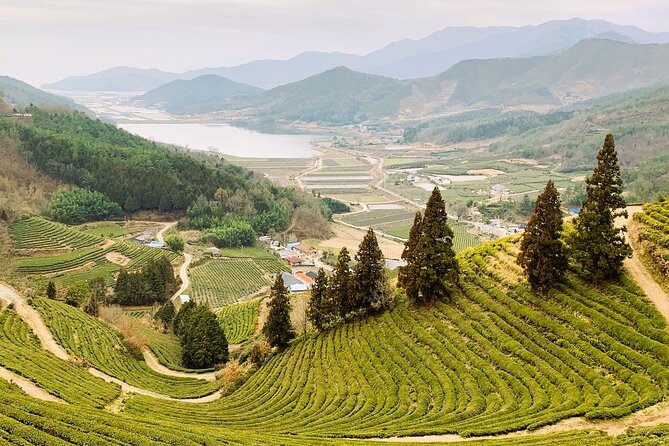
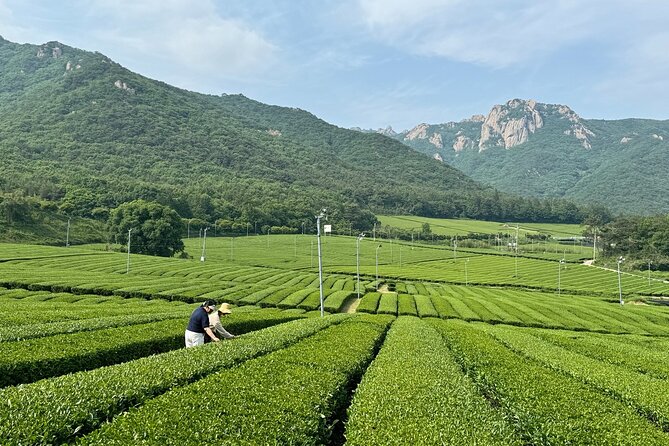
Boseong is the easy place to associate with Korean green tea. Its slopes are planted in neat, curving rows, and the county’s climate and soil suit tea cultivation. The farms here are described as organic, and the main attraction is the visual pleasure of walking through a working tea-growing area.
Gangjin gives the day more depth. Its fields are less famous with international visitors, but tea has been part of the area’s story for more than 1,000 years. The connection reaches back to the Joseon period and includes the work of Jeong Yak-yong, a major scholar who spent time in exile in Gangjin.
That contrast gives you a better day than simply visiting one large farm. Boseong shows you the scale and beauty of modern tea production. Gangjin explains how tea survived through gardens, scholars, families, and local makers.
You begin at 9:30 a.m. in Gwangju Metropolitan City. Since the drive to Boseong takes about 70 minutes, the first stop is far enough from the city to feel like a proper countryside outing. Private transport matters here. The tea sites are spread out, and public transport would make it difficult to cover all seven stops in one day.
More Green Tea Tours in the world:
- Experience all of Japanese culture and Japanese food experience classes “origami, udon, Japanese food, green tea, calligraphy” in 4 hours
★ 5.0 · 105 reviews - Uji: Green Tea Tour with Byodoin and Koshoji Temple Visits
★ 4.8 · 72 reviews - Scenic Green Tea Fields of Hidden Kyoto & Local Tea Exp (Private)
★ 5.0 · 32 reviews
Daehan Dawon, Boseong’s classic tea view
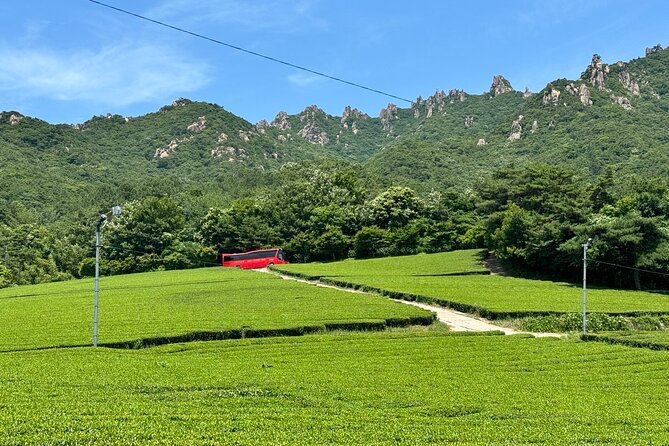
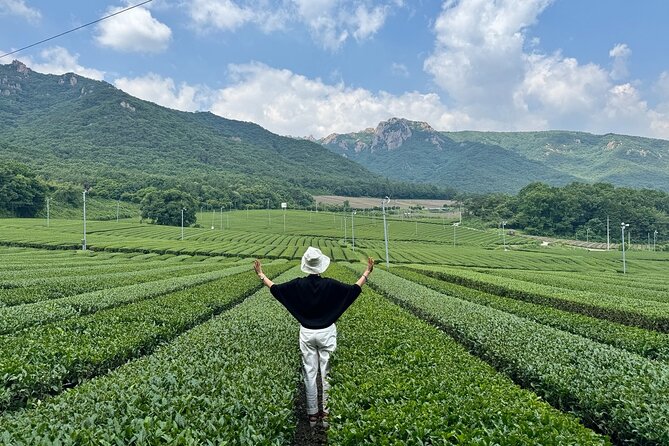
Your first major stop is Boseong Green Tea Field Daehan Dawon, with about 90 minutes on site. This is the place for the famous hillside view: long bands of tea plants running over rounded slopes, with paths leading through the rows.
The appeal is partly visual, but the visit also gives you a useful first look at how tea is grown. You are not just looking at a green hillside from a roadside pull-off. You have time to walk around, take photographs, and begin to see tea as an agricultural product rather than a decorative garden.
The admission fee is included, which keeps the day simple. Wear shoes that you can walk in comfortably, since the main pleasure here comes from moving through the farm rather than staying beside the vehicle. The weather can change the feel of the stop. On a clear day, the views are the star. In wet weather, paths may be less pleasant, and the entire day can be affected because the experience depends on outdoor scenery.
This is also where the trip begins to feel much more useful with a guide. A good guide can explain what you are looking at, answer questions about Korean tea, and keep you from treating the visit as only a photo stop. Veronica and Vicky are specifically associated with the tour, and the strongest praise centers on their explanations, flexibility, and warm way of handling the day.
Lunch in Boseong-eup, with your choice of local food
After the first farm, you stop in Boseong-eup for about an hour. Lunch is not included, so you pay the restaurant directly. The tour presents several local choices, including stir-fried nakji, or Korean octopus, along with other popular town dishes.
This arrangement has a useful advantage: you choose what you want rather than paying for a fixed meal you may not enjoy. It also means the final price is not quite all-inclusive. At $195 per person, you should budget separately for lunch and skip any assumption that drinks are covered. Alcoholic beverages are not included either.
An hour is enough for a straightforward meal, but not for a long, slow restaurant visit. Tell your guide if you have food restrictions or need help choosing. The local-food focus is one of the day’s practical benefits, since a guide familiar with the area can point you toward places you would be unlikely to find while passing through town.
Korea Tea Museum, the day’s best classroom
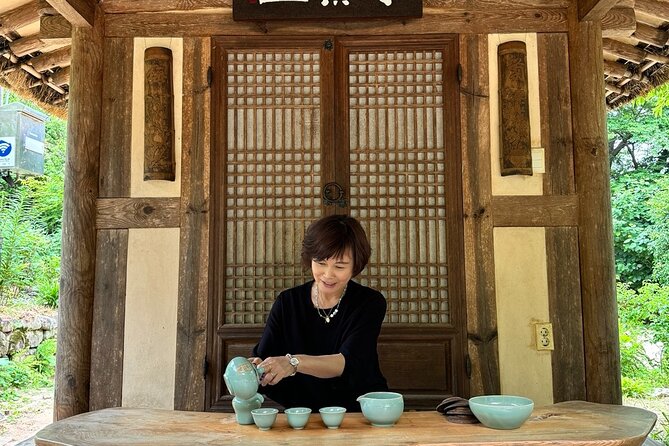
The Korea Tea Museum gives the outdoor stops some structure. You spend about an hour learning about the tea plant, Korean tea customs, and the six types of tea that can be produced from the same plant.
This is valuable because green tea is not simply one fixed drink. Production methods affect the leaf, flavor, appearance, and final use. The museum also provides background on Korean tea history and production, so you can understand why a powdered matcha-style tea and a pressed rice cake tea belong in the same story.
If you are mainly looking for scenery, this is a slower stop. If you want to know what you are tasting, it may be the most useful one. I would pay close attention here, because the later tea experiences in Boseong and Gangjin make more sense after you understand the basic categories.
The museum admission is included. Its indoor setting also gives you a break from sun, wind, or rain, though the tour still requires plenty of outdoor time overall.
More tea experiences around the world if you are still choosing
- Kyoto: Tea Ceremony in a Traditional Tea House in Kiyomizu
★ 4.9 · 3,519 reviews - London: Afternoon Tea Cruise on the River Thames
★ 4.4 · 3,274 reviews - Kyoto: Tea Ceremony Ju-An at Jotokuji Temple
★ 4.9 · 3,207 reviews - Afternoon Tea Bus Tour in Dublin
★ 5.0 · 2,791 reviews
Nokcha-ro and the Choroknip tea farm
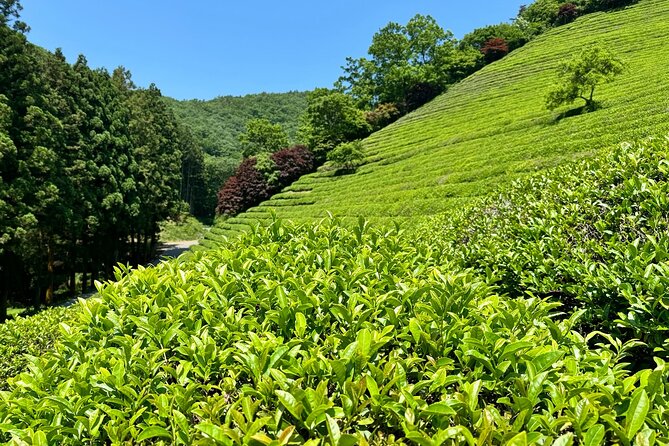
The next Boseong stop is Nokcha-ro, where Choroknip tea farm is known for its view. You have about 40 minutes, including time at the tea house terrace overlooking more rolling tea fields.
This is a shorter visit than Daehan Dawon, but it serves a different purpose. Daehan Dawon lets you experience the scale of the farm. Choroknip gives you a place to sit, look back across the slopes, and take in the pattern of the fields from above.
The terrace is a good spot for the included matcha affogato, a dessert combining powdered green tea with green tea ice cream. It is a playful bridge between traditional tea and modern cafe culture. The matcha flavor may be stronger and more bitter than a standard sweet dessert, so this is best approached as a tea tasting with ice cream rather than an ordinary sundae.
Forty minutes goes quickly. This stop is about the view and treat, not a long farm walk. If photography matters to you, keep your camera ready and ask the guide about the best viewing point.
Gangjin Dawon beneath Mount Wolchulsan
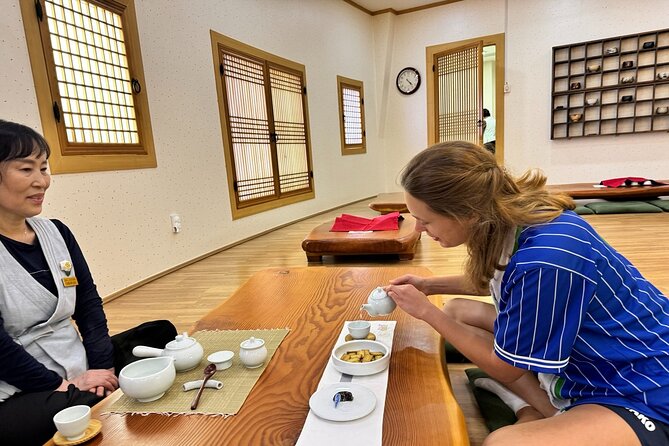
The drive from Boseong to Gangjin takes about 50 minutes. That transfer is one reason private transport is important. The two areas are close enough to combine, but not close enough for an easy walk or simple public transport connection.
Gangjin Dawon sits at the foot of Mount Wolchulsan. The tea field here was cultivated for green tea production by Osulloc beginning in 1980, linking a modern Korean tea producer with a much older local tea tradition.
You spend about 30 minutes here, so do not expect a long hike or a full farm tour. Instead, use the stop to compare the setting with Boseong. The atmosphere and scale are different, and the mountain backdrop helps show why tea growing developed in this part of South Jeolla Province.
This is a good point in the day for your guide to connect agriculture with regional history. Gangjin is not being presented as simply another pretty field. It is part of a long chain of Korean tea making that continues into current production.
Baegundong Hermitage Garden and Joseon-era tea culture
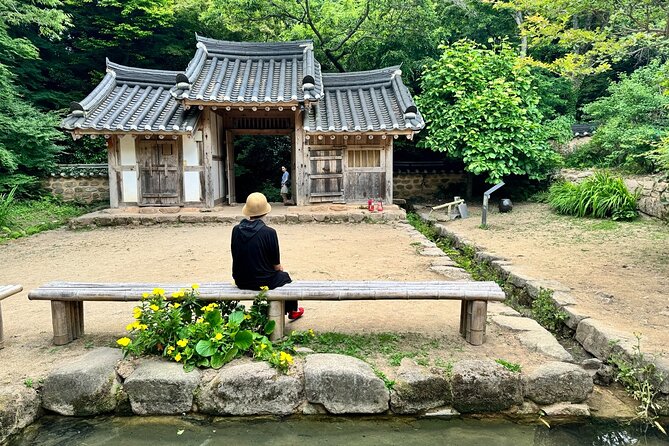
Baegundong Hermitage Garden is one of the most distinctive stops. You have about 40 minutes at this private garden, built in the late 17th century during the Joseon Dynasty.
The garden was carefully placed to work with its natural surroundings. That design idea matters. Instead of a large attraction built around one grand structure, you get a quieter place where water, plants, paths, and buildings are arranged as a whole.
The word hermitage can make the site sound remote or austere, but the point of the visit is its beauty and connection to tea culture. The garden is tied to the revival of tea traditions in Gangjin, giving the day a human story after the broad views of Boseong.
Forty minutes is enough to appreciate the setting, but not enough for a slow, detailed exploration of every corner. Listen to the guide here. Without explanation, you might see only a well-kept historic garden. With context, the place becomes part of the story of how Korean tea customs were preserved and brought back into public attention.
Baegun Tea House and the old rice cake tea tradition
The final stop is in Seongjeon-myeon, at Baegun Tea House. You spend about 40 minutes learning about Baegun Okpan Tea, described as Korea’s first tea brand, created in the 1920s by Lee Han-young.
Lee Han-young was a descendant of one of Jeong Yak-yong’s disciples. That link gives the tea house a direct connection to the scholar associated with Gangjin. The story is not only about a product label. It shows how tea knowledge moved through personal relationships, local families, and small-scale production.
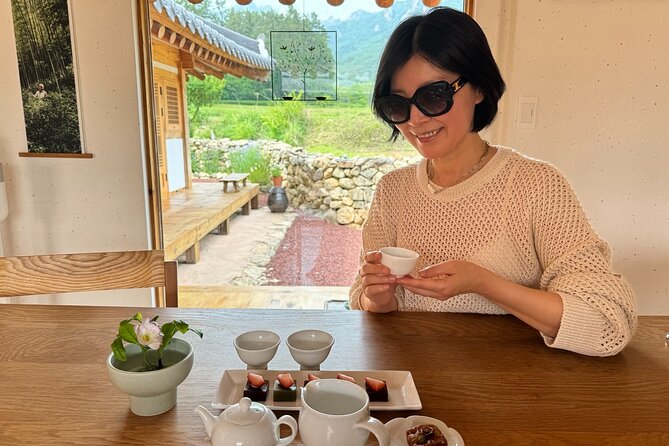
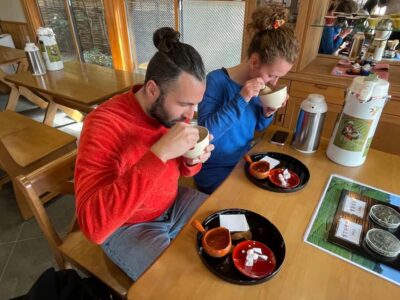
Here you taste historical rice cake tea, one of the most unusual inclusions in the day. The name refers to tea that was pressed or formed into cakes for storage and later preparation. This is very different from sipping a fresh cup of loose leaf tea, and it gives you a taste of how tea could be preserved and handled before modern packaging.
The experience makes the day’s central idea clear. Korean tea is not one flavor or one ceremony. It includes everyday leaf tea, powdered tea, formal preparation, and older methods of storing tea in compact cakes.
What $195 per person really covers
At $195 per person, this is not a cheap countryside transfer. It is also not simply a series of admission tickets. The price includes private transportation, all listed fees and taxes, the Korean tea ceremony, matcha affogato, and historical rice cake tea.
The value is strongest for people staying in Gwangju who want to see both Boseong and Gangjin in one day. Hiring separate transport, finding the fields, locating the garden, arranging museum visits, and choosing a place for lunch could take a great deal of time. You are paying for access, routing, translation, and the ability to connect the stops into one story.
The value is weaker if you only want to photograph Boseong’s main tea hills. In that case, a shorter outing may suit you better. This tour earns its price through variety and interpretation, not through a single spectacular viewpoint.
The private format also changes the experience. Only your group takes part, so you can ask questions without holding up a large coach. Guides have been praised for helping with transport problems beyond the planned route and for listening when a group wants to adjust its time. That flexibility is especially useful on a nine to ten hour day.
Timing, comfort, and who should book
Plan on leaving Gwangju at 9:30 a.m. and returning after a full day. The total driving time alone is about three hours and 10 minutes, before counting the seven stops. That is manageable in a private vehicle, but you should not book this expecting a relaxed half-day.
You should also be comfortable with repeated transitions between vehicle, tea field, museum, garden, and tea house. Some stops are short, especially Gangjin Dawon, while others allow more time to walk or look around. The mix keeps the day moving, but it does not give you long, unstructured periods at any one place.
Most people can participate, and service animals are allowed. The tour is near public transportation, but the experience itself is built around private transport. Confirmation arrives when you book. Free cancellation is available until 24 hours before the start time, and poor weather can lead to a different date or a full refund.
This tour suits you best if you enjoy food, rural scenery, cultural history, and guided explanation. It is also a strong choice if you are staying in Gwangju and do not want to solve the transport puzzle yourself.
It may not suit you if you dislike long day trips, want a strenuous hike, or prefer to explore one farm at your own pace. The program has a clear schedule, and the weather matters. Bring practical walking shoes and allow room in your day for the return drive.
Should you book the Boseong and Gangjin tea tour?
Book it if you want more than the famous green hills. The best parts are the combination of Boseong’s grand views, Gangjin’s quieter tea traditions, the Korean tea ceremony, and the unusual rice cake tea. You also get a matcha affogato and local lunch guidance, which keeps the day from feeling like a museum-only outing.
I would be especially inclined to book if this is your first visit to the tea regions from Gwangju. A guide such as Veronica or Vicky can turn scattered rural stops into a clear story and help with the practical details. Skip it if your priority is a short, inexpensive photo trip to one farm. For a serious look at Korean tea, its price and long schedule are justified.
FAQ
Where does the Korean Green Tea Tour begin?
The tour starts in Gwangju Metropolitan City, with a listed start time of 9:30 a.m.
How long does the tour last?
The experience lasts approximately nine to ten hours.
How long is the drive from Gwangju to Boseong?
Travel time from Gwangju to Boseong is around 70 minutes.
How long is the drive from Boseong to Gangjin?
Travel time from Boseong to Gangjin is around 50 minutes.
Is lunch included?
No. Lunch is not included. You choose from local dishes in Boseong-eup and pay at the restaurant.
What food and tea experiences are included?
The tour includes a matcha affogato, a Korean tea ceremony in Boseong, and historical rice cake tea in Gangjin.
Is transportation private?
Yes. Private transportation is included, and only your group participates in the activity.
Are admission fees included?
All fees and taxes are included. Admission is specifically included for Boseong Green Tea Field Daehan Dawon and the Korea Tea Museum.
Can I cancel the tour for a full refund?
You can cancel at least 24 hours before the experience start time for a full refund. If poor weather causes the tour to be canceled, you are offered a different date or a full refund.
Fresh tea listings around the world
- York: Private Horse-Drawn Carriage Ride and Afternoon Tea★ 5.0 · 3 reviews
- Yokohama : Tea Ceremony with Sweets and Souvenir★ 5.0 · 5 reviews
- Walking Tour: Yanaka,Nezu& Sendagi: Tea Ceremony & Old Tokyo★ 5.0 · 3 reviews
- Washington, D.C.: Tea Around Town Bus Tour with Landmarks★ 3.4 · 7 reviews
- Yogyakarta: Prambanan Tour, Sukuh Temple & Tea Plantation★ 5.0 · 3 reviews
- Visit local home for music and tea ceremony near Disney★ 4.9 · 13 reviews
- Tea Route: Lake, Forest, Tea Plantation & 3 Course Lunch★ 3.6 · 7 reviews
- Wadi Rum: 2-Hour Jeep Tour with Bedouin Tea★ 5.0 · 11 reviews
Green Tea Tours, compared.
Uji: Green Tea Tour with Byodoin and Koshoji Temple Visits
Read our review →
Scenic Green Tea Fields of Hidden Kyoto & Local Tea Exp (Private)
Read our review →
Osaka; Japanese Tea ceremony experience, Macha and Sencha
Read our review →
Slow Cycling Tour at Uji’s Matcha Green Tea Fields and Heritage
Read our review →
Sencha-do the Japanese Tea Ceremony Workshop in Kyoto
Read our review →Browse the lists this tour appears in