
Review · SOUTH KOREA TEA TOURS
Seoul: Herbal Tea Class & Korean Medicine Tour
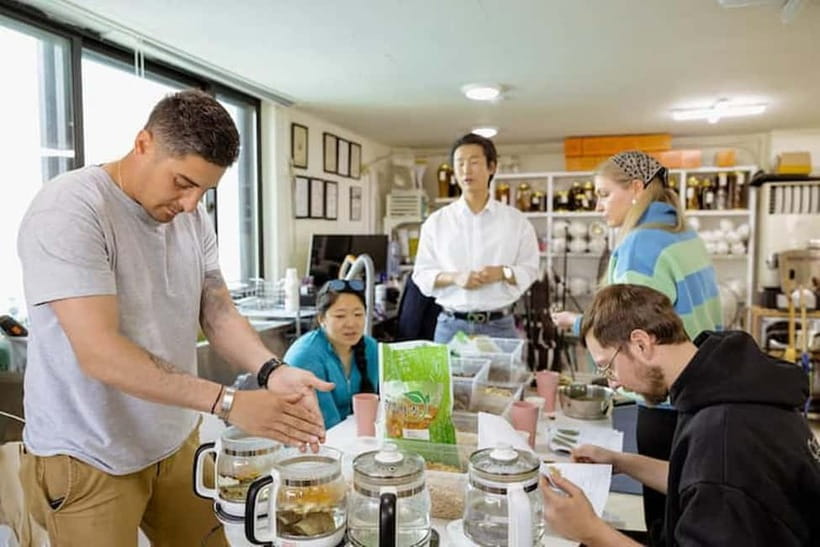
The most interesting part of this Seoul experience is the chance to handle roughly 40 traditional Korean herbs before choosing ingredients for your own tea. Sungil Choi, an herbal specialist who has worked with medicinal herbs since 2017, shapes the session around your level, from complete beginner to medical professional.
I like the practical tea-making session, since you do not just hear about herbs, you select and blend them. I also like the small keepsakes: your tea goes into a bottle to take home, and the museum visit adds context to what you have just handled. The main drawback is that the museum portion may depend heavily on Sungil’s live explanation. Some displays do not have English text, and one poor experience reported that the guide offered little commentary.
Key points to know
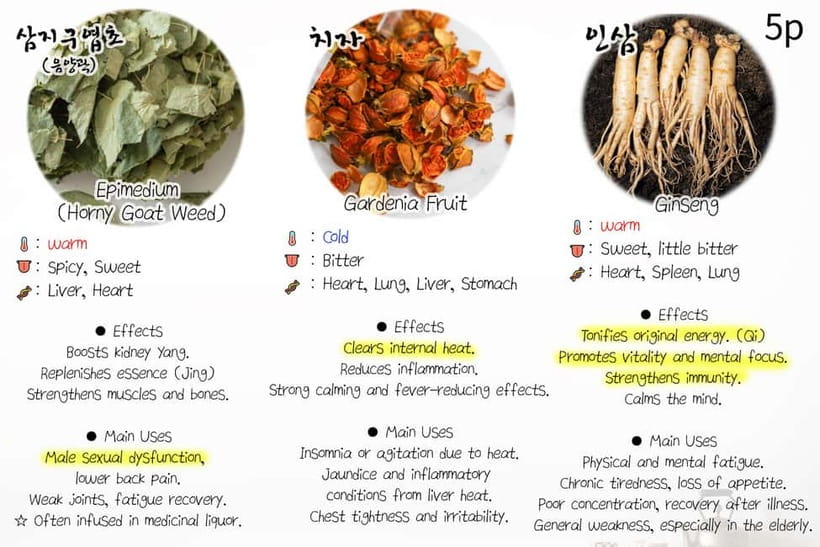
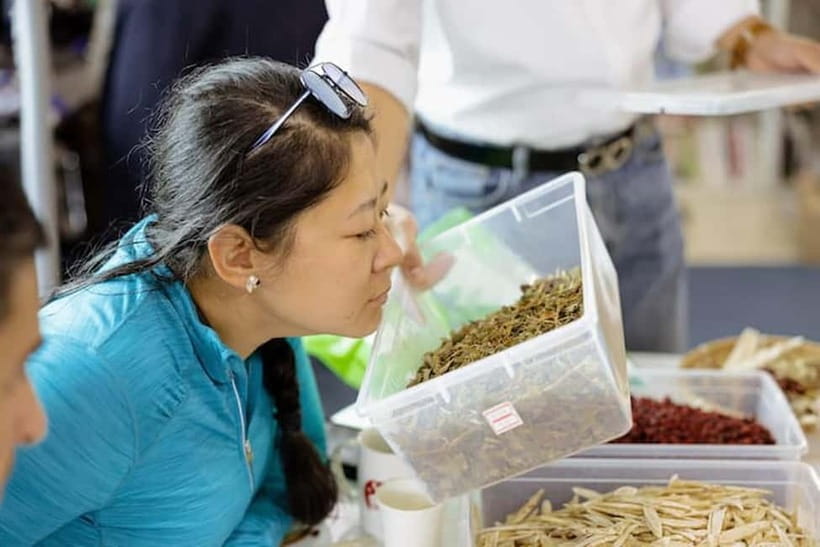
- Start with hands-on herbs: You can see, touch, and compare about 40 commonly used medicinal herbs.
- Make a tea suited to you: Sungil helps you choose ingredients and explains how Traditional Korean Medicine views them.
- Learn without needing a medical background: Yin-Yang, the Five Elements, and East-West medicine are introduced in simple terms.
- Visit Yaknyeong Market’s medical center: The route includes the TKM Museum at K-medi Center, with museum commentary from Sungil.
- Optional treatments cost extra: Foot baths, massage, acupuncture, moxibustion, clinic visits, and herb shopping are separate purchases.
- Plan for a flexible conversation: Sungil adjusts the session to your interests and can help interpret symptoms at a Korean medicine clinic.
Starting with 40 herbs in a Seoul workshop
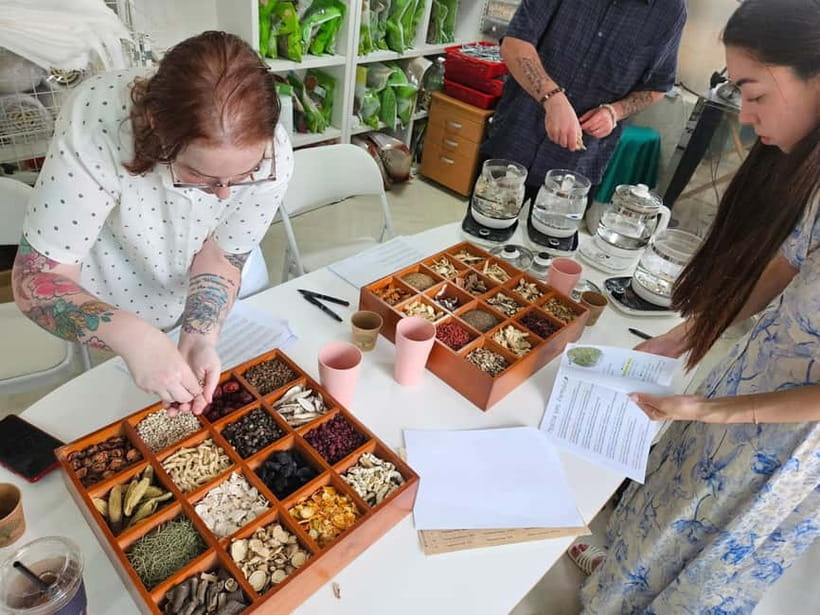
The tour begins at 2:00 p.m. in Room 401, Sungil’s workshop. If you are not comfortable finding the address, he sends detailed directions on the day of the tour. The experience also ends back at this meeting point, which keeps the logistics simple.
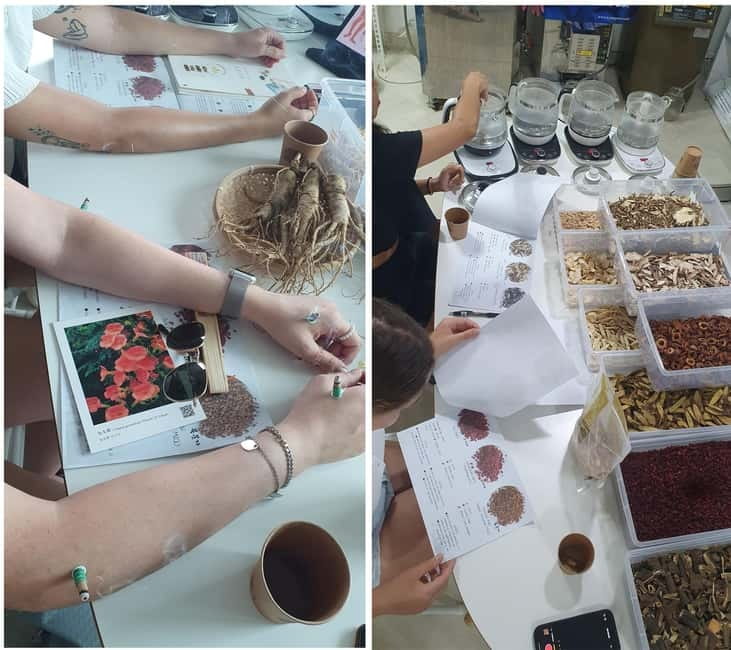
The workshop is the heart of the activity. Instead of starting with a long lecture, you get to examine a wide selection of herbs used in Traditional Korean Medicine, often called TKM. You can see their forms, handle them, and ask what they are used for. That physical contact matters. A dried root, flower, leaf, or bark is easier to remember once you have held it and discussed it.
Sungil’s background shapes the session. He studied herbal subjects at university and has sold medicinal herbs in South Korea since 2017. He does not present the class as a fixed speech for everyone. If you already know something about herbs, you can ask more specific questions. If the subject is new to you, he can keep the explanations basic.
That flexibility is useful because TKM can become complicated fast. You are not expected to learn every herb or understand the whole medical system in one afternoon. The better goal is to leave with a clear introduction, a few new terms, and a sense of how Koreans use plants within a traditional health system.
More tea experiences around the world if you are still choosing
- Kyoto: Tea Ceremony in a Traditional Tea House in Kiyomizu
★ 4.9 · 3,519 reviews - London: Afternoon Tea Cruise on the River Thames
★ 4.4 · 3,274 reviews - Kyoto: Tea Ceremony Ju-An at Jotokuji Temple
★ 4.9 · 3,207 reviews
Blending a personal herbal tea
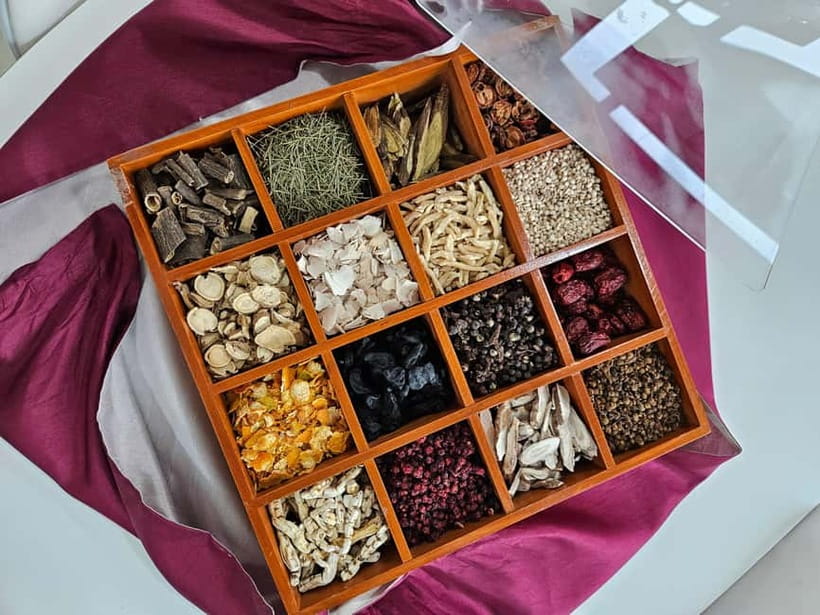
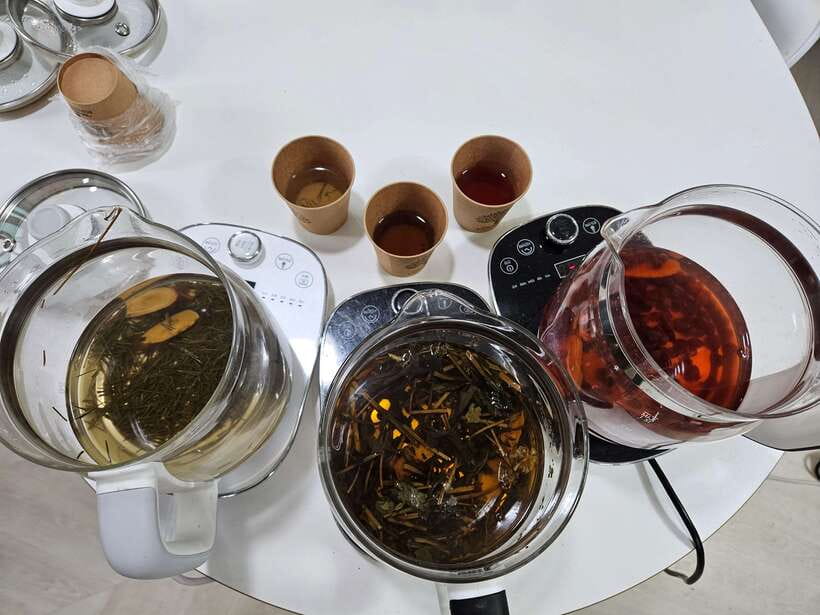
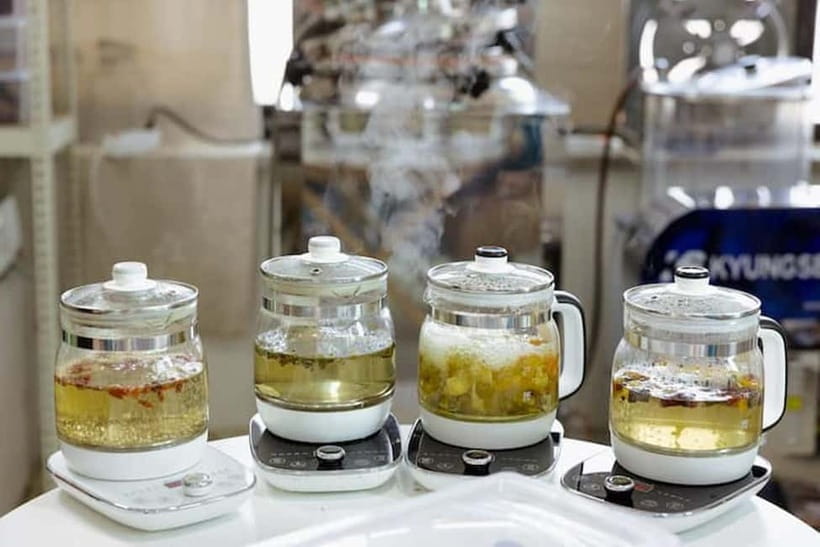
The tea-making section gives the workshop a clear purpose. After looking at the herbs, you choose ingredients and blend your own tea with Sungil’s help. The exact blend depends on your interests and the ingredients selected during the session.
This is where the experience feels more personal than a standard museum visit. You are not simply watching someone prepare a sample. You make a choice, discuss why the ingredients may fit your needs, and leave with a bottle of tea for home. The tour also supplies the herbs and teapot needed for the blending session, along with a welcome cup of herbal medicine tea.
I would treat this as an educational tasting, not as a medical diagnosis. TKM has its own ways of discussing balance, symptoms, and the body, but an afternoon class cannot replace care from a licensed medical professional. The guide can explain traditional ideas and help you understand the role of different herbs, yet you should still be careful with any herb if you have a health condition, take medication, or are pregnant.
The personal element works especially well for couples or friends. You can compare your choices, ask why two people might receive different suggestions, and take home something connected to the class. Several of the strongest comments about this experience focus on the pleasure of selecting plants for individual needs.
Yin-Yang, the Five Elements, and two medical traditions
Sungil also introduces the basic ideas behind TKM. You learn about Yin-Yang and the Five Elements, along with a simple comparison between Eastern and Western medicine.
Do not expect a university lecture. The material is presented as an accessible foundation, so you can follow the museum displays and understand the logic behind the tea-making exercise. If you have studied Chinese or Korean medicine before, you may want to use the time for more detailed questions. If not, the class gives you useful reference points without requiring previous reading.
The comparison with Western medicine can be helpful, but it is best understood as an overview rather than a debate. The purpose is to show that TKM organizes health and treatment through a different set of ideas. You can listen, ask questions, and decide how much of the system you want to explore.
Sungil’s willingness to keep answering questions after the tour is a useful extra. The activity includes ongoing contact for questions, so you can follow up if you later forget the name of an herb or want clarification about what you learned. That does not turn the tour into a medical advice service, but it adds value for someone who wants to continue studying the subject.
Visiting the TKM Museum at K-medi Center
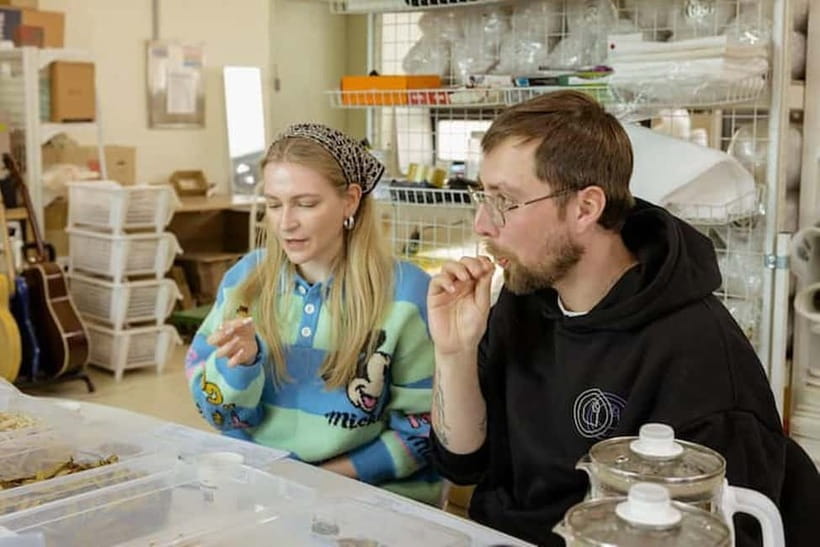
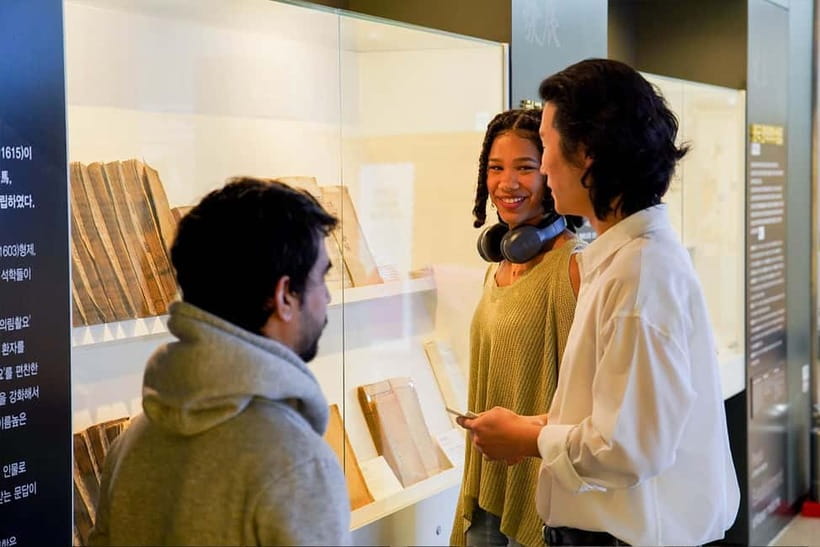
After the tea and a short break, you go to K-medi Center, where you visit the Traditional Korean Medicine Museum. The museum gives you a wider view after the close-up workshop. At the table, you looked at individual plants. Here, you can connect those plants with the broader practice of Korean medicine.
Museum entry is included in the $50 tour price. Sungil is meant to guide you through the displays and explain what you are seeing. That commentary is important because some museum information is not presented in English. You may need to use your phone for translation if a display is written only in Korean.
This is the part I would clarify before booking. The quality of the museum stop depends on how much explanation you receive on the day. One account described detailed and useful commentary, while another found the museum visit too hands-off and felt that the displays were left for visitors to read alone. That difference matters. The museum itself may be worthwhile, but its value rises sharply when Sungil actively connects the exhibits to the herbs and ideas from the workshop.
You should also feel free to ask direct questions during this portion. Ask Sungil to explain a display, define a term, or point out how the museum material relates to your tea blend. The tour is designed around discussion, and a quiet walk through untranslated displays would miss much of the reason to book it.
Same city, a very different cup:
- Afternoon Tea Bus Tour in Dublin
★ 5.0 · 2,791 reviews - Kyoto: 45-Minute Tea Ceremony Lesson Experience
★ 4.3 · 2,378 reviews - London: Afternoon Tea Bus Tour – 1960s Routemaster Bus
★ 4.5 · 2,032 reviews - London: Afternoon Tea Bus with a Glass of Prosecco
★ 4.4 · 1,853 reviews
Choosing optional treatments after the museum
After the museum, you can decide if you want to add another Korean medicine activity. These options are not included in the tour price, so plan your spending before you agree to anything.
Available choices include:
- An outdoor foot bath, costing 6,000 KRW per tub for up to two people
- Meridian massage for 5,000 KRW per person
- Moxibustion or acupuncture, at approximately 50,000 KRW
- A Korean medicine clinic visit, around 50,000 KRW without health insurance
- Shopping for additional herbs
Costs can vary slightly, especially for clinic services. Shopping is also separate, so you should not feel that buying herbs is part of the $50 commitment. You can finish after the museum if that is enough for you.
The low-cost foot bath or massage may suit you if you want a gentle add-on. Acupuncture, moxibustion, and a clinic consultation are more serious choices and should be approached as medical services, not sightseeing extras. Sungil can help interpret your symptoms for the doctor, guide you through the consultation, and connect you with an appropriate specialist based on your needs.
That help may be particularly useful if you do not speak Korean. Still, ask about the treatment, price, and expected process before proceeding. The tour price does not cover treatment, and the supplied information does not promise that every optional activity will be available on every date.
What the $50 price really covers
At $50 per person, the value rests mainly in the instruction and personal guidance, not in the physical amount of tea or the museum ticket. Your fee includes a welcome herbal tea, the herbs and teapot for blending, the basic TKM lesson, a take-home bottle, museum admission, and museum commentary from a Traditional Korean Medicine specialist.
That is a fair package if you want a personal introduction rather than a quick museum visit. Sungil’s ability to adjust the class for beginners, experienced herb users, and medical professionals gives the fee more value for people with specific questions.
The price feels less attractive if you expect a long, polished museum tour with English text throughout. It also becomes more expensive if you add acupuncture, moxibustion, clinic care, massage, foot baths, or herb shopping. I would think of the base price as the education and tea workshop, with optional treatments handled separately.
A useful tip is to decide what you want before arriving. If you mainly want to learn and make tea, the included program may be enough. If you hope to receive treatment, budget another 5,000 to 50,000 KRW, depending on the choice.
Who will get the most from this experience
This tour suits you if you are curious about medicinal plants and want more than a souvenir shop explanation. It works especially well if you like asking questions, comparing health traditions, and taking part in a small practical activity.
You do not need previous knowledge. The explanations are intended to be simple enough for beginners, while Sungil can adjust the conversation for people who already know about herbs or TKM. The session may also appeal to medical professionals who want a basic look at Korean traditional practice outside a hospital setting.
Couples can enjoy comparing personalized tea choices. Someone who already has an interest in herbal medicine may appreciate the chance to discuss particular plants. A person looking only for a standard sightseeing stop may find the topic too specialized, especially if they are not interested in health traditions.
The English-language format is useful, but the museum signs can still require phone translation. You should book this with the expectation of conversation and interpretation, not a fully English-labeled exhibition.
Practical details before you book
The tour starts at 2:00 p.m. and returns to the same meeting point. The meeting location is Room 401, and Sungil provides more detailed directions on the day if needed. The activity is conducted in English.
The advertised rating is 4.6 from 15 ratings, but the written experiences show why you should keep expectations clear. The best version of the tour includes a warm welcome, a personalized tea session, strong explanations, and useful museum guidance. The weak version can feel like museum entry, a foot bath, and a tea bottle without enough instruction.
It is reasonable to confirm the plan at the start. Ask how much time will be spent on the herbs, what the museum commentary will cover, and which optional activities are available that day. If photos or video are being taken, you can also make your preference known before the session begins.
You can reserve now and pay later, which keeps your plans flexible. Cancellation is free up to 24 hours before the activity. Those details are helpful, but the more important booking question is whether you want a specialist-led introduction to TKM or simply a quick cultural stop.
Should you book the Seoul herbal tea class?
Book it if you want to handle real medicinal herbs, create a personal tea, and ask an English-speaking herbal specialist about Traditional Korean Medicine. The workshop is the strongest reason to go, and the take-home bottle gives you a modest but useful reminder of the session.
I would be more cautious if your main goal is a polished English museum tour. The museum commentary may be excellent, but the experience can depend on how actively the guide explains the displays. Also budget separately for any treatment or shopping.
For curious beginners, herbal tea fans, and people with a serious interest in Korean medicine, this is a distinctive Seoul activity at a reasonable base price. Go in ready to participate and ask questions, and you are more likely to get the thoughtful, personal experience the format is built to provide.
FAQ
Where does the tour begin?
The tour begins at Room 401, the workshop meeting point. Detailed directions are sent on the day for anyone who is not familiar with the address.
What time does the experience start?
The tour starts at 2:00 p.m.
Where does the activity end?
The activity ends back at the original meeting point.
Is the tour offered in English?
Yes. The tour language is English.
Do I need previous knowledge of herbs or Korean medicine?
No. The session is designed for beginners, and it can also be adjusted for people with more advanced knowledge, including medical professionals.
What is included in the $50 price?
The price includes a welcome herbal tea, herbs and a teapot for blending, a basic TKM lecture, a bottle for taking tea home, museum admission, and museum commentary from a Traditional Korean Medicine expert.
Are acupuncture and moxibustion included?
No. Acupuncture or moxibustion costs approximately 50,000 KRW and is paid separately.
How much do the optional foot bath and massage cost?
An outdoor foot bath costs 6,000 KRW per tub, with room for two people. Meridian massage costs 5,000 KRW per person.
Can I cancel for a full refund?
Yes. You can cancel up to 24 hours in advance for a full refund.
Fresh tea listings around the world
- Dubai: Bustronomy Panoramic Afternoon Tea City Tour★ 4.7 · 7 reviews
- Dubai: Sunset Cruise on Traditional Boat & Emirati High Tea★ 4.9 · 10 reviews
- Ella: Lipton’s Seat Tour with Dambetanna Tea Factory Visit★ 4.6 · 7 reviews
- Cycling Tour at Uji’s Matcha Green Tea Fields and Heritage★ 5.0 · 10 reviews
- Da Lat: Sunrise Panorama, Green Tea Hill and Strawberry Farm★ 4.0 · 3 reviews
- Dallas: Tea Around Town Bus Tour with Treats★ 3.7 · 8 reviews
- From Colombo: Kandy & Pinnawala & Tea Factory Full Day Trip★ 4.3 · 2 reviews
- Mauritius: Crocodile Park and Tea Factory Tour with Tasting★ 4.9 · 4 reviews
South Korea Tea Tours, compared.

Small Group Seoul Highlight Tour opt. Hanbok & Tea Ceremony
Read our review →
West & South Jeju: Hallasan Trail, Waterfall, Tea Field Tour
Read our review →Seoul: Traditional Korean Dessert Workshop with Korean Tea
Read our review →
Busan: Join a Tea Ceremony & Create a Calligraphy Memento
Read our review →
Private Full-Day Guided Tour in Seoul with Lunch, Tea and Dinner
Read our review →Browse the lists this tour appears in