
Review · TEA & CALLIGRAPHY WORKSHOPS
Beijing Hands-On Culture Tour: Tea, Instrument, Calligraphy
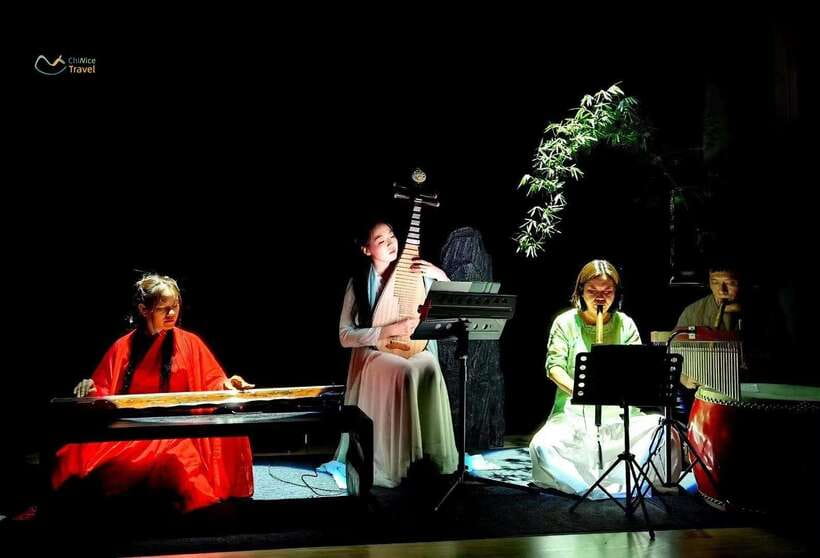
The unusual hook here is simple: you do not just watch Chinese culture, you use your hands. In one compact visit, you brew tea, pluck the strings of a Guqin, brush Chinese characters onto paper, put on Hanfu, and take home your own small pieces of the experience.
I like the small groups of up to 10, which should make it easier to ask questions and get personal help. I also like the mix of quiet arts and lively participation: the mellow Guqin, the calm rhythm of calligraphy, and the social fun of tea tasting all balance one another.
The main consideration is time. The core program is described as about 2.5 hours within a three-hour booking, so this is a focused introduction rather than a long study of any one art. You will sample several traditions, not become a tea master or concert musician in one afternoon.
Key points at a glance
- Play a complete Guqin melody, with step-by-step help from a Guqin performer rather than simply watching a concert.
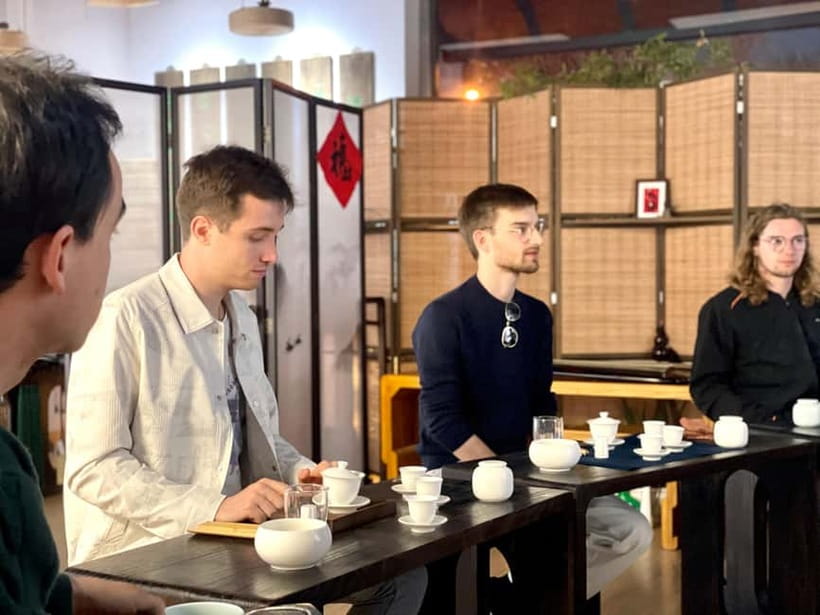
- Taste three types of Chinese tea, including red, green, and floral varieties, while learning a six-step tea ritual.
- Write your own name or a meaningful word with brush and ink after learning how Chinese writing developed.
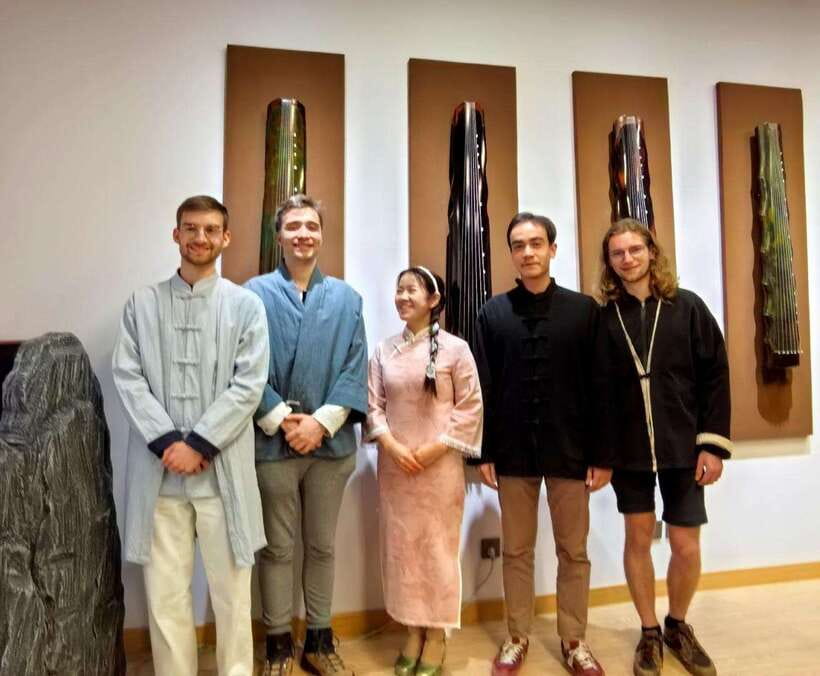
- Wear Hanfu and take photos, with the costume session adding a visual and playful part to the visit.
- Meet in a private, air-conditioned art center, away from crowds and suited to families and first-time visitors.
- Pay about $15 per person, a low price for a three-hour activity that includes tuition, tea, costume rental, photos, and souvenirs.
Why this Beijing culture class works so well
Beijing offers grand palaces, temple courtyards, and enormous museums. Those places help you see Chinese culture from the outside. This activity gives you a smaller, more personal entry point. You sit down, handle the tools, and try the motions yourself.
That difference matters. Calligraphy makes more sense when you feel how a brush responds to pressure. Tea ceremony becomes less formal when you pour the water yourself. The Guqin is no longer an ancient object in a display case once your own fingers produce its low, gentle sound.
The setting also helps. You are inside a certified private art center with air conditioning, English guidance, and no large public crowd to work around. That makes the visit especially useful on a hot Beijing day, or after several hours of walking through major sights.
The activity is presented as a six-in-one cultural experience. In practical terms, the program combines tea, Guqin, calligraphy, cultural explanation, Hanfu dressing, and photography, with souvenirs included. The structure keeps changing, so you are unlikely to spend the whole session doing one repetitive exercise.
More Tea and Calligraphy Workshops in China:
- Beijing Culture: Tea Ceremony, Heritage Instrument & Calligraphy
★ 5.0 · 57 reviews - Beijing Culture Event: Tradition Music, Tea Ceremony, Calligraphy
★ 5.0 · 11 reviews - Xi’an Calligraphy & Tea Ceremony – Dive into Ink & Brush Artistry
★ 5.0 · 4 reviews
Tea first: three flavors and six careful steps
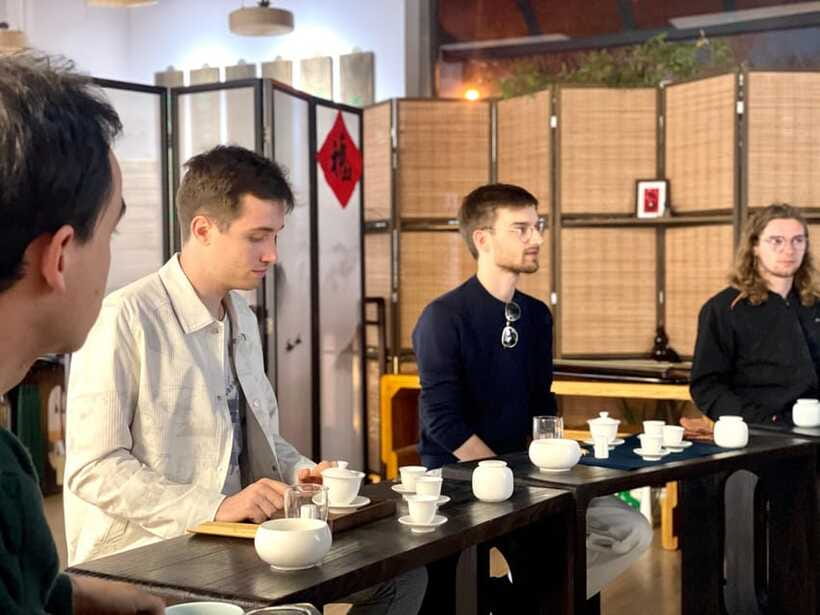
The tea portion gives you a calm start. A professional tea tutor introduces a six-step ritual and shows you how the ceremony is organized. You then brew and taste three broad styles: red tea, green tea, and floral tea.
The value is not just the drink. You learn to notice differences in aroma, taste, and tradition, rather than treating every Chinese tea as the same. The ritual also shows why tea can be a social and thoughtful act, not simply a quick cup ordered in a café.
I would pay attention to the movements here. The point is not to copy a performance perfectly. It is to understand the care behind the sequence, from preparing the tea to serving and tasting it.
Tea is also an easy part of the program for mixed-age groups. Younger children can focus on pouring and tasting, while adults may be more interested in the meaning behind the ritual. If you have allergies, contact the organizer in advance. Sylvia asked one family about allergies before the visit, which suggests that advance notice is useful.
Tea is included, but meals and other drinks are not. Plan this as a cultural tasting, not a replacement for lunch.
The Guqin lesson goes beyond a concert
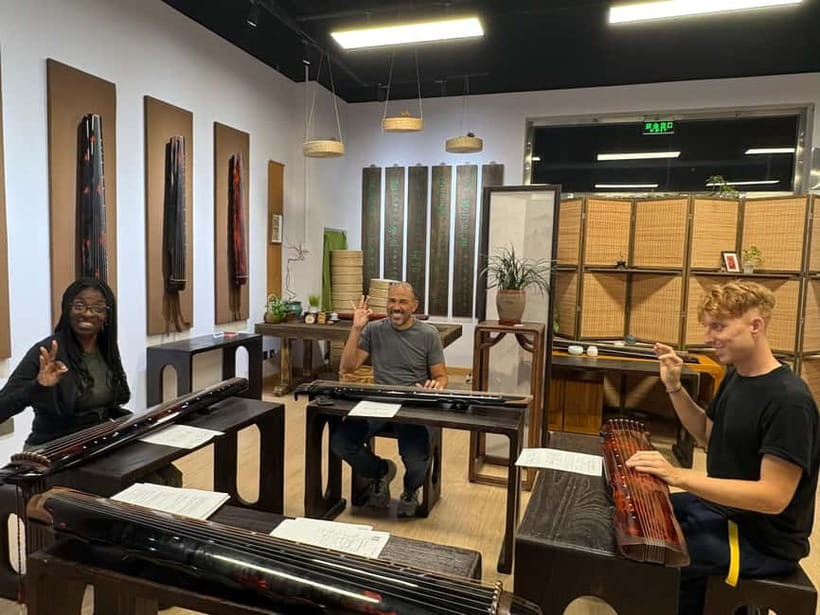
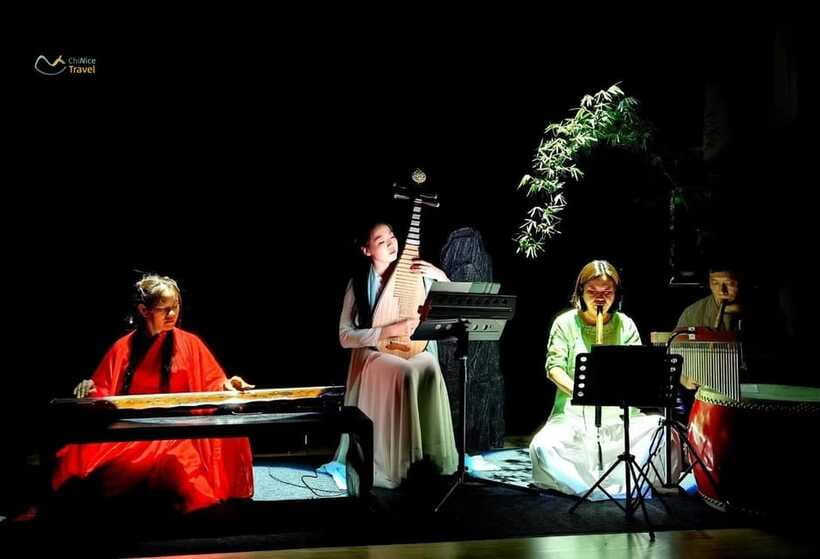
The Guqin is the oldest and most respected instrument in the program. Its tone is soft, low, and restrained, with a peaceful quality that contrasts with the louder instruments often associated with stage performances.
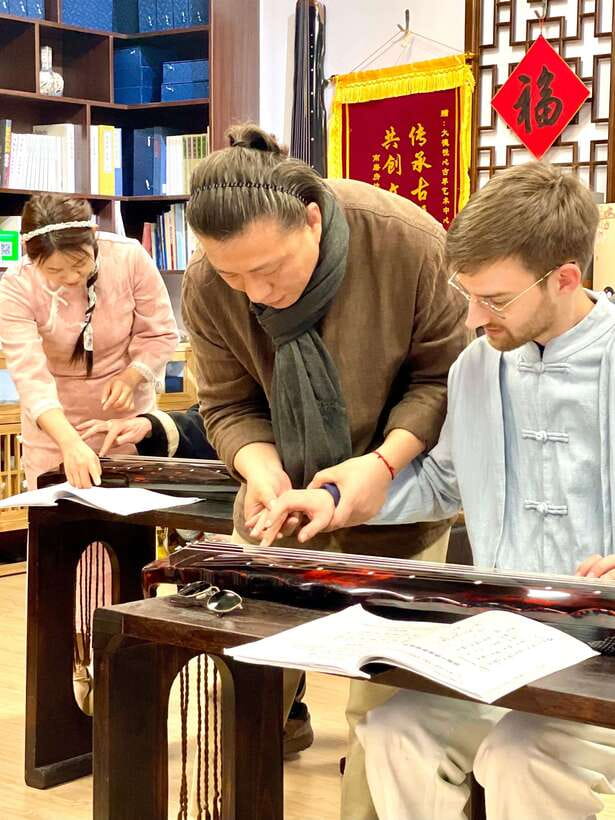
You first receive guidance from a Guqin performer, then try the instrument yourself. The important promise here is that you work toward a full ancient melody, not just one or two random notes. Your tutor helps you find the rhythm and basic finger movements step by step.
Do not expect polished music from your first attempt. The pleasure is in feeling how the strings respond and hearing a small melody take shape. The activity gives you a more useful understanding of the instrument than a short demonstration would.
This is likely the most memorable part for many people because it feels so unusual. You are handling an instrument linked with centuries of Chinese artistic practice, yet the instruction is aimed at complete beginners.
The Guqin lesson is also where group size matters most. With a maximum of 10 people, the tutor has a better chance of correcting your hand position and helping you keep the rhythm. If a larger group were trying to play at once, this part could become noisy or hurried. The limited numbers are a real advantage.
Brush, ink, and the meaning behind Chinese characters
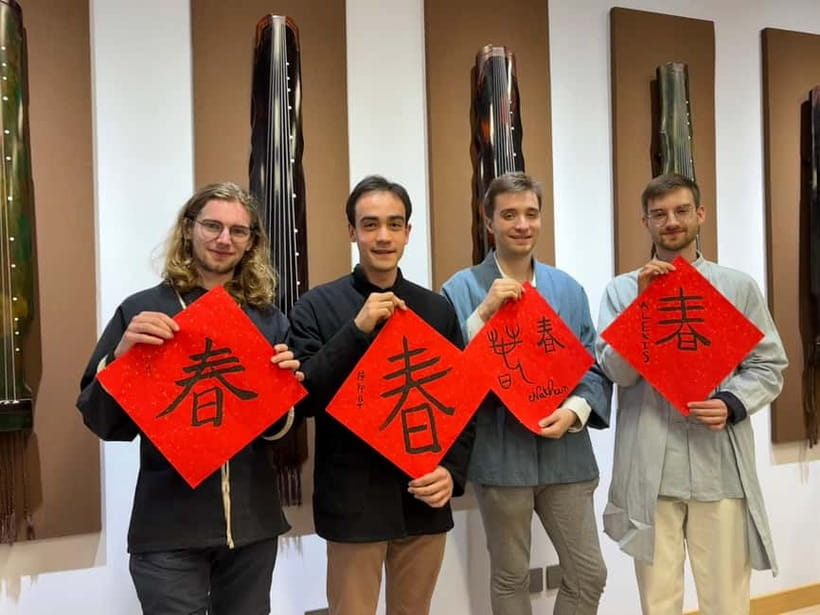
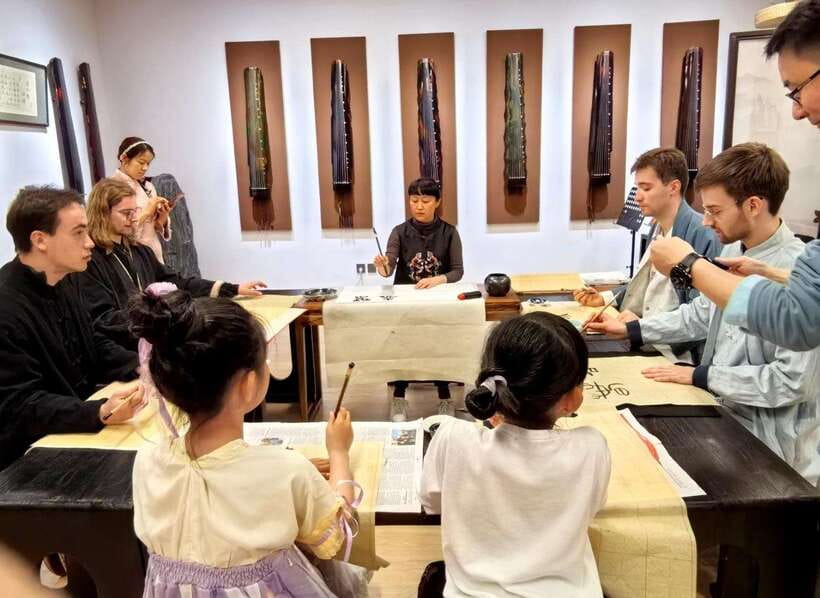
Calligraphy slows the pace again. Before you write, the guide explains how Chinese writing developed and how characters carry meaning beyond their sound.
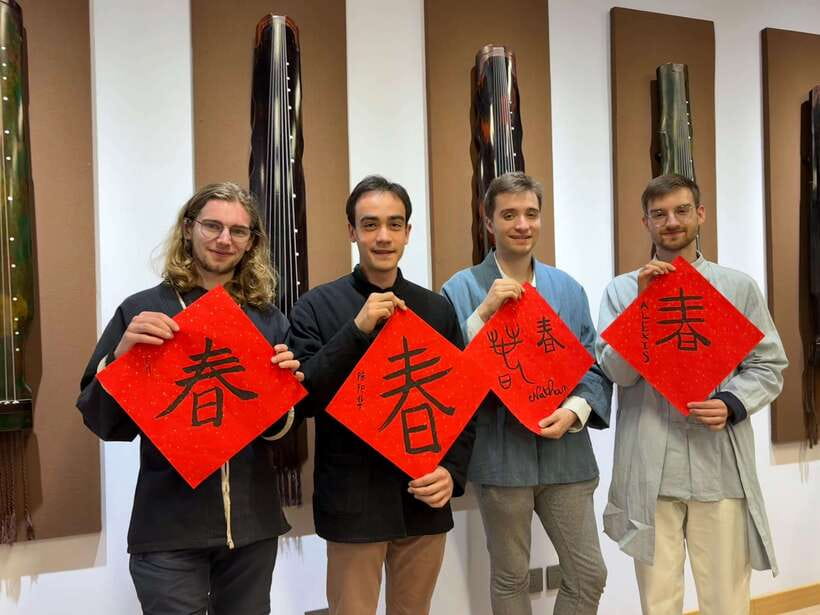
You can write your own name or choose a word such as peace or blessing. The exercise is not simply about making a pretty souvenir. It gives you a basic feel for brush control, spacing, and the visual balance of a character.
Expect a first attempt, not museum-quality work. That is fine. The charm is in taking home something you made yourself, complete with the uneven strokes that show it was not printed by a machine.
This part suits adults who enjoy quiet concentration, but it also works for children and teenagers. One family with children aged 9 and 14 especially liked having several different art forms in one visit. The younger participant can focus on the physical act of painting, while an older child may enjoy choosing a meaningful word.
Calligraphy can also be a welcome break from sightseeing. After a morning of crowded streets and large monuments, sitting down with brush and ink gives you a slower hour, or at least a slower part of the hour.
More tea experiences around China if you are still choosing
- One-Day Hangzhou Dragon Well Tea Culture & West Lake Private Tour
★ 5.0 · 98 reviews - Traditional Chinese Tea Ceremony Experience
★ 4.7 · 74 reviews - Tea Tasting and Pairing Concept Workshop
★ 5.0 · 57 reviews - Biking Real Shanghai& Tea Tasting Experience
★ 4.5 · 45 reviews
Hanfu, photography, and the playful side of tradition
The Hanfu session adds color and movement to an otherwise thoughtful program. You rent traditional clothing, put it on, and take photographs in the art center.
This is not the most academically serious section, but it serves a useful purpose. Clothing changes how you see the traditions you are learning. It also gives families and friends a chance to enjoy the visit together rather than treating every activity as a lesson.
Wear comfortable clothes underneath the Hanfu. The organizers specifically recommend this, and it is sensible advice for any dressing session. Bring your camera as well, even though photography is included. You may want your own casual pictures in addition to the organized photo shoot.
The photos help turn the experience into a lasting memory, especially for families visiting China for the first time. One participant particularly enjoyed learning to write her name and the word blessing while wearing the traditional dress. That combination of personal writing and costume makes the session feel more connected to you.
The dressing and photography also explain part of the appeal for people who are not initially excited about cultural activities. The program is not all listening and observation. You keep doing something.
A guide who connects the activities
English support is one of the most important practical features. The guide is expected to explain more than vocabulary. You receive context about history, philosophy, symbolism, and the place each art form holds in Chinese life.
That matters because a tea ritual or calligraphy stroke can seem mysterious when you only see the action. A good explanation gives you a reason for the movement and helps you remember it later.
Sylvia is connected with the meeting arrangements and has helped visitors from the metro entrance to the art center. That can be useful in Beijing, where finding a small venue after leaving a station is not always simple. One family staying at the Kerry Hotel found the train journey manageable once they had sorted out their tickets, then met Sylvia at the metro entrance.
You should still allow time to get there and arrive 10 minutes early. That gives you time to prepare for the Hanfu session and avoids cutting into the first lesson.
The available languages are Chinese and English. If you need another language, this activity may not be the right fit.
How the three hours are likely to feel
The booking duration is three hours, while the central experience is described as about 2.5 hours. That extra margin likely covers arrival, preparation, dressing, photographs, and transitions between activities.
The pace is one of the strengths. Tea gives you a quiet beginning. The Guqin adds concentrated hands-on practice. Calligraphy brings another kind of focus, and Hanfu photography adds a more relaxed social finish.
You should not expect long breaks or free time between every activity. The schedule is designed to fit several traditions into one visit. That makes it efficient, but it also means you need to stay engaged and follow the tutor’s timing.
For a family, the changing activities help prevent boredom. For a couple or solo visitor, the small group creates a social setting without the pressure of joining a large tour. The air-conditioned room is another practical plus during Beijing’s hotter months.
The activity is wheelchair accessible, but specific details about the route from the station or the interior setup are not provided. If you use a wheelchair, confirm the meeting details before booking.
Is $15 a good value?
At about $15 per person, this is unusually inexpensive for a three-hour guided activity that includes tea, instruction, Guqin practice, calligraphy, Hanfu rental, photography, and original souvenirs.
The price works because you are receiving an introduction to several traditions rather than private master-level tuition in one discipline. If your goal is serious Guqin training or advanced calligraphy, you need a longer and more specialized class.
For a first visit to China, though, the value is strong. A major attraction may show you impressive architecture for a ticket price, but this activity gives you several personal memories to carry away. You taste three teas, produce music, create calligraphy, and appear in traditional clothing.
Transportation is not included, and neither are meals or personal purchases. You will need to reach the venue yourself, so factor in the cost and time of the metro or another local option. The activity becomes an even better deal if you are already visiting the area and do not need a special cross-city journey.
Free cancellation up to 24 hours before the activity and reserve-now, pay-later booking make it easier to fit into a changing Beijing schedule. Starting times vary, so check availability when choosing your date.
Who should book this experience?
I would recommend it most strongly to first-time visitors who want cultural context without committing to a full-day class. It is also a good choice for families, since the program moves between tasting, music, writing, dressing, and photography.
Children can take part, and the experience has worked well for families ranging from school-age children to adults. The Guqin may appeal to a child who is not interested in museums, while calligraphy gives a quieter activity to someone who prefers drawing or writing.
Couples and solo visitors should also find it easy to join. The group is capped at 10, and the activities naturally create conversation.
This may not suit you if you want a purely historical lecture, a formal concert, or a long uninterrupted tea ceremony. It is hands-on and light in tone. You will receive a broad taste of Chinese arts, not a complete course in any one of them.
Should you book it?
Book this Beijing culture experience if you want to do more than take pictures of Chinese traditions. The combination of Guqin practice, tea tasting, calligraphy, Hanfu, and photography gives you a lot for the price and keeps the visit active.
I would especially choose it for a family, a first trip to China, or a rainy or very hot day when an indoor activity sounds better than another outdoor sight. Arrive early, wear comfortable clothes, bring a camera, and allow time to find the venue.
Skip it only if you prefer slow, specialist instruction in one art. For everyone else, this is a friendly, efficient way to get your hands on several parts of Chinese culture in one small Beijing setting.
FAQ
How long does the Beijing culture experience last?
The booking duration is three hours, while the main cultural program is described as about 2.5 hours. The remaining time may cover preparation, dressing, photographs, and transitions.
What activities are included?
You will take part in a tea ceremony, brew three types of tea, learn to play a Guqin melody, practice Chinese calligraphy, wear Hanfu, take photographs, and learn about Chinese cultural rituals.
Is the experience offered in English?
Yes. The activity is available in Chinese and English, and an English-speaking cultural guide or tutor provides explanations and instruction.
What is included in the price?
Tea and water, a ticket to the show, Hanfu rental, a photo shoot, a Guqin class, a professional guide or tutor, and original souvenirs are included.
Is the activity suitable for children?
The activity is suitable for all ages, and families with children have taken part. The group size is limited to 10 participants, which allows for hands-on instruction.
What should I bring and when should I arrive?
Wear comfortable clothes for the Hanfu dressing session, bring your camera, and arrive 10 minutes early. Transportation, meals, additional drinks, and personal purchases are not included.
Fresh tea listings around China
- Beijing:Learn Calligraphy & Enjoy Kung Fu Tea Ceremony★ 5.0 · 2 reviews
- Beijing: Temple Of Heaven+Tai Chi Class+Tea Ceremony★ 5.0 · 8 reviews
- Beijing: Chinese Culture Tea Ceremony Reservation Service★ 4.8 · 4 reviews
- Xi’an Chinese Calligraphy Workshop: Ink Art & Tea Tasting★ 5.0 · 4 reviews
- Qixianfeng Tea Plantation Tour in Yangshuo★ 4.6 · 4 reviews
- 3 hours Xi’an Mahjong Class with Local Tea★ 5.0 · 2 reviews
- Xi’an Calligraphy & Tea Ceremony – Dive into Ink & Brush Artistry★ 5.0 · 4 reviews
- Xi’an Noodle Making and Tea Tasting Experience★ 5.0 · 6 reviews
Tea & Calligraphy Workshops, compared.
Kyoto: Tea Ceremony Meditation – Make Matcha with Tea Master
Read our review →
Osaka: Tea Ceremony, Calligraphy, and Kimono Experience
Read our review →
Tokyo: Practicing Zen with a Japanese Tea Ceremony
Read our review →
An Amazing set of Cultural experience: Kimono, Tea Ceremony and Calligraphy
Read our review →
Beijing Culture: Tea Ceremony, Heritage Instrument & Calligraphy
Read our review →
Osaka: Private Tea Ceremony and Calligraphy Experience
Read our review →
Cultural Activities :Kimono, tea ceremony, Calligraphy and Amulet
Read our review →Browse the lists this tour appears in