
Review · WALKING TOURS
Tokyo Walking Tour : Sumo, Sushi, Tea, Temples and Tokyo Tower
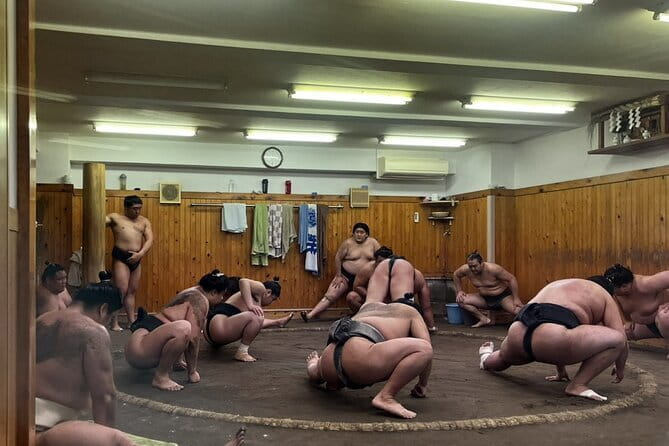
The day begins with one of Tokyo’s most unusual sights: a visit to Arashio Beya, where you may watch sumo wrestlers train in a working training room. From there, the route connects food, gardens, a Buddhist temple, and Tokyo Tower, giving you a broad look at the city without spending the day inside a tour bus.
I like the mix of real daily culture and classic landmarks, especially the quiet tea stop and the chance to watch sumo under strict training rules. I also like that the guide, including Jade when scheduled, adds personal anecdotes to the history instead of simply pointing at buildings.
The main drawback is stamina. This is an 8-hour-15-minute outing with several hours on foot and public transport, and the sumo visit is not guaranteed. Training can stop during tournament periods in January, May, and September, or change without notice.
Key points to know before booking
- Sumo training comes first: Arashio Beya offers a rare look at wrestlers practicing, but the session may be canceled or unavailable.
- Tsukiji is for tasting and browsing: You get a guided walk, food samples, photos, shopping time, and free time to explore.
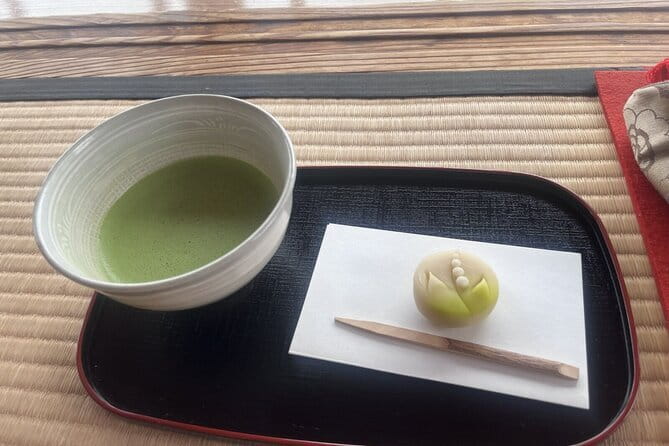
- Tea is included: Hama Rikyu Gardens admission and a traditional tea and sweet experience are part of the price.
- The temple visit is hands-on: At Zojoji Temple, you receive an introduction to the complex and try sutra copying.
- Tokyo Tower ends the day: The included ticket gives you time at one of Tokyo’s best-known observation decks.
- Public transport shapes the day: The tour begins at Hamacho Station and finishes near Akabanebashi Station, with only the train from Ningyocho Station to Tsukiji Station included.
A strong first stop at Arashio Beya
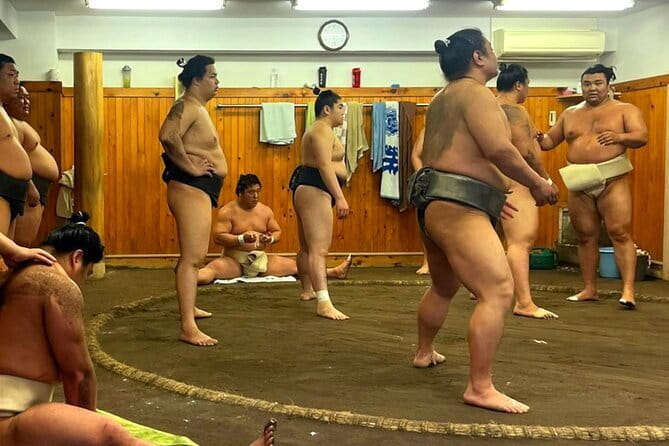
The tour opens at Arashio Beya, a traditional sumo training room. This is not a staged performance. The wrestlers are there to practice, and you must watch quietly without interrupting them.
That distinction matters. Sumo is often presented through tournaments, costumes, and ceremony. Here, you see the discipline behind the spectacle. Training may be repetitive, physical, and serious. That is part of its appeal. You are seeing a working place rather than a polished show.
The scheduled visit lasts about 1 hour and 10 minutes. The sumo schedule can change, though, so you should treat this as a special possibility rather than the one feature you are guaranteed to receive. Training is also closed during certain weeks when the Grand Sumo Tournaments take place in January, May, and September.
If sumo is the main reason you are booking, check the current conditions before paying. The tour still has a full day of other sights, but the experience feels different when its opening highlight is unavailable.
The rules are simple: observe and do not disturb. You will need to be comfortable standing or sitting quietly and letting the training happen on its own terms. That restraint is valuable. It keeps the visit respectful and gives you a better sense of how focused the wrestlers are.
More Walking Tours in Tokyo:
- Asakusa Cultural Walk & Matcha Making Tour
★ 5.0 · 245 reviews - Walking Tour: Yanaka,Nezu& Sendagi: Tea Ceremony & Old Tokyo
★ 5.0 · 3 reviews - London: Kensington Palace Afternoon Tea & Guided Walk
★ 4.6 · 341 reviews
Tasting Tokyo at Tsukiji Outer Market
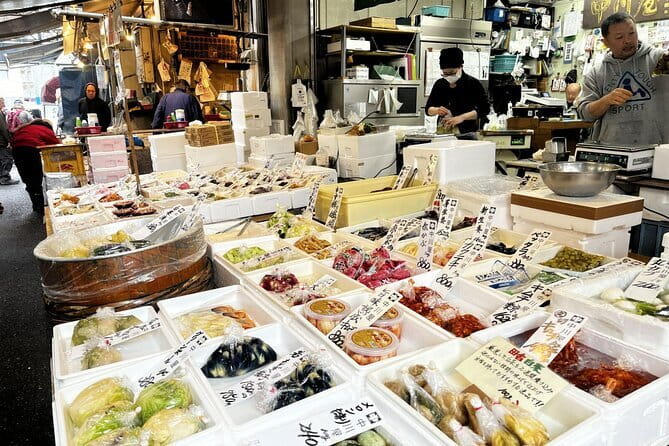
After the sumo stop, you head to Tsukiji Outer Market. The market visit lasts about 1 hour and 30 minutes, giving you time for both a guided introduction and independent exploration.
Your guide leads you through the market and helps you sample foods on offer. The tour description highlights sushi and street food, so this is a good place to use your appetite rather than arrive expecting a sit-down lunch. Food and drink are not included in the tour price, even though you can sample items as you go.
That arrangement gives you control over spending. You can try only what appeals to you, buy extra snacks, or save your appetite for later. It also means you should bring money for anything beyond the included tasting opportunities. The exact food selection is not fixed, and market offerings can change.
The free time is useful. You can take pictures, browse shops, and move at your own pace instead of staying shoulder to shoulder with the guide for the whole visit. I would use this time to buy a small edible souvenir or revisit a stall that caught your attention during the guided portion.
Tsukiji can be a sensory stop, with food, displays, and narrow market routes competing for attention. The guide helps you make sense of it without turning the visit into a rushed checklist. Still, the time passes quickly. If you want a long, unhurried market meal, this tour may feel too structured.
A quiet pause in Hama Rikyu Gardens
Hama Rikyu Gardens changes the pace. After the early sumo visit and market food, you enter a traditional Japanese garden for about 1 hour and 20 minutes.
Your guide gives you an introduction to the garden and its history, then you have free time to walk and take in the setting before meeting again at a tea house. The garden admission is included, as is the tea house experience.
This is one of the tour’s best-balanced sections. You are not simply rushed from one photo stop to the next. The free time gives you room to slow down, look around, and enjoy the change from Tokyo’s busy streets to a carefully designed garden setting.
The tea and sweet experience adds a cultural detail that a quick garden walk would miss. It also gives your feet a break. You do not need to be an expert in tea ceremony customs to appreciate the pause, but you should follow the guide’s instructions and treat the setting with care.
Because this is a group tour, the tea experience follows the group’s schedule rather than your own. The garden stop is long enough to feel meaningful, but not long enough for a leisurely private visit. If you enjoy gardens, I would pay close attention to the free-time instructions so you do not lose minutes finding the meeting point.
Zojoji Temple and the sutra copying experience
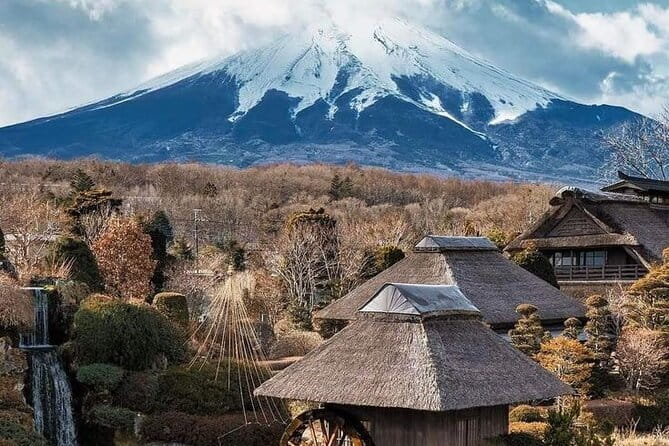
The next stop is Zojoji Temple, a historic Buddhist temple complex and park. The visit lasts about one hour and includes a guided look at the temple and its history, along with a sutra copying experience.
Sutra copying gives the temple visit a slower, more reflective quality. Rather than only looking at architecture and taking pictures, you spend time performing a quiet activity. You do not need to approach it as a religious commitment. The experience can simply offer a calm break in a long sightseeing day.
This is also a useful reminder that temple visits are about conduct as much as appearance. Listen to the guide, follow the local customs explained to you, and allow the activity to remain quiet. The copying fee is included in the tour.
One hour is enough for an introduction and the activity, but it is not a full exploration of every part of the complex. If Zojoji is especially important to you, you may want to return independently another time. On this tour, the value comes from combining the temple with a guided explanation and a hands-on moment.
The park setting helps keep the stop from feeling like another indoor attraction. You get a change of surroundings before the final move toward Tokyo Tower.
More tea experiences around Tokyo if you are still choosing
- Matcha Making Class in Tokyo with Authentic Japanese Sweets Set
★ 5.0 · 744 reviews - Kimono Tea Ceremony at Tokyo, Asakusa Maikoya
★ 5.0 · 638 reviews - Tokyo: Traditional Tea Ceremony with a Tea Master
★ 5.0 · 528 reviews - Dynamic Tokyo: Tokyo Tower, Tea Experience, Bay Cruise Day Tour
★ 4.5 · 521 reviews
Finishing above Tokyo at Tokyo Tower

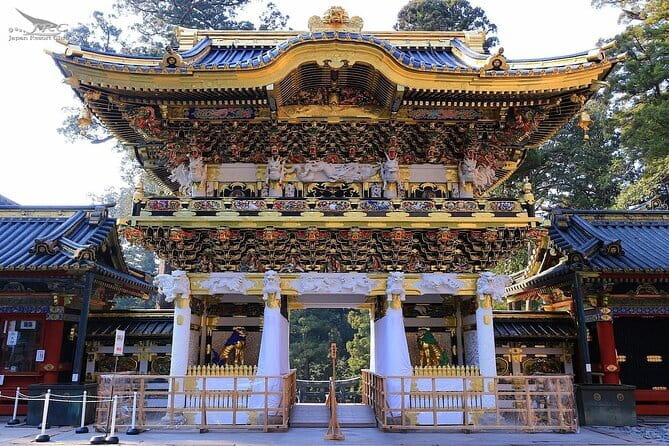
The last major stop is Tokyo Tower, where you have about 1 hour and 15 minutes. The admission ticket is included, so you can spend this time taking in Tokyo from above and enjoying the tower’s retro architectural character.
Ending here makes practical sense. After a day of markets, gardens, and temple grounds, the observation deck gives you a broad view of the city and a clear sense of how the different neighborhoods fit together. The tower also provides a strong final image, especially if you enjoy older landmarks with a distinct visual identity.
The time allowance is generous enough for the main viewing experience, but your visit will still follow the group schedule. You should not expect unlimited time to explore every part of the tower complex. The tour finishes nearby at Akabanebashi Station, so you can continue by train or ask the guide for help getting back to your hotel or next stop.
The end point is different from the starting point. That is convenient if you plan to continue sightseeing in the Minato area, but you should plan your return route before the day begins. Transport after the tour is not included.
How the 8-hour route works
This is a walking tour in the practical sense, even though trains connect parts of the route. The tour does not use a private vehicle. You will walk outdoors for several hours and use public transport between stops.
The day starts at 8:15 am at Hamacho Station, at 2-chome-59-3 Nihonbashihamacho, Chuo City. The end is near Akabanebashi Station in Minato City. Only the train fee from Ningyocho Station to Tsukiji Station is included, along with entrance fees and the listed cultural activities.
The overall duration is about 8 hours and 15 minutes. The individual stops total a little over six hours, leaving time for walking, transfers, instructions, and the shift between neighborhoods. That makes comfortable shoes essential. You should also dress for the weather, since the route includes outdoor walking and garden or temple grounds.
The group is limited to a maximum of 15 people. That is small enough for a guide to manage questions and meeting points without the feel of a large coach tour. It is still a group, however, so you need to keep to the schedule.
Public transport is part of the experience, not just a way to fill gaps. You get a practical sense of moving through Tokyo, but you also face station walks, transfers, and the need to stay alert. Anyone who dislikes navigating a city on foot may find the day tiring.
What the $166.85 price really covers
At $166.85 per person, this is not a cheap way to visit Tokyo. Its value depends on how much structure and guidance you want.
The price includes a local English-speaking guide, admission to Hama Rikyu Gardens, the tea house experience, the sutra copying fee, Tokyo Tower admission, and the specified train fare. You are paying for a full day that connects several different types of experiences, with someone handling the order and explanations.
Food and drink are not included. You should budget extra for Tsukiji purchases and any meals or snacks during the day. Transport before the meeting point and after the final stop is also your responsibility.
I see the strongest value in the variety. A separate visit to a sumo training room, a market, a garden tea house, a Buddhist temple, and Tokyo Tower would require careful planning, route research, and timed admissions. This tour puts them into one day and limits the group to 15.
The weaker value appears if you already know Tokyo well or prefer long, independent visits. The schedule gives you a good introduction, but each stop has a set time. You may leave wanting more time at the market, garden, temple, or tower.
The guide makes the difference

The guide is a local English speaker, and the experience is designed around explanation as much as movement. The strongest feedback specifically praises Jade for combining personal anecdotes with Japanese history. That is the kind of guiding that can turn a sequence of stops into a connected day.
Personal stories can make the city easier to understand, especially when the route moves from sumo customs to food culture, garden design, Buddhist practice, and modern city views. You should still feel free to ask questions, since the group size is capped at 15.
The guide also helps with practical matters. At the end of the tour, you can ask for help with transport back to your hotel or onward destination. That is useful after a long day in unfamiliar parts of Tokyo.
The sumo visit requires particular care from the guide and the group. Since the wrestlers cannot be disturbed, you should expect observation rather than an interactive demonstration. A respectful guide is more important here than an entertaining one.
Who will enjoy this day most
I would recommend this tour to a first-time Tokyo visitor who wants several major themes in one well-organized day. It suits you especially well if you want culture, food, outdoor spaces, and a city view without building five separate plans.
It is also a good fit if you enjoy guided context. The temple and garden stops mean more when you understand what you are seeing, and the market can be easier to approach with help choosing where to look and what to taste.
You may want another option if you dislike walking, need a slow pace, or want complete control over meal times. The tour is long, outdoors, and dependent on public transport. It is not designed as a relaxed hotel-to-hotel outing.
Families and older visitors should judge the walking demands carefully. Most people can participate, but the day involves movement and several hours outside. The maximum group size of 15 keeps things manageable, but it does not remove the physical demands.
Practical details that matter
Confirmation arrives at booking, and the experience operates near public transportation. The meeting point is Hamacho Station, while the final stop is near Akabanebashi Station, so check both locations before the morning begins.
Free cancellation is available until 24 hours before the start time. Changes or cancellations made inside that window are not accepted for a refund. Since sumo training can change, this deadline is worth noting before you commit.
The tour is provided by Snow Monkey Resorts Tours, operated by Machinovate Japan Ltd. The current rating is 5 out of 5 from 21 ratings, with 100 percent recommending it. The praise for Jade’s blend of anecdotes and history points to the guiding style you should hope for, though guide assignments can vary.
Should you book the Tokyo Walking Tour?
Book it if you want a packed but thoughtful introduction to Tokyo and like the idea of seeing sumo, food, tea, temples, and Tokyo Tower in one day. The included admissions and small group help justify the price, while the guide adds context that would be hard to create on your own.
Skip it if your priority is a guaranteed sumo session, a long Tsukiji meal, or a slow visit to any one attraction. The sumo schedule can change, food costs extra, and the public transport route demands energy.
For the right person, this is a smart first full day in Tokyo. Bring good walking shoes, money for market food, and realistic expectations about the sumo stop. If those conditions suit you, the route offers a memorable cross-section of the city without feeling like a standard landmark checklist.
FAQ
Where does the tour start?
The tour starts at 8:15 am at Hamacho Station, located at 2-chome-59-3 Nihonbashihamacho, Chuo City, Tokyo 103-0007, Japan.
Where does the tour end?
The tour ends near Akabanebashi Station in Minato City. The guide can help with questions about transport to your hotel or next destination.
Is transportation included?
The tour includes the train fare from Ningyocho Station to Tsukiji Station. Transport before the tour and after it ends is not included.
Is the sumo training guaranteed?
No. The Arashio Beya schedule can change, and training may not take place. Training is also closed during certain weeks when Grand Sumo Tournaments are held in January, May, and September.
Are food and drinks included?
No. The tour includes guided time and food sampling opportunities at Tsukiji Outer Market, but food and drinks are not included in the price.
How long is the tour and how many people can join?
The tour lasts about 8 hours and 15 minutes. The maximum group size is 15 people.
Fresh tea listings around Tokyo
- Yokohama : Tea Ceremony with Sweets and Souvenir★ 5.0 · 5 reviews
- Walking Tour: Yanaka,Nezu& Sendagi: Tea Ceremony & Old Tokyo★ 5.0 · 3 reviews
- Private Mochi・Matcha sweets Making Class Near Shibuya Area★ 5.0 · 22 reviews
- 2 Hours Mochi &Nerikiri Making & Matcha Class in Bunkyo★ 5.0 · 21 reviews
- Private Kimono and tea ceremony at local home near Tokyo Disney★ 5.0 · 6 reviews
- Kimono and Tea Ceremony in Asakusa Private Food Tour With Guide★ 5.0 · 4 reviews
- Tokyo: Tea Ceremony & Japanese Sweets Making★ 5.0 · 10 reviews
- Tokyo Sweets Tour: Hidden Gems & Matcha at an Old Tea House★ 5.0 · 6 reviews
Walking Tours, compared.

London: Kensington Palace Afternoon Tea & Guided Walk
Read our review →
Kyoto Tea Ceremony & Kiyomizu-dera Temple Walking Tour
Read our review →
Antalya: Old Town Walking Tour with Turkish Tea and Baklava
Read our review →
Uji: UNESCO Heritage & Tea Ceremony Walking Tour
Read our review →
Tea planation walking In Munnar- (by Munnar Info)
Read our review →
London: Buckingham Palace Walk & Tea at Kensington Palace
Read our review →Browse the lists this tour appears in