
Review · TEA PLANTATION & FARM TOURS
Chiang Rai: 7 Major Sites, Golden Triangle & Tea Plantation
Chiang Rai’s best sights are scattered across the province, from the fanciful White Temple to the Golden Triangle near Thailand’s northern border. This tour links seven major stops in one long day, with a guide to explain the art, religion, and local stories behind them.
I like the efficient route and the small group limit of 10. I also like the range: you get striking modern temples, a tea plantation, border scenery, and a museum about the opium trade. The tradeoff is time. The White Temple is a major highlight, and one stop may feel shorter than you would prefer.
Key points to know before booking
- Three very different art sites: White Temple, Blue Temple, and Black House each offer a distinct look at modern northern Thai art.
- A full northern Thailand circuit: The route reaches the Golden Triangle, Chui Fong Tea Plantation, Karen village, and Opium Museum.
- Strong guide service: Guides named Guitar, Ping, Muew, Meo, Phing, and Yok have been praised for clear English, good humor, local explanations, and personal attention.
- A long but practical day: Pickup runs from about 8:00 to 8:30 a.m., with return to Chiang Rai in the evening.
- Check the ticket option carefully: Option 1 includes tickets, while Option 2 excludes them. The White Temple ticket is listed at 200 baht per person.
- Comfortable transport and lunch: You ride in an air-conditioned minibus, with Thai buffet lunch, drinking water, and hotel pickup within 6 kilometers of central Chiang Rai.
Why this Chiang Rai day works
This is a sightseeing-heavy day, not a slow temple retreat. You cover several places that are difficult to combine by local transport, and you do it with a private English-speaking guide assigned to a small group.
That matters in Chiang Rai. The attractions sit outside the central city, and the Golden Triangle is a considerable distance from the temples. Having a driver handle the route lets you focus on the stops instead of arranging several rides.
The day also gives you a useful introduction to Chiang Rai’s unusual character. This is not simply a procession of old Buddhist temples. The White Temple and Blue Temple are modern works shaped by artists and religious ideas, while the Black House is an art museum rather than a temple. Later, the tour shifts toward border history, hill communities, tea production, and the opium trade.
I would choose this outing if you have only one full day in Chiang Rai and want to see the province’s headline sights. If you prefer long visits at one or two places, the schedule may feel too packed.
More Tea Plantation Tours in the world:
- From Taipei: Thousand Island Lake and Pinglin Tea Plantation
★ 4.7 · 519 reviews - Active Volcano, Rice Field, Hot Spring, Fruit market, Tea Plantation with Lunch
★ 5.0 · 513 reviews - Furnas: Tea Plantations, Lake and Volcano Guided Tour
★ 4.8 · 511 reviews
White Temple: Chiang Rai’s theatrical first stop
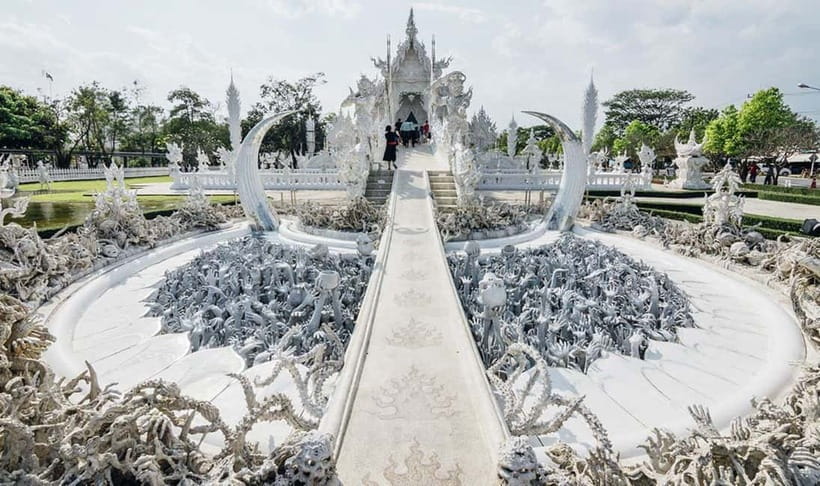
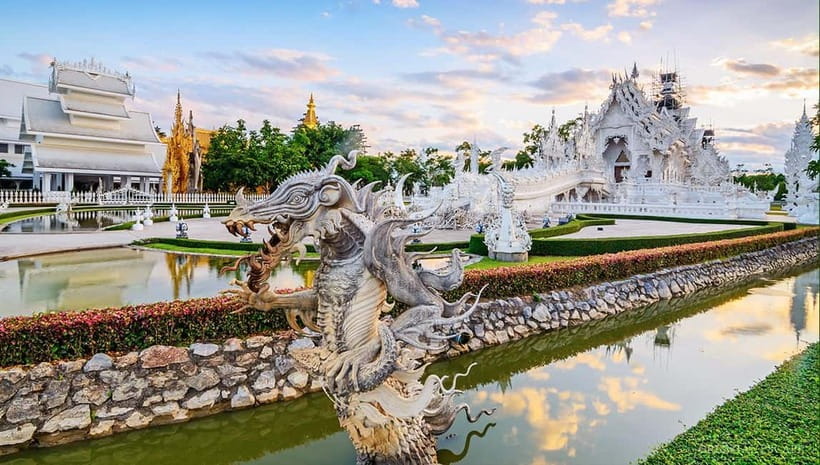
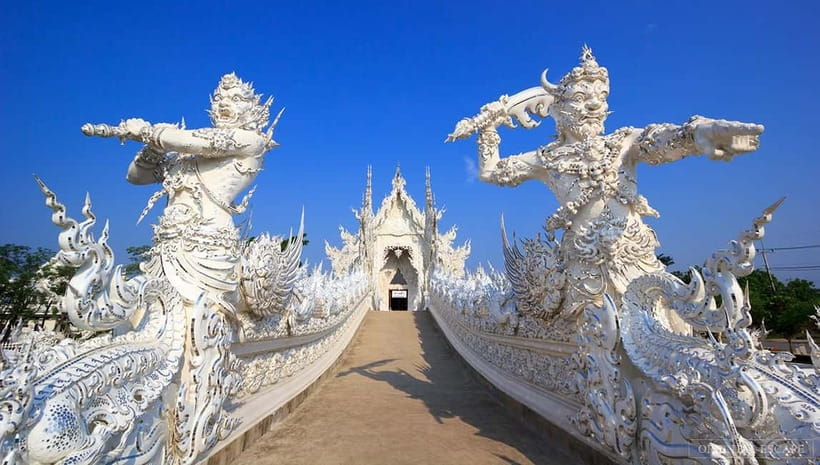
Wat Rong Khun, usually called the White Temple, is the visual star of the day. It is a modern structure created by a prominent Thai artist, with the ambition of giving Chiang Rai its own grand artistic landmark.
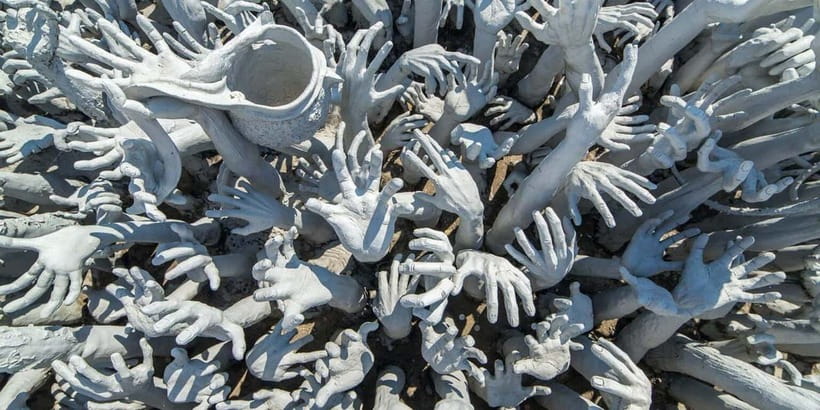
The temple is white rather than the usual gold or earth tones, and its design is deliberately theatrical. The complex is best understood as a work of art with Buddhist meaning, not as an ancient ruin. Your guide can help connect the strange details to ideas about morality, imagination, and spiritual life.
Allow yourself time to look closely. The outside design is the part most people remember, but the attraction rewards attention to its smaller details too. The grounds can be busy, and the schedule has several more stops ahead, so this is the place where you may wish for extra minutes.
One practical detail matters here: the supplied information lists a 200 baht White Temple ticket per person. Ticket treatment depends on which of the two booking options you choose. Check that point before paying, since Option 1 includes all tickets and Option 2 excludes them.
Blue Temple: modern color with a religious purpose
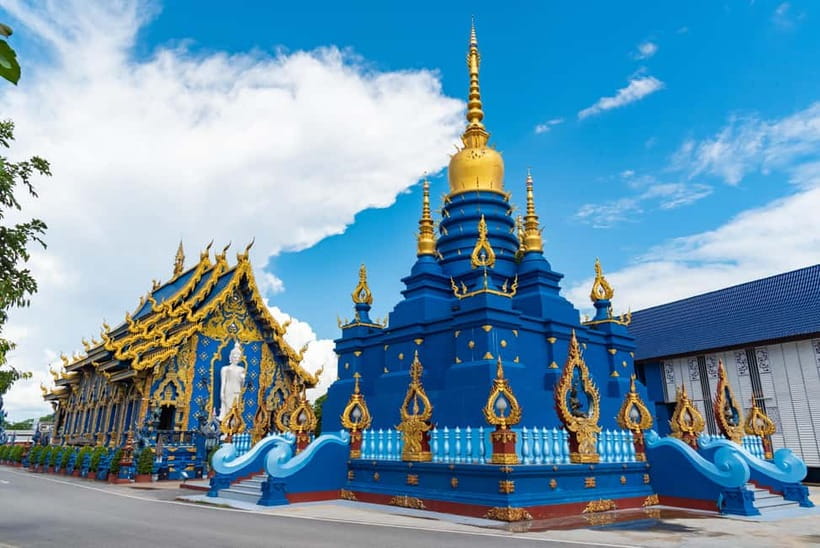
Wat Rong Suea Ten, known as the Blue Temple, offers a sharp change in mood and color. The design blends modern art with Buddhist imagery, creating a place that feels more energetic and expressive than a conventional temple visit.
The blue exterior and interior give the site its identity, but the appeal is not only photographic. This stop shows how present-day artists in Chiang Rai use traditional religious forms while making something new. I find it a useful companion to the White Temple: one asks you to think through fantasy and symbolism, while the other makes a stronger visual impression through color and decoration.
Your guide’s explanations are especially useful at the first three stops. Guides such as Guitar and Ping have been singled out for explaining local culture, legends, and the meaning behind the sites in clear English. You will get more from the temples if you listen to the context instead of treating them as quick photo stops.
Black House: art, animals, and an unusual change of pace
The Black House is commonly grouped with Chiang Rai’s famous temples, but it is not really a temple. It is a museum and art complex created by another major Thai artist, Thawan Duchanee.
The mood changes here. Dark wooden buildings and unusual artistic objects give the site a more serious and sometimes unsettling feel. The Black House is not designed to please everyone, and that is part of its value. It gives the day some edge after the bright White and Blue temples.
I would pay attention to the guide’s explanation here, especially if you are interested in art and symbolism. Without context, the collection can seem strange or confusing. With context, it becomes a useful look at how modern Thai artists approach religion, death, nature, and power.
This is also the point where the tour reveals its wider purpose. You are not visiting three versions of the same temple. You are seeing three different artistic responses to Thai identity and belief.
More tea experiences around the world if you are still choosing
- Kyoto: Tea Ceremony in a Traditional Tea House in Kiyomizu
★ 4.9 · 3,519 reviews - London: Afternoon Tea Cruise on the River Thames
★ 4.4 · 3,274 reviews - Kyoto: Tea Ceremony Ju-An at Jotokuji Temple
★ 4.9 · 3,207 reviews - Afternoon Tea Bus Tour in Dublin
★ 5.0 · 2,791 reviews
The Golden Triangle and the meeting of borders
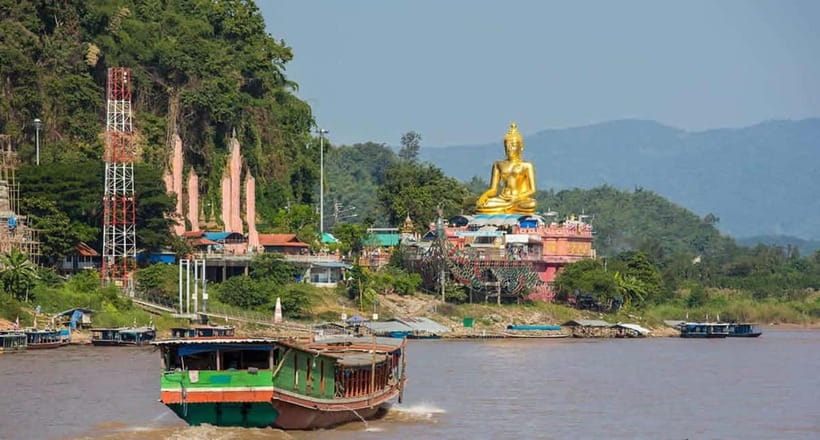
The Golden Triangle takes the tour away from Chiang Rai’s art scene and toward the region where Thailand, Laos, and Myanmar meet. The stop gives you a sense of northern Thailand’s border geography and its long connection to trade and the opium economy.
Do not expect a full border expedition. This is a sightseeing stop within a larger circuit, so the value lies in seeing the area and hearing its background from the guide. The place carries more meaning when paired with the Opium Museum later in the day.
The route also explains why this excursion takes all day. The Golden Triangle is outside Chiang Rai city, and the tour continues to the tea plantation and other sites before returning in the evening. The air-conditioned minibus is important here. You have several road sections between stops, and the vehicle provides a cool break from walking outdoors.
Chui Fong Tea Plantation: a calmer outdoor stop
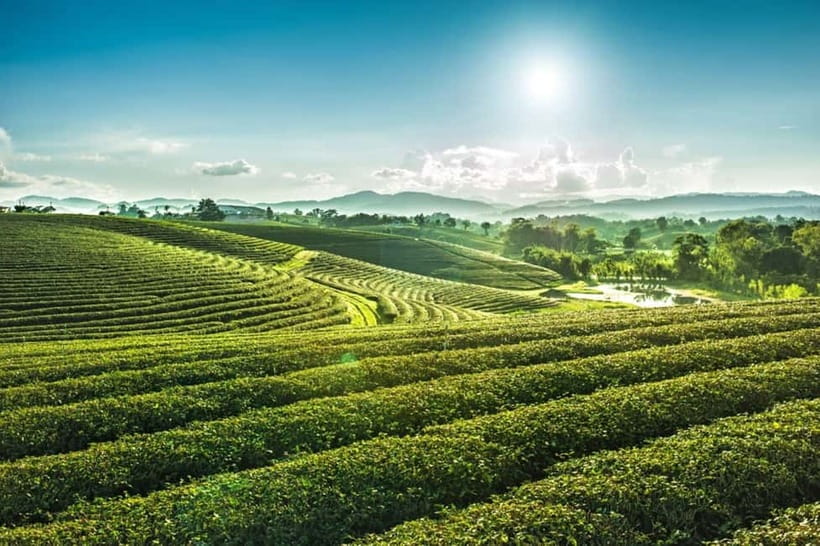
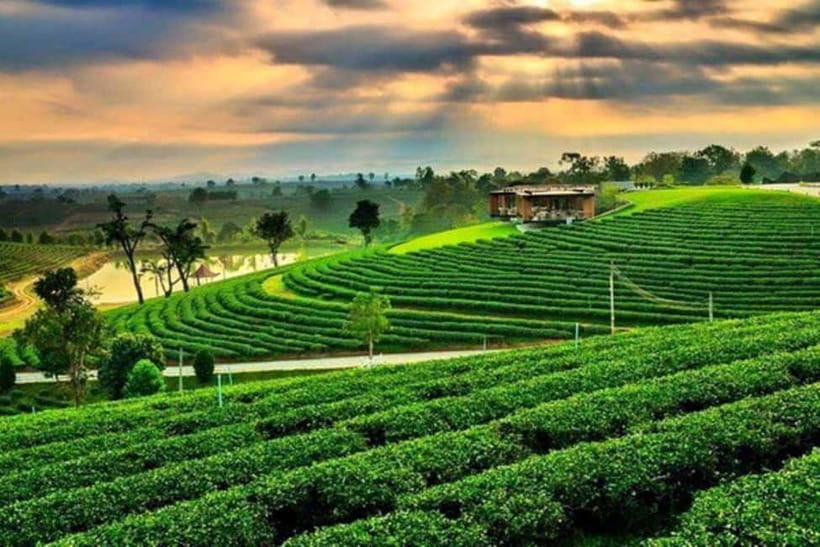
Chui Fong Tea Plantation brings a change of pace after the temples and border region. You can look across rows of tea plants and see a different side of northern Thailand’s countryside.
The plantation is a good place to slow down, take photographs, and enjoy the setting without the visual intensity of the art sites. It also gives the day some variety. You are not spending every hour inside a temple compound or museum.
Bring a hat and sunscreen. The tour company specifically recommends both, and the day includes outdoor stops where shade may not be constant. Comfortable shoes also make sense, though no special equipment is required.
The plantation will appeal most to you if you enjoy scenic stops and local products. If you want a detailed tea-making workshop, that is not promised here, so keep your expectations focused on visiting the plantation rather than taking a formal class.
Karen hilltribe village: an optional encounter
The Karen hilltribe village is listed as an option, so confirm how it fits into your selected booking before departure. This is not presented as a guaranteed activity in the same way as the main temple and museum stops.
If included in your day, the village adds a human and cultural dimension to the route. Your guide can help explain what you are seeing and answer questions about local life. Approach the stop with care and curiosity rather than treating it as a quick photo opportunity.
Because the supplied details do not specify the exact visit format, duration, or any additional fee, ask the operator for the current arrangement before booking. That small check can prevent confusion on a tightly timed day.
Opium Museum: useful context for the Golden Triangle
The Opium Museum gives historical background to the Golden Triangle and the region’s connection with opium production and trade. It is a worthwhile pairing with the border stop because it moves the subject beyond a scenic viewpoint.
Expect a museum visit rather than a temple or nature stop. The subject can be sobering, and the museum adds historical weight to an otherwise colorful day. I like that the tour includes this stop because it helps you understand why the Golden Triangle became internationally known.
Your guide can make the visit easier to follow, especially if you are unfamiliar with northern Thailand’s border history. The museum is also a good reason to choose this tour over a simple Golden Triangle transfer. You get context, not just a name and a photo stop.
Lunch, transport, and the rhythm of the day
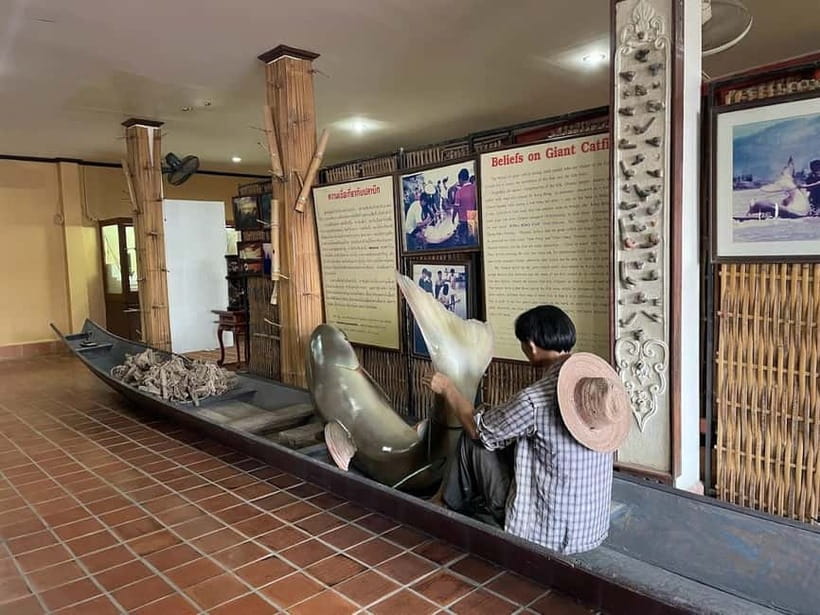
Thai buffet lunch is included, along with drinking water. Vegetarian food can be provided if you notify the guide, and you should mention allergies or dietary restrictions before the meal. One participant specifically appreciated the attention given to a restricted diet, so speak up early rather than hoping the buffet will suit you.
Pickup takes place during a 30-minute window, roughly 8:00 to 8:30 a.m. You need to provide your hotel name because Chiang Rai’s streets can be difficult to locate. Pickup is free within 6 kilometers of the city center. If you stay farther away or outside the city, contact the operator for a meeting point.
The minibus has air conditioning, and the transport has received a very strong rating from the people who took the trip. Several guides and drivers have been praised for smooth driving, a comfortable vehicle, punctual pickup, and helpful service.
The day’s rhythm is simple: pickup, temples, lunch, then the farther-reaching attractions before an evening return. The exact order may vary, but you should plan for a full day with road time between stops. Bring water if you prefer to carry your own supply, though drinking water is provided.
Guides can make or break a packed itinerary
The guide is one of the most important parts of this experience. Names that have received strong praise include Guitar, Ping, Muew, Meo, Phing, and Yok. The best comments focus on clear English, lively explanations, local legends, food suggestions, and careful attention to individual needs.
Guitar has been praised for remembering names, explaining the sites well, and keeping the group engaged. Ping has been noted for cultural information, practical food and massage suggestions, and making sure dietary needs were handled properly. Muew and Meo have also been described as kind, entertaining, and thorough.
That personal guidance matters because the three art sites can seem puzzling without an explanation. It also helps at the Golden Triangle and Opium Museum, where the historical setting is more important than a quick photograph.
The group is limited to 10 people, which should feel more manageable than a large coach tour. It also lets the guide answer questions and keep track of the group more easily. Still, small group does not mean private. You will share the vehicle and schedule with other participants.
Is the $72 price good value?
The listed price is $72 for a group of up to one person, so check how the booking platform applies that wording to your party. The value depends heavily on the ticket option you select.
Option 1 includes all tickets. Option 2 excludes entry fees, so you pay those separately during the day. The White Temple ticket is specifically listed at 200 baht per person, while the full ticket cost for every stop is not stated. Compare the final totals rather than choosing only by the lower headline price.
For that price, you receive a full day of transportation, an English-speaking guide, lunch, water, hotel pickup within the stated area, and travel accident insurance. You also avoid arranging separate transport to distant sites such as the Golden Triangle and Chui Fong Tea Plantation.
I consider it good value for a first visit, especially if you want many major sights in one day. The main cost is not money but time. You trade a relaxed schedule for coverage.
Who should book this day?
I would recommend it to first-time visitors staying in Chiang Rai who want a broad introduction to the province. It suits people interested in modern art, Buddhist culture, border history, tea, and scenic stops rather than one single theme.
It also works well for anyone without a car. The route is too spread out to handle easily with casual taxi rides, and the driver removes the stress of navigation.
You should think twice if you use a wheelchair, since the tour is not suitable for wheelchair users. It is also not suitable for people over 70 according to the provided conditions. The combination of outdoor walking, multiple stops, and a long day may be tiring even for younger participants.
Pack a hat, sunscreen, comfortable clothes, and any necessary medication. Pets, alcohol, and drugs are not allowed.
Should you book the Chiang Rai circuit?
Book it if you want to see Chiang Rai’s major sights in one organized day and value a guide who can explain what makes each place different. The White Temple, Blue Temple, and Black House provide the artistic core, while the Golden Triangle, tea plantation, Karen village option, and Opium Museum keep the day from becoming repetitive.
Skip it if you want to linger at the White Temple, travel slowly, or choose every stop yourself. The route is long, and the White Temple in particular may deserve more time than a seven-stop schedule allows.
For most first-time visitors with only one day, I would choose the ticket-included option after checking the final price and confirming the Karen village arrangement. That keeps the day simpler and lets you concentrate on Chiang Rai’s unusual mix of art, religion, countryside, and border history.
FAQ
How long is the Chiang Rai tour?
It lasts one full day, with pickup in the morning and return to Chiang Rai in the evening.
What time is hotel pickup?
Pickup takes place during a 30-minute period from approximately 8:00 to 8:30 a.m. You should provide your hotel name so the driver can find you.
Is hotel pickup included?
Yes, free pickup and drop-off are included within 6 kilometers of Chiang Rai city center. If you stay outside the city or farther away, contact the operator for a meeting point.
Are attraction tickets included?
You can choose between two options. Option 1 includes all tickets, while Option 2 excludes tickets. The White Temple ticket is listed at 200 baht per person.
Is lunch included?
Yes. A Thai buffet lunch and drinking water are included. Vegetarian food can be arranged if you inform the guide, and you should report allergies or other dietary restrictions.
How many people are in the group?
The tour is described as a small-group experience limited to 10 participants.
Is the tour suitable for wheelchair users or people over 70?
No. The tour is listed as unsuitable for wheelchair users and people over 70.
Fresh tea listings around the world
- Dubai: Bustronomy Panoramic Afternoon Tea City Tour★ 4.7 · 7 reviews
- Dubai: Sunset Cruise on Traditional Boat & Emirati High Tea★ 4.9 · 10 reviews
- Ella: Lipton’s Seat Tour with Dambetanna Tea Factory Visit★ 4.6 · 7 reviews
- Cycling Tour at Uji’s Matcha Green Tea Fields and Heritage★ 5.0 · 10 reviews
- Da Lat: Sunrise Panorama, Green Tea Hill and Strawberry Farm★ 4.0 · 3 reviews
- Dallas: Tea Around Town Bus Tour with Treats★ 3.7 · 8 reviews
- From Colombo: Kandy & Pinnawala & Tea Factory Full Day Trip★ 4.3 · 2 reviews
- Mauritius: Crocodile Park and Tea Factory Tour with Tasting★ 4.9 · 4 reviews
Tea Plantation & Farm Tours, compared.
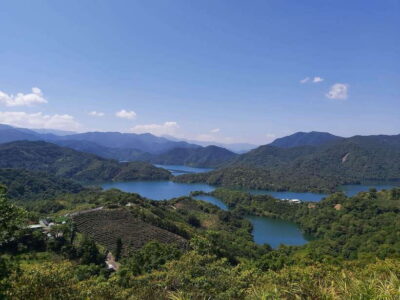
From Taipei: Thousand Island Lake and Pinglin Tea Plantation
Read our review →
Active Volcano, Rice Field, Hot Spring, Fruit market, Tea Plantation with Lunch
Read our review →
Furnas: Tea Plantations, Lake and Volcano Guided Tour
Read our review →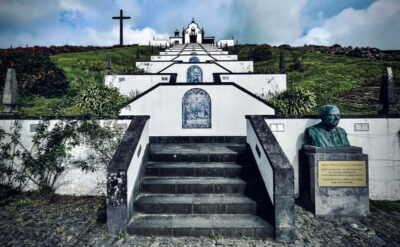
São Miguel: Furnas Volcano & Tea Plantation Tour with Lunch
Read our review →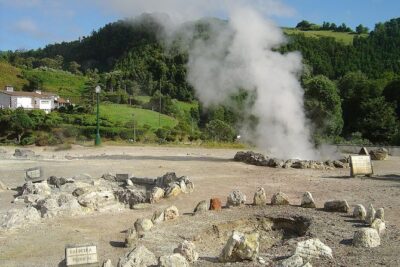
Furnas Volcano & Tea Plantation With Traditional Lunch, East Tour
Read our review →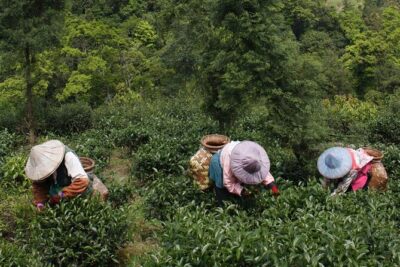
Thousand Island Lake and Pinglin Tea Plantation from Taipei
Read our review →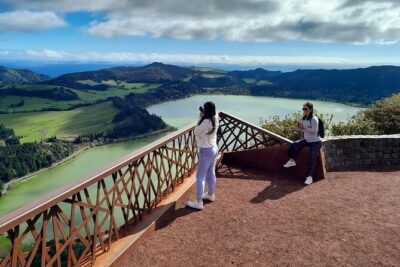
Furnas: Volcano Wonders, Tea Plantation & Waterfall Tour
Read our review →Browse the lists this tour appears in