
Review · TEA TASTINGS
Hong Kong: MingCha Tea Tasting and Pairing Workshop
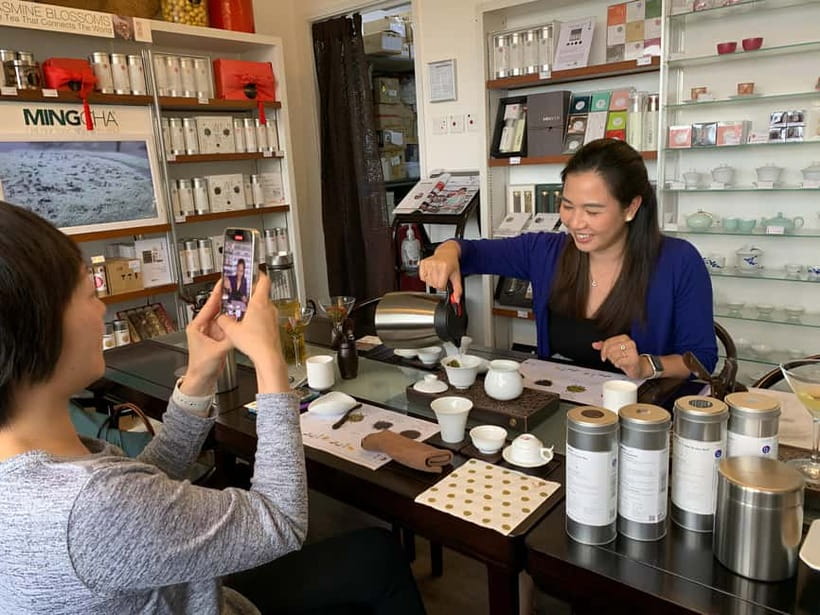
The most interesting part of this Hong Kong experience is how much a single tea can change from one brewing to the next. At MingCha Tea House, you do not simply sip a cup and move on. You examine dry leaves, smell the brewed leaves, taste five or six rounds, and learn what harvest, climate, and production do to the final drink.
I like the hands-on gaiwan practice, because it turns tea from a subject into a skill you can use at home. I also like the food pairings, especially rose honey toast, which show how tea works with texture and sweetness rather than treating it as a drink on its own.
The main consideration is the location inside a factory building in Chai Wan. It is easy to reach from the MTR, but the entrance can feel less obvious than a shop on a main street, so allow a few extra minutes to find Block B and the correct lift.
Key points to know before booking
- Four premium Chinese teas: The session typically explores green, scented green, red, oolong, white, and puer styles, with four teas served in the workshop.
- Five or six brews per tea: You taste how aroma and flavor shift as the same leaves are steeped again.
- Gaiwan brewing practice: You make tea yourself using a traditional lidded bowl, then brew for others.
- Tea with rose honey toast: The snack pairing gives you a practical way to think about tea and food at home.
- Small enough for questions: Sessions allow up to 20 people and run for about 1.5 hours.
- Five minutes from Chai Wan MTR: Exit C is the useful landmark, though the factory-building entrance takes some attention.
What happens inside the MingCha workshop
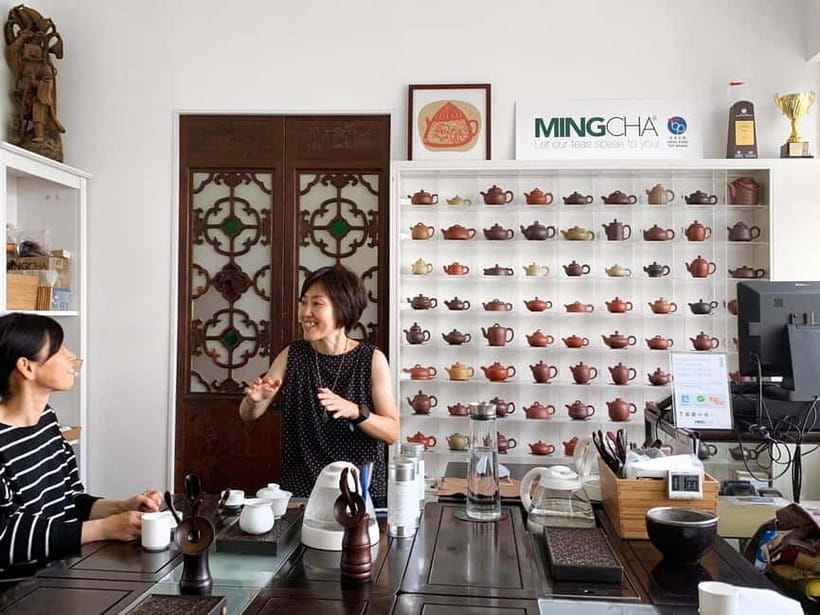
MingCha Tea House was founded by Vivian Mak, an artist and designer who later built a tea business around presentation, taste, and education. The setting is not a grand old teahouse, and that is worth knowing before you go. You are visiting a specialist tea studio in Fortune Factory Building, rather than stepping into a traditional dining room.
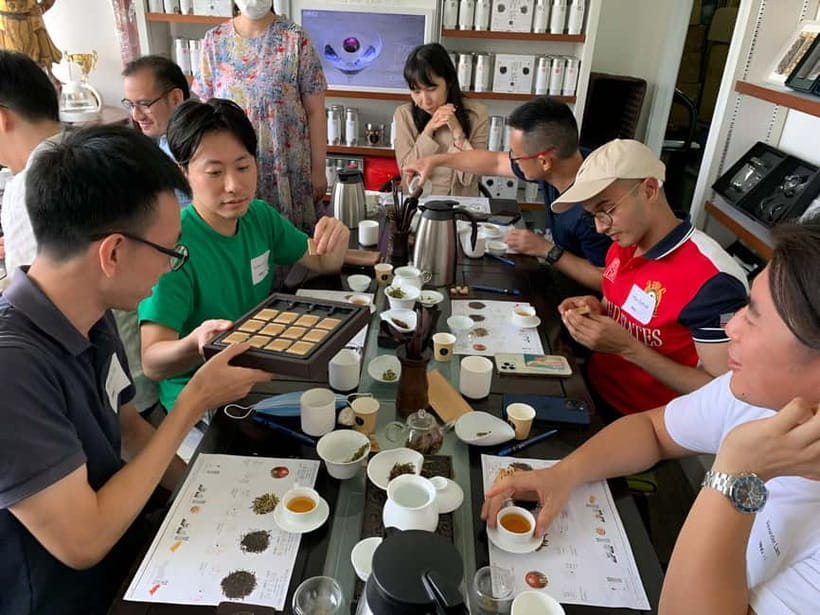
The workshop begins with the basic idea that tea is a sensory subject. You look at the leaves, smell them before and after brewing, taste the liquor, feel the leaves, and pay attention to the sound and rhythm of preparation. This approach gives beginners something concrete to do, while people who already drink tea get a more precise vocabulary for what they notice.
Your host explains where each tea comes from and how it is made. The talk covers tea’s history, plant science, classification, and production. You also learn why the same broad type of tea can taste very different depending on harvest timing, local climate, and the way the leaves are processed.
The pace matters here. This is not a lecture followed by one polite cup. You return to the leaves several times, and each brew gives you another point of comparison. Some cups may show more fragrance early on, while later rounds can reveal a softer or more rounded character. The point is not to memorize tasting notes. It is to learn how to pay attention.
More Tea Tastings in the world:
- Twinings 2-Hour Tea Tasting Masterclass in London
★ 5.0 · 105 reviews - Tea Tasting and Pairing Concept Workshop
★ 5.0 · 57 reviews - Munnar: Tea trail, Tea Factory, and Tea Tasting Tour
★ 4.9 · 47 reviews
Six tea styles, one changing lesson
The exact tea selection can vary, but the session generally draws from green, scented green, red, oolong, white, and puer teas. Four premium handcrafted teas are included, with the broader selection helping the host choose a useful mix for the group.
Green tea gives you a look at fresh, delicate flavors. Scented green tea adds another layer, since fragrance becomes part of the experience rather than coming only from the leaf itself. Red tea, the Chinese category often called black tea in the West, helps show how fuller processing can change color, body, and aroma.
Oolong makes a useful comparison because it can sit between lighter and more heavily processed styles. White tea offers another lesson in restraint, while puer introduces a category with its own production methods and familiar place in Chinese tea culture.
You are not expected to identify every tea perfectly. That would miss the point. The better result is learning to ask why a tea smells floral, tastes brisk, feels soft, or changes after another short brew.
The tea masters also explain what to look for in dry leaves and steeped leaves. This is practical information if you want to buy tea later. You begin to notice leaf shape, color, scent, and how the leaves open in water, rather than relying only on a label or a fashionable package.
Why repeated brewing makes the tasting better
Many casual tea tastings give you one cup per variety. MingCha’s method is more revealing. Each tea is brewed five or six times, which lets you watch its character shift.
That repeated tasting also slows you down. You are less likely to gulp the first cup and decide that you like or dislike a tea too quickly. Instead, you compare one round with the next. A tea that seems light at first may become more expressive, while another may lose its strongest aroma after several brews.
I find this especially useful for new tea drinkers. You do not need a trained palate to notice change. The host guides you toward simple observations about smell, texture, aftertaste, and strength. It turns a vague question, such as Why does this taste different now?, into a clear lesson about brewing and leaf quality.
The multiple brews also make the $63 price easier to assess. You are paying for instruction, several premium teas, repeated tastings, brewing equipment, and snack pairings, not just for four small drinks. It is not the cheapest tea stop in Hong Kong, but it offers more substance than a quick retail tasting.
Learning to brew with a gaiwan
The practical center of the workshop is the brewing lesson. You learn to use a gaiwan, a small lidded bowl used in traditional Chinese tea preparation.
A gaiwan can look simple, but it rewards careful handling. The lid helps hold back the leaves while you pour, and the small size makes short, repeated brews possible. During the session, you get to practice rather than watch from the side. You brew for yourself and for other people, which adds a useful social element.
Your host covers the small decisions that shape the cup. The lesson connects leaf quantity, water, timing, and pouring to the flavor you taste. You also see why traditional brewing is not just a formal display. It gives you control and lets you compare the tea at different stages.
Do not worry if your first pour is not graceful. This is a workshop, not a performance. The value is in learning a method you can repeat at home. If you buy a gaiwan later, you will already understand the basic rhythm and purpose of the equipment.
The session is conducted in English, Cantonese, and Mandarin. Vivian Mak and hosts such as Vanessa lead the presentation, and their teaching style includes stories and explanations rather than only technical instructions. One session was described as running for three hours, but the stated workshop length is about 1.5 hours, so plan around the official duration.
More Food and Drink Tours in the world:
- Jakarta: Volcano, Tea/Rice Fields, Hot Spring, Local Food
★ 4.9 · 515 reviews - Private Tea Ceremony and Sake Tasting in Kyoto Samurai House
★ 5.0 · 163 reviews - SF’s Chinatown: Tea & Dim Sum Food Tour – Includes full meal, 3hr
★ 5.0 · 153 reviews - Experience all of Japanese culture and Japanese food experience classes “origami, udon, Japanese food, green tea, calligraphy” in 4 hours
★ 5.0 · 105 reviews
Tea and food, with rose honey toast
The snack pairing is one of the most distinctive parts of the experience. Tea is often served with something sweet or savory, but the pairing here is treated as part of the lesson. You taste tea alongside complementary snacks and consider how sweetness, crispness, and floral notes affect the drink.
Rose honey toast is a memorable example. Its crisp texture and light floral sweetness offer a contrast to the tea, helping you notice flavors that may not be as clear when you drink it alone.
This is not a full meal. Additional food and drinks are not included, so eat beforehand if you need lunch or dinner. Think of the pairing as a focused tasting component, not a substitute for a restaurant stop.
I like this feature because it gives you something to take home besides brewing instructions. You can experiment with your own snacks later. A mildly sweet food, a crisp biscuit, or another simple pairing may make a tea taste different without requiring expensive ingredients.
Vivian Mak is known for pairing tea with foods that are not always obvious choices. The workshop explains the thinking behind those matches, so the snack is not just a pleasant extra. It helps you understand balance, contrast, and aroma.
Finding the tea house in Chai Wan
The tea house is about a five-minute walk from Chai Wan MTR Station, Exit C. The neighborhood setting may not look like a classic visitor attraction, but the transport link is simple once you know the route.
The entrance to Fortune Factory Building is green and functions as a parking lot. Walk in, turn left, and look for Block B, marked by a stainless steel sign. Enter Block B, turn left again, and take the passenger lift to the 15th floor.
When you leave the lift, look for the brown door. The doorbell is on the right. This is the sort of meeting detail that can save you needless wandering, especially if you arrive close to the start time.
The location is a drawback only if you expect a street-front tea salon with a clear sign. It is also a benefit for people who like seeing a working Hong Kong district beyond the usual central shopping streets. I would save the address and arrive a little early rather than trying to find it while the session is starting.
How the time and group size affect the experience
The workshop lasts about 1.5 hours and allows up to 20 participants. That is enough time for a structured introduction, several teas, brewing practice, and food pairing without taking over your day.
A group of 20 is not private, so you should not expect an entirely personal lesson. Still, the hands-on format gives the session more contact than a demonstration where everyone remains seated. If you have a question about a tea, brewing method, or food match, the format is suited to asking it.
The pace should work well on a rainy afternoon or as a planned break from sightseeing. One visitor used the session as a rainy-day activity and found that it changed their view of tea. That makes sense: the workshop is indoors, weather-proof, and social without requiring high energy.
The experience is also suitable for people who are only mildly interested in tea. You do not need background knowledge. The host starts with basic ideas, then adds detail for those who want more. If you already know your oolong from your puer, you may appreciate the production discussion and repeated brewing more than the introductory material.
Who will get the most from the $63 price
At $63 per person, this is best treated as a specialist cultural activity rather than a casual beverage purchase. The price includes four premium teas, guided teaching, repeated brews, hands-on gaiwan practice, and food pairings.
I would recommend it to anyone who wants a clear introduction to Chinese tea without committing to a long course. It also suits people who collect tea, enjoy cooking and pairing, or want to bring home a skill rather than another souvenir.
The value is weaker if you only want a quick cup or a large amount of tea to take away. The workshop is about attention and instruction. You will spend time smelling, tasting, comparing, and brewing, so it rewards curiosity more than speed.
The flexible booking terms help if your Hong Kong plans are still moving. You can reserve now and pay later, and cancellation is free up to 24 hours before the activity. Those details matter when weather or sightseeing plans may change.
Should you book the MingCha tea workshop?
Book it if you want a focused, friendly lesson in Chinese tea and like the idea of tasting four premium teas across several brews. The gaiwan practice and rose honey toast pairing make it more useful than a standard tasting, while the English, Cantonese, and Mandarin options make the instruction broadly accessible.
Skip it if you need a full meal, dislike small-group instruction, or want a traditional teahouse in a historic-looking setting. The factory-building location is practical rather than atmospheric.
For most curious visitors, I think the session earns its place in a Hong Kong itinerary. You leave with a better sense of how tea is grown and made, a workable brewing method, and a clearer idea of how to enjoy tea with food at home.
FAQ
Where is MingCha Tea House located?
It is in Fortune Factory Building, Block B, 15/F, Unit B2, in Chai Wan, Hong Kong.
How do I reach the tea house by MTR?
The tea house is about a five-minute walk from Chai Wan MTR Station, Exit C.
How do I find the correct building entrance?
The building entrance is green and also serves as a parking lot. Walk in, turn left, find Block B by its stainless steel sign, then take the passenger lift to the 15th floor.
What should I look for after leaving the lift?
You should see a brown door. The doorbell is on the right side of the door.
How long does the workshop last?
The stated duration is approximately 1.5 hours.
How many people can join a session?
A maximum of 20 participants can attend each session.
How many teas are included?
The experience includes a tasting of four premium handcrafted teas. The wider selection may include green, scented green, red, oolong, white, and puer teas.
Will I brew tea myself?
Yes. The workshop includes hands-on brewing practice using traditional methods, including a gaiwan.
Is food included?
Complementary snacks are included as part of the tea pairing. Additional food and drinks outside the pairing are not included.
What languages are used?
The workshop is conducted in English, Cantonese, and Mandarin.
Fresh tea listings around the world
- Ella: Lipton’s Seat Tour with Dambetanna Tea Factory Visit★ 4.6 · 7 reviews
- Dubai: Bustronomy Panoramic Afternoon Tea City Tour★ 4.7 · 7 reviews
- Dubai: Sunset Cruise on Traditional Boat & Emirati High Tea★ 4.9 · 10 reviews
- Cycling Tour at Uji’s Matcha Green Tea Fields and Heritage★ 5.0 · 10 reviews
- Da Lat: Sunrise Panorama, Green Tea Hill and Strawberry Farm★ 4.0 · 3 reviews
- Dallas: Tea Around Town Bus Tour with Treats★ 3.7 · 8 reviews
- From Colombo: Kandy & Pinnawala & Tea Factory Full Day Trip★ 4.3 · 2 reviews
- Mauritius: Crocodile Park and Tea Factory Tour with Tasting★ 4.9 · 4 reviews
Tea Tastings, compared.
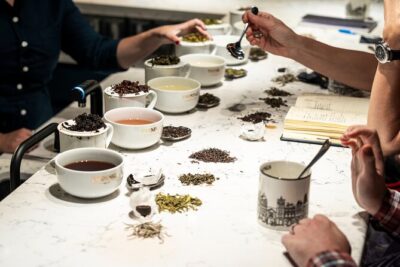
Twinings 2-Hour Tea Tasting Masterclass in London
Read our review →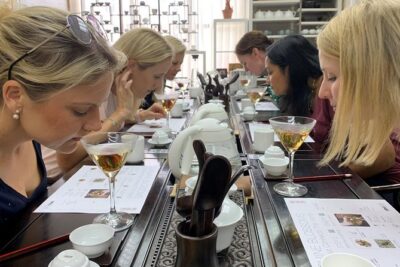
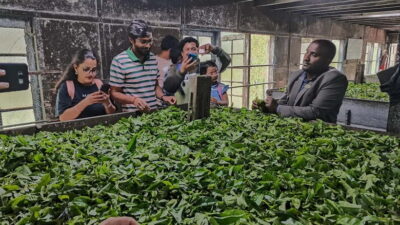
Munnar: Tea trail, Tea Factory, and Tea Tasting Tour
Read our review →
Matcha Experience with of Japanese Tea Tasting in Tokyo
Read our review →
Nara:5 Type of Tea Tasting & Mindful Tea Ceremony
Read our review →
Montmartre Hill French Afternoon Tea Tasting Tour with Crepes and Macarons
Read our review →
Munnar Tea Trail Tour , Tea factory visit & Tea Tasting
Read our review →Browse the lists this tour appears in