
Review · GREEN TEA TOURS
Big Island Jungle Tour with Guava Green Tea
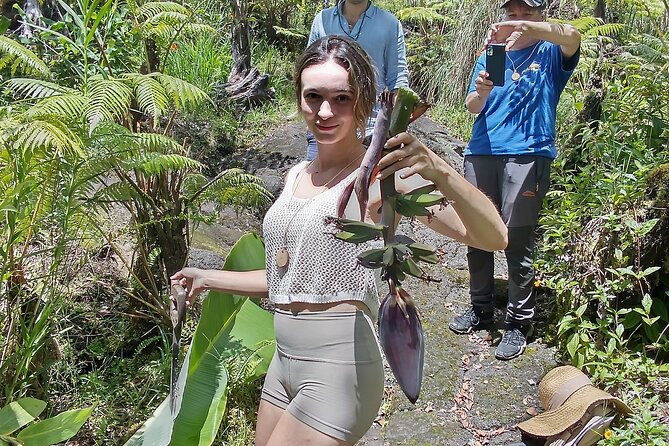
The most unusual part of this Big Island outing is that you are not simply looking at rainforest plants from a trail. Jason and Nicki bring you into their working home, where hand-carved tikis, lava rock sculptures, banana plants, and recycled materials all tell the story of how they live and create.
I like the hands-on approach. You can try a hammer and chisel on a tiki, take part in simple garden work, and see how more than 150 apple banana plants are cultivated. I also like the honest look at off-grid life, including water catchment and composting toilets.
The main consideration is comfort. This is an active, informal visit rather than a polished attraction, and one past participant described it as unsuitable for people with physical limits or closed minds. Come ready to work with your hands and listen to a very personal story.
Key points about the Jungle Tour
- Jason and Nicki host the visit themselves, giving the experience a personal, home-based feel.
- The tiki collection is unusually large, with hand-carved pieces set among the rainforest.
- Mount Rastamore is made from lava rock, part of a wider outdoor sculpture collection.
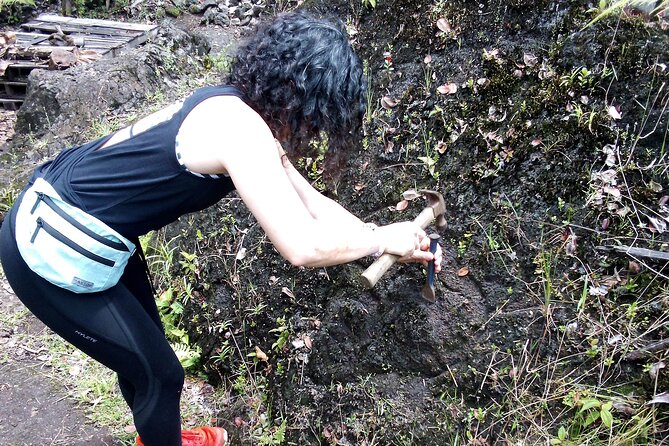
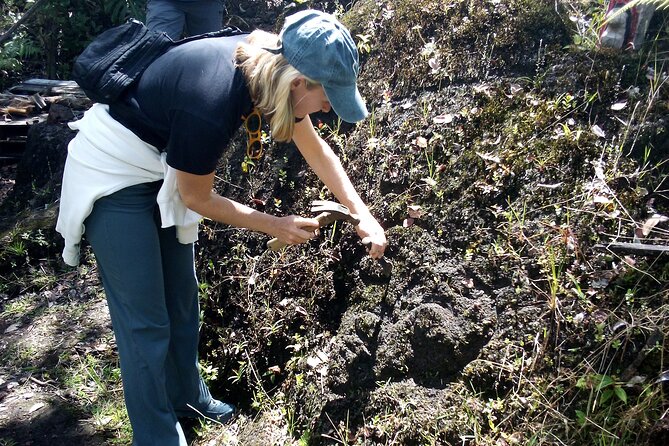
- You can try carving, with a hammer and chisel provided for a hands-on creative session.
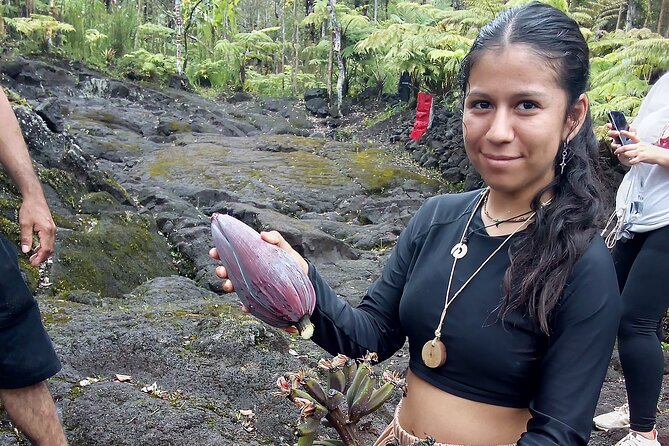
- More than 150 apple banana plants support a practical lesson in tropical cultivation.
- The tour ends with tea, including refreshing guava and banana leaf preparations.
A rainforest visit built around creativity
Paradise Unplugged is in Fern Forest, on Jungle King Avenue. The tour lasts about two hours and begins and ends at the same meeting point. That setting matters: you are visiting a lived-in, working piece of rainforest rather than moving through a large commercial park.
Jason and Nicki guide the experience together. Their home and grounds combine gardening, sculpture, art, recycling, and practical self-sufficiency. You will hear about how they use the land and see projects that continue to change over time.
I would set your expectations correctly before booking. This is not a standard nature walk with a marked route and a long list of species. It is a close-up look at two people’s way of life, with plenty of conversation and chances to handle tools and materials.
That personal quality is the heart of the visit. You get a direct explanation of why the sculptures exist, how the garden is managed, and what it takes to live with limited outside infrastructure. The experience works best if you enjoy meeting local people and seeing how they solve daily problems in their own way.
More Green Tea Tours in the USA:
- Experience all of Japanese culture and Japanese food experience classes “origami, udon, Japanese food, green tea, calligraphy” in 4 hours
★ 5.0 · 105 reviews - Uji: Green Tea Tour with Byodoin and Koshoji Temple Visits
★ 4.8 · 72 reviews - Scenic Green Tea Fields of Hidden Kyoto & Local Tea Exp (Private)
★ 5.0 · 32 reviews
Meeting the rainforest tikis
The first part of the tour focuses on the hand-carved tiki collection. Paradise Unplugged presents this as the largest collection of rainforest tikis in Hawaii, and the pieces are shown at close range rather than from behind a barrier.
The tikis give the grounds a strong artistic identity. You can look at the carving details, ask Jason about the work, and see how sculpture fits into the surrounding rainforest. This is not a quick photo stop. The collection is one of the main reasons the visit feels different from a basic garden tour.
You should also expect the art to be informal and personal. The grounds are not presented as a conventional museum, and the setting is part of the display. The forest, cleared areas, handmade structures, and carved pieces all sit together.
That can be a plus if you like rough edges and individual expression. If you prefer carefully labeled exhibits, smooth walkways, and a formal presentation, this may feel less structured than expected.
Mount Rastamore and the lava rock sculptures
After the tikis, Jason and Nicki show the lava rock sculpture collection. Its best-known feature is Mount Rastamore, a playful name for a major piece made from volcanic rock.
This section connects the tour to the Big Island itself. Lava is not just scenery here. It becomes a building and carving material, giving you a practical reminder of how volcanic ground shapes life on the island.
The collection also shows how the hosts turn available materials into art. You may find the pieces inventive, rough, humorous, or unusual, depending on your taste. The important point is that the tour lets you examine the work at close range and hear the ideas behind it.
The later carving activity makes more sense after seeing these sculptures. You are not simply being handed a souvenir project. You first see what can be done with wood and stone, then get a small chance to try the process yourself.
A garden with more than 300 hapuu ferns
The tropical garden includes more than 300 Hawaiian hapuu ferns. The tour uses this collection to explain the plant life around the property and the conditions needed to grow in the rainforest.
For me, this is one of the more useful parts of the experience because it places the art in its natural setting. The garden is not separate from the rest of the property. Plants, food crops, sculpture, and daily life all overlap.
You will learn about edible plants and other tropical growth found around the land. The information is tied to what you can see, rather than delivered as a broad lecture about Hawaii.
Plant lovers should appreciate the variety. You do not need to identify every fern or remember every cultivation detail to enjoy this section. The value is in seeing how the hosts work with the environment and use what grows around them.
More tea experiences around the USA if you are still choosing
- Tea Around Town: High Tea Experience and Tour of Washington DC
★ 4.0 · 154 reviews - SF’s Chinatown: Tea & Dim Sum Food Tour – Includes full meal, 3hr
★ 5.0 · 153 reviews - Tea Around Town® NYC: Mobile Tea Room Experience
★ 3.5 · 99 reviews - Charleston: Wadmalaw Island Wine Tasting and Tea Garden Trip
★ 4.9 · 94 reviews
Learning how the apple bananas are grown
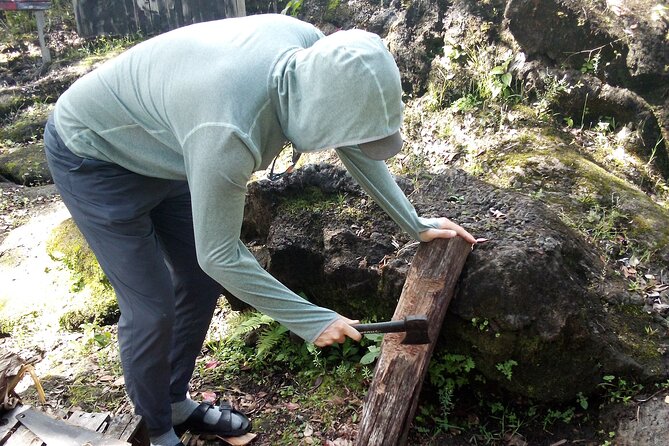
Banana cultivation is a central part of the visit. Paradise Unplugged maintains more than 150 apple banana plants, and Jason and Nicki explain the techniques used to harvest them.
This makes the tour especially useful for anyone interested in food production, tropical gardening, or small-scale self-sufficiency. You see a crop that is common in Hawaii treated as both a food source and a hands-on lesson.
The apple banana focus also gives the visit a clear thread. You move from wild rainforest growth to cultivated plants, then to tea made from leaves. The parts connect without turning the afternoon into a standard farm tour.
The experience may appeal to gardeners who want practical ideas, though you should not expect a full agricultural course. Two hours allows for an introduction, not detailed training in every aspect of banana growing.
Trying the tools yourself
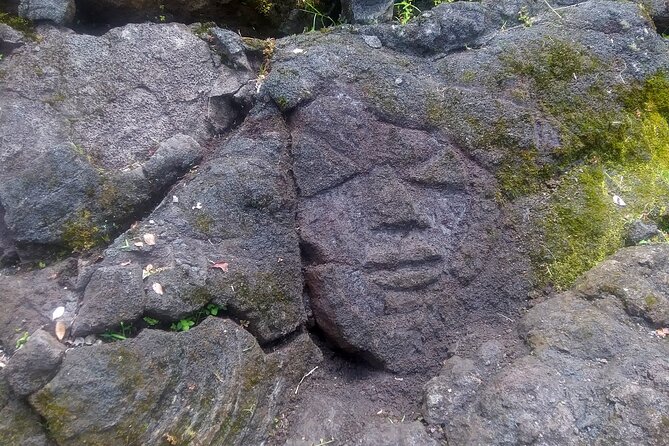
One of the strongest features is the chance to take part. You may use a hammer and chisel to carve a tiki, and the activity can include simple work such as sawing, planting, or a little axe work.
That hands-on element changes the pace. Instead of only hearing how Jason works, you get a small sense of the care and effort involved in shaping wood or lava stone. Even a short carving attempt can make you look at the finished pieces differently.
You should take the physical side seriously. The experience is not described as difficult for most people, but it is not completely passive. If using hand tools is uncomfortable for you, or if you have physical restrictions, you may prefer to watch rather than participate.
The tour also suits people who enjoy learning by doing. Children and adults are listed as generally able to participate, but the available information does not provide a specific age policy or detailed accessibility plan. If you need a particular accommodation, ask before booking.
Inside the Okina off-grid structure
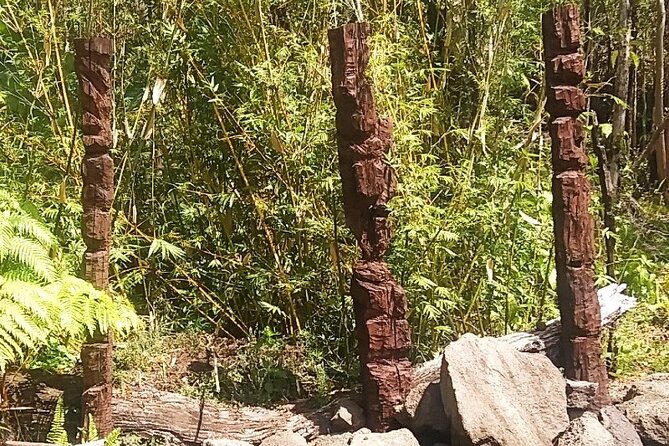
The Okina is an off-grid structure made from recycled pallets. It gives Jason and Nicki a place to explain parts of their lifestyle that are easy to miss from the garden paths.
You will see key features such as water catchment and composting toilets. These details are practical rather than decorative. They show how the hosts manage basic needs without relying on a conventional home setup.
This is where the visit becomes more than an art stop. You get a look at decisions about water, waste, building materials, and daily resource use. The approach may inspire you, challenge your assumptions, or simply give you a better sense of what off-grid living involves.
The trade-off is that the experience is personal. You are seeing one couple’s methods, not a universal model for sustainable living. Treat it as a real example to study, not as a formal certification course or technical demonstration.
The recycled art gallery
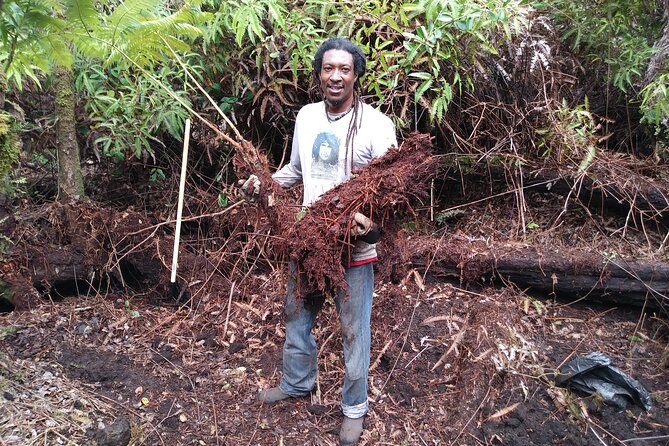
The route continues to an outdoor art gallery with the hosts’ latest exhibition. Jason has also created pallet paintings inspired by a New York artist, adding another style of work to the carvings and lava sculptures.
The gallery helps show the range of the property. The visit is not only about tikis and plants. Reused wood, painting, stone, and garden materials all become part of the creative setting.
I like this section because it reflects the broader idea behind Paradise Unplugged: materials that might otherwise be discarded can be given another purpose. That idea appears in the artwork, the Okina, the garden, and the way the property is organized.
You will not find a fixed museum collection with a permanent exhibit list. The outdoor display changes as new work is made, so the exact selection may vary. That keeps the experience personal, but it also means you should not book expecting a particular artwork beyond the named features.
Tea at the Tiki Tea Bar
The tour ends at the Tiki Tea Bar with a sample of tea. The main options described are guava leaf tea and banana leaf tea, with the wider booking information also listing coffee and tea as included.
The guava tea is described as similar to green tea, while the banana leaf version is smoother and lighter. This final tasting gives you a quiet way to finish the visit and connects back to the plants you have seen.
It is a small serving rather than a full meal. You should eat beforehand if you need lunch or a substantial snack, since the included food and drink is limited to the tea experience.
The tea also makes a useful closing note. You have spent the previous two hours looking at plants as food, building material, art inspiration, and part of an off-grid routine. The final cup brings those ideas together in a simple way.
What the $75 price gets you
At $75 per person, this is priced above a basic garden walk but below many full-day Big Island excursions. The value comes from the amount of direct access and participation packed into two hours.
You are paying for a small-group experience with a maximum of 10 people, a guided look at the property, access to the sculpture and garden areas, the hands-on carving opportunity, and tea. Admission is included, and the hosts lead the visit themselves.
The price makes the most sense if you value personal contact and unusual subject matter. You are not paying for transportation, a large attraction, or a long scenic route. Private transportation is not included, so you must arrange your own way to Jungle King Avenue in Fern Forest.
The tour is booked an average of 16 days ahead, which suggests that planning early is sensible if your Big Island schedule is tight. Confirmation arrives when you book, and free cancellation is available until 24 hours before the start time. Changes or cancellations inside that window are not refundable.
Who will enjoy this most
I would recommend this experience to you if you like local stories, handmade art, gardening, and practical examples of off-grid living. It is a good match for people who would rather spend time with a creative couple than join a large, scripted attraction.
It also suits outdoor enthusiasts who enjoy learning about plants and working with simple tools. The tour gives you a chance to plant, carve, saw, or handle an axe, depending on the activities offered during your visit.
You may want to choose another outing if your main goal is a long rainforest hike, dramatic coastal scenery, or a polished cultural presentation. The setting is the rainforest, but the focus is the property, its art, its crops, and the hosts’ lifestyle.
I would also think carefully if you have trouble walking, standing, or using hand tools. The available information says most people can participate, but it does not promise full accessibility, and the hands-on nature may not suit every body.
Is the Big Island Jungle Tour worth booking?
Book it if you want a personal and unusual look at how Jason and Nicki combine rainforest living, banana cultivation, sculpture, recycling, and art. The strongest reasons to go are the close-up tiki collection, Mount Rastamore, the chance to carve, and the honest look at water catchment and composting toilets.
Skip it if you want a conventional nature walk or a tightly scheduled attraction with polished facilities. At $75, the tour earns its value through access and conversation, not through distance covered or the number of formal sights.
For the right person, this is a memorable two-hour stop with real character. Arrive ready to listen, handle tools, ask questions, and accept that the experience is handmade in every sense.
FAQ
Where does the Big Island Jungle Tour begin?
The tour begins at Jungle King Avenue, Fern Forest, Hawaii 96778. It ends back at the same meeting point.
How long does the tour last?
The experience lasts approximately two hours.
How much does the tour cost?
The listed price is $75 per person.
Who leads the experience?
Jason and Nicki from Paradise Unplugged host the tour.
What can I see during the tour?
You can see a large collection of hand-carved tikis, lava rock sculptures including Mount Rastamore, more than 300 Hawaiian hapuu ferns, apple banana plants, an outdoor art gallery, and the Okina off-grid structure.
Can I try carving during the visit?
Yes. You are given the opportunity to use a hammer and chisel to carve a tiki. The experience may also include simple hands-on work such as sawing, planting, and some axe work.
Is tea included?
Yes. Tea is included, with the visit ending at the Tiki Tea Bar for samples of guava and banana leaf tea. Coffee and tea are listed among the included refreshments.
What happens if I need to cancel?
You can receive a full refund if you cancel at least 24 hours before the experience begins. Cancellations or changes made less than 24 hours before the start time are not refunded or accepted.
Fresh tea listings around the USA
- Washington, D.C.: Tea Around Town Bus Tour with Landmarks★ 3.4 · 7 reviews
- Tea By The Sea★ 5.0 · 9 reviews
- Tea Blending★ 4.5 · 8 reviews
- Tea Around Town: A Charming Tea Experience in Philadelphia★ 3.5 · 24 reviews
- St. Johns River High-Tea Cruise Tour in Sanford★ 5.0 · 2 reviews
- Premium Loose Leaf Tea and Chocolate Tasting★ 3.0 · 4 reviews
- Beach Yoga & Tea Experience on South Beach★ 5.0 · 19 reviews
- Tea Plantation and Winery Tour in Charleston★ 5.0 · 3 reviews
Green Tea Tours, compared.
Uji: Green Tea Tour with Byodoin and Koshoji Temple Visits
Read our review →
Scenic Green Tea Fields of Hidden Kyoto & Local Tea Exp (Private)
Read our review →
Osaka; Japanese Tea ceremony experience, Macha and Sencha
Read our review →
Slow Cycling Tour at Uji’s Matcha Green Tea Fields and Heritage
Read our review →
Sencha-do the Japanese Tea Ceremony Workshop in Kyoto
Read our review →Browse the lists this tour appears in