
Review · CHENGDU TEA TOURS
Chengdu: Sichuan Opera Show ShufengYayun & Covered Bowl Tea
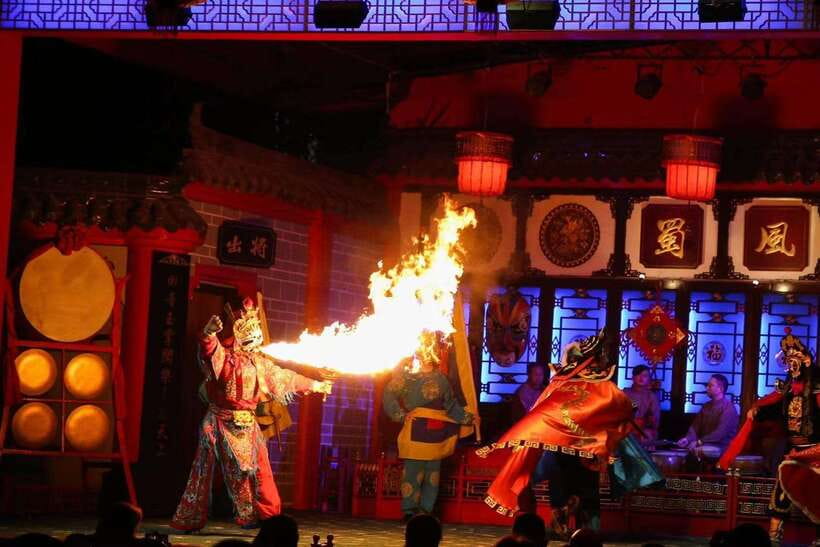
The most striking part of this Chengdu evening is the finale: performers shift painted faces in a blink, then follow it with fire-breathing. Before that, you’ll watch puppets, shadow play, folk music, opera scenes, and comic stage pieces in an old-style theater beside Qingyang Palace. I like the covered-bowl tea because it gives the show a local, hands-on touch, and I like the mix of short acts because you are not asked to follow one long Chinese-language plot. The main consideration is that seats are assigned randomly within your chosen section, so the $34 ticket does not guarantee a particular chair.
I also like that the extras are tied to the ticket area rather than sold as one large package. Depending on your class, you receive tea, sunflower seeds, and a choice such as a massage, ear cleaning, dessert, souvenir, or costume try-on. Just remember that the costume option is for trying on only. Makeup, hairstyling, a custom background, and professional photos cost extra.
Key points at a glance
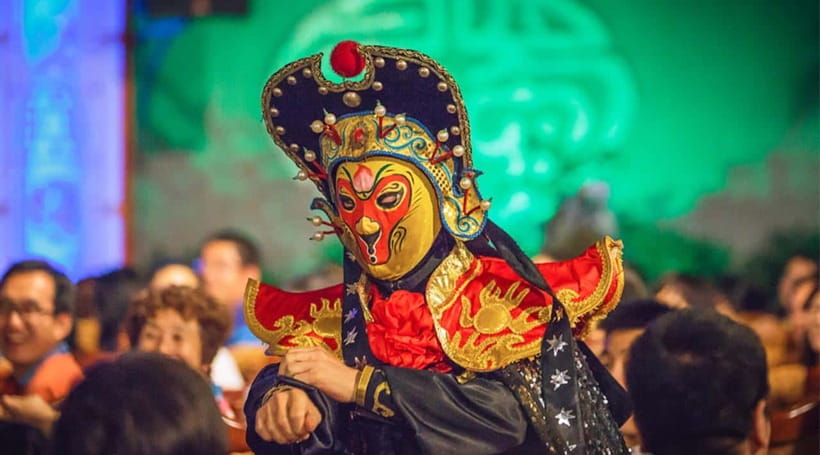
- Face-changing and fire-breathing: The final section delivers the famous Sichuan opera tricks most first-time visitors hope to see.
- Covered-bowl tea: Sip tea from a gaiwan, using its lid to control the leaves, heat, and strength.
- Historic theater setting: Shufeng Yayun occupies old buildings near Qingyang Palace on Chengdu’s Qintai Ancient Path.
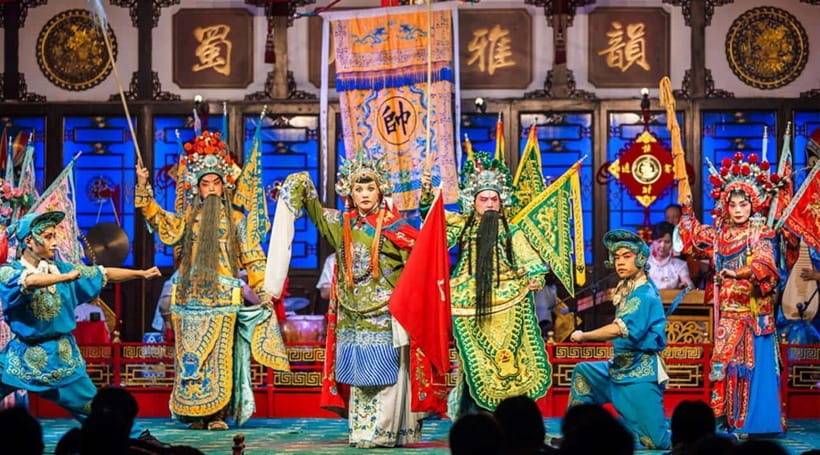
- Many short acts: The 80-minute program moves through drums, opera, huqin, folk music, puppetry, shadow play, and rolling lights.
- Ticket-area extras: Red, green, and blue seating areas include different complimentary treats and services.
- Simple evening plan: Collect your ticket at the Municipal Cultural Park entrance, then walk about one minute to the Old Theater.
Why this Chengdu evening works so well
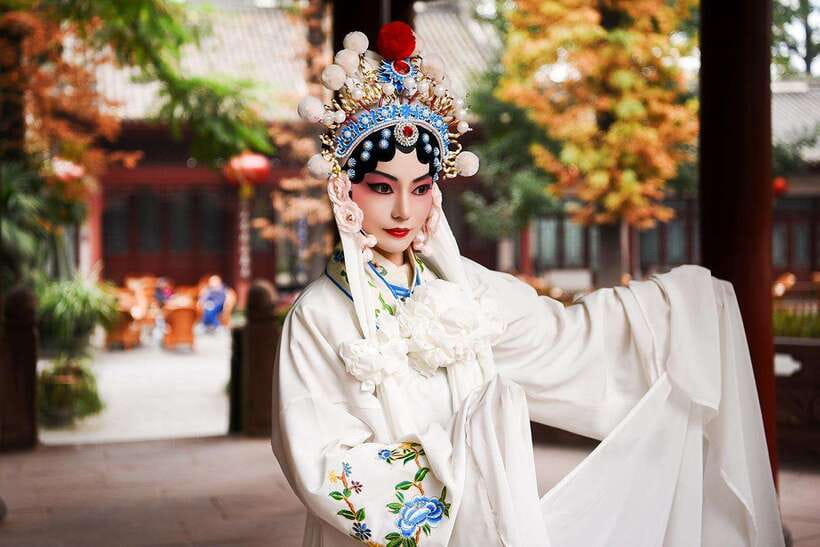
Sichuan opera is not just a singer in elaborate clothing. It is a collection of stage skills, music, movement, comedy, visual tricks, and old performance traditions. This show gives you a quick tour through several of them in one sitting.
That format is useful if you do not speak Chinese. A full-length opera can be hard to follow without translation, but this program uses short sections with clear visual action. You can appreciate the drums, instruments, puppets, costumes, lights, and physical skill even when the spoken lines pass too quickly to catch.
The show is held at Shufeng Yayun, established in 1998 as a major folk-art and opera venue for both Chinese and international audiences. Its name is sometimes written as Sufeng Yayun in English-language material. The theater sits among traditional buildings within Qingyang Palace, near Du Fu Thatched Cottage and Wuhou Shrine. That location gives the evening more character than a performance in a modern hotel ballroom.
I would plan to arrive early enough to enjoy the setting rather than sprint in at 7:59 p.m. The performance begins at 8:00 p.m. and lasts about 80 minutes. You are asked to arrive 15 minutes before the start.
More Shows in China:
- Samurai Show, Tea Ceremony, Japanese Traditional Activities
★ 5.0 · 56 reviews - Kyoto: Wazuma Magic Show & Tea Ceremony
★ 4.8 · 29 reviews - Premium Kimono Dressing, Tea Ceremony, Calligraphy, Samurai show
★ 5.0 · 18 reviews
Collecting your ticket on Qintai Road
The meeting point is the ticket booth at the entrance to the Municipal Cultural Park, at the middle of Qintai Road. You enter your phone number there to obtain the ticket and select a seat within the available area. After collection, walk roughly one minute to the Old Theater for entry.
This is a small but important detail. The ticket collection point and performance hall are close, but they are not the same doorway. Check your email before leaving for the venue, since the booking instructions include the address, transportation details, and ticket collection guidance.
English and Chinese assistance is available. If you are unsure where to go, ask on-site staff for help. The venue is wheelchair accessible, and small-group arrangements are available.
The seats are assigned randomly inside the red, green, or blue area linked to your ticket. You can choose your seating range, but not necessarily the exact seat you want. For that reason, I would treat the seating classes as broad zones rather than precise theater reservations.
The tea ritual before the curtain
Each seating category includes one cup of lidded tea, also called gaiwan or covered-bowl tea. A gaiwan has three parts: a bowl, a lid, and a saucer. You use the lid to hold back the leaves while drinking, and you can gently press or rotate it to control the tea’s strength and temperature.
This is more than a drink placed beside your chair. It is a small introduction to a daily Sichuan custom. Take care when lifting the cup, since the lid and bowl may be hot. The tea also gives you something to do before the show begins, while the theater settles.
A plate of sunflower seeds is provided per table. Other food and drinks from the on-site menu are not included. If you want more refreshments, budget separately and ask about the venue’s current prices.
The tea service helps explain why this experience feels different from simply buying a seat at a stage performance. You are watching a show while taking part in one of the region’s familiar tea traditions. It is a modest detail, but it adds local flavor without adding a separate stop to your evening.
What happens during the 80-minute show
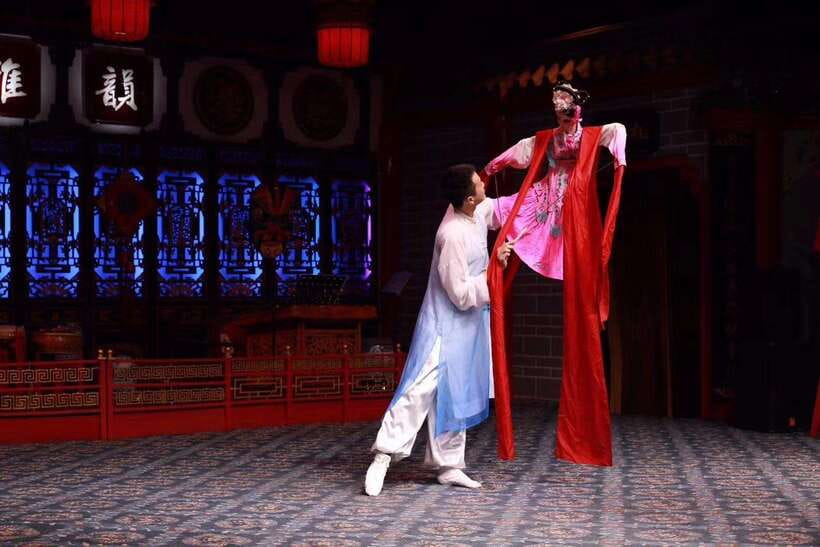
The exact order can change, and the program on the day takes priority. Still, the advertised sequence gives you a useful idea of the evening.
More tea experiences around China if you are still choosing
- One-Day Hangzhou Dragon Well Tea Culture & West Lake Private Tour
★ 5.0 · 98 reviews - Traditional Chinese Tea Ceremony Experience
★ 4.7 · 74 reviews - Tea Tasting and Pairing Concept Workshop
★ 5.0 · 57 reviews - Beijing Culture: Tea Ceremony, Heritage Instrument & Calligraphy
★ 5.0 · 57 reviews
Drums and gongs open the theater
The first section, called Nao Tai, uses drums and gongs to announce the performance. This opening is loud, direct, and built to focus the room. It also reflects the old role of percussion in Chinese stage shows, where sound helped mark the beginning of a performance and drew attention from outside the theater.
A one-act play sets the tone
A short play follows. Since the full story may be delivered in Chinese, focus on the actors’ movement, costume, expression, and timing rather than trying to catch every line. A short scene is easier to enjoy than a long plot when you do not have a translation.
Huqin brings in the string music
The huqin section features a traditional Chinese bowed string instrument. This changes the pace after the opening percussion. You get a quieter look at the musical side of Sichuan stage arts instead of seeing only large gestures and visual stunts.
Folk music adds another local sound
A folk music performance follows, listed as Penna in the program information. The name may be presented differently in English, but the purpose is clear: the evening is not limited to opera singing. You hear another part of the region’s musical tradition.
Puppetry keeps the program moving
The puppet show is one of the more accessible sections for families and for anyone who does not speak Chinese. Puppetry communicates through movement and visual action, so you can follow the performance without needing a plot summary.
Selected Sichuan opera scenes
The opera scenes give you the core art form. Watch the actors’ stylized movement, costumes, gestures, and facial expressions. Sichuan opera often asks performers to control small details as carefully as large actions, so it is worth watching the hands and face rather than only waiting for the next trick.
Hand shadow play changes the scale
The hand-shadow segment uses light and the performer’s hands to create images. It is a simple-looking form that depends on exact control. After the color and costumes of the opera, the plain shadow shapes provide a welcome visual change.
Rolling lights offer a brief novelty act
Rolling lights add another skill-based interlude. The section is short, but it helps keep the 80-minute program varied. This show is designed as a sequence of different acts, not as one continuous dramatic work.
Face-changing and fire-breathing close the night
The finale is the part most people associate with Sichuan opera. Performers change painted face designs with startling speed, often without making the method obvious from the audience. Fire-breathing follows as another high-impact stage skill.
The face-changing is worth watching closely, but do not expect an explanation of the technique during the performance. The appeal is the mystery and speed. The fire sequence also has a strong visual effect, though the exact presentation can vary. The program and order may change on the day.
Choosing between the red, green, and blue areas
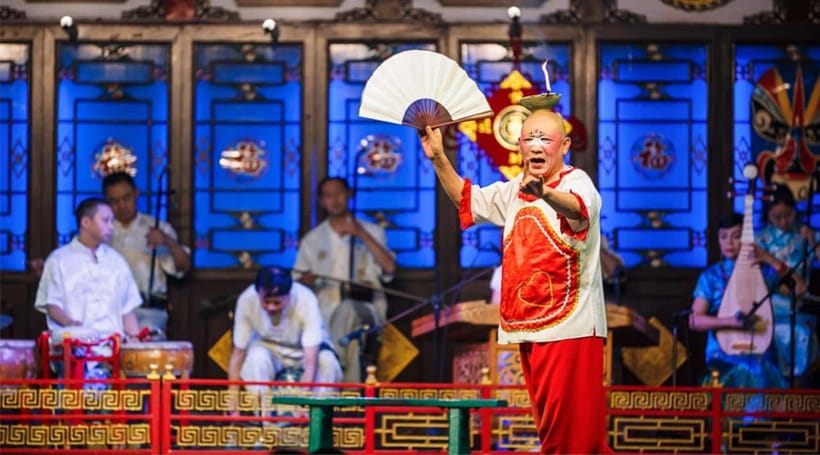
The ticket options are called Yipin, Erpin, and Sanpin. The included extras differ, so compare the benefit you actually want instead of choosing only by color or name.
The Yipin class, shown in the red area, includes covered-bowl tea and sunflower seeds per table, plus one of the following: a premium costume experience, a fruit platter, or massage and ear cleaning with a dessert. The costume experience means trying on the clothing. It does not include makeup, hairstyling, or a photo session.
The Erpin class, shown in the green area, includes tea and sunflower seeds, plus one of these: massage, ear cleaning, dessert, or a souvenir.
The Sanpin class, shown in the blue area, also includes tea and sunflower seeds, with one choice from massage, ear cleaning, dessert, or a souvenir.
Because the seats are randomly assigned inside the selected zone, the higher class may matter for both location and extras. If you care most about the costume experience, confirm that option at booking or with the venue staff. If you simply want the opera and tea, a lower area may offer better value.
Do not assume every listed service happens during the show itself. The information describes them as complimentary additions included with the ticket. Ask staff when and where to receive your selected benefit.
Costume photos, massages, and extra charges
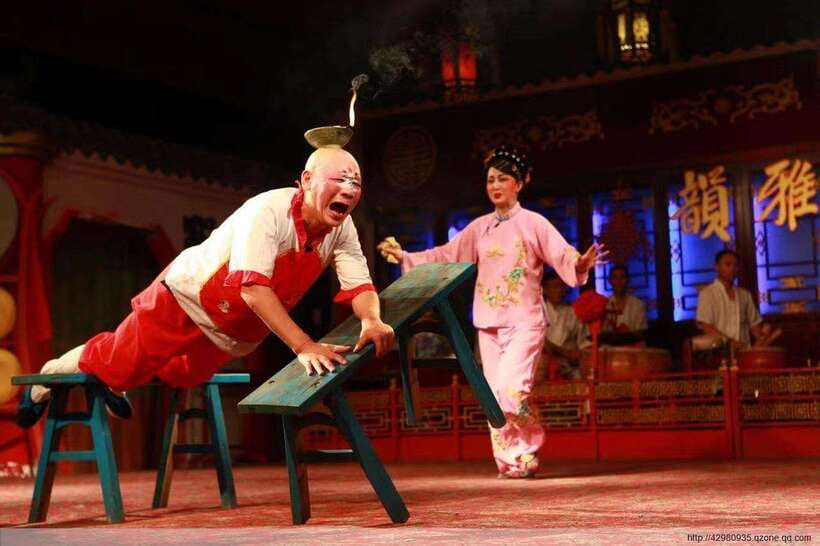
Trying on a costume can be a fun way to connect with the theater’s visual style, especially for families or visitors who want a more active cultural stop. But the basic package does not include professional makeup, hairstyling, a special background, or photography.
If you want the full photo experience, arrive at least one hour before the performance. The premium option includes a photographer, customized background, and at least 10 professionally edited photos. The extra fee must be confirmed and paid directly at the venue.
That timing matters. Arriving only 15 minutes early is enough for the standard show, ticket collection, and seating. It is not enough for the premium costume photography arrangement.
Massage and ear cleaning may appeal after a day of walking through Chengdu. Still, I would treat them as optional extras rather than the reason to book the show. The opera, tea, and theater setting are the central experience. The added service is a bonus that may make one ticket category a better deal for you.
Is $34 a fair price?
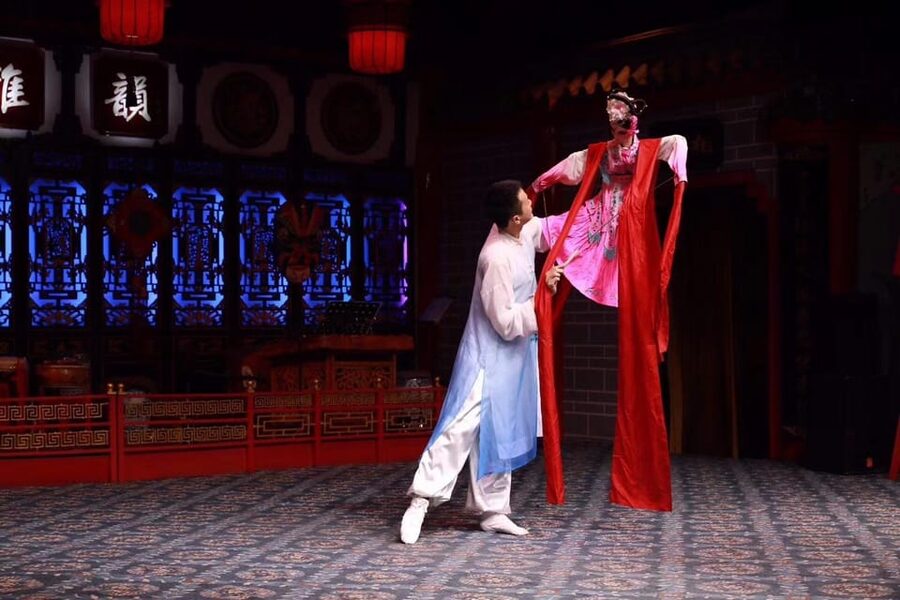
At $34 per person, the price is reasonable if you want several forms of Chinese stage entertainment in one convenient evening. You receive an 80-minute performance, tea, sunflower seeds, and one extra tied to the seating category. You also avoid having to arrange separate visits for opera, puppetry, shadow play, and traditional music.
The value is strongest for a first visit to Chengdu. You get the famous face-changing act, but you also see less familiar pieces that show how broad Sichuan performance culture can be. If you only want face-changing and fire-breathing, the price may feel high for a show where those moments come near the end.
The ticket does not include extra food and drinks, hotel transfers, or professional costume photography. Transport from a central Chengdu hotel is not included unless you select an option that specifically provides it. Plan your route to Qintai Road yourself and allow time to find the ticket booth.
Who should book this show?
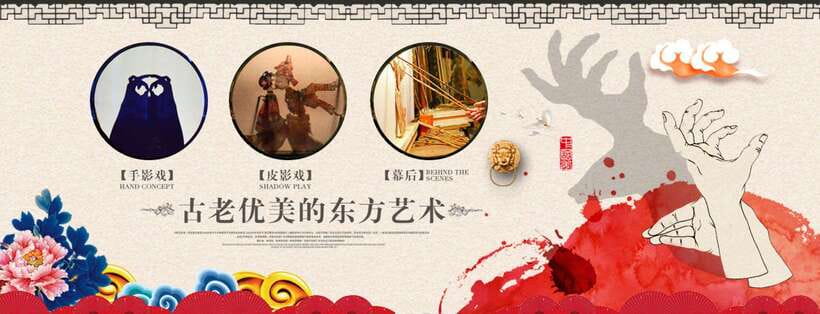
I would recommend it to you if you want a compact cultural evening, especially if this is your first exposure to Sichuan opera. Families may like the changing acts, puppets, shadow play, and visual finale. You do not need Chinese-language skills to enjoy the physical performance and stage effects.
It also suits you if you are visiting Qingyang Palace, Du Fu Thatched Cottage, or Wuhou Shrine and want a performance near those sights. The old theater setting gives the evening a clear sense of place.
I would be more cautious if you want a serious, full-length opera with a translated story and a fixed seat. This is a sampler of stage traditions, and the exact program can change. It is designed for variety and visual appeal rather than a single detailed drama.
The experience has an overall rating of 4.2 from 14 ratings. The strongest praise centers on the easy ticket collection, the varied 80-minute program, the face-changing and fire-breathing, and the extra massage. Those are the areas I would use when deciding if it fits your evening.
My call: book it for variety, not just one trick
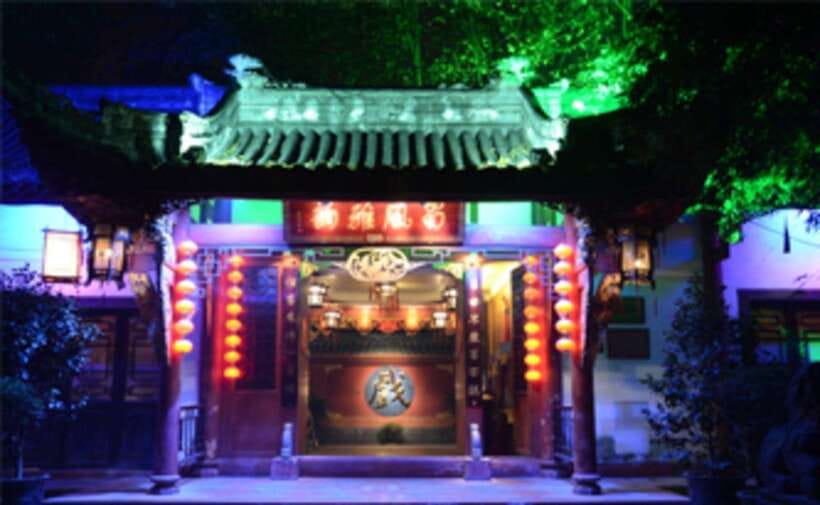
Book this experience if you want an easy introduction to Chengdu’s performing arts with tea, a historic theater setting, and several short acts in one night. The combination of opera scenes, puppetry, folk music, shadow play, rolling lights, face-changing, and fire-breathing gives you plenty to watch even without Chinese.
Before paying, choose your seating area based on the included extra, not on the hope of selecting a precise chair. Arrive 15 minutes early, check your email for the ticket instructions, and allow an hour if you want professional costume photos. For $34, it is a sensible pick for a first Sichuan opera night, as long as you understand that it is a varied cultural show rather than a full translated opera.
FAQ
Where does the Sichuan opera show take place?
The performance takes place at the Old Theater at Shufeng Yayun, located in the traditional buildings of Qingyang Palace on Qintai Ancient Path in Chengdu.
Where do I collect my ticket?
Collect your ticket at the booth at the entrance of the Municipal Cultural Park, located in the middle of Qintai Road. You enter your phone number there and then walk about one minute to the Old Theater.
What time does the show begin?
The show begins at 8:00 p.m. You should arrive 15 minutes earlier for ticket collection, seating, and assistance from the on-site staff.
How long does the performance last?
The performance lasts approximately 80 minutes.
What acts are included in the show?
The program may include opening drums and gongs, a one-act play, huqin music, folk music, puppetry, Sichuan opera scenes, hand shadow play, rolling lights, face-changing, and fire-breathing. The order and content may change.
Is covered-bowl tea included?
Yes. Each listed seating class includes one cup of covered-bowl tea, also called gaiwan tea. A plate of sunflower seeds is also provided per table.
Can I choose my exact seat?
No. Seats are randomly assigned within the seating area connected to your selected package. You can check the seating range for each package, but not request a specific chair.
Is the costume experience a photo session?
No. The costume experience included in the Yipin package is for trying on the costume only. Makeup, hairstyling, a customized background, and professional photography require an additional fee paid at the venue.
Is the venue wheelchair accessible?
Yes. The activity information states that the venue is wheelchair accessible. English and Chinese assistance is available, and small-group arrangements are offered.
Fresh tea listings around China
- Chongqing 1941 theatre: Tea Art Performance with Folk Art★ 3.8 · 8 reviews
- Beijing:Learn Calligraphy & Enjoy Kung Fu Tea Ceremony★ 5.0 · 2 reviews
- Beijing: Temple Of Heaven+Tai Chi Class+Tea Ceremony★ 5.0 · 8 reviews
- Beijing Hands-On Culture Tour: Tea, Instrument, Calligraphy★ 5.0 · 6 reviews
- Beijing: Chinese Culture Tea Ceremony Reservation Service★ 4.8 · 4 reviews
- Qixianfeng Tea Plantation Tour in Yangshuo★ 4.6 · 4 reviews
- 3 hours Xi’an Mahjong Class with Local Tea★ 5.0 · 2 reviews
- Xi’an Calligraphy & Tea Ceremony – Dive into Ink & Brush Artistry★ 5.0 · 4 reviews
Chengdu Tea Tours, compared.
Leshan Buddha + Panda Base or Old Tea House Private Day Tour
Read our review →
Half-day Private Mahjong course in Local Tea House
Read our review →
Experience Chengdu: Private Tea-Making Day Tour of Mengdingshan Tea Plantation
Read our review →Browse the lists this tour appears in