
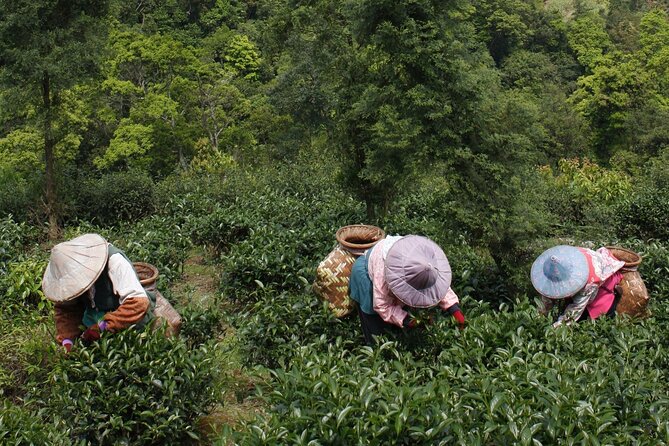
Review · TEA PLANTATION & FARM TOURS
Thousand Island Lake and Pinglin Tea Plantation from Taipei
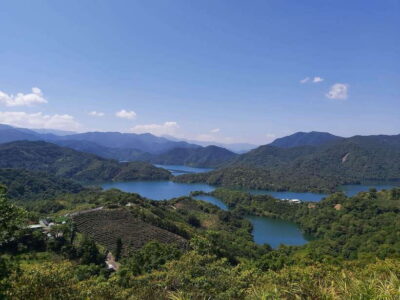
Thousand Island Lake is the star here: a chain of small green islets scattered across Feitsui Reservoir, framed by tea fields and wooded hills. This is an easy way to trade Taipei’s towers for mountain air without arranging buses or taxis yourself. The route also gives you a useful introduction to Taiwan’s tea culture, especially Wenshan Baozhong.
I like the scenic viewpoints and the tea tasting most. The first gives you a fine view of the reservoir and the neatly planted slopes. The second is more than a quick sample: a local tea expert explains the leaves, brewing, and flavors, with three teas often served, including two grown nearby.
The main drawback is time. Five hours sounds generous, but mountain roads, several stops, and group movement can make the museum visit feel rushed. Some people also find the museum portion a little long, while others wish they had another 20 or 30 minutes there. Your experience may depend on the guide and the pace of your group.
Quick takeaways from the mountain trip
- Thousand Island Lake viewpoint: See Feitsui Reservoir dotted with small islands from the hills above Shiding.
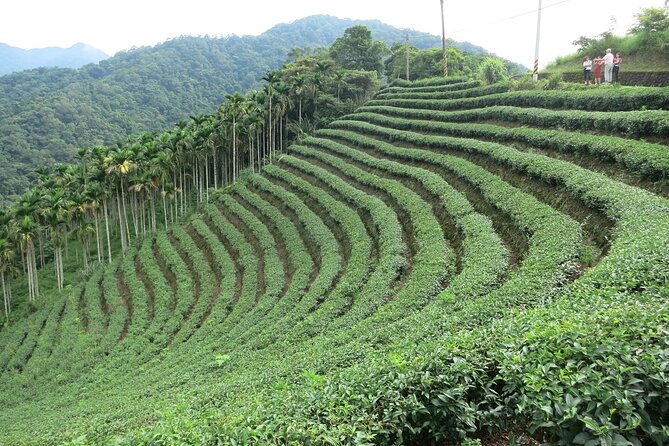
- Bagua Tea Garden: Look down over tidy rows of tea plants and learn why this area suits Wenshan Baozhong and Dong Fang Mei Ren.
- Pinglin Tea Museum: Explore a traditional Hokkien-style courtyard building and exhibits on tea tools, leaves, and production.
- Tea tasting with a local expert: Try several Taiwanese teas and learn how brewing changes their taste.
- Small-group format: The maximum is 20 people, with many departures using a much smaller group.
- Simple city escape: The tour lasts about five hours and includes an air-conditioned vehicle, guide, tea tasting, and insurance.
Leaving Taipei for Shiding’s green hills
Taipei is easy to enjoy on foot and by metro, but the city can fill your whole trip. This excursion gives you a practical half-day break without asking you to rent a car or work out the mountain roads.
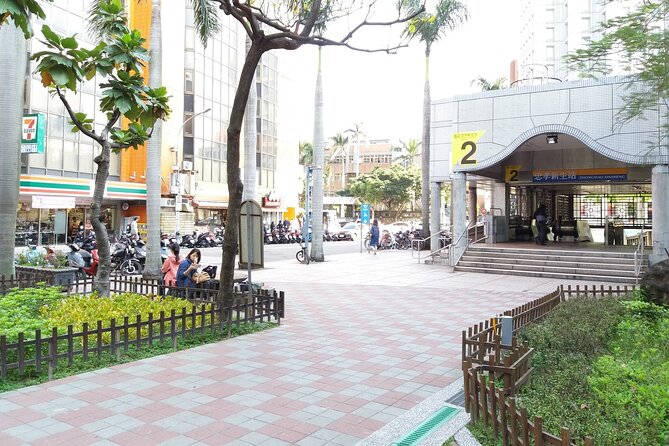
The standard meeting point is Zhongxiao Park at No. 1, Lane 134, Section 2, Zhongxiao East Road, in Taipei’s Zhongzheng District. The activity ends back at the meeting point, though you can choose to be dropped at Taipei 101 on the return journey. Hotel pickup and drop-off are included only if you choose the private option, so check that detail carefully before booking.
The ride heads through New Taipei City toward Shiding. The road becomes more winding as it reaches the hills around Feitsui Reservoir. That drive is part of the appeal, but it also explains why the schedule can stretch beyond the advertised five hours. Road conditions and group timing matter here.
You ride in an air-conditioned vehicle with a licensed guide. Guides named in the feedback include Molly, Sharron, Kevin, Damien, James, Christina, Walter, Cathy, Tony, David, and Kevin Su. The strongest descriptions focus on clear explanations of Taiwanese tea, local history, and the countryside. English ability can vary in presentation, and one person found a masked guide hard to hear on the bus, so sit close if the commentary matters to you.
More Tea Plantation Tours in the world:
- From Taipei: Thousand Island Lake and Pinglin Tea Plantation
★ 4.7 · 519 reviews - Active Volcano, Rice Field, Hot Spring, Fruit market, Tea Plantation with Lunch
★ 5.0 · 513 reviews - Furnas: Tea Plantations, Lake and Volcano Guided Tour
★ 4.8 · 511 reviews
Thousand Island Lake and Feitsui Reservoir
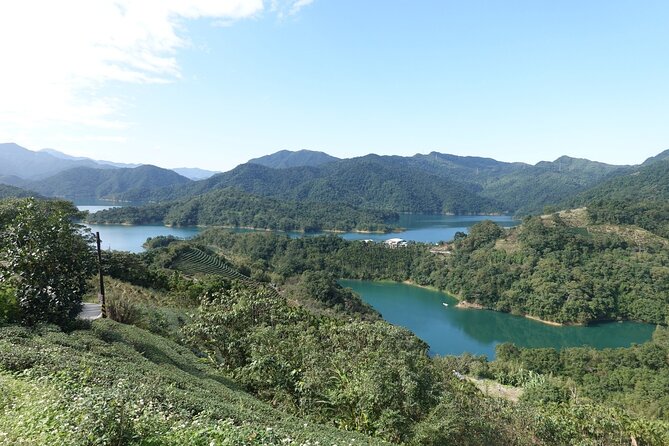
The first stop is Shihding Ciandao Lake, also called Thousand Island Lake. You get about 20 minutes here, with no admission charge. The view comes from the surrounding hills rather than from the water itself, so this is a scenic lookout, not a boat trip.
The reservoir’s catchment area creates the famous pattern of water and little islands. From above, the scene changes with the weather. On a clear day, the tea slopes and lake show their shape. In rain or mist, the hills become softer and more atmospheric, though visibility can drop.
Bring your phone or camera, but do not expect a long walk or a broad network of viewpoints. The stop is short and focused. Your guide may add useful context about the reservoir, the local plants, and the tea farms around it, but you will want to be ready when the vehicle arrives.
This is the part that makes the tour more than a museum visit. You see why tea farming works here: hills, moisture, and cooler mountain conditions close to Taipei. If you want a serious hiking outing, this is not it. If you want a strong rural view with little physical effort, it fits well.
Looking over Bagua Tea Garden
Next comes Bagua Tea Garden, with about 25 minutes to view the rows from the top of the hill. The tea plants are arranged in clean lines across the slopes, making this one of the most photogenic stops.
The terrain and climate around Feitsui Reservoir support several tea types, including Wenshan Baozhong and Dong Fang Mei Ren. You will not get a full farming lesson here, and the tour does not promise a harvest demonstration. Instead, the garden gives you a visual sense of how tea country is laid out.
I like this stop because it connects the scenery to what you later drink. At the lake, the tea fields appear as part of the wider view. At Bagua, you can inspect their rows and see how much of the countryside is shaped by small-scale agriculture.
The visit involves some walking, often on uneven or sloping ground. Comfortable shoes are a smart choice. The tour is not recommended for people with physical disabilities, and anyone who has trouble on hills should consider that advice carefully.
Pinglin Tea Museum in a traditional courtyard
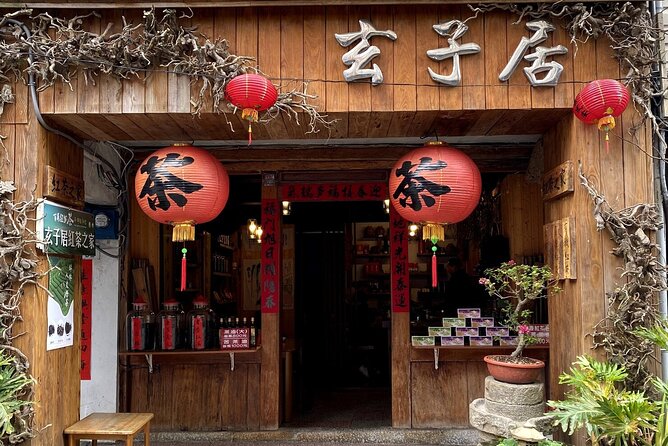
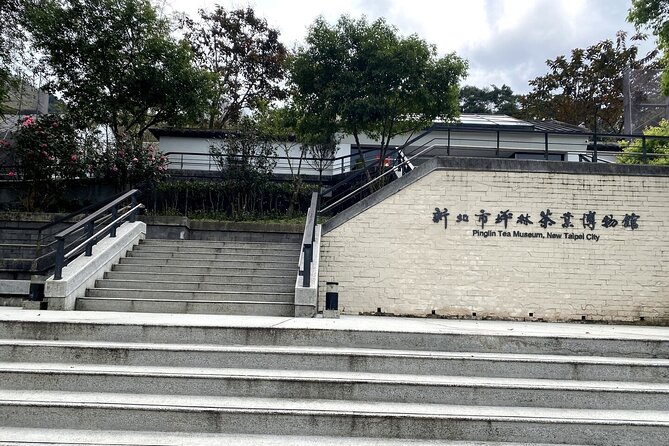
The trip continues to Pinglin District, known for Wanshan Pouchong tea. The Pinglin Tea Museum occupies a Hokkien-style siheyuan, or quadrangle courtyard house, a traditional form of Taiwanese architecture.
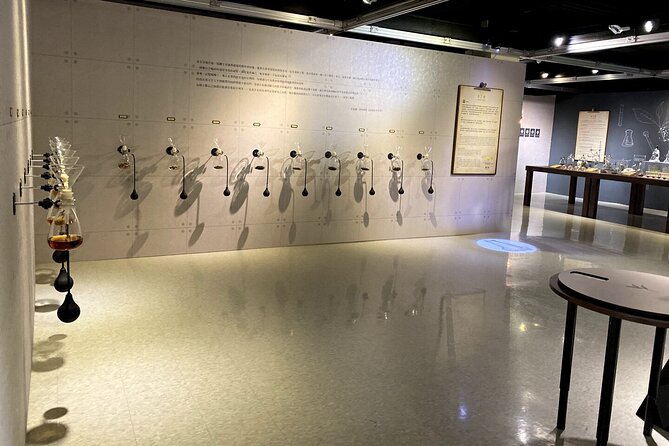
You have about 50 minutes inside, with admission included. Exhibits cover tea leaves, old machinery, tea tools, and the steps from growing and harvesting to brewing. The building itself adds interest, since you are learning about modern tea production in a setting tied to traditional Taiwanese homes.
The museum works best as a primer. It gives you vocabulary and background before the tasting. You can see how tea processing has changed and how much equipment is involved, even if the visit does not show every stage in action.
The tradeoff is the limited time. Some people want longer to see the basement exhibit and read the displays. Much of the signage is in Chinese, and the museum does not necessarily provide a simple film showing the full process. Your guide’s explanation therefore matters. If you prefer hands-on farm visits, this portion may feel more like a compact museum stop than a working plantation tour.
The museum closes on the first Monday of each month. On those dates, the itinerary replaces it with Pinglin Old Street. That alternative keeps you in the tea district, but it is not the same museum experience, so check the calendar if the exhibits are important to you.
More tea experiences around the world if you are still choosing
- Kyoto: Tea Ceremony in a Traditional Tea House in Kiyomizu
★ 4.9 · 3,519 reviews - London: Afternoon Tea Cruise on the River Thames
★ 4.4 · 3,274 reviews - Kyoto: Tea Ceremony Ju-An at Jotokuji Temple
★ 4.9 · 3,207 reviews - Afternoon Tea Bus Tour in Dublin
★ 5.0 · 2,791 reviews
Tea tasting in Pinglin Old Street
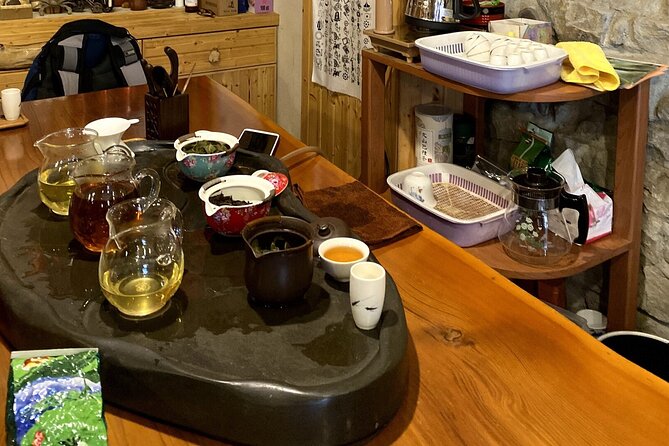
The tasting is the most personal part of the outing. In Pinglin, you visit a local tea shop where the owner introduces Taiwanese tea and demonstrates how to brew it. The tasting often includes three teas, with two locally grown, though the exact selection may change.
This is not simply a cup handed to you on the way out. You learn how the same leaves can taste different depending on water, timing, and brewing method. It is also the point where the earlier stops make sense. You have seen the growing area, heard about production, and now taste the finished product.
The tea shop owners are described as warm and funny, with two brothers providing plenty of personality during some visits. The setting feels more local than a formal museum lecture. You can ask questions, compare flavors, and decide what you actually like before buying tea for the rest of your trip.
A few practical details help. Meals are not included, and bottled water is not provided. Carry a reusable bottle and some cash for snacks, drinks, tea, or small souvenirs. Convenience stores and many eateries in Taiwan may not accept credit cards, so do not rely on a card alone.
Families can manage the outing, and one family brought a one-year-old with good support from the group. A ten-year-old enjoyed the museum and tea-related treats. Still, the day includes a mountain drive and some walking, so it suits children who can handle a moderate half-day schedule.
How the timing and group size affect value
The listed price is $52 per person. For that amount, you receive transport, a licensed guide, tea tasting, admission to the museum, and general liability insurance. There is no meal, bottled water, or required tip.
I see the value mainly in the transport and access. You get from central Taipei into the hills, stop at several places, and return without paying separate fares or trying to coordinate a rural route. The guide also adds value by connecting the reservoir, tea fields, museum, and tasting into one story.
The tour has a maximum of 20 people, though some departures have been much smaller, including a group of about 12. A small group makes it easier to ask questions and meet other people. It can also make the schedule feel tight when everyone needs to board, walk, and gather at the next stop.
This is not a private tea-farm lesson. It is a well-organized introduction to the countryside. If your goal is to see a beautiful rural area and learn the basics of Taiwanese tea in one morning or afternoon, the price is fair. If you want long photography stops, a working harvest, or extended time with farmers, you may want a more specialized outing.
The overall rating is 4.6 from 172 ratings, with 92 percent recommending it. The strongest praise centers on the views, the tea tasting, and guides who explain the area clearly. The recurring cautions are limited museum time, a sometimes rushed pace, and uneven audio or translation depending on the group arrangement.
Practical details before you book
Wear shoes you can walk in comfortably. The tour involves a small amount of walking, but the tea garden and mountain stops can include slopes or uneven ground.
Bring cash, water, sun protection, and a light rain layer. The countryside can be wet, and one guide still provided a good day during rainy weather, but clouds can affect the lake views. There is no promise of clear weather.
The tour is open to most people, but it is not recommended for people with physical disabilities. Tell the operator about any mobility concern before booking rather than assuming the short walking time means the outing is fully accessible.
Free cancellation is available if you cancel at least 24 hours before the start time. Cancellations or changes made less than 24 hours ahead are not refunded or accepted. The cut-off follows local Taipei time.
Who should choose this half-day tour?
I would choose this for a first visit to Taipei when you want a change of pace but do not want to sacrifice a full day. It also suits tea drinkers who want enough background to understand what they are tasting, plus families and solo visitors who prefer arranged transport.
It is a particularly good match if you enjoy scenic drives, small local museums, and informal demonstrations. The tea shop is more memorable than a standard gift-shop stop because you can taste before deciding what to buy.
I would hesitate if you dislike winding mountain roads, want a long hike, or expect to watch tea being picked and processed on a working farm. You should also think twice if your main goal is a slow museum visit, since 50 minutes may not be enough for every exhibit.
Should you book Thousand Island Lake and Pinglin?
Book it if you want the easiest route from Taipei into tea country. The reservoir views are lovely, Bagua Tea Garden gives you a clear picture of local farming, and the Pinglin tasting adds a real human touch. At $52, the combination of transport, guiding, museum entry, and tea makes sense.
Go in with realistic expectations. This is a compact introduction, not a full agricultural study. The pace may feel brisk, the museum may be too short for serious enthusiasts, and weather can change the lake view. For most visitors, though, it is a smart half-day choice that adds rural Taiwan to a city-focused trip.
FAQ
How long does the Thousand Island Lake and Pinglin tea tour last?
The tour lasts approximately five hours, including transportation from Taipei and the return journey.
Where does the tour begin?
The standard meeting point is Zhongxiao Park, No. 1, Lane 134, Section 2, Zhongxiao East Road, Zhongzheng District, Taipei City.
Is hotel pickup included?
Hotel pickup and drop-off are included if you select the private option. The standard activity begins and ends at the listed meeting point.
What places does the tour visit?
The route includes Shihding Ciandao Lake, also called Thousand Island Lake, Bagua Tea Garden, Pinglin Tea Museum, and Pinglin Old Street for the local tea shop visit.
Is tea tasting included?
Yes. A local tea tasting is included, with an explanation of Taiwanese tea and brewing. The tasting may include three teas, including locally grown teas.
What happens if the Pinglin Tea Museum is closed?
The museum is closed on the first Monday of every month. On those dates, the visit is replaced by a stop at Pinglin Old Street.
Are meals and bottled water included?
No. Meals and bottled water are not included. You should bring water and enough cash for food, drinks, souvenirs, and other personal expenses.
Can I cancel the tour for a refund?
You can cancel for a full refund if you cancel at least 24 hours before the experience starts. Cancellations or changes made less than 24 hours before the start time are not accepted or refunded.
Fresh tea listings around the world
- Dubai: Bustronomy Panoramic Afternoon Tea City Tour★ 4.7 · 7 reviews
- Dubai: Sunset Cruise on Traditional Boat & Emirati High Tea★ 4.9 · 10 reviews
- Ella: Lipton’s Seat Tour with Dambetanna Tea Factory Visit★ 4.6 · 7 reviews
- Cycling Tour at Uji’s Matcha Green Tea Fields and Heritage★ 5.0 · 10 reviews
- Da Lat: Sunrise Panorama, Green Tea Hill and Strawberry Farm★ 4.0 · 3 reviews
- Dallas: Tea Around Town Bus Tour with Treats★ 3.7 · 8 reviews
- From Colombo: Kandy & Pinnawala & Tea Factory Full Day Trip★ 4.3 · 2 reviews
- Mauritius: Crocodile Park and Tea Factory Tour with Tasting★ 4.9 · 4 reviews
Tea Plantation & Farm Tours, compared.
From Taipei: Thousand Island Lake and Pinglin Tea Plantation
Read our review →
Active Volcano, Rice Field, Hot Spring, Fruit market, Tea Plantation with Lunch
Read our review →
Furnas: Tea Plantations, Lake and Volcano Guided Tour
Read our review →
São Miguel: Furnas Volcano & Tea Plantation Tour with Lunch
Read our review →
Furnas Volcano & Tea Plantation With Traditional Lunch, East Tour
Read our review →
Furnas: Volcano Wonders, Tea Plantation & Waterfall Tour
Read our review →
Adventure in the Furnas, with volcanoes, lagoons and tea plantations
Read our review →Browse the lists this tour appears in